Anti-Aging · Reference
RADIANCE Blend Dosage: GHK-Cu and Tesamorelin in Units, mL and mg
This page explains the RADIANCE dosage Pepti prescribes, what the units on the syringe mean, how much of each peptide is in a dose, a chart for the RADIANCE vial, how a RADIANCE dose compares with GHK-Cu and tesamorelin on their own, when it is taken, what the studies used, what can change your directions, and the side effects to know about. It covers how Pepti prescribes RADIANCE, not online protocols. Nothing here is a reason to change your own dose.
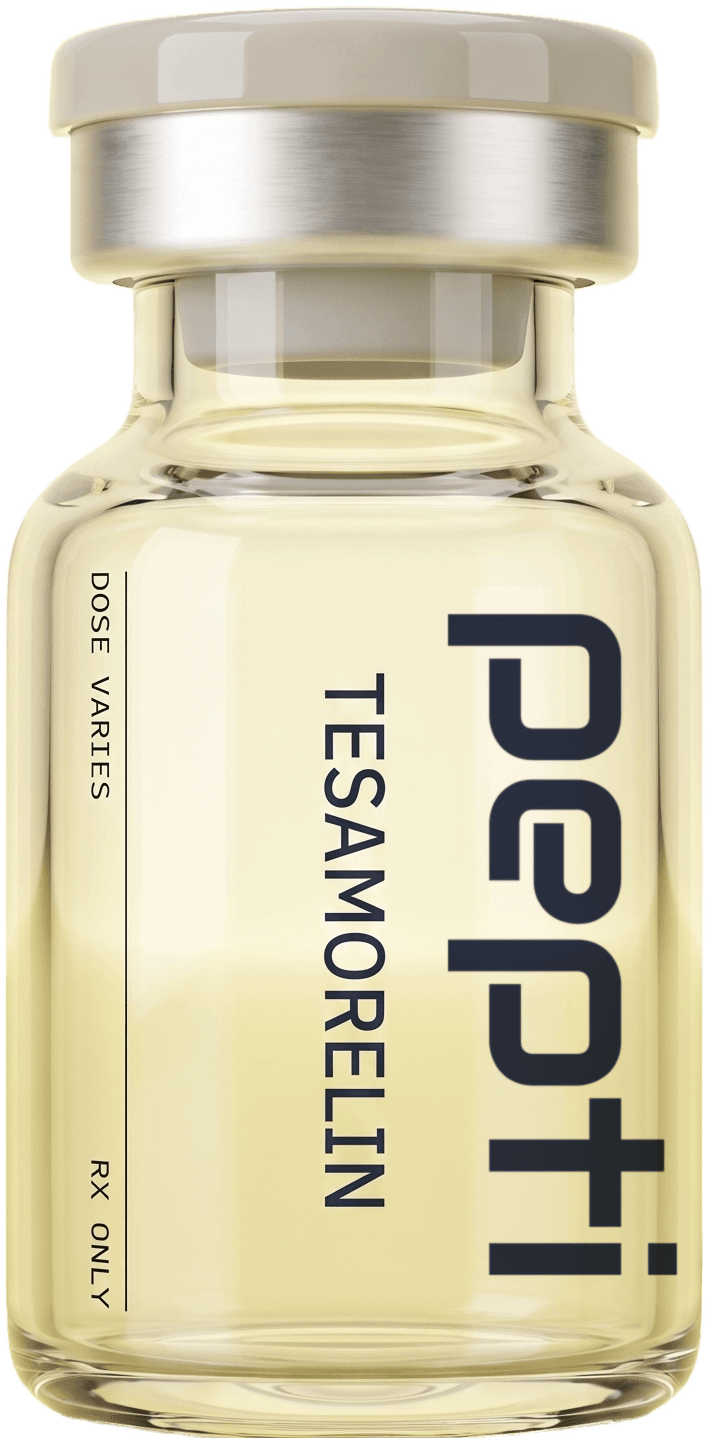
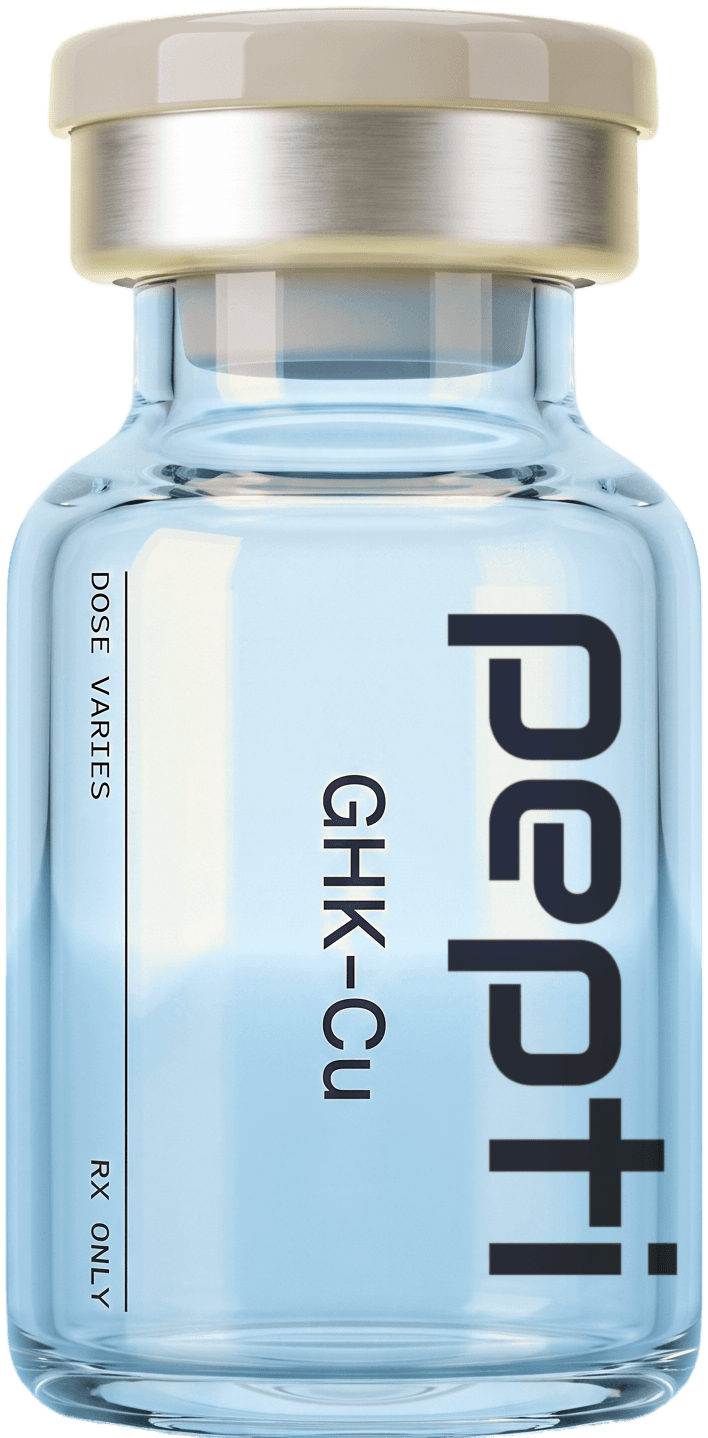
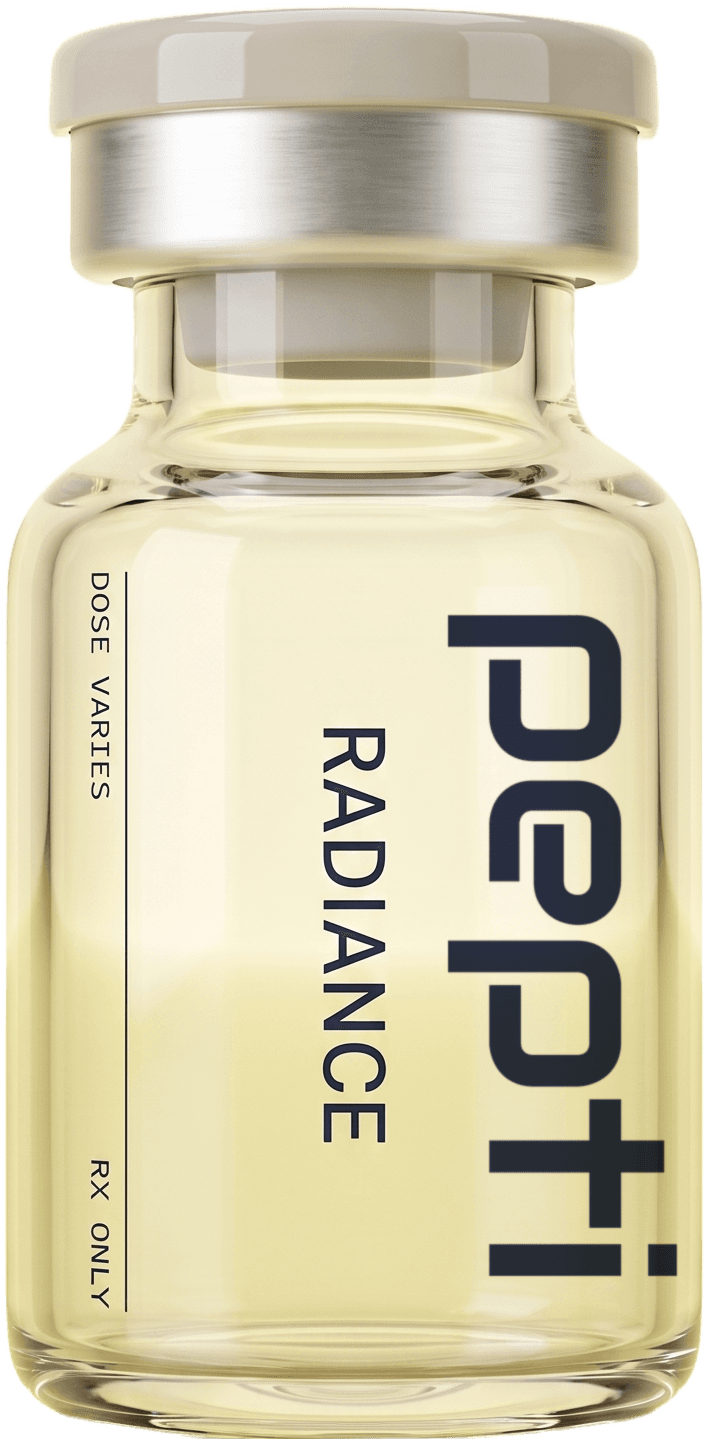
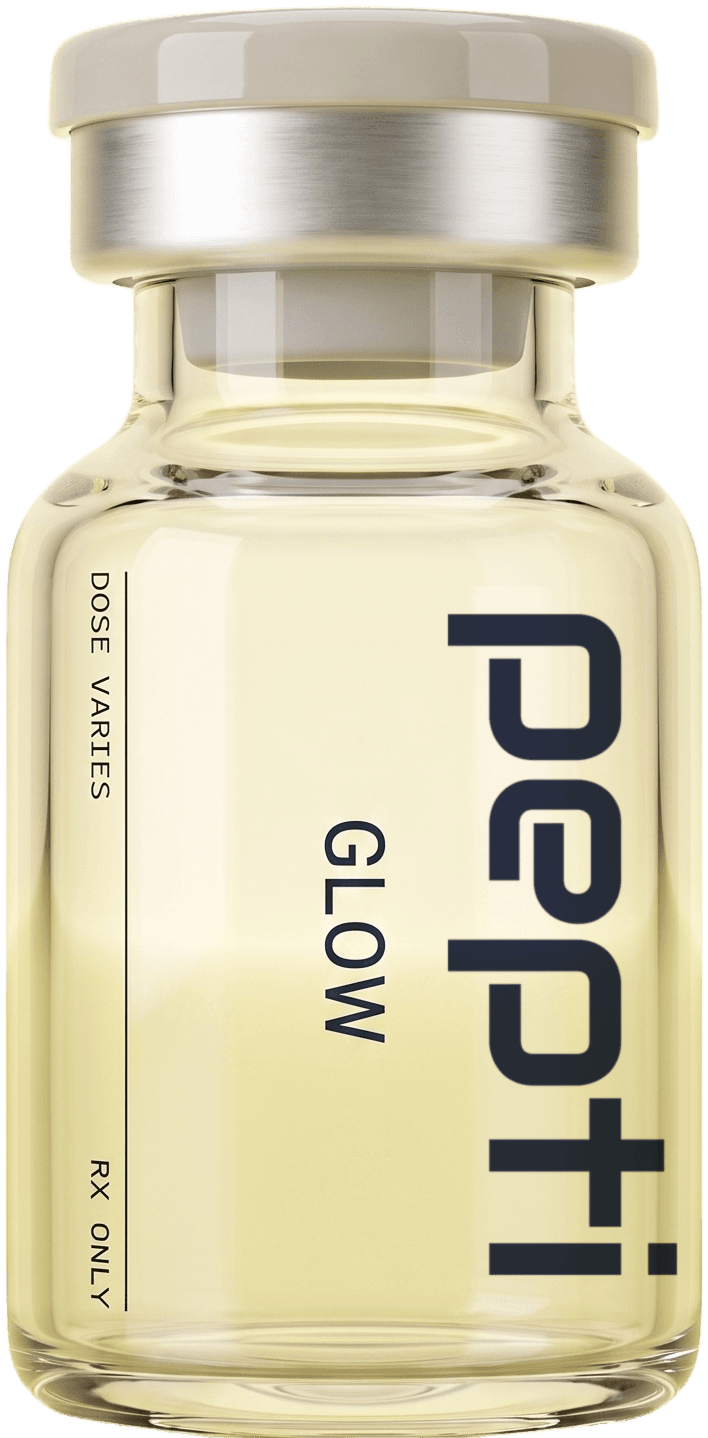
At Pepti, the RADIANCE blend is prescribed as 0.25 mL, which is 25 units on a U-100 insulin syringe, injected under the skin once daily Monday through Friday. The 5 mL vial holds 50 mg GHK-Cu and 10 mg tesamorelin, so every 0.25 mL dose delivers 2.5 mg GHK-Cu and 0.5 mg tesamorelin, and the vial holds 20 doses, about four weeks. Your physician sets your directions after reviewing your intake, and your exact dose and units are printed on the vial. The two peptides are in fixed proportion, so every draw delivers the same split.
RADIANCE Blend Dosage
The short answer
| Product | Vial | Typical directions | Per dose | Doses per vial | Price |
|---|---|---|---|---|---|
| RADIANCE Blend | 5 mL: GHK-Cu 10 mg/mL, tesamorelin 2 mg/mL (50 mg GHK-Cu / 10 mg tesamorelin per vial) | Inject 0.25 mL (25 units) subcutaneously once daily Monday through Friday | 2.5 mg GHK-Cu and 0.5 mg tesamorelin | 20 | $249/mo |
The price is all-in, covering medication, physician review, refill management and shipping, with no separate membership fee. Pepti is cash-pay and does not bill insurance. These are the typical printed directions; your own directions are the ones on your vial.
RADIANCE Blend Dosage
What RADIANCE is, briefly
RADIANCE is two independently studied peptides dissolved together in one sterile multi-dose vial. GHK-Cu is a copper-binding tripeptide (glycine, histidine, lysine) found naturally in human plasma, described in cell and animal research around collagen, elastin and matrix synthesis; its human studies are almost all of topical creams and gels. Tesamorelin is a 44-amino-acid analogue of growth-hormone-releasing hormone that prompts the pituitary to release your own growth hormone; it is the active ingredient of an FDA-approved product for one specific indication, with randomised human trials behind it. The name RADIANCE is a brand name for the combination; the combination has never been studied as a combination. The full reference is what is RADIANCE.
RADIANCE Blend Dosage
RADIANCE dosage in units, mL and mg
Pepti's directions are written in two forms, millilitres and units, because prescriptions are written in millilitres and insulin syringes are marked in units. On a U-100 insulin syringe, 1 unit is 0.01 mL, so 100 units is 1 mL and 25 units is 0.25 mL. A unit is a volume mark on the barrel, not a measure of how strong the medication is.
A two-peptide vial has two concentrations on its label, and each gives its own milligram figure from the same draw:
| Component | Concentration | Per vial | Per 0.25 mL dose |
|---|---|---|---|
| GHK-Cu | 10 mg/mL | 50 mg | 2.5 mg |
| Tesamorelin | 2 mg/mL | 10 mg | 0.5 mg |
| Total | 60 mg | 3 mg |
That arithmetic is a way to read a label, not a way to set a dose. A vial labelled 60 mg in total is not a 60 mg dose: it is twenty doses of 3 mg combined. If your label and your syringe seem to disagree, do not dose; message your care team. How long does a peptide vial last explains every number on a vial label.
Fixed proportions
GHK-Cu is 50 of the 60 mg in the vial, so by mass RADIANCE is mostly a GHK-Cu preparation with a smaller tesamorelin component, five parts to one. Every dose delivers the same split, and there is no way to take more of one and less of the other from the same vial. If a physician wants a different balance, the components are prescribed separately.
RADIANCE Blend Dosage
RADIANCE dosage chart: units to mL to mg
The chart below is the conversion for the RADIANCE vial, drawn with a U-100 insulin syringe. It is math only. It is not a menu of doses, and the only line that applies to you is the one that matches the number printed on your vial.
| Syringe mark (U-100) | Volume | GHK-Cu | Tesamorelin |
|---|---|---|---|
| 5 units | 0.05 mL | 0.5 mg | 0.1 mg |
| 10 units | 0.10 mL | 1 mg | 0.2 mg |
| 15 units | 0.15 mL | 1.5 mg | 0.3 mg |
| 20 units | 0.20 mL | 2 mg | 0.4 mg |
| 25 units (Pepti's typical directions) | 0.25 mL | 2.5 mg | 0.5 mg |
| 50 units | 0.50 mL | 5 mg | 1 mg |
| 100 units | 1 mL | 10 mg | 2 mg |
The rule behind every row: units divided by 100 gives millilitres; multiply millilitres by 10 for GHK-Cu and by 2 for tesamorelin. Those multipliers only hold for this vial. A chart written for a different GHK-Cu blend or a different concentration gives different milligram figures for the same units, which is the main reason not to dose from a chart, including this one.
RADIANCE Blend Dosage
RADIANCE compared with GHK-Cu and tesamorelin alone
People often ask whether a blend waters down its components. For RADIANCE the arithmetic says no: the same 25 unit draw delivers the same amount of each peptide as the single-peptide vials do.
| RADIANCE | GHK-Cu | Tesamorelin | Tesamorelin + Ipamorelin | |
|---|---|---|---|---|
| What is in the vial | 50 mg GHK-Cu, 10 mg tesamorelin in 5 mL | 50 mg GHK-Cu in 5 mL | 10 mg tesamorelin in 5 mL | 10 mg tesamorelin, 5 mg ipamorelin in 5 mL |
| Typical directions | 0.25 mL once daily Monday through Friday | 0.25 mL once daily Monday through Friday | 0.25 mL Monday through Friday nights at bedtime | 0.25 mL Monday through Friday nights at bedtime |
| Per dose | 2.5 mg GHK-Cu, 0.5 mg tesamorelin | 2.5 mg GHK-Cu | 0.5 mg tesamorelin | 0.5 mg tesamorelin, 0.25 mg ipamorelin |
| Price | $249/mo | $239/mo | $249/mo | $259/mo |
What the numbers show
RADIANCE delivers exactly the GHK-Cu per dose of the GHK-Cu vial and exactly the tesamorelin per dose of the tesamorelin vial. Nothing is diluted by being in a blend. That is also why RADIANCE is not taken alongside either of those products, or alongside another GHK-Cu blend such as GLOW, KLOW or the ETERNAL blend: each would double a component, and doubling GHK-Cu doubles the copper. Tesamorelin + Ipamorelin carries the same tesamorelin per dose with a second secretagogue instead of GHK-Cu. The single-peptide numbers are in GHK-Cu dosage and tesamorelin dosage.
RADIANCE Blend Dosage
How long a RADIANCE vial lasts
| Step | Value |
|---|---|
| Dose | 25 units, 0.25 mL |
| Doses per week | 5 (Monday through Friday) |
| Doses per vial | 20 (5 mL divided by 0.25 mL) |
| Used over the vial | 50 mg GHK-Cu and 10 mg tesamorelin, the whole vial |
| Time per vial | 20 doses divided by 5 per week = 4 weeks |
Four weeks is why refills run every 28 days, one vial per fill. Vials are multi-dose solutions shipped ready to use, refrigerated with ice packs, with sterile syringes and alcohol prep pads. Nothing is mixed at home. Keep the vial in the fridge and follow the beyond-use date printed on the label, which runs from first puncture. How to store peptides covers storage, and a blue vial is normal for a GHK-Cu product: why is GHK-Cu blue explains it.
If a vial runs short before the refill, message your care team rather than adjusting anything yourself. If you miss a weekday dose, follow your directions and do not take two doses to make up for one.
RADIANCE Blend Dosage
When RADIANCE is taken
Once daily, Monday through Friday
Pepti's typical printed directions say once daily Monday through Friday, without naming a time of day. Some prescribers direct GHK-Cu and tesamorelin products in the evening, because the body's largest natural growth hormone pulse occurs during sleep and a fatty meal is described as blunting it; others direct mornings for consistency. Your printed directions win over anything on this page. Weekends off are part of the schedule, not missed doses, and the weekday pattern is a prescriber convention rather than something derived from a trial.
Under the skin
Subcutaneous means into the fat layer, not the muscle. The abdomen is the usual site, rotated so the same spot is not used repeatedly, with the thigh as an alternative if your directions allow it. Injecting into the face or another area you want to change is not how the blend is used; the mechanisms described are systemic. Technique is in how to inject peptides safely and peptide injection sites.
| Directions say | What it means in practice |
|---|---|
| 0.25 mL (25 units) | Draw to the 25 mark on a U-100 insulin syringe |
| Subcutaneously | Into the fat layer, abdomen or thigh, rotating sites |
| Once daily Monday through Friday | Five doses a week, weekends off |
| 20 doses per vial | About four weeks, then the next refill |
RADIANCE Blend Dosage
Why the research cannot give you a RADIANCE dose
RADIANCE has never been studied as a blend, in people or in animals, so there is no trial dose for it. The evidence is per component, and it is uneven:
| Component | Dosing in the live research | How it compares with a RADIANCE dose |
|---|---|---|
| Tesamorelin | 1 mg or 2 mg once daily, every day, in every trial, including the 26-week phase 3 trials (New England Journal of Medicine, 2007; Journal of Acquired Immune Deficiency Syndromes, 2010) | RADIANCE delivers 0.5 mg five days a week, a fraction of the studied exposure |
| Tesamorelin, approved product | 1.4 mg or 1.28 mg once daily in the two current formulations | Not the same product, dose or purpose |
| GHK-Cu | Human studies used topical creams and gels on skin and wounds; the animal wound work injected it locally into experimental wounds | There is no human dose for injected GHK-Cu |
None of these used the weekday schedule or the amounts in this vial, and none combined the two peptides. The directions on the vial are a prescribing standard set to deliver one vial in four weeks. What research has looked at, component by component, is in RADIANCE blend benefits, with more in tesamorelin benefits and GHK-Cu benefits.
RADIANCE Blend Dosage
What changes the directions
Your physician sets your directions after reviewing your intake. Things that can lead to different directions, or a different product, include:
| What can change | How it shows up |
|---|---|
| Whether RADIANCE is the right formula | Skin alone may point to GHK-Cu; visceral fat alone to tesamorelin; skin with tissue repair to GLOW or KLOW |
| Your blood sugar | Diabetes, borderline glucose, or a glucose-lowering medication change the conversation, because growth hormone reduces insulin sensitivity |
| Cancer or pituitary history | The approved tesamorelin label contraindicates active malignancy and hypothalamic-pituitary disruption |
| Copper | Wilson's disease or another copper-metabolism disorder rules out GHK-Cu; any other GHK-Cu product doubles the copper |
| Pregnancy | Tesamorelin is contraindicated in pregnancy |
| How you respond | Puffiness, joint aches, hand tingling or anything unexpected goes to your physician, who may revise your directions |
When directions change, the new numbers are printed on the new label. Never carry a number over from a previous fill. Bloodwork is not required for any Pepti treatment. If your physician wants labs for your care, they'll ask through your account.
RADIANCE Blend Dosage
Side effects, in summary
| What is reported | Which component | What to do |
|---|---|---|
| Injection-site redness, soreness or a small lump | Both | Rotate sites |
| A faint blue-green mark at the site | GHK-Cu | Expected; clears on its own |
| Joint aches, muscle aches, swelling in the hands or feet, tingling | Tesamorelin (label rates of 5% to 13% at 2 mg daily) | Message your care team; do not change the dose yourself |
| Unusual thirst or frequent urination | Tesamorelin, through blood sugar | Contact your care team promptly |
| Persistent nausea and vomiting, abdominal pain, jaundice or new confusion | The pattern copper excess would produce | Stop dosing and contact your physician the same day; call 911 for sudden or severe confusion |
| Facial or throat swelling, widespread hives, breathing difficulty | Any injected peptide | Call 911 first, then tell your physician |
If you think you have drawn too much, call Poison Control at 1-800-222-1222 and message your care team. Do not skip, double or change a dose to compensate. The full list, with the tesamorelin label rates, is in RADIANCE blend side effects.
Tested athletes should know that GHRH analogues such as tesamorelin are prohibited in sport. RADIANCE is a compounded prescription; compounded medications are not FDA approved. An approved tesamorelin product exists for one specific indication, at a different dose; RADIANCE itself is not approved for anything.
RADIANCE Blend Dosage
Where to get RADIANCE prescribed
RADIANCE cannot be bought legitimately without a prescription. Sites selling it "for research use only" are not accountable for what is in the vial: identity, purity, sterility and concentration are untested, so the per-dose figures above would not hold. The prescription route:
- Complete a free online intake covering your history, medications and supplements (including zinc), blood sugar, cancer history and what you want help with.
- A physician licensed in your state reviews it, usually within 24 hours.
- If it is appropriate, a PCAB-accredited, FDA-registered US 503A compounding pharmacy prepares it to that prescription. Lot test results are published at /quality/lab-results.
- It ships refrigerated with your directions printed on the vial.
- Your physician stays reachable for questions and dose changes.
RADIANCE is supplied as a vial and syringe only. For the components on their own: how to get GHK-Cu prescribed and how to get tesamorelin prescribed.
References
What this is based on.
References
- Pickart L, Vasquez-Soltero JM, Margolina A. GHK Peptide as a Natural Modulator of Multiple Cellular Pathways in Skin Regeneration · Biomed Res Int (2015) · PMID 26236730
- Falutz J, Allas S, Blot K et al.. Metabolic effects of a growth hormone-releasing factor in patients with HIV · N Engl J Med (2007) · PMID 18057338
- Stanley TL, Feldpausch MN, Oh J et al.. Effect of tesamorelin on visceral fat and liver fat in HIV-infected patients with abdominal fat accumulation: a randomized clinical trial · JAMA (2014) · PMID 25038357
- Falutz J, Mamputu JC, Potvin D et al.. Effects of tesamorelin (TH9507), a growth hormone-releasing factor analog, in human immunodeficiency virus-infected patients with excess abdominal fat: a pooled analysis of two multicenter, double-blind placebo-controlled phase 3 trials with safety extension data · J Clin Endocrinol Metab (2010) · PMID 20554713
- Falutz J, Potvin D, Mamputu JC et al.. Effects of tesamorelin, a growth hormone-releasing factor, in HIV-infected patients with abdominal fat accumulation: a randomized placebo-controlled trial with a safety extension · J Acquir Immune Defic Syndr (2010) · PMID 20101189
- Stanley TL, Fourman LT, Feldpausch MN et al.. Effects of tesamorelin on non-alcoholic fatty liver disease in HIV: a randomised, double-blind, multicentre trial · Lancet HIV (2019) · PMID 31611038
- Makimura H, Feldpausch MN, Rope AM et al.. Metabolic effects of a growth hormone-releasing factor in obese subjects with reduced growth hormone secretion: a randomized controlled trial · J Clin Endocrinol Metab (2012) · PMID 23015655
- Dal J, Leisner MZ, Hermansen K et al.. Cancer Incidence in Patients With Acromegaly: A Cohort Study and Meta-Analysis of the Literature · J Clin Endocrinol Metab (2018) · PMID 29590449
- Johannsson G, Touraine P, Feldt-Rasmussen U et al.. Long-term Safety of Growth Hormone in Adults With Growth Hormone Deficiency: Overview of 15 809 GH-Treated Patients · J Clin Endocrinol Metab (2022) · PMID 35368070
- Zhou H, Sun L, Zhang S, Wang Y, Wang G. Effect of long-term growth hormone replacement on glucose metabolism in adults with growth hormone deficiency: a systematic review and meta-analysis · Pituitary (2021) · PMID 32888174
- Clemmons DR. Roles of insulin-like growth factor-I and growth hormone in mediating insulin resistance in acromegaly · Pituitary (2002) · PMID 12812310
- Clemmons DR. Consensus statement on the standardization and evaluation of growth hormone and insulin-like growth factor assays · Clinical Chemistry (2011) · PMID 21285256
Citations are provided for educational purposes. They do not constitute medical advice. Always discuss any peptide protocol with your prescribing physician.
Common questions
RADIANCE Blend Dosage, answered.
At Pepti, 0.25 mL, which is 25 units on a U-100 insulin syringe, injected subcutaneously once daily Monday through Friday. Your physician sets your directions after reviewing your intake, and your exact dose is printed on the vial.
At 0.25 mL: 2.5 mg GHK-Cu and 0.5 mg tesamorelin, 3 mg combined. The split is fixed by the formulation.
The number printed on your vial. Pepti's typical directions are 25 units, which is 0.25 mL on a U-100 insulin syringe.
Twenty. A 5 mL vial divided by 0.25 mL per dose is 20 doses, about four weeks at five days a week.
Pepti's typical directions say once daily Monday through Friday without naming a time. Some prescribers direct it in the evening because of the overnight growth hormone pulse. Follow the time on your own label.
Yes, per component. A 25 unit dose of RADIANCE carries the same 2.5 mg GHK-Cu as the GHK-Cu vial and the same 0.5 mg tesamorelin as the tesamorelin vial.
Raise it with your physician first. RADIANCE already contains a full dose of each component, so taking another GHK-Cu product doubles the copper and another tesamorelin product doubles the tesamorelin.
No. The trials used 1 mg or 2 mg once daily, every day. RADIANCE delivers 0.5 mg five days a week, and that amount has not been studied.
No. Take the dose printed on your vial, on the schedule printed on your vial. Puffiness and joint aches signal more growth hormone than a person needs, and more GHK-Cu means more copper. If you have questions about your dose, message your care team.
No. Pepti vials are multi-dose solutions shipped ready to use, with sterile syringes and alcohol prep pads.
Bloodwork is not required for any Pepti treatment. If your physician wants labs for your care, they'll ask through your account. The free assessment goes to a physician licensed in your state. A consultation does not guarantee a prescription.
Related answers
Keep reading.
- RADIANCE Blend (GHK-Cu / Tesamorelin): What It Is, Where to Get It Prescribed, and What It Costs
- RADIANCE Blend for Men: Visceral Fat, Hair, TRT, Glucose and Sport
- RADIANCE Blend for Women: Skin, Menopause, Pregnancy and What the Research Covers
- RADIANCE Blend Side Effects: Copper, Growth Hormone Effects, Blood Sugar and What to Report
- REVIVE Blend Dosage: How Pepti Prescribes the REVIVE Peptide Blend
Next step
See what a physician recommends for you.
A licensed physician in your state reviews your intake to see whether treatment fits your history. A consultation does not guarantee a prescription.