— Anti-Aging · Reference
RADIANCE Blend (GHK-Cu / Tesamorelin): What It Is, Where to Get It Prescribed, and What It Costs
This page covers what RADIANCE is, what each of its two components is and the pathways researchers have described for it, why they are compounded into one vial, what the published work does and does not establish for each, where each component stands with the FDA, how a vial is dosed, and how to get it prescribed.
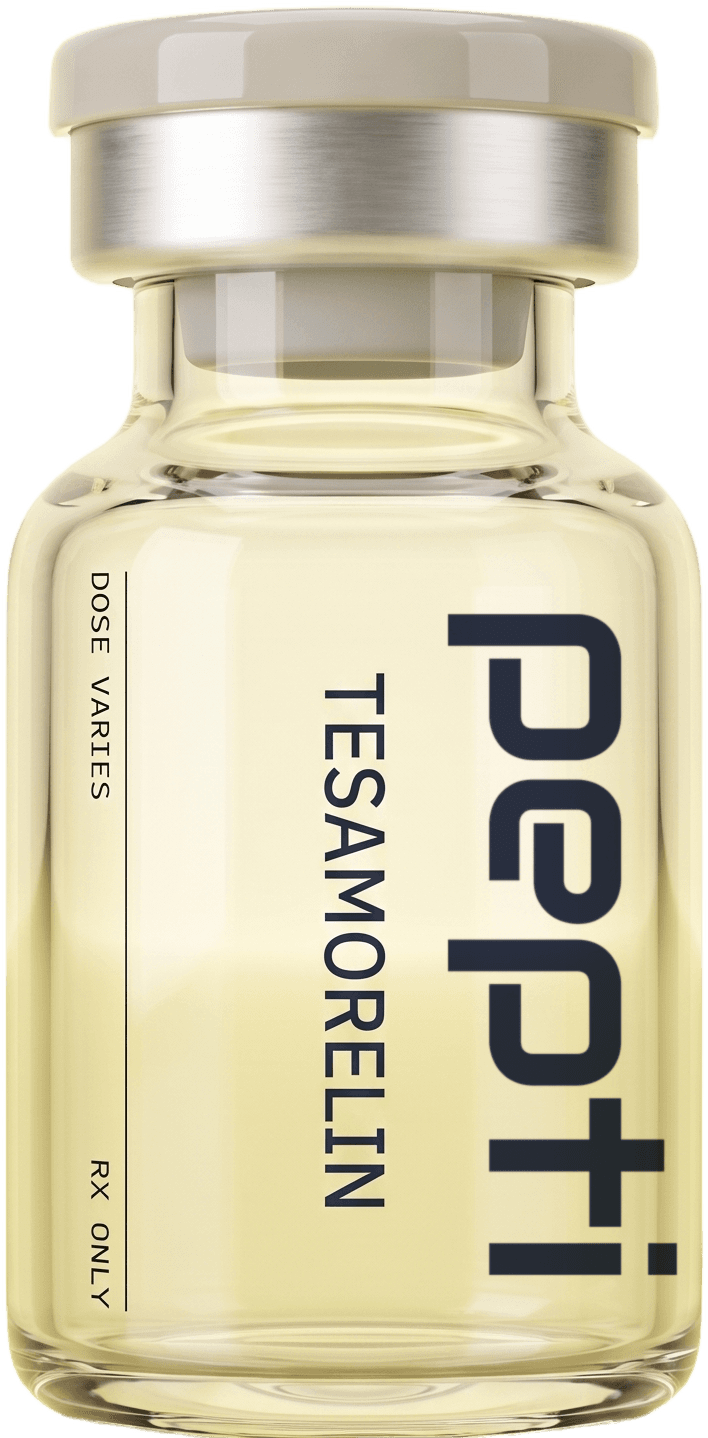
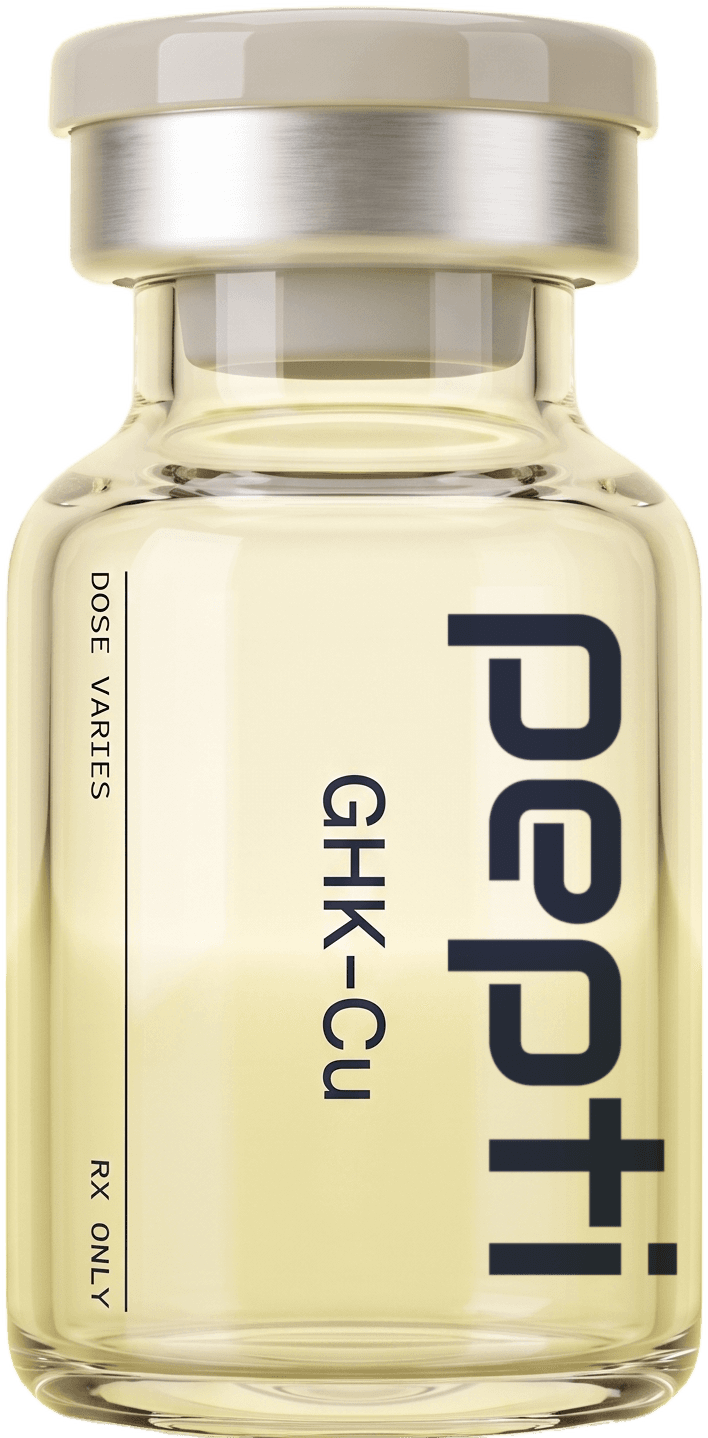
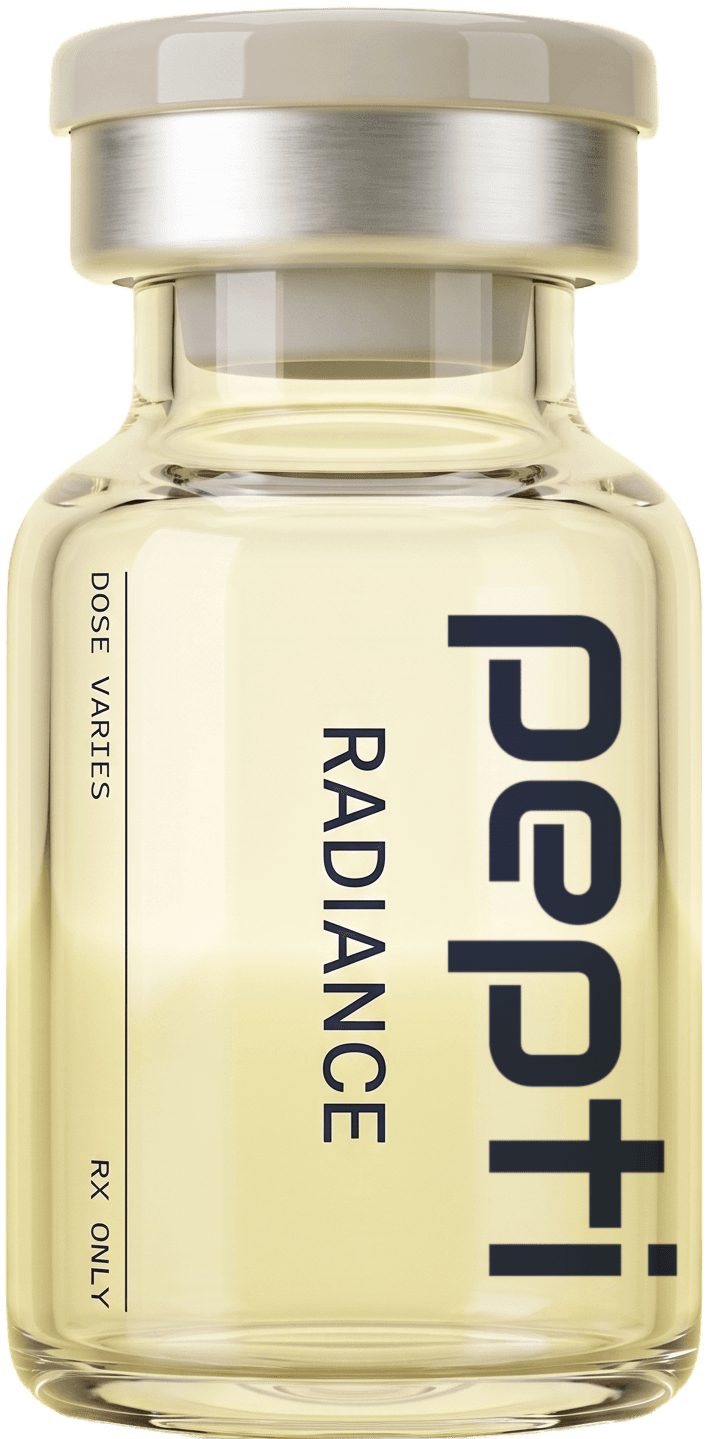
RADIANCE Blend (GHK-Cu / Tesamorelin) is a prescription injection supplied as 5 mL multi-dose vial, GHK-Cu 10 mg/mL + Tesamorelin 2 mg/mL (50 mg GHK-Cu / 10 mg Tesamorelin per vial). The reviewed directions are: Inject 0.25 mL (25 units) subcutaneously once daily Monday through Friday. That is 20 doses per vial, about 4 weeks at Monday through Friday. It requires a prescription from a physician licensed in your state, is compounded by a state-licensed US pharmacy, and is not FDA approved.
This page covers what RADIANCE is, what each of its two components is and the pathways researchers have described for it, why they are compounded into one vial, what the published work does and does not establish for each, where each component stands with the FDA, how a vial is dosed, and how to get it prescribed.
— RADIANCE Blend (GHK-Cu / Tesamorelin)
What RADIANCE actually is
— Two separate peptides, one vial
RADIANCE is not a single molecule. It is two independently studied peptides — GHK-Cu and tesamorelin — dissolved together in one sterile multi-dose vial by a compounding pharmacy. The two could hardly be more different in where their evidence comes from. GHK-Cu is a naturally occurring tripeptide with a large cell and animal literature and human studies that are almost all topical. Tesamorelin is the active ingredient of an FDA-approved prescription biologic, with randomised, placebo-controlled human trials behind it. The name RADIANCE is a brand name for the combination; it does not appear in any journal. So "does RADIANCE work" has to be broken into two questions, because the combination itself has never been studied as a combination.
Component Per vial What it is Studied for GHK-Cu 50 mg Copper-binding tripeptide (glycine-histidine-lysine) found in human plasma Collagen and matrix synthesis, wound healing, hair follicle biology — in cells, animals and topical human studies Tesamorelin 10 mg Stabilised synthetic analogue of growth-hormone-releasing hormone Visceral abdominal fat and liver fat, in randomised human trials, mostly in people with HIV — Why these two, and why in these proportions
The rationale prescribers give is that skin and tissue quality has two inputs that decline together with age: the local matrix — collagen, elastin, the proteins between cells — and the growth-hormone / IGF-1 axis that governs how quickly tissue is turned over and how body fat is distributed. GHK-Cu is described in the research as acting on the first; tesamorelin acts on the second. One vial covers both with a single injection.
The proportions are worth noticing. GHK-Cu is 50 of the 60 mg in the vial, so by mass RADIANCE is mostly a GHK-Cu preparation with a smaller tesamorelin component: 2.5 mg GHK-Cu and 0.5 mg tesamorelin per standard 0.25 mL dose. The ratio is fixed by the pharmacy's formulation and cannot be adjusted per component, which is the genuine trade-off of any blend.
— What it is not
It is not a weight-loss medication. Tesamorelin's own approved label states that it is not indicated for weight-loss management because its effect on body weight is neutral; the trials measured visceral fat, not the scale. It is not a cosmetic filler, a retinoid or a substitute for sun protection, and nothing on this page describes it changing what you see in the mirror. It is not injected growth hormone: tesamorelin prompts your own pituitary rather than replacing its output. And it is not a shortcut around the slow biology of skin.
— RADIANCE Blend (GHK-Cu / Tesamorelin)
How each component is described to work
Each component has its own section because each has its own literature; no study has looked at what the two do together. For GHK-Cu, the mechanistic detail is from cell and animal work and the human data is topical — the two are kept separate below because they are not interchangeable. For tesamorelin, the human data is from randomised trials of the approved product.
— GHK-Cu in cells and animals: copper delivery and matrix synthesis
GHK-Cu is a tripeptide — glycine, histidine, lysine — that binds copper with high affinity. It occurs naturally in human plasma, where its concentration is reported to decline with age. The copper-carrying role is the basis for most of its described effects, because collagen cross-linking, elastin formation and several antioxidant enzymes are copper-dependent.
In cell and animal work, and in reviews in Biomed Research International (2015) and the International Journal of Molecular Sciences (2018), GHK-Cu is described as increasing synthesis of collagen, elastin, proteoglycans and glycosaminoglycans, and as shifting the balance between matrix metalloproteinases, which break tissue down, and their inhibitors. Gene-expression work reports effects across a large number of genes rather than one pathway, which is why the literature discusses it as resetting tissue toward a repair pattern. The rat wound work behind these claims used the peptide injected locally into experimental wounds; none of it used the systemic subcutaneous route.
— GHK-Cu in humans: what the topical studies looked at
The human GHK-Cu literature is almost entirely topical. A 1994 study in Wound Repair and Regeneration applied a GHK-Cu gel to diabetic foot ulcers and reported faster closure than the comparison dressing. A 2006 study in Archives of Facial Plastic Surgery applied a copper-tripeptide cream after CO2 laser resurfacing of facial skin and reported on re-epithelialisation. The cosmetic studies of GHK-Cu creams in photoaged skin, summarised in the 2015 review, measured firmness, fine lines and elasticity in small groups.
The precision that matters: those studies describe what a cream or gel did on the skin it was applied to. They do not describe what an injection into the abdomen does to the face, and no study has tested that. The injectable form's evidence is the cell and animal work above plus clinical prescribing experience. Citing the topical human studies as evidence for the injection is mixing two different things.
— Tesamorelin: a GHRH analogue acting on the pituitary
Tesamorelin is a 44-amino-acid synthetic analogue of human growth-hormone-releasing hormone, modified at the N-terminus to resist breakdown by the enzyme DPP-4. It binds the GHRH receptor on the pituitary and prompts a pulse of the body's own growth hormone, which in turn raises IGF-1, the hormone the liver makes in response. Because it works through the pituitary, the response stays under the body's own feedback control: somatostatin still puts the brakes on, and release stays pulsatile rather than flat. That is the distinction between a secretagogue like tesamorelin and injected growth hormone. The pharmacology here is human, established during development of the approved product.
— Tesamorelin: why visceral fat is the endpoint
Growth hormone promotes the breakdown of stored fat, and visceral fat — the fat packed around the organs inside the abdomen, as opposed to the fat under the skin — is particularly responsive to it. That is why the approved indication concerns visceral adipose tissue specifically, and why trials measured it with CT scans rather than scales. The New England Journal of Medicine (2007) trial and the pooled analysis in the Journal of Clinical Endocrinology & Metabolism (2010) reported visceral fat falling on tesamorelin against a small rise on placebo, with IGF-1 rising and body weight essentially unchanged. Skin was not an endpoint in any tesamorelin trial.
— How the two are meant to fit together
The map below is the clinical rationale for the blend. It is a rationale, not a finding — no study has confirmed that the two act together when injected together.
What prescribers are addressing Which component is described here Where the evidence sits Collagen, elastin and matrix synthesis in skin GHK-Cu Cells, animals, topical human studies Hair follicle biology GHK-Cu Cells and animals Growth-hormone / IGF-1 axis output Tesamorelin Human randomised trials Visceral abdominal fat and liver fat Tesamorelin Human randomised trials, mostly HIV populations Skin and body together The combination Prescriber rationale only; no study
— RADIANCE Blend (GHK-Cu / Tesamorelin)
What the research actually shows
— Skin, connective tissue and hair
This rests on GHK-Cu. The cell and animal literature is deep and coherent: more collagen and matrix laid down, a shift away from matrix breakdown, effects on a large number of genes. The human literature is topical, small, and concerned with wound closure and cosmetic measures of photoaged skin. There are no human studies of injectable GHK-Cu for skin quality. Hair is similar: the basis is laboratory work on hair follicles and animal studies, and there is no human trial of GHK-Cu, topical or injectable, with hair growth as an endpoint. The fuller treatment is on the GHK-Cu page.
— Visceral fat, liver fat and body composition
This rests on tesamorelin and it is the strongest evidence on this page. Two phase 3 randomised, double-blind, placebo-controlled trials in people with HIV and abdominal fat accumulation, published in the New England Journal of Medicine (2007) and the Journal of Acquired Immune Deficiency Syndromes (2010) and pooled in the Journal of Clinical Endocrinology & Metabolism (2010), reported reduced visceral adipose tissue on CT at 26 weeks, lower triglycerides and a rise in IGF-1, with body weight neutral. A randomised trial in the Journal of Clinical Endocrinology & Metabolism (2012) in abdominally obese adults without HIV who had reduced growth hormone secretion reported reduced visceral fat over 12 months. A randomised, double-blind trial in Lancet HIV (2019) in people with HIV and non-alcoholic fatty liver disease reported a reduction in liver fat fraction over 12 months. Every one of these used the approved product at 1 mg or 2 mg once daily, every day.
— What human data exists
This is the honest part, and it is the part worth understanding before starting.
There are no randomised controlled trials of RADIANCE, or of any GHK-Cu and tesamorelin combination, in humans. The blend has never been studied as a blend. Evidence is per component, and it is very uneven:
- GHK-Cu has small human studies of topical creams and gels — for diabetic ulcers, post-laser skin and photoaged facial skin. There are no randomised controlled trials of injectable GHK-Cu in humans for any indication.
- Tesamorelin has randomised, double-blind, placebo-controlled trials, including the two phase 3 trials that supported an FDA approval, with roughly 1,100 people randomised across the published trials. Almost all were in people with HIV, every trial used a fixed daily dose of 1 mg or 2 mg, and the endpoints were visceral fat, liver fat and metabolic markers — not skin, not hair.
Two gaps are specific to RADIANCE. The tesamorelin in a standard injection is 0.5 mg, five days a week; the trials used 1 to 2 mg every day, so the blend delivers a fraction of the studied exposure and nobody has measured what that fraction does. And none of the tesamorelin trials looked at skin, so the skin rationale rests entirely on GHK-Cu's preclinical and topical literature plus prescriber experience.
Much of medicine rests on mechanism plus clinical experience, and that is the basis on which physicians prescribe RADIANCE. But the accurate framing is "one component described in preclinical research and used clinically, one component with human trials at a different dose for a different endpoint," not "proven in people."
— What the evidence does not establish
- That the two peptides together do more than either alone. No study has compared the blend with its components.
- Any effect of the blend, or of either component, on the appearance of skin, on wrinkles, on hair growth or on complexion in humans. No such trial has been run.
- An effect of RADIANCE on visceral fat. That data belongs to the approved tesamorelin product at 1 to 2 mg daily, not to 0.5 mg five days a week in a blend.
- An effect on body weight. Tesamorelin's own label describes its effect on weight as neutral.
- A timeline in humans. Timelines given by prescribers are clinical experience, not trial endpoints.
- Long-term safety of the combination over years, which is part of why a physician reviews each refill and why bloodwork is commonly required.
- Efficacy for any condition as an FDA-approved treatment. RADIANCE is not approved for anything; the approved tesamorelin product is approved for one indication that RADIANCE is not prescribed for.
— RADIANCE Blend (GHK-Cu / Tesamorelin)
Where RADIANCE stands with the FDA right now
RADIANCE has no regulatory status of its own; the FDA regulates the bulk substances a pharmacy compounds from, not the brand name of a blend. Its two components sit in completely different regulatory positions, and one of them moved in 2026. As of 24 September 2026:
— GHK-Cu: removed from Category 2, review scheduled
In 2023 the FDA placed injectable GHK-Cu in Category 2 of its interim 503A bulk drug substances list — the category for nominated substances flagged as raising significant safety risks — citing a possible immunogenicity risk from aggregation and peptide-related impurities and limited human safety data. Non-injectable GHK-Cu sat separately in Category 1, the list of substances under evaluation.
On 15 April 2026 the FDA announced the removal of twelve peptides from Category 2, and injectable GHK-Cu was one of them. The FDA's current 503A category list, updated 14 May 2026, no longer lists GHK-Cu in Category 2 at all; Category 2 is now six substances, none of them in RADIANCE. The same document records that non-injectable GHK-Cu was removed from Category 1 on 22 April 2026 after its nominators withdrew, that one nominator clarified on 5 May 2026 it meant to withdraw only the injectable route, and that non-injectable GHK-Cu will be added back to Category 1. It also states that the FDA intends to consult the Pharmacy Compounding Advisory Committee before the end of February 2027 on whether GHK-Cu should be added to the 503A Bulks List.
GHK-Cu was not on the committee's 23–24 July 2026 agenda, which covered BPC-157, KPV, TB-500, MOTS-c, emideltide, Semax and epitalon. So the accurate description today is: no longer flagged, not yet on the positive list, with a formal advisory-committee review scheduled.
— Tesamorelin: the active ingredient of an approved biologic
Tesamorelin did not move in the 2026 changes because it was never on the 503A category list. That list is for substances nominated for compounding that are not components of approved drugs, and tesamorelin is the active ingredient of one.
Egrifta (tesamorelin acetate) was approved on 10 November 2010, application 022505, for the reduction of excess abdominal fat in HIV-infected adult patients with lipodystrophy. On 23 March 2020 that approval was deemed a biologics licence under the Public Health Service Act, in the transition that moved protein products onto the FDA's Purple Book. Two formulations are current: Egrifta SV, dosed at 1.4 mg once daily from a 2 mg vial, and Egrifta WR, approved on 25 March 2025, dosed at 1.28 mg once daily from an 11.6 mg vial reconstituted for a week's use. Both labels carry the same limitations of use: long-term cardiovascular safety has not been established, the product is not indicated for weight-loss management because its effect on weight is neutral, and there is no evidence it improves antiretroviral adherence. Both are contraindicated in disruption of the hypothalamic-pituitary axis, active malignancy, known hypersensitivity, and pregnancy.
— Compounded tesamorelin is not Egrifta
The tesamorelin in RADIANCE is prepared by a state-licensed pharmacy to an individual physician's prescription. It has not been reviewed by the FDA for safety, effectiveness or manufacturing quality as a finished product, and the trial data above belongs to the approved product at its approved doses. Prescribing tesamorelin for anything other than HIV-associated lipodystrophy is off-label, which is a physician's decision and common across medicine, but it should be understood as such.
— What that adds up to
Neither component is restricted. GHK-Cu is off the safety-risk list and scheduled for advisory-committee review; tesamorelin is an approved active whose approved product is licensed for a different indication than RADIANCE is used for. RADIANCE itself is not an FDA-approved drug product, and compounded medications never are — they are prepared by a licensed pharmacy to a physician's prescription, not approved as manufactured products.
— RADIANCE Blend (GHK-Cu / Tesamorelin)
Realistic expectations
These are patterns described by prescribers, not trial endpoints. Individual response varies widely, and a physician decides whether treatment is appropriate at all.
— The first one to two weeks
Most people notice little or nothing. Injection-site tenderness and, with the tesamorelin component, occasional mild fluid retention or joint stiffness are the commonest early observations. Some describe sleeping more deeply, which prescribers attribute to the growth-hormone pulse falling in the evening. Noticing nothing in this window is normal and is not a sign the course is not working.
— Weeks two to four
This is the window one vial covers on a weekday schedule. Prescribers describe the early signs as subjective — skin feeling better hydrated, recovery from training feeling quicker — rather than anything visible. If baseline bloodwork was drawn, a repeat IGF-1 in this window is the one objective marker that the tesamorelin component is doing what it is described to do.
— Weeks four to twelve
Where prescribers describe change in the abdomen it is in this window, and the reference point is the trials, where the visceral-fat measurement was taken at 26 weeks. It typically takes a second and third vial to reach, and the trials used a higher, daily dose and did not measure skin.
— Week eight onward: skin, and after the course
Skin turnover is slow, and GHK-Cu's described effects on collagen and matrix are slow by nature; prescribers who use RADIANCE with skin quality as a goal describe texture changes, where they occur, as a two-month-plus proposition. Nothing produces visible skin change in two weeks. After a course there is no withdrawal and no rebound described for GHK-Cu; for tesamorelin, the trials' safety extensions reported visceral fat returning toward baseline within months of stopping, which is the honest expectation for a medication that works only while it is being taken.
— RADIANCE Blend (GHK-Cu / Tesamorelin)
When something else makes more sense
Defaulting to the two-component formula is not always right. Some honest cases where RADIANCE is not the first thing to reach for:
- Skin is the whole goal. GHK-Cu on its own delivers the component doing the skin work, without a second peptide that needs bloodwork and carries its own contraindications.
- Visceral fat is the whole goal. Tesamorelin alone is the component with the trial evidence, and a physician can dose it without 2.5 mg of GHK-Cu attached to every injection. Tesamorelin + Ipamorelin pairs it with a second secretagogue instead.
- Weight loss is the goal. Tesamorelin is weight-neutral by its own label. Semaglutide and tirzepatide are the medications with human trial evidence for weight; the SHRED and PHYSIQ blends are built around body composition rather than skin.
- Skin plus tissue repair, not skin plus the GH axis. GLOW and KLOW pair GHK-Cu with BPC-157 and TB-500 for people whose picture includes a tendon, joint or gut problem; the ETERNAL blend adds epithalon.
- Skin plus a different secretagogue. The REVIVE blend pairs GHK-Cu and TB-500 with CJC-1295 and ipamorelin instead of tesamorelin. Which, if any, fits is a physician's call.
- Any history of cancer, a pituitary condition, or diabetes that is not well controlled. Tesamorelin's approved label contraindicates active malignancy and hypothalamic-pituitary disruption and warns about glucose. These are reasons a physician may decline the blend outright, not just prefer another product.
Your physician will tell you if RADIANCE is not the right tool for what you have described. A consultation does not guarantee a prescription, and being declined is refunded.
— RADIANCE Blend (GHK-Cu / Tesamorelin)
Dosing, and how a vial is actually used
| Question | Answer |
|---|---|
| Standard dose | 0.25 mL, 25 units on a U-100 insulin syringe |
| Per injection | 2.5 mg GHK-Cu and 0.5 mg tesamorelin |
| Schedule | Monday through Friday, weekends off |
| Doses per 5 mL vial | 20 |
| Coverage per vial | About four weeks |
| Who sets the dose | The prescribing physician; it is printed on your vial |
| Storage | Refrigerated, with a beyond-use date on the label |
— Why the dose is measured in units
The directions are written in millilitres and in insulin-syringe units because that is what you can actually read off the barrel. 0.25 mL is 25 units on a U-100 syringe. You are not calculating anything — the number is printed on your medication. Because the two peptides are in fixed proportion, every dose delivers the same split — 2.5 mg GHK-Cu and 0.5 mg tesamorelin — and you cannot take more of one and less of the other. If your directions and syringe markings appear to disagree, ask before dosing.
— Subcutaneous, where, and when
Subcutaneous means into the fat layer, not the muscle. The abdomen is the usual site for this blend — the approved tesamorelin product is directed into the abdomen, rotating sites — with the thigh as an alternative if your directions allow it. Injecting into the face or another area you want to change is not how the blend is used; the mechanisms described are systemic. On timing, growth hormone is released mostly during sleep, so many prescribers direct the injection in the evening, sometimes on an empty stomach because a fatty meal blunts the pulse; others direct mornings for consistency. Your printed directions win over anything on this page.
— Why a vial covers four working weeks
20 doses at five per week is four weeks of weekday dosing, which is why refills run on a monthly cycle. Weekends off is part of the schedule, not a missed dose; prescribers describe the two-day break as a way of keeping the pituitary responsive to the tesamorelin pulse. One vial per fill, always — not a stockpile.
— Storage
Refrigerated, and it ships that way in insulated packaging with ice packs. Beyond-use dating is on the label; a multi-peptide vial is not something to keep past it.
— RADIANCE Blend (GHK-Cu / Tesamorelin)
Safety and side effects
Each component has its own profile and they do not overlap much.
GHK-Cu is generally described as well tolerated in its published animal work, and what gets reported clinically is mostly injection-site: redness, mild soreness, occasional bruising. Two things are specific to it. It delivers copper, so anyone with Wilson's disease or another copper-metabolism disorder should not take it. And high-dose zinc supplementation competes with copper, which is why the intake asks about supplements as well as prescriptions.
Tesamorelin has a real human safety record, from the trials and from years of the approved product on the market, which is why it can be described more precisely. The approved label lists injection-site reactions, joint pain, swelling of the limbs, muscle aches and tingling as common. Because it raises IGF-1, the label warns about glucose intolerance and diabetes and recommends monitoring glucose; it also warns of fluid retention, hypersensitivity reactions and the possibility of raising IGF-1 above the normal range, and recommends checking IGF-1 during treatment. It is contraindicated in active malignancy, because growth hormone and IGF-1 support the growth of any tissue, in disruption of the hypothalamic-pituitary axis, in known hypersensitivity, and in pregnancy. That record belongs to 1 to 2 mg daily of the approved product; a RADIANCE dose contains 0.5 mg.
This is why bloodwork is commonly required before RADIANCE is prescribed: a physician will usually want a baseline fasting glucose or HbA1c and an IGF-1 before starting, and may repeat them on treatment. At-home blood testing covers those without a lab visit.
There is no established interaction list for the blend, because the trials that would produce one have not been run. That is precisely why the intake asks for every medication you take and why a physician reviews it rather than a form.
Stop and contact your physician for any reaction that is severe, spreading, or involves difficulty breathing.
— RADIANCE Blend (GHK-Cu / Tesamorelin)
How RADIANCE compares
RADIANCE is supplied as a vial and syringe only; there is no Pen cartridge, capsule or nasal spray. The comparisons that matter are with its own components and with the other GHK-Cu blends.
— RADIANCE vs GHK-Cu alone
GHK-Cu on its own is the skin component without the growth-hormone axis attached. It does not need the glucose and IGF-1 bloodwork tesamorelin brings, and it does not carry tesamorelin's contraindications. RADIANCE is the fuller formula for someone whose goals include body composition as well as skin; for skin alone, the single peptide is the more targeted prescription and a physician may reasonably prefer it.
— RADIANCE vs tesamorelin alone
Tesamorelin on its own is the component with the human trial evidence, prescribed for the endpoint that evidence covers: visceral fat. Prescribed alone, a physician can set its dose independently rather than accepting 0.5 mg tied to 2.5 mg of GHK-Cu. RADIANCE adds the skin and matrix component for someone who wants both; it is not a stronger tesamorelin.
— RADIANCE vs KLOW, GLOW and ETERNAL
The other GHK-Cu blends pair it with repair peptides rather than a secretagogue. GLOW adds BPC-157 and TB-500; KLOW adds KPV to those; the ETERNAL blend adds epithalon. None of them acts on the growth-hormone axis, none needs the bloodwork tesamorelin does, and all are aimed at tissue repair and inflammation alongside skin. RADIANCE is the GHK-Cu blend for someone whose second goal is body composition rather than a tendon, joint or gut problem.
— RADIANCE Blend (GHK-Cu / Tesamorelin)
Availability and formats
| Question | Answer |
|---|---|
| Can I get it by telehealth? | Yes, where a physician licensed in your state prescribes it |
| Which states? | All 50 states and DC |
| Does it come as a pen? | No, this one is a vial and syringe only |
| Does it come as a capsule? | No |
| Does it come as a nasal spray? | No |
| Is bloodwork required first? | Usually, for this medication |
— RADIANCE Blend (GHK-Cu / Tesamorelin)
Where to get RADIANCE Blend (GHK-Cu / Tesamorelin) prescribed
RADIANCE Blend (GHK-Cu / Tesamorelin) cannot be bought legitimately without a prescription. Sites shipping it with no prescription are selling a research-use-only product, where no pharmacy is accountable for identity, purity, sterility or concentration.
The prescription route works like this:
- Complete a medical intake covering your history, medications, allergies and what you are treating.
- A physician licensed in your state reviews it and will usually want baseline bloodwork before prescribing this one.
- If appropriate, a state-licensed, FDA-registered pharmacy compounds it to that prescription.
- It ships refrigerated with your directions printed on the vial.
- Your physician stays reachable afterwards for dose questions and side effects.
Current all-in pricing for RADIANCE Blend (GHK-Cu / Tesamorelin) is published: medication, physician review, refill management and shipping in one figure, with no separate membership fee. What to check on any provider is in how to tell if a peptide seller is legitimate.
— RADIANCE Blend (GHK-Cu / Tesamorelin)
Who should not take it, or should discuss it first
| Situation | Why |
|---|---|
| Wilson's disease or any copper-metabolism disorder | Raised at intake |
| High-dose zinc supplementation | which competes with copper absorption |
| Personal history of cancer | Raised at intake |
| Diabetes or impaired glucose tolerance | Raised at intake |
| Pregnancy or breastfeeding | Raised at intake |
| Pregnancy or breastfeeding | Not used; safety data is absent |
| Tested athletes | Many peptides are prohibited in competition; check the current list |
— Full specification
Everything on the label.
— Product
RADIANCE Blend (GHK-Cu / Tesamorelin)
— How supplied
5 mL multi-dose vial, GHK-Cu 10 mg/mL + Tesamorelin 2 mg/mL (50 mg GHK-Cu / 10 mg Tesamorelin per vial)
— Typical directions
Inject 0.25 mL (25 units) subcutaneously once daily Monday through Friday.
— Dose volume
0.25 mL (25 units on a U-100 insulin syringe)
— Doses per vial
20
— Coverage per vial
about 4 weeks at Monday through Friday
— Formats
Vial and syringe
— Available in
All 50 states and DC
— Bloodwork
Commonly required before prescribing
— Legal status
Prescription-only, compounded, not FDA approved
— Category
Skin & Hair
— References
What this is based on.
References
- Pickart L, Vasquez-Soltero JM, Margolina A. GHK Peptide as a Natural Modulator of Multiple Cellular Pathways in Skin Regeneration · Biomed Res Int (2015) · PMID 26236730
- Falutz J, Allas S, Blot K et al.. Metabolic effects of a growth hormone-releasing factor in patients with HIV · N Engl J Med (2007) · PMID 18057338
- Stanley TL, Feldpausch MN, Oh J et al.. Effect of tesamorelin on visceral fat and liver fat in HIV-infected patients with abdominal fat accumulation: a randomized clinical trial · JAMA (2014) · PMID 25038357
- Falutz J, Mamputu JC, Potvin D et al.. Effects of tesamorelin (TH9507), a growth hormone-releasing factor analog, in human immunodeficiency virus-infected patients with excess abdominal fat: a pooled analysis of two multicenter, double-blind placebo-controlled phase 3 trials with safety extension data · J Clin Endocrinol Metab (2010) · PMID 20554713
- Falutz J, Potvin D, Mamputu JC et al.. Effects of tesamorelin, a growth hormone-releasing factor, in HIV-infected patients with abdominal fat accumulation: a randomized placebo-controlled trial with a safety extension · J Acquir Immune Defic Syndr (2010) · PMID 20101189
- Stanley TL, Fourman LT, Feldpausch MN et al.. Effects of tesamorelin on non-alcoholic fatty liver disease in HIV: a randomised, double-blind, multicentre trial · Lancet HIV (2019) · PMID 31611038
- Makimura H, Feldpausch MN, Rope AM et al.. Metabolic effects of a growth hormone-releasing factor in obese subjects with reduced growth hormone secretion: a randomized controlled trial · J Clin Endocrinol Metab (2012) · PMID 23015655
- Dal J, Leisner MZ, Hermansen K et al.. Cancer Incidence in Patients With Acromegaly: A Cohort Study and Meta-Analysis of the Literature · J Clin Endocrinol Metab (2018) · PMID 29590449
- Johannsson G, Touraine P, Feldt-Rasmussen U et al.. Long-term Safety of Growth Hormone in Adults With Growth Hormone Deficiency: Overview of 15 809 GH-Treated Patients · J Clin Endocrinol Metab (2022) · PMID 35368070
- Zhou H, Sun L, Zhang S, Wang Y, Wang G. Effect of long-term growth hormone replacement on glucose metabolism in adults with growth hormone deficiency: a systematic review and meta-analysis · Pituitary (2021) · PMID 32888174
- Clemmons DR. Roles of insulin-like growth factor-I and growth hormone in mediating insulin resistance in acromegaly · Pituitary (2002) · PMID 12812310
- Clemmons DR. Consensus statement on the standardization and evaluation of growth hormone and insulin-like growth factor assays · Clinical Chemistry (2011) · PMID 21285256
Citations are provided for educational purposes. They do not constitute medical advice. Always discuss any peptide protocol with your prescribing physician.
— Common questions
RADIANCE Blend (GHK-Cu / Tesamorelin), answered.
Through a telehealth provider where a physician licensed in your state reviews a medical intake and a licensed US pharmacy compounds the prescription. Pepti prescribes RADIANCE Blend (GHK-Cu / Tesamorelin) in all 50 states and DC; start with the free assessment.
5 mL multi-dose vial, GHK-Cu 10 mg/mL + Tesamorelin 2 mg/mL (50 mg GHK-Cu / 10 mg Tesamorelin per vial)
Inject 0.25 mL (25 units) subcutaneously once daily Monday through Friday. Your physician sets your own dose and it is printed on your medication.
20 at the standard volume, about 4 weeks at Monday through Friday.
RADIANCE Blend (GHK-Cu / Tesamorelin) is supplied as a vial, drawn with an insulin syringe. It is not available as a pen or capsule.
Usually yes for this medication. A physician will generally want baseline labs before prescribing, and at-home blood testing covers hormone, metabolic and thyroid markers without a lab visit.
It is legal to prescribe and dispense in the United States with a valid prescription. It is not FDA approved: compounded medications are prepared by licensed pharmacies pursuant to a prescription rather than approved as manufactured products. See are peptides FDA approved.
Pricing is published on the RADIANCE Blend (GHK-Cu / Tesamorelin) page as one all-in figure covering medication, physician review, refill management and shipping. What drives peptide pricing generally is in how much do peptides cost.
No. The GHK-Cu and tesamorelin combination has never been studied as a combination, in humans or in animals. The evidence is per component: GHK-Cu has cell and animal research and small human studies of topical creams and gels, with no randomised trials of the injectable; tesamorelin has randomised, placebo-controlled human trials of the approved product for visceral fat, mostly in people with HIV, at a higher daily dose than a RADIANCE injection contains. There are no randomised controlled trials of RADIANCE.
An FDA-approved tesamorelin product exists: Egrifta, first approved in 2010 and now licensed as a biologic in the Egrifta SV and Egrifta WR formulations, for the reduction of excess abdominal fat in HIV-infected adults with lipodystrophy. RADIANCE is not that product. Its tesamorelin is compounded by a licensed pharmacy to a prescription, at a different dose, in a blend, for a different purpose, and it has not been reviewed by the FDA as a finished product.
No. Injectable GHK-Cu was placed in Category 2 of the FDA's 503A bulk substances list in 2023, and the FDA removed it from Category 2 in April 2026; the current list, updated 14 May 2026, no longer includes it. The FDA has said it intends to consult the Pharmacy Compounding Advisory Committee before the end of February 2027 on adding GHK-Cu to the 503A Bulks List. It remains legal to prescribe and dispense.
The tesamorelin component prompts your pituitary to release your own growth hormone, and IGF-1 rises as a result — that is measurable on a blood test and is the basis of its approved use. It is not injected growth hormone and the release stays under the body's own feedback control. GHK-Cu has no described effect on growth hormone.
It is not a weight-loss medication. The approved tesamorelin label states that its effect on body weight is neutral; the trials measured visceral fat on CT, not weight, and used a higher daily dose than RADIANCE contains. Medications with human trial evidence for weight are semaglutide and tirzepatide. Whether any of them is appropriate is your physician's decision.
Because of the tesamorelin. Its approved label recommends monitoring glucose and IGF-1, warns about glucose intolerance, and contraindicates active malignancy and pituitary disruption — all things a physician wants to know before prescribing a growth-hormone secretagogue. GHK-Cu on its own does not raise those questions.
Both are GHK-Cu blends, but the second half is different. KLOW pairs GHK-Cu with three repair and anti-inflammatory peptides — KPV, BPC-157 and TB-500 — for skin alongside tendon, joint or gut problems. RADIANCE pairs it with tesamorelin, a growth-hormone secretagogue, for skin alongside body composition. KLOW does not act on the growth-hormone axis and does not usually need bloodwork; RADIANCE does both.
There is no trial-established timeline in humans for the blend. Prescribers generally describe injection-site tenderness and little else in the first two weeks, subjective changes in hydration and recovery in weeks two to four, abdominal change where it happens from week four onward, and skin texture change, where it happens, from week eight onward. Those are clinical patterns, not endpoints. The tesamorelin trials measured visceral fat at 26 weeks.
— Next step
See what a physician
recommends for you.
A licensed physician in your state reviews your intake and decides what is appropriate. A consultation does not guarantee a prescription.
Important legal & safety information
The assessment process available on the Pepti website asks a series of medical questions, and the answers provided are reviewed by an independent licensed physician affiliated with our partner physician network. The licensed providers have established exclusionary criteria, and the answers provided determine if the individual is screened out of eligibility for treatment. The licensed clinicians retain the sole decision to prescribe peptide therapy and other compounded medications to patients. Treatment may be denied at the physician's sole discretion. If a prescription is not approved, you will not be charged for the medication.
Pharmacy Providers. Pepti is a technology platform and is not a healthcare provider, pharmacy, or prescriber. All medications offered through the platform are compounded by independent FDA-registered 503A or 503B compounding pharmacies based on a valid prescription written by a licensed physician for an individual patient. Compounded medications are not FDA-approved as products. The active pharmaceutical ingredients used by our partner pharmacies are sourced from FDA-registered facilities. Compounded medications may not undergo the same testing or quality control as commercially manufactured FDA-approved drugs.
Results vary. Results from peptide therapy and other compounded treatments vary based on individual factors, including age, weight, medical history, adherence to the prescribed protocol, lifestyle factors, and physiological response. Pepti makes no guarantee of any specific outcome. Statements about peptide therapy and compounded medications offered through the platform have not been evaluated by the Food and Drug Administration. These products are not intended to diagnose, treat, cure, or prevent any disease.
Product images. Product photographs and renderings shown on this website are for illustrative purposes only. The appearance of vials, packaging, labeling, and other materials you receive may vary and is determined by the dispensing compounding pharmacy.
Off-label use.Many peptides offered through the platform are prescribed for off-label use. “Off-label” means the medication is being prescribed for a use, dose, or patient population that is not specifically approved by the FDA. Off-label prescribing is legal and common in U.S. medical practice when supported by clinical experience and judgment.
Mailing & shipping. Pepti currently dispenses prescription medication to patients in all 50 states and Washington, D.C.. All orders ship in unbranded, tamper-evident packaging via expedited delivery from our partner compounding pharmacies. Temperature-sensitive medications ship with insulated packaging and ice packs. Shipping is included at no additional cost. We do not currently ship medication outside all 50 states and Washington, D.C., internationally, or to APO/FPO addresses.
Not for emergencies. Pepti is not designed for medical emergencies. If you are experiencing a medical emergency, call 911 or go to your nearest emergency room immediately. For urgent but non-emergency medical questions, contact your primary care provider or use an urgent care service.
No doctor-patient relationship with Pepti. Your use of the platform does not create a doctor-patient relationship between you and pepti LLC. A doctor-patient relationship is established only between you and the independent licensed physician who reviews your intake and prescribes your treatment. The physicians who use the platform are independent contractors and are solely responsible for the medical care they provide.
Prescription medications. All prescription products require a valid prescription from a licensed healthcare provider. By using the platform, you acknowledge that you are at least 18 years old and that the information you provide is true, accurate, current, and complete. Providing false information may result in inappropriate treatment recommendations or denial of service.
Cosmetic & wellness products.Certain products offered through Pepti — including skincare, hair care, body care, supplements, men's grooming, sports recovery, and sexual wellness products — are cosmetic or dietary supplement products, not prescription medications. These products do not require a prescription and are not reviewed or prescribed by a physician. Statements regarding dietary supplements have not been evaluated by the Food and Drug Administration. These products are not intended to diagnose, treat, cure, or prevent any disease. Results vary by individual. Consult your healthcare provider before starting any new supplement or topical product, especially if you are pregnant, nursing, or taking other medications.
pepti LLC · Delaware Limited Liability Company · 131 Continental Dr, Suite 305, Newark, DE 19713 · For media or partnership inquiries, email hello@hellopepti.com. For patient support, email support@hellopepti.com. For privacy and HIPAA inquiries, email privacy@hellopepti.com.