Anti-Aging · Reference
RADIANCE Blend Benefits: What the Research Behind GHK-Cu and Tesamorelin Shows
This page goes benefit by benefit: what each claim is, which component it comes from, what was studied, in what, and how much weight it can bear. It describes research, not results anyone should expect.
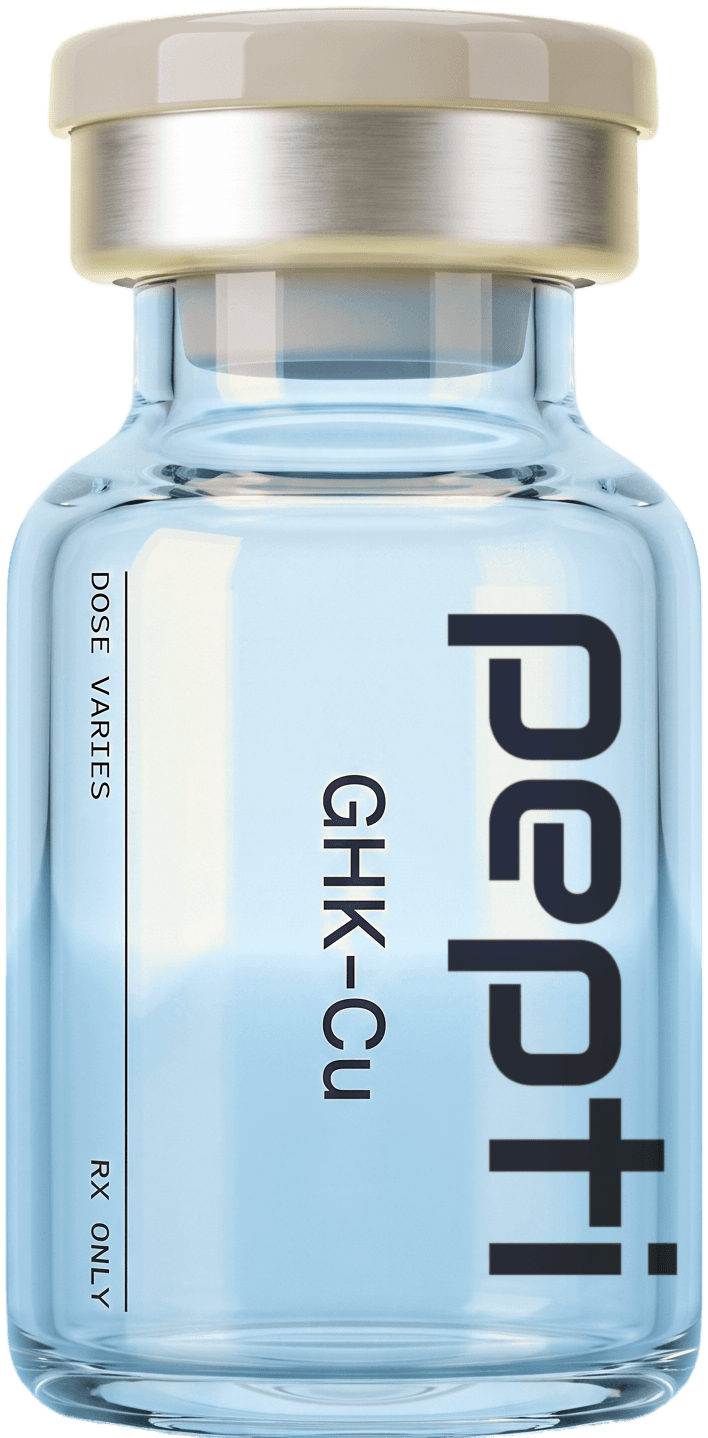
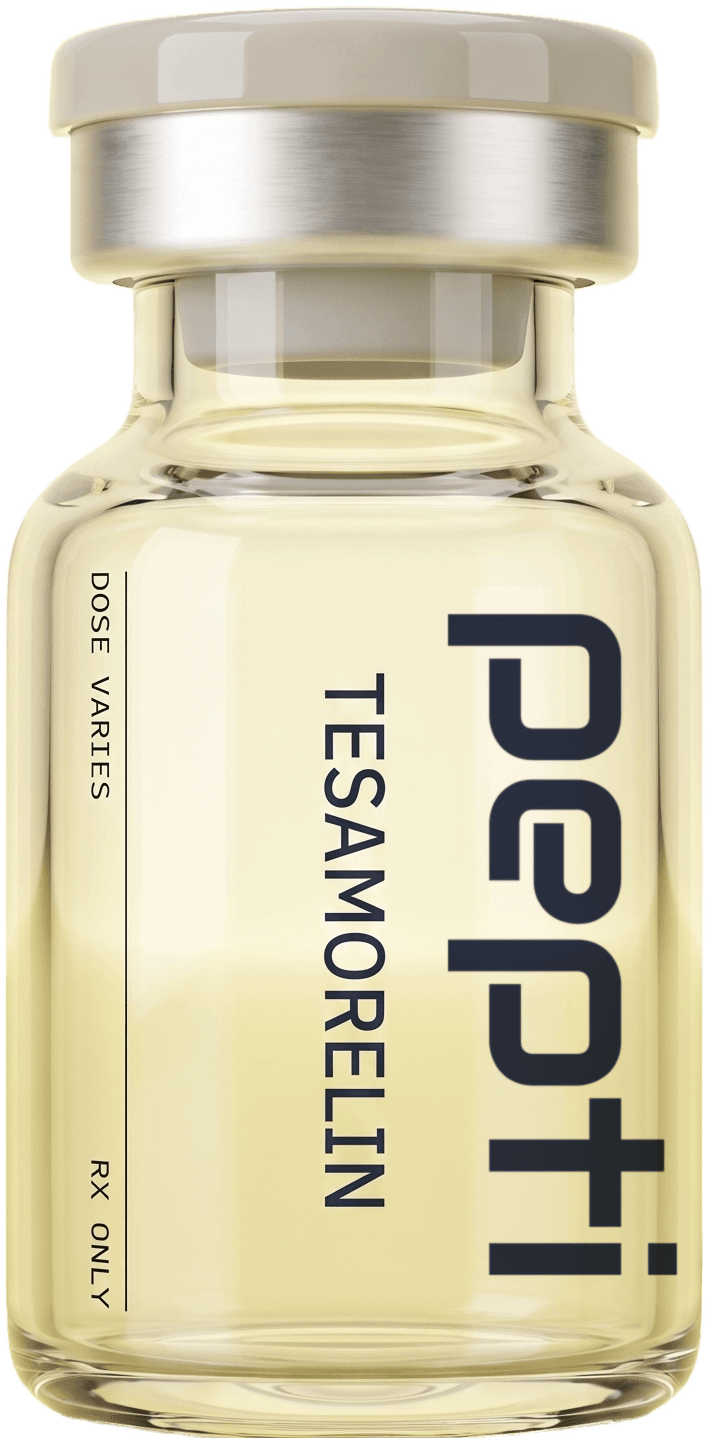
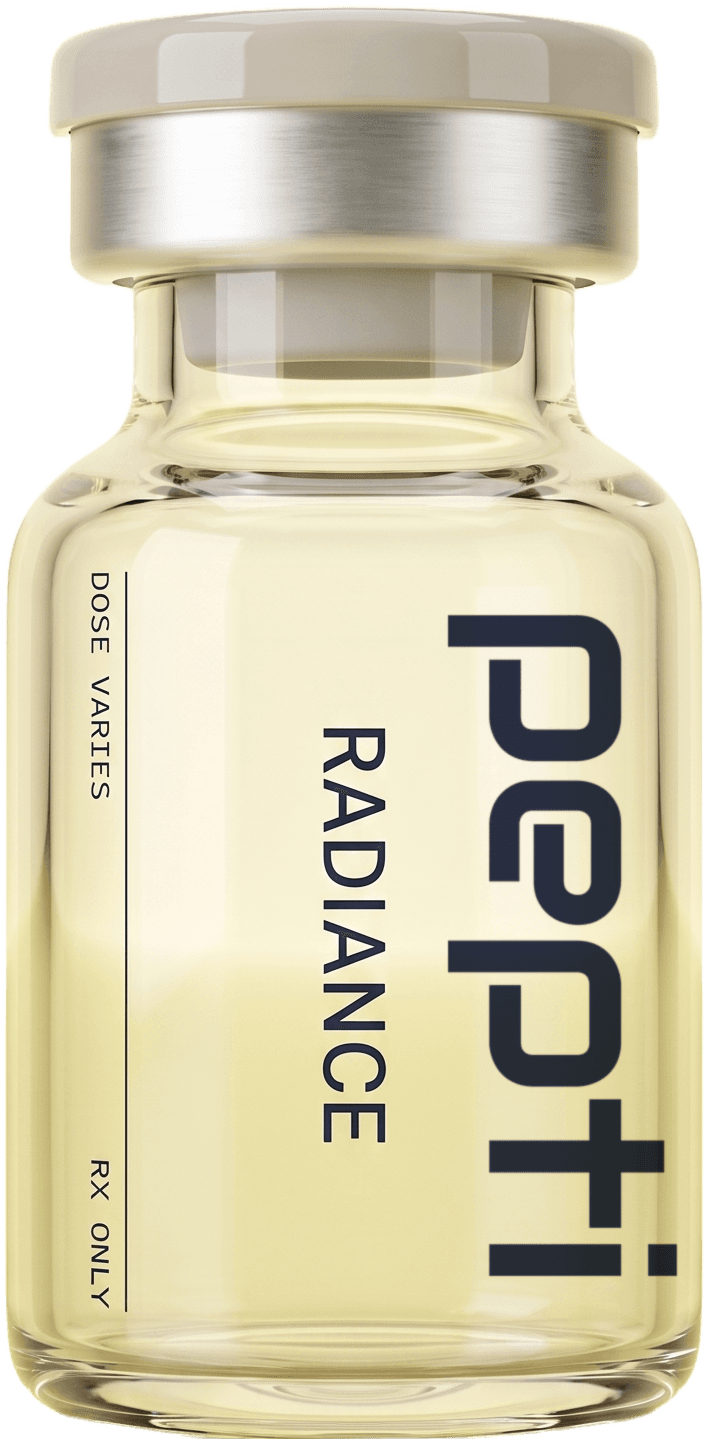
RADIANCE is two peptides in one vial, 50 mg GHK-Cu and 10 mg tesamorelin, and every benefit claimed for it is a benefit described for one of those two. The skin claims come from GHK-Cu, whose evidence is cell and animal work plus small human studies of topical creams and gels, with no trials of the injected form. The body-composition claims come from tesamorelin, which has randomised, placebo-controlled human trials for visceral fat, mostly in people with HIV, at 1 to 2 mg every day, while a RADIANCE dose contains 0.5 mg five days a week. The blend has never been studied as a blend, there are no randomised trials of RADIANCE, and compounded medications are not FDA approved.
For the full specification and the FDA history of each component, read what is the RADIANCE blend.
RADIANCE Blend Benefits
The short answer
| Claimed benefit | Component it comes from | What the evidence is | Strength of evidence |
|---|---|---|---|
| Collagen and skin matrix | GHK-Cu | Cell and animal (collagen synthesis, 1988, 1993; reviews 2015, 2018) | Preclinical; human data topical only |
| Skin firmness, fine lines, elasticity | GHK-Cu | Small human studies of topical creams on photoaged skin | Limited human data, topical only; no injectable trials |
| Wound and post-procedure skin repair | GHK-Cu | Topical gel on diabetic foot ulcers (1994); cream after laser resurfacing (2006) | Small human topical studies |
| Hair | GHK-Cu | Laboratory work on hair follicles and animal studies | Preclinical only; no human trial with hair as an endpoint |
| Visceral abdominal fat | Tesamorelin | Two phase 3 RCTs (2007, 2010), pooled 2010; a 12-month RCT outside HIV (2012) | Strong human RCTs, mostly HIV, at 1 to 2 mg daily |
| Liver fat | Tesamorelin | RCT in people with HIV and fatty liver disease (Lancet HIV, 2019) | Human RCT, one population |
| IGF-1 and triglycerides | Tesamorelin | Measured in the phase 3 trials | Human RCTs |
| Sleep | Tesamorelin's growth hormone pulse | Prescriber-described pattern | Not a trial outcome |
| Body weight | Tesamorelin | The approved label describes the effect on weight as neutral | Not a benefit claimed by the evidence |
| The two together doing more than one alone | The blend | None; never studied as a combination | No evidence either way |
Read the last two rows first. "RADIANCE benefits" is shorthand for two separate literatures, neither of which tested the two peptides together, and neither of which supports a weight-loss claim.
RADIANCE Blend Benefits
What is in RADIANCE
| Component | Per vial | Per 0.25 mL dose | What it is |
|---|---|---|---|
| GHK-Cu | 50 mg | 2.5 mg | Copper-binding tripeptide (glycine, histidine, lysine) found in human plasma |
| Tesamorelin | 10 mg | 0.5 mg | 44-amino-acid analogue of growth-hormone-releasing hormone, protected against breakdown by the enzyme DPP-4 |
By mass RADIANCE is mostly a GHK-Cu preparation, 50 of the 60 mg in the vial. The rationale prescribers give is that skin and tissue quality has two inputs that decline together with age: the local matrix of collagen and elastin, which GHK-Cu is described as acting on, and the growth hormone and IGF-1 axis, which tesamorelin acts on. That is a rationale, not a finding.
RADIANCE Blend Benefits
Benefit 1: Collagen and skin matrix (GHK-Cu)
What the research describes. A 1988 paper in FEBS Letters reported that GHK-Cu stimulated collagen synthesis in cultured human fibroblasts, and a 1993 Journal of Clinical Investigation paper reported more connective tissue in rat wound chambers treated with it. Reviews in BioMed Research International (2015) and the International Journal of Molecular Sciences (2018) describe increased synthesis of collagen, elastin, proteoglycans and glycosaminoglycans, and a shift in the balance between matrix metalloproteinases, which break tissue down, and their inhibitors. Gene-expression work reports effects across a large number of genes rather than one pathway. Collagen cross-linking and elastin formation are copper-dependent, which is the basis for most of this. GHK-Cu's plasma concentration is reported to decline with age.
Evidence type. Cell and animal.
The limit. The animal wound work injected the peptide locally into experimental wounds; none of it used the systemic subcutaneous route a RADIANCE injection uses.
RADIANCE Blend Benefits
Benefit 2: Skin firmness, fine lines and elasticity (GHK-Cu)
What was studied. Cosmetic studies of GHK-Cu creams in photoaged facial skin, summarised in the 2015 review, measured firmness, fine lines and elasticity in small groups.
What it means for RADIANCE. Those studies describe what a cream did on the skin it was applied to. They do not describe what an injection into the abdomen does to the face, and no study has tested that. Citing the topical studies as evidence for the injection mixes two different things. How the routes differ is in GHK-Cu topical vs injection, and GHK-Cu on its own is covered in GHK-Cu benefits.
Evidence type. Human, topical, small.
RADIANCE Blend Benefits
Benefit 3: Wound and post-procedure skin repair (GHK-Cu)
What was studied. A 1994 study in Wound Repair and Regeneration applied a GHK-Cu gel to diabetic foot ulcers and reported faster closure than the comparison dressing. A 2006 study in Archives of Facial Plastic Surgery applied a copper-tripeptide cream after CO2 laser resurfacing of facial skin and reported on re-epithelialisation.
Evidence type. Human, topical, small.
The limit. Both were applied directly to the wound or treated skin. Neither tested an injection, and neither is a reason to use RADIANCE for a wound, which is a medical problem to be assessed in its own right.
RADIANCE Blend Benefits
Benefit 4: Hair (GHK-Cu)
What the research describes. Laboratory work on hair follicles and animal studies.
The limit. There is no human trial of GHK-Cu, topical or injectable, with hair growth as an endpoint. Peptides for hair growth sets out the wider picture, including the causes of hair loss a physician looks at first.
Evidence type. Preclinical only.
RADIANCE Blend Benefits
Benefit 5: Visceral abdominal fat (tesamorelin)
This is the strongest evidence behind any part of RADIANCE.
What was studied. Two phase 3 randomised, double-blind, placebo-controlled trials in people with HIV and abdominal fat accumulation, published in the New England Journal of Medicine (2007) and the Journal of Acquired Immune Deficiency Syndromes (2010) and pooled in the Journal of Clinical Endocrinology and Metabolism (2010), measured visceral adipose tissue, the fat packed around the organs inside the abdomen, by CT scan at 26 weeks. A randomised trial in the Journal of Clinical Endocrinology and Metabolism (2012) studied abdominally obese adults without HIV who had reduced growth hormone secretion, over 12 months.
What was reported. Visceral fat fell on tesamorelin against a small rise on placebo in the phase 3 trials, with body weight essentially unchanged; the 2012 trial also reported reduced visceral fat.
| Study | Population | Dose | Endpoint |
|---|---|---|---|
| NEJM 2007 | People with HIV and abdominal fat accumulation | 2 mg daily | Visceral fat by CT at 26 weeks |
| JAIDS 2010 | Same population | The approved product, 1 or 2 mg daily | Visceral fat by CT at 26 weeks |
| JCEM 2012 | Abdominally obese adults without HIV, reduced growth hormone secretion | The approved product, 1 or 2 mg daily | Visceral fat over 12 months |
The limits. Almost every participant had HIV. Every trial used the approved product at 1 mg or 2 mg once daily, every day; RADIANCE delivers 0.5 mg five days a week, a fraction of the studied exposure, and nobody has measured what that fraction does. The trials measured visceral fat on CT, not appearance and not the scale. The trials' safety extensions reported visceral fat returning toward baseline within months of stopping. More is in tesamorelin benefits.
Evidence type. Human randomised controlled trials.
RADIANCE Blend Benefits
Benefit 6: Liver fat (tesamorelin)
What was studied. A randomised, double-blind trial in Lancet HIV (2019) in people with HIV and non-alcoholic fatty liver disease.
What was reported. A reduction in liver fat fraction over 12 months.
The limit. One population, the approved product at its studied dose, and liver fat is a medical finding that needs its own care. Nothing here makes RADIANCE a treatment for liver disease.
Evidence type. Human randomised controlled trial.
RADIANCE Blend Benefits
Benefit 7: IGF-1 and triglycerides (tesamorelin)
What the research describes. Tesamorelin binds the GHRH receptor on the pituitary and prompts a pulse of the body's own growth hormone, which raises IGF-1, the hormone the liver makes in response. The phase 3 trials reported a rise in IGF-1 and lower triglycerides. Because tesamorelin works through the pituitary, release stays under the body's own feedback control and pulsatile rather than flat. That is the difference between a secretagogue and injected growth hormone.
What it means for RADIANCE. A rise in IGF-1 is the one objective marker that the tesamorelin component is doing what it is described to do. It is a measurement, not a benefit in itself.
Evidence type. Human pharmacology and randomised trials.
RADIANCE Blend Benefits
Benefit 8: Sleep
Some people on tesamorelin products describe sleeping more deeply, which prescribers attribute to the growth hormone pulse. That is a pattern prescribers describe, not a trial outcome: sleep was not an endpoint in any tesamorelin trial in our sources. If sleep is the whole goal, peptides for sleep covers the options actually studied for it.
RADIANCE Blend Benefits
What RADIANCE is not
It is not a weight-loss medication. The approved tesamorelin label states that it is not indicated for weight-loss management because its effect on body weight is neutral. It is not a filler, a retinoid or a substitute for sun protection. It is not injected growth hormone. And skin was not an endpoint in any tesamorelin trial, so the skin rationale rests entirely on GHK-Cu's preclinical and topical research.
RADIANCE Blend Benefits
Benefit 9: Two peptides doing more than one
This is the benefit the blend exists to deliver, and it has the least evidence. No study has compared RADIANCE with GHK-Cu or tesamorelin alone. A blend is a convenience, one injection, one schedule and one refill, not a stronger version of its parts.
RADIANCE Blend Benefits
What the evidence does not establish
- That the two peptides together do more than either alone.
- Any effect of the blend, or of either component by injection, on the appearance of skin, wrinkles, hair or complexion in humans. No such trial has been run.
- An effect of RADIANCE on visceral fat. That data belongs to the approved tesamorelin product at 1 to 2 mg daily, not to 0.5 mg five days a week in a blend.
- An effect on body weight.
- An effect size or a human timeline for any benefit above.
- Long-term safety of the combination over years, or efficacy for any condition as an FDA-approved treatment.
Where the components stand with the FDA
Injectable GHK-Cu was placed in Category 2 of the FDA's interim 503A bulks list in 2023 and removed on 15 April 2026; the FDA has said it intends to consult the Pharmacy Compounding Advisory Committee on GHK-Cu before the end of February 2027. Tesamorelin was never on the 503A category list because it is the active ingredient of an approved product: an FDA approval on 10 November 2010 for the reduction of excess abdominal fat in adults with HIV-associated lipodystrophy, deemed a biologics licence on 23 March 2020. Compounded tesamorelin is not that product, and RADIANCE is not FDA approved for anything.
RADIANCE Blend Benefits
Side effects, in brief
| What is reported | What it means |
|---|---|
| Injection-site redness, mild soreness, occasional bruising | The most common reports; rotate sites |
| A faint blue-green mark at the site | Copper from GHK-Cu; clears on its own |
| Joint pain, muscle aches, swelling of the limbs, tingling | Tesamorelin label effects at 2 mg daily; message your care team |
| Higher blood sugar | Growth hormone reduces insulin sensitivity; the label records new-onset diabetes in 5% against 1% on placebo |
| Facial or throat swelling, widespread hives, breathing difficulty | Call 911 first, then tell your physician |
Who should not take RADIANCE, or should discuss it first: anyone with Wilson's disease or another copper-metabolism disorder; anyone with active cancer or a pituitary condition; anyone with diabetes or borderline glucose; anyone pregnant or breastfeeding; anyone already on another GHK-Cu or tesamorelin product. The full list is in RADIANCE blend side effects.
RADIANCE Blend Benefits
How Pepti prescribes RADIANCE
| Product | RADIANCE Blend |
| Vial | 5 mL: GHK-Cu 10 mg/mL + tesamorelin 2 mg/mL (50 mg / 10 mg per vial) |
| Typical directions | Inject 0.25 mL (25 units) subcutaneously once daily Monday through Friday |
| Per dose | 2.5 mg GHK-Cu and 0.5 mg tesamorelin |
| Doses per vial | 20, about four weeks |
| Price | $249/mo, all-in |
The price covers medication, physician review, refill management and shipping, with no membership fee. Pepti is cash-pay and does not bill insurance. Vials ship refrigerated with ice packs, ready to use, with sterile syringes and alcohol prep pads, one vial per 28-day fill. Your physician sets your directions after reviewing your intake, and they are printed on the vial. The units chart is in RADIANCE blend dosage.
If one goal dominates, a single component may be the more targeted prescription: GHK-Cu ($239/mo) for skin alone, or tesamorelin ($249/mo) for visceral fat alone. GLOW and KLOW pair GHK-Cu with repair peptides instead of a secretagogue, and the REVIVE blend pairs GHK-Cu and TB-500 with CJC-1295 and ipamorelin. Peptides for skin compares the skin-focused options.
RADIANCE Blend Benefits
Where to get RADIANCE prescribed
RADIANCE cannot be bought legitimately without a prescription. Sites selling it "for research use only" are not accountable for identity, purity, sterility or concentration. The prescription route:
- Complete a free online intake covering your history, medications and supplements, blood sugar, cancer history and what you want help with.
- A physician licensed in your state reviews it, usually within 24 hours.
- If it is appropriate, a PCAB-accredited, FDA-registered US 503A compounding pharmacy prepares it to that prescription. Lot test results are published at /quality/lab-results.
- It ships refrigerated with your directions printed on the vial.
- Your physician stays reachable for questions and side effects.
Bloodwork is not required for any Pepti treatment. If your physician wants labs for your care, they'll ask through your account.
References
What this is based on.
References
- Pickart L, Vasquez-Soltero JM, Margolina A. GHK Peptide as a Natural Modulator of Multiple Cellular Pathways in Skin Regeneration · Biomed Res Int (2015) · PMID 26236730
- Falutz J, Allas S, Blot K et al.. Metabolic effects of a growth hormone-releasing factor in patients with HIV · N Engl J Med (2007) · PMID 18057338
- Stanley TL, Feldpausch MN, Oh J et al.. Effect of tesamorelin on visceral fat and liver fat in HIV-infected patients with abdominal fat accumulation: a randomized clinical trial · JAMA (2014) · PMID 25038357
- Falutz J, Mamputu JC, Potvin D et al.. Effects of tesamorelin (TH9507), a growth hormone-releasing factor analog, in human immunodeficiency virus-infected patients with excess abdominal fat: a pooled analysis of two multicenter, double-blind placebo-controlled phase 3 trials with safety extension data · J Clin Endocrinol Metab (2010) · PMID 20554713
- Falutz J, Potvin D, Mamputu JC et al.. Effects of tesamorelin, a growth hormone-releasing factor, in HIV-infected patients with abdominal fat accumulation: a randomized placebo-controlled trial with a safety extension · J Acquir Immune Defic Syndr (2010) · PMID 20101189
- Stanley TL, Fourman LT, Feldpausch MN et al.. Effects of tesamorelin on non-alcoholic fatty liver disease in HIV: a randomised, double-blind, multicentre trial · Lancet HIV (2019) · PMID 31611038
- Makimura H, Feldpausch MN, Rope AM et al.. Metabolic effects of a growth hormone-releasing factor in obese subjects with reduced growth hormone secretion: a randomized controlled trial · J Clin Endocrinol Metab (2012) · PMID 23015655
- Dal J, Leisner MZ, Hermansen K et al.. Cancer Incidence in Patients With Acromegaly: A Cohort Study and Meta-Analysis of the Literature · J Clin Endocrinol Metab (2018) · PMID 29590449
- Johannsson G, Touraine P, Feldt-Rasmussen U et al.. Long-term Safety of Growth Hormone in Adults With Growth Hormone Deficiency: Overview of 15 809 GH-Treated Patients · J Clin Endocrinol Metab (2022) · PMID 35368070
- Zhou H, Sun L, Zhang S, Wang Y, Wang G. Effect of long-term growth hormone replacement on glucose metabolism in adults with growth hormone deficiency: a systematic review and meta-analysis · Pituitary (2021) · PMID 32888174
- Clemmons DR. Roles of insulin-like growth factor-I and growth hormone in mediating insulin resistance in acromegaly · Pituitary (2002) · PMID 12812310
- Clemmons DR. Consensus statement on the standardization and evaluation of growth hormone and insulin-like growth factor assays · Clinical Chemistry (2011) · PMID 21285256
Citations are provided for educational purposes. They do not constitute medical advice. Always discuss any peptide protocol with your prescribing physician.
Common questions
RADIANCE Blend Benefits, answered.
The benefits claimed are those described for its two components. GHK-Cu has cell and animal research on collagen and skin matrix and small topical human studies on skin and wounds. Tesamorelin has randomised human trials showing reduced visceral fat and liver fat, mostly in people with HIV, at higher daily doses than RADIANCE contains. The blend itself has never been studied.
No study has tested it. The skin case rests on GHK-Cu's cell, animal and topical cream research. No study has shown that injected GHK-Cu does for skin what the creams were reported to do, and skin was never an endpoint in the tesamorelin trials.
There is no human trial of GHK-Cu, topical or injectable, with hair growth as an endpoint. The hair rationale is laboratory and animal work on hair follicles.
It is not a weight-loss medication. The approved tesamorelin label describes its effect on body weight as neutral, and the trials measured visceral fat on CT, not weight.
Tesamorelin reduced visceral fat, the fat around the organs, in randomised trials of the approved product at 1 to 2 mg every day, mostly in people with HIV. RADIANCE delivers 0.5 mg five days a week, which has not been studied.
The tesamorelin component prompts your pituitary to release your own growth hormone, and IGF-1 rises as a result. GHK-Cu has no described effect on growth hormone. RADIANCE is not injected growth hormone.
There is no evidence that it is. RADIANCE adds tesamorelin for someone whose goals include body composition; for skin alone, the single peptide is the more targeted prescription and carries fewer considerations.
No. There are no randomised controlled trials of RADIANCE or of any GHK-Cu and tesamorelin combination. The evidence is per component.
No. Compounded medications are not FDA approved. An approved tesamorelin product exists for one indication, HIV-associated abdominal fat, at a different dose; RADIANCE is not that product.
There is no human timeline for the blend. The tesamorelin trials measured visceral fat at 26 weeks, at a higher daily dose. Nothing in the research sets a timeline for skin.
At Pepti, $249 a month, all-in, covering medication, physician review, refill management and shipping. The free assessment goes to a physician licensed in your state. A consultation does not guarantee a prescription.
Related answers
Keep reading.
- RADIANCE Blend (GHK-Cu / Tesamorelin): What It Is, Where to Get It Prescribed, and What It Costs
- RADIANCE Blend Dosage: GHK-Cu and Tesamorelin in Units, mL and mg
- RADIANCE Blend for Men: Visceral Fat, Hair, TRT, Glucose and Sport
- RADIANCE Blend for Women: Skin, Menopause, Pregnancy and What the Research Covers
- REVIVE Blend Benefits: What the Research Behind Each of Its Four Peptides Shows
Next step
See what a physician recommends for you.
A licensed physician in your state reviews your intake to see whether treatment fits your history. A consultation does not guarantee a prescription.