Weight Loss · Reference
Is Phentermine a GLP-1? Phentermine vs GLP-1 Medications Explained
No, phentermine is not a GLP-1. Phentermine is an oral appetite suppressant chemically related to amphetamine; it acts on the brain's norepinephrine signalling and is a federally controlled substance.
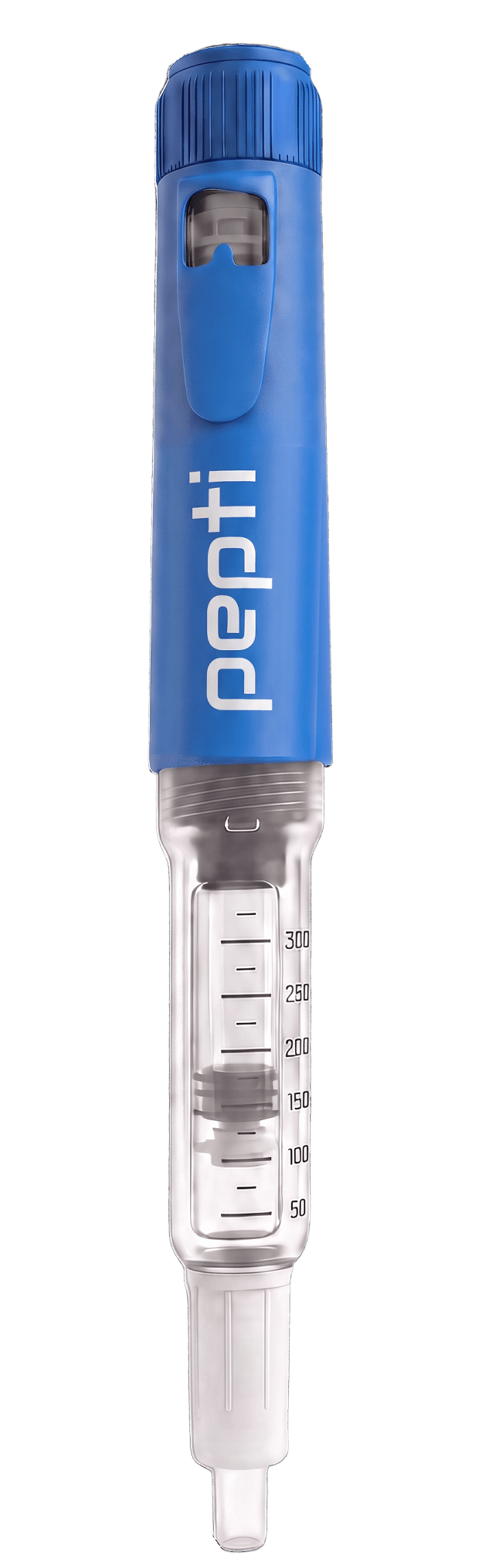
Treatments mentioned
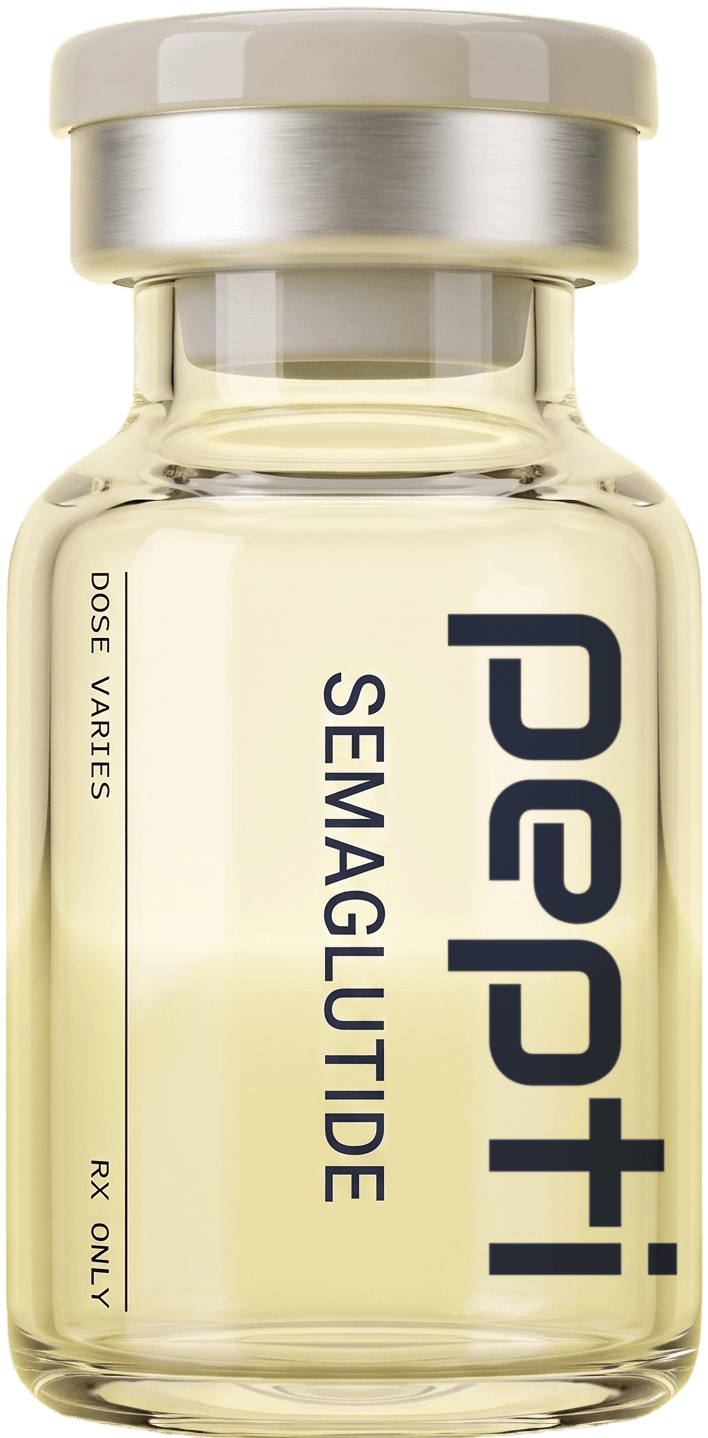
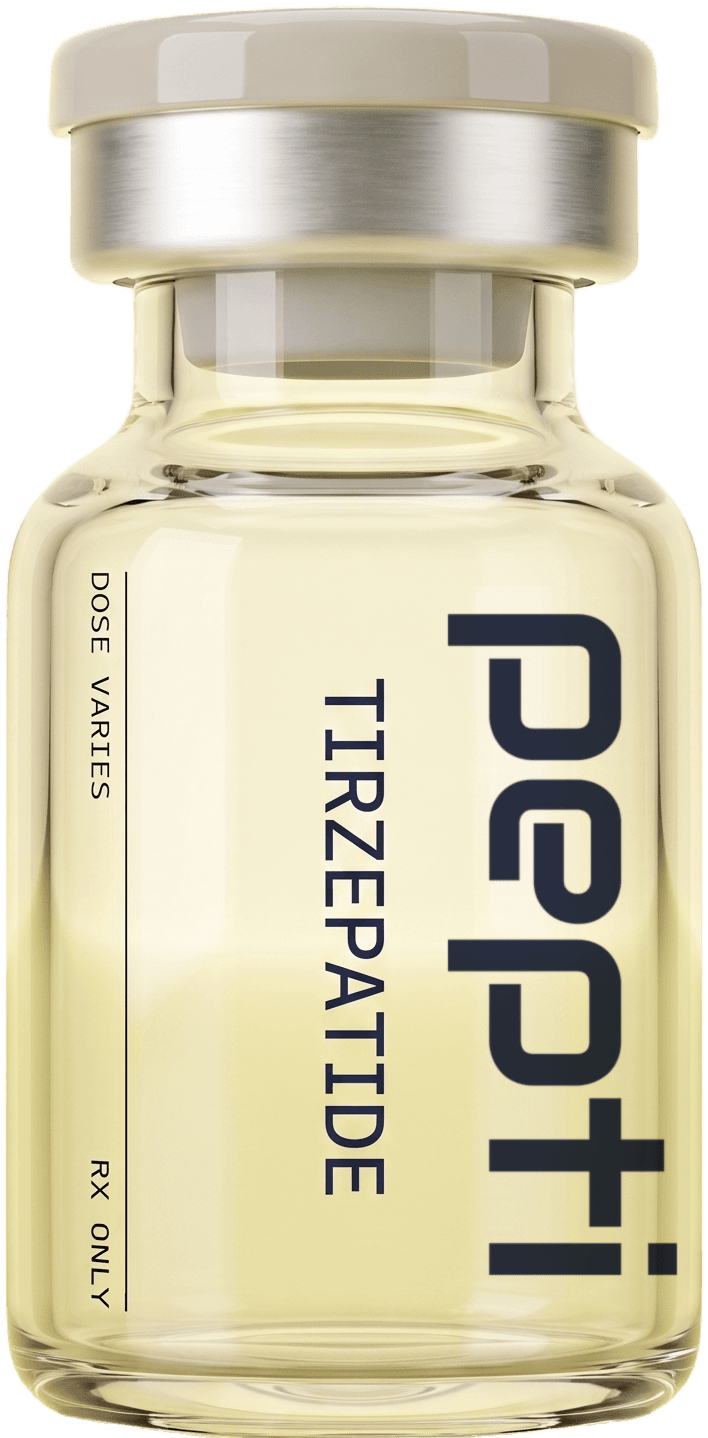
GLP-1 medications such as semaglutide and tirzepatide are injected analogues of a gut hormone that act on GLP-1 receptors in the pancreas, stomach and brain, and they are not stimulants. Both are used in weight management and both reduce appetite, but they work through unrelated pathways. Pepti prescribes compounded semaglutide and tirzepatide; it does not prescribe phentermine.
This page explains each on its own terms, sets them side by side, and covers how they differ on mechanism, evidence, side effects, regulation and how long each is used. Phentermine is described neutrally and generally here, because Pepti does not prescribe it.
Is Phentermine a GLP-1? Phentermine vs GLP-1 Medications Explained
The short answer
| Question | Phentermine | GLP-1 medications |
|---|---|---|
| Is it a GLP-1? | No | Yes (semaglutide); tirzepatide acts on GLP-1 and GIP receptors |
| What kind of molecule? | A small-molecule sympathomimetic amine | Peptide hormone analogues |
| How is it taken? | By mouth | Injection under the skin, once weekly |
| Stimulant? | Yes, stimulant-type | No |
| Controlled substance? | Yes, Schedule IV | No |
| Prescribed by Pepti? | No | Semaglutide from $99/mo; tirzepatide from $159/mo |
GLP-1 prices are "from" prices, because the vials are dose-specific and the price moves with the strength. Every Pepti price is all-in, covering medication, physician review, refill management and shipping, with no separate membership fee.
Is Phentermine a GLP-1? Phentermine vs GLP-1 Medications Explained
Phentermine on its own terms
What it is
Phentermine is a small-molecule drug, not a peptide. Chemically it belongs to the same family as amphetamine, and it is classed as a sympathomimetic amine: a drug that mimics or amplifies the body's "fight or flight" signalling. It has been used for decades as a prescription appetite suppressant and is taken as a tablet or capsule by mouth.
How it is described to work
Phentermine is described as increasing the release of norepinephrine, one of the brain's stimulating messengers, in the parts of the brain that regulate hunger. The result is reduced appetite, alongside the other effects of that signalling throughout the body, such as a faster heart rate. It does not act on GLP-1 receptors, does not slow stomach emptying the way a GLP-1 medication does, and does not change insulin release in the glucose-dependent way GLP-1 does.
How it is regulated
Phentermine is a Schedule IV controlled substance under federal law because of its stimulant properties and potential for misuse. Its approved labelling describes short-term use, as an adjunct to diet and exercise, and a combination product pairing it with topiramate is approved for longer-term use. Because it is controlled, its prescribing and dispensing are more tightly regulated than a GLP-1's. None of that is a judgement on it; it is simply a different category of medicine from the ones Pepti prescribes.
Is Phentermine a GLP-1? Phentermine vs GLP-1 Medications Explained
GLP-1 medications on their own terms
What they are
GLP-1, glucagon-like peptide-1, is a peptide hormone the small intestine releases after a meal. It is broken down by the enzyme DPP-4 within minutes, so GLP-1 medications are modified versions engineered to last for days. Semaglutide acts on the GLP-1 receptor alone, with a half-life of roughly a week. Tirzepatide is a 39-amino-acid peptide that activates both the GIP and GLP-1 receptors, with a half-life of about five days. Both are injected once a week. The background is in what is a GLP-1.
How they are described to work
Unlike most peptides on this site, the GLP-1 mechanisms are established in humans.
Action Where it happens What it means in practice Glucose-dependent insulin release Beta cells in the pancreas Insulin is released only when glucose is elevated Less glucagon Alpha cells in the pancreas The liver releases less stored glucose Slower gastric emptying The stomach Fullness lasts longer after a meal; also the source of nausea Appetite signalling Hypothalamus and brainstem Less hunger and fewer cravings A GLP-1 medication is not a stimulant and does not force the body to burn anything. It works through receptors the body already uses to register that a meal has been eaten.
What human data exists
A great deal. Semaglutide's weight-management evidence is the STEP programme, with SUSTAIN-6 and SELECT for cardiovascular outcomes; tirzepatide's is the SURMOUNT trials, with SURPASS in type 2 diabetes. These are large randomised trials with weight as a primary endpoint. Every one used the manufacturers' products alongside diet and activity changes; compounded preparations share the active ingredient, not the trials.
Is Phentermine a GLP-1? Phentermine vs GLP-1 Medications Explained
Head to head
| Phentermine | Semaglutide / tirzepatide | |
|---|---|---|
| Molecule type | Small molecule, amphetamine family | Peptide hormone analogues |
| Target | Norepinephrine signalling in the brain | GLP-1 receptor (semaglutide); GLP-1 and GIP receptors (tirzepatide) |
| Acts on appetite? | Yes, through stimulant-type signalling | Yes, through gut-hormone receptors |
| Slows gastric emptying? | Not its mechanism | Yes |
| Glucose-dependent insulin release? | No | Yes |
| Route | Oral | Subcutaneous injection |
| Schedule | Daily | Once weekly |
| Controlled substance | Schedule IV | No |
| Typical length of use on the label | Short term (the combination with topiramate, longer) | Long term, as ongoing treatment |
| Characteristic side effects | Faster heart rate, raised blood pressure, trouble sleeping, dry mouth, restlessness | Nausea, diarrhoea, vomiting, constipation |
| Prescribed by Pepti | No | Yes, compounded |
The real difference is the pathway
The question "is phentermine a GLP-1?" usually comes from the fact that both reduce appetite. They get there in unrelated ways. Phentermine turns up a stimulating signal in the brain. A GLP-1 medication mimics a hormone that normally rises after a meal, telling the brain and gut that food has arrived. That difference shows up in everything else: the side effects (heart rate and sleep for one, the stomach for the other), the regulation (a controlled substance versus a hormone analogue), and the length of use each label describes.
Is Phentermine a GLP-1? Phentermine vs GLP-1 Medications Explained
Why the regulation differs
| Question | Phentermine | GLP-1 medications |
|---|---|---|
| Why is it regulated the way it is? | Stimulant properties and potential for misuse | Prescription medicines, not controlled substances |
| Compounded at Pepti? | No | Yes, patient-specific under 503A |
| FDA status of the active ingredient | Approved | Approved |
| Pending FDA action on this page | None covered here | 30 April 2026 proposal to exclude semaglutide, tirzepatide and liraglutide from the 503B bulks list |
Semaglutide and tirzepatide are FDA-approved active ingredients, sold by their manufacturers as approved products. Compounded semaglutide and tirzepatide are different products: the same active ingredient, prepared by a state-licensed pharmacy for an identified patient on a physician's prescription, and not FDA approved. Shortage-based compounding of both ended in 2025; what remains is the ordinary 503A pathway, where the prescriber documents a clinical reason for that patient. The April 2026 proposal concerns 503B outsourcing facilities and does not by itself change that framework. Are peptides FDA approved explains the difference between not approved and not legal.
Is Phentermine a GLP-1? Phentermine vs GLP-1 Medications Explained
Can phentermine and a GLP-1 be taken together?
Pepti does not prescribe phentermine, so this page does not take a position on combining them. What matters for anyone already taking phentermine and asking about a GLP-1:
- Put it on the intake. Every prescription medication, including phentermine and its dose, belongs on the intake so the reviewing physician sees the whole picture.
- Tell each prescriber about the other. A combination is a decision for the prescribers involved, with your full medication list in front of them.
- Never add or stop anything on your own. That applies to both medications.
Combining two GLP-1 medications is a different matter, and the answer is no: semaglutide and tirzepatide both act at the GLP-1 receptor and are never taken together.
Is Phentermine a GLP-1? Phentermine vs GLP-1 Medications Explained
Side effects
Phentermine. As a stimulant-type drug, its labelled effects follow from that signalling: faster heart rate, raised blood pressure, restlessness, trouble sleeping, dry mouth and constipation among them. Its label lists situations where it is not used, including cardiovascular disease, uncontrolled high blood pressure, an overactive thyroid, glaucoma, a history of drug misuse, recent use of an MAO inhibitor, and pregnancy or breastfeeding. Anyone taking it should follow the directions of the prescriber who manages it.
Semaglutide and tirzepatide. The most common effects are gastrointestinal: nausea, diarrhoea, vomiting, constipation and abdominal pain, most often in the days after a dose increase. Less common but important: acute pancreatitis, gallbladder disease, and dehydration that can affect the kidneys. Low blood sugar is uncommon on a GLP-1 alone and more likely with insulin or a sulfonylurea. Slower gastric emptying can change how oral medications are absorbed, and tirzepatide can make oral contraceptives less reliable for four weeks after starting and after each dose increase. The approved labels carry a warning about thyroid C-cell tumours seen in rodents. More is in GLP-1 side effects.
Stop and contact your physician for severe or persistent abdominal pain, persistent vomiting, or any reaction that is severe, spreading or involves difficulty breathing. For chest pain, trouble breathing or swelling of the face or throat, call 911.
Is Phentermine a GLP-1? Phentermine vs GLP-1 Medications Explained
Who should not take a GLP-1, or should discuss it first
| Situation | Why |
|---|---|
| Personal or family history of medullary thyroid carcinoma or MEN 2 | A contraindication for the class |
| History of pancreatitis | Needs careful discussion |
| Pregnancy, planning pregnancy, or breastfeeding | Not used |
| Type 1 diabetes | Not a GLP-1 indication |
| Taking insulin or a sulfonylurea | Raises the risk of low blood sugar |
| Taking any other weight medication, including phentermine | List it on the intake so it can be reviewed |
Is Phentermine a GLP-1? Phentermine vs GLP-1 Medications Explained
GLP-1 dosing at Pepti
Both GLP-1 medications come as compounded dose-specific vials, injected under the skin once a week. Each vial holds four weekly doses, which is why refills run every 28 days, one vial per fill.
| Medication | Starting strength vial | How dosing works |
|---|---|---|
| Semaglutide | 1 mg in 1 mL (1 mg/mL), drawn at 0.25 mL (25 units) for the 0.25 mg weekly dose | Each strength is a separate vial; the draw volume differs between strengths |
| Tirzepatide | 10 mg in 2 mL (5 mg/mL), with glycine, for the 2.5 mg weekly dose | Every strength is drawn at the same 0.50 mL (50 units) |
Your physician sets your strength and directions after reviewing your intake, and they are printed on the vial. Never carry a unit count over from an earlier strength. Both ship refrigerated with ice packs, sterile syringes and alcohol prep pads. Pepti's GLP-1 vials contain no B12. The full charts are in semaglutide dosing chart and tirzepatide dosing chart.
Is Phentermine a GLP-1? Phentermine vs GLP-1 Medications Explained
What the evidence shows, honestly
Phentermine and the GLP-1 medications are both established, approved medicines with human data behind them, which makes this a different comparison from most on this site. What is established: they act through unrelated pathways, they carry different side-effect profiles, and they are regulated differently. Semaglutide and tirzepatide have large randomised trials with weight as the primary endpoint, cardiovascular outcome data for semaglutide, and withdrawal trials (STEP 4 and SURMOUNT-4) showing most of the weight returning after people switched to placebo, which is why GLP-1 treatment is planned as ongoing. Those trials used the manufacturers' products, not compounded preparations. Any page calling phentermine a GLP-1, or a GLP-1 a stimulant, has the pharmacology wrong. The wider set of options is in best peptides for weight loss.
Is Phentermine a GLP-1? Phentermine vs GLP-1 Medications Explained
Where to get a GLP-1 prescribed
GLP-1 medications cannot be bought legitimately without a prescription. Vials sold "for research use only" are not accountable for identity, purity, sterility or concentration. The prescription route:
- Complete a free online intake covering your history, every medication you take and what you want help with.
- A physician licensed in your state reviews it, usually within 24 hours.
- If it is appropriate, a PCAB-accredited, FDA-registered US 503A pharmacy compounds it to that prescription. Lot test results are published at /quality/lab-results.
- It ships refrigerated with ice packs, sterile syringes and alcohol prep pads, with your directions printed on the vial.
- Your physician stays reachable for questions and dose changes, and refills run every 28 days, one vial per fill.
Pepti is cash-pay and does not bill insurance. Step by step: how to get semaglutide prescribed online and how to get tirzepatide prescribed online.
References
What this is based on.
References
- Wilding JPH, Batterham RL, Calanna S, et al.. Once-Weekly Semaglutide in Adults with Overweight or Obesity (STEP 1) · New England Journal of Medicine (2021) · PMID 33567185
- Lincoff AM, Brown-Frandsen K, Colhoun HM, et al.. Semaglutide and Cardiovascular Outcomes in Obesity without Diabetes (SELECT) · New England Journal of Medicine (2023) · PMID 37952131
- Wadden TA, Bailey TS, Billings LK, et al.. Effect of subcutaneous semaglutide vs placebo as an adjunct to intensive behavioral therapy on body weight in adults with overweight or obesity (STEP 3) · JAMA (2021) · PMID 33625476
- Rubino D, Abrahamsson N, Davies M, et al.. Effect of Continued Weekly Subcutaneous Semaglutide vs Placebo on Weight Loss Maintenance in Adults With Overweight or Obesity: The STEP 4 Randomized Clinical Trial · JAMA (2021) · PMID 33755728
- Marso SP, Bain SC, Consoli A, et al.. Semaglutide and Cardiovascular Outcomes in Patients with Type 2 Diabetes (SUSTAIN-6) · New England Journal of Medicine (2016) · PMID 27633186
- Davies M, Færch L, Jeppesen OK, et al.. Semaglutide 2.4 mg once a week in adults with overweight or obesity, and type 2 diabetes (STEP 2): a randomised, double-blind, double-dummy, placebo-controlled, phase 3 trial · The Lancet (2021) · PMID 33667417
- Garvey WT, Batterham RL, Bhatta M, et al.. Two-year effects of semaglutide in adults with overweight or obesity: the STEP 5 trial · Nature Medicine (2022) · PMID 36216945
- Rubino DM, Greenway FL, Khalid U, et al.. Effect of Weekly Subcutaneous Semaglutide vs Daily Liraglutide on Body Weight in Adults With Overweight or Obesity Without Diabetes: The STEP 8 Randomized Clinical Trial · JAMA (2022) · PMID 35015037
- Aronne LJ, Horn DB, le Roux CW, et al.. Tirzepatide as Compared with Semaglutide for the Treatment of Obesity (SURMOUNT-5) · New England Journal of Medicine (2025) · PMID 40353578
- Sanyal AJ, Newsome PN, Kliers I, et al.. Phase 3 Trial of Semaglutide in Metabolic Dysfunction-Associated Steatohepatitis (ESSENCE) · New England Journal of Medicine (2025) · PMID 40305708
- Wilding JPH, Batterham RL, Davies M, Van Gaal LF, Kandler K et al.. Weight regain and cardiometabolic effects after withdrawal of semaglutide: The STEP 1 trial extension · Diabetes Obes Metab (2022) · PMID 35441470
- Batsis JA, Gavras A, Gross DC, Cheever CR, Da Silva BR et al.. Effect of Incretin-Based and Nonpharmacologic Weight Loss on Body Composition: A Systematic Review · Ann Intern Med (2026) · PMID 41996180
Citations are provided for educational purposes. They do not constitute medical advice. Always discuss any peptide protocol with your prescribing physician.
Common questions
Is Phentermine a GLP-1? Phentermine vs GLP-1 Medications Explained, answered.
No. Phentermine is an oral stimulant-type appetite suppressant in the amphetamine family that acts on norepinephrine signalling in the brain. GLP-1 medications are injected analogues of a gut hormone that act on GLP-1 receptors.
Phentermine is a small-molecule stimulant taken by mouth, a Schedule IV controlled substance, labelled for short-term use. Semaglutide is a weekly injected GLP-1 receptor agonist that reduces appetite and slows stomach emptying through gut-hormone receptors, and it is not a stimulant.
Yes. It is a sympathomimetic amine, chemically related to amphetamine, which is why it is a controlled substance and why faster heart rate, raised blood pressure and trouble sleeping are among its labelled effects.
No. Semaglutide works through the GLP-1 receptor, the same receptor the body's own post-meal hormone uses. Its common side effects are gastrointestinal rather than stimulant-type.
Tirzepatide is a GLP-1 and GIP receptor agonist, a peptide injected once weekly. It has nothing in common with phentermine's mechanism.
Pepti does not prescribe phentermine, so it does not advise on combining them. If you take phentermine, list it on your intake and tell every prescriber involved. Never add or stop a medication on your own.
No. Pepti prescribes compounded semaglutide, from $99 a month, and compounded tirzepatide, from $159 a month.
Because of its stimulant properties and potential for misuse. GLP-1 medications are hormone analogues without that profile, so they are ordinary prescription medicines rather than controlled substances.
No. The active ingredients are approved, but compounded preparations are made by a state-licensed pharmacy for an individual prescription and are not FDA approved.
They are planned as ongoing treatment. The withdrawal trials for both reported most of the weight returning after people switched to placebo, so treatment runs on 28-day refills rather than as a short course.
No. Bloodwork is not required for any Pepti treatment. If your physician wants labs for your care, they'll ask through your account. The free assessment goes to a physician licensed in your state. A consultation does not guarantee a prescription.
Related answers
Keep reading.
- What Is a GLP-1? Meaning, How GLP-1 Medications Work, and the List by Generic Name
- Traveling With a GLP-1: Flights, TSA, Time Zones and Dose Day on Semaglutide or Tirzepatide
- What to Eat on a GLP-1: Practical Eating Guidance for Semaglutide and Tirzepatide
- What to Look for in an Online Telehealth Provider for GLP-1s
- PT-141 vs Oxytocin: Desire vs Closeness, Evidence, Dosing, Side Effects and Cost
Next step
See what a physician recommends for you.
A licensed physician in your state reviews your intake to see whether treatment fits your history. A consultation does not guarantee a prescription.