Intimacy · Reference
PT-141 vs Oxytocin: Desire vs Closeness, Evidence, Dosing, Side Effects and Cost
This page explains each on its own terms, puts them side by side, covers what the research does and does not show, where each stands with the FDA, how each is dosed, what each costs at Pepti, and who tends to suit which.
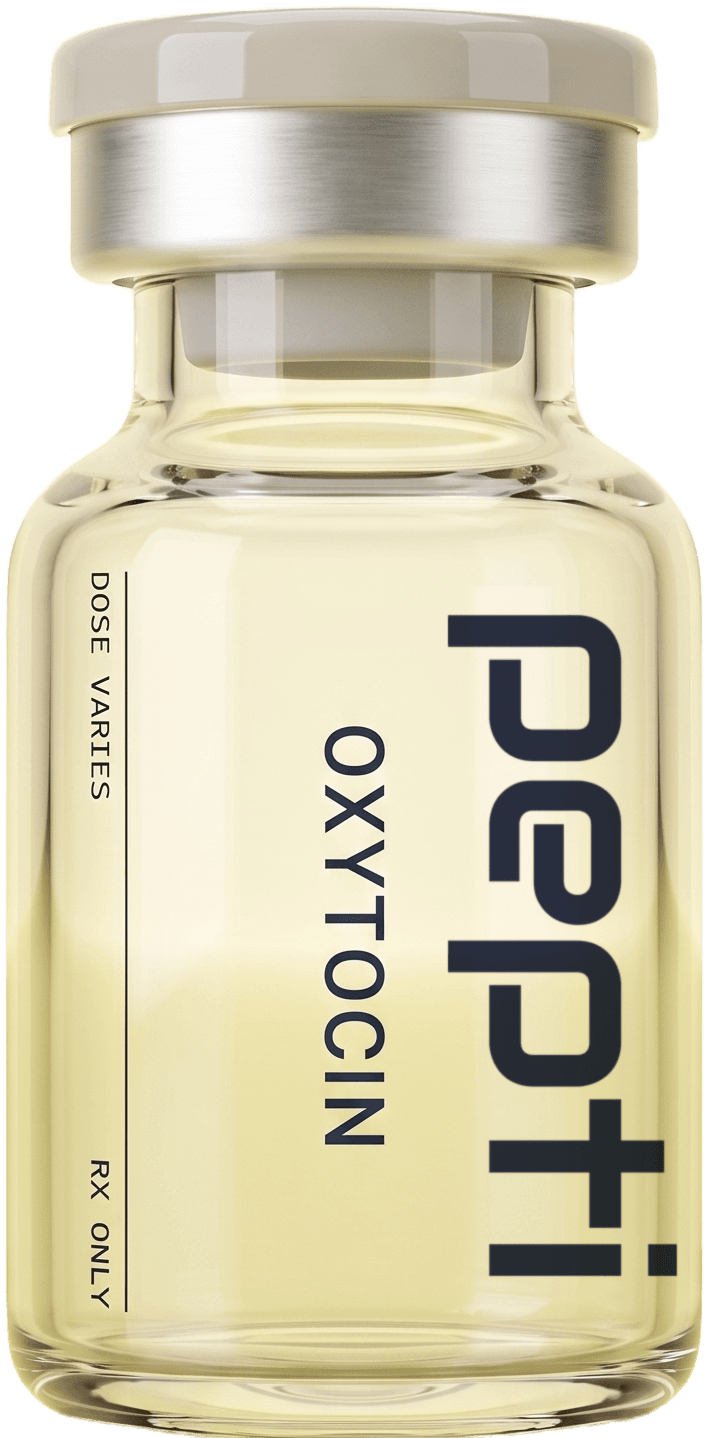
Treatments mentioned
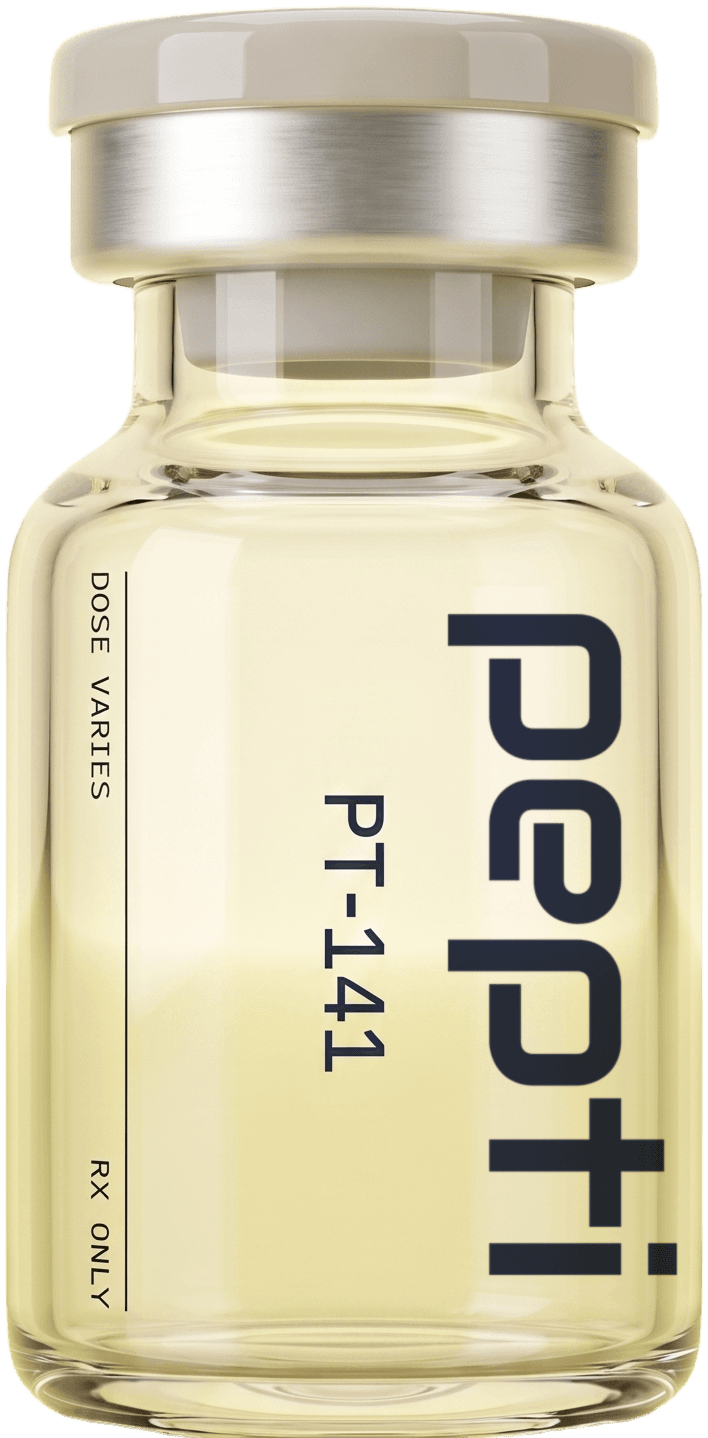
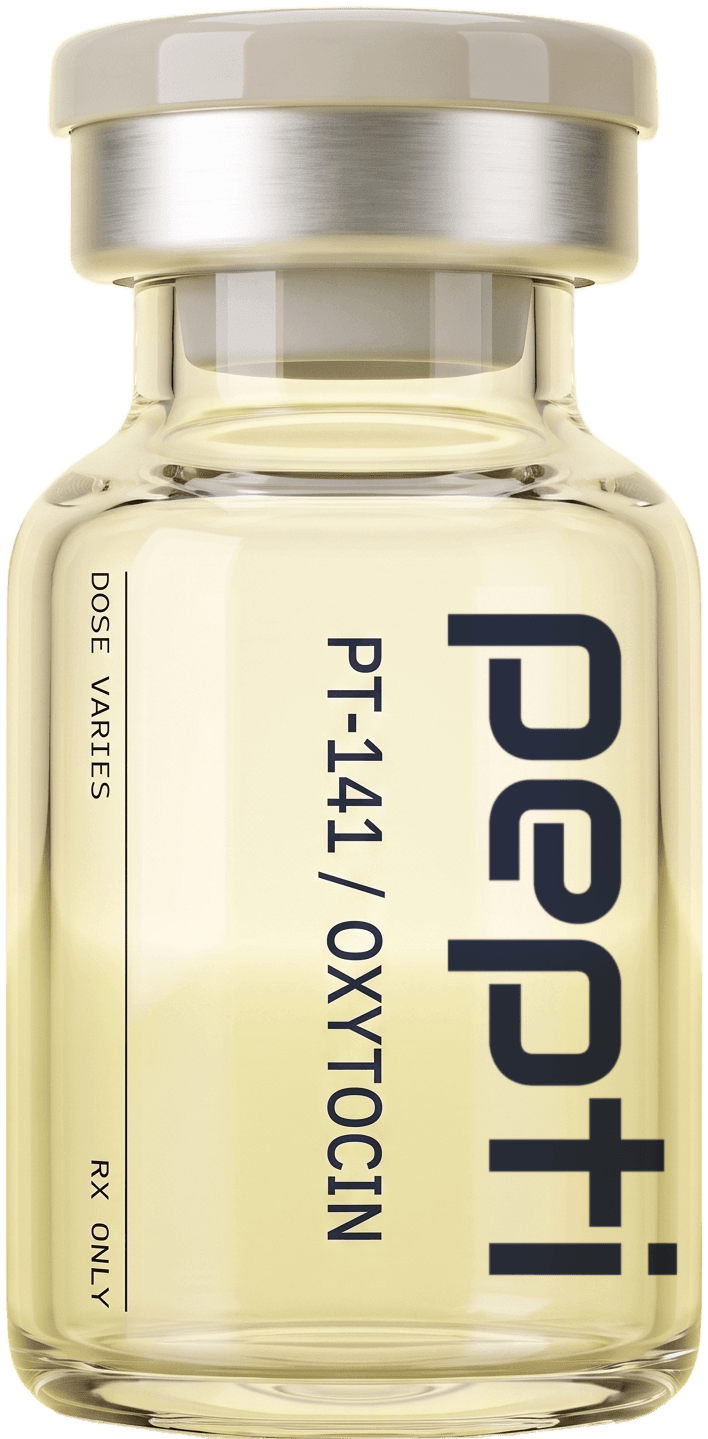
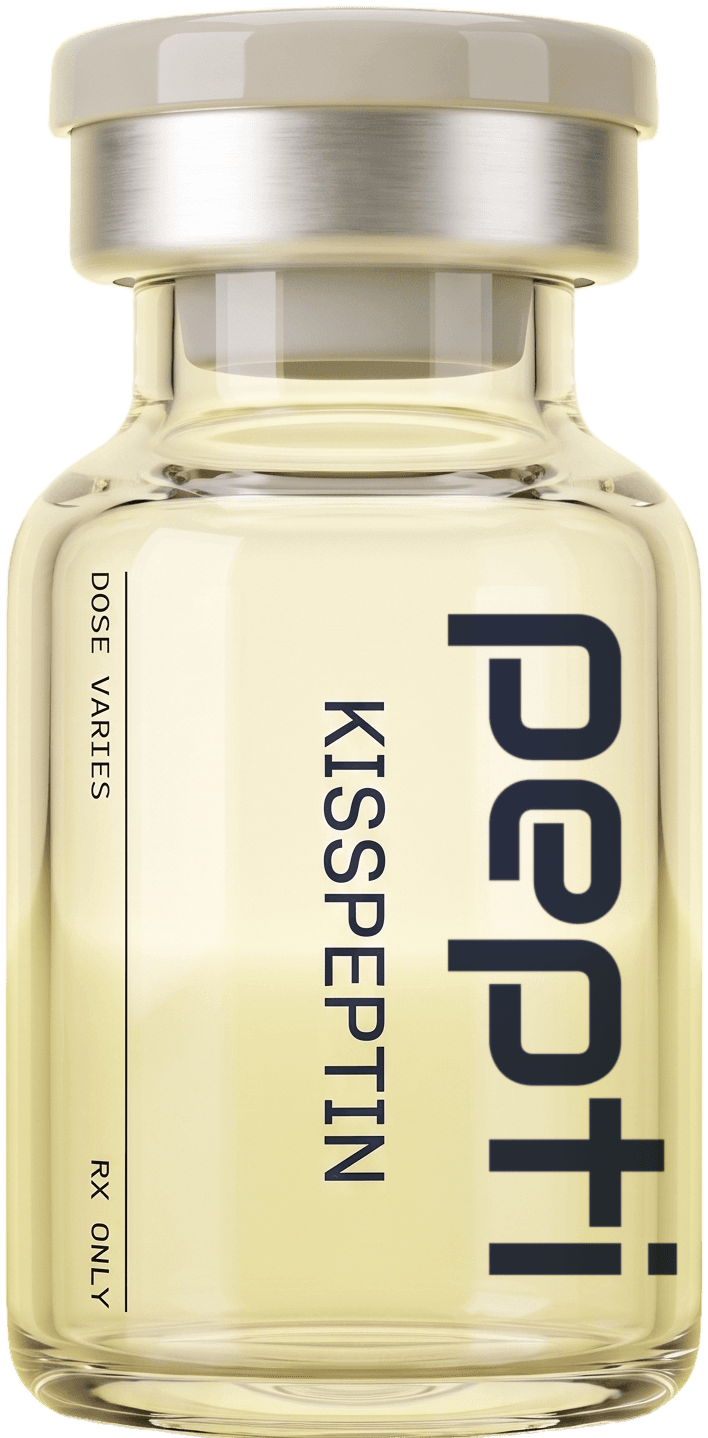
PT-141 and oxytocin are both prescribed around intimacy, but they act on different parts of it: PT-141 (bremelanotide) is a melanocortin-receptor agonist aimed at desire and arousal, while oxytocin is the body's own bonding hormone, studied for orgasm intensity and closeness afterwards rather than desire. PT-141 has the stronger evidence, two positive phase 3 trials in premenopausal women, and the more noticeable side effects, especially nausea and a brief rise in blood pressure. Oxytocin's intimacy trials are small, intranasal and mixed, and it is gentler. Both active ingredients are in FDA-approved drugs for other uses, Pepti also supplies them together in one vial, and none of the compounded products is FDA approved.
This page explains each on its own terms, puts them side by side, covers what the research does and does not show, where each stands with the FDA, how each is dosed, what each costs at Pepti, and who tends to suit which.
PT-141 vs Oxytocin
The short answer
| If your main concern is | The usual prescription | What is in it | Price |
|---|---|---|---|
| Low desire or difficulty getting started | PT-141 | 10 mg PT-141 in a 5 mL vial | $259/mo |
| Closeness, orgasm intensity, the experience itself | Oxytocin | 10 mg oxytocin in a 5 mL vial | $239/mo |
| Both ends of the sequence in one injection | PT-141 + Oxytocin | 10 mg PT-141 and 5 mg oxytocin in a 5 mL vial | $259/mo |
| Hormones may be the cause | Kisspeptin, after a conversation about testing | 10 mg kisspeptin-10 in a 5 mL vial | $229/mo |
Every figure is an all-in monthly price covering the medication, physician review, refill management and shipping. There is no separate membership fee, and Pepti is cash-pay and does not bill insurance. Current pricing always lives on each product page.
PT-141 vs Oxytocin
PT-141 on its own terms
What it is
PT-141 is bremelanotide, a seven-amino-acid cyclic peptide. It came out of work on Melanotan II, a synthetic alpha-MSH analogue studied for tanning whose subjects reported unexpected effects on arousal. "PT-141" was its development code. Bremelanotide is the active ingredient of an FDA-approved drug, approved on 21 June 2019 for premenopausal women with acquired, generalized hypoactive sexual desire disorder. It acts in the brain, not on blood flow, so it is not a PDE5 inhibitor. The full reference is at what is PT-141.
How PT-141 is described to work
- Melanocortin receptors. Bremelanotide activates several melanocortin receptors, with MC1R and MC4R the relevant two at therapeutic doses.
- Dopamine in the hypothalamus. Animal studies suggest it activates MC4 receptors in the medial preoptic area of the hypothalamus, increasing dopamine release in the desire circuit (CNS Spectrums, 2022). The approved label states the mechanism is unknown; this is the leading explanation.
- Pigment. MC1R is the receptor that drives skin pigmentation, which is why focal darkening is a described side effect.
What human data exists for PT-141
This is the strongest evidence in the category. The two RECONNECT phase 3 trials (Obstetrics and Gynecology, 2019) randomized 1,267 premenopausal women with acquired, generalized hypoactive sexual desire disorder to 1.75 mg as needed or placebo for 24 weeks, and both met both co-primary endpoints, on desire and on distress. The effects were statistically robust and modest in absolute size. A 52-week extension in 684 women found no new safety signals. In men, two 2004 studies reported measurable erectile responses, but the male programme never led to approval. More is in PT-141 benefits.
PT-141 vs Oxytocin
Oxytocin on its own terms
What it is
Oxytocin is a nine-amino-acid hormone made in the hypothalamus and released from the posterior pituitary. It drives contractions in labour, triggers milk release in breastfeeding, and rises during sexual activity, peaking around orgasm in both sexes (Journal of Clinical Endocrinology and Metabolism, 1987). Synthetic oxytocin has been an FDA-approved hospital drug since 1980, for obstetric uses only. The "bonding hormone" label comes largely from prairie vole research and overstates what is known in people. The full reference is at what is oxytocin.
How oxytocin is described to work
- The peripheral receptor. Oxytocin binds one receptor on uterine muscle, the breast and tissues of the reproductive tract in both sexes, causing smooth-muscle contraction, including the rhythmic contractions of orgasm.
- Central signalling. In animals, oxytocin in the amygdala and reward regions is described as increasing the reward value of social contact.
- The delivery problem. Oxytocin has a half-life of a few minutes and crosses the blood-brain barrier poorly. A 2016 paper in Biological Psychiatry argued that little of even large intranasal doses reaches the brain, and that applies at least as strongly to an injection.
What human data exists for oxytocin
There are randomized trials, all intranasal, pointing in more than one direction:
Study Who What was reported Hormones and Behavior, 2014 29 healthy couples, crossover No change in drive, arousal, erection or lubrication; small to moderate effects on orgasm intensity and contentment afterwards Psychoneuroendocrinology, 2008 10 healthy men No change in sexual behaviour on the scale used Fertility and Sterility, 2015 30 women with sexual dysfunction, crossover Both oxytocin and placebo improved substantially; no difference between them There are no randomized trials of subcutaneous oxytocin for intimacy. The strongest negative, the 2015 trial, was in the population with an actual diagnosis.
PT-141 vs Oxytocin
Head to head
| PT-141 | Oxytocin | |
|---|---|---|
| What it is | Bremelanotide, a synthetic melanocortin agonist | A natural nine-amino-acid hormone |
| Part of intimacy it is aimed at | Desire and arousal | Orgasm intensity and closeness afterwards |
| Where it acts | Melanocortin receptors in the brain | Oxytocin receptors, mainly peripheral |
| Effect on desire in trials | Positive in two phase 3 trials in women | None in the couples study; no better than placebo in women with dysfunction |
| Human trial route | Subcutaneous autoinjector | Intranasal |
| Approved product | Bremelanotide, for hypoactive sexual desire disorder in premenopausal women (2019) | Oxytocin injection, for labour and postpartum bleeding (1980) |
| Characteristic side effects | Nausea, flushing, headache, a brief blood-pressure rise, skin darkening | Injection-site reactions; occasional brief flushing or headache |
| Vial at Pepti | 5 mL, 2 mg/mL (10 mg) | 5 mL, 2 mg/mL (10 mg) |
| Typical directions | 0.50 mL (50 units) 2 to 4 hours before sexual activity, no more than 4 doses a month | 0.18 mL (18 units) once daily |
| Per dose | 1 mg | 0.36 mg |
| Doses per vial | 10 | Just over 27, about 4 weeks |
| Formats | Vial or pre-filled pepti Pen | Vial only |
| Price at Pepti | $259 a month | $239 a month |
Desire versus the experience
The most useful thing to know is that these two do not compete for the same job. In the one couples study that found any oxytocin effect, it was on how intercourse felt and how people felt afterwards, not on wanting it or getting aroused. PT-141's trials measured desire and the distress that comes with low desire, and found effects there. If low desire is the complaint, oxytocin's own evidence says it is unlikely to be the answer. If desire is fine and the interest is in the experience and connection, PT-141's side effects buy something you may not need.
PT-141 vs Oxytocin
The combined vial
Prescribers frequently pair them, which is why PT-141 + Oxytocin exists: one injection before intimacy meant to cover desire at one end and the orgasmic phase and closeness at the other. That is a rationale, not a finding. No study has tested whether oxytocin adds anything to PT-141, and the combination has never been trialed in humans or animals.
| PT-141 + Oxytocin | |
|---|---|
| Vial | 5 mL: PT-141 2 mg/mL + oxytocin 1 mg/mL (10 mg PT-141 / 5 mg oxytocin) |
| Typical printed directions | Inject 0.10 mL (10 units) subcutaneously 2 to 4 hours prior to sexual activity. No more than 8 doses per month |
| Per dose (math only) | 0.2 mg PT-141 and 0.1 mg oxytocin, in fixed proportion |
| Doses per vial | 50 |
| Price | $259 a month |
The proportions cannot be adjusted per component, and its label is different from both single vials. More is in what is PT-141 + Oxytocin.
PT-141 vs Oxytocin
Who suits which
PT-141
PT-141 is the more direct choice when low desire, or difficulty getting started, is the main problem. It has the trial evidence, at least in premenopausal women. It is used on occasions, not daily, and it suits people who can tolerate the possibility of nausea and do not have uncontrolled blood pressure or heart disease. Prescribing it to men is off-label use of an approved active.
Oxytocin
Oxytocin suits people whose desire is intact and whose interest is the experience: feeling more present, more relaxed with a partner, or orgasm itself. It avoids PT-141's nausea, blood-pressure and pigmentation profile entirely, and it has none of PT-141's trial evidence either. Its controlled results for women with a diagnosed sexual dysfunction were no better than placebo.
The combination
PT-141 + Oxytocin suits someone whose physician judges both parts of the picture worth addressing in one injection, accepting that the evidence for the oxytocin half is thin. If desire is the whole problem, PT-141 alone is the more targeted prescription.
PT-141 vs Oxytocin
When neither is the right first step
| Situation | What makes more sense |
|---|---|
| Low desire with possible hormonal causes | Low testosterone, thyroid dysfunction and perimenopause each cause it; at-home blood testing is a sensible first step, and kisspeptin acts on the reproductive hormone axis |
| Erection quality with desire intact | A physician conversation about established treatments; oxytocin did not change erection in the couples study |
| Anxiety is the main barrier | Oxytocin did not change outcomes in a social anxiety trial; Selank is aimed at anxiety |
| Low desire caused by another medication, depression or a relationship problem | The approved bremelanotide label excludes all three from its indication |
| Uncontrolled blood pressure or heart disease | Not PT-141 or the combination |
PT-141 vs Oxytocin
Where each stands with the FDA
Unusually, both active ingredients are in FDA-approved drugs, which gives them their own route to being compounded:
| PT-141 (bremelanotide) | Oxytocin | |
|---|---|---|
| Approved product | Approved 21 June 2019, for premenopausal women with acquired, generalized hypoactive sexual desire disorder; 1.75 mg autoinjector, at most once in 24 hours and eight times a month | Approved 19 November 1980, for induction or improvement of labour and control of postpartum bleeding, given IV or IM in hospital |
| Basis for compounding | A component of an FDA-approved drug | A component of an FDA-approved drug, with a USP monograph |
| 503A bulks list and Category 2 | Never nominated; not involved in the 2026 changes | Never nominated; not involved in the 2026 changes |
| The compounded vial | A different formulation; not FDA approved | A different concentration, route and purpose; not FDA approved |
Intimacy is not an approved indication for any oxytocin product, and PT-141 prescribed to men or outside its labelled indication is off-label use of an approved active. Compounded medications are not FDA approved. See are peptides FDA approved.
PT-141 vs Oxytocin
Dosing, side by side
Both are injected under the skin into the abdomen or thigh, rotating sites, from multi-dose vials shipped ready to use, refrigerated with ice packs, with sterile syringes and alcohol prep pads.
| PT-141 | Oxytocin | |
|---|---|---|
| Typical printed directions | Inject 0.50 mL (50 units) subcutaneously 2 to 4 hours prior to sexual activity. No more than 4 doses per month | Inject 0.18 mL (18 units) subcutaneously once daily |
| Concentration | 2 mg/mL | 2 mg/mL |
| Per dose (math only) | 0.50 mL x 2 mg/mL = 1 mg | 0.18 mL x 2 mg/mL = 0.36 mg |
| Doses per vial | 10 (5 mL divided by 0.50 mL) | Just over 27 (5 mL divided by 0.18 mL) |
| How long a vial lasts | At the ceiling of 4 a month, about ten weeks; the beyond-use date on the label decides if used less | About four weeks of daily use |
| Rules that matter | Never more than one dose in 24 hours | Daily, as printed |
On a U-100 insulin syringe, 1 unit is 0.01 mL; the units are a volume mark, not a strength. Both vials happen to be 2 mg/mL, so the same number of units would carry the same milligrams, but they are different drugs with different labels and are never interchangeable. Your physician sets your directions after reviewing your intake, and your directions are printed on the vial. The published oxytocin trials gave it as a nasal spray before intercourse; no trial has tested a daily subcutaneous schedule. Refills are one vial per fill. More is in PT-141 dosage.
PT-141 vs Oxytocin
Side effects
PT-141. Because the same active ingredient carries an FDA label, its side effects are well described. In the phase 3 trials, nausea affected 40 percent of women against about 1 percent on placebo, usually starting within an hour, lasting about two, and most common with the first dose. Flushing (20 percent), injection-site reactions (13 percent) and headache (11 percent) came next. Each dose raises blood pressure briefly, by about 6 mmHg systolic at most, peaking two to four hours after a dose and usually back to baseline within twelve. Focal darkening of the face, gums or breasts was reported in 1 percent of women at up to eight doses a month, and was not always reversible. It can slow gastric emptying and should not be used with oral naltrexone. More is in PT-141 side effects.
Oxytocin. In the controlled intranasal trials, adverse events did not differ from placebo. With the injection, prescribers mostly hear about injection-site redness or soreness and occasional brief flushing or headache. Oxytocin contracts the uterus, which is why it must not be used in pregnancy outside a hospital. At the far larger IV doses used in obstetrics, the label warns of water retention and low blood pressure, so cardiac or fluid-balance conditions must be disclosed at intake.
Message your care team about marked nausea, new skin darkening or anything unexpected. Chest pain, a severe headache, trouble breathing, facial or throat swelling, or an erection lasting more than four hours is an emergency: call 911, then tell your physician.
PT-141 vs Oxytocin
Who should not take either, or should discuss it first
| Situation | Why |
|---|---|
| Pregnancy or breastfeeding | Not used for either; oxytocin contracts the uterus |
| Uncontrolled high blood pressure or known cardiovascular disease | PT-141 is contraindicated |
| Taking oral naltrexone | PT-141 should not be combined with it |
| History of melanoma or atypical moles | PT-141, because of the pigmentation warning |
| Cardiac or fluid-balance conditions | Raise them for oxytocin |
| Tested athletes | Bremelanotide is not named on the 2026 WADA Prohibited List; check your sport's current rules for either |
PT-141 vs Oxytocin
What the evidence shows, honestly
PT-141 has the one solid result in this space: two phase 3 trials showing modest improvements in desire and distress in premenopausal women with a specific diagnosis, by an autoinjector at a different dose from the compounded vial. Oxytocin has small intranasal studies, one reporting effects on orgasm and contentment in healthy couples and the better-controlled one in women with dysfunction finding no difference from placebo. Neither compounded injection has been trialed, and the combination has no trials at all. Any provider promising either will transform intimacy is overstating it. A large placebo response runs through this whole area.
PT-141 vs Oxytocin
Where to get PT-141 or oxytocin prescribed
Neither can be bought legitimately without a prescription. Sites selling them "for research use only" are not accountable for identity, purity, sterility or concentration. The prescription route:
- Complete a free online intake covering your history, medications and what you want help with.
- A physician licensed in your state reviews it, usually within 24 hours.
- If it is appropriate, a PCAB-accredited, FDA-registered US 503A compounding pharmacy prepares it to that prescription. Lot test results are published at /quality/lab-results.
- It ships refrigerated with ice packs and your directions printed on the vial.
- Your physician stays reachable for questions and dose changes.
Pepti prescribes both in every state except Oklahoma, plus DC Step by step: how to get PT-141 prescribed online. Related: kisspeptin vs PT-141, PT-141 vs Melanotan II and peptides for libido.
References
What this is based on.
References
- Simon JA, Kingsberg SA, Portman D, Williams LA, Krop J, Jordan R, Lucas J, Clayton AH. Long-Term Safety and Efficacy of Bremelanotide for Hypoactive Sexual Desire Disorder · Obstetrics & Gynecology (2019) · PMID 31599847
- Clayton AH, Althof SE, Kingsberg S, DeRogatis LR, Kroll R, Goldstein I, Kaminetsky J, Spana C, Lucas J, Jordan R, Portman DJ. Bremelanotide for female sexual dysfunctions in premenopausal women: a randomized, placebo-controlled dose-finding trial · Women's Health (London) (2016) · PMID 27181790
- Clayton AH, Kingsberg SA, Portman D, Sadiq A, Krop J, Jordan R, Lucas J, Simon JA. Safety Profile of Bremelanotide Across the Clinical Development Program · Journal of Women's Health (2022) · PMID 35147466
- Pfaus JG, Sadiq A, Spana C, Clayton AH. The neurobiology of bremelanotide for the treatment of hypoactive sexual desire disorder in premenopausal women · CNS Spectrums (2022) · PMID 33455598
- Diamond LE, Earle DC, Rosen RC, Willett MS, Molinoff PB. Double-blind, placebo-controlled evaluation of the safety, pharmacokinetic properties and pharmacodynamic effects of intranasal PT-141, a melanocortin receptor agonist, in healthy males and patients with mild-to-moderate erectile dysfunction · International Journal of Impotence Research (2004) · PMID 14963471
- Rosen RC, Diamond LE, Earle DC, Shadiack AM, Molinoff PB. Evaluation of the safety, pharmacokinetics and pharmacodynamic effects of subcutaneously administered PT-141, a melanocortin receptor agonist, in healthy male subjects and in patients with an inadequate response to Viagra · International Journal of Impotence Research (2004) · PMID 14999221
- Diamond LE, Earle DC, Garcia WD, Spana C. Co-administration of low doses of intranasal PT-141, a melanocortin receptor agonist, and sildenafil to men with erectile dysfunction results in an enhanced erectile response · Urology (2005) · PMID 15833522
- Molinoff PB, Shadiack AM, Earle D, Diamond LE, Quon CY. PT-141: a melanocortin agonist for the treatment of sexual dysfunction · Annals of the New York Academy of Sciences (2003) · PMID 12851303
- Kingsberg SA, Clayton AH, Portman D, et al.. Bremelanotide for the Treatment of Hypoactive Sexual Desire Disorder: Two Randomized Phase 3 Trials · Obstetrics & Gynecology (2019) · PMID 31599840
- Thompson IM, Tangen CM, Goodman PJ, Probstfield JL, Moinpour CM, Coltman CA. Erectile dysfunction and subsequent cardiovascular disease · JAMA (2005) · PMID 16414947
- Nehra A, Jackson G, Miner M, Billups KL et al.. The Princeton III Consensus recommendations for the management of erectile dysfunction and cardiovascular disease · Mayo Clin Proc (2012) · PMID 22862865
- Carani C, Isidori AM, Granata A, Carosa E, Maggi M, Lenzi A, Jannini EA. Multicenter study on the prevalence of sexual symptoms in male hypo- and hyperthyroid patients · J Clin Endocrinol Metab (2005) · PMID 16204360
Citations are provided for educational purposes. They do not constitute medical advice. Always discuss any peptide protocol with your prescribing physician.
Common questions
PT-141 vs Oxytocin, answered.
It depends on the problem. PT-141 is the one with trial evidence for low desire. Oxytocin's evidence, such as it is, is about orgasm intensity and closeness afterwards, not desire. If desire is the issue, PT-141 is the more direct conversation; if desire is fine, oxytocin is the gentler one.
PT-141 (bremelanotide) is a synthetic peptide that activates melanocortin receptors in the brain's desire circuit. Oxytocin is a natural hormone that contracts smooth muscle and rises around orgasm. They act on different systems and different parts of intimacy.
Yes, they are frequently prescribed together, and Pepti supplies PT-141 + Oxytocin in one vial. No study has shown oxytocin adds anything to PT-141. Never combine separate vials yourself; follow the directions printed on whatever you are prescribed.
Not in the trials. The 2014 couples study found no effect on sexual drive or arousal, and the 2015 trial in women with sexual dysfunction found oxytocin no better than placebo. PT-141 is the one with evidence for desire.
The approved bremelanotide product is for premenopausal women only, and its label says it is not indicated in men. Two 2004 studies reported erectile responses in men, but the male programme did not continue to approval. Prescribing it to men is off-label.
PT-141, clearly. Nausea affected 40 percent of women in the phase 3 trials, alongside flushing, headache, a brief blood-pressure rise and occasional skin darkening. Oxytocin's controlled trials reported side effects similar to placebo.
Pepti's typical PT-141 directions are 2 to 4 hours before sexual activity. Pepti's typical oxytocin directions are once daily. The PT-141 + Oxytocin vial is 2 to 4 hours before. Your own label says which applies to you.
PT-141 reaches peak blood levels about an hour after a dose, according to the approved label, and the phase 3 trials measured outcomes over 24 weeks of as-needed use. The oxytocin intimacy trials were single-occasion or eight-week crossover studies of a nasal spray. No trial has tested either compounded injection.
At Pepti, PT-141 is $259 a month, oxytocin is $239 a month, and PT-141 + Oxytocin is $259 a month, all-in, including medication, physician review, refill management and shipping.
Same molecule, different product. The approved hospital injection is labelled in USP units for IV or IM use in labour. Pepti's vial is 2 mg/mL for subcutaneous injection, prepared to a prescription, and not FDA approved.
Bloodwork is not required for any Pepti treatment. If your physician wants labs for your care, they'll ask through your account. The free assessment goes to a physician licensed in your state. A consultation does not guarantee a prescription.
Next step
See what a physician recommends for you.
A licensed physician in your state reviews your intake and decides what is appropriate. A consultation does not guarantee a prescription.