Recovery · Reference
Peptide Stacks Explained: What a Stack Is, How Blends Work, and Which Combinations Make Sense
A peptide stack is two or more peptides taken together, usually because they act through different mechanisms on the same goal.
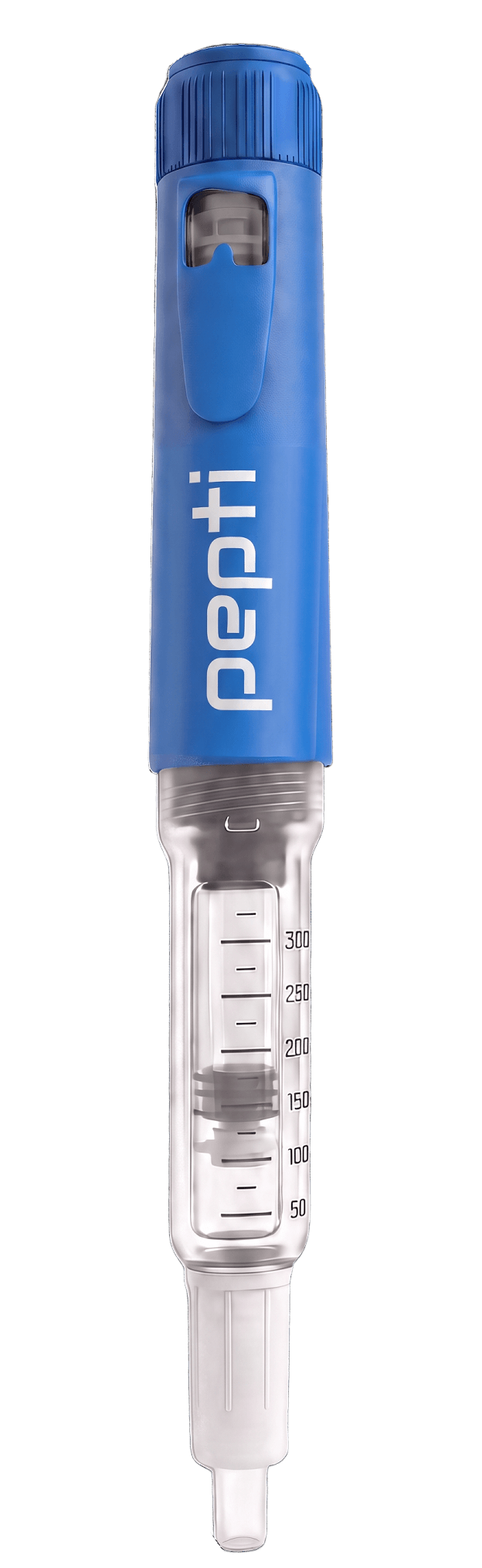
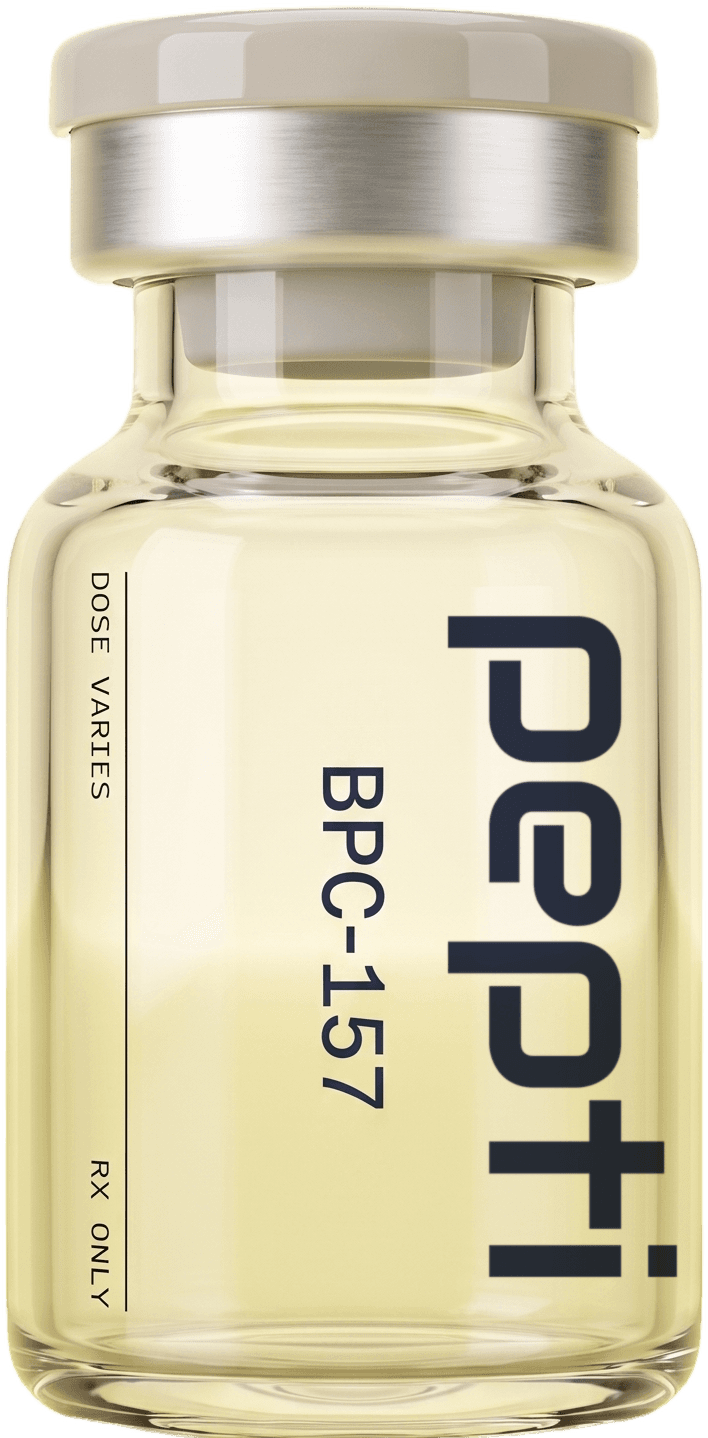
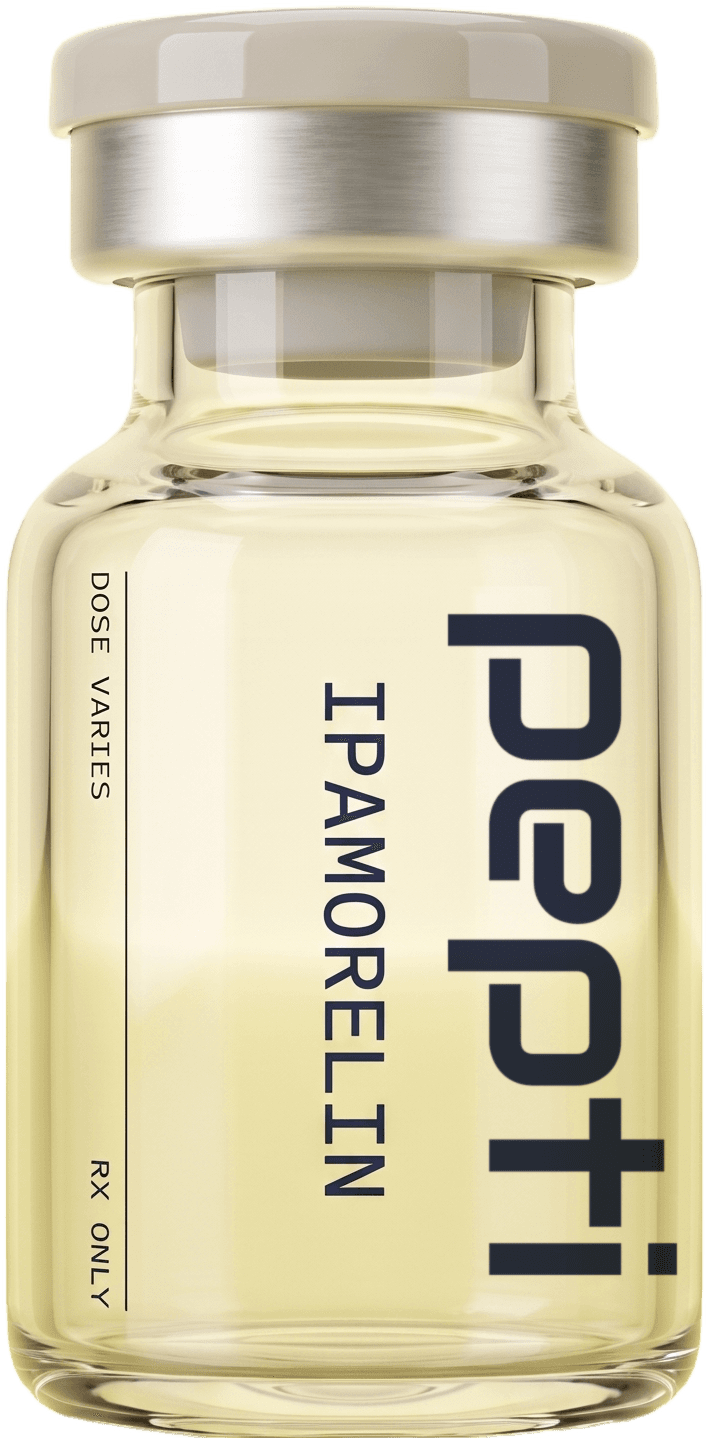
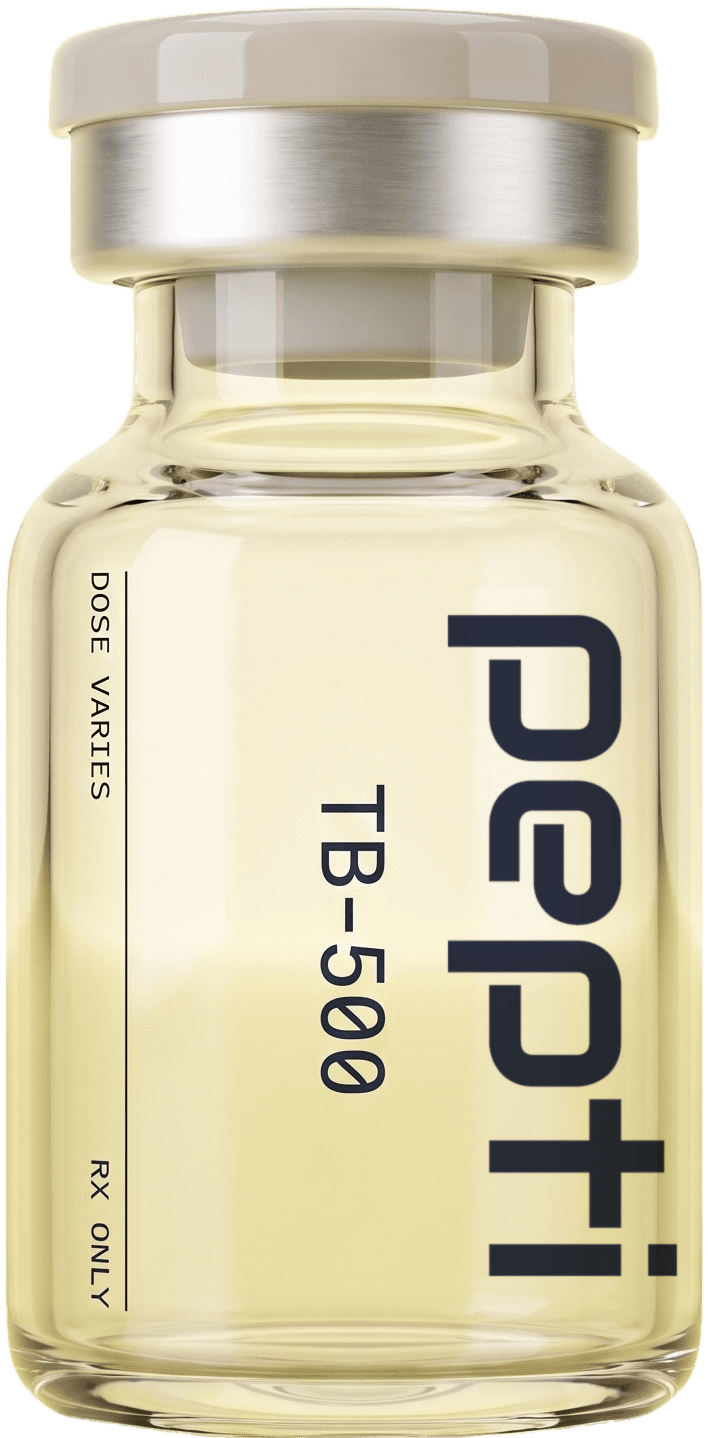
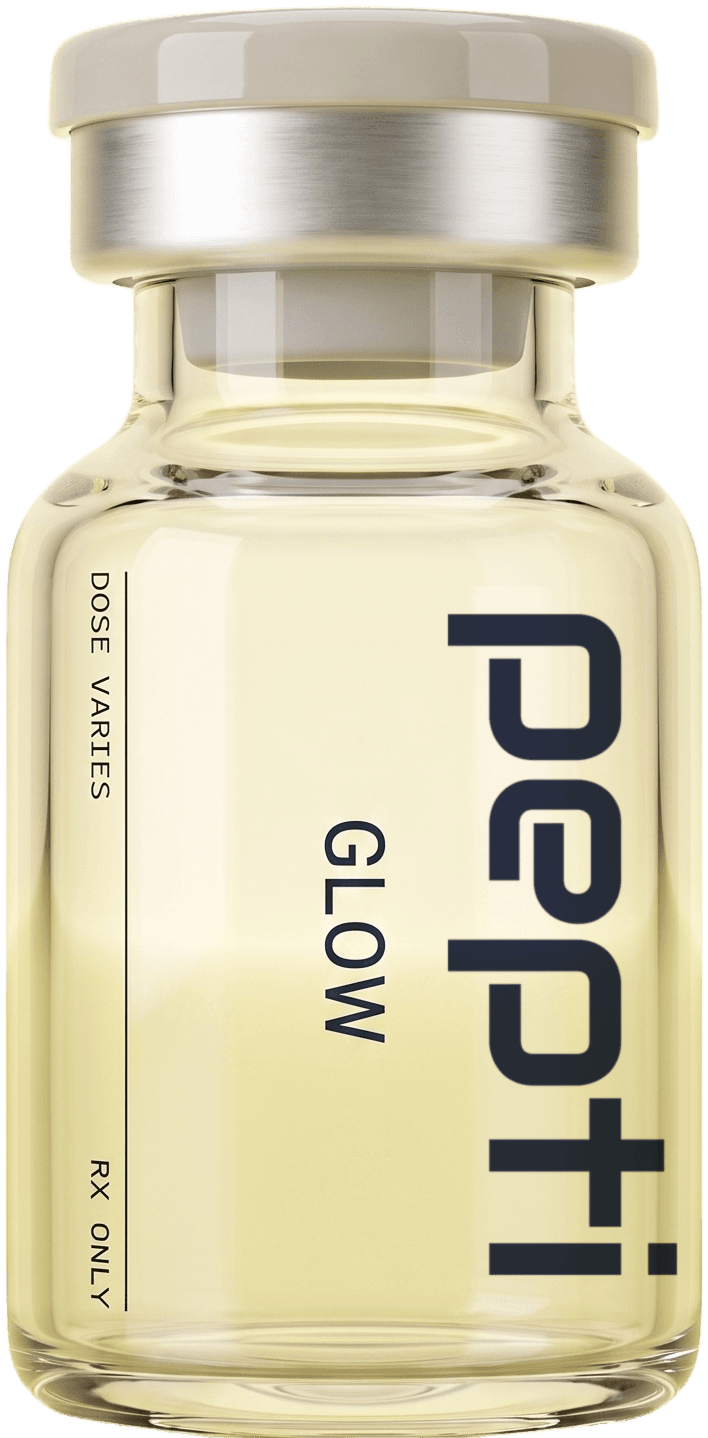
As a prescription, a stack is normally compounded into a single vial, called a blend, so it is one injection on one schedule with one set of directions: Pepti's BPC-157 + TB-500, CJC-1295 / Ipamorelin and four-peptide blends such as KLOW work this way. A good stack combines different mechanisms; a poor one duplicates the same receptor. There are almost no trials of peptide combinations, so blends rest on mechanism and prescriber experience rather than on evidence that a combination works better than its parts.
This page explains what a stack is, what makes a combination coherent, how single-vial blends differ from mixing your own, every Pepti blend with its contents and price, the combinations that need real care, and what the evidence honestly shows.
Peptide Stacks Explained
The short answer
| Question | Answer |
|---|---|
| What is a peptide stack? | Two or more peptides taken together toward one goal |
| How is a prescription stack supplied? | Usually compounded into one vial, a blend |
| What makes a good stack? | Different mechanisms doing different jobs in the same process |
| What makes a poor one? | Two peptides acting at the same receptor |
| Can I build my own stack from separate vials? | Not on your own initiative; combinations are a prescribing decision |
| Is there trial evidence for stacks? | Almost none; the pairings are grounded in mechanism and prescriber experience |
| Are blends FDA approved? | No. Compounded medications are not FDA approved |
Every price on this page is all-in monthly, covering medication, physician review, refill management and shipping, with no separate membership fee.
Peptide Stacks Explained
What a stack is
"Stack" is an informal word from fitness and recovery communities for taking more than one peptide at a time. It is not a medical term, and some stacks have nicknames, such as the "Wolverine stack" for BPC-157 with TB-500, covered in wolverine stack.
In prescription care, the same idea is called a combination, and the usual form is a blend: a preparation a licensed pharmacist compounds into one sterile vial because a physician licensed in your state named those ingredients for you. A blend is not four products bundled for marketing. It is one compounded preparation with one finished concentration for each component and one set of directions calculated against all of them.
Peptide Stacks Explained
What makes a stack coherent
The logic of a good combination is always the same: two mechanisms that do different jobs in the same process.
| Combination | Mechanism one | Mechanism two | Why they go together |
|---|---|---|---|
| BPC-157 with TB-500 | Angiogenesis and gut-lining protection | Actin binding, so repair cells migrate into damaged tissue | Different phases of one repair sequence |
| CJC-1295 with ipamorelin | GHRH receptor | Ghrelin receptor | Two separate signals converging on the same pituitary pulse |
| GHK-Cu with BPC-157 and TB-500 | Collagen and matrix synthesis | Blood supply and cell migration | Repair plus rebuilding of the matrix itself |
| KPV added to a repair blend | Inflammatory signalling | The repair mechanisms above | Unresolved inflammation can stall a repair phase |
| Thymosin alpha-1 with BPC-157 and KPV | Immune modulation | Repair and anti-inflammatory signalling | Recovery where immune function is the limiting factor |
Two receptors, one pulse
CJC-1295 is a long-acting analogue of growth-hormone-releasing hormone; ipamorelin is a ghrelin-receptor agonist. A 2009 study in the American Journal of Physiology: Endocrinology and Metabolism reported more growth hormone release from a combined GHRH and GH-releasing peptide stimulus than from either alone. That is a real combination: two doors into the same room.
Two phases of one repair sequence
BPC-157 is described in preclinical work around new blood vessel formation; TB-500, a fragment of thymosin beta-4, around actin and cell movement. Blood supply and cell motility are different problems, which is why the two are compounded together. A 2026 paper in Joint Diseases and Related Surgery examined them together on Achilles tendon healing in rats. An animal study, not a human trial.
Peptide Stacks Explained
How Pepti's blends work
Every blend is a 5 mL multi-dose vial of ready-to-use solution, with directions printed on the vial in millilitres and units on a U-100 syringe. Almost all are printed as 0.25 mL (25 units) subcutaneously on weekdays, which is 20 doses per vial, about four weeks, so refills run every 28 days, one vial per fill.
Two-peptide blends
Blend What is in the 5 mL vial Printed directions Price BPC-157 + TB-500 5 mg BPC-157, 5 mg TB-500 0.25 mL weekday mornings $259/mo CJC-1295 / Ipamorelin 6 mg CJC-1295, 12 mg ipamorelin 0.25 mL weekdays on an empty stomach $239/mo Ipamorelin + Sermorelin 10 mg ipamorelin, 10 mg sermorelin 0.25 mL weekday nights at bedtime $219/mo Tesamorelin + Ipamorelin 10 mg tesamorelin, 5 mg ipamorelin 0.25 mL weekday nights at bedtime $259/mo RADIANCE 50 mg GHK-Cu, 10 mg tesamorelin 0.25 mL weekdays $249/mo Repair and skin blends
Blend What is in the 5 mL vial Printed directions Price GLOW 50 mg GHK-Cu, 10 mg BPC-157, 10 mg TB-500 0.25 mL weekday mornings $259/mo KLOW 50 mg GHK-Cu, 10 mg KPV, 10 mg BPC-157, 10 mg TB-500 0.25 mL weekday mornings $259/mo ETERNAL 50 mg GHK-Cu, 10 mg BPC-157, 10 mg TB-500, 10 mg epithalon 0.25 mL weekdays $279/mo REVIVE 50 mg GHK-Cu, 6 mg CJC-1295, 12 mg ipamorelin, 2 mg TB-500 0.25 mL weekday nights at bedtime $279/mo FORTIFY 5 mg thymosin alpha-1, 5 mg BPC-157, 2 mg KPV, 1 mg LL-37 0.25 mL weekdays $289/mo Growth hormone axis and metabolic blends
Blend What is in the 5 mL vial Printed directions Price TITAN 10 mg tesamorelin, 6 mg CJC-1295, 12 mg ipamorelin, 10 mg BPC-157 0.25 mL weekday nights at bedtime $289/mo ASCEND 6 mg CJC-1295, 12 mg ipamorelin, 10 mg tesamorelin, 1 mg IGF-1 LR3 0.25 mL weekday nights at bedtime $289/mo PHYSIQ 10 mg tesamorelin, 10 mg ipamorelin, 10 mg AOD-9604, 10 mg MOTS-c 0.25 mL weekday nights at bedtime $289/mo SHRED 10 mg AOD-9604, 6 mg CJC-1295, 10 mg ipamorelin, 10 mg MOTS-c 0.25 mL weekdays $279/mo FUSION 10 mg BPC-157, 10 mg MOTS-c, 10 mg 5-Amino-1MQ, 15 mg tesamorelin 0.25 mL weekdays $279/mo Sleep, cognitive and other blends
Blend What is in the 5 mL vial Printed directions Price SERENITY 5 mg DSIP, 5 mg Selank, 6 mg CJC-1295, 12 mg ipamorelin 0.25 mL weekday nights at bedtime $279/mo ELEVATE 5 mg Semax, 5 mg Selank, 10 mg BPC-157, 10 mg KPV 0.25 mL weekdays $249/mo SYNAPSE 5 mg Semax, 5 mg Selank, 10 mg MOTS-c, 10 mg tesamorelin 0.25 mL weekdays $279/mo EUPHORIA 10 mg MOTS-c, 10 mg BPC-157, 50 mg GHK-Cu, 2 mg kisspeptin 0.25 mL weekdays $279/mo Your own directions are printed on your vial and are the ones that apply. Head-to-head pages: KLOW vs GLOW and PHYSIQ vs SHRED vs TITAN.
Peptide Stacks Explained
Why a blend is not the same as mixing your own
Three things differ when two vials are drawn into one syringe at home.
| Pharmacy blend | Two vials mixed at home | |
|---|---|---|
| Sterility | Compounded under the pharmacy's validated sterile process and sealed once | Extra punctures and transfers nobody validated |
| Concentration | Directions calculated against every component's finished concentration | Neither label describes what is in the barrel |
| Record | One prescription in your chart | A mixture documented nowhere |
Do not mix two products in one syringe on your own initiative. If you want both in one injection, that is a request for a combined preparation, and it goes to your prescriber. More is in can you take two peptides together.
Peptide Stacks Explained
Stacks that need real care
| Combination | The problem |
|---|---|
| Two GHRH analogues, such as sermorelin added to CJC-1295 | Duplication at the same receptor; more signal at one point is not more result |
| Two ghrelin-receptor agonists, such as hexarelin with ipamorelin | Two keys in one lock; published work describes receptor desensitisation with hexarelin |
| Two GLP-1 medications | Same receptor system, stacked side effects, no established benefit. Not done |
| A GH-axis peptide alongside a GLP-1 | Legitimate and common, but the two pull on glucose handling in different directions, so monitoring changes |
| A separate BPC-157 vial on top of a blend that already contains BPC-157 | Not a new mechanism; it changes a dose without anyone deciding it should |
| GHK-Cu alongside high-dose zinc | Zinc competes with copper absorption; tell your physician what supplements you take |
| Prescribed peptides plus research-use vials bought online | Nobody is accountable for what is in the unregulated vial |
Overlaps that are not obvious from the names
ASCEND, TITAN, REVIVE, SHRED and SERENITY all carry GH-axis components. KLOW, GLOW, ETERNAL and FORTIFY all contain BPC-157. Checking for duplication is a short task for someone who knows the formulations and a hard one for someone who does not.
Peptide Stacks Explained
The attribution problem
If you start one medication and something changes, that change has one plausible cause. If you start three in a fortnight and then feel unwell, nobody can say which did it, and the usual outcome is that everything gets stopped.
A four-peptide blend looks like four changes at once, and pharmacologically it is. But it is one prescription, one start date, one set of directions and one thing to stop. A blend plus a separately sourced vial plus a new supplement is three variables, and two of them are not in the chart. The rule is not "never take more than one molecule." It is "never change more than one thing you would have to unpick."
Peptide Stacks Explained
The fixed-ratio limitation
A blend is a set of ratios chosen in advance: a feature when they suit you, a limitation when they do not. If your physician wants more of one component and less of another, the answer is single agents. BPC-157, TB-500, GHK-Cu, ipamorelin and tesamorelin are all supplied individually for that reason.
| When a blend fits | When single agents fit |
|---|---|
| Two or more distinct mechanisms are wanted from the start | You have not yet established what one agent does for you |
| One injection and one schedule matter to you | The dose of one component needs to be unusual |
| One vial costs less than two prescriptions | The goal is narrow, such as sleep alone |
Peptide Stacks Explained
What the evidence shows, honestly
There are almost no trials of peptide combinations. The pairings described above are grounded in mechanism and in prescriber experience, not in randomised comparisons of a blend against its components. Nobody can tell you that four peptides in one vial outperform two, because that study has not been done, and a provider presenting a blend as shown to work better is overstating what exists.
The components also differ widely. Tesamorelin has randomised phase 3 trials in a defined population, and thymosin alpha-1 has randomised trials in hospital populations. There are no large randomised human trials for BPC-157 in soft-tissue injury, for GHK-Cu as an injection, for KPV, for MOTS-c or for epithalon; that literature is animal and cell research, in a blend or on its own. Compounded medications are not FDA approved.
Peptide Stacks Explained
Where to get a stack prescribed
- Complete a free online intake covering your history, medications, supplements and what you want help with.
- A physician licensed in your state reviews it, usually within 24 hours, including whether a blend or a single agent fits.
- If it is appropriate, a PCAB-accredited, FDA-registered US 503A pharmacy compounds it into one vial. Lot test results are published at /quality/lab-results.
- It ships refrigerated with ice packs, sterile syringes and alcohol prep pads, with your directions printed on the vial.
- Your physician stays reachable for questions, and refills run every 28 days, one vial per fill.
Pepti is cash-pay and does not bill insurance. Step-by-step pages: BPC-157 + TB-500, KLOW, CJC-1295 / Ipamorelin and SHRED.
References
What this is based on.
References
- Chang CH, Tsai WC, Hsu YH, Pang JH. Pentadecapeptide BPC 157 enhances the growth hormone receptor expression in tendon fibroblasts · Molecules (2014) · PMID 25415472
- Krivic A, Anic T, Seiwerth S, et al.. Achilles detachment of rat and stable gastric pentadecapeptide BPC 157 · Journal of Orthopaedic Research (2006) · PMID 16583442
- Sikiric P, Seiwerth S, Rucman R, et al.. Stable gastric pentadecapeptide BPC 157: novel therapy in gastrointestinal tract · Current Pharmaceutical Design (2011) · PMID 21548867
- Cerovecki T, Bojanic I, Brcic L, Radic B, et al.. Pentadecapeptide BPC 157 (PL 14736) improves ligament healing in the rat · J Orthop Res (2010) · PMID 20225319
- Sikiric P, Seiwerth S, Rucman R, Turkovic B, et al.. Stable gastric pentadecapeptide BPC 157-NO-system relation · Curr Pharm Des (2014) · PMID 23755725
- Cox HD, Miller GD, Eichner D. Detection and in vitro metabolism of the confiscated peptides BPC 157 and MGF R23H · Drug Test Anal (2017) · PMID 28035768
- Thomas A, Görgens C, Guddat S et al.. Simplifying and expanding the screening for peptides <2 kDa by direct urine injection, liquid chromatography, and ion mobility mass spectrometry · J Sep Sci (2016) · PMID 26578461
- Farrar JT, Young JP Jr, LaMoreaux L, Werth JL et al.. Clinical importance of changes in chronic pain intensity measured on an 11-point numerical pain rating scale · Pain (2001) · PMID 11690728
- Meyer JD, Ho B, Manning MC. Effects of conformation on the chemical stability of pharmaceutically relevant polypeptides · Pharm Biotechnol (2002) · PMID 11987755
- Xu C, Sun L, Ren F, Huang P, et al.. Preclinical Safety Evaluation of Body Protective Compound-157, a Potential Drug for Treating Various Wounds · Regul Toxicol Pharmacol (2020) · PMID 32334036
- He L, Feng D, Guo H, et al.. Pharmacokinetics, distribution, metabolism, and excretion of body-protective compound 157, a potential drug for treating various wounds, in rats and dogs · Front Pharmacol (2022) · PMID 36588717
- Lee E, Padgett B. Intra-Articular Injection of BPC 157 for Multiple Types of Knee Pain · Altern Ther Health Med (2021) · PMID 34324435
Citations are provided for educational purposes. They do not constitute medical advice. Always discuss any peptide protocol with your prescribing physician.
Common questions
Peptide Stacks Explained, answered.
Two or more peptides taken together toward one goal, usually because they act through different mechanisms. As a prescription, a stack is normally compounded into a single vial called a blend.
BPC-157 with TB-500, sometimes nicknamed the Wolverine stack, and CJC-1295 with ipamorelin are the most familiar pairings. Both are supplied as single vials.
That has not been shown. There are almost no trials comparing a blend against its components. A blend is a reasonable choice when distinct mechanisms are wanted; a single agent is better when you need to learn what one thing does or need an unusual dose.
Not on your own initiative. Combining separate vials in one syringe produces something neither label describes and adds sterility risks. Ask your prescriber for a combined preparation instead.
There is no fixed number. What matters is whether each has a distinct job, whether the combined cautions are acceptable for you, and whether your physician can still interpret what happens. Blends of four exist.
Usually. KLOW, at $259 a month, holds four peptides in one vial, which costs less than separate prescriptions for each.
GLOW holds GHK-Cu, BPC-157 and TB-500; KLOW adds KPV. Both are $259 a month. See KLOW vs GLOW.
It is a common discussion, usually with a GH-axis peptide. It is a prescribing decision because the two affect glucose handling in different directions. See what peptides can you take with tirzepatide.
They can, and they make side effects harder to attribute. That is why one change at a time is the careful approach. See peptide side effects: what to watch for.
No. Compounded medications are not FDA approved, and the FDA does not review them for safety, effectiveness or quality before they are marketed.
No. Bloodwork is not required for any Pepti treatment. If your physician wants labs for your care, they'll ask through your account. The free assessment goes to a physician licensed in your state. A consultation does not guarantee a prescription.
Related answers
Keep reading.
- Peptides for Testosterone: What Kisspeptin Research Shows, and What It Does Not
- What Happens When You Stop Glutathione? What the Research Shows
- What Is Peptide Therapy? How It Works, What It Is Used For, and What It Costs
- Are Peptides Natural? Native, Fragment, Analogue or Designed, Peptide by Peptide
- B12 Injections: What They Are, Who They Help, and What MIC Injections Add
Next step
See what a physician recommends for you.
A licensed physician in your state reviews your intake to see whether treatment fits your history. A consultation does not guarantee a prescription.