Supplements · Reference
B12 Injections: What They Are, Who They Help, and What MIC Injections Add
This page explains what is in a B12 shot, the different forms of B12, why it is injected, what MIC and "lipotropic" injections are, what the research does and does not support, how the injections are given, the side effects, where B12 stands with the FDA, and how to get it prescribed.
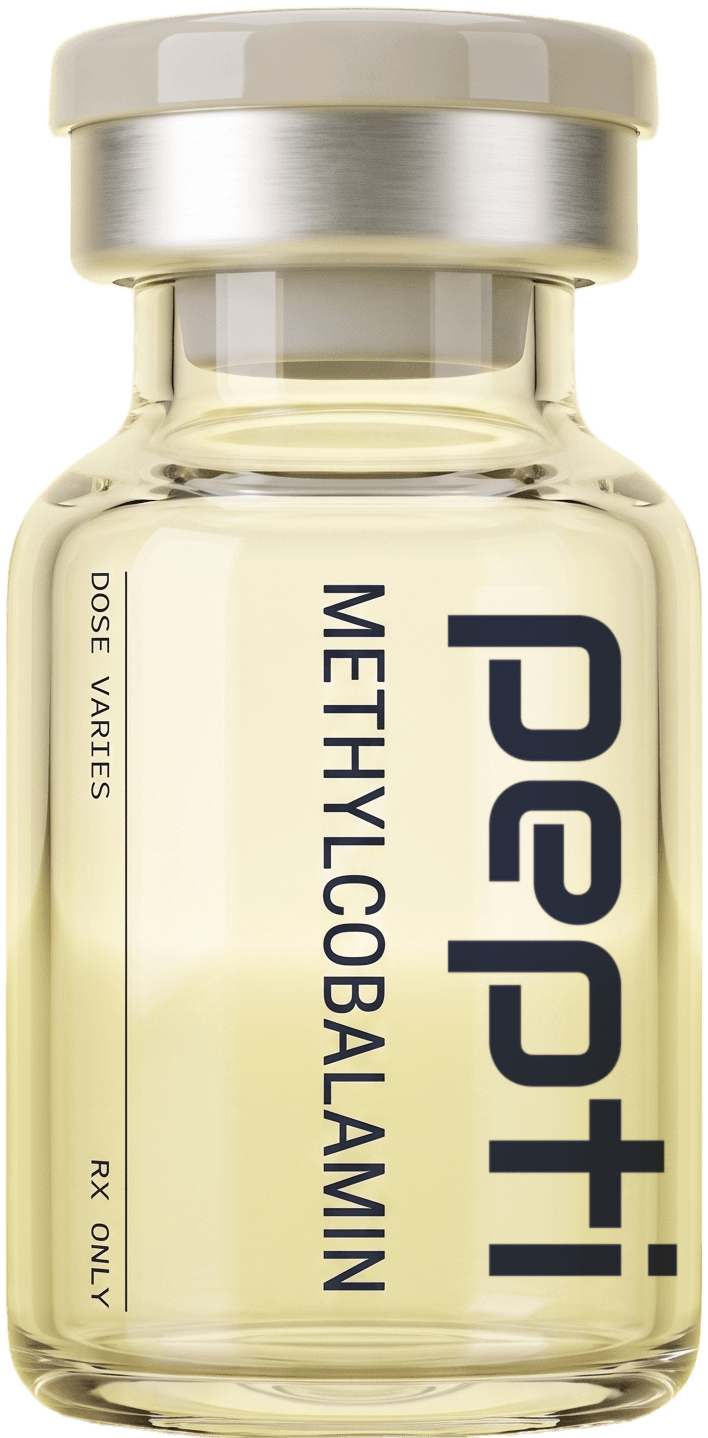
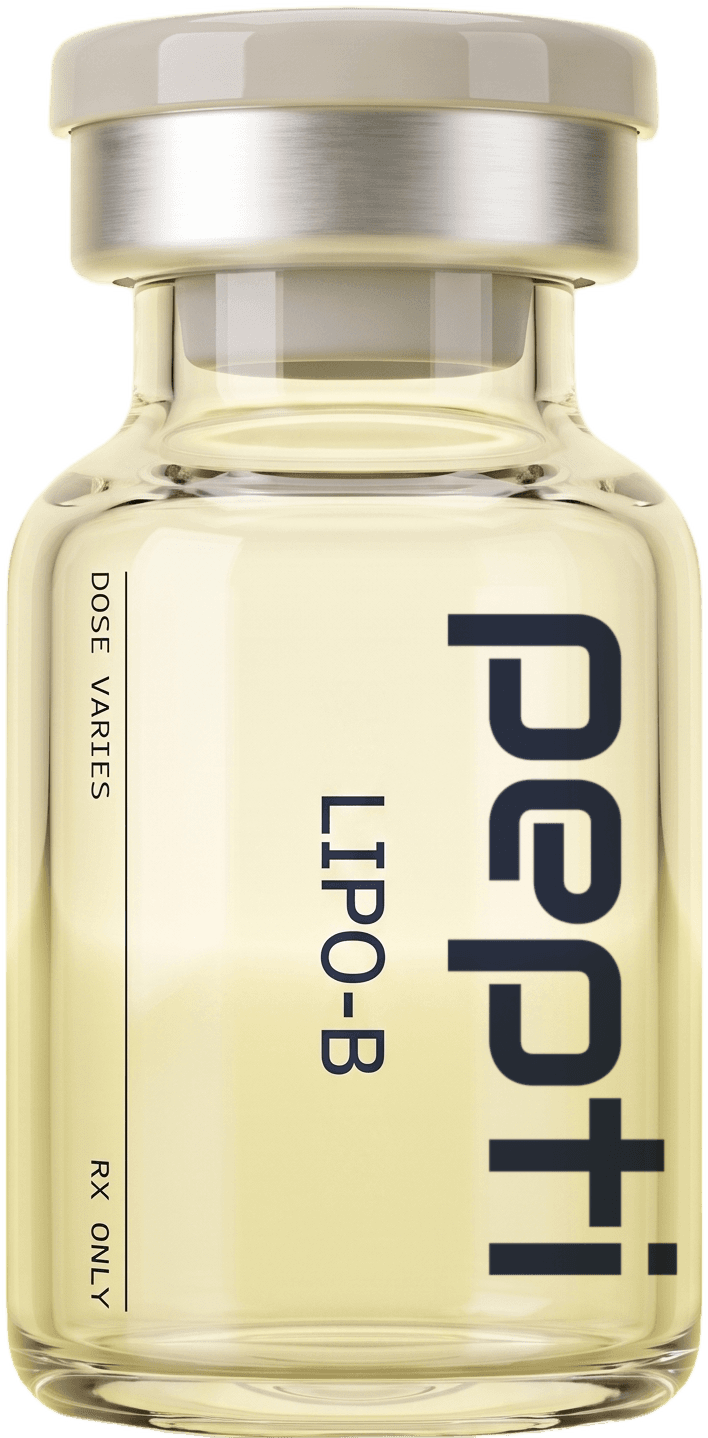
A B12 injection is a shot of vitamin B12 (cobalamin) into muscle, used to correct or prevent B12 deficiency, and that is where its evidence is strongest. Injection bypasses the gut, which matters when absorption is the problem, as in pernicious anemia, after stomach or bowel surgery, or with long-term metformin or acid-suppressing medication. A MIC injection adds three nutrients, methionine, inositol and choline, to the B12, and is usually prescribed alongside a weight-management plan, but no randomized trial has tested the combination for weight or energy. At Pepti, B12 is prescribed as Methylcobalamin ($229/mo) or as Lipo-B, B12 plus MIC ($209/mo); both are compounded, and compounded medications are not FDA approved.
This page explains what is in a B12 shot, the different forms of B12, why it is injected, what MIC and "lipotropic" injections are, what the research does and does not support, how the injections are given, the side effects, where B12 stands with the FDA, and how to get it prescribed.
B12 Injections
The short answer
| Product | What is in the vial | Pepti's printed directions | Doses per vial | Price |
|---|---|---|---|---|
| Methylcobalamin (Active B12) | 5 mL, methylcobalamin 2 mg/mL (10 mg per vial) | Inject 1.25 mL (125 units) intramuscularly once weekly | 4, about four weeks | $229/mo |
| Lipo-B (B12 + MIC) | 10 mL; per mL, 50 mg methionine, 50 mg inositol, 25 mg choline, 1 mg B12 (cyanocobalamin) | Inject 0.8 mL (80 units) intramuscularly three times weekly | 12, about four weeks | $209/mo |
| Lipo-Mino-Mix-C | 10 mL, MIC with vitamins B6, B1 and B12 | Inject 0.8 mL (80 units) intramuscularly three times weekly | 12, about four weeks | $209/mo |
Every price is all-in, covering medication, physician review, refill management and shipping, with no separate membership fee. Pepti is cash-pay and does not bill insurance. Your physician sets your directions after reviewing your intake, and your own directions are the ones printed on your vial.
B12 Injections
What a B12 injection actually is
Vitamin B12, or cobalamin, is a large molecule built around a single cobalt atom. The group attached on top of that cobalt is what separates the forms you see on labels:
| Form | Upper group | Where you meet it |
|---|---|---|
| Cyanocobalamin | A cyanide group | Most supplements, the FDA-approved B12 injection, and the B12 in Lipo-B |
| Hydroxocobalamin | A hydroxyl group | Another injectable form used in practice |
| Methylcobalamin | A methyl group | One of the two forms cells actually use; Pepti's Methylcobalamin product |
| Adenosylcobalamin | An adenosyl group | The other working form, used inside mitochondria |
Inside the cell only two forms do any work. Methylcobalamin is the cofactor for methionine synthase, the enzyme that recycles homocysteine back to methionine and keeps the folate cycle turning. Adenosylcobalamin is the cofactor for methylmalonyl-CoA mutase in the mitochondria. Every other form is converted into one of those two first. That is why methylcobalamin is called "active" B12. It is a description of chemistry, not a claim that it works better once injected; a 2015 review in Molecular Nutrition & Food Research concluded that the coenzyme forms are not likely to be superior to cyanocobalamin or hydroxocobalamin for preventing or treating deficiency, because cells strip the upper group off every form and rebuild the coenzymes themselves.
Humans cannot make B12. Bacteria make it, animal foods concentrate it, and the liver keeps a reserve that typically lasts years. When B12 runs short, homocysteine and methylmalonic acid build up, rapidly dividing cells in the bone marrow struggle (which shows up as large, immature red cells, megaloblastic anemia), and the myelin around nerve fibers suffers (which shows up as numbness, tingling, unsteadiness and memory or mood changes). The New England Journal of Medicine review from 2013 and the Nature Reviews Disease Primers review from 2017 both stress that the nerve symptoms can appear before, or entirely without, any change in the blood count.
B12 Injections
Why B12 is given as an injection
Oral B12 needs stomach acid to free it from food, intrinsic factor from the stomach lining to carry it, and a healthy end of the small intestine to absorb it. Several common situations interfere with that chain:
| Situation | Why it matters for B12 |
|---|---|
| Pernicious anemia | Autoimmune loss of intrinsic factor, so dietary B12 is not absorbed |
| Stomach or bowel surgery, including gastric bypass | Removes or bypasses the parts that absorb B12 |
| Crohn's disease | Can affect the section of bowel that absorbs B12 |
| Long-term acid suppression | Less acid to release B12 from food |
| Long-term metformin | Associated with lower B12 levels over years of use |
| Vegetarian and especially vegan diets | Little or no B12 in the diet |
| Older age | Deficiency is more common |
An intramuscular injection enters the blood regardless of what the gut is doing. That is the real reason B12 injections exist, not because injected B12 is stronger. Deficiency is common in vegetarians and vegans (Nutrition Reviews, 2013; European Journal of Clinical Nutrition, 2014) and in long-term metformin users (the Diabetes Prevention Program Outcomes Study, Journal of Clinical Endocrinology & Metabolism, 2016), and the American Diabetes Association recommends periodic B12 testing for people on metformin.
The injection is not the only route. Two Cochrane reviews (2005, updated 2018) compared oral with intramuscular B12 for deficiency; the 2018 update found three trials with 153 participants and concluded, on low-quality evidence, that the two had similar effects on serum levels. A 1998 trial in Blood randomized 38 newly diagnosed deficient patients to 2 mg oral B12 daily or a standard intramuscular schedule and reported that correction was prompt and indistinguishable. The honest reading: high-dose oral B12 works for many deficient people. Injections are the clear choice when absorption is unreliable, when nerve symptoms make fast repletion the priority, or when tablets have not worked.
B12 Injections
What MIC injections are
MIC is the initials of three nutrients: methionine, inositol and choline. A MIC injection, often called a lipotropic injection, combines them, usually with B12, and that combination is what Lipo-B is.
"Lipotropic" is an older nutrition term. In animal feeding studies from the middle of the twentieth century, choline was found to prevent fat building up in the livers of animals fed a choline-deficient diet. Methionine was grouped with it because it can donate the methyl groups the liver uses to make its own choline, and inositol because it is part of the phospholipids that package fat for export from the liver. A 2013 survey in Critical Reviews in Food Science and Nutrition uses the same narrow definition: compounds involved in liver fat handling. The word is routinely misread as "fat-burning." It does not mean that.
| Ingredient | What it is | What the research describes | Amount in one 0.8 mL Lipo-B dose |
|---|---|---|---|
| Methionine | An essential amino acid | Precursor of S-adenosylmethionine, the body's main methyl donor | 40 mg |
| Inositol | A sugar-alcohol in membrane phospholipids | Precursor of insulin-signalling messengers; oral PCOS trials used 2 to 4 grams a day | 40 mg |
| Choline | An essential nutrient | Needed to make phosphatidylcholine, which lets the liver export fat | 20 mg |
| Vitamin B12 (cyanocobalamin) | The standard pharmaceutical form of B12 | Cofactor for methionine synthase; corrects deficiency | 0.8 mg |
The per-dose amounts are arithmetic from the label (0.8 mL of a vial holding 50, 50, 25 and 1 mg per mL). The scale is worth seeing: the adequate intake for choline set by the US Institute of Medicine is 550 mg a day for adult men and 425 mg for adult women, and one egg contains roughly ten times the methionine in a dose. The B12 is the one ingredient in the injection present at a level with an established clinical job.
Lipo-Mino-Mix-C is the related preparation: the same MIC base with vitamins B6 and B1 as well as B12. The full component-by-component picture is in what is Lipo-B and what is Lipo-Mino-Mix-C.
B12 Injections
Methylcobalamin vs Lipo-B: which B12 injection
| Methylcobalamin | Lipo-B | |
|---|---|---|
| Form of B12 | Methylcobalamin, an active coenzyme form | Cyanocobalamin, converted by the body |
| B12 per dose at Pepti's directions | 2.5 mg | 0.8 mg |
| Other ingredients | None | Methionine, inositol and choline |
| How often | Once weekly | Three times weekly |
| Route | Intramuscular | Intramuscular |
| Usually prescribed for | Correcting or maintaining B12 status | Support alongside a weight-management plan |
| Vial | 5 mL, 2 mg/mL | 10 mL |
| Price | $229/mo | $209/mo |
If B12 is the whole reason for the injection, methylcobalamin alone is the more direct tool. If the aim is a supporting injection alongside a diet and activity plan, Lipo-B is what that product is for. For treating or preventing deficiency, the forms of B12 are broadly interchangeable in practice. Methylcobalamin carries no cyanide group, which matters very little for almost everyone but is the reason cyanocobalamin is avoided in a rare inherited eye condition, Leber's hereditary optic neuropathy.
B12 Injections
What the evidence shows, honestly
For B12 deficiency, the evidence is definitive. Correcting deficiency corrects megaloblastic anemia, lowers methylmalonic acid and homocysteine, and improves or halts the nerve symptoms, with the degree of nerve recovery depending on how long the damage has been present. The British Society for Haematology guideline (British Journal of Haematology, 2014) and the Mayo Clinic Proceedings review "The Many Faces of Cobalamin Deficiency" (2019) cover diagnosis and management.
For energy in people with normal B12, there is no convincing evidence. B12 shots are widely marketed for energy, and the biochemistry offers a story, but the story only holds when B12 is actually short. A 2018 randomized, double-blind, placebo-controlled trial in Clinical Nutrition ESPEN gave extra B12 to people with irritable bowel syndrome or inflammatory bowel disease who were not deficient and found no reduction in fatigue compared with placebo. The closest thing to a direct test of B12 for tiredness, a small pilot in the British Journal of Nutrition in 1973, has never been followed by a properly powered trial showing benefit.
For weight, there is no trial evidence at all. No randomized human trial has tested the methionine, inositol and choline combination, as an injection or otherwise, for weight, body composition, energy or liver fat. Any change in weight over a course of Lipo-B belongs to the plan it is prescribed alongside. If weight management is the goal, semaglutide (from $99/mo) and tirzepatide (from $159/mo) are the actives with large randomized human trials for that purpose.
For nerve pain not caused by deficiency, the evidence is weak. A 2026 review and meta-analysis in the Journal of Clinical Medicine pooled thirteen randomized trials of B-vitamin supplementation in diabetic neuropathy (834 participants) and reported small improvements in some neuropathy scores, no significant effect on pain by standard scales, and enough bias and inconsistency that the authors declined to recommend routine use.
The benefit-by-benefit picture, with the limits of each study, is in B12 benefits.
B12 Injections
How a B12 injection is given
Pepti's B12 injections are intramuscular: into the muscle, not the fat layer under the skin. That is the traditional route for B12. The usual sites are the outer thigh and the upper outer buttock, rotated between doses. Your directions say which route, and your pharmacy supplies syringes and needles suited to it, with alcohol prep pads.
The directions are written in millilitres and in units because insulin syringes are marked in units. On a U-100 syringe, 1 unit is 0.01 mL, so 125 units is 1.25 mL and 80 units is 0.8 mL. You are not calculating anything; the number is printed on your vial. Each vial is sized to last about four weeks at the printed directions, which is why refills run every 28 days, one vial per fill. The vials are multi-dose solutions shipped ready to use, refrigerated with ice packs. B12 is light-sensitive, so keep the vial in its carton, and follow the beyond-use date on the label. The full units, mL and mg breakdown for both products is in B12 dosage, and general technique is in how to inject peptides safely.
B12 Injections
Side effects in brief
B12 is a water-soluble vitamin with no established upper intake level; excess is excreted in urine, and toxicity from the vitamin itself is not described. What gets reported with the injections is mostly the injection: stinging, soreness and occasional bruising at the site, and for some people an intramuscular shot stings more than a shot under the skin. Less often people report acne-like eruptions, mild diarrhea, headache, or with Lipo-B a brief warmth or flushing. Allergic reactions, including anaphylaxis, are rare but documented with cobalamin injections of any form, and anyone with a cobalt allergy should say so at intake. Facial or throat swelling, a spreading rash or difficulty breathing needs emergency care: call 911. The full list, and when to message your care team, is in B12 side effects.
B12 Injections
Where B12 stands with the FDA
Two very similar molecules sit in different regulatory positions. Cyanocobalamin injection is an FDA-approved prescription drug, listed in Drugs@FDA as an approved injectable, for B12 deficiency. Methylcobalamin is not an FDA-approved drug product. As of the FDA's list updated 14 May 2026, methylcobalamin is in Category 1 of the 503A bulk drug substances, "Bulk Drug Substances Under Evaluation," which means state-licensed pharmacies may compound it under the FDA's interim policy. It is not in Category 2, the safety-concern category.
For Lipo-B, cyanocobalamin is an approved drug in its own right, choline chloride is in Category 1 on the same 14 May 2026 document, and methionine and inositol are long-standing compendial substances. None of the 2026 peptide changes touched these ingredients. The combination itself is compounded, and compounded medications are not FDA approved. Are peptides FDA approved explains the difference between "not approved" and "not legal."
B12 Injections
Who should not take a B12 injection, or should discuss it first
| Situation | Why |
|---|---|
| Cobalt or cobalamin allergy | Cobalt is part of the B12 molecule; allergic reactions are rare but documented |
| Leber's hereditary optic neuropathy | Cyanocobalamin is avoided; tell your physician |
| Pregnancy or breastfeeding | Not used at Pepti; raise it on your intake |
| Recreational or dental nitrous oxide | Inactivates B12 and can bring on nerve problems in someone with low stores |
| High-dose folic acid | Can correct the anemia of B12 deficiency while nerve damage continues |
| Metformin, acid suppressants, colchicine | Reduce absorption of oral B12; list them so your history is reviewed together |
| Tested athletes | Check your sport's current prohibited list before starting anything |
Bloodwork is not required for any Pepti treatment. If your physician wants labs for your care, they'll ask through your account.
B12 Injections
Where to get a B12 injection prescribed
Prescription B12 and MIC injections should come from a licensed pharmacy filling a prescription written for you. A sterile injectable needs a pharmacy accountable for identity, purity, sterility and concentration. The prescription route:
- Complete a free online intake covering your history, medications and what you want help with.
- A physician licensed in your state reviews it, usually within 24 hours.
- If it is appropriate, a PCAB-accredited, FDA-registered US 503A compounding pharmacy prepares it to that prescription. Lot test results are published at /quality/lab-results.
- It ships refrigerated with your directions printed on the vial, with sterile syringes and alcohol prep pads.
- Your physician stays reachable for questions and side effects.
Pepti prescribes Methylcobalamin and Lipo-B in every state except Oklahoma, plus DC The full references are what is methylcobalamin and what is Lipo-B.
References
What this is based on.
References
- Wilding JPH, Batterham RL, Calanna S, et al.. Once-Weekly Semaglutide in Adults with Overweight or Obesity (STEP 1) · New England Journal of Medicine (2021) · PMID 33567185
- Lincoff AM, Brown-Frandsen K, Colhoun HM, et al.. Semaglutide and Cardiovascular Outcomes in Obesity without Diabetes (SELECT) · New England Journal of Medicine (2023) · PMID 37952131
- Wadden TA, Bailey TS, Billings LK, et al.. Effect of subcutaneous semaglutide vs placebo as an adjunct to intensive behavioral therapy on body weight in adults with overweight or obesity (STEP 3) · JAMA (2021) · PMID 33625476
- Rubino D, Abrahamsson N, Davies M, et al.. Effect of Continued Weekly Subcutaneous Semaglutide vs Placebo on Weight Loss Maintenance in Adults With Overweight or Obesity: The STEP 4 Randomized Clinical Trial · JAMA (2021) · PMID 33755728
- Marso SP, Bain SC, Consoli A, et al.. Semaglutide and Cardiovascular Outcomes in Patients with Type 2 Diabetes (SUSTAIN-6) · New England Journal of Medicine (2016) · PMID 27633186
- Davies M, Færch L, Jeppesen OK, et al.. Semaglutide 2.4 mg once a week in adults with overweight or obesity, and type 2 diabetes (STEP 2): a randomised, double-blind, double-dummy, placebo-controlled, phase 3 trial · The Lancet (2021) · PMID 33667417
- Garvey WT, Batterham RL, Bhatta M, et al.. Two-year effects of semaglutide in adults with overweight or obesity: the STEP 5 trial · Nature Medicine (2022) · PMID 36216945
- Rubino DM, Greenway FL, Khalid U, et al.. Effect of Weekly Subcutaneous Semaglutide vs Daily Liraglutide on Body Weight in Adults With Overweight or Obesity Without Diabetes: The STEP 8 Randomized Clinical Trial · JAMA (2022) · PMID 35015037
- Aronne LJ, Horn DB, le Roux CW, et al.. Tirzepatide as Compared with Semaglutide for the Treatment of Obesity (SURMOUNT-5) · New England Journal of Medicine (2025) · PMID 40353578
- Sanyal AJ, Newsome PN, Kliers I, et al.. Phase 3 Trial of Semaglutide in Metabolic Dysfunction-Associated Steatohepatitis (ESSENCE) · New England Journal of Medicine (2025) · PMID 40305708
- Wilding JPH, Batterham RL, Davies M, Van Gaal LF, Kandler K et al.. Weight regain and cardiometabolic effects after withdrawal of semaglutide: The STEP 1 trial extension · Diabetes Obes Metab (2022) · PMID 35441470
- Batsis JA, Gavras A, Gross DC, Cheever CR, Da Silva BR et al.. Effect of Incretin-Based and Nonpharmacologic Weight Loss on Body Composition: A Systematic Review · Ann Intern Med (2026) · PMID 41996180
Citations are provided for educational purposes. They do not constitute medical advice. Always discuss any peptide protocol with your prescribing physician.
Common questions
B12 Injections, answered.
A shot of vitamin B12 into muscle, used to correct or prevent B12 deficiency. Because it goes straight into the blood, it works even when the gut cannot absorb B12, as in pernicious anemia or after stomach surgery. At Pepti it is prescribed as methylcobalamin or as Lipo-B, which adds methionine, inositol and choline.
Injections of methionine, inositol and choline, usually combined with B12. They are also called lipotropic injections and are usually prescribed alongside a weight-management plan. No randomized human trial has tested the combination for weight or energy. Pepti's MIC product is Lipo-B.
If you are deficient, correcting it relieves the fatigue that deficiency causes. If your B12 is normal, a 2018 randomized placebo-controlled trial found no effect of extra B12 on fatigue, and no trial has shown otherwise. Fatigue often has another cause worth finding, such as thyroid, iron or sleep.
There is no trial evidence that they do. B12 is not a weight-loss medication, and the MIC combination has never been tested for weight in a randomized trial. Semaglutide and tirzepatide are the actives with large randomized trials for weight management.
For deficiency, the review literature says no: cells remove the upper group from every form and rebuild the working forms themselves. Methylcobalamin carries no cyanide group, and some patients and prescribers prefer it on that basis. Cyanocobalamin injection is the FDA-approved product.
At Pepti, Methylcobalamin is directed once weekly at 1.25 mL (125 units), and Lipo-B three times weekly at 0.8 mL (80 units). Each vial lasts about four weeks. Your directions are printed on the vial; see B12 dosage.
Into muscle, usually the outer thigh or the upper outer buttock, rotating sites. Pepti's B12 directions are intramuscular, and the pharmacy supplies syringes suited to that route. Do not switch routes on your own; ask your care team.
A brief sting and a slightly sore site the next day are the usual experience. Intramuscular shots can sting more than injections under the skin. A site that is hot, spreading or getting worse is worth reporting.
Mostly injection-site stinging, soreness or bruising. Less often, acne-like spots, mild diarrhea, headache or brief flushing. Allergic reactions are rare but documented; swelling of the face or throat, a spreading rash or trouble breathing needs 911. More in B12 side effects.
B12 has no established upper intake level, and excess is excreted in urine. Take only the dose printed on your vial. If you think you have injected far more than directed, call Poison Control at 1-800-222-1222 and message your care team.
Cyanocobalamin injection is an FDA-approved drug. Methylcobalamin is not an approved drug product; it is in 503A Category 1, under FDA evaluation, and compounded. Lipo-B is a compounded combination, and compounded medications are not FDA approved.
Bloodwork is not required for any Pepti treatment. If your physician wants labs for your care, they'll ask through your account. A B12 level, with methylmalonic acid and homocysteine for borderline results, is how deficiency is confirmed in medicine generally. The free assessment goes to a physician licensed in your state. A consultation does not guarantee a prescription.
Next step
See what a physician recommends for you.
A licensed physician in your state reviews your intake and decides what is appropriate. A consultation does not guarantee a prescription.