Recovery · Reference
KPV for Women: What the Research Has Looked At, and What to Check First
This page covers what KPV is, what research has and has not looked at, the questions women most often ask (gut, skin, pigment, diagnosed inflammatory conditions, pregnancy, fertility, contraception, sport), and how Pepti supplies it. The general reference is what is KPV, the evidence benefit by benefit is in KPV benefits, and the men's version of this page is KPV for men.
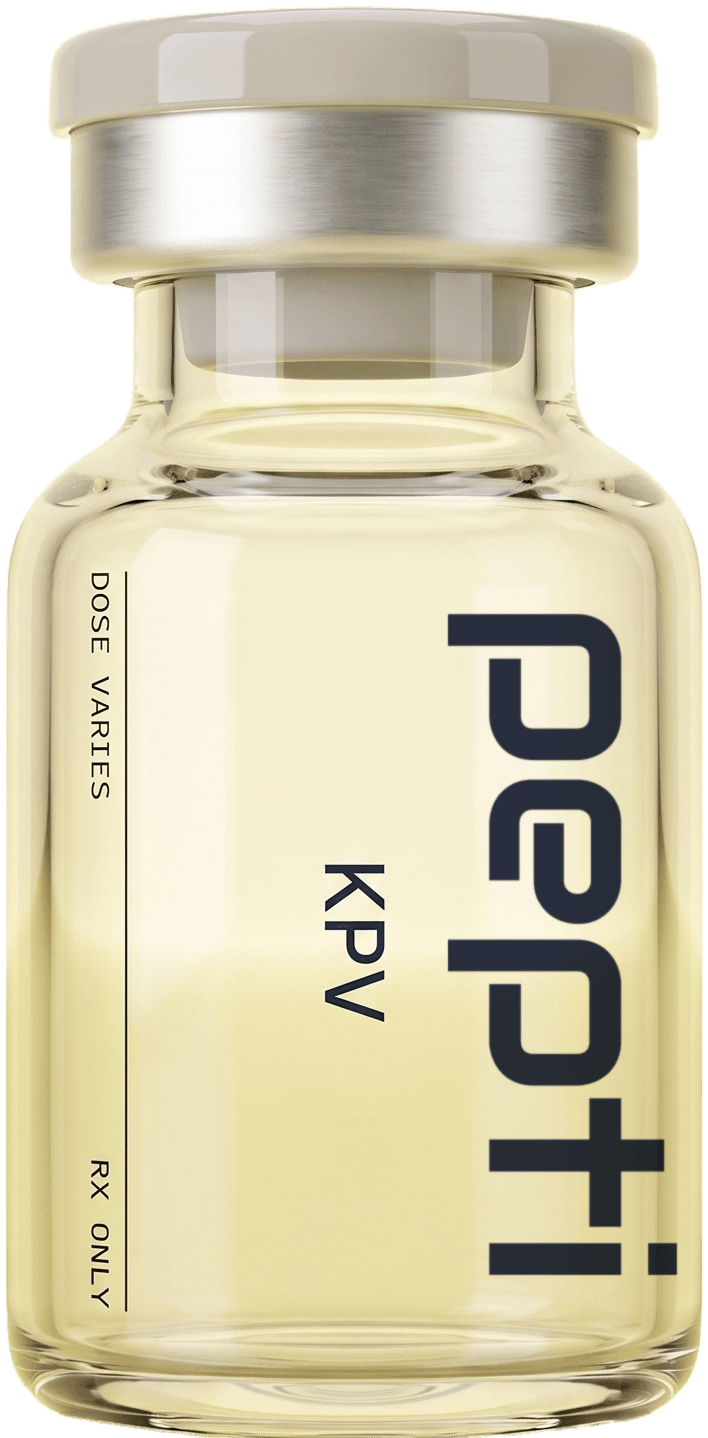
Treatments mentioned
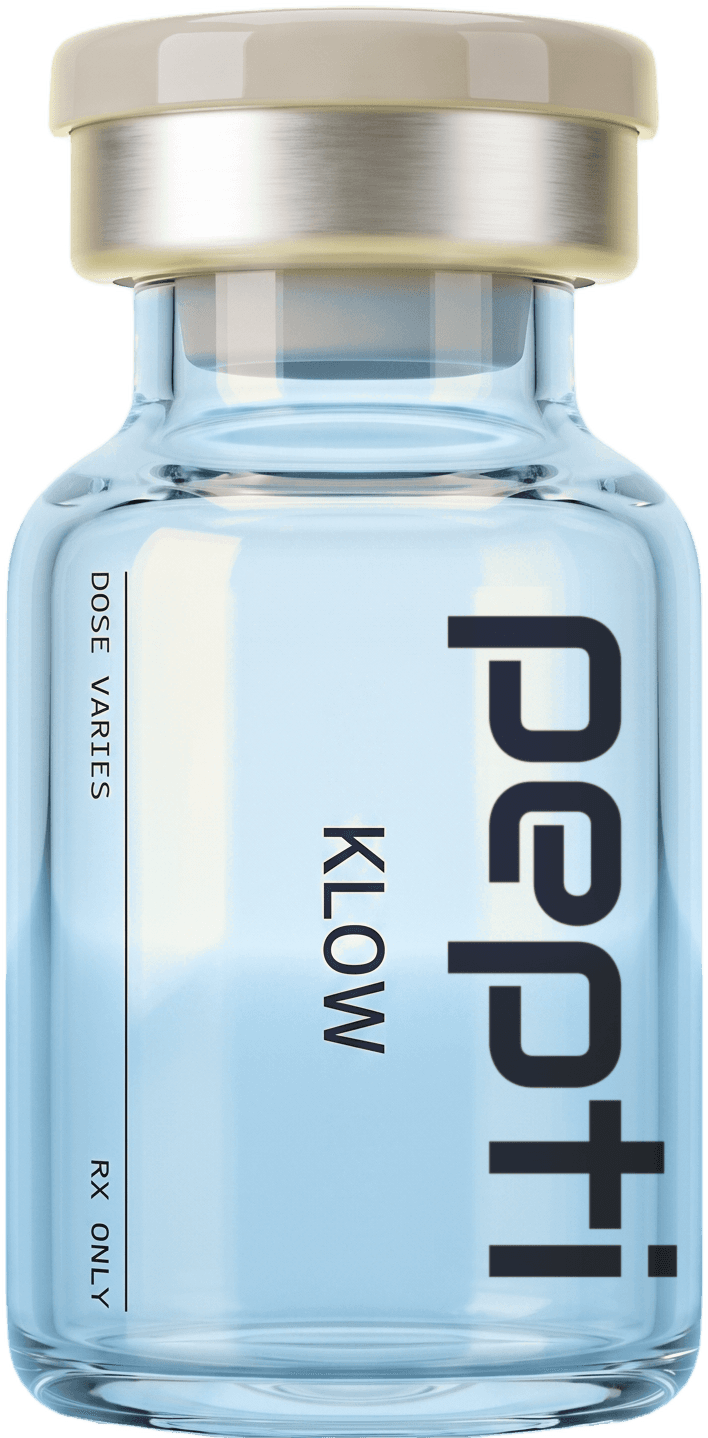
KPV has not been studied in women specifically, or in people at all: there are no published human trials of KPV of any design, and its research is cell work and mouse models of colitis, skin inflammation, airway inflammation and brain injury. It is a three-amino-acid fragment of alpha-MSH, a hormone the body already makes, and it keeps that hormone's anti-inflammatory signalling without its pigmentation effect, so it does not tan or darken the skin. It does not act on estrogen, progesterone or the cycle. For women the points that change are the gut symptoms that need a diagnosis before any peptide, the rule that KPV is not used in pregnancy or breastfeeding, and the absence of any fertility data. It is a compounded prescription injection that is not FDA approved.
This page covers what KPV is, what research has and has not looked at, the questions women most often ask (gut, skin, pigment, diagnosed inflammatory conditions, pregnancy, fertility, contraception, sport), and how Pepti supplies it. The general reference is what is KPV, the evidence benefit by benefit is in KPV benefits, and the men's version of this page is KPV for men.
KPV for Women
The short answer
| Question | What the live research shows | Strength of evidence |
|---|---|---|
| Has KPV been studied in women specifically? | No; it has not been studied in humans at all | None |
| Gut inflammation | Mouse colitis models (Inflammatory Bowel Diseases, 2008; Gastroenterology, 2008; Molecular Therapy, 2017) | Animal and cell only |
| Skin and airway inflammation | Mouse skin models and a human bronchial cell line (2012) | Animal and cell only |
| Does it tan or darken skin? | No; it lacks the part of alpha-MSH that drives pigmentation | Clear from the cell work |
| Does it act on hormones or the cycle? | Not described as acting on any hormone axis | Not a hormone |
| Pregnancy, breastfeeding | Not used; no pregnancy data at all | Clear exclusion |
| Fertility | No fertility data in either sex | Unknown |
| Tested sport | Not named on the 2026 WADA list, but S0 covers substances without approval for human use | Assume it is caught |
The honest summary: a consistent animal story for damping inflammatory signalling, mostly in the gut, no human trial in anyone, and nothing designed to answer a question about women.
KPV for Women
What KPV is, in one paragraph
KPV is a tripeptide, lysine-proline-valine, which is where the name comes from. It is the last three amino acids of alpha-melanocyte-stimulating hormone (alpha-MSH), a thirteen-amino-acid hormone the body makes continuously. Alpha-MSH is best known for driving pigmentation, but it also works as an anti-inflammatory signal, and a 2008 review in Endocrine Reviews describes the three-amino-acid tail as keeping much of that anti-inflammatory activity while leaving pigmentation behind. Cell work describes KPV entering cells through PepT1, the transporter the gut lining uses to absorb small peptides from food, and interfering with NF-kB and MAPK, two of the main pathways that turn an inflammatory trigger into cytokine output. It is not a hormone in its own right, it is not a steroid, and it is not a painkiller.
KPV for Women
What research has looked at
The gut, in mice
This is the deepest body of work. A 2008 paper in Inflammatory Bowel Diseases reported less weight loss and less inflammation on tissue examination in mice with chemically induced colitis and in IL-10-deficient mice, a model of chronic colitis. A 2008 paper in Gastroenterology reported that KPV given in drinking water reduced the severity of two different chemically induced colitis models and tied the effect to the PepT1 transporter. A 2017 paper in Molecular Therapy packaged KPV in nanoparticles designed to reach inflamed colon and reported reduced colitis at a far lower total dose; that delivery system is a research formulation no pharmacy supplies.
What it shows. A consistent picture in mice: less inflammatory signalling and less tissue damage in colitis models.
What it does not show. That any of this happens in a person, how large an effect would be, or how long it would take. Most of the gut work used the oral route deliberately, and the subcutaneous route that is prescribed has not been compared.
Skin, airway and brain
The Endocrine Reviews summary covers alpha-MSH and its C-terminal fragment in mouse skin inflammation models and in cultured skin cells, with the same direction of effect as in the gut. A 2012 paper in the International Journal of Physiology, Pathophysiology and Pharmacology examined KPV in a human bronchial cell line and described it blocking cytokine-driven NF-kB activation through a route that did not depend on the melanocortin-1 receptor. A 2013 paper in PLoS One reported that a single dose after experimental brain injury in mice reduced lesion volume and inflammatory markers. These are single studies in single models.
The human data, all of it
There is none. The FDA's review for its July 2026 advisory committee stated that no published studies were found in which drug products containing KPV were used in humans, and that none of the references the nominator cited were human studies. The nearest thing is human cell lines, which show the mechanism operates in human cells but say nothing about what happens when a woman injects it. No study has reported anything by sex.
KPV for Women
What changes for women
Gut symptoms: what a physician rules out first
KPV is most often asked about for gut complaints, and some gut symptoms need a diagnosis rather than a peptide, whatever the age:
Red flag Why it comes first Blood in the stool, or black tarry stools Needs investigation, not symptom treatment Unintentional weight loss Same, and urgently Iron-deficiency anaemia Common in women because of menstrual blood loss, but it can also be the first sign of bowel bleeding, so it is not assumed to be one or the other Persistent vomiting or difficulty swallowing Needs endoscopic assessment A new, persistent change in bowel habit over 50 Standard threshold for investigation Symptoms that wake you at night Uncommon in functional disorders Fever, or a family history of bowel cancer or IBD Lowers the threshold for investigation Any one of those goes to a gastroenterologist or your primary physician before a peptide is discussed. Beyond red flags, celiac disease, inflammatory bowel disease, H. pylori infection and several other conditions have established treatments and tests of their own. The fuller order is in peptides for gut health and peptides for inflammation.
A diagnosed inflammatory condition on treatment
Women with Crohn's disease, ulcerative colitis, psoriasis or another diagnosed inflammatory condition on prescribed treatment should not swap that treatment for a peptide. KPV is not a replacement for what a gastroenterologist, dermatologist or rheumatologist has put you on. If you take an immunosuppressant or a biologic, raise it specifically at intake, and tell that specialist what you are considering.
Skin and pigment
Because KPV comes from alpha-MSH, women sometimes ask whether it darkens skin or worsens uneven pigment. It is not expected to. Pigmentation depends on the melanocortin-1 receptor and on a part of the hormone that KPV does not contain, and the 2012 cell work described KPV acting through a route that does not depend on that receptor. Any darkening of skin or moles is still worth reporting. The tanning peptide is Melanotan II, a different molecule with different cautions. The skin research for KPV itself is mouse inflammation models, not cosmetic studies; the peptide with small human skin studies, mostly in women, is GHK-Cu, covered in KLOW for women and peptides for skin.
Pregnancy and breastfeeding
KPV is not used in pregnancy or while breastfeeding. The repair peptides, KPV among them, have largely preclinical evidence overall and no pregnancy data at all, and absence of data is not evidence of safety. If you become pregnant on treatment, stop and contact your physician the same day. Can you take peptides while pregnant covers why.
Trying to conceive
There is no fertility data for KPV in either sex. The live reference on fertility lists KPV with the other repair peptides as "no fertility data, unknown": nothing in its literature describes an effect on the reproductive hormone axis, on ovulation or on early pregnancy, because nothing in it looked. If conception is a goal in any timeframe you can name, raise it with your physician before starting. See do peptides affect fertility.
The cycle and contraception
KPV is not described as acting on any hormone axis or as affecting hormonal contraception. No study has looked at either directly, so any change in your cycle on treatment is worth reporting, even if another cause is likelier. List your contraception on your intake.
Perimenopause and menopause
KPV is not hormone therapy and has not been tested for any menopause symptom. Bloating, gut changes, fatigue and low mood in these years often travel with the transition itself, or with thyroid disease and iron deficiency, both far more common in women. If the transition is the driver, it belongs in the conversation with your physician rather than being treated around. See peptides for menopause and peptides for women.
Tested sport
KPV is not named on the 2026 World Anti-Doping Agency Prohibited List. But category S0 prohibits at all times any pharmacological substance with no current approval by a governmental health authority for human therapeutic use, and WADA has said that absence from the list is not permission. A compounded preparation of KPV can fall under S0. If you are tested by any body, check with it before starting and tell your physician. See is KPV banned in sports.
KPV for Women
What the evidence does not establish
- That KPV changes inflammation, gut symptoms or skin in women, or in anyone. The human trials have not been run.
- That injecting it does what giving it to mice in drinking water did. The routes have not been compared.
- Any effect on hormones, the cycle, menopause symptoms or fertility. None was studied.
- An effect size or a timeline. Prescriber reports are clinical experience, and many people notice nothing.
- Long-term safety over months or years, or any safety in pregnancy.
- Efficacy for any condition as an approved treatment. KPV is not approved for anything.
KPV for Women
Safety and who should not take it
| What is reported or relevant | How often | What to do |
|---|---|---|
| Injection-site redness, mild soreness, occasional bruising | Most common | Rotate sites between abdomen and thigh |
| Mild nausea or a transient headache early on | Uncommon | Usually settles; report it if it does not |
| A site that is hot, spreading or increasingly painful | Not expected | Message your care team the same day |
| Facial or throat swelling, widespread rash, difficulty breathing | Rare | Call 911 first, then tell your physician |
| Situation | Why it matters |
|---|---|
| Pregnant or breastfeeding | Not used; no pregnancy data |
| Trying to conceive | No fertility data; raise it before starting |
| Immunosuppressant or biologic therapy | Raise it specifically at intake |
| A diagnosed inflammatory disease on treatment | Do not swap treatment; involve your specialist |
| Any gut red flag above | Needs a diagnosis before a peptide |
| Drug-tested sport | Check with your anti-doping body first |
The animal work has not reported toxicity at the doses studied, but there are no human trials, so "well tolerated" means nothing concerning has emerged from animal work or prescribing experience, not that it has been tested and shown safe. Nothing in the live material suggests the profile differs between women and men. There is no established interaction list, which is why the intake asks for every medication you take. The full detail is in KPV side effects.
KPV for Women
Where KPV stands with the FDA
KPV was placed in Category 2 of the FDA's 503A bulk drug substances list in 2023. On 15 April 2026 the FDA announced its removal from Category 2, effective 22 April, after the original nominations were withdrawn. On 23 July 2026 the FDA's Pharmacy Compounding Advisory Committee voted 8 to 6, with one abstention, to recommend adding KPV (free base and acetate) to the 503A Bulks List for wound healing and inflammatory conditions, against the FDA reviewers' own recommendation. A committee vote is a recommendation; the FDA's final determination is pending. KPV remains legal to prescribe and dispense with a valid prescription, and compounded medications are not FDA approved.
KPV for Women
How Pepti supplies KPV
| Product | What is in it | Typical directions | Price |
|---|---|---|---|
| KPV | 5 mL vial, 2 mg/mL (10 mg KPV) | 0.25 mL (25 units) subcutaneously once daily Monday through Friday; 0.5 mg per dose, 20 doses | $229/mo |
| KLOW Blend | 50 mg GHK-Cu, 10 mg KPV, 10 mg BPC-157, 10 mg TB-500 in 5 mL | 0.25 mL (25 units) Monday through Friday mornings | $259/mo |
| ELEVATE Blend | 5 mg Semax, 5 mg Selank, 10 mg BPC-157, 10 mg KPV in 5 mL | Printed on the vial | $249/mo |
| FORTIFY Blend | 5 mg thymosin alpha-1, 5 mg BPC-157, 2 mg KPV, 1 mg LL-37 in 5 mL | Printed on the vial | $289/mo |
On the KPV vial, 0.25 mL at 2 mg/mL is 0.5 mg per dose (math only). Twenty doses at five a week is four weeks, which is why refills run every 28 days, one vial per fill; the weekend gap is part of the schedule, not something to fill in. KLOW adds GHK-Cu and the repair peptides, with GHK-Cu's copper cautions; the comparison is in KPV vs KLOW, and the gut comparison with BPC-157 is in KPV vs BPC-157. The arithmetic for each product is in KPV dosage. Your physician sets your directions after reviewing your intake, and they are printed on the vial.
Every price is all-in, covering medication, physician review, refill management and shipping, with no membership fee. Pepti is cash-pay and does not bill insurance. Vials arrive as ready-to-use solutions with sterile syringes and alcohol prep pads, shipped refrigerated with ice packs.
KPV for Women
Where to get KPV prescribed
KPV cannot be bought legitimately without a prescription; vials sold without one are research-use-only products with no pharmacy accountable for identity, purity, sterility or concentration. The prescription route:
- Complete a free online intake covering your symptoms, any diagnosis and treatment you already have, your medications (including contraception, immunosuppressants or biologics), pregnancy and breastfeeding status, whether you are drug tested, and what you want help with.
- A physician licensed in your state reviews it, usually within 24 hours.
- If it is appropriate, a PCAB-accredited, FDA-registered US 503A compounding pharmacy prepares it to that prescription. Lot test results are published at /quality/lab-results.
- It ships refrigerated with your directions printed on the vial.
- Your care team stays reachable for questions and side effects.
Step by step: how to get KPV prescribed online. Bloodwork is not required for any Pepti treatment. If your physician wants labs for your care, they'll ask through your account.
References
What this is based on.
References
- Dalmasso G, Charrier-Hisamuddin L, Nguyen HT et al.. PepT1-mediated tripeptide KPV uptake reduces intestinal inflammation · Gastroenterology (2008) · PMID 18061177
- Kannengiesser K, Maaser C, Heidemann J et al.. Melanocortin-derived tripeptide KPV has anti-inflammatory potential in murine models of inflammatory bowel disease · Inflamm Bowel Dis (2008) · PMID 18092346
- Xiao B, Xu Z, Viennois E et al.. Orally Targeted Delivery of Tripeptide KPV via Hyaluronic Acid-Functionalized Nanoparticles Efficiently Alleviates Ulcerative Colitis · Mol Ther (2017) · PMID 28143741
- Land SC. Inhibition of cellular and systemic inflammation cues in human bronchial epithelial cells by melanocortin-related peptides: mechanism of KPV action and a role for MC3R agonists · Int J Physiol Pathophysiol Pharmacol (2012) · PMID 22837805
- Cutuli M, Cristiani S, Lipton JM et al.. Antimicrobial effects of alpha-MSH peptides · J Leukoc Biol (2000) · PMID 10670585
- Schaible EV, Steinsträßer A, Jahn-Eimermacher A et al.. Single administration of tripeptide α-MSH(11-13) attenuates brain damage by reduced inflammation and apoptosis after experimental traumatic brain injury in mice · PLoS One (2013) · PMID 23940690
- Bonfiglio V, Camillieri G, Avitabile T et al.. Effects of the COOH-terminal tripeptide alpha-MSH(11-13) on corneal epithelial wound healing: role of nitric oxide · Exp Eye Res (2006) · PMID 16965771
Citations are provided for educational purposes. They do not constitute medical advice. Always discuss any peptide protocol with your prescribing physician.
Common questions
KPV for Women, answered.
It has not been studied in women, or in people at all. Research describes it in mouse models of colitis, skin, airway and brain inflammation and in human cell lines. Any benefit for women is described from that work, not established.
No human study has tested it for any gut symptom. The research is mouse colitis models. Blood in the stool, unexplained weight loss, iron-deficiency anaemia, a new change in bowel habit over 50 or symptoms that wake you at night need investigation first.
No. Pigmentation from alpha-MSH depends on a receptor and a part of the hormone that KPV does not use. The tanning peptide is Melanotan II, a different molecule.
Its skin research is mouse inflammation models and cultured skin cells, not cosmetic studies in people. The peptide with small human skin studies, mostly in women, is GHK-Cu.
It is not described as acting on any hormone axis. No study has looked at cycle effects, so report any change.
No interaction is described, and no study has looked. List your contraception on your intake.
No. There is no pregnancy data at all. If you become pregnant on treatment, stop and contact your physician the same day.
No study has looked, in either sex. Raise conception plans with your physician before starting.
No. KPV has no human trials, and it is not a replacement for treatment your specialist has prescribed. Raise any immunosuppressant or biologic at intake.
The same as for anyone: mostly injection-site redness, mild soreness or bruising, and sometimes mild nausea or a transient headache early on. Facial or throat swelling or difficulty breathing after a dose needs 911.
At Pepti, KPV is $229 a month all-in, covering medication, physician review, refill management and shipping. The KLOW Blend, which contains KPV with GHK-Cu, BPC-157 and TB-500, is $259 a month.
No. Bloodwork is not required for any Pepti treatment. If your physician wants labs for your care, they'll ask through your account. The free assessment goes to a physician licensed in your state. A consultation does not guarantee a prescription.
Next step
See what a physician recommends for you.
A licensed physician in your state reviews your intake and decides what is appropriate. A consultation does not guarantee a prescription.