Recovery · Reference
KLOW for Women: Skin, Hair, Inflammation and What the Research Covers
This page covers what KLOW is, what research has and has not looked at that matters to women, the considerations that change for women (skin, hair, pigment, inflammation, pregnancy, the cycle, copper), the cautions, and how Pepti supplies it. For the product reference see what is KLOW; for the evidence claim by claim, KLOW benefits. The men's version of this page is KLOW for men.
Treatments mentioned
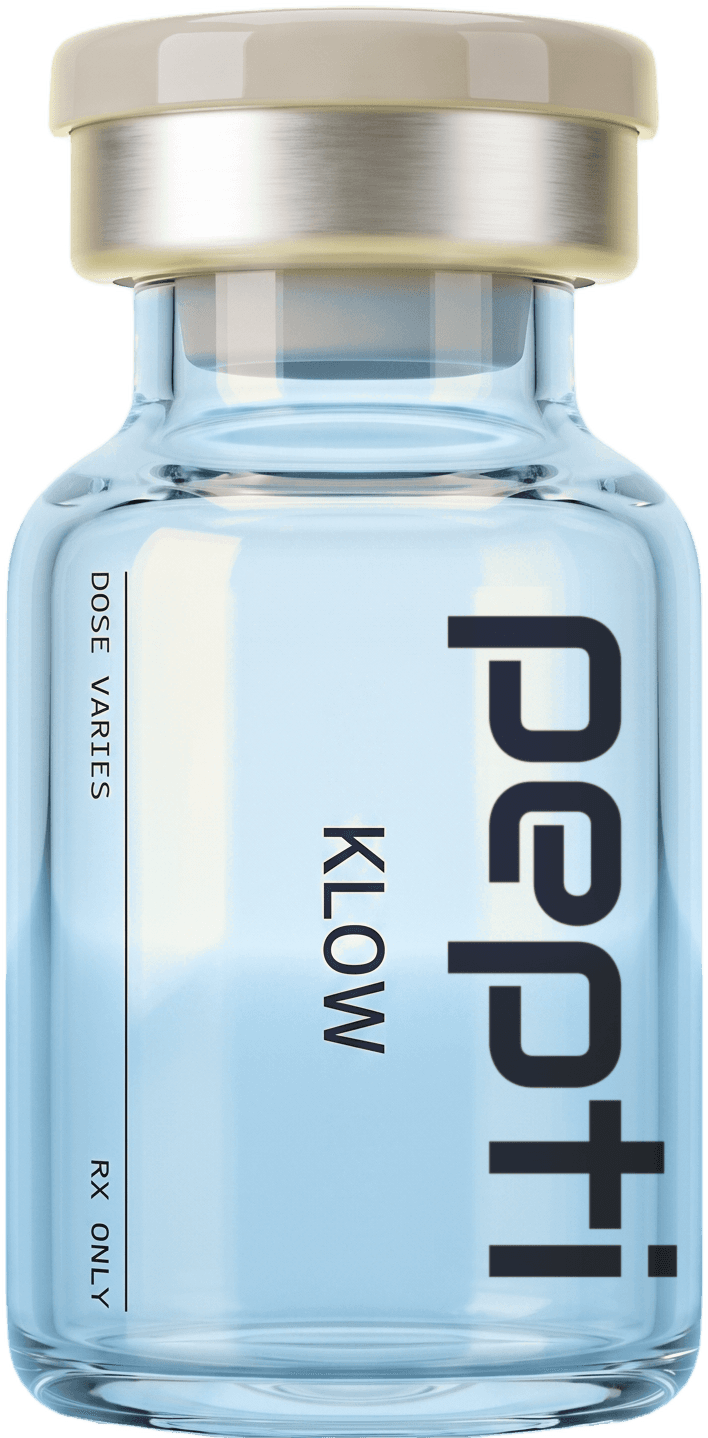
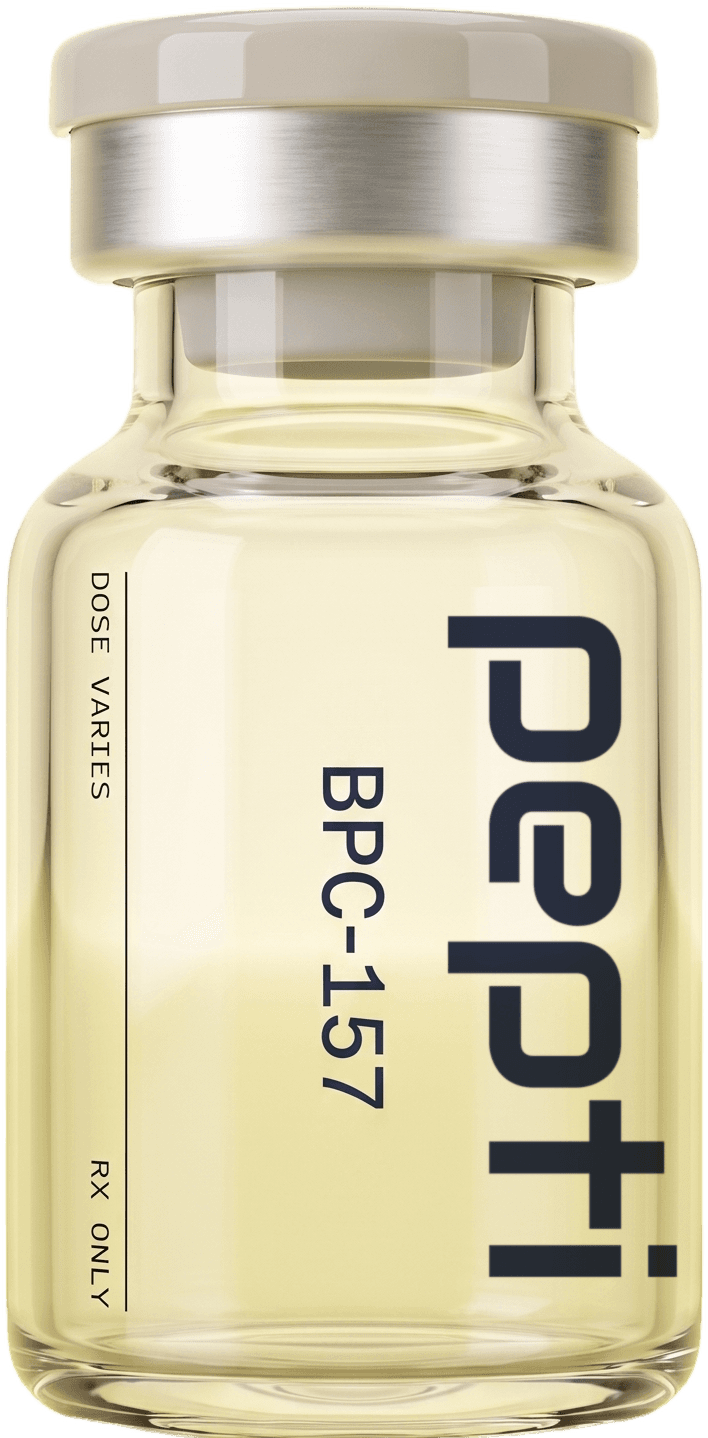
No study has tested KLOW in women, or in anyone: it is four separately studied peptides, GHK-Cu, KPV, BPC-157 and TB-500, in one vial, and the evidence is per component and mostly animal and cell work. The one place women appear in the research is GHK-Cu's skin literature: small cosmetic studies of creams, mostly in women with photoaged facial skin over 8 to 12 weeks, which did not use the injection. KLOW is not used in pregnancy or while breastfeeding, and none of its four components has fertility data. For hair shedding, iron deficiency, thyroid disease and female-pattern hair loss are worth ruling out before any peptide. Compounded KLOW is a prescription injection and is not FDA approved.
This page covers what KLOW is, what research has and has not looked at that matters to women, the considerations that change for women (skin, hair, pigment, inflammation, pregnancy, the cycle, copper), the cautions, and how Pepti supplies it. For the product reference see what is KLOW; for the evidence claim by claim, KLOW benefits. The men's version of this page is KLOW for men.
KLOW for Women
The short answer
| Question | What the research shows | Strength of evidence |
|---|---|---|
| Has KLOW been studied in women? | No study of the blend in anyone | None for the combination |
| Skin | Topical GHK-Cu cosmetic studies, mostly in women with photoaged facial skin, 8 to 12 weeks | Small human studies of creams, not the injection |
| Hair | Copper-peptide follicle work in rodents and a dish study of human follicles; thymosin beta-4 in rats and mice | Animal and dish only; no trial in women's hair loss |
| Inflammation | KPV in mouse colitis and cell models | Animal and cell only; no human trial of KPV |
| Tendons and joints | Rat tendon and muscle injury models, mostly BPC-157 | Animal only |
| Does it act on hormones? | No; none of the four is a hormone or a secretagogue | Clear: not its mechanism |
| Pregnancy, breastfeeding | Not used; safety data is absent | Clear exclusion |
| Tested sport | BPC-157 (S0) and TB-500 (S2.3) are prohibited at all times on the 2026 WADA List | Settled |
The honest summary: one small human literature, for GHK-Cu creams and mostly in women, plus four animal and cell literatures, and no trial of the blend itself.
KLOW for Women
What KLOW is
| Component | Per vial | Per 25 unit dose (math only) | What it is |
|---|---|---|---|
| GHK-Cu | 50 mg | 2.5 mg | Copper-binding tripeptide found in human plasma |
| KPV | 10 mg | 0.5 mg | The last three amino acids of alpha-melanocyte-stimulating hormone |
| BPC-157 | 10 mg | 0.5 mg | 15-amino-acid fragment of a protein from human gastric juice |
| TB-500 | 10 mg | 0.5 mg | Synthetic fragment of thymosin beta-4 |
The rationale prescribers give is that tissue repair runs in overlapping phases (inflammation, cell migration, new blood vessels, matrix synthesis and remodelling), and each component is described as acting on a different one, with KPV placed at the inflammation stage. That is a rationale, not a finding: no study has confirmed the four act in sequence when injected together. By mass, KLOW is mostly GHK-Cu, 50 of the 80 mg in the vial, and the proportions are fixed. None of the four is a hormone, and none acts on estrogen, progesterone or the reproductive axis.
KLOW for Women
What research has looked at that matters to women
Skin: the GHK-Cu studies
This is the research women most often have in mind when they ask about KLOW, and it is worth reading precisely. Cosmetic-science studies in human volunteers have evaluated GHK-Cu creams, mostly in women with photoaged facial skin, over 8 to 12 weeks, and reported changes in skin density, thickness, firmness, fine lines and clarity measured by instruments and by dermatologists. Most of that work appeared in conference proceedings and industry-funded reports rather than peer-reviewed journals; a 2015 review in BioMed Research International summarises it.
What it shows. That copper peptide creams changed measured skin properties in small groups of mostly female volunteers.
What it does not show. Anything about injected GHK-Cu, or about GHK-Cu combined with three other peptides. The studies were small, short and mostly not independently published. Whether an injection under the skin of the abdomen does for facial skin what a cream applied to the face was reported to do has not been tested. GHK-Cu topical vs injection sets out that gap.
Skin around menopause
The dermatology literature describes a marked drop in dermal collagen in the years after the final period, and collagen loss accelerating in the years around menopause is the reason GHK-Cu comes up for women in their forties and fifties. The live guidance places GHK-Cu alongside retinoids and sun protection, not in place of them. No study has tested GHK-Cu, by any route, specifically in perimenopausal or postmenopausal skin. The wider picture is in peptides for skin and peptides for menopause.
Hair
The hair research for KLOW's components is copper-peptide follicle work in mice and rats (1991 and 1993), a 2007 dish study of human follicles using a related copper tripeptide, and a 2004 FASEB Journal paper reporting that thymosin beta-4, the protein TB-500 is a fragment of, increased hair growth in rats and mice by acting on follicle stem cells. BPC-157 and KPV have no hair research. No trial has tested KLOW or any of its components in women with hair loss.
Inflammation: what KPV adds
KPV is what separates KLOW from the three-peptide GLOW. Cell and animal studies describe it interfering with NF-kB signalling and reducing pro-inflammatory cytokines such as TNF-alpha and IL-6, and a 2008 paper in Gastroenterology reported reduced inflammation in mouse colitis models, with KPV taken up into gut cells by the PepT1 transporter; much of that work gave KPV in drinking water rather than by injection. There is no human trial of KPV for any indication.
Tendons and joints
The injury case rests on BPC-157 and, by extension from the full-length protein, on TB-500. A 2003 paper in the Journal of Orthopaedic Research reported faster reattachment after Achilles tendon transection in rats, and a 2011 paper in the Journal of Applied Physiology reported greater tendon outgrowth in rat explants. There are no randomized trials of BPC-157 or TB-500 in humans for tendon or soft-tissue injury, and none reports results for women.
KLOW for Women
What changes for women
Hair shedding has findable causes first
Hair shedding is one of the commonest reasons women ask about copper peptides, and in this decade it is at least as often thyroid disease, iron deficiency or female-pattern hair loss as anything a peptide addresses. Iron deficiency is far more common in women because of menstrual blood loss, and ferritin can be low while a full blood count reads normal. Autoimmune thyroid disease is heavily skewed toward women. Postpartum shedding is a synchronised shift of follicles into a resting phase and usually resolves untreated, and a peptide is not appropriate while breastfeeding regardless. KLOW is not a treatment for female-pattern hair loss and not a substitute for established hair-loss treatment. More in peptides for hair growth.
Pigment: KPV does not tan
Because KPV comes from alpha-MSH, the hormone best known for pigmentation, women sometimes ask whether KLOW darkens skin or worsens uneven pigment. It is not expected to. KPV is the fragment that keeps alpha-MSH's anti-inflammatory signalling and drops the pigmentation effect. Any darkening of skin or moles is a reason to stop and report it. The product that does drive pigmentation, Melanotan II, is not in KLOW.
Pregnancy and breastfeeding
KLOW is not used in pregnancy or while breastfeeding. The repair peptides, BPC-157, TB-500, GHK-Cu and KPV, have largely preclinical evidence overall and no pregnancy data at all. Absence of data is not evidence of safety. If you become pregnant on treatment, stop and contact your physician the same day. Can you take peptides while pregnant covers why.
Trying to conceive
None of the four components has human fertility data. Nothing in their research describes an effect on the reproductive hormone axis, on ovulation or on early pregnancy, because nothing in it looked. If conception is a goal in any timeframe you can name, raise it with your physician before starting. See do peptides affect fertility.
The cycle and contraception
None of the four is a hormone or acts on the reproductive axis, and none is described as affecting hormonal contraception. No study has looked at that directly, so any change in your cycle on treatment is worth reporting, even if another cause is likelier. This is a real difference from the GLP-1 medications, which carry their own contraception conversation; see peptides for women.
Copper
GHK-Cu delivers copper, which matters for anyone with Wilson's disease or another copper-metabolism disorder, where KLOW is ruled out, and for anyone taking high-dose zinc, which competes with copper. Every GHK-Cu blend carries a full 50 mg, so two GHK-Cu products at once doubles the copper. If you already use GHK-Cu, GLOW or RADIANCE, say so on your intake.
Cancer history, including breast cancer
The components are described as supporting new blood-vessel growth, which is why a personal history of cancer is on the caution list. A history of breast, ovarian or endometrial cancer goes on the intake in full.
Tested sport
The 2026 World Anti-Doping Code Prohibited List names BPC-157 in S0 and lists thymosin beta-4 and its derivatives, TB-500 included, under S2.3, both prohibited at all times. A blend is prohibited by virtue of its components, so KLOW is not an option for any woman in a testing pool, and a prescription does not create an exemption. See is TB-500 banned in sports and peptides for athletes.
KLOW for Women
What the evidence does not establish
- That four peptides together do more than any one alone. No study has compared the blend with its components.
- Any effect in women specifically. There are no sex-specific findings for the blend.
- That injected GHK-Cu does for skin what topical GHK-Cu is reported to do.
- That KLOW changes female-pattern hair loss or any menopause symptom.
- That KPV does anything in people; it has no human trials.
- An effect size or a timeline for any goal. Prescriber timelines are clinical experience, not trial endpoints.
- Safety in pregnancy, breastfeeding or long-term use over years.
KLOW for Women
Side effects and cautions
Nothing in the published research suggests the profile differs between women and men.
| What is reported or relevant | How often | What to do |
|---|---|---|
| Injection-site redness, itching, mild soreness, occasional bruising | The most common | Rotate sites; mention it at follow-up |
| A faint blue-green mark at the site | Common | Copper from GHK-Cu; clears on its own |
| Early nausea, a metallic taste, light-headedness or flushing | Uncommon | Message your care team if it persists, especially if you take blood-pressure medication |
| Tiredness, head fog or headache in the first week or two | Some people | Usually settles; report it if it does not |
| Persistent vomiting, abdominal pain, jaundice or new confusion | Not reported at prescribed doses | The pattern copper excess would produce; stop and contact your care team the same day |
| Facial or throat swelling, widespread rash, difficulty breathing | Rare | Call 911 or go to emergency care first, then tell your care team |
| Situation | Why it matters |
|---|---|
| Pregnant, breastfeeding or trying to conceive | Not used; no data in pregnancy or on fertility |
| Wilson's disease or another copper disorder | GHK-Cu delivers copper; rules KLOW out |
| High-dose zinc | Zinc competes with copper; list your dose |
| Anticoagulants | BPC-157's vascular mechanism and animal clotting signals |
| Personal history of cancer | The components are described as supporting new blood-vessel growth |
| Liver disease or heavy drinking | The liver clears copper; see KLOW and alcohol |
| In a drug-testing pool | BPC-157 and TB-500 are prohibited at all times |
More in KLOW side effects.
KLOW for Women
Where KLOW stands with the FDA
KLOW has no regulatory status of its own; its components do. On 15 April 2026 the FDA removed BPC-157, KPV, TB-500 and injectable GHK-Cu from Category 2 of its interim 503A list. On 23 July 2026 the FDA's advisory committee voted 8 to 6, with one abstention in each case, to recommend adding BPC-157, KPV and TB-500 to the 503A Bulks List; the FDA's final determination is pending. GHK-Cu is scheduled for review at a meeting before the end of February 2027. Compounded medications are not FDA approved.
KLOW for Women
How Pepti supplies KLOW, and the alternatives
| Product | What is in it | Typical directions | Price |
|---|---|---|---|
| KLOW Blend | 5 mL vial: GHK-Cu 10 mg/mL + KPV 2 mg/mL + BPC-157 2 mg/mL + TB-500 2 mg/mL (50 / 10 / 10 / 10 mg) | 0.25 mL (25 units) subcutaneously Monday through Friday mornings | $259/mo |
| GLOW | The same minus KPV: 50 mg GHK-Cu, 10 mg BPC-157, 10 mg TB-500 | 0.25 mL (25 units) Monday through Friday mornings | $259/mo |
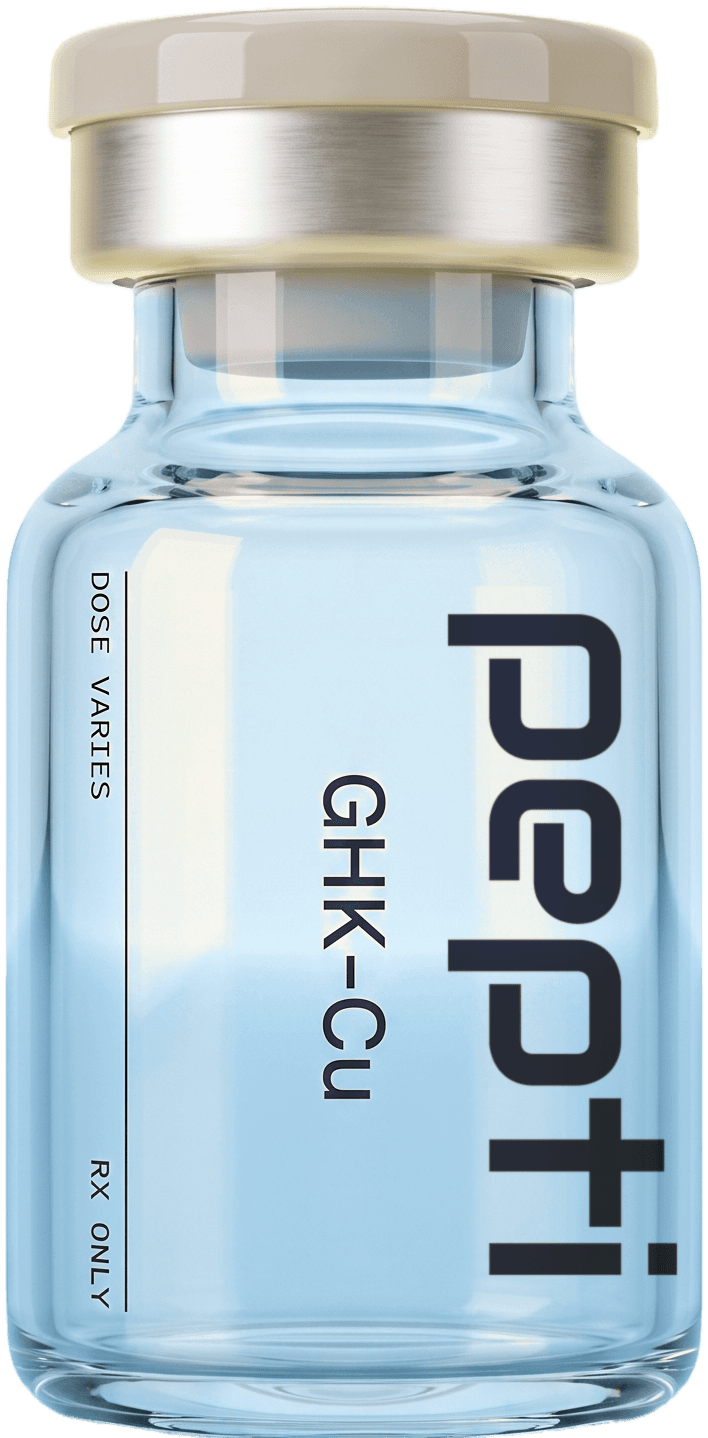
| GHK-Cu | 5 mL vial: 50 mg GHK-Cu | Printed on your vial | $239/mo |
| RADIANCE | 5 mL vial: 50 mg GHK-Cu, 10 mg tesamorelin | Printed on your vial | $249/mo |
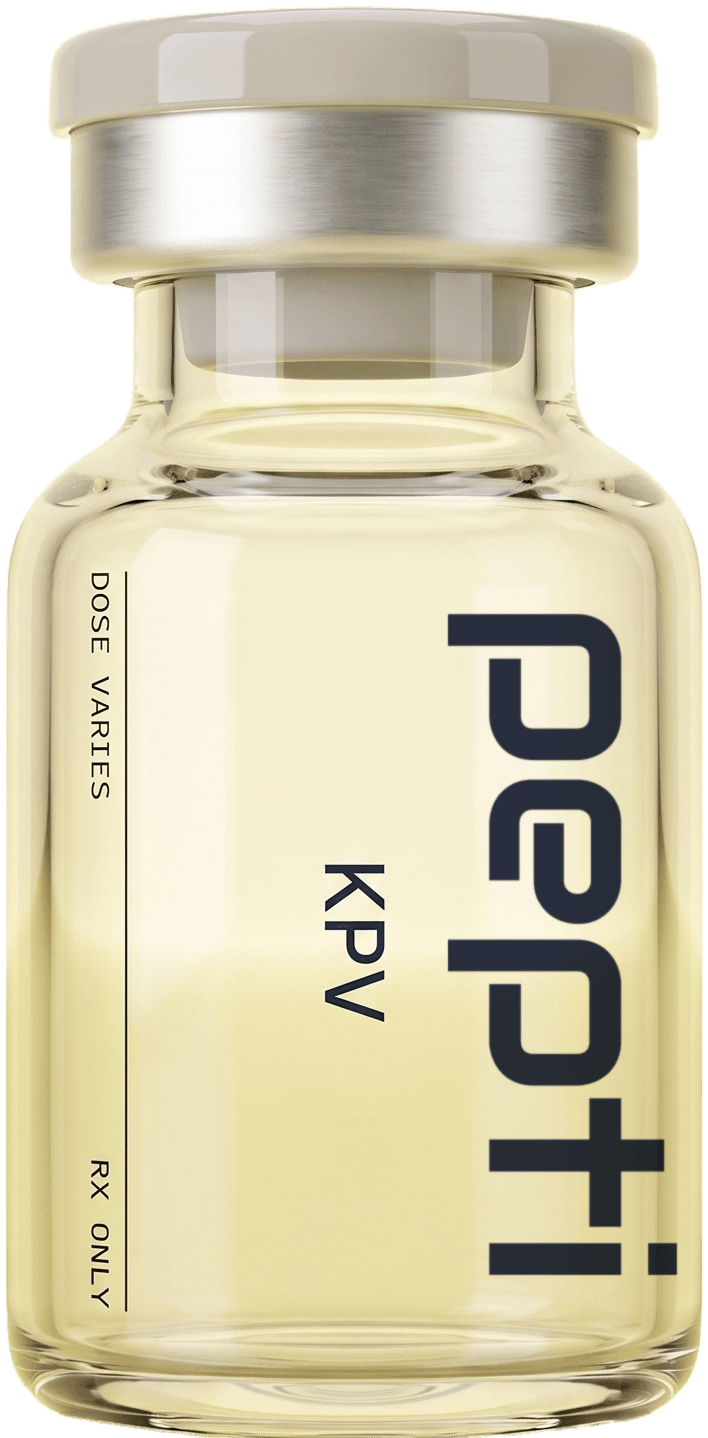
| KPV | 5 mL vial: 10 mg KPV | Printed on your vial | $229/mo |
If skin is the only goal, GHK-Cu on its own is the component with the skin studies, and the other three add repair and inflammation rationales rather than skin evidence. RADIANCE pairs GHK-Cu with tesamorelin, a growth-hormone-axis peptide that brings its own cautions and is not used in pregnancy. The comparisons are in KLOW vs GLOW, GHK-Cu vs KLOW and KPV vs KLOW.
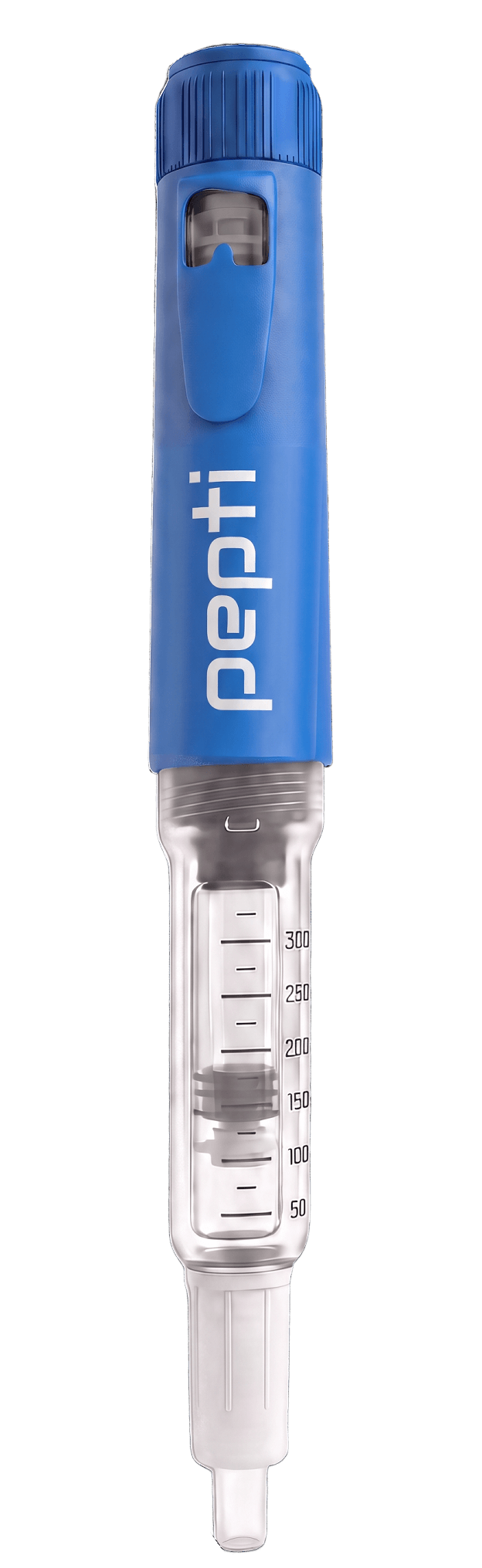
A KLOW vial holds 20 doses at 25 units, about four weeks, so refills run every 28 days, one vial per fill. KLOW also comes as a pre-filled 3 mL Pen cartridge with the same four peptides at the same totals. Your physician sets your directions after reviewing your intake, and they are printed on the vial. The dose math is in KLOW dosage.
Every price is all-in, covering medication, physician review, refill management and shipping, with no membership fee. Pepti is cash-pay and does not bill insurance. Vials arrive as solutions ready to use, with sterile syringes and alcohol prep pads, shipped refrigerated with ice packs. The solution is blue because of the copper, which is expected.
KLOW for Women
Where to get KLOW prescribed
KLOW cannot be bought legitimately without a prescription. Sites shipping it without one are selling a research-use-only product, where no pharmacy is accountable for identity, purity, sterility or concentration. The prescription route:
- Complete a free online intake covering your history, medications and supplements (including zinc and any other GHK-Cu product), pregnancy and breastfeeding status, whether you are drug tested, and the goal.
- A physician licensed in your state reviews it, usually within 24 hours.
- If it is appropriate, a PCAB-accredited, FDA-registered US 503A compounding pharmacy prepares it to that prescription. Lot test results are at /quality/lab-results.
- It ships refrigerated with your directions printed on the vial.
- Your care team stays reachable for questions and side effects.
Step by step: how to get KLOW prescribed online. Bloodwork is not required for any Pepti treatment. If your physician wants labs for your care, they'll ask through your account.
References
What this is based on.
References
- Pickart L, Vasquez-Soltero JM, Margolina A. GHK Peptide as a Natural Modulator of Multiple Cellular Pathways in Skin Regeneration · Biomed Res Int (2015) · PMID 26236730
- Chang CH, Tsai WC, Lin MS et al.. The promoting effect of pentadecapeptide BPC 157 on tendon healing involves tendon outgrowth, cell survival, and cell migration · J Appl Physiol (1985) (2011) · PMID 21030672
- Dalmasso G, Charrier-Hisamuddin L, Nguyen HT et al.. PepT1-mediated tripeptide KPV uptake reduces intestinal inflammation · Gastroenterology (2008) · PMID 18061177
- Goldstein AL, Hannappel E, Sosne G et al.. Thymosin β4: a multi-functional regenerative peptide. Basic properties and clinical applications · Expert Opin Biol Ther (2012) · PMID 22074294
- Brzoska T, Luger TA, Maaser C et al.. Alpha-melanocyte-stimulating hormone and related tripeptides: biochemistry, antiinflammatory and protective effects in vitro and in vivo, and future perspectives for the treatment of immune-mediated inflammatory diseases · Endocr Rev (2008) · PMID 18612139
Citations are provided for educational purposes. They do not constitute medical advice. Always discuss any peptide protocol with your prescribing physician.
Common questions
KLOW for Women, answered.
No study has tested KLOW in women or anyone. Each component has animal and cell research, and GHK-Cu has small topical skin studies that were mostly in women. Any benefit for women is described in that research, not established for the injected blend.
The skin evidence belongs to GHK-Cu, and it is from creams: small cosmetic studies, mostly in women with photoaged facial skin over 8 to 12 weeks. No study has tested injected KLOW for skin.
Not on current evidence. The hair research is rodent and dish work on copper peptides and thymosin beta-4. Iron deficiency, thyroid disease and female-pattern hair loss are worth ruling out first.
It has not been tested for any menopause symptom and is not hormone therapy. GHK-Cu comes up around menopause because collagen loss accelerates then, but no study has looked at it in menopausal skin specifically.
None of the four components is a hormone or acts on the reproductive axis. No study has looked at cycle effects, so report any change.
No interaction is described, and none of the four is described as affecting hormonal contraception. List your contraception on your intake.
No. There is no safety data in either situation. If you become pregnant on treatment, stop and contact your physician the same day.
It is not expected to. KPV keeps alpha-MSH's anti-inflammatory signalling without its pigmentation effect. Report any darkening of skin or moles.
They have not been compared. The only difference is KPV, the anti-inflammatory component. If persistent inflammation is part of the picture, prescribers describe KLOW as the fuller formula; if skin is the main goal, GHK-Cu is the component with the skin studies in both.
The same as for men: mostly injection-site redness, soreness or bruising, sometimes a faint blue-green mark, and in some people early nausea, light-headedness, tiredness or headache. Persistent vomiting, abdominal pain, jaundice or new confusion is a same-day call.
At Pepti, KLOW is $259 a month, all-in, covering medication, physician review, refill management and shipping.
No. Bloodwork is not required for any Pepti treatment. If your physician wants labs for your care, they'll ask through your account. The free assessment goes to a physician licensed in your state. A consultation does not guarantee a prescription.
Next step
See what a physician recommends for you.
A licensed physician in your state reviews your intake and decides what is appropriate. A consultation does not guarantee a prescription.