Recovery · Reference
How to Get GLOW (BPC-157 / GHK-Cu / TB-500) Prescribed Online: The Steps, the Intake and What Arrives
To get GLOW prescribed online, you complete a medical intake with a telehealth provider, a physician licensed in your state reviews it, and if GLOW is appropriate a licensed US 503A compounding pharmacy prepares the vial in your name and ships it refrigerated.
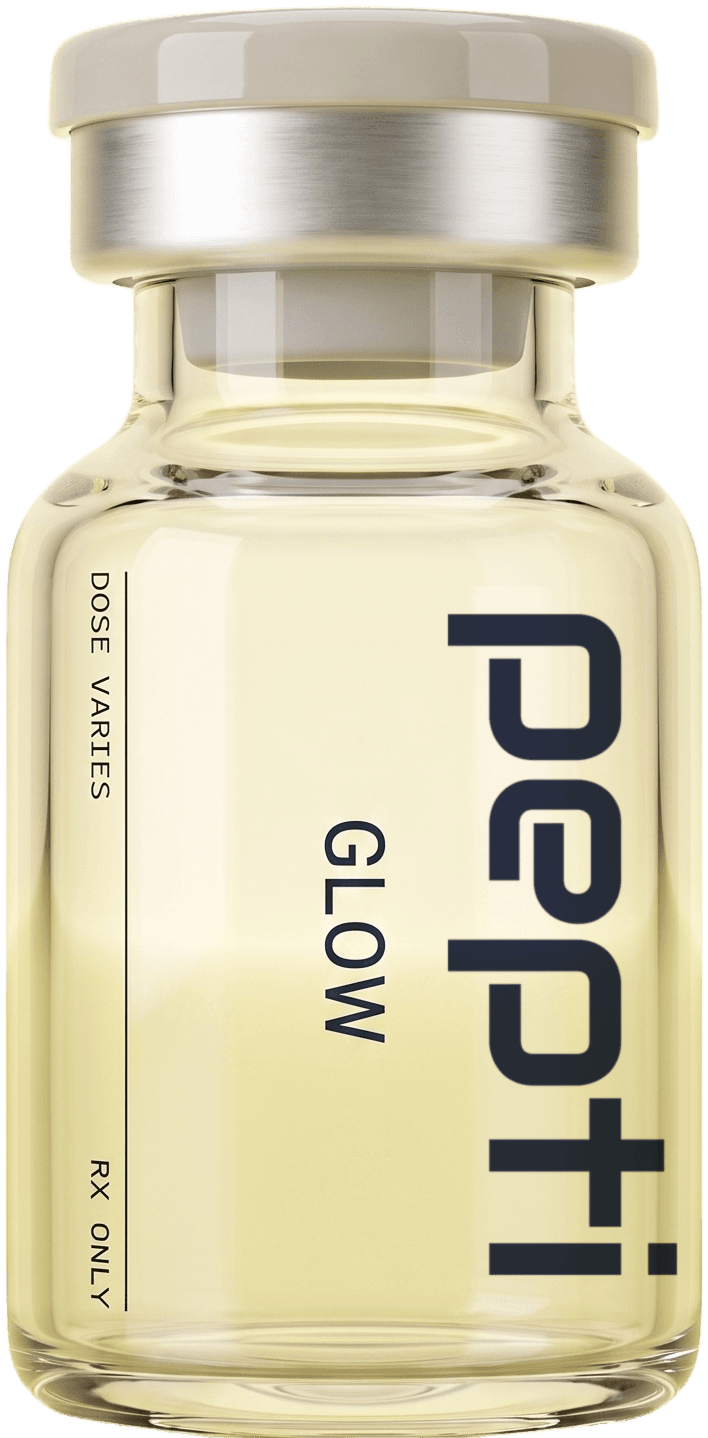
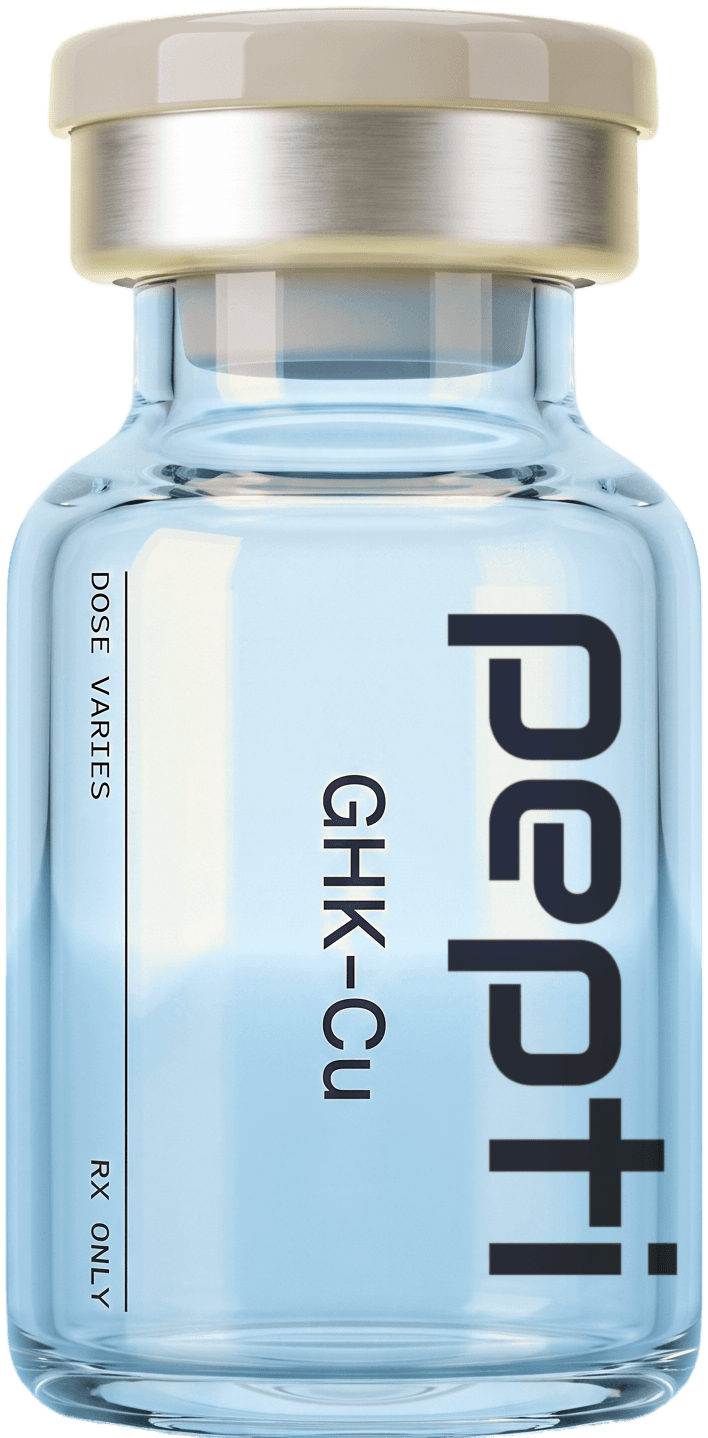
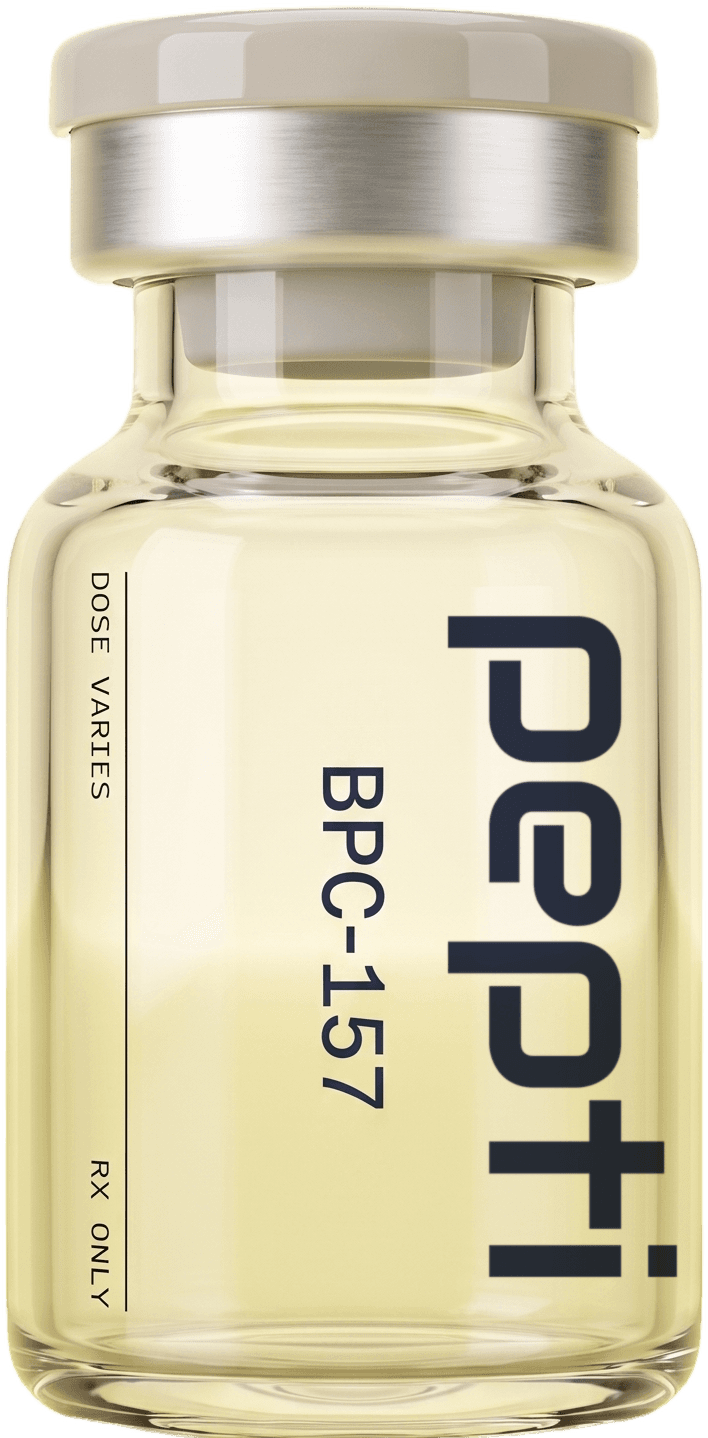
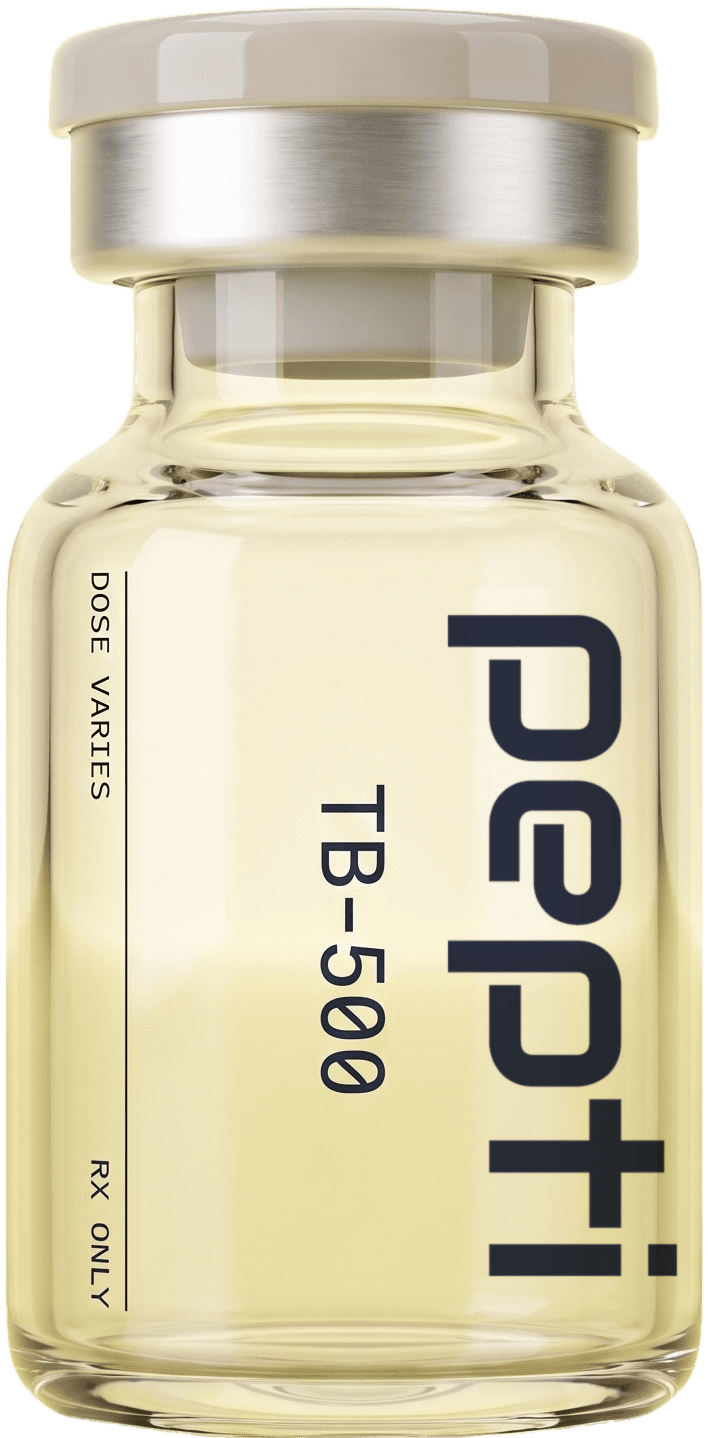
At Pepti that starts with the free assessment, physician review usually happens within 24 hours, and the price is $259 a month all-in for a 5 mL vial containing 50 mg GHK-Cu, 10 mg BPC-157 and 10 mg TB-500. There is no in-person visit, and bloodwork is not required. Compounded GLOW is not FDA approved.
If you are still deciding which provider to use, best place to get GLOW online has the checklist, and the legal background is in do you need a prescription for GLOW. This page is the process itself, from the first question to the first refill.
How to Get GLOW (BPC-157 / GHK-Cu / TB-500) Prescribed Online
The short answer
| Step | What happens | Typical timing |
|---|---|---|
| 1. Assessment | Free questions about what you are looking for | A few minutes |
| 2. Medical intake and checkout | Health history, medications, supplements, allergies and your concern, plus checkout at the all-in price | Several minutes |
| 3. Physician review | A physician licensed in your state reads your file and may ask follow-up questions | Usually within 24 hours |
| 4. Prescription | If appropriate, written for your vial with your directions | After review |
| 5. Compounding | A PCAB-accredited, FDA-registered US 503A pharmacy prepares it | After the prescription |
| 6. Shipping | Refrigerated, with ice packs, syringes and alcohol prep pads | Ships after compounding |
| 7. Refills | Every 28 days, one vial per fill, until you cancel | Ongoing |
If GLOW is not the right fit for what you describe, your physician will tell you.
How to Get GLOW (BPC-157 / GHK-Cu / TB-500) Prescribed Online
Before you start: is GLOW the right conversation?
GLOW is three separately studied peptides in one vial. GHK-Cu is a copper-binding tripeptide described in cell and animal work around collagen and matrix; BPC-157 is described around blood-vessel growth and cell migration; TB-500 is a fragment of thymosin beta-4 described around cell movement into damaged tissue. GHK-Cu is 50 of the 70 mg, so GLOW leans toward skin and connective tissue as much as toward injury.
That shapes the review. A physician is weighing whether a blend aimed at both repair and skin fits what you describe, or whether something narrower fits better:
| If your situation is | A physician may first discuss |
|---|---|
| A single tendon or ligament problem, nothing else | BPC-157 + TB-500, without the GHK-Cu |
| Inflammation that never seems to settle | KLOW, the same three plus KPV |
| A gut complaint | BPC-157 alone, the component with the gut literature |
| Skin as the whole goal | GHK-Cu alone |
| A structural injury, such as a full rupture | Imaging and an orthopedic opinion; no peptide changes that |
More on how GLOW compares is in KLOW vs GLOW, BPC-157 vs GLOW and KPV vs GLOW.
How to Get GLOW (BPC-157 / GHK-Cu / TB-500) Prescribed Online
Step by step
Step 1: the free assessment
The assessment asks what you want help with. It is free and it goes to a physician licensed in your state. It is not a prescription, and finishing it does not commit you to anything.
Step 2: the medical intake
The intake is the step that makes this a prescription rather than a purchase. For GLOW expect questions about:
- Your concern: where it is, how long it has been there, whether it has been imaged or diagnosed, and what rehabilitation you have tried.
- Every medication and supplement you take. Supplements matter more than usual here, because high-dose zinc competes with copper and another GHK-Cu product would double the copper.
- Wilson's disease or any other copper-metabolism disorder, which rules GHK-Cu out.
- A personal history of cancer, and anticoagulant therapy, both raised because of the blood-vessel mechanisms described for the components.
- Allergies and existing conditions, including liver disease.
- Pregnancy or breastfeeding, where GLOW is not used because safety data is absent.
- Whether you are a tested athlete. BPC-157 and TB-500 are named on the WADA Prohibited List at all times; see is GLOW banned in sports.
Checkout is one all-in price. There is no separate fee for the review, the pharmacy or shipping.
Step 3: physician review
A physician licensed in your state reads your intake, usually within 24 hours. They may message you through your account with follow-up questions. If GLOW is not the right tool for what you described, they will tell you. A review that never says no is not a review.
Bloodwork is not required for any Pepti treatment. If your physician wants labs for your care, they'll ask through your account.
Step 4: the prescription
If GLOW is appropriate, the physician writes a prescription for the vial with your directions. Your physician sets your directions after reviewing your intake, and they are printed on the vial. The typical printed direction for this vial is:
On the label What it means Inject 0.25 mL (25 units) 25 units on a U-100 insulin syringe Subcutaneously Into the fat layer, usually abdomen or thigh, rotating sites Monday through Friday mornings 20 doses per vial, about four weeks, weekends off 5 mL: GHK-Cu 10 mg/mL, BPC-157 2 mg/mL, TB-500 2 mg/mL 0.25 mL contains 2.5 mg GHK-Cu, 0.5 mg BPC-157 and 0.5 mg TB-500 (math only) The ratio is fixed by the formulation, so every draw delivers the same split. The units, mL and mg chart is in GLOW dosage.
Step 5: compounding
A PCAB-accredited, FDA-registered US 503A compounding pharmacy prepares the vial to your prescription. A 503A pharmacy compounds for an identified individual patient, which is why your name is on the label. Lot test results are published at lab results.
Step 6: shipping and what is in the box
The vial ships refrigerated in insulated packaging with ice packs. It arrives as a multi-dose solution, ready to use, with directions printed on the vial, along with sterile syringes and alcohol prep pads. Nothing is mixed at home. Put it in the refrigerator when it arrives. The solution is blue because of the copper in GHK-Cu, which is expected; why is GHK-Cu blue explains what a normal vial looks like. The beyond-use date is on the label. See how to store peptides and how to inject peptides safely.
Step 7: after it arrives, and refills
Your care team is reachable through your account for questions about injection technique, side effects or anything that does not look right. The most common reports are injection-site redness, mild soreness and occasional bruising, and sometimes a faint blue-green mark at the site from the copper. Facial or throat swelling, a widespread rash or difficulty breathing means calling 911 first. The full list is in GLOW side effects.
Refills run every 28 days, one vial per fill, which matches 20 weekday doses. Treatment is a subscription that continues until you cancel it. Pepti does not ship stockpiles of vials. If a vial runs short before the refill, message your care team rather than adjusting anything yourself.
How to Get GLOW (BPC-157 / GHK-Cu / TB-500) Prescribed Online
What it costs
| Line item | Included in $259 a month |
|---|---|
| GLOW, 5 mL vial: 50 mg GHK-Cu, 10 mg BPC-157, 10 mg TB-500 | Yes |
| Physician review and prescription | Yes |
| Compounding by a licensed 503A pharmacy | Yes |
| Syringes and alcohol prep pads | Yes |
| Refrigerated shipping | Yes |
| Refill management and messaging your care team | Yes |
| Membership fee | None |
Pepti is cash-pay and does not bill insurance. Current details are on the GLOW product page and the GLOW cost page.
How to Get GLOW (BPC-157 / GHK-Cu / TB-500) Prescribed Online
Where GLOW stands legally
GLOW is a prescription drug, and neither the blend nor any component is FDA approved. BPC-157, TB-500 and injectable GHK-Cu were in Category 2 of the FDA's 503A interim policy from 2023 and were removed in April 2026. On 23 July 2026 the FDA's advisory committee voted 8 to 6, with 1 abstention, to recommend BPC-157 and TB-500 for the 503A bulks list; the final determination is pending. GHK-Cu is scheduled for committee review before the end of February 2027. All three remain legal for a physician to prescribe and a licensed pharmacy to compound. Wider background is in are peptides legal in the US.
References
What this is based on.
References
- Chang CH, Tsai WC, Hsu YH, Pang JH. Pentadecapeptide BPC 157 enhances the growth hormone receptor expression in tendon fibroblasts · Molecules (2014) · PMID 25415472
- Krivic A, Anic T, Seiwerth S, et al.. Achilles detachment of rat and stable gastric pentadecapeptide BPC 157 · Journal of Orthopaedic Research (2006) · PMID 16583442
- Sikiric P, Seiwerth S, Rucman R, et al.. Stable gastric pentadecapeptide BPC 157: novel therapy in gastrointestinal tract · Current Pharmaceutical Design (2011) · PMID 21548867
- Cerovecki T, Bojanic I, Brcic L, Radic B, et al.. Pentadecapeptide BPC 157 (PL 14736) improves ligament healing in the rat · J Orthop Res (2010) · PMID 20225319
- Sikiric P, Seiwerth S, Rucman R, Turkovic B, et al.. Stable gastric pentadecapeptide BPC 157-NO-system relation · Curr Pharm Des (2014) · PMID 23755725
- Cox HD, Miller GD, Eichner D. Detection and in vitro metabolism of the confiscated peptides BPC 157 and MGF R23H · Drug Test Anal (2017) · PMID 28035768
- Thomas A, Görgens C, Guddat S et al.. Simplifying and expanding the screening for peptides <2 kDa by direct urine injection, liquid chromatography, and ion mobility mass spectrometry · J Sep Sci (2016) · PMID 26578461
- Farrar JT, Young JP Jr, LaMoreaux L, Werth JL et al.. Clinical importance of changes in chronic pain intensity measured on an 11-point numerical pain rating scale · Pain (2001) · PMID 11690728
- Meyer JD, Ho B, Manning MC. Effects of conformation on the chemical stability of pharmaceutically relevant polypeptides · Pharm Biotechnol (2002) · PMID 11987755
- Xu C, Sun L, Ren F, Huang P, et al.. Preclinical Safety Evaluation of Body Protective Compound-157, a Potential Drug for Treating Various Wounds · Regul Toxicol Pharmacol (2020) · PMID 32334036
- He L, Feng D, Guo H, et al.. Pharmacokinetics, distribution, metabolism, and excretion of body-protective compound 157, a potential drug for treating various wounds, in rats and dogs · Front Pharmacol (2022) · PMID 36588717
- Lee E, Padgett B. Intra-Articular Injection of BPC 157 for Multiple Types of Knee Pain · Altern Ther Health Med (2021) · PMID 34324435
Citations are provided for educational purposes. They do not constitute medical advice. Always discuss any peptide protocol with your prescribing physician.
Common questions
How to Get GLOW (BPC-157 / GHK-Cu / TB-500) Prescribed Online, answered.
Complete a telehealth medical intake, have a physician licensed in your state review it, and if appropriate a licensed 503A pharmacy compounds and ships the vial. At Pepti, start with the free assessment.
At Pepti, physician review usually happens within 24 hours of a completed intake. Compounding and refrigerated shipping follow.
No. The review is done by a physician licensed in your state through telehealth.
No. Bloodwork is not required for any Pepti treatment. If your physician wants labs for your care, they'll ask through your account.
Everything the intake asks, especially every medication and supplement, any copper disorder, any cancer history, anticoagulants, pregnancy, and whether you are a tested athlete.
At Pepti, $259 a month all-in, covering medication, physician review, refill management and shipping. No membership fee, no insurance billing.
A refrigerated 5 mL multi-dose vial of GLOW with your directions printed on it, sterile syringes and alcohol prep pads, packed with ice packs.
The typical printed direction is 0.25 mL (25 units) under the skin Monday through Friday mornings. Your own directions are the ones printed on your vial.
Every 28 days, one vial per fill, until you cancel.
Pepti prescribes GLOW in most US states. It is not currently available in Oklahoma.
No. Compounded medications are not FDA approved, and none of GLOW's components has been approved for any use. The free assessment goes to a physician licensed in your state. A consultation does not guarantee a prescription.
Related answers
Keep reading.
- GLOW (BPC-157 / GHK-Cu / TB-500): What It Is, Where to Get It Prescribed, and What It Costs
- Is GLOW Banned in Sports? WADA, NCAA and Drug Tests for the GLOW Blend
- Best Place to Get GLOW (BPC-157 / GHK-Cu / TB-500) Online: Choosing a Provider
- Can You Take GLOW With Tirzepatide or Semaglutide?
- How to Get Ipamorelin + Sermorelin Prescribed Online, Step by Step
Next step
See what a physician recommends for you.
A licensed physician in your state reviews your intake to see whether treatment fits your history. A consultation does not guarantee a prescription.