— Recovery · Reference
Are Peptides Legal in the US? Prescription Rules and the Grey Market
This is general information, not legal advice, and the rules move. Your prescribing physician and your pharmacy work to the current ones.
— Treatments mentioned
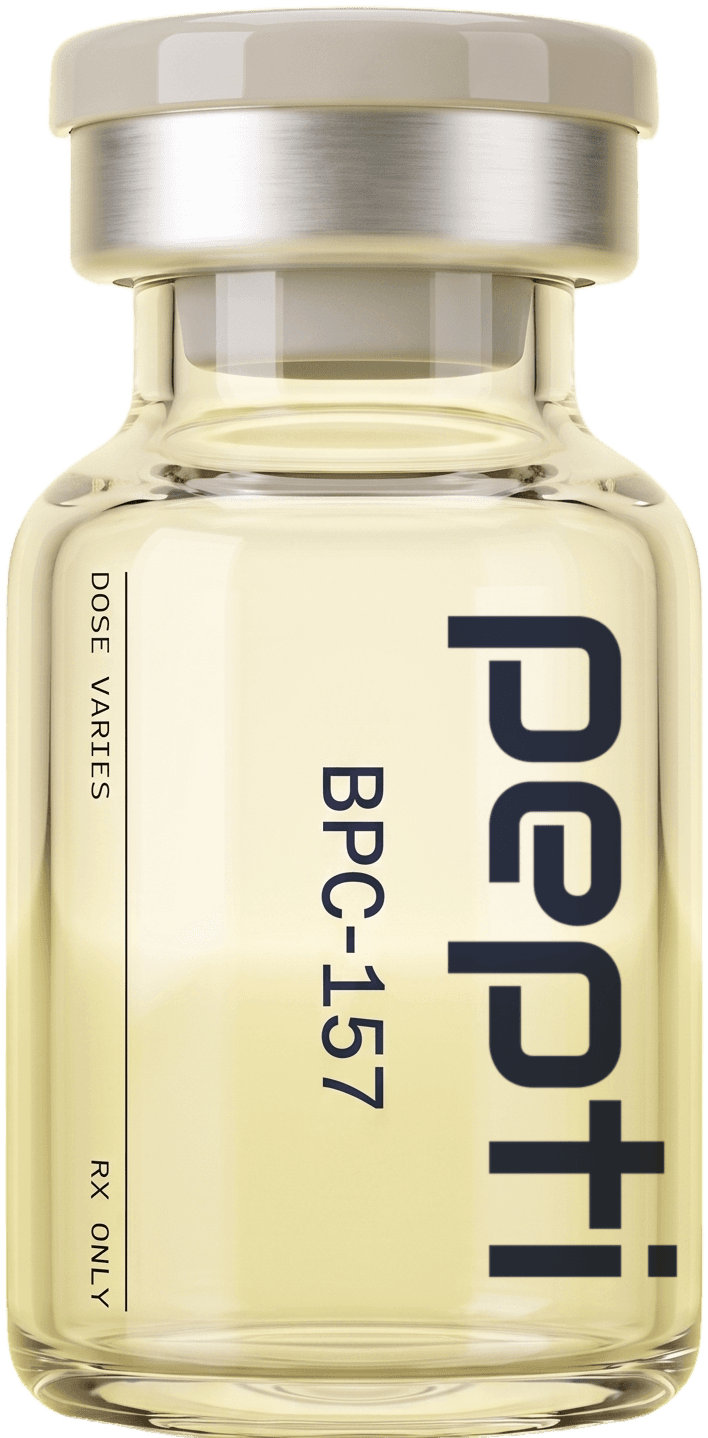
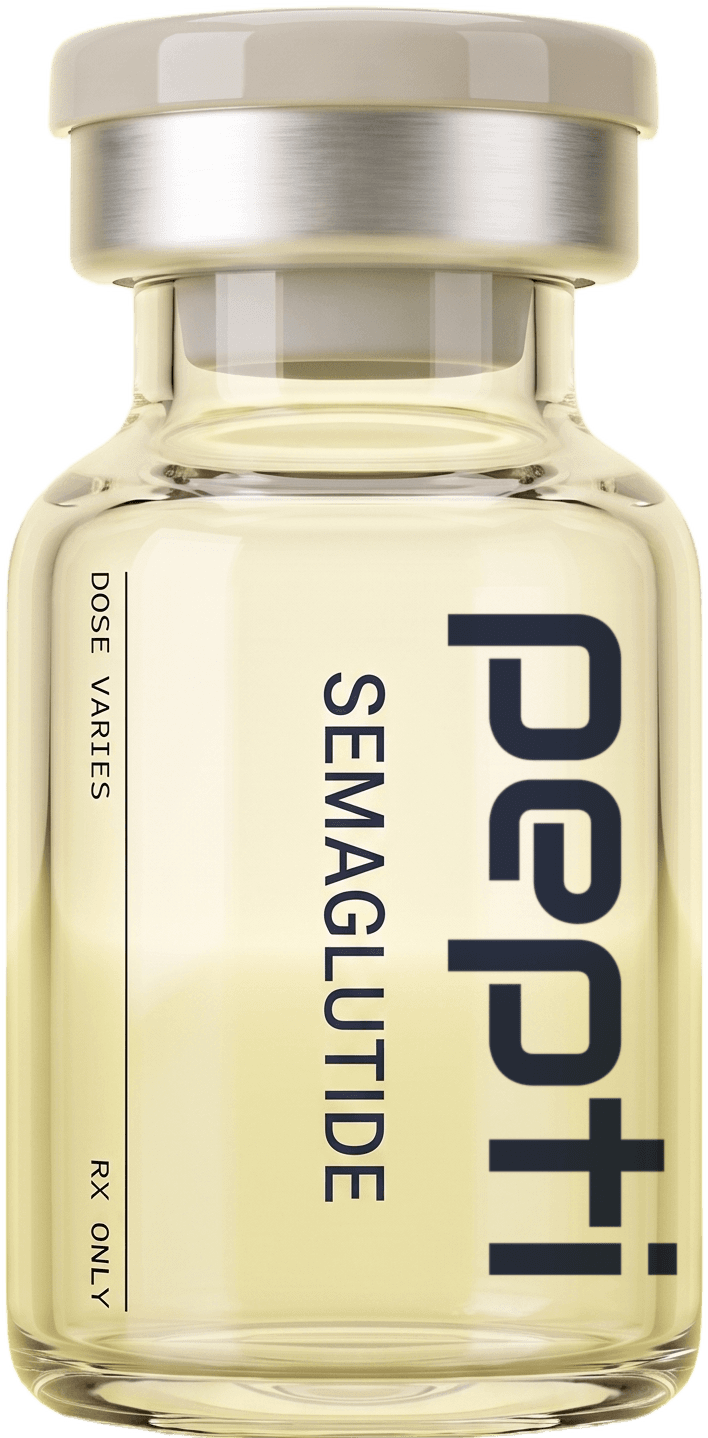
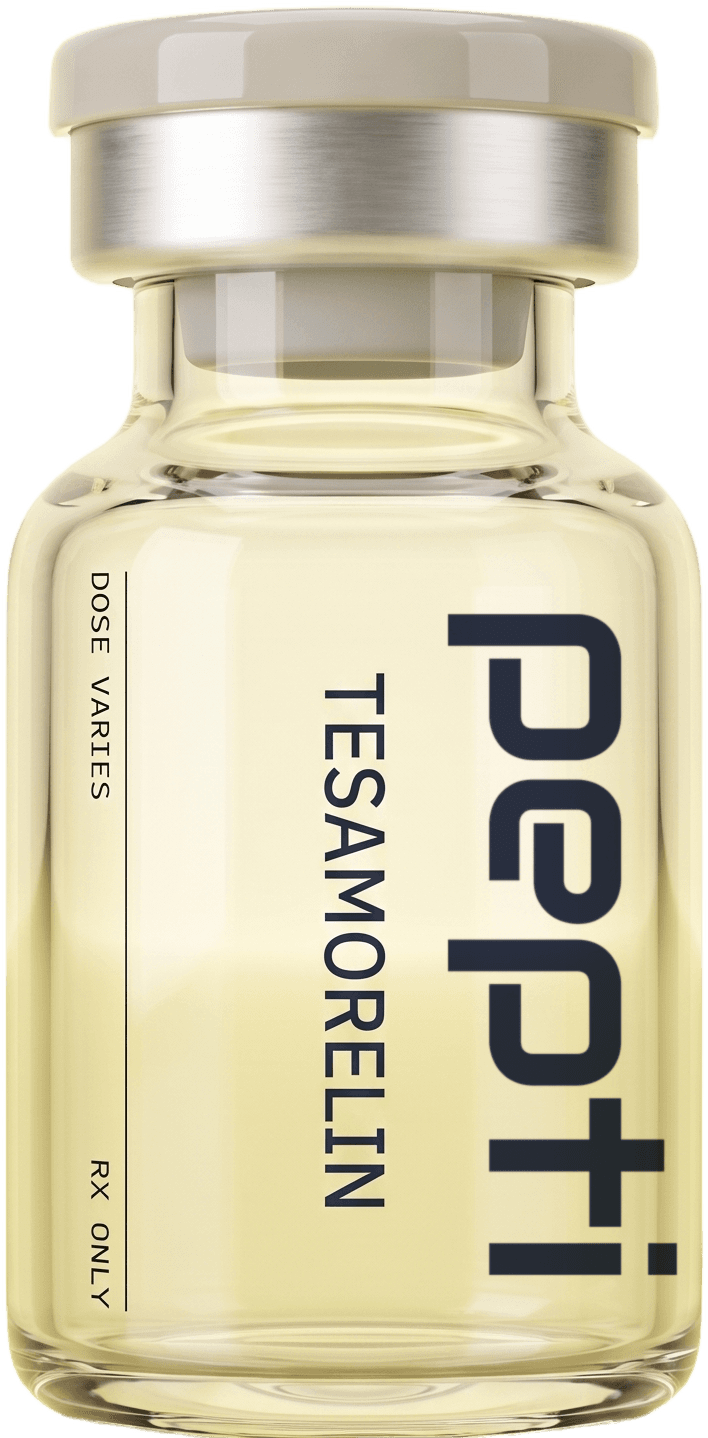
Peptides used clinically are legal in the United States when a physician licensed in your state prescribes them and a licensed pharmacy dispenses them, and they are not legal to sell over the counter for human use. They are also, with few exceptions, not FDA approved, which is a separate question from legality. The "research use only" vials sold online are lawful to sell precisely because the seller states in writing that they are not for human consumption, which is also why no medical or pharmacy standard applies to them. Simple possession of a prescription peptide is not a criminal matter in the way a controlled substance is, because these are not scheduled drugs.
This is general information, not legal advice, and the rules move. Your prescribing physician and your pharmacy work to the current ones.
— Are Peptides Legal in the US? Prescription Rules and the Grey Market
The short answer
| The situation | Legal status | What makes it so | What you pay |
|---|---|---|---|
| Prescribed by a physician licensed in your state, dispensed by a licensed pharmacy | Lawful | Ordinary practice of medicine and pharmacy | $99 to $369 a month all-in, by medication |
| Compounded to your prescription as a multi-dose vial, for example BPC-157 | Lawful, not FDA approved | Section 503A of the Federal Food, Drug, and Cosmetic Act | $209 a month all-in |
| A compounded GLP-1 such as semaglutide | Lawful to compound per prescription where the substance qualifies, not FDA approved | Same statute, and the substance must meet the bulk drug substance rules | $99 a month all-in, dose dependent |
| Buying a vial labelled "research use only" | Lawful to sell, because human use is disclaimed | The disclaimer is what keeps it outside drug regulation | Cheaper, with nothing behind it |
| Using that vial on yourself | Not a crime, and not covered by any standard | You have stepped outside what the label permits | The risk sits entirely with you |
| Importing peptides for personal use | Frequently refused at the border | Unapproved new drugs are subject to refusal | Lost shipment, no recourse |
| Competing in tested sport while taking them | Prohibited under sporting rules | Anti-doping codes, not criminal law | Sanction from your federation |
— Are Peptides Legal in the US? Prescription Rules and the Grey Market
The four rules that actually decide this
Almost every argument about peptide legality is really an argument about which of four rules someone is standing under. They are separate rules with separate consequences, and mixing them up is where the confusion comes from.
— The prescription requirement
Section 503(b) of the Federal Food, Drug, and Cosmetic Act, at 21 U.S.C. § 353(b), creates prescription-only status: a drug "not safe for use except under the supervision of a practitioner licensed by law to administer such drug" may be dispensed only on a prescription. The enforcement mechanism is misbranding — "the act of dispensing a drug contrary to the provisions of this paragraph shall be deemed to be an act which results in the drug being misbranded while held for sale." That sentence explains the whole market: the violation attaches to the act of dispensing, by the seller, and does not create an offence of possessing or using. That is the structural reason the grey market exists, and why your exposure as a patient differs in kind from the seller's.
— The approval requirement
Section 505(a), at 21 U.S.C. § 355(a): "no person shall introduce or deliver for introduction into interstate commerce any new drug, unless an approval of an application filed pursuant to subsection (b) or (j) is effective with respect to such drug." Most peptide products would fall foul of this if nothing else applied, because almost none have been through an approval application as finished products.
— The compounding exemption
Section 503A, at 21 U.S.C. § 353a, resolves that. It exempts a drug compounded by a licensed pharmacist or licensed physician from three requirements at once — section 505 (approval), section 502(f)(1) (adequate directions for use) and section 501(a)(2)(B) (current good manufacturing practice) — provided a list of conditions is met. This is the statute that makes BPC-157 and every other compounded peptide lawful. It is not a loophole; it is an express exemption Congress wrote, amended most recently by the Drug Quality and Security Act of 2013.
— State medical practice and pharmacy acts
The three rules above are federal. Who may prescribe to you, and which pharmacy may ship to you, are answered by state law. Medical practice acts define what establishes a physician–patient relationship and whether a telemedicine encounter is enough. Pharmacy acts license the dispenser and, through non-resident registration, control which out-of-state pharmacies may ship in at all.
— Are Peptides Legal in the US? Prescription Rules and the Grey Market
What makes a prescription route lawful
Three things have to be true at once, and a legitimate provider can evidence all three.
| Requirement | What it means in practice | How to verify it |
|---|---|---|
| A valid prescriber relationship | A physician licensed in your state reviewed your history and decided the medication is appropriate | The prescriber is named; check the state medical board |
| A valid prescription | Written for you, for a stated medication, strength and direction | Your name and the sig are printed on the vial label |
| A licensed dispenser | A pharmacy licensed by a state board, registered with the FDA | Ask which pharmacy and which state, then look it up |
Telemedicine satisfies the first requirement where state rules allow it, which is why peptide telehealth exists at all. States differ on what kind of encounter establishes the relationship, and a provider operating properly is licensed where you live rather than where it is headquartered.
None of the peptides discussed here are controlled substances under the Controlled Substances Act. That is why possession is not a scheduling question, and it is also why the meaningful controls are the prescription requirement and the pharmacy rules rather than criminal law.
"For an identified individual patient" is the load-bearing phrase
Section 503A requires that the drug be "compounded for an identified individual patient based on the receipt of a valid prescription order." That phrase separates lawful compounding from unlawful manufacturing. A pharmacy filling named prescriptions is compounding; an operation producing the same preparation in volume for whoever buys it is manufacturing without an approved application, and does not get the exemption. The test you can apply yourself is whether your name is on the vial, alongside the medication, the strength and the directions. A product arriving in generic packaging with no patient name was not compounded for you.
Why none of this is a scheduling question
The DEA publishes its schedules as an alphabetical list of controlled substances. None of the peptides discussed here appear on it — not BPC-157, not semaglutide or tirzepatide, not tesamorelin, not the growth-hormone-axis peptides.
That cuts two ways. There is no DEA registration question and no criminal possession statute in play. It also means the prescription requirement and the pharmacy rules are the only real controls on these medications — so a provider who treats them casually is not lightly regulated, it is operating outside the only regulation there is.
— Are Peptides Legal in the US? Prescription Rules and the Grey Market
What a compounding pharmacy may actually use
This is the part almost nobody explains properly, and it determines what is on any pharmacy's menu. Under 503A, a compounding pharmacy may only use a bulk drug substance — the raw active powder — if it meets one of three conditions: it complies with the standards of an applicable United States Pharmacopeia or National Formulary monograph; or, failing that, is a component of a drug approved by the Secretary; or, failing both, appears on a list developed by the Secretary.
— Route one: a USP or National Formulary monograph
A monograph is a published compendial standard defining identity, strength, quality and purity for a substance. Where one exists, the pharmacy sources material that complies with it and the first condition is satisfied. Many of the older injectable actives — the B vitamins, amino acids and similar — sit here.
— Route two: a component of an FDA-approved drug
If the active is the active ingredient of an approved finished drug, the second condition is satisfied. This is why several medications on this site have an unusually clean regulatory footing. Tesamorelin is the active ingredient of Egrifta, approved 10 November 2010. Bremelanotide — the molecule sold as PT-141 — is the active ingredient of Vyleesi, approved 21 June 2019. Semaglutide is the active ingredient of Ozempic, approved 5 December 2017. Tirzepatide is the active ingredient of Mounjaro, approved 13 May 2022.
Note what that does and does not mean. The bulk substance qualifies under the second route; the compounded preparation is not thereby FDA approved. A compounded semaglutide or tesamorelin preparation is not the approved product and is not approved itself — two different objects, and the distinction is the most abused point in peptide marketing.
— Route three: the FDA's own 503A list
Where there is no monograph and no approved drug containing the substance, the only remaining statutory route is FDA's list. It exists as a final rule at 21 C.F.R. § 216.23 and currently contains six substances: Brilliant Blue G, cantharidin, diphenylcyclopropenone, N-acetyl-D-glucosamine, squaric acid dibutyl ester and thymol iodide, most of them topical only.
Six, and no peptides. That is why the interim categories below exist, and why peptide availability moves the way it does.
— What the interim categories mean
Because the formal list is that short and rulemaking is slow, FDA runs an interim policy: nominated substances are sorted into three categories while evaluation proceeds — Category 1, "Bulk Drug Substances Under Evaluation"; Category 2, "Bulk Drug Substances that Raise Significant Safety Risks"; and Category 3, "Bulk Drug Substances Nominated Without Adequate Support."
Category 1 is the working category: substances under evaluation, against which FDA has said it does not presently intend to take action while review continues. Category 2 is the flagged category. Category 3 is the paperwork category — nominated without enough supporting information to evaluate, which is a statement about the nomination file rather than the molecule. Substances move between categories as evidence is submitted, nominations are amended or withdrawn, and review advances.
— Where the list stands in September 2026
The current version of FDA's nominated-substances document is dated 14 May 2026. Category 1 runs to roughly fifty substances and includes several actives used in injectable wellness medicine — glutathione, methylcobalamin and nicotinamide adenine dinucleotide among them. Category 2 is by far the shortest of the three.
BPC-157 appears in none of the three categories on that document. It had been placed in Category 2 in 2023 and was removed in April 2026, and in July 2026 FDA's Pharmacy Compounding Advisory Committee took up whether it should be added to the 503A bulks list — an advisory recommendation is not a final determination, and FDA's own determination controls. The accurate description today: no longer flagged, under active consideration, and not an approved drug product, which compounded medications never are.
— The "essentially a copy" restriction
Section 503A also says a pharmacist may not "regularly or in inordinate amounts" compound drug products that are essentially copies of a commercially available drug product — with an express exception where the prescriber determines a change from the commercial product produces "a significant difference" for that identified patient. This provision most often drives a menu change on a medication also sold as a brand: a live judgement made on each prescription rather than a blanket rule. A separate provision lets FDA identify products presenting "demonstrable difficulties for compounding that reasonably demonstrate an adverse effect on the safety or effectiveness" of the product, which may not be compounded at all.
— Are Peptides Legal in the US? Prescription Rules and the Grey Market
Why product menus change, and why that is a good sign
The practical consequence for you:
- A peptide that was on a provider's menu last year may not be on it this year.
- A pharmacy that stops filling something is following the rule, not failing you.
- A provider that keeps selling a substance after its pharmacy will no longer compound it is not sourcing from that pharmacy.
- "Available elsewhere" is usually a grey-market seller, not a better-informed pharmacy.
The mechanics of who may compound what are in what is a 503A compounding pharmacy.
What a menu change looks like from the inside
From the outside it can look arbitrary; the sequence is not. FDA updates its nominated-substances document, the pharmacy's regulatory team reads it and decides what it will compound from that date, the prescriber is notified, open prescriptions are reviewed, and affected patients are moved to an alternative. Nothing about the molecule changed overnight — what changed is whether the pharmacy can stand behind compounding it. A provider that quietly keeps taking orders through that sequence has either changed pharmacy without telling you, or was never using the one it named.
— Are Peptides Legal in the US? Prescription Rules and the Grey Market
The research-use-only market, precisely
Sellers ship vials stating the contents are not for human consumption. That statement does the legal work: a substance not intended for human use is not being marketed as a drug, so drug regulation does not attach to the sale. It is lawful to sell on those terms. What that also means:
- No pharmacy licence, no pharmacist, no state board, no inspection.
- No requirement to test identity, purity, sterility or concentration, and no obligation to show you results if they exist.
- No prescriber, so no one has looked at your history, your medications or your contraindications.
- No recourse. There is nobody to complain to and nothing to enforce, because you used a product in a way its label disclaimed.
Independent testing of grey-market peptide products has repeatedly found vials that were underdosed, overdosed, mislabelled or contaminated. The molecule name on the label may well be right. Everything else is unverified. The full comparison is in research peptides vs prescription peptides.
— The regulation the disclaimer relies on
There is an actual regulation behind this, and it is narrower than sellers imply. 21 C.F.R. § 201.125 exempts a drug from section 502(f)(1) — the requirement to bear adequate directions for use — when it is "shipped or sold to, or in the possession of, persons regularly and lawfully engaged in instruction in pharmacy, chemistry, or medicine not involving clinical use, or engaged in law enforcement, or in research not involving clinical use, or in chemical analysis, or physical testing," and is "to be used only for such instruction, law enforcement, research, analysis, or testing."
Two conditions, not one. The buyer must be a person lawfully engaged in non-clinical research, and the material must be used only for that. A consumer buying a vial to inject is neither, so the exemption does not describe the transaction actually happening — and the burden of that mismatch lands on the buyer.
— Why intent, not the molecule, is the legal test
21 C.F.R. § 201.128 defines "intended uses" as "the objective intent of the persons legally responsible for the labeling of an article," shown by labeling claims, advertising, oral or written statements, the design or composition of the article, and the circumstances in which it is, with the seller's knowledge, "offered or used for a purpose for which it is neither labeled nor advertised."
That last clause is why this area is more fragile than the disclaimer suggests. The molecule is not what makes something a drug — intent is. A seller who disclaims human use on the label while the site's marketing, dosing charts and testimonials describe human use is generating exactly the evidence the regulation points to.
— Why "research grade" is not a grade
"Research grade," "pharma grade" and "99% purity" have no legal or compendial meaning in grey-market listings. None is defined by a standard, verified by anyone, or creates an obligation. A USP monograph is a real standard with a real testing method behind it, and a certificate of analysis from a pharmacy that will put its licence behind the preparation is a real document. What those look like is on our lab results page.
— Are Peptides Legal in the US? Prescription Rules and the Grey Market
Importing peptides for personal use
FDA's personal importation page states the default plainly: "in most circumstances, it is illegal for individuals to import drugs or devices into the U.S. for personal use because these products purchased from other countries often have not been approved by the FDA." Peptides ordered from overseas sit squarely in that description, and a shipment stopped at the border is not a negotiation you win.
FDA does describe situations where its personnel may exercise discretion — broadly, a product for a serious condition with no effective domestic treatment, not commercialised in the US, presenting no unreasonable risk, with a written affirmation that it is for personal use, limited to "generally not more than a three month supply," and supported by documentation from a US licensed physician or evidence of continuing a treatment begun abroad.
That is a narrow door, and wellness peptides ordered from an overseas website do not walk through it. The useful takeaway is not that importing is criminal for you — it is that the route has no floor: no recourse if the shipment vanishes, no accountability for what is in the vial, and no prescriber.
— Are Peptides Legal in the US? Prescription Rules and the Grey Market
Peptides and the dietary supplement question
You will occasionally see peptides sold as capsules or sprays labelled as dietary supplements. The statutory definition makes that a difficult position to hold. A dietary supplement under 21 U.S.C. § 321(ff) must be a vitamin, mineral, herb, amino acid or related constituent intended for ingestion and labeled as such — and the definition expressly excludes an article "approved as a new drug under section 355" or "authorized for investigation as a new drug" for which substantial clinical investigations have been instituted and made public. Several peptides have been the subject of exactly such investigations. And the definition of "drug" reaches any article other than food "intended to affect the structure or any function of the body." A product marketed for what peptides are marketed for is describing a drug, whatever the label says.
— Are Peptides Legal in the US? Prescription Rules and the Grey Market
State law is where this becomes specific
What the states control
The federal rules above are uniform. The state layer is not, and it decides your actual experience. States set what kind of encounter creates a physician–patient relationship, whether an asynchronous telemedicine intake suffices, whether a video or telephone consultation is required, and what must be documented. States license the pharmacy and register out-of-state pharmacies that ship in. Some impose additional requirements on compounded sterile preparations or on specific categories of medication.
Why we do not publish a state-by-state legal chart
Because it would be wrong within a quarter, and because a chart is the wrong instrument. State rules change on their own timetable, boards issue guidance between rule changes, and the interaction between a medical board position and a pharmacy board position is not something a table captures. What you can do instead takes a minute: confirm the prescriber is licensed in your state, ask which pharmacy will dispense and where it is licensed, and verify both with the relevant boards. That answers your state question definitively, today, which no chart can.
— Are Peptides Legal in the US? Prescription Rules and the Grey Market
Not FDA approved is not the same as illegal
What approval actually certifies
Two things are commonly confused and should not be. Not FDA approved does not mean illegal: approval applies to a manufactured product that went through the approval process, while lawful compounding is a different pathway with its own oversight. And FDA registration of a pharmacy is not FDA approval of a drug. A provider using those interchangeably is either careless or hoping you will not notice. Compounded medications are not FDA approved — FDA states it directly: "compounded drugs are not FDA-approved. This means that FDA does not verify the safety, effectiveness or quality of compounded drugs before they are marketed."
What oversight a 503A pharmacy is actually under
The oversight is real but it is not product approval. FDA describes the split: "state boards of pharmacy have primary responsibility for the day-to-day oversight of state-licensed pharmacies," while FDA conducts surveillance and for-cause inspections. Drugs compounded under 503A are not subject to current good manufacturing practice requirements; drugs compounded in a 503B outsourcing facility are, and those facilities are inspected by FDA on a risk-based schedule.
So the accurate framing of a compounded BPC-157 vial is: prepared by a pharmacist licensed by a state board, in a pharmacy that board inspects, on a prescription written for you by a physician licensed in your state, from a bulk substance the pharmacy has satisfied itself qualifies under 503A. That is a genuine chain of accountability. It is not FDA approval, and anyone telling you it is has stopped being useful to you.
— Are Peptides Legal in the US? Prescription Rules and the Grey Market
What the evidence shows, honestly
The legal framework above is settled and documentable: section 503A of the Federal Food, Drug, and Cosmetic Act, as amended by the Drug Quality and Security Act of 2013, state pharmacy licensure, and state medical practice acts. What is genuinely unsettled is the regulatory status of individual peptide substances, which is under active review and moves. Separately, legality says nothing about evidence. For most of the wellness peptides the published research is preclinical: animal and cell work rather than large randomised human trials. Lawful, prescribed and well made is not the same as proven, and an honest prescriber will say so.
Where the human evidence is genuinely strong
The generalisation has real exceptions and it is dishonest to flatten them. Semaglutide and tirzepatide have among the largest randomised trial programmes in modern medicine — the STEP and SELECT trials for semaglutide, the SURMOUNT and SURPASS programmes for tirzepatide, in the New England Journal of Medicine and The Lancet. Tesamorelin was studied in randomised placebo-controlled phase 3 trials in people with HIV-associated abdominal fat accumulation, reported in the New England Journal of Medicine in 2007 and later in JAMA and Lancet HIV. Bremelanotide, the molecule dispensed as PT-141, was studied in randomised trials in premenopausal women with hypoactive sexual desire disorder, reported in Obstetrics & Gynecology in 2019 and in the Journal of Women's Health in 2022.
Where it is not
BPC-157, by contrast, has no large randomised controlled trials in humans. The literature is animal and cell research, and the honest framing is "described in preclinical research and used clinically," not "proven in people." Both statements can be true about the same catalogue, and a reference that will not distinguish between them is not worth reading. Are peptides safe long term covers what is and is not known.
— References
What this is based on.
References
- Chang CH, Tsai WC, Hsu YH, Pang JH. Pentadecapeptide BPC 157 enhances the growth hormone receptor expression in tendon fibroblasts · Molecules (2014) · PMID 25415472
- Krivic A, Anic T, Seiwerth S, et al.. Achilles detachment of rat and stable gastric pentadecapeptide BPC 157 · Journal of Orthopaedic Research (2006) · PMID 16583442
- Sikiric P, Seiwerth S, Rucman R, et al.. Stable gastric pentadecapeptide BPC 157: novel therapy in gastrointestinal tract · Current Pharmaceutical Design (2011) · PMID 21548867
- Cerovecki T, Bojanic I, Brcic L, Radic B, et al.. Pentadecapeptide BPC 157 (PL 14736) improves ligament healing in the rat · J Orthop Res (2010) · PMID 20225319
- Sikiric P, Seiwerth S, Rucman R, Turkovic B, et al.. Stable gastric pentadecapeptide BPC 157-NO-system relation · Curr Pharm Des (2014) · PMID 23755725
- Cox HD, Miller GD, Eichner D. Detection and in vitro metabolism of the confiscated peptides BPC 157 and MGF R23H · Drug Test Anal (2017) · PMID 28035768
- Thomas A, Görgens C, Guddat S et al.. Simplifying and expanding the screening for peptides <2 kDa by direct urine injection, liquid chromatography, and ion mobility mass spectrometry · J Sep Sci (2016) · PMID 26578461
- Farrar JT, Young JP Jr, LaMoreaux L, Werth JL et al.. Clinical importance of changes in chronic pain intensity measured on an 11-point numerical pain rating scale · Pain (2001) · PMID 11690728
- Meyer JD, Ho B, Manning MC. Effects of conformation on the chemical stability of pharmaceutically relevant polypeptides · Pharm Biotechnol (2002) · PMID 11987755
- Xu C, Sun L, Ren F, Huang P, et al.. Preclinical Safety Evaluation of Body Protective Compound-157, a Potential Drug for Treating Various Wounds · Regul Toxicol Pharmacol (2020) · PMID 32334036
- He L, Feng D, Guo H, et al.. Pharmacokinetics, distribution, metabolism, and excretion of body-protective compound 157, a potential drug for treating various wounds, in rats and dogs · Front Pharmacol (2022) · PMID 36588717
- Lee E, Padgett B. Intra-Articular Injection of BPC 157 for Multiple Types of Knee Pain · Altern Ther Health Med (2021) · PMID 34324435
Citations are provided for educational purposes. They do not constitute medical advice. Always discuss any peptide protocol with your prescribing physician.
— Common questions
Are Peptides Legal in the US? Prescription Rules and the Grey Market, answered.
The sale is lawful when the seller labels the product for research use only, because human use has been disclaimed. Using it on yourself is not a crime, but it is outside what the label permits and outside every standard that makes a medication a medication. The exemption the seller relies on, at 21 C.F.R. § 201.125, applies to material shipped to persons lawfully engaged in research not involving clinical use and used only for that purpose — which does not describe a consumer buying a vial to inject. See can you buy peptides without a prescription.
No. The peptides discussed here are not scheduled under the Controlled Substances Act. They are prescription medications, which is a different control: the requirement is a prescriber and a pharmacy, not a DEA schedule. None of them appear on the DEA's published alphabetical list of controlled substances.
It is lawful for a physician to prescribe and for a licensed pharmacy to compound where the substance qualifies under the compounding rules, and it is not FDA approved. BPC-157 was placed in Category 2 of FDA's nominated bulk drug substances document in 2023 and removed from that category in April 2026; it does not appear in any of the three categories on the version dated 14 May 2026. Availability can change as the regulatory review of individual substances moves, which is why a pharmacy's menu is the practical answer. See is BPC-157 banned.
Unapproved new drugs are subject to refusal at the border, and personal-import shipments of peptides are frequently stopped. FDA's own position is that "in most circumstances, it is illegal for individuals to import drugs or devices into the U.S. for personal use." You lose the shipment and have no recourse, which makes it an expensive way to save money.
No. Legality is about who may prescribe and dispense. Evidence is a separate question, and for most of these molecules it is preclinical. Are peptides safe long term covers what is and is not known.
Standard employment panels do not look for them. Sport anti-doping testing is a different matter and many peptides are prohibited in competition. Anti-doping rules are not law and are not enforced by any government — they are contractual rules of the federations, revised annually, so a medication can be entirely lawful for you to hold and use and still be prohibited in competition. If you compete under a testing programme, check the current prohibited list for your sport before starting anything and tell your physician. See do peptides show up on a drug test.
Ask for the prescriber's name and licence state, and the pharmacy's name and licence state, then verify both with the relevant state boards — every state publishes free licence verification. Check that the vial carries your name, the medication, the strength and the directions, and that certificates of analysis are published; ours are. Ask for the published price, which belongs on the product page and cost page rather than being quoted after an intake. A provider that answers all of that in a minute is the one you want.
Section 503A of the Federal Food, Drug, and Cosmetic Act, at 21 U.S.C. § 353a. It exempts a drug compounded by a licensed pharmacist or licensed physician for an identified individual patient, on a valid prescription, from the approval requirement of section 505, the adequate-directions requirement of section 502(f)(1) and the good manufacturing practice requirement of section 501(a)(2)(B).
Semaglutide qualifies as a bulk substance under the "component of an FDA-approved drug" route, because it is the active ingredient of an approved product. Whether a particular compounded preparation may be dispensed to you also depends on the "essentially a copy" provision in 503A, which turns on a prescriber determination that a change produces a significant difference for you as an identified patient. That is a judgement your physician and the pharmacy make on your prescription. The same structure applies to tirzepatide.
Yes, and Egrifta is part of why. Tesamorelin is the active ingredient of an FDA-approved product, approved 10 November 2010, which satisfies the second statutory route for bulk substances under 503A. A compounded tesamorelin preparation is still not itself FDA approved, and the "essentially a copy" provision still applies to the prescriber's judgement. The same reasoning applies to PT-141, whose molecule is the active ingredient of an approved product.
The federal answer is the same everywhere; the state answer is genuinely state-specific. States decide what kind of encounter creates a valid physician–patient relationship, whether an asynchronous telemedicine intake is enough, and which out-of-state pharmacies may ship in. Rather than trust a chart, confirm which state the prescriber is licensed in and which state the pharmacy is licensed in, then verify both with those boards. The free assessment routes to a physician licensed in your state.
The statutory definition makes that difficult. A dietary supplement under 21 U.S.C. § 321(ff) expressly excludes an article approved as a new drug, or authorized for investigation as a new drug where substantial clinical investigations have been instituted and made public. And the definition of "drug" reaches anything other than food intended to affect the structure or any function of the body. A peptide marketed for a physiological effect is describing a drug regardless of the label on the bottle.
Usually because FDA updated its nominated-substances document and the compounding pharmacy revised what it will make, or because the "essentially a copy" analysis changed for a medication also sold as a brand. Neither means the molecule became dangerous overnight. A pharmacy that stops is following the rule; a provider that keeps selling after its named pharmacy stopped has changed pharmacy, or never used the one it named. What we publish about our own pharmacies and testing is on the quality page. The free assessment goes to a physician licensed in your state. A consultation does not guarantee a prescription.
— Next step
See what a physician
recommends for you.
A licensed physician in your state reviews your intake and decides what is appropriate. A consultation does not guarantee a prescription.
Important legal & safety information
The assessment process available on the Pepti website asks a series of medical questions, and the answers provided are reviewed by an independent licensed physician affiliated with our partner physician network. The licensed providers have established exclusionary criteria, and the answers provided determine if the individual is screened out of eligibility for treatment. The licensed clinicians retain the sole decision to prescribe peptide therapy and other compounded medications to patients. Treatment may be denied at the physician's sole discretion. If a prescription is not approved, you will not be charged for the medication.
Pharmacy Providers. Pepti is a technology platform and is not a healthcare provider, pharmacy, or prescriber. All medications offered through the platform are compounded by independent FDA-registered 503A or 503B compounding pharmacies based on a valid prescription written by a licensed physician for an individual patient. Compounded medications are not FDA-approved as products. The active pharmaceutical ingredients used by our partner pharmacies are sourced from FDA-registered facilities. Compounded medications may not undergo the same testing or quality control as commercially manufactured FDA-approved drugs.
Results vary. Results from peptide therapy and other compounded treatments vary based on individual factors, including age, weight, medical history, adherence to the prescribed protocol, lifestyle factors, and physiological response. Pepti makes no guarantee of any specific outcome. Statements about peptide therapy and compounded medications offered through the platform have not been evaluated by the Food and Drug Administration. These products are not intended to diagnose, treat, cure, or prevent any disease.
Product images. Product photographs and renderings shown on this website are for illustrative purposes only. The appearance of vials, packaging, labeling, and other materials you receive may vary and is determined by the dispensing compounding pharmacy.
Off-label use.Many peptides offered through the platform are prescribed for off-label use. “Off-label” means the medication is being prescribed for a use, dose, or patient population that is not specifically approved by the FDA. Off-label prescribing is legal and common in U.S. medical practice when supported by clinical experience and judgment.
Mailing & shipping. Pepti currently dispenses prescription medication to patients in all 50 states and Washington, D.C.. All orders ship in unbranded, tamper-evident packaging via expedited delivery from our partner compounding pharmacies. Temperature-sensitive medications ship with insulated packaging and ice packs. Shipping is included at no additional cost. We do not currently ship medication outside all 50 states and Washington, D.C., internationally, or to APO/FPO addresses.
Not for emergencies. Pepti is not designed for medical emergencies. If you are experiencing a medical emergency, call 911 or go to your nearest emergency room immediately. For urgent but non-emergency medical questions, contact your primary care provider or use an urgent care service.
No doctor-patient relationship with Pepti. Your use of the platform does not create a doctor-patient relationship between you and pepti LLC. A doctor-patient relationship is established only between you and the independent licensed physician who reviews your intake and prescribes your treatment. The physicians who use the platform are independent contractors and are solely responsible for the medical care they provide.
Prescription medications. All prescription products require a valid prescription from a licensed healthcare provider. By using the platform, you acknowledge that you are at least 18 years old and that the information you provide is true, accurate, current, and complete. Providing false information may result in inappropriate treatment recommendations or denial of service.
Cosmetic & wellness products.Certain products offered through Pepti — including skincare, hair care, body care, supplements, men's grooming, sports recovery, and sexual wellness products — are cosmetic or dietary supplement products, not prescription medications. These products do not require a prescription and are not reviewed or prescribed by a physician. Statements regarding dietary supplements have not been evaluated by the Food and Drug Administration. These products are not intended to diagnose, treat, cure, or prevent any disease. Results vary by individual. Consult your healthcare provider before starting any new supplement or topical product, especially if you are pregnant, nursing, or taking other medications.
pepti LLC · Delaware Limited Liability Company · 131 Continental Dr, Suite 305, Newark, DE 19713 · For media or partnership inquiries, email hello@hellopepti.com. For patient support, email support@hellopepti.com. For privacy and HIPAA inquiries, email privacy@hellopepti.com.