Recovery · Reference
Can You Take GLOW With Tirzepatide or Semaglutide?
This page covers what GLOW is, how each component sits next to a GLP-1, what is and is not known, the symptoms that could come from either, how the schedules fit, and how to add GLOW properly. Everything here applies to semaglutide the same way.
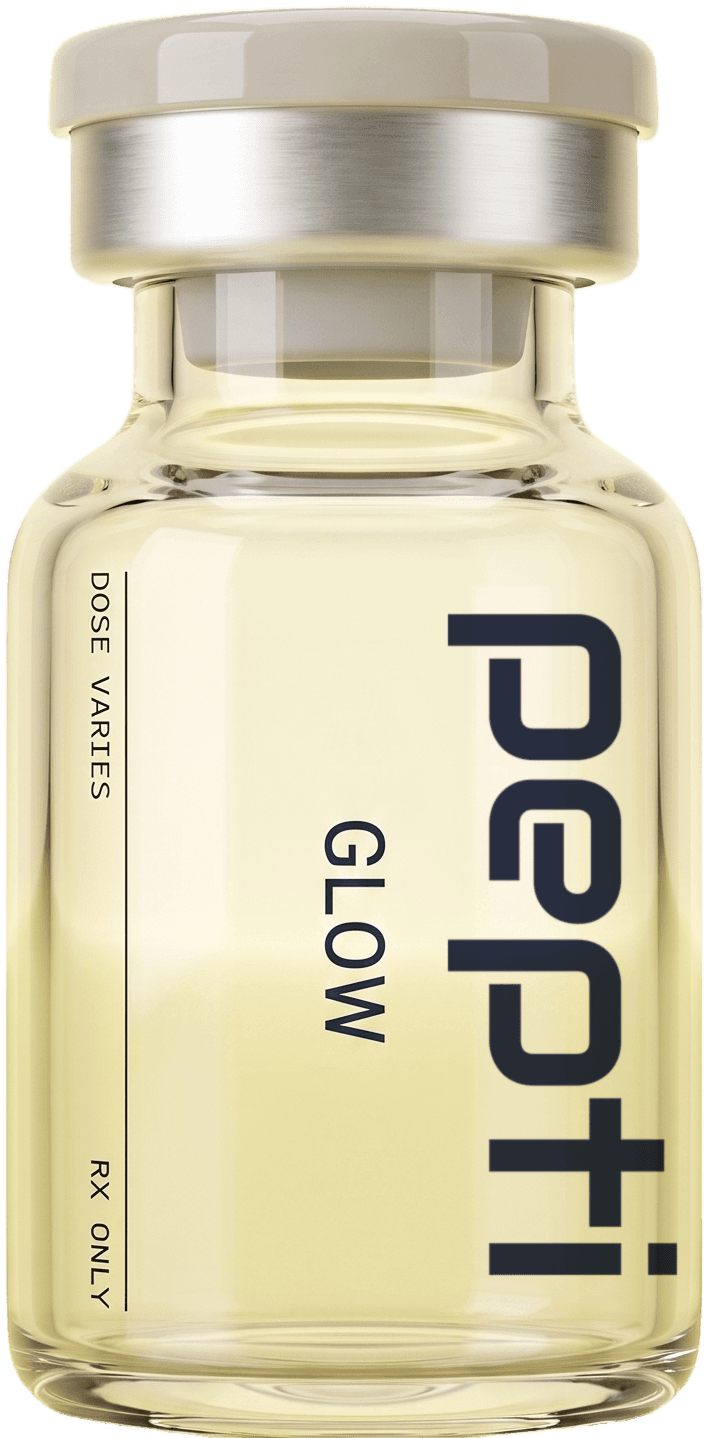
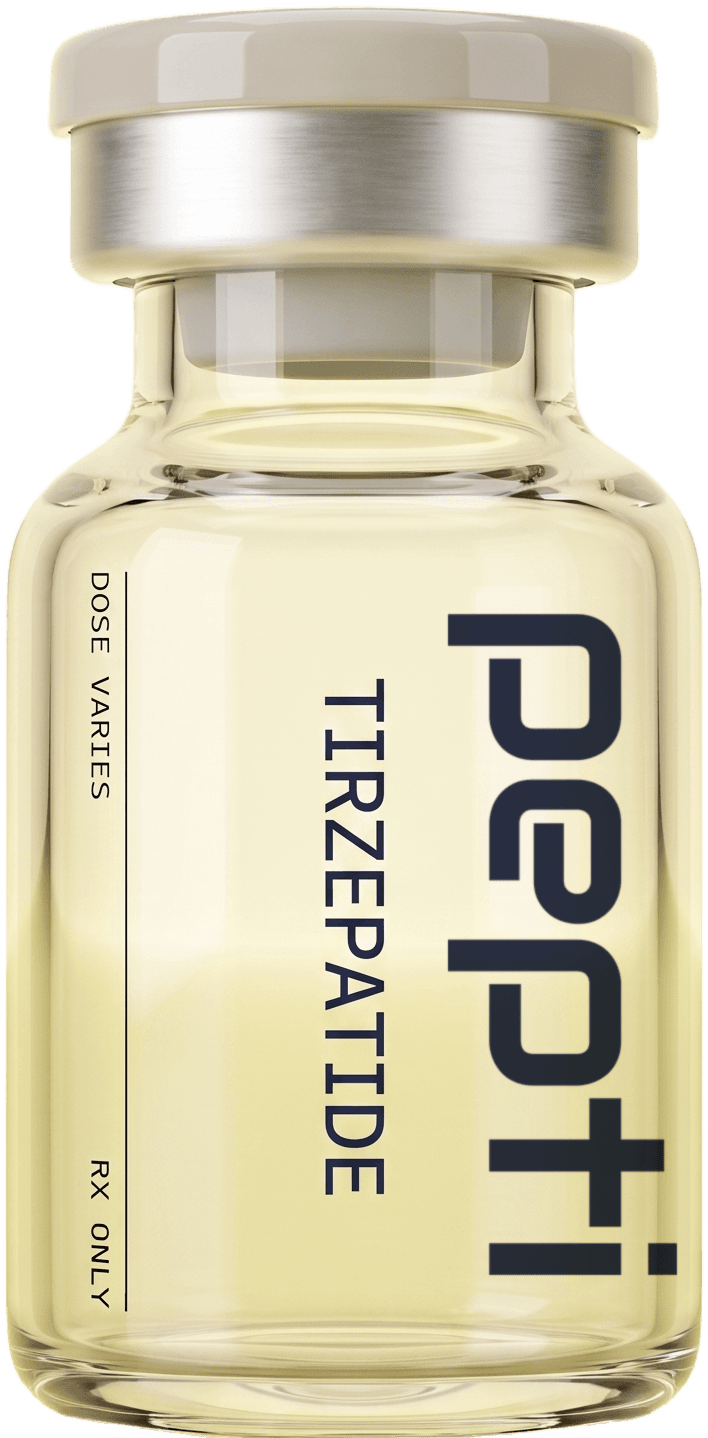
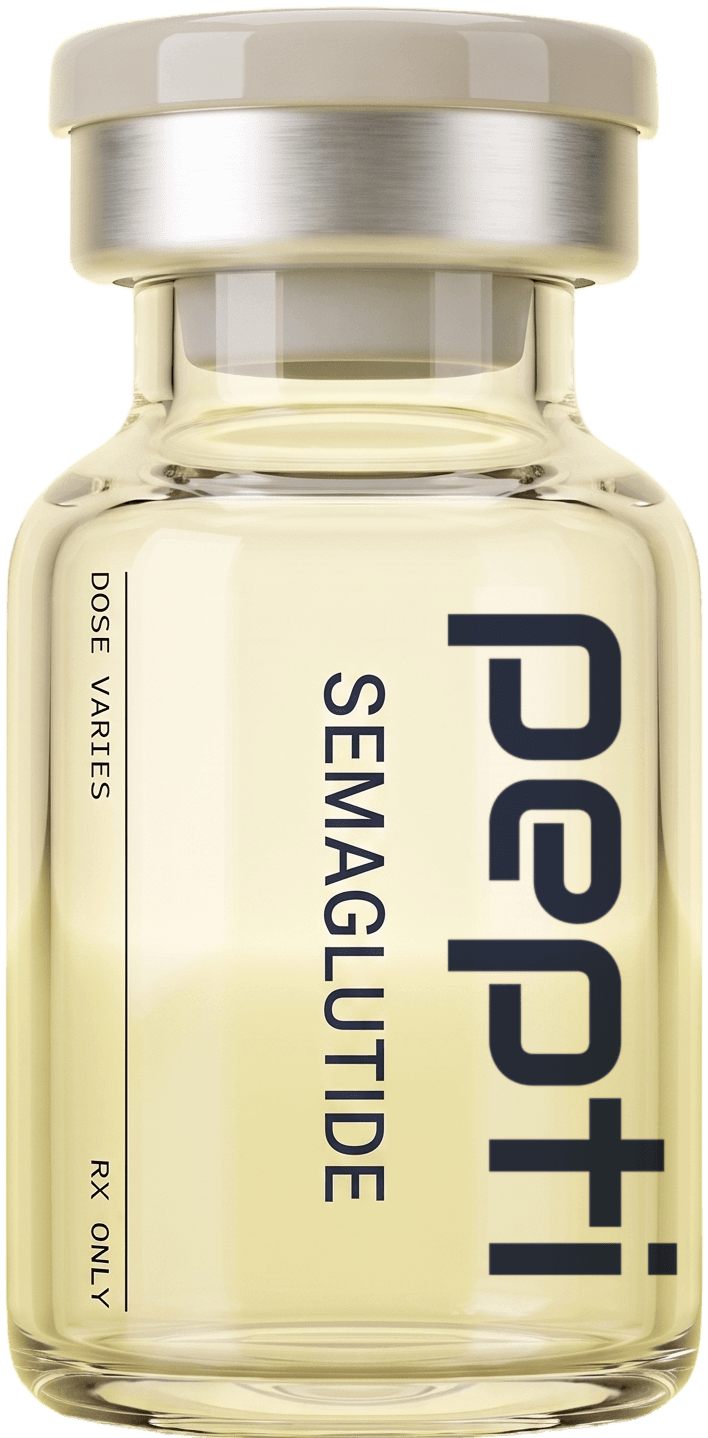
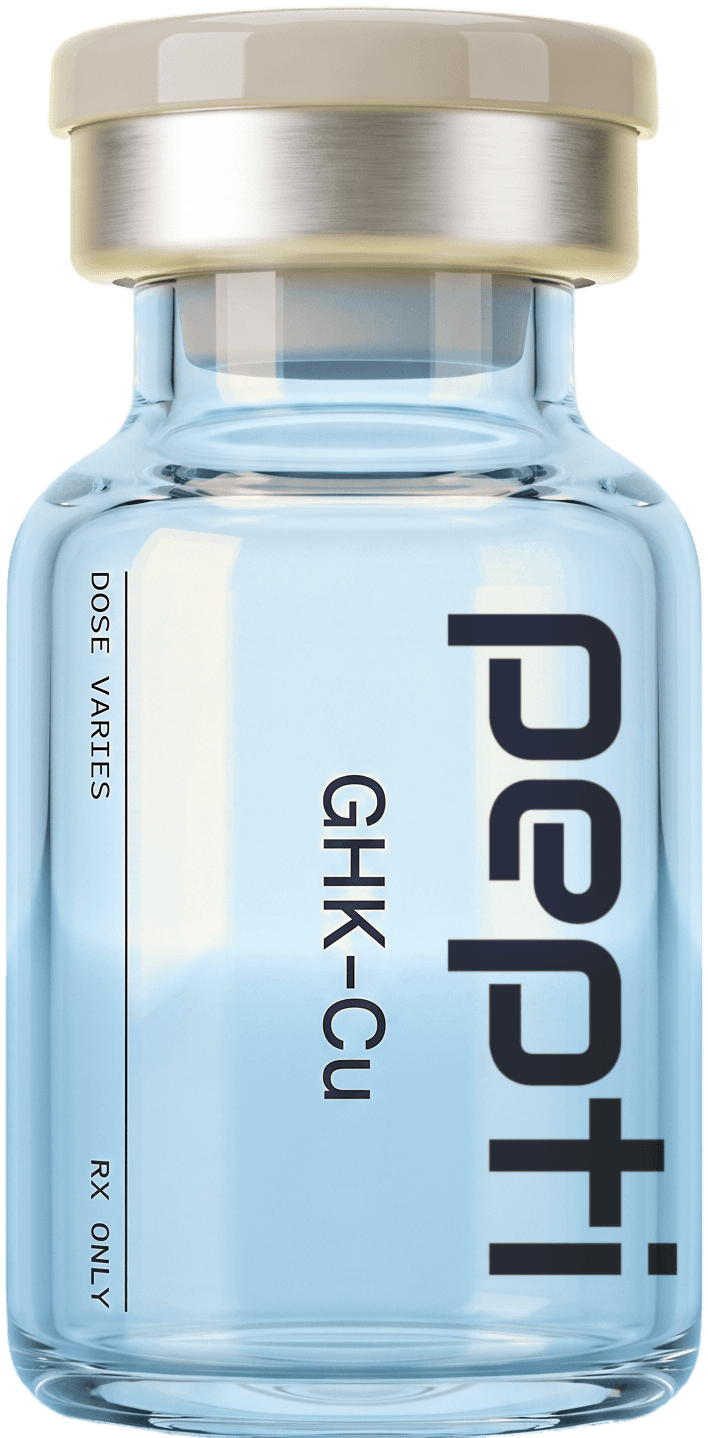
GLOW can be prescribed alongside tirzepatide or semaglutide when a physician reviewing your intake judges it appropriate, but no study has tested the blend with a GLP-1, and the blend itself has never been studied as a blend. GLOW combines three repair peptides, GHK-Cu, BPC-157 and TB-500, in one vial; none of them acts on appetite, insulin or the GLP-1 receptor, so it does a different job from tirzepatide rather than adding to it. The usual reason for the pairing is recovery or skin goals that arise while someone is on a weight program. GLOW is not a weight treatment and not a treatment for GLP-1 side effects.
This page covers what GLOW is, how each component sits next to a GLP-1, what is and is not known, the symptoms that could come from either, how the schedules fit, and how to add GLOW properly. Everything here applies to semaglutide the same way.
Can You Take GLOW With Tirzepatide or Semaglutide?
The short answer
| Question | Answer |
|---|---|
| Can they be prescribed together? | Yes, when a physician reviewing your intake judges it appropriate |
| Has the combination been studied? | No. Neither GLOW with a GLP-1, nor GLOW's three components together |
| Does any component act on appetite or insulin? | No |
| Does GLOW help GLP-1 nausea or hair loss? | Not on any evidence; those are reported to your care team |
| Is there an established interaction? | No interaction list exists for GLOW or any of its components |
| What belongs on the intake? | Cancer history, anticoagulants, copper-metabolism disorders and high-dose zinc |
| Same answer for semaglutide? | Yes |
The medications this page covers:
| Product | What is in it | Typical directions | Price |
|---|---|---|---|
| GLOW | 5 mL multi-dose vial: GHK-Cu 10 mg/mL, BPC-157 2 mg/mL, TB-500 2 mg/mL (50 mg / 10 mg / 10 mg per vial) | 0.25 mL (25 units) under the skin Monday through Friday mornings | $259/mo |
| Tirzepatide | Dose-specific 2 mL vials at six strengths, 2.5 mg to 15 mg weekly; glycine in the 2.5 mg and 7.5 mg vials | 0.50 mL (50 units) once weekly at every strength | From $159/mo |
| Semaglutide | Dose-specific vials at six strengths, starting with 1 mg per 1 mL at the 0.25 mg starting dose | Printed on the vial for your strength | From $99/mo |
Prices are all-in, covering medication, physician review, refill management and shipping, with no membership fee. GLP-1 prices are "from" prices, set by dose. Compounded medications are not FDA approved.
Can You Take GLOW With Tirzepatide or Semaglutide?
What GLOW is, next to a GLP-1
Tirzepatide is a single peptide that activates the GIP and GLP-1 receptors, acting on appetite, gastric emptying, and insulin and glucagon signalling (what is tirzepatide). GLOW is three separate peptides dissolved in one vial, each with its own literature (what is GLOW). By mass it is mostly GHK-Cu: 50 of the 70 mg.
| Component | Per dose | What it is described to do | Human evidence | Relation to tirzepatide |
|---|---|---|---|---|
| GHK-Cu | 2.5 mg | Collagen and matrix synthesis, copper delivery | Topical skin studies only | No shared pathway |
| BPC-157 | 0.5 mg | Angiogenesis, tendon cell migration, gut-lining protection in animals | Early-phase work for inflammatory bowel indications; no randomised trials for tendon or soft tissue | No shared pathway |
| TB-500 | 0.5 mg | Actin binding and cell migration, inferred from the full thymosin beta-4 protein | None for the fragment | No shared pathway |
None of the three binds the GIP or GLP-1 receptor, acts on appetite, or is described as changing insulin or glucose. That makes a direct interaction with tirzepatide unlikely on mechanism. With no study of the pairing, that is the limit of what can be said.
Can You Take GLOW With Tirzepatide or Semaglutide?
When the pairing makes sense, and when it does not
Where it fits
The case for GLOW alongside a GLP-1 is a separate goal: a soft-tissue complaint from training more, or skin and connective-tissue goals, in someone who is also on a weight program. In that case the two are doing unrelated jobs and the question is whether your physician is comfortable adding a three-component vial to your record.
Where something else fits better
| Situation | Usually a better conversation |
|---|---|
| A single tendon or ligament problem, nothing else | The BPC-157 + TB-500 stack, without the GHK-Cu |
| Skin is the whole goal | GHK-Cu on its own |
| Persistent inflammation is part of the picture | KLOW, which adds KPV |
| You want a blend positioned for use with or without a GLP-1 | FUSION, which contains BPC-157 with MOTS-c, 5-Amino-1MQ and tesamorelin, at $279 a month |
| Stomach side effects on the GLP-1 | A message to your care team; a dose and titration question |
| Hair shedding on the GLP-1 | A message to your care team; the label ties it to weight reduction |
For GLP-1 stomach side effects, the live gut-health reference is plain that they are a dose and titration question for the prescribing physician, not a reason to add a second vial. For hair, the live hair reference says none of the peptides discussed for hair is a treatment for GLP-1 shedding. GLOW's BPC-157 and GHK-Cu do not change either answer. See GLP-1 nausea: how to manage it and peptides for hair growth.
Can You Take GLOW With Tirzepatide or Semaglutide?
Symptoms that could come from either
| Symptom | On tirzepatide | On GLOW |
|---|---|---|
| Nausea | The most common effect, around starting and dose increases | Some people report early nausea |
| Dizziness or light-headedness | 4 to 5% on the approved weight-management label, against 2% | Some people report early light-headedness |
| Injection-site redness, soreness or bruising | 6 to 8% on the label | The most common report |
| Transient blue tint at the site | No | Possible, from the copper complex |
| Reflux, constipation, diarrhea | Common, around dose increases | Not described |
GLOW is a morning injection, and nausea on a GLP-1 is most likely in the days after starting and after each dose increase. Two sources of queasiness are hard to tell apart, which is the main reason to start GLOW at a point when your GLP-1 dose is steady, not in the same week as an increase. The GLP-1 side-effect reference is tirzepatide side effects.
Can You Take GLOW With Tirzepatide or Semaglutide?
Fitting the schedules together
| GLOW | Tirzepatide | |
|---|---|---|
| Draw | 0.25 mL (25 units on a U-100 insulin syringe) | 0.50 mL (50 units) |
| Medication per dose | 2.5 mg GHK-Cu, 0.5 mg BPC-157, 0.5 mg TB-500 | Your weekly strength, 2.5 mg to 15 mg |
| How often | Monday through Friday mornings, weekends off | Once weekly, same day each week |
| Doses per vial | 20 | 4 |
| One vial lasts | About four weeks | Four weeks |
The GLOW figures are math from the vial: 0.25 mL carries a quarter of each component's per-mL concentration, and 5 mL at 0.25 mL is 20 doses. Because the proportions are fixed, every dose delivers the same split. Both run on a 28-day refill cycle, one vial per fill.
- Two vials, two syringes, two sites. Never mix GLOW and tirzepatide in one syringe.
- Keep your tirzepatide day fixed. On a shared weekday, inject each at a different site.
- Refrigerate both, and do not keep a multi-peptide vial past its beyond-use date.
How each product's vial is counted is in how long does a peptide vial last.
Can You Take GLOW With Tirzepatide or Semaglutide?
Who should discuss it first
| Situation | Why |
|---|---|
| Personal history of cancer | Angiogenesis is a described mechanism of BPC-157 and GHK-Cu |
| Anticoagulant therapy | Raised before GLOW, given the vascular mechanisms |
| Wilson's disease or any copper-metabolism disorder | Rules out the GHK-Cu component |
| High-dose zinc supplementation | Competes with copper |
| Personal or family history of medullary thyroid carcinoma or MEN 2 | Rules out tirzepatide and semaglutide |
| Pregnancy, planning pregnancy or breastfeeding | Neither is used |
| Insulin or a sulfonylurea | Low blood glucose on tirzepatide becomes more likely |
| Already taking BPC-157, TB-500, GHK-Cu, KLOW or ETERNAL | GLOW would duplicate components |
| Tested athlete | Many peptides are prohibited in competition; check your sport's list |
Bloodwork is not required for any Pepti treatment. If your physician wants labs for your care, they'll ask through your account.
Can You Take GLOW With Tirzepatide or Semaglutide?
Semaglutide works the same way
Semaglutide acts at GLP-1 only, where tirzepatide acts at GLP-1 and GIP, but both act through appetite and gastric emptying and bring the same early side effects. Nothing on this page changes for semaglutide. Semaglutide and tirzepatide are never taken together; see semaglutide vs tirzepatide.
Can You Take GLOW With Tirzepatide or Semaglutide?
How to add GLOW to a GLP-1 properly
- Name the goal that is separate from weight, such as a sore tendon from new training or a skin goal.
- List everything, including supplements and any blend you already take, so components are not duplicated.
- Start when your GLP-1 dose is steady.
- Report what happens, including nothing.
Your physician sets your directions after reviewing your intake, and every vial arrives with its directions printed on the label. More on combining is in can you take two peptides together, what peptides can you take with tirzepatide and KLOW vs GLOW. Step-by-step: how to get tirzepatide prescribed, and for the components BPC-157, GHK-Cu and TB-500.
Can You Take GLOW With Tirzepatide or Semaglutide?
What the evidence shows, honestly
Tirzepatide has a large human trial base in its approved form. GLOW has never been studied as a blend; its evidence is per component and uneven, from topical human skin studies for GHK-Cu, to early-phase human work for BPC-157, to no human trials at all for the TB-500 fragment. There is no study of GLOW or any component with a GLP-1. On regulation, BPC-157 and TB-500 were each recommended for the 503A Bulks List by the FDA's advisory committee in July 2026 by 8 votes to 6, and GHK-Cu is scheduled for review before the end of February 2027; final determinations are pending. The pairing is reasonable to discuss when there is a separate reason for GLOW. It is not a stack shown to work better than tirzepatide alone.
References
What this is based on.
References
- Wilding JPH, Batterham RL, Calanna S, et al.. Once-Weekly Semaglutide in Adults with Overweight or Obesity (STEP 1) · New England Journal of Medicine (2021) · PMID 33567185
- Lincoff AM, Brown-Frandsen K, Colhoun HM, et al.. Semaglutide and Cardiovascular Outcomes in Obesity without Diabetes (SELECT) · New England Journal of Medicine (2023) · PMID 37952131
- Wadden TA, Bailey TS, Billings LK, et al.. Effect of subcutaneous semaglutide vs placebo as an adjunct to intensive behavioral therapy on body weight in adults with overweight or obesity (STEP 3) · JAMA (2021) · PMID 33625476
- Rubino D, Abrahamsson N, Davies M, et al.. Effect of Continued Weekly Subcutaneous Semaglutide vs Placebo on Weight Loss Maintenance in Adults With Overweight or Obesity: The STEP 4 Randomized Clinical Trial · JAMA (2021) · PMID 33755728
- Marso SP, Bain SC, Consoli A, et al.. Semaglutide and Cardiovascular Outcomes in Patients with Type 2 Diabetes (SUSTAIN-6) · New England Journal of Medicine (2016) · PMID 27633186
- Davies M, Færch L, Jeppesen OK, et al.. Semaglutide 2.4 mg once a week in adults with overweight or obesity, and type 2 diabetes (STEP 2): a randomised, double-blind, double-dummy, placebo-controlled, phase 3 trial · The Lancet (2021) · PMID 33667417
- Garvey WT, Batterham RL, Bhatta M, et al.. Two-year effects of semaglutide in adults with overweight or obesity: the STEP 5 trial · Nature Medicine (2022) · PMID 36216945
- Rubino DM, Greenway FL, Khalid U, et al.. Effect of Weekly Subcutaneous Semaglutide vs Daily Liraglutide on Body Weight in Adults With Overweight or Obesity Without Diabetes: The STEP 8 Randomized Clinical Trial · JAMA (2022) · PMID 35015037
- Aronne LJ, Horn DB, le Roux CW, et al.. Tirzepatide as Compared with Semaglutide for the Treatment of Obesity (SURMOUNT-5) · New England Journal of Medicine (2025) · PMID 40353578
- Sanyal AJ, Newsome PN, Kliers I, et al.. Phase 3 Trial of Semaglutide in Metabolic Dysfunction-Associated Steatohepatitis (ESSENCE) · New England Journal of Medicine (2025) · PMID 40305708
- Wilding JPH, Batterham RL, Davies M, Van Gaal LF, Kandler K et al.. Weight regain and cardiometabolic effects after withdrawal of semaglutide: The STEP 1 trial extension · Diabetes Obes Metab (2022) · PMID 35441470
- Batsis JA, Gavras A, Gross DC, Cheever CR, Da Silva BR et al.. Effect of Incretin-Based and Nonpharmacologic Weight Loss on Body Composition: A Systematic Review · Ann Intern Med (2026) · PMID 41996180
Citations are provided for educational purposes. They do not constitute medical advice. Always discuss any peptide protocol with your prescribing physician.
Common questions
Can You Take GLOW With Tirzepatide or Semaglutide?, answered.
It can be prescribed alongside tirzepatide when a physician reviewing your intake judges it appropriate. None of its components acts on the GLP-1 system, but no study has tested the combination.
The answer is the same as for tirzepatide.
No. None of its components acts on appetite or is a weight treatment. FUSION is the blend positioned for use with or without a GLP-1, though that pairing has not been tested in a trial either.
There is no evidence that it does. Some people report early nausea on GLOW itself. GLP-1 nausea is a dose and titration question for your physician.
Not on any evidence. GLP-1 hair loss is attributed on the label to weight reduction. Report it and keep protein intake up.
Yes, as two separate injections from two separate vials, each with its own syringe and at a different site.
Neither has been studied with one. KLOW is GLOW plus KPV, described around inflammation; the choice depends on whether persistent inflammation is part of your picture, not on the GLP-1.
No interaction is described, and no interaction list exists for GLOW or its components because the trials have not been run.
No. Bloodwork is not required for any Pepti treatment. If your physician wants labs for your care, they'll ask through your account. The free assessment goes to a physician licensed in your state. A consultation does not guarantee a prescription.
Next step
See what a physician recommends for you.
A licensed physician in your state reviews your intake and decides what is appropriate. A consultation does not guarantee a prescription.