Recovery · Reference
KPV vs GLOW: One Anti-Inflammatory Peptide vs a Three-Peptide Repair Blend
KPV and GLOW are not two versions of the same thing: KPV is a single peptide described around damping inflammation, while GLOW is a three-peptide blend of GHK-Cu, BPC-157 and TB-500 described around tissue repair and skin, and it contains no KPV.
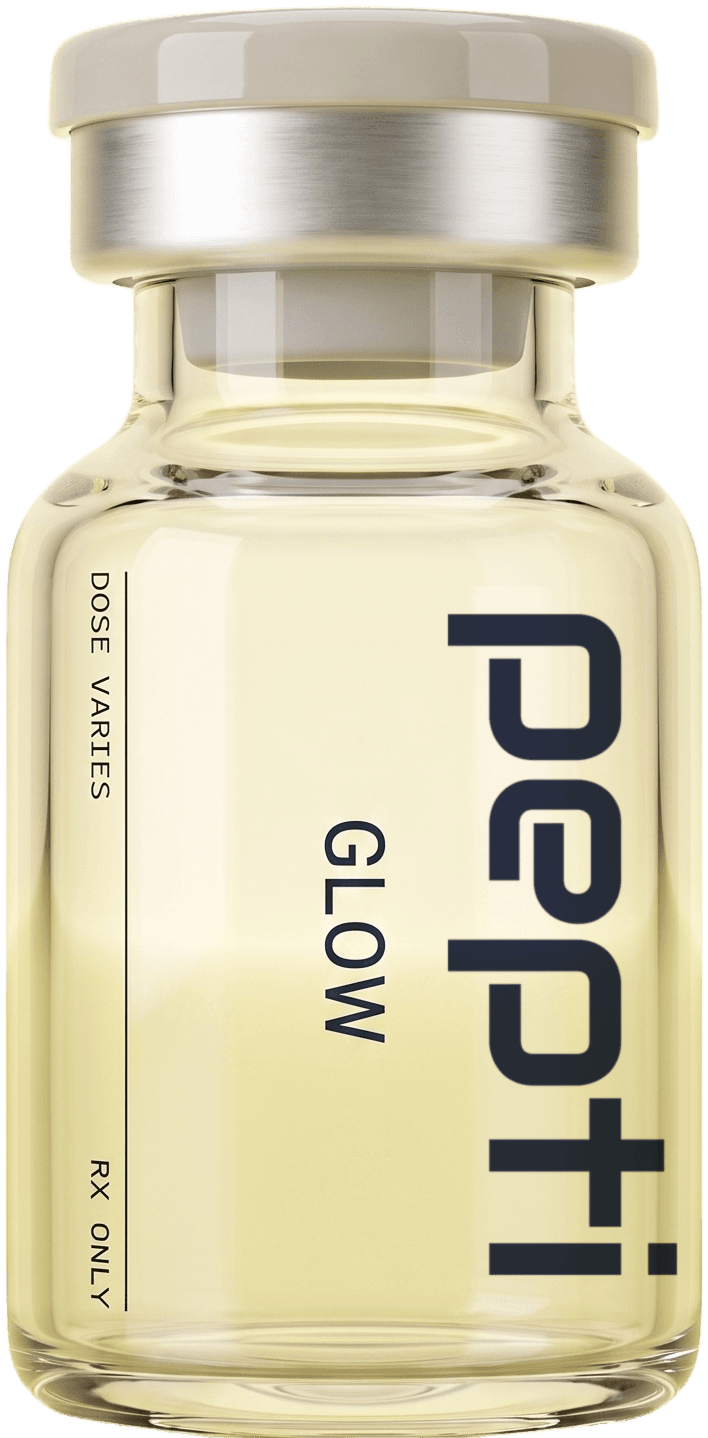
Treatments mentioned
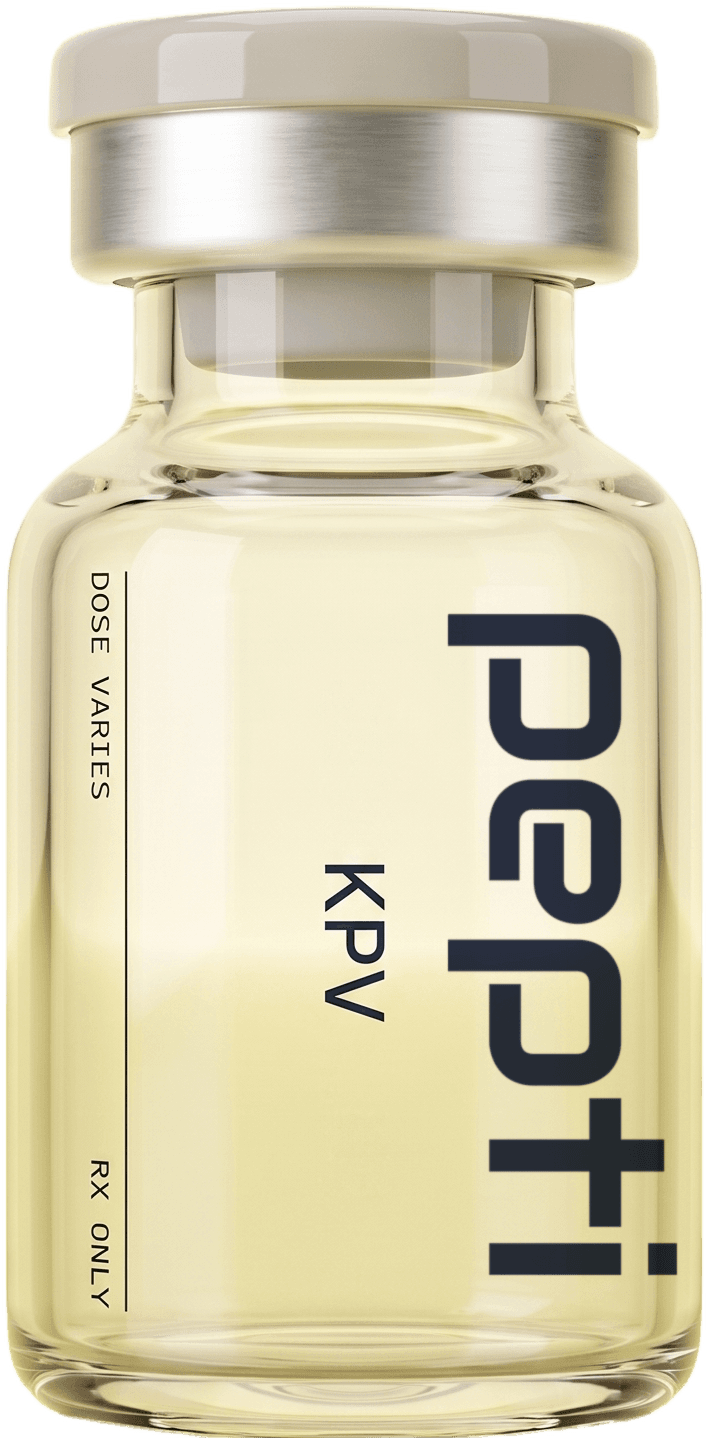
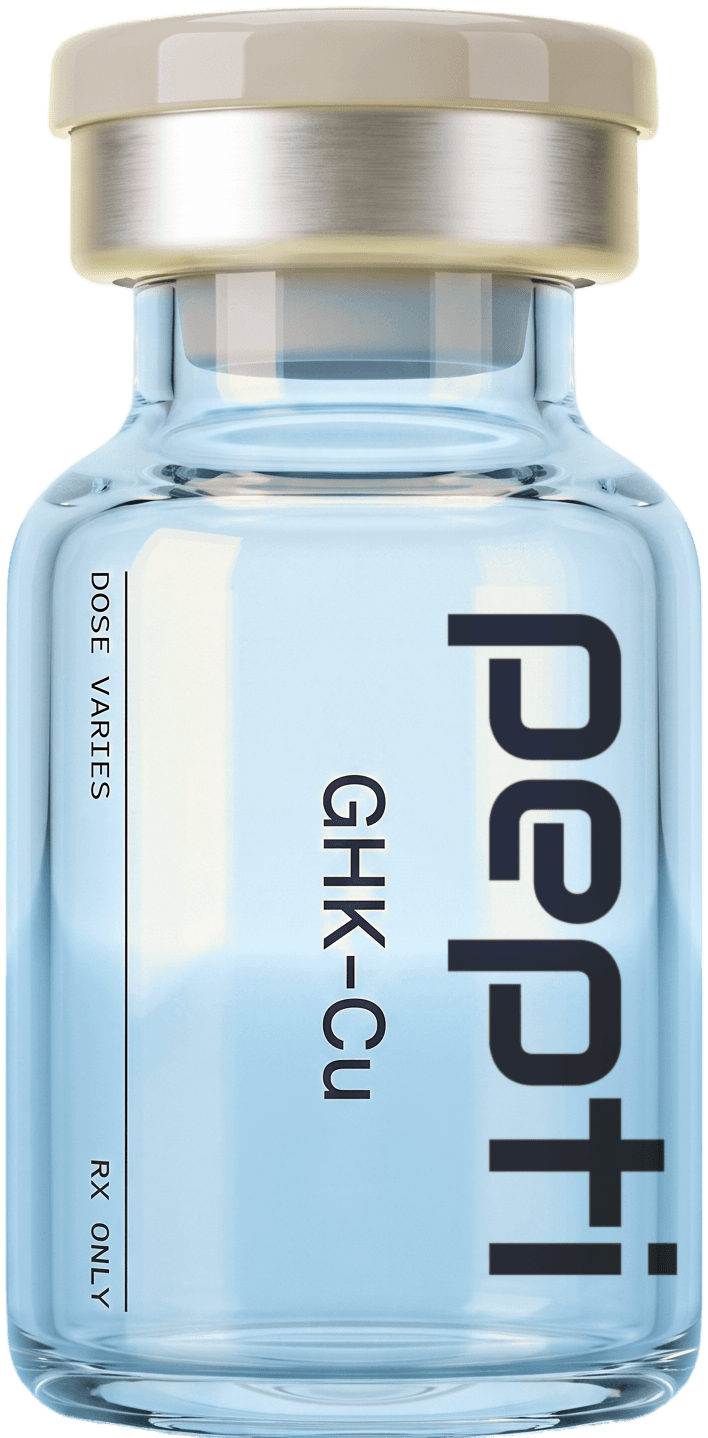
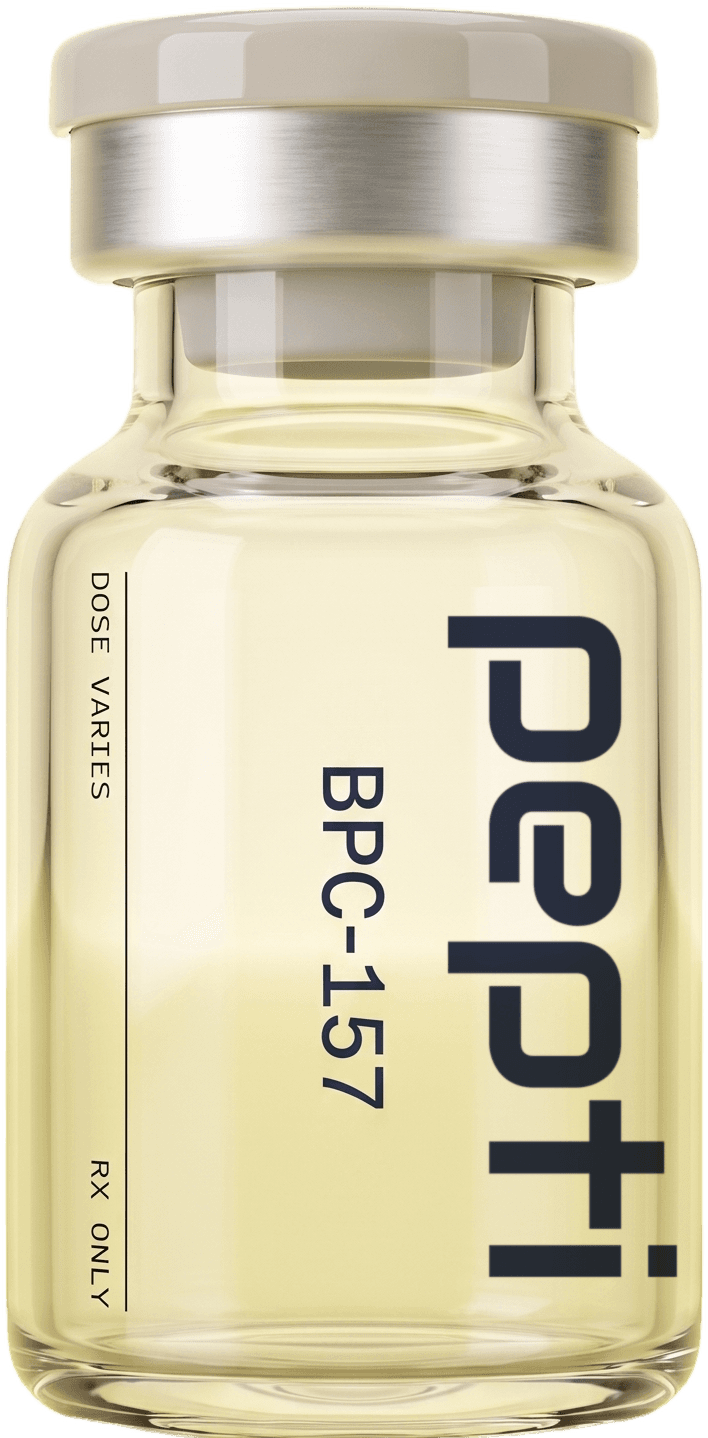
That gap is the whole reason the KLOW blend exists: KLOW is GLOW's three peptides at the same amounts plus 10 mg of KPV, at the same price as GLOW at Pepti. So the real choice is usually between KPV alone (inflammation is the whole picture), GLOW (repair and skin, no inflammation component) and KLOW (both). None has a human trial of the injection, all are prescription-only and compounded by a licensed US pharmacy, and none is FDA approved.
This page explains each on its own terms, puts them side by side, covers what the research does and does not show, where each component stands with the FDA, how each is dosed, what each costs at Pepti, and who tends to suit which.
KPV vs GLOW
The short answer
| If your main goal is | The usual prescription | What is in it | Price |
|---|---|---|---|
| Inflammation that will not settle, nothing else | KPV | 10 mg KPV in a 5 mL vial (2 mg/mL) | $229/mo |
| Repair and skin quality, no inflammation component | GLOW | 50 mg GHK-Cu, 10 mg BPC-157 and 10 mg TB-500 in a 5 mL vial | $259/mo |
| Repair, skin and inflammation together | KLOW Blend | GLOW's three plus 10 mg KPV | $259/mo |
| A single tendon or ligament injury | BPC-157 + TB-500 | 5 mg BPC-157 and 5 mg TB-500 in a 5 mL vial | $259/mo |
| Inflammation plus immune and gut support | FORTIFY Blend | Thymosin alpha-1, BPC-157, KPV and LL-37 | $289/mo |
Every figure is an all-in monthly price covering the medication, physician review, refill management and shipping. There is no separate membership fee. Current pricing always lives on each product page; the table is a guide to which product fits which goal.
KPV vs GLOW
KPV on its own terms
What it is
KPV is a tripeptide, lysine-proline-valine, the last three amino acids of alpha-melanocyte-stimulating hormone (alpha-MSH). Alpha-MSH drives pigmentation and also acts as an anti-inflammatory signal; a 2008 review in Endocrine Reviews describes the three-amino-acid tail keeping much of the anti-inflammatory activity in cell and animal models without the pigmentation. KPV does not cause tanning. The full reference is at what is KPV.
How KPV is described to work
- Into the cell through PepT1, the gut's small-peptide transporter (Gastroenterology, 2008).
- Interrupting NF-kB and MAPK, the pathways that turn an inflammatory trigger into a response.
- Lower cytokine output: TNF-alpha, IL-6, IL-1 beta and IL-8 in cell and mouse work.
- Independent of the pigment receptor, in a 2012 study of human bronchial cells.
What human data exists for KPV
The deepest work is mouse colitis: reduced inflammation in a 2008 Inflammatory Bowel Diseases paper, two colitis models improved in a 2008 Gastroenterology paper, and reduced colitis with targeted nanoparticles in 2017. There are no human trials of KPV of any design. More: KPV benefits.
KPV vs GLOW
GLOW on its own terms
What it is
GLOW is three separately studied peptides dissolved together in one sterile vial. The name is a brand name for the combination; the combination itself has never been studied. The full reference is at what is GLOW.
Component Per vial Per 0.25 mL dose Described around GHK-Cu 50 mg 2.5 mg Collagen, elastin and matrix remodelling; copper delivery BPC-157 10 mg 0.5 mg Blood-vessel growth and cell migration in tendon and gut TB-500 10 mg 0.5 mg Actin binding and cell movement into damaged tissue GHK-Cu is 50 of the 70 mg in the vial, so by mass GLOW is mostly a GHK-Cu preparation with two smaller repair components, which is why it is positioned toward skin and connective tissue as much as injury.
How GLOW is described to work
The rationale prescribers give is that tissue repair runs in overlapping phases and each component is described acting on a different one: TB-500 and BPC-157 on cell migration, BPC-157 and GHK-Cu on new blood vessels, GHK-Cu on matrix synthesis, GHK-Cu and TB-500 on remodelling. What is not on that map is a dedicated inflammation component. That is the gap KPV fills in KLOW.
What human data exists for GLOW
There are no randomised controlled trials of GLOW, or of any combination of its components, in humans. Per component:
- GHK-Cu: small human studies of topical creams on skin and a topical gel on diabetic ulcers; no trials of the injection.
- BPC-157: early-phase human work in inflammatory bowel indications; the one randomised study the FDA identified for its 2026 briefing was an incompletely reported meeting abstract of a two-week enema trial; nothing for the injected route.
- TB-500: no human trials of any kind; the full-length parent protein, thymosin beta-4, has early human trials in wounds and eye conditions.
More: GLOW benefits.
KPV vs GLOW
Head to head
| KPV | GLOW | |
|---|---|---|
| What it is | One tripeptide | A blend of three peptides |
| Main described job | Damping inflammatory signalling | Tissue repair and skin or matrix quality |
| Anti-inflammatory component | It is one | None dedicated |
| Where the work is strongest | Mouse colitis models | GHK-Cu topical skin studies; BPC-157 animal tendon and gut work |
| Human trials of the injection | None | None, for the blend or any component |
| Copper caution | No | Yes, from GHK-Cu |
| Typical directions at Pepti | 0.25 mL (25 units) once daily, Monday to Friday | 0.25 mL (25 units) Monday to Friday mornings |
| Per dose | 0.5 mg KPV | 2.5 mg GHK-Cu, 0.5 mg BPC-157, 0.5 mg TB-500 |
| Doses per vial | 20, about 4 weeks | 20, about 4 weeks |
| Price at Pepti | $229 a month | $259 a month |
The real choice is usually KPV, GLOW or KLOW
Comparing KPV with GLOW directly is comparing one ingredient with a recipe that leaves it out. KLOW contains everything GLOW does at the same amounts, plus 10 mg of KPV, which works out to the same 0.5 mg KPV per 0.25 mL dose as the single KPV vial. At Pepti, KLOW and GLOW are both $259 a month. So the useful question is what is in your picture: inflammation alone points to KPV, repair and skin without inflammation to GLOW, and all of it to KLOW. See KLOW vs GLOW.
KPV vs GLOW
Who suits which
KPV alone
KPV suits someone whose complaint is inflammation, often gut-related, with no injury or skin goal. As one variable it is easier to judge. More: KPV dosage.
GLOW
GLOW suits someone with a soft-tissue complaint and a skin goal together, where persistent inflammation is not part of the picture. More: GLOW dosage.
KLOW
KLOW suits the same person as GLOW when inflammation that never seems to resolve is also part of it. See what is KLOW.
Can you take KPV and GLOW together?
Taking both separately would mean two injections to arrive at roughly what KLOW is in one vial. No study has tested any of these combinations. Your physician sets your directions after reviewing your intake.
KPV vs GLOW
When neither is the right first step
| Situation | What makes more sense |
|---|---|
| A single tendon or ligament problem | The BPC-157 + TB-500 stack, without GHK-Cu |
| A gut complaint | BPC-157 alone has the gastrointestinal literature; KPV's mouse work is also gut-focused |
| Skin is the whole goal | GHK-Cu alone, or the RADIANCE Blend |
| A diagnosed inflammatory disease on prescribed treatment | Your specialist; neither replaces that treatment |
| A complete rupture, displaced fracture or locking joint | A surgical or imaging question; no peptide changes that |
| Wilson's disease or a copper disorder | Not GLOW or KLOW |
KPV vs GLOW
Where each stands with the FDA
GLOW has no regulatory status of its own; the FDA regulates the bulk substances a pharmacy compounds from, not a blend's name.
| Category 2 history | Advisory committee | Status | |
|---|---|---|---|
| KPV | Placed in 2023; removal announced 15 April 2026 | 23 July 2026: 8 to 6, one abstention, to recommend adding to the 503A Bulks List | Final determination pending |
| BPC-157 (in GLOW) | Placed in 2023; removed April 2026 | 23 July 2026: 8 to 6, one abstention, to recommend | Final determination pending |
| TB-500 (in GLOW) | Placed in 2023; removed April 2026 | 23 July 2026: 8 to 6, one abstention, to recommend | Final determination pending |
| GHK-Cu (in GLOW) | Injectable placed in 2023; removed April 2026 | Scheduled before the end of February 2027 | Not yet reviewed |
In each July vote the FDA's own scientists had proposed against inclusion. A committee vote is a recommendation, not a decision. All remain legal to prescribe and dispense as compounded medications, and compounded medications are not FDA approved. Are peptides FDA approved explains the difference.
KPV vs GLOW
Dosing, side by side
Both are injected under the skin (subcutaneously) into the abdomen or thigh, rotating sites, Monday through Friday. This is arithmetic only, on a U-100 insulin syringe where 1 unit is 0.01 mL:
| Units | mL | KPV (2 mg/mL) | GLOW: GHK-Cu / BPC-157 / TB-500 |
|---|---|---|---|
| 10 | 0.10 | 0.2 mg | 1.0 / 0.2 / 0.2 mg |
| 20 | 0.20 | 0.4 mg | 2.0 / 0.4 / 0.4 mg |
| 25 (typical printed directions for both) | 0.25 | 0.5 mg | 2.5 / 0.5 / 0.5 mg |
In GLOW the three are in fixed proportion, so every dose delivers the same split and none can be adjusted on its own. At 0.25 mL a dose, each 5 mL vial holds 20 doses, about four weeks, which is why refills run every 28 days, one vial per fill. Your directions are printed on the vial, and your physician sets them after reviewing your intake. Both ship refrigerated with ice packs, sterile syringes and alcohol prep pads.
Bloodwork is not required for any Pepti treatment. If your physician wants labs for your care, they'll ask through your account.
KPV vs GLOW
Side effects
KPV. Animal work has not reported toxicity at the doses studied. Clinically: injection-site redness, mild soreness or bruising, and in some people mild nausea or a transient headache early on. More: KPV side effects.
GLOW. Each component is described as well tolerated in its own animal work. Clinically: injection-site redness, soreness or bruising, and in some people early nausea or light-headedness. GHK-Cu delivers copper, so anyone with Wilson's disease or a copper-metabolism disorder should not take it, and high-dose zinc belongs on the intake. A personal history of cancer and anticoagulant therapy are raised at intake because of the blood-vessel mechanisms. More: GLOW side effects.
For both, stop and contact your care team for any reaction that is severe or spreading. Difficulty breathing or swelling of the face or throat needs emergency care: call 911.
KPV vs GLOW
Who should not take either, or should discuss it first
| Situation | Why |
|---|---|
| Wilson's disease or any copper-metabolism disorder | GLOW contains GHK-Cu |
| Personal history of cancer | Especially for GLOW, because of the angiogenesis mechanisms |
| Anticoagulant therapy | Especially for GLOW |
| On immunosuppressants or biologic therapy | Especially for KPV |
| Pregnancy or breastfeeding | Not used; safety data is absent |
| Tested athletes | GLOW's components are prohibited in competition by anti-doping bodies; check your sport's list for both |
KPV vs GLOW
What the evidence shows, honestly
Neither KPV nor GLOW has been studied in people as an injection. KPV rests on consistent mouse colitis work; GLOW rests on three separate preclinical literatures, the only human data among them being topical GHK-Cu and early BPC-157 bowel work. No study has shown that GLOW's three peptides together do more than one alone, or that adding KPV, as KLOW does, changes anything in people. The accurate framing is "described in preclinical research and used clinically," not "proven."
KPV vs GLOW
Where to get KPV or GLOW prescribed
Neither can be bought legitimately without a prescription. Sites selling them "for research use only" are not accountable for what is in the vial: identity, purity, sterility and concentration are untested. The prescription route:
- Complete a free online intake covering your history, medications and what you want help with.
- A physician licensed in your state reviews it, usually within 24 hours.
- If it is appropriate, a PCAB-accredited, FDA-registered US 503A pharmacy compounds it to that prescription. Lot test results are published at /quality/lab-results.
- It ships refrigerated with your directions printed on the vial.
- Your care team stays reachable for questions and side effects.
Pepti is cash-pay and does not bill insurance. Step-by-step pages: how to get KPV prescribed online and how to get KLOW prescribed online. GLOW details are on the GLOW page.
References
What this is based on.
References
- Dalmasso G, Charrier-Hisamuddin L, Nguyen HT et al.. PepT1-mediated tripeptide KPV uptake reduces intestinal inflammation · Gastroenterology (2008) · PMID 18061177
- Kannengiesser K, Maaser C, Heidemann J et al.. Melanocortin-derived tripeptide KPV has anti-inflammatory potential in murine models of inflammatory bowel disease · Inflamm Bowel Dis (2008) · PMID 18092346
- Xiao B, Xu Z, Viennois E et al.. Orally Targeted Delivery of Tripeptide KPV via Hyaluronic Acid-Functionalized Nanoparticles Efficiently Alleviates Ulcerative Colitis · Mol Ther (2017) · PMID 28143741
- Land SC. Inhibition of cellular and systemic inflammation cues in human bronchial epithelial cells by melanocortin-related peptides: mechanism of KPV action and a role for MC3R agonists · Int J Physiol Pathophysiol Pharmacol (2012) · PMID 22837805
- Cutuli M, Cristiani S, Lipton JM et al.. Antimicrobial effects of alpha-MSH peptides · J Leukoc Biol (2000) · PMID 10670585
- Schaible EV, Steinsträßer A, Jahn-Eimermacher A et al.. Single administration of tripeptide α-MSH(11-13) attenuates brain damage by reduced inflammation and apoptosis after experimental traumatic brain injury in mice · PLoS One (2013) · PMID 23940690
- Bonfiglio V, Camillieri G, Avitabile T et al.. Effects of the COOH-terminal tripeptide alpha-MSH(11-13) on corneal epithelial wound healing: role of nitric oxide · Exp Eye Res (2006) · PMID 16965771
Citations are provided for educational purposes. They do not constitute medical advice. Always discuss any peptide protocol with your prescribing physician.
Common questions
KPV vs GLOW, answered.
No. GLOW is GHK-Cu, BPC-157 and TB-500. The blend that adds KPV is KLOW, which contains the same three at the same amounts plus 10 mg of KPV.
KPV is the one built around inflammation; GLOW has no dedicated anti-inflammatory component. If inflammation and repair are both in the picture, KLOW combines them. None has been tested for inflammation in people.
GLOW, because most of it by mass is GHK-Cu, the skin and matrix component. KPV is not aimed at skin quality. Neither has an injection trial for skin.
KPV. KLOW is GLOW plus 10 mg of KPV. At Pepti both are $259 a month.
Taking them separately means two injections for roughly what KLOW is in one vial. No study has tested any of these combinations. Your physician sets your directions after reviewing your intake.
At Pepti, KPV is $229 a month and GLOW is $259 a month, all-in, including the medication, physician review, refill management and shipping. KLOW is also $259 a month.
Pepti's typical printed directions for both are 0.25 mL (25 units) under the skin Monday through Friday, GLOW in the mornings. That is 0.5 mg of KPV, or 2.5 mg GHK-Cu, 0.5 mg BPC-157 and 0.5 mg TB-500 for GLOW. Your own directions are printed on the vial.
No. The three-peptide combination has never been studied as a combination, in humans or animals. The evidence is per component.
No. KPV, BPC-157, TB-500 and injectable GHK-Cu were all removed from Category 2 in April 2026. KPV, BPC-157 and TB-500 were recommended for the 503A Bulks List in July 2026; GHK-Cu is due for review by February 2027. None is FDA approved.
No. Bloodwork is not required for any Pepti treatment. If your physician wants labs for your care, they'll ask through your account. The free assessment goes to a physician licensed in your state. A consultation does not guarantee a prescription.
Related answers
Keep reading.
- KPV: What It Is, Where to Get It Prescribed, and What It Costs
- GLOW (BPC-157 / GHK-Cu / TB-500): What It Is, Where to Get It Prescribed, and What It Costs
- KPV vs KLOW: Same KPV Dose, Three Extra Peptides, and Which One Fits
- KPV vs BPC-157: Inflammation, Gut and Skin, and Whether to Combine Them
- Liposomal Glutathione vs Injectable Glutathione: Evidence, Absorption, Cost and Which Fits
Next step
See what a physician recommends for you.
A licensed physician in your state reviews your intake to see whether treatment fits your history. A consultation does not guarantee a prescription.