Immune · Reference
Thymosin Alpha-1 vs ARA-290: Immune Modulator or Nerve-Repair Peptide, and Which One Fits
This page explains each on its own terms, puts them side by side, covers what the trials do and do not show, where each stands with the FDA, how each is dosed, what each costs at Pepti, and who tends to suit which.
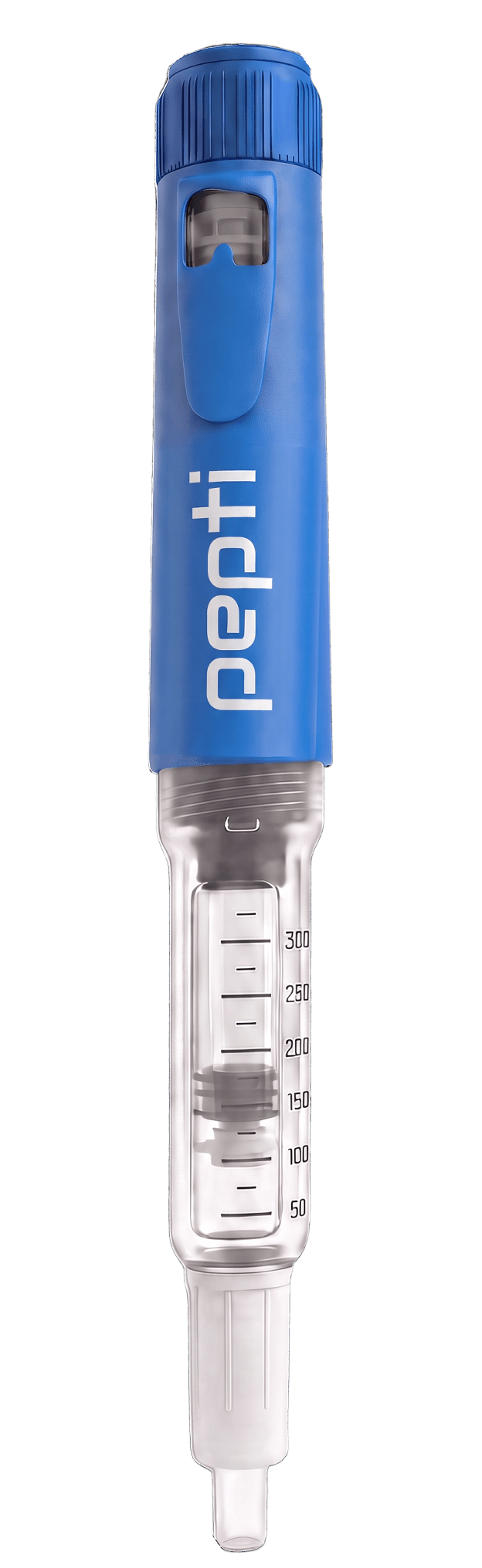
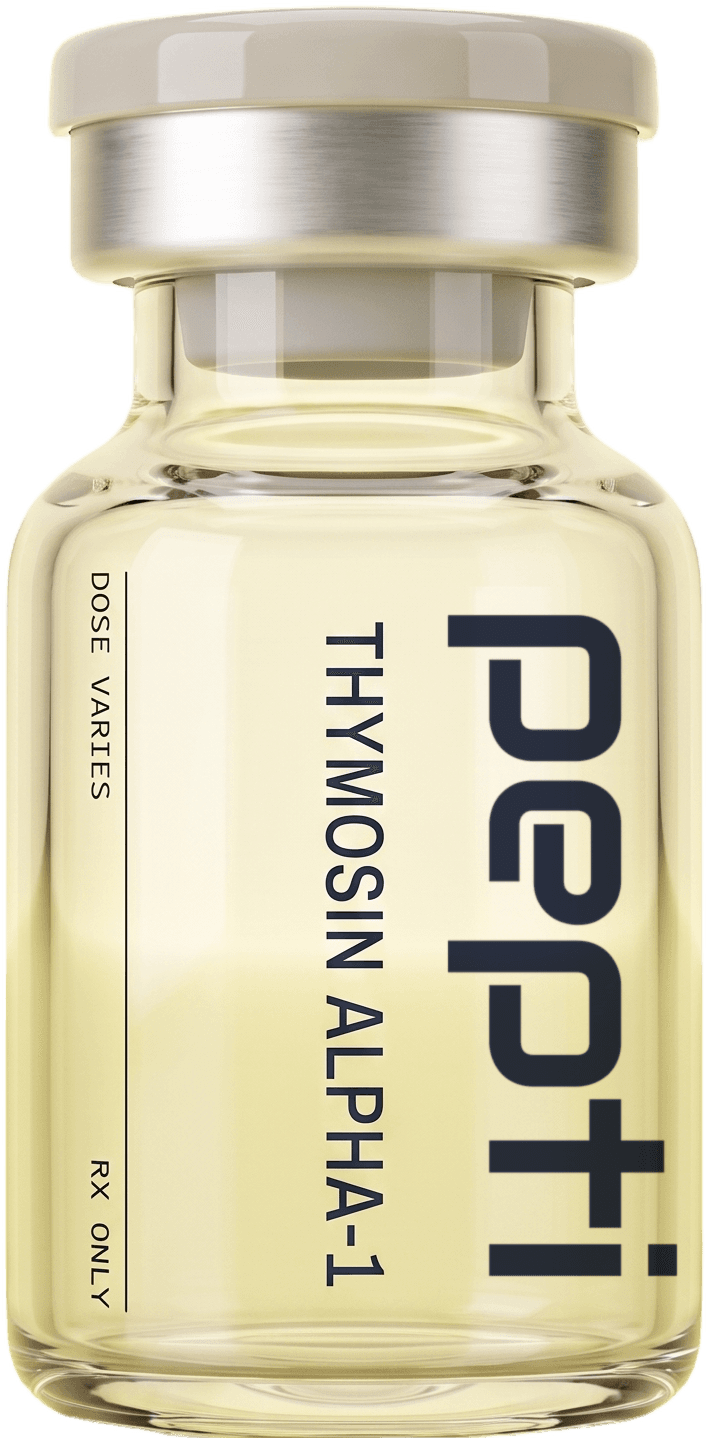
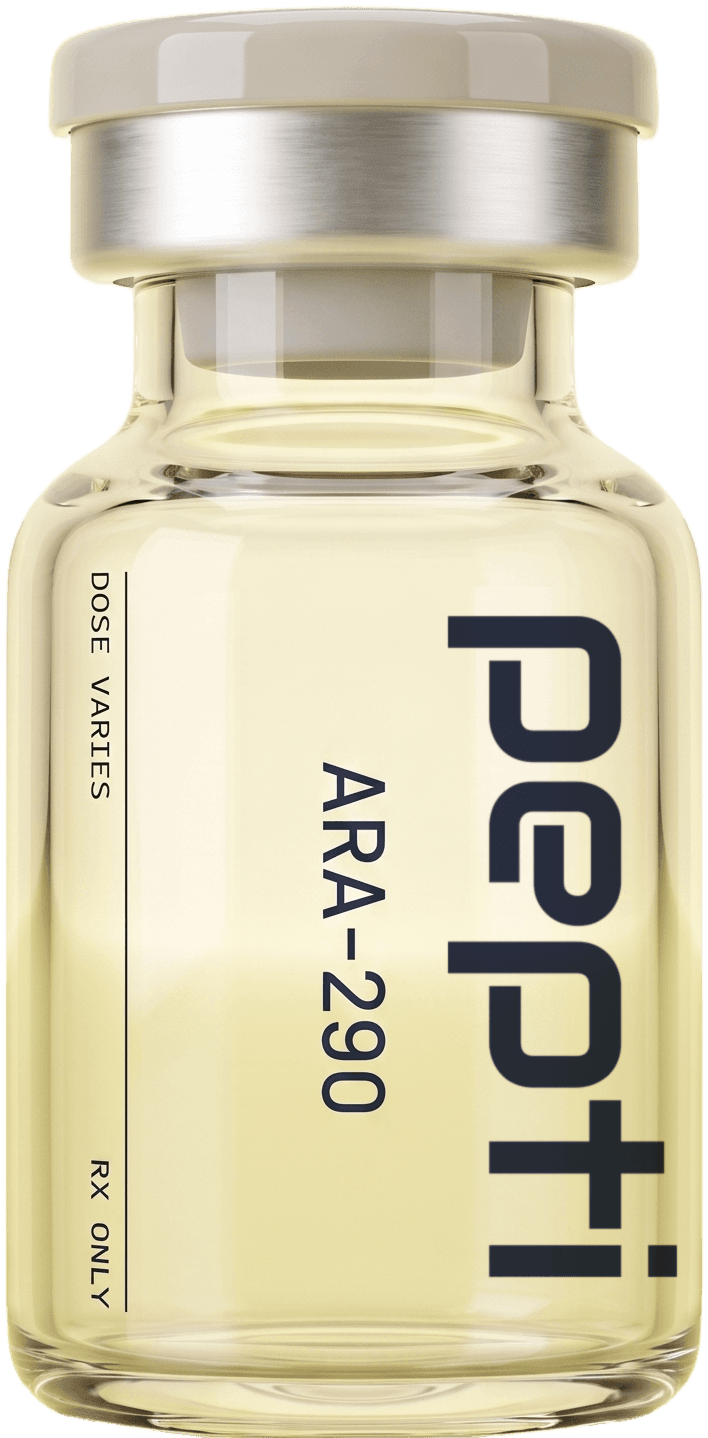
Thymosin alpha-1 and ARA-290 are unusual among compounded peptides because both have randomized human trials, but those trials studied unrelated things. Thymosin alpha-1 is a 28-amino-acid thymic peptide studied over more than thirty years as an immune modulator, in hepatitis B, hepatitis C, sepsis, melanoma and vaccine response, with mixed results and a negative result in its largest trial. ARA-290, also called cibinetide, is an 11-amino-acid fragment of erythropoietin studied in small four-week trials in small-fibre neuropathy, where it increased nerve fibre counts on an eye scan and improved symptom questionnaires but did not clearly beat placebo on pain intensity. Thymosin alpha-1 is the immune conversation; ARA-290 is the nerve conversation. Both are prescription-only, compounded by a licensed US pharmacy, and neither is FDA approved.
This page explains each on its own terms, puts them side by side, covers what the trials do and do not show, where each stands with the FDA, how each is dosed, what each costs at Pepti, and who tends to suit which.
Thymosin Alpha-1 vs ARA-290
The short answer
| If your main goal is | The usual prescription | What is in it | Price |
|---|---|---|---|
| Immune modulation | Thymosin Alpha-1 | 10 mg thymosin alpha-1 in a 5 mL vial (2 mg/mL); also a Pen | $249/mo |
| Burning, tingling or numbness from small nerve fibre damage | ARA-290 | 10 mg ARA-290 in a 5 mL vial (2 mg/mL) | $219/mo |
| Immune, gut and inflammation coverage in one vial | FORTIFY Blend | Thymosin alpha-1, BPC-157, KPV and LL-37 | $289/mo |
| Inflammation without a nerve-damage picture | KPV | 10 mg KPV in a 5 mL vial | $229/mo |
| A tendon, ligament or muscle injury | BPC-157 + TB-500 | 5 mg BPC-157 and 5 mg TB-500 in a 5 mL vial | $259/mo |
Every figure is an all-in monthly price covering the medication, physician review, refill management and shipping. There is no separate membership fee. Current pricing always lives on each product page.
Thymosin Alpha-1 vs ARA-290
Thymosin alpha-1 on its own terms
What it is
Thymosin alpha-1 is a 28-amino-acid peptide with an acetyl group on its N-terminus, cut by the body from a larger precursor called prothymosin alpha. It was first isolated in 1977 from a calf thymus preparation called thymosin fraction 5. Its generic name is thymalfasin, and a synthetic branded version has been sold since the 1990s in a number of countries outside the US, mainly for hepatitis B and as a vaccine adjuvant. It has never been approved by the FDA, and a compounded thymosin alpha-1 carries none of those foreign approvals. It is not thymosin beta-4 or TB-500, despite the name; see thymosin alpha-1 vs TB-500. The full reference is at what is thymosin alpha-1.
How thymosin alpha-1 is described to work
- Toll-like receptors on dendritic cells. In mouse and cell work, action on TLR9 and TLR2 increases cytokine production and antigen presentation.
- T-cell maturation. It promotes maturation of immature T cells into CD4 and CD8 populations; a 2020 report on severe COVID-19 measured a rise in circulating CD4 and CD8 T cells in treated patients.
- Natural killer cells and MHC class I. Cell and animal studies describe both increasing, the rationale for the cancer-adjunct trials.
- A regulatory direction. A 2010 review in the Annals of the New York Academy of Sciences called it "the regulator of regulators," describing a push toward regulatory T cells and tolerance in mouse work.
What human data exists for thymosin alpha-1
Trial Who Result 1998, Hepatology 98 people with chronic hepatitis B Complete virological response at 18 months: 40.6% (26 weeks), 26.5% (52 weeks), 9.4% untreated 2026 Cochrane review 10 trials, 1,349 people with hepatitis B May reduce mortality and serious adverse events; very low certainty 2012, Journal of Viral Hepatitis 552 people with hepatitis C No difference in sustained viral response (12.7% vs 10.5%) 2013, Critical Care (ETASS) 361 people with severe sepsis 28-day mortality 26.0% vs 35.0%, marginal significance 2025, BMJ (TESTS) 1,106 adults with sepsis, double-blind 28-day mortality 23.4% vs 24.1%; no clear benefit 2010, Journal of Clinical Oncology 488 people with metastatic melanoma A signal on survival that did not reach significance There are no randomized trials of thymosin alpha-1 for immune support in otherwise healthy adults, which is the use most people ask about. Detail is in thymosin alpha-1 benefits.
Thymosin Alpha-1 vs ARA-290
ARA-290 on its own terms
What it is
ARA-290 is an eleven-amino-acid peptide whose sequence was lifted from one helix of erythropoietin, the hormone that tells bone marrow to make red blood cells. It was engineered, not found in nature: a 2008 paper in the Proceedings of the National Academy of Sciences introduced it as a "nonerythropoietic, tissue-protective" peptide, keeping the part of erythropoietin that appears to protect tissue and leaving behind the part that raises red cell counts. Its international non-proprietary name is cibinetide; older papers call it helix B surface peptide. It does not raise haemoglobin and is not a conventional painkiller. The full reference is at what is ARA-290.
How ARA-290 is described to work
- The innate repair receptor. It is described as engaging only a receptor assembly of one erythropoietin receptor paired with the beta-common receptor (CD131), which the research group calls the innate repair receptor, switched on in injured or inflamed tissue. In a 2011 Anesthesiology study, mice bred without the beta-common receptor did not respond.
- Calmer nerve-tissue inflammation. A 2014 paper in Molecular Pain reported five doses after a nerve injury in rats reducing pain-related behaviour for up to twenty weeks and suppressing spinal microglia activation.
- Small nerve fibre regrowth. The human trials counted corneal nerve fibres with a non-invasive eye scan as a stand-in for small fibres elsewhere.
What human data exists for ARA-290
Trial Who Result 2012, Molecular Medicine 22 people with sarcoidosis and small-fibre neuropathy symptoms, IV for 4 weeks Better on a neuropathy symptom questionnaire than placebo; pain and fatigue scores improved equally in both groups 2013, Molecular Medicine Sarcoidosis with nerve fibre loss, daily subcutaneous for 28 days Improved symptoms, corneal nerve fibre density and six-minute walk 2015, Molecular Medicine Type 2 diabetes with painful neuropathy, 28 days Better symptom scores; corneal fibres rose in those starting low; HbA1c and lipids improved 2017, Investigative Ophthalmology and Visual Science 64 people with sarcoidosis, three doses vs placebo Only the middle dose beat placebo on corneal nerve fibre area; pain intensity not significantly better than placebo The trials were small, four weeks long and run by the developer. No phase 3 trial exists. A 2020 open-label eye study and a 2015 mood study found no benefit. Detail is in ARA-290 benefits.
Thymosin Alpha-1 vs ARA-290
Head to head
| Thymosin alpha-1 | ARA-290 | |
|---|---|---|
| Built from | A natural thymic peptide, 28 amino acids | A fragment of erythropoietin, 11 amino acids |
| Main described mechanism | Immune modulation: dendritic cells, T cells, NK cells | The innate repair receptor in injured tissue |
| What it is usually chosen for | Immune support | Small-fibre nerve symptoms |
| Human trial populations | Hepatitis B and C, sepsis, melanoma, vaccine response | Sarcoidosis-related and diabetic small-fibre neuropathy |
| Largest trial | 1,106 adults with sepsis, negative on mortality | 64 people with sarcoidosis, one of three doses positive |
| Trial length | Courses up to 52 weeks in hepatitis B | Four weeks |
| Who ran the trials | Trials across several disease areas over thirty years | Mostly the developer's group |
| Approval anywhere | Branded version approved in some countries outside the US | None anywhere |
| Healthy-adult trials | None | None |
| Sport | Not named on the 2026 WADA list, but S0 applies | Named as a prohibited peptide in the anti-doping literature |
| Vial at Pepti | 5 mL, 2 mg/mL (10 mg) | 5 mL, 2 mg/mL (10 mg) |
| Standard directions | 0.25 mL (25 units) once daily, Monday to Friday | 0.25 mL (25 units) once daily, Monday to Friday |
| Per dose | 0.5 mg | 0.5 mg |
| Doses per vial | 20, about 4 weeks | 20, about 4 weeks |
| Price at Pepti | $249 a month | $219 a month |
| Combined options | FORTIFY Blend; Pen | Single vial only |
The real difference is the problem, not the evidence
Both have more human data than most compounded peptides, so the evidence gap that decides many comparisons does not apply here. What separates them is what they were studied for. Thymosin alpha-1 is an immune peptide; nothing about it is aimed at nerves. ARA-290 is a tissue-protection peptide studied in nerve damage; nothing about it is aimed at immune deficiency. Choosing between them is mostly a matter of naming the problem accurately. No study has compared them.
Thymosin Alpha-1 vs ARA-290
Who suits which
Thymosin alpha-1
Thymosin alpha-1 suits a question that is specifically about immune modulation, and someone who wants the peptide with the longest controlled human record in that area, while understanding that none of it was in healthy adults and its biggest trial was negative. If gut and inflammation are part of the picture, the FORTIFY Blend adds BPC-157, KPV and LL-37.
ARA-290
ARA-290 suits burning, tingling or numbness from small nerve fibre damage once the testable causes, such as B12 deficiency, thyroid disease and poorly controlled glucose, have been looked at. It is not a fast-acting painkiller, and its trials were in two specific populations. If B12 is the issue, methylcobalamin is the more direct conversation.
Can you take thymosin alpha-1 and ARA-290 together?
They act on different systems, and some physicians do prescribe more than one peptide. No study has tested the combination. Your physician works out whether it fits after reviewing your intake.
Thymosin Alpha-1 vs ARA-290
When neither is the right first step
| Situation | What makes more sense |
|---|---|
| A diagnosed infection such as hepatitis B or C | FDA-approved treatments, which have far stronger evidence |
| Neuropathy that has not been worked up | Checking B12, thyroid and glucose first |
| Type 2 diabetes is driving the neuropathy | Glucose control first; semaglutide and tirzepatide have large trials for glucose |
| A soft-tissue injury rather than nerve damage | BPC-157 or TB-500 |
| Fatigue without an immune finding | A work-up for ordinary causes; see peptides for energy and fatigue |
Thymosin Alpha-1 vs ARA-290
Where each stands with the FDA
| Thymosin alpha-1 | ARA-290 (cibinetide) | |
|---|---|---|
| Category history | Category 2 in 2023; removed effective 27 September 2024 after the nomination was withdrawn | Category 3, nominated without adequate support, on the list updated 14 May 2026 |
| Advisory committee | Voted 4 to 17 against adding it to the 503A Bulks List on 4 December 2024 | Not reviewed |
| Safety-concern list | Not on it | Not on it |
| Final determination | None issued | None; not evaluated because the nomination was incomplete |
Category 3 is a paperwork category, not a safety finding. A committee vote is a recommendation, not a rule. Both remain legal to prescribe as compounded medications, and compounded medications are not FDA approved. See are peptides FDA approved.
Thymosin Alpha-1 vs ARA-290
Dosing, side by side
At Pepti the two vials are the same strength and carry the same printed direction: 0.25 mL, which is 25 units on a U-100 insulin syringe, injected under the skin into the abdomen or thigh once daily Monday through Friday. At 2 mg/mL that volume holds 0.5 mg of either. ARA-290's 2013 and 2015 trials used daily subcutaneous injection, the same route. The branded thymosin alpha-1 schedule abroad is 1.6 mg twice weekly, which is not the compounded direction. Your physician sets your directions after reviewing your intake, and they are printed on the vial. More is in thymosin alpha-1 dosage and ARA-290 dosage.
Twenty doses per vial covers about four weeks, which for ARA-290 matches the length of its human trials. Refills run every 28 days, one vial per fill. Both ship refrigerated with ice packs, ready to use, with sterile syringes and alcohol prep pads.
Thymosin Alpha-1 vs ARA-290
Side effects
Thymosin alpha-1. The randomized trials, including the 1,106-patient sepsis trial, report adverse-event rates similar to placebo. What is reported is mostly injection-site redness, mild soreness or bruising. Because it acts on immune signalling, autoimmune disease and immunosuppressive treatment belong on the intake. More is in thymosin alpha-1 side effects.
ARA-290. Investigators reported no safety concerns across the trials, and a twelve-week study found no antibodies to the peptide. It does not raise red cell counts. What is reported is mostly injection-site redness, soreness or bruising. Because one trial reported improved HbA1c, anyone on insulin or other glucose-lowering medication should list it and report symptoms.
For both, long-term data is limited and there is no established interaction list. Facial or throat swelling or difficulty breathing needs emergency care first (call 911), then tell your physician.
Thymosin Alpha-1 vs ARA-290
Who should not take either, or should discuss it first
| Situation | Why |
|---|---|
| Pregnancy or breastfeeding | Not used; safety data is absent |
| Autoimmune disease or immunosuppressants | Especially for thymosin alpha-1; raise it at intake |
| Insulin or glucose-lowering medication | Especially for ARA-290, because of the HbA1c finding |
| Tested athletes | ARA-290 is named as prohibited; check the current list for thymosin alpha-1 |
Thymosin Alpha-1 vs ARA-290
What the evidence shows, honestly
Thymosin alpha-1 has decades of randomized trials, consistent tolerability and real signals in some diseases, and its largest, best-designed trial was negative. ARA-290 has a handful of small, short, developer-run trials with a consistent nerve-fibre signal and no clear pain benefit beyond placebo. Neither has been tested in healthy adults, and neither is a treatment for any disease as a compounded product. Any provider describing either as established for general immune support or nerve pain is overstating it.
Thymosin Alpha-1 vs ARA-290
Where to get thymosin alpha-1 or ARA-290 prescribed
Neither can be bought legitimately without a prescription. Sites selling them "for research use only" are not accountable for identity, purity, sterility or concentration, which matters for thymosin alpha-1, where one of the FDA's stated concerns was immunogenicity from impure material. The prescription route:
- Complete a free online intake covering your history, medications and what you want help with.
- A physician licensed in your state reviews it, usually within 24 hours.
- If it is appropriate, a PCAB-accredited, FDA-registered US 503A pharmacy compounds it to that prescription. Lot test results are published at /quality/lab-results.
- It ships refrigerated with your directions printed on the vial.
- Your physician stays reachable for questions and side effects.
Pepti prescribes both in every state except Oklahoma, plus DC, and is cash-pay with no insurance billing. Step by step: how to get thymosin alpha-1 prescribed online.
References
What this is based on.
References
- Dahan A, Dunne A, Swartjes M et al.. ARA 290 improves symptoms in patients with sarcoidosis-associated small nerve fiber loss and increases corneal nerve fiber density · Mol Med (2013) · PMID 24136731
- Heij L, Niesters M, Swartjes M et al.. Safety and efficacy of ARA 290 in sarcoidosis patients with symptoms of small fiber neuropathy: a randomized, double-blind pilot study · Mol Med (2012) · PMID 23168581
- Brines M, Patel NS, Villa P et al.. Nonerythropoietic, tissue-protective peptides derived from the tertiary structure of erythropoietin · Proc Natl Acad Sci U S A (2008) · PMID 18676614
- Swartjes M, Morariu A, Niesters M et al.. ARA290, a peptide derived from the tertiary structure of erythropoietin, produces long-term relief of neuropathic pain: an experimental study in rats and β-common receptor knockout mice · Anesthesiology (2011) · PMID 21873879
- Swartjes M, van Velzen M, Niesters M et al.. ARA 290, a peptide derived from the tertiary structure of erythropoietin, produces long-term relief of neuropathic pain coupled with suppression of the spinal microglia response · Mol Pain (2014) · PMID 24529189
- van Velzen M, Heij L, Niesters M et al.. ARA 290 for treatment of small fiber neuropathy in sarcoidosis · Expert Opin Investig Drugs (2014) · PMID 24555851
- Brines M, Dunne AN, van Velzen M et al.. ARA 290, a nonerythropoietic peptide engineered from erythropoietin, improves metabolic control and neuropathic symptoms in patients with type 2 diabetes · Mol Med (2015) · PMID 25387363
- Cerit H, Veer IM, Dahan A et al.. Testing the antidepressant properties of the peptide ARA290 in a human neuropsychological model of drug action · Eur Neuropsychopharmacol (2015) · PMID 26431906
- Dahan A, Brines M, Niesters M et al.. Targeting the innate repair receptor to treat neuropathy · Pain Rep (2016) · PMID 29392190
- Culver DA, Dahan A, Bajorunas D et al.. Cibinetide Improves Corneal Nerve Fiber Abundance in Patients With Sarcoidosis-Associated Small Nerve Fiber Loss and Neuropathic Pain · Invest Ophthalmol Vis Sci (2017) · PMID 28475703
- Thomas A, Knoop A, Schänzer W et al.. Characterization of in vitro generated metabolites of selected peptides <2 kDa prohibited in sports · Drug Test Anal (2017) · PMID 28941172
- Brines M, Culver DA, Ferdousi M et al.. Corneal nerve fiber size adds utility to the diagnosis and assessment of therapeutic response in patients with small fiber neuropathy · Sci Rep (2018) · PMID 29549285
Citations are provided for educational purposes. They do not constitute medical advice. Always discuss any peptide protocol with your prescribing physician.
Common questions
Thymosin Alpha-1 vs ARA-290, answered.
They were studied for different problems, so neither is better in general. Thymosin alpha-1 is an immune modulator with trials in infection and cancer. ARA-290 was studied in small-fibre neuropathy. No study has compared them.
Thymosin alpha-1 is a 28-amino-acid peptide from the thymus, studied around immune cells. ARA-290 is an 11-amino-acid fragment of erythropoietin, studied around a tissue-repair receptor in nerve damage.
ARA-290 is the one studied in neuropathy. Its trials found better symptom questionnaire scores and more corneal nerve fibres, but pain intensity did not clearly separate from placebo. Thymosin alpha-1 has no nerve research.
Thymosin alpha-1. ARA-290 has an anti-inflammatory mechanism in injured tissue but was not studied as an immune treatment.
Yes, which is unusual. Thymosin alpha-1 has randomized trials over thirty years, including a 1,106-person sepsis trial that was negative. ARA-290 has small four-week randomized trials in 22 to 64 people.
No study has tested the combination. They act on different systems, and your physician works out whether it fits after reviewing your intake.
No. It was engineered not to bind the receptor pair that drives red cell production, and the trials found no effect on blood counts.
Yes, thymalfasin is its generic name. A compounded version is the same sequence but not the branded product and carries none of its foreign approvals.
For both, mostly injection-site redness, soreness or bruising. Thymosin alpha-1 trials report adverse events similar to placebo. ARA-290 trials reported no safety concerns over four to twelve weeks.
At Pepti, thymosin alpha-1 is $249 a month and ARA-290 is $219 a month, all-in, covering medication, physician review, refill management and shipping.
No. Compounded medications are not FDA approved. Thymosin alpha-1 received a 4 to 17 advisory committee vote against the Bulks List in 2024; cibinetide is in Category 3. Neither has a final FDA determination.
No. Bloodwork is not required for any Pepti treatment. If your physician wants labs for your care, they'll ask through your account. The free assessment goes to a physician licensed in your state. A consultation does not guarantee a prescription.
Next step
See what a physician recommends for you.
A licensed physician in your state reviews your intake and decides what is appropriate. A consultation does not guarantee a prescription.