Immune · Reference
Thymosin Alpha 1 Benefits: What the Research Actually Shows
This page takes each claimed benefit in turn and says what was studied, in what, and how much weight it can bear. It describes research, not results anyone should expect, and none of it makes thymosin alpha-1 a treatment for any disease. For the biology and the FDA history in full, read what is thymosin alpha-1; for directions, thymosin alpha 1 dosage.
Thymosin alpha-1 has more human trial evidence than almost any other compounded peptide: randomised trials over more than thirty years in hepatitis B, hepatitis C, sepsis, melanoma and vaccine response. The results are mixed. Hepatitis B shows consistent signals graded very low certainty, the largest trial, 1,106 adults with sepsis, found no clear mortality benefit, and hepatitis C was negative. There are no randomised trials of thymosin alpha-1 for immune support in otherwise healthy adults, which is the use most people ask about. It is a compounded prescription injection at Pepti; compounded medications are not FDA approved.
This page takes each claimed benefit in turn and says what was studied, in what, and how much weight it can bear. It describes research, not results anyone should expect, and none of it makes thymosin alpha-1 a treatment for any disease. For the biology and the FDA history in full, read what is thymosin alpha-1; for directions, thymosin alpha 1 dosage.
Thymosin Alpha 1 Benefits
The short answer
| Claimed benefit | What the evidence is | Strength of evidence |
|---|---|---|
| Sharper immune signalling (dendritic cells, TLRs) | Cell and animal | Preclinical mechanism |
| T-cell maturation and higher T-cell counts | Cell and animal; human counts measured in a 2020 COVID-19 report | Preclinical, with one observational human measurement |
| Balancing, not only stimulating, immunity | Animal and cell (regulatory T cells, IDO) | Preclinical only |
| Chronic hepatitis B | Human randomised trials; 2026 Cochrane review of 10 trials, 1,349 people | Human, very low certainty |
| Chronic hepatitis C | Human randomised trial, 552 people (2012) | Human, negative |
| Sepsis | Human randomised trials: 361 people (2013), then 1,106 people (BMJ 2025) | Human; the largest trial was negative |
| Melanoma, alongside chemotherapy | Human randomised trial, 488 people (2010) | Human, a signal short of significance |
| Vaccine response | Human trials from the 1980s and 1990s with older vaccines | Human, judged insufficient by the FDA |
| Severe COVID-19 | Retrospective review, 76 people (2020); later randomised work did not confirm | Weak, not confirmed |
| General immune support in healthy adults | No trial | No direct evidence |
The honest summary of the table: a compound that is consistently well tolerated, that measurably changes immune-cell counts in people, that has produced positive signals in some diseases and a clear negative in its biggest trial, and that has never been tested in the healthy population that typically asks about it.
Thymosin Alpha 1 Benefits
What thymosin alpha-1 is, in one paragraph
Thymosin alpha-1 is a 28-amino-acid peptide with an acetyl group on its N-terminus, cut by the body from a larger precursor called prothymosin alpha. It was first isolated in 1977 from a calf thymus preparation known as thymosin fraction 5. The thymus is where T cells mature, and everything studied since has been about what the peptide does to immune cells. Its generic name is thymalfasin, and a synthetic branded version has been sold since the 1990s in a number of countries outside the US, mainly for hepatitis B and as a vaccine adjuvant; it has never been approved by the FDA. It is not a hormone, not an antiviral, not an immunosuppressant, and not thymosin beta-4 or its fragment TB-500.
Thymosin Alpha 1 Benefits
Benefit 1: Sharper immune signalling
What the research describes. The most-cited mechanism is action on Toll-like receptors, particularly TLR9 and TLR2, on dendritic cells, the cells that decide what the rest of the immune system responds to. In mouse and cell work this is described as increasing cytokine production and antigen presentation. Cell and animal studies also describe increased natural killer cell activity and increased MHC class I expression on tumour cells, making them easier for the immune system to recognise.
Evidence type. Cell and animal.
What it means. This is the rationale for every clinical use: vaccine adjuvant, chronic viral infection and cancer adjunct. It is a mechanism, not a benefit measured in a healthy person.
Thymosin Alpha 1 Benefits
Benefit 2: T-cell maturation and counts
What the research describes. The original thymic-factor work describes thymosin alpha-1 promoting the maturation of immature T cells into functional CD4 and CD8 populations, with increased interleukin-2 and IL-2 receptor expression. Some of this has been observed in people: a 2020 report on severe COVID-19 measured a rise in circulating CD4 and CD8 T cells in treated patients.
Evidence type. Cell and animal, with one observational human measurement.
Strength. One of the few peptide mechanisms with a human laboratory readout. A change in a cell count is a laboratory endpoint; whether it means anything a person would notice depends on why they were treated, and often it would not be perceptible.
Thymosin Alpha 1 Benefits
Benefit 3: Balancing immunity rather than only boosting it
What the research describes. A 2010 review in the Annals of the New York Academy of Sciences called thymosin alpha-1 "the regulator of regulators." In mouse work the compound is described as inducing indoleamine 2,3-dioxygenase (IDO) in dendritic cells, which pushes the response toward regulatory T cells and tolerance rather than inflammation.
Evidence type. Animal and cell.
What it means. The picture is of a peptide that sharpens immune recognition where it is deficient while restraining runaway inflammation. That is why the research describes it as a modulator rather than a stimulant or a suppressant. It is also why autoimmune disease and immunosuppressive treatment are things to raise at intake.
Thymosin Alpha 1 Benefits
Benefit 4: Chronic hepatitis B
What the research describes. This is the indication behind most of the international approvals. A 1998 randomised controlled trial in Hepatology allocated 98 patients to a 26-week course, a 52-week course, or no treatment. Complete virological response at 18 months was reported in 40.6 per cent, 26.5 per cent and 9.4 per cent respectively, with responses accumulating after the course finished rather than during it.
The current synthesis. A 2026 Cochrane review of ten randomised trials and 1,349 participants reported that thymosin alpha-1 may reduce all-cause mortality and serious adverse events compared with control, but graded the certainty as very low for almost every outcome.
Evidence type. Human, randomised.
Strength. Consistent signals across small trials, not settled proof, in a disease where oral antivirals have since changed the standard of care. Hepatitis B has FDA-approved treatments, and thymosin alpha-1 was studied alongside them, never instead of them.
Thymosin Alpha 1 Benefits
Benefit 5: Chronic hepatitis C
What the research describes. A 2012 trial in the Journal of Viral Hepatitis randomised 552 people who had not responded to standard interferon-based treatment to that treatment plus thymosin alpha-1 or placebo for 48 weeks. Sustained viral response was not different between arms (12.7 per cent against 10.5 per cent).
Evidence type. Human, randomised.
Strength. Negative, and largely historical now that direct-acting antivirals exist.
Thymosin Alpha 1 Benefits
Benefit 6: Sepsis
What the research describes. Two randomised trials, both in China, tell a two-part story. The 2013 ETASS trial in Critical Care randomised 361 people with severe sepsis and reported 28-day mortality of 26.0 per cent with thymosin alpha-1 against 35.0 per cent with conventional care, a difference of marginal significance. The follow-up, TESTS, published in the BMJ in 2025, was a multicentre, double-blind, placebo-controlled phase 3 trial of 1,106 adults with sepsis: 28-day mortality was 23.4 per cent against 24.1 per cent, and the trial found no clear evidence that thymosin alpha-1 reduces mortality.
Evidence type. Human, randomised.
What it means. TESTS is the largest and best-designed trial of the compound in any indication, and it was negative on its main endpoint. The earlier, smaller result did not hold up. This is the single most important fact for reading any thymosin alpha-1 claim.
Thymosin Alpha 1 Benefits
Benefit 7: Melanoma, alongside chemotherapy
What the research describes. A 2010 trial in the Journal of Clinical Oncology randomised 488 people with metastatic melanoma to chemotherapy with or without thymosin alpha-1. Tumour responses were reported in 10 and 12 patients in the thymosin alpha-1 groups against four in the control group, and median survival was 9.4 months against 6.6 months, a difference that did not reach statistical significance. The authors described a signal warranting further evaluation.
Evidence type. Human, randomised.
Strength. A signal, not a significant result. Thymosin alpha-1 is not a cancer treatment.
Thymosin Alpha 1 Benefits
Benefit 8: Vaccine response
What the research describes. Trials from the 1980s and 1990s studied thymosin alpha-1 alongside influenza vaccination in older adults and haemodialysis patients, reporting higher antibody responses in some.
Evidence type. Human.
Strength. The FDA's 2024 review noted those vaccines are not the ones used in the US today and found the evidence insufficient.
Thymosin Alpha 1 Benefits
Benefit 9: COVID-19
What the research describes. A 2020 paper in Clinical Infectious Diseases was a retrospective review of 76 people with severe COVID-19 in Wuhan, reporting lower mortality in the treated group (11.1 per cent against 30.0 per cent). Later randomised work did not confirm a mortality benefit.
Evidence type. Human, retrospective.
Strength. A retrospective series is the weakest kind of comparative evidence, and it was not confirmed.
Thymosin Alpha 1 Benefits
Benefit 10: General immune support in healthy adults
What the research describes. Nothing. There are no randomised controlled trials of thymosin alpha-1 for immune support in otherwise healthy adults, for frequent infections, for long COVID or for chronic fatigue. That use rests on clinical judgement, not on the trials.
What prescribers report. Thymosin alpha-1 does not produce a sensation, and noticing nothing is normal. These are prescriber descriptions, not trial endpoints.
Evidence type. None direct.
What it means. If the concern is frequent illness or fatigue without an immune finding, ordinary causes come first. Peptides for immune support sets out what is known about each option.
Thymosin Alpha 1 Benefits
What the evidence does not establish
- A benefit in healthy adults or for general immune support. That trial has not been run.
- A mortality benefit in sepsis, or efficacy as a cancer treatment. The largest trial found no mortality benefit, and the oncology results were signals, not significant differences.
- A dose or duration for any use outside the trials. The branded product's schedule (1.6 mg twice weekly) is not the compounded direction.
- That a compounded product carries any of the branded product's foreign approvals. It does not.
- Anything as an FDA-approved treatment. Thymosin alpha-1 is not approved for any use in the United States.
Thymosin Alpha 1 Benefits
Where thymosin alpha-1 stands with the FDA
Thymosin alpha-1 was placed in Category 2 of the FDA's interim 503A bulks list in 2023. The nomination was withdrawn and the FDA removed it from Category 2 effective 27 September 2024. On 4 December 2024 the FDA's Pharmacy Compounding Advisory Committee voted 4 to 17 against adding it to the 503A Bulks List, citing incomplete physicochemical characterisation, insufficient safety information including immunogenicity risk, and a lack of effectiveness evidence for the conditions evaluated. That vote is a recommendation, not a rule; the FDA has not issued a final determination, and on its interim list updated 14 May 2026 thymosin alpha-1 does not appear in Category 1, 2 or 3. See are peptides FDA approved.
Thymosin Alpha 1 Benefits
Side effects, in brief
| What is reported | When | What to do |
|---|---|---|
| Injection-site redness, mild soreness, occasional bruising | Any time | Rotate sites |
| Changes that may be immune-related, particularly with an autoimmune condition | Any time | Raise autoimmune disease or immunosuppressive treatment at intake; message your care team |
| A severe or spreading reaction, facial or throat swelling, difficulty breathing | Rare | Emergency care first (call 911), then tell your physician |
The randomised trials, including the 1,106-patient sepsis trial, report adverse-event rates similar to placebo, and the branded product has been in use since the 1990s. The FDA's 2024 review raised immunogenicity from aggregated or impure compounded material, which is a manufacturing-quality question; lot test results are at /quality/lab-results. There is no established interaction list, which is why the intake asks for every medication you take. Thymosin alpha-1 is not used in pregnancy or breastfeeding. It is not named on the 2026 WADA Prohibited List, but the S0 class covers substances without regulatory approval for human therapeutic use, so tested athletes should confirm first.
Thymosin Alpha 1 Benefits
How Pepti supplies thymosin alpha-1
| Product | What is in it | Typical directions | Price |
|---|---|---|---|
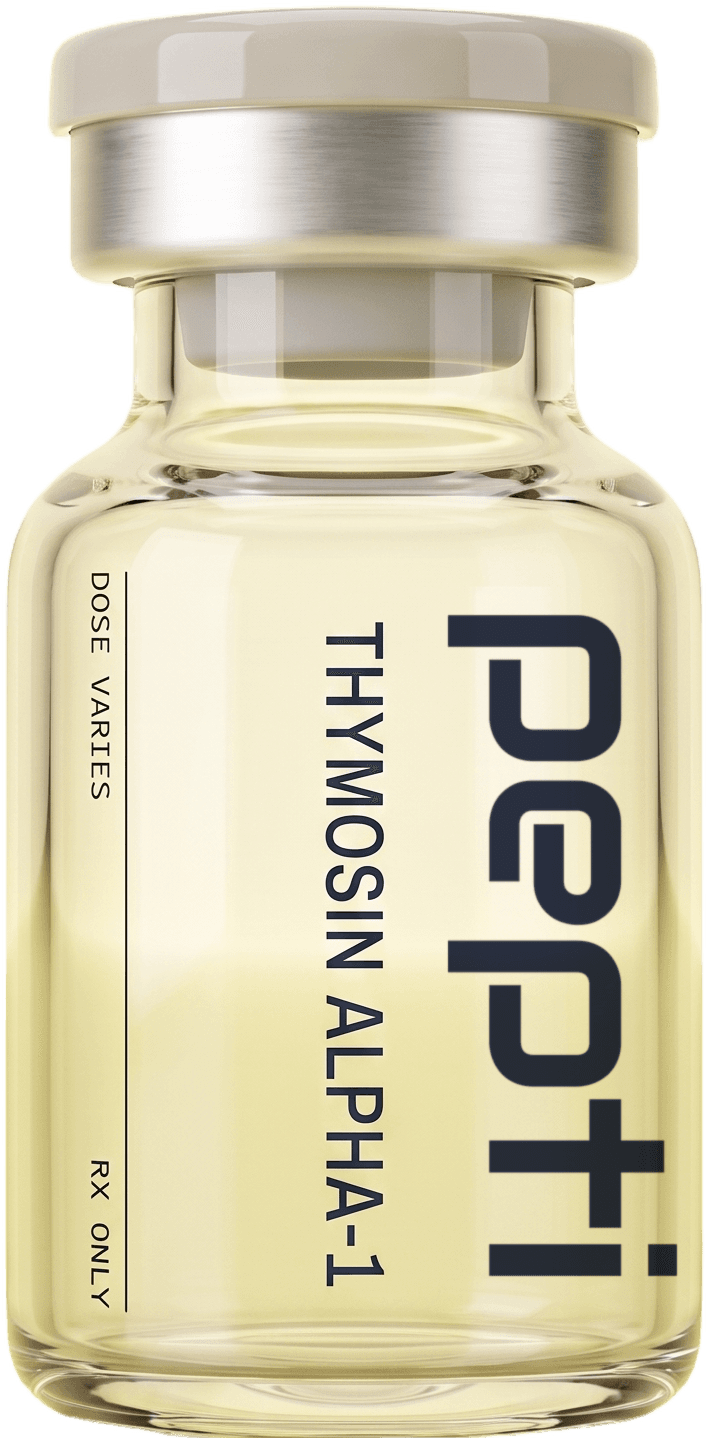
| Thymosin Alpha-1, vial | 5 mL multi-dose vial, 2 mg/mL (10 mg) | 0.25 mL (25 units) subcutaneously once daily Monday through Friday; 20 doses, about 4 weeks | $249/mo |
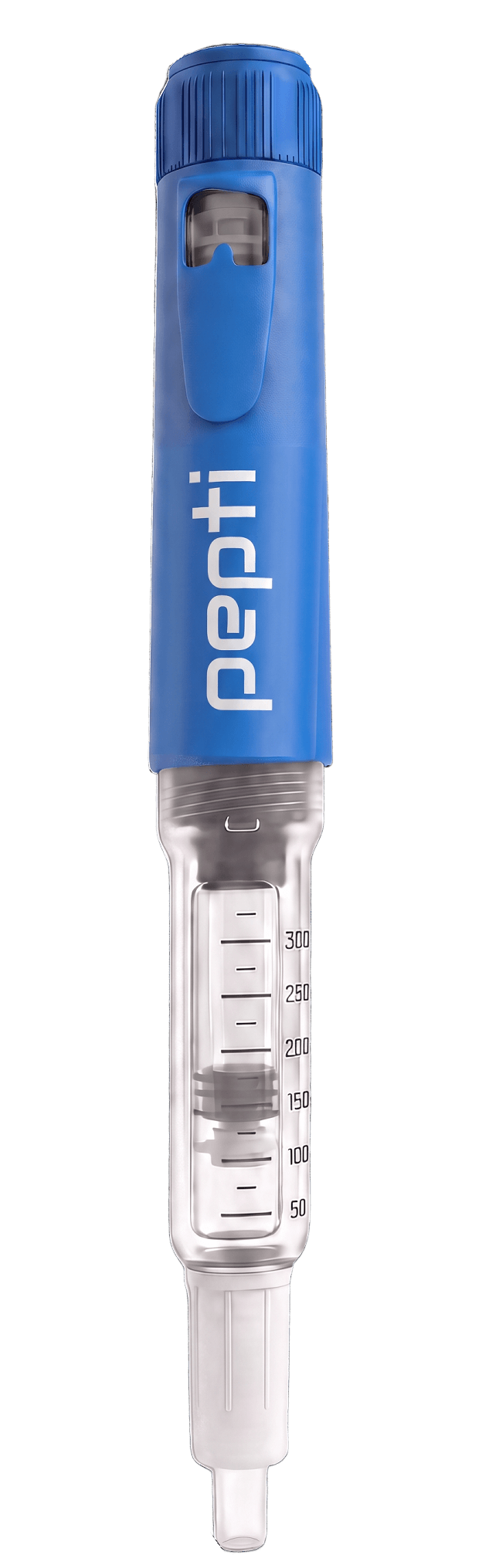
| Thymosin Alpha-1, Pen | 3 mL pre-filled Pen cartridge containing 15 mg, in a reusable click-dial injector | Dosed by dial, as printed with your prescription | See the product page |
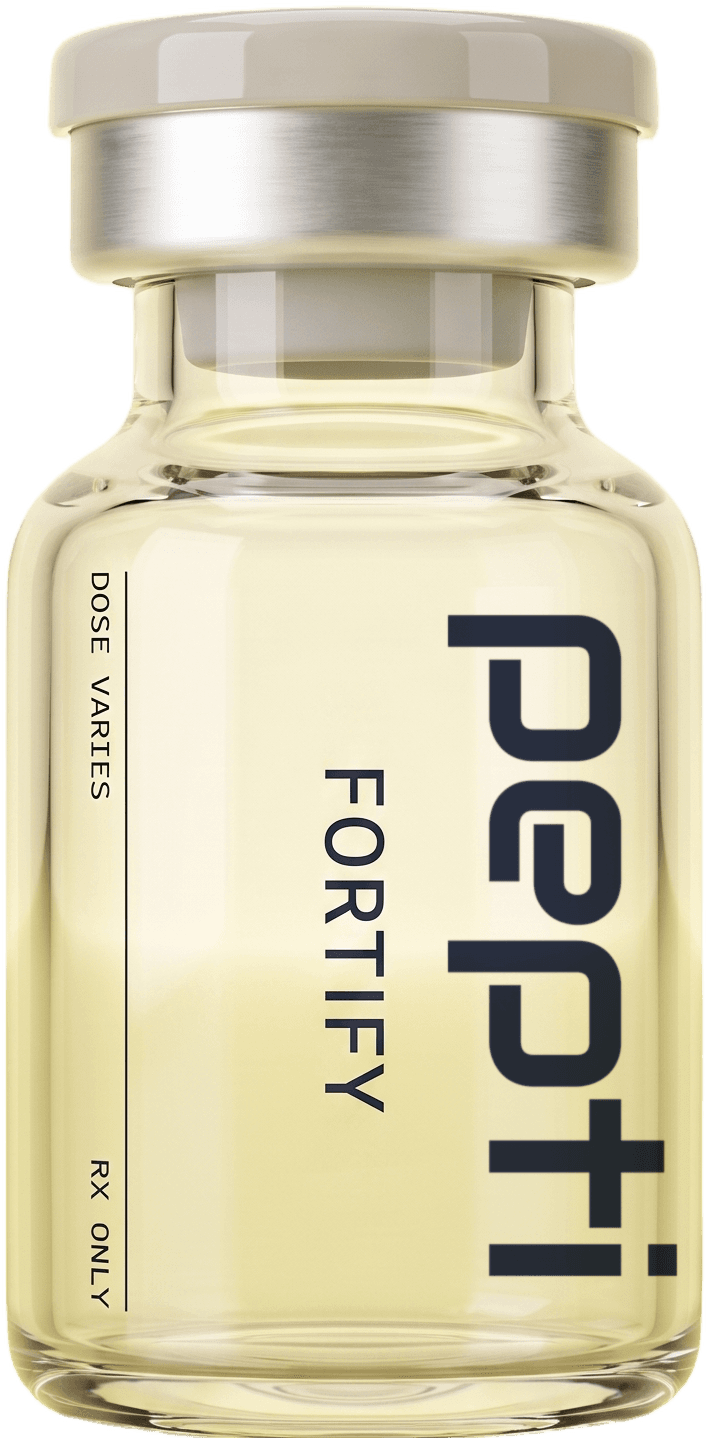
| FORTIFY Blend | 5 mg thymosin alpha-1, 5 mg BPC-157, 2 mg KPV, 1 mg LL-37 in 5 mL | 0.25 mL (25 units) subcutaneously once daily Monday through Friday | $289/mo |
Every price is all-in, covering medication, physician review, refill management and shipping, with no separate membership fee. Pepti is cash-pay and does not bill insurance. Vials are multi-dose solutions shipped ready to use, refrigerated with ice packs, with sterile syringes and alcohol prep pads. Refills run every 28 days, one vial per fill. Your physician sets your directions after reviewing your intake, and they are printed on the vial. FORTIFY is for when the immune component is wanted alongside gut, inflammation and antimicrobial-peptide coverage; what is the FORTIFY blend and KPV benefits cover the other ingredients. No study has tested thymosin alpha-1 in combination with them.
Thymosin Alpha 1 Benefits
Where to get thymosin alpha-1 prescribed
Thymosin alpha-1 cannot be bought legitimately without a prescription. Sites selling it "for research use only" are not accountable for identity, purity, sterility or concentration, which matters for a peptide where one of the FDA's stated concerns was immunogenicity from impure material. The prescription route:
- Complete a free online intake covering your history, medications and what you want help with.
- A physician licensed in your state reviews it, usually within 24 hours.
- If it is appropriate, a PCAB-accredited, FDA-registered US 503A compounding pharmacy prepares it to that prescription. Lot test results are published at /quality/lab-results.
- It ships refrigerated with your directions printed on the vial.
- Your physician stays reachable for questions and side effects.
Pepti prescribes thymosin alpha-1 in every state except Oklahoma, plus DC The step-by-step page is how to get thymosin alpha-1 prescribed online. The name causes constant confusion with a different peptide; thymosin alpha-1 vs TB-500 sets the two apart.
References
What this is based on.
References
- Dominari A, Hathaway Iii D, Pandav K et al.. Thymosin alpha 1: A comprehensive review of the literature · World J Virol (2020) · PMID 33362999
- Dürr UH, Sudheendra US, Ramamoorthy A. LL-37, the only human member of the cathelicidin family of antimicrobial peptides · Biochim Biophys Acta (2006) · PMID 16716248
- Dalmasso G, Charrier-Hisamuddin L, Nguyen HT et al.. PepT1-mediated tripeptide KPV uptake reduces intestinal inflammation · Gastroenterology (2008) · PMID 18061177
- Grönberg A, Mahlapuu M, Ståhle M et al.. Treatment with LL-37 is safe and effective in enhancing healing of hard-to-heal venous leg ulcers: a randomized, placebo-controlled clinical trial · Wound Repair Regen (2014) · PMID 25041740
- Mahlapuu M, Sidorowicz A, Mikosinski J et al.. Evaluation of LL-37 in healing of hard-to-heal venous leg ulcers: A multicentric prospective randomized placebo-controlled clinical trial · Wound Repair Regen (2021) · PMID 34687253
- Lande R, Gregorio J, Facchinetti V et al.. Plasmacytoid dendritic cells sense self-DNA coupled with antimicrobial peptide · Nature (2007) · PMID 17873860
- Goldstein AL, Hannappel E, Kleinman HK. Thymosin beta4: actin-sequestering protein moonlights to repair injured tissues · Trends Mol Med (2005) · PMID 16099219
- Malinda KM, Sidhu GS, Mani H et al.. Thymosin beta4 accelerates wound healing · J Invest Dermatol (1999) · PMID 10469335
- Malinda KM, Goldstein AL, Kleinman HK. Thymosin beta 4 stimulates directional migration of human umbilical vein endothelial cells · FASEB J (1997) · PMID 9194528
- Philp D, Badamchian M, Scheremeta B et al.. Thymosin beta 4 and a synthetic peptide containing its actin-binding domain promote dermal wound repair in db/db diabetic mice and in aged mice · Wound Repair Regen (2003) · PMID 12581423
- Philp D, Goldstein AL, Kleinman HK. Thymosin beta4 promotes angiogenesis, wound healing, and hair follicle development · Mech Ageing Dev (2004) · PMID 15037013
- Philp D, Scheremeta B, Sibliss K et al.. Thymosin beta4 promotes matrix metalloproteinase expression during wound repair · J Cell Physiol (2006) · PMID 16607611
Citations are provided for educational purposes. They do not constitute medical advice. Always discuss any peptide protocol with your prescribing physician.
Common questions
Thymosin Alpha 1 Benefits, answered.
The research describes it changing how immune cells signal and mature, and human trials have studied it in hepatitis B (consistent signals, very low certainty), hepatitis C (negative), sepsis (an early positive trial, then a 1,106-person trial with no clear mortality benefit), melanoma (a signal short of significance) and vaccine response. There are no trials in healthy adults.
In cell and animal work it acts on Toll-like receptors on dendritic cells, promotes T-cell maturation, increases natural killer cell activity and, in some settings, pushes the response toward regulatory T cells. In people, it has been measured raising CD4 and CD8 T-cell counts.
The research describes it as a modulator rather than a booster: it increases immune signalling where it is deficient and restrains inflammation in other settings. No trial has tested it for immune support in otherwise healthy adults.
It has been studied there more than anywhere else. A 2026 Cochrane review of ten trials reported that it may reduce mortality and serious adverse events compared with control, at very low certainty. Hepatitis B has FDA-approved treatments, and thymosin alpha-1 is not one of them in the US.
The largest trial, published in the BMJ in 2025, randomised 1,106 adults with sepsis and found no clear reduction in 28-day mortality. An earlier, smaller 2013 trial had reported a marginal difference.
A 2020 retrospective review of 76 people with severe COVID-19 reported lower mortality, but later randomised work did not confirm it. There are no trials for long COVID.
Yes. Thymalfasin is the generic name for the same peptide. Compounded thymosin alpha-1 is the same sequence, but it is not the branded product and carries none of its foreign approvals.
No. TB-500 is a fragment of thymosin beta-4, studied for soft-tissue repair, with no human randomised trials. Thymosin alpha-1 is a different peptide studied for immune modulation, with decades of human trials.
Mostly injection-site redness, mild soreness or bruising. Randomised trials report adverse-event rates similar to placebo. Autoimmune disease and immunosuppressive treatment should be raised at intake.
No. Compounded medications are not FDA approved, and thymosin alpha-1 is not approved for any use in the US. The FDA's advisory committee voted 4 to 17 against adding it to the 503A Bulks List in December 2024; no final rule has been issued.
At Pepti, the thymosin alpha-1 vial is $249 a month and the FORTIFY Blend is $289, all-in, covering medication, physician review, refill management and shipping.
No. Bloodwork is not required for any Pepti treatment. If your physician wants labs for your care, they'll ask through your account. The free assessment goes to a physician licensed in your state. A consultation does not guarantee a prescription.
Next step
See what a physician recommends for you.
A licensed physician in your state reviews your intake and decides what is appropriate. A consultation does not guarantee a prescription.