Immune · Reference
Thymosin Alpha 1 Dosage: How Pepti Prescribes It, in Units, mL and mg
This page explains the thymosin alpha 1 dosage Pepti prescribes, what the units on the syringe mean, a chart that converts units to millilitres and milligrams, the FORTIFY blend and the Pen, how long a vial lasts, how courses are structured, what the branded product and the trials used, and the side effects to know about. It covers how Pepti's thymosin alpha-1 is typically prescribed, not protocols from the internet. Nothing here is a reason to change your own dose.
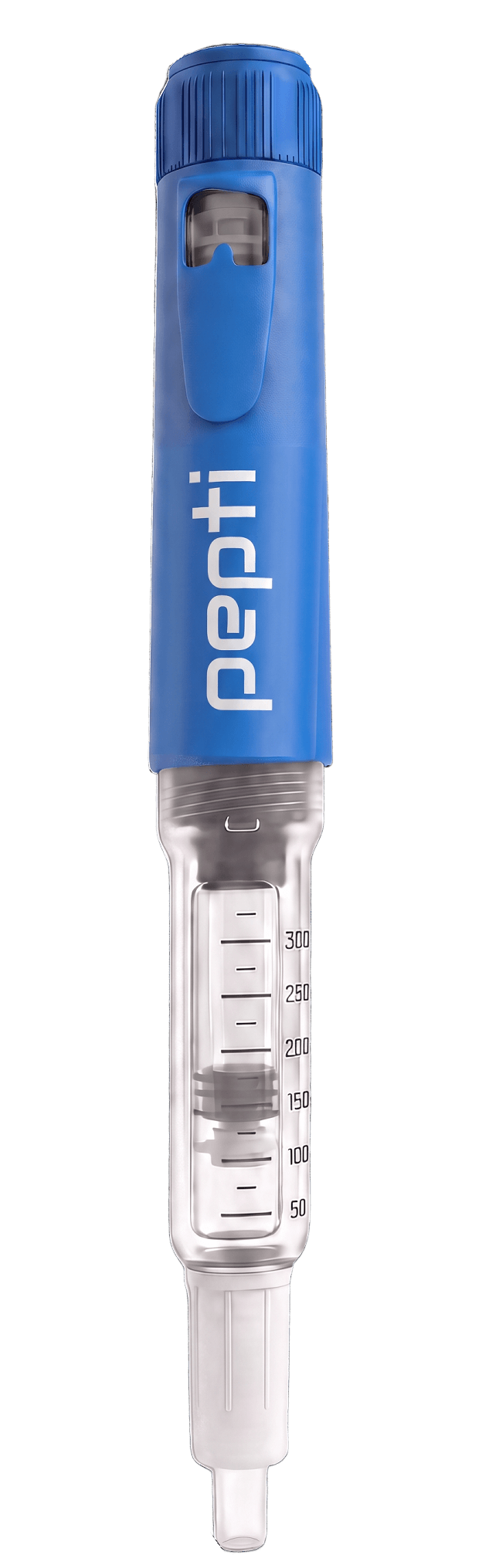
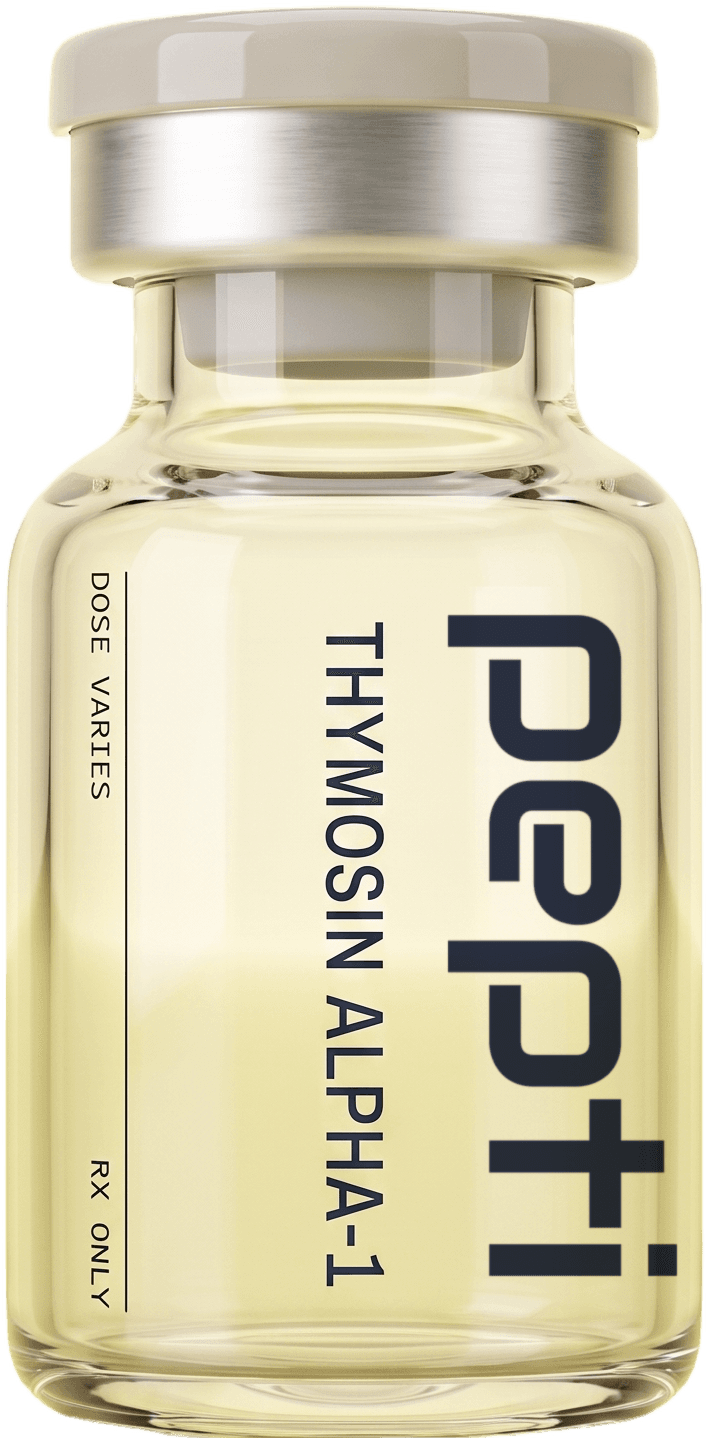
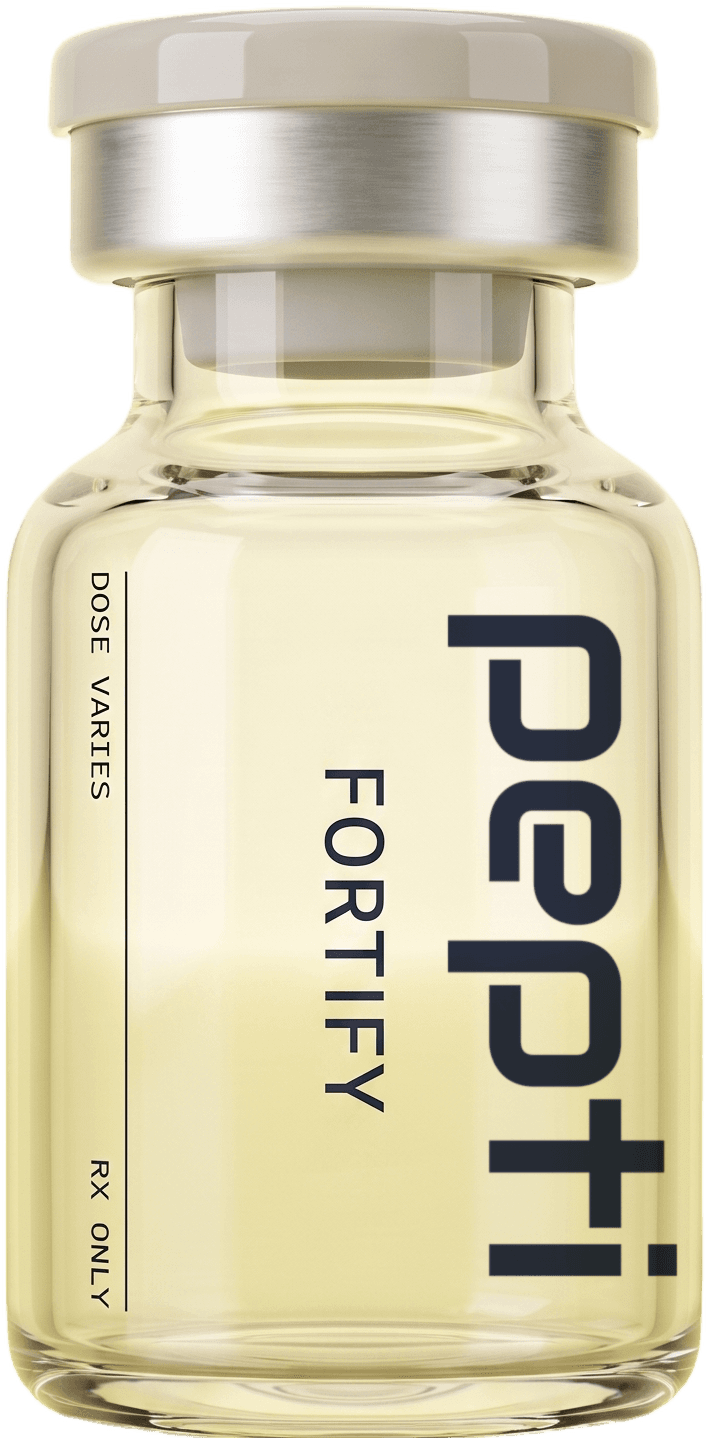
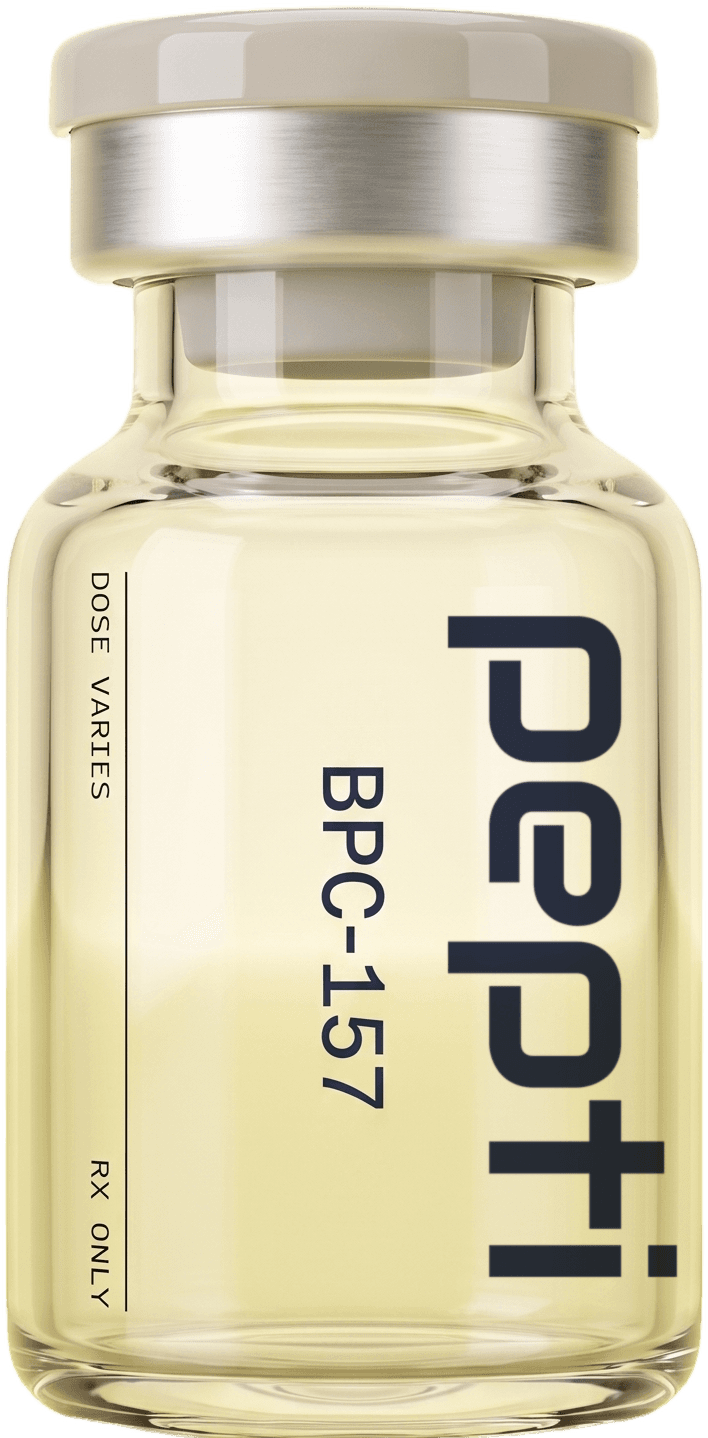
At Pepti, thymosin alpha-1 is typically prescribed as 0.25 mL, which is 25 units on a U-100 insulin syringe, injected under the skin once daily Monday through Friday. The vial is 5 mL at 2 mg/mL, so each dose carries 0.5 mg of thymosin alpha-1 and the vial holds 20 doses, about four weeks. The branded thymalfasin product sold outside the US is labelled at 1.6 mg twice weekly, which is a different schedule from the compounded directions. Your physician sets your directions after reviewing your intake, and your exact dose is printed on the vial.
This page explains the thymosin alpha 1 dosage Pepti prescribes, what the units on the syringe mean, a chart that converts units to millilitres and milligrams, the FORTIFY blend and the Pen, how long a vial lasts, how courses are structured, what the branded product and the trials used, and the side effects to know about. It covers how Pepti's thymosin alpha-1 is typically prescribed, not protocols from the internet. Nothing here is a reason to change your own dose.
Thymosin Alpha 1 Dosage
The short answer
| Product | What is supplied | Typical directions | Thymosin alpha-1 per dose | Doses per vial | Price |
|---|---|---|---|---|---|
| Thymosin Alpha-1, vial | 5 mL, 2 mg/mL (10 mg per vial) | Inject 0.25 mL (25 units) subcutaneously once daily Monday through Friday | 0.5 mg | 20 | $249/mo |
| Thymosin Alpha-1, Pen | 3 mL pre-filled Pen cartridge containing 15 mg | Dosed by the pen's dial, as printed with your prescription | Set by your prescription | Not drawn in units | See the product page |
| FORTIFY Blend | 5 mL, thymosin alpha-1 1 mg/mL with BPC-157, KPV and LL-37 | Inject 0.25 mL (25 units) subcutaneously once daily Monday through Friday | 0.25 mg, with the other three ingredients | 20 | $289/mo |
Every price is all-in, covering medication, physician review, refill management and shipping, with no separate membership fee. Pepti is cash-pay and does not bill insurance. These are the typical printed directions; your own directions are the ones on your vial or prescription.
Thymosin Alpha 1 Dosage
Thymosin alpha 1 dosage in units, mL and mg
Pepti's directions are written in two forms, millilitres and units, because prescriptions are written in millilitres and insulin syringes are marked in units. On a U-100 insulin syringe, 1 unit is 0.01 mL, so 100 units is 1 mL and 25 units is 0.25 mL. A unit is a volume mark on the barrel, not a measure of how strong the medication is.
The milligram figure comes from the concentration on the label. Pepti's thymosin alpha-1 vial is supplied at 2 mg/mL, so:
| What you read | Value | Where it comes from |
|---|---|---|
| Dose volume | 0.25 mL | Printed on the vial |
| On a U-100 insulin syringe | 25 units | 0.25 mL x 100 units per mL |
| Concentration | 2 mg/mL | Printed on the vial |
| Thymosin alpha-1 per dose | 0.5 mg | 2 mg/mL x 0.25 mL |
| Total in the vial | 10 mg in 5 mL | Printed on the vial |
| Doses per vial | 20 | 5 mL divided by 0.25 mL |
That arithmetic is a way to read a label, not a way to set a dose. A vial labelled 10 mg is not a 10 mg dose: it is twenty 0.5 mg doses. Many doses quoted online are written for powder vials mixed at home, at whatever concentration the water made; a Pepti vial arrives in solution at a fixed concentration, so those figures do not transfer. Do peptides come pre-mixed explains the difference. If your label and your syringe seem to disagree, do not dose; message your care team.
Thymosin Alpha 1 Dosage
Thymosin alpha 1 dosage chart: units to mL to mg
The chart below is the conversion for the 2 mg/mL vial and for the 1 mg/mL thymosin alpha-1 in the FORTIFY Blend, drawn with a U-100 insulin syringe. It is math only. It is not a menu of doses, and the only line that applies to you is the one that matches the number printed on your vial.
| Syringe mark (U-100) | Volume | From the 2 mg/mL vial | From FORTIFY (1 mg/mL) |
|---|---|---|---|
| 5 units | 0.05 mL | 0.1 mg | 0.05 mg |
| 10 units | 0.1 mL | 0.2 mg | 0.1 mg |
| 15 units | 0.15 mL | 0.3 mg | 0.15 mg |
| 20 units | 0.2 mL | 0.4 mg | 0.2 mg |
| 25 units (Pepti's typical directions) | 0.25 mL | 0.5 mg | 0.25 mg |
| 50 units | 0.5 mL | 1 mg | 0.5 mg |
| 100 units | 1 mL | 2 mg | 1 mg |
The rule behind every row: units divided by 100 gives millilitres, and millilitres multiplied by the concentration gives milligrams. The two columns show why the same 25 units means different milligrams in different vials, which is the main reason not to dose from a chart, including this one.
Thymosin alpha-1 in the FORTIFY blend
FORTIFY holds thymosin alpha-1 at half the concentration of the single vial, so the same 25 unit draw delivers 0.25 mg. Each draw also delivers the other three ingredients in fixed proportion:
| Ingredient | Concentration | Per 0.25 mL (25 unit) dose | Per vial |
|---|---|---|---|
| Thymosin alpha-1 | 1 mg/mL | 0.25 mg | 5 mg |
| BPC-157 | 1 mg/mL | 0.25 mg | 5 mg |
| KPV | 0.4 mg/mL | 0.1 mg | 2 mg |
| LL-37 | 0.2 mg/mL | 0.05 mg | 1 mg |
There is no way to take more thymosin alpha-1 and less of something else from the same vial; a different balance is a different prescription. More on the blend is in what is the FORTIFY blend.
The Pen
Thymosin alpha-1 also comes as a 3 mL pre-filled pepti Pen cartridge containing 15 mg, used in a reusable click-dial injector. It is dosed by the pen's dial rather than drawn with a syringe, so the units chart above does not apply to it; the directions come printed with your prescription. It is the same medication, and the comparison is in vial vs pen. FORTIFY is a vial only.
Thymosin Alpha 1 Dosage
How long a thymosin alpha-1 vial lasts
At Pepti's typical directions, one 10 mg vial lasts four weeks:
| Step | Value |
|---|---|
| Dose | 25 units, 0.25 mL, 0.5 mg |
| Doses per week | 5 (Monday through Friday) |
| Doses per vial | 20 (5 mL divided by 0.25 mL) |
| Thymosin alpha-1 used | 20 x 0.5 mg = 10 mg, the whole vial |
| Time per vial | 20 doses divided by 5 per week = 4 weeks |
FORTIFY works out the same way in volume: 20 doses of 0.25 mL, four weeks. Four weeks is why refills run every 28 days, one vial per fill. Vials are multi-dose solutions shipped ready to use, refrigerated with ice packs, with sterile syringes and alcohol prep pads. Nothing is mixed at home. Keep the vial in the fridge between doses, and follow the beyond-use date printed on the label, which runs from first puncture. How to store peptides covers storage.
If a vial runs short before the refill, message your care team rather than adjusting anything yourself. If you miss a dose, follow your directions and do not take two doses to make up for one.
Thymosin Alpha 1 Dosage
When thymosin alpha-1 is taken
Once daily, Monday through Friday
Pepti's directions say once daily Monday through Friday, with weekends off. Five days a week is a common prescriber pattern, and it lines a 20-dose vial up with a 28-day refill. The standard label does not set a time of day; follow any timing printed on yours.
Under the skin
Subcutaneous means into the fat layer, not the muscle. Abdomen and thigh are the usual sites, rotated so the same spot is not used repeatedly. Technique is covered in how to inject peptides safely.
Directions say What it means in practice 0.25 mL (25 units) Draw to the 25 mark on a U-100 insulin syringe Subcutaneously Into the fat layer, abdomen or thigh, rotating sites Once daily One injection a day Monday through Friday Five doses a week, weekends off 20 doses per vial About four weeks, then the next refill Courses, not cycles
In the research, thymosin alpha-1 was given in defined courses tied to a purpose: the chronic hepatitis B trials, for example, ran 26-week and 52-week courses, and the response accumulated after the course finished. That is a different structure from cycling on and off; the course ends because the purpose ends. How long your course runs is set by your physician after reviewing your intake, and it is worth discussing before you start. Peptide cycling and tolerance covers this across peptides.
Thymosin Alpha 1 Dosage
The branded schedule, and why it is not your dose
Thymosin alpha-1 is unusual among compounded peptides: its generic name is thymalfasin, and a synthetic version has been sold since the 1990s as a branded 1.6 mg subcutaneous injection, approved in a number of countries outside the US, mainly for hepatitis B and as a vaccine adjuvant. Its labelled schedule is 1.6 mg twice weekly. It has never been approved by the FDA.
| Branded thymalfasin (outside the US) | Pepti's typical compounded directions | |
|---|---|---|
| Dose | 1.6 mg | 0.5 mg (0.25 mL of 2 mg/mL) |
| Frequency | Twice weekly | Once daily, Monday through Friday |
| Weekly total (math only) | 3.2 mg | 2.5 mg |
| Studied for | Hepatitis B, vaccine response | Prescribed for other uses |
| FDA status | Not approved in the US | Compounded; not FDA approved |
The FDA's 2024 briefing noted that it could not independently verify every approval the manufacturer lists. More importantly, the trials behind those approvals were in people with chronic hepatitis B, sepsis, hepatitis C, melanoma and vaccine response, not healthy adults. There are no randomised controlled trials of thymosin alpha-1 for immune support in otherwise healthy adults, and none establishes a dose or duration for that use. Physicians write the compounded schedule differently from the branded label, so do not be surprised by the difference; your directions will say. The trials, one by one, are in thymosin alpha 1 benefits.
Thymosin Alpha 1 Dosage
What changes the directions
Your physician sets your directions after reviewing your intake. Things that can lead to different directions, or a different product, include:
| What can change | How it shows up |
|---|---|
| Vial, Pen or blend | The Pen is dosed by dial; FORTIFY has its own label and four ingredients |
| Your medical history | Autoimmune disease or immunosuppressive treatment need specialist input; pregnancy or breastfeeding change the conversation |
| A diagnosed infection or immune disease | Hepatitis B, hepatitis C, HIV and sepsis have FDA-approved treatments; thymosin alpha-1 was studied alongside them, never instead of them |
| Your other medications | There is no established interaction list, so the intake asks for everything you take |
| Course length | Courses are tied to a purpose; your physician sets when one ends |
When directions change, the new numbers are printed on the new label. Never carry a number over from a previous fill. Bloodwork is not required for any Pepti treatment. If your physician wants labs for your care, they'll ask through your account.
Thymosin Alpha 1 Dosage
Side effects, in summary
Thymosin alpha-1 has an unusually long human safety record for a compounded peptide. The randomised trials, including a 1,106-patient sepsis trial published in 2025, report adverse-event rates similar to placebo.
| What is reported | What it usually means | What to do |
|---|---|---|
| Injection-site redness, mild soreness, occasional bruising | The commonest complaint | Rotate sites |
| Any immune-related change, especially with autoimmune disease | The theoretical concerns are immune ones | Raise autoimmune disease or immunosuppressive treatment at intake; message your care team |
| A severe or spreading reaction, facial or throat swelling, difficulty breathing | Rare | Emergency care first (call 911), then tell your physician |
The FDA's 2024 review raised immunogenicity from aggregated or impure compounded material, a manufacturing-quality question; lot test results are at /quality/lab-results. Thymosin alpha-1 is not used in pregnancy or breastfeeding. It is not named on the 2026 WADA Prohibited List, but the S0 class covers substances without regulatory approval for human therapeutic use, so tested athletes should confirm first; FORTIFY contains BPC-157, which is named under S0.
Thymosin alpha-1 left Category 2 of the FDA's interim 503A list in September 2024, and in December 2024 the FDA's advisory committee voted 4 to 17 against adding it to the 503A Bulks List; that is a recommendation, and no final rule has been issued. Compounded medications are not FDA approved.
Thymosin Alpha 1 Dosage
Where to get thymosin alpha-1 prescribed
Thymosin alpha-1 cannot be bought legitimately without a prescription. Sites selling it "for research use only" are not accountable for what is in the vial: identity, purity, sterility and concentration are untested, so the concentration your units chart depends on is unknown. The prescription route:
- Complete a free online intake covering your history, medications and what you want help with.
- A physician licensed in your state reviews it, usually within 24 hours.
- If it is appropriate, a PCAB-accredited, FDA-registered US 503A compounding pharmacy prepares it to that prescription. Lot test results are published at /quality/lab-results.
- It ships refrigerated with your directions printed on the vial.
- Your physician stays reachable for questions and dose changes.
Pepti prescribes thymosin alpha-1 in every state except Oklahoma, plus DC Step by step: how to get thymosin alpha-1 prescribed online. The full reference is what is thymosin alpha-1, and the most common mix-up is covered in thymosin alpha-1 vs TB-500.
References
What this is based on.
References
- Chang CH, Tsai WC, Hsu YH, Pang JH. Pentadecapeptide BPC 157 enhances the growth hormone receptor expression in tendon fibroblasts · Molecules (2014) · PMID 25415472
- Krivic A, Anic T, Seiwerth S, et al.. Achilles detachment of rat and stable gastric pentadecapeptide BPC 157 · Journal of Orthopaedic Research (2006) · PMID 16583442
- Sikiric P, Seiwerth S, Rucman R, et al.. Stable gastric pentadecapeptide BPC 157: novel therapy in gastrointestinal tract · Current Pharmaceutical Design (2011) · PMID 21548867
- Cerovecki T, Bojanic I, Brcic L, Radic B, et al.. Pentadecapeptide BPC 157 (PL 14736) improves ligament healing in the rat · J Orthop Res (2010) · PMID 20225319
- Sikiric P, Seiwerth S, Rucman R, Turkovic B, et al.. Stable gastric pentadecapeptide BPC 157-NO-system relation · Curr Pharm Des (2014) · PMID 23755725
- Cox HD, Miller GD, Eichner D. Detection and in vitro metabolism of the confiscated peptides BPC 157 and MGF R23H · Drug Test Anal (2017) · PMID 28035768
- Thomas A, Görgens C, Guddat S et al.. Simplifying and expanding the screening for peptides <2 kDa by direct urine injection, liquid chromatography, and ion mobility mass spectrometry · J Sep Sci (2016) · PMID 26578461
- Farrar JT, Young JP Jr, LaMoreaux L, Werth JL et al.. Clinical importance of changes in chronic pain intensity measured on an 11-point numerical pain rating scale · Pain (2001) · PMID 11690728
- Meyer JD, Ho B, Manning MC. Effects of conformation on the chemical stability of pharmaceutically relevant polypeptides · Pharm Biotechnol (2002) · PMID 11987755
- Xu C, Sun L, Ren F, Huang P, et al.. Preclinical Safety Evaluation of Body Protective Compound-157, a Potential Drug for Treating Various Wounds · Regul Toxicol Pharmacol (2020) · PMID 32334036
- He L, Feng D, Guo H, et al.. Pharmacokinetics, distribution, metabolism, and excretion of body-protective compound 157, a potential drug for treating various wounds, in rats and dogs · Front Pharmacol (2022) · PMID 36588717
- Lee E, Padgett B. Intra-Articular Injection of BPC 157 for Multiple Types of Knee Pain · Altern Ther Health Med (2021) · PMID 34324435
Citations are provided for educational purposes. They do not constitute medical advice. Always discuss any peptide protocol with your prescribing physician.
Common questions
Thymosin Alpha 1 Dosage, answered.
At Pepti, thymosin alpha-1 is typically prescribed as 0.25 mL, which is 25 units on a U-100 insulin syringe, injected subcutaneously once daily Monday through Friday. From the 2 mg/mL vial that is 0.5 mg per dose. Your physician sets your directions after reviewing your intake, and your exact dose is printed on the vial.
The amount printed on your vial, on the schedule printed on your vial. Pepti's typical directions are 25 units five days a week. If you have questions about your dose, message your care team.
The number printed on your vial. Pepti's typical directions are 25 units, which is 0.25 mL on a U-100 insulin syringe. The Pen is dosed by dial, not units.
From the 2 mg/mL vial, 0.5 mg. From the FORTIFY Blend, which holds it at 1 mg/mL, the same 25 units carries 0.25 mg.
That is the labelled schedule of the branded thymalfasin product sold outside the US, studied mainly in hepatitis B. Pepti's compounded directions are typically 0.5 mg once daily Monday through Friday. Follow the directions on your vial.
The research used defined courses tied to a purpose, such as 26-week and 52-week courses in hepatitis B. No trial establishes a duration for immune support in healthy adults. How long your course runs is set by your physician after reviewing your intake.
Pepti's directions say once daily Monday through Friday, without a set time of day. Follow any timing printed on your label.
About four weeks. A 10 mg vial at 25 units (0.5 mg) five days a week is 20 injections, which uses the whole vial in four weeks, matching the 28-day refill.
No. They are different peptides. At Pepti both are drawn at 0.25 mL five days a week, but the vials differ in strength, so that volume delivers 0.5 mg of thymosin alpha-1 or 0.25 mg of TB-500.
No. Pepti vials are multi-dose solutions shipped ready to use, with sterile syringes and alcohol prep pads, and the Pen comes pre-filled. Nothing is reconstituted at home.
Do not change your dose yourself. Take the dose printed on your vial, on the schedule printed on your vial. A diagnosed infection needs its own treatment; message your care team.
Bloodwork is not required for any Pepti treatment. If your physician wants labs for your care, they'll ask through your account. The free assessment goes to a physician licensed in your state. A consultation does not guarantee a prescription.
Next step
See what a physician recommends for you.
A licensed physician in your state reviews your intake and decides what is appropriate. A consultation does not guarantee a prescription.