Anti-Aging · Reference
NAD+ Injection Side Effects: What Is Reported, Why, and When to Call
The side effects most often reported with NAD+ injections are stinging or burning at the injection site, local redness or a small lump, and flushing, warmth or mild nausea during or after a dose, and most of them are driven by how fast NAD+ goes in rather than by the molecule.
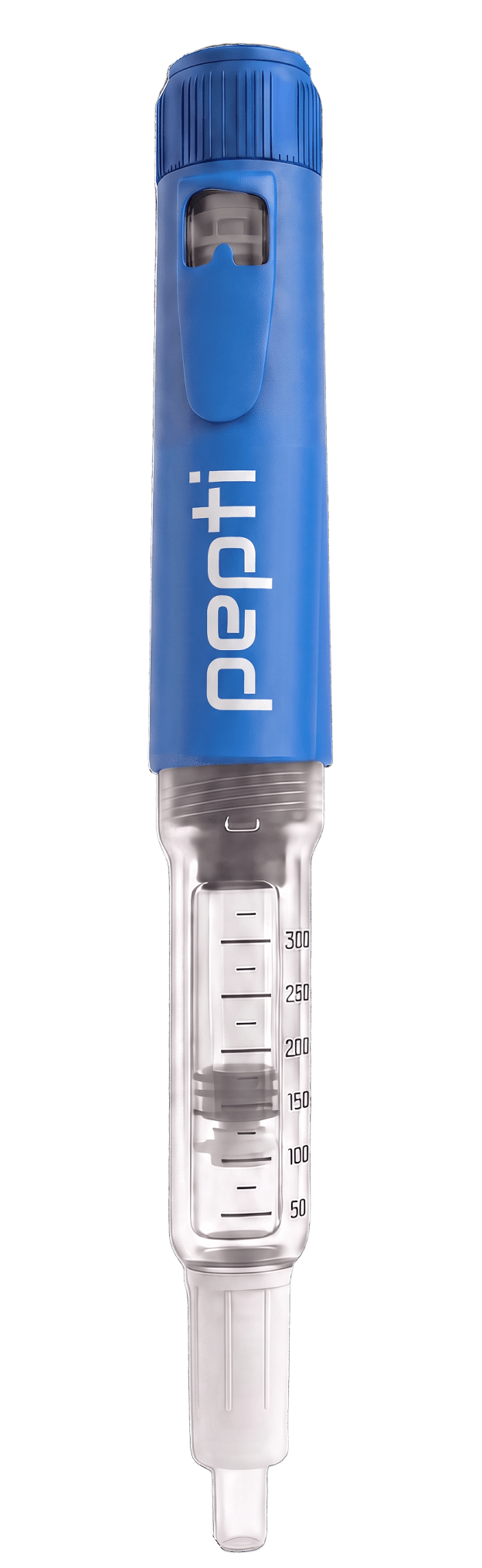
Treatments mentioned
Headache, light-headedness and a wired feeling that disrupts sleep are less common. Injecting slowly and rotating sites address most of it. The cautions that deserve a real conversation are an active or recent cancer, significant kidney or liver disease, and pregnancy or breastfeeding, where NAD+ is not used. Swelling of the face or throat, a widespread rash or trouble breathing is an emergency: call 911.
This page is a practical reference: what is reported, where each report comes from, why NAD+ side effects look the way they do, what to report and when, and who should not take it. For the wider safety picture, read is NAD+ safe; for the product reference, what is NAD+ injection.
NAD+ Injection Side Effects
The short answer
| Side effect | How often it is reported | Why it happens | What to do |
|---|---|---|---|
| Stinging or burning at the site | Common | NAD+ solutions are acidic, and the volume sits in the fat layer while it absorbs | Inject slowly; rotate sites |
| Redness or a small firm lump at the site | Common; usually resolves over a day or two | The injected volume absorbing | Rotate sites; report it if it spreads |
| Flushing and warmth | Common | Usually rate-related | Inject slowly; report it |
| Mild nausea | Common, particularly with larger or faster doses | Rate and dose | Report it; your care team can change the directions |
| Chest or abdominal tightness during the injection | Reported, fading within minutes | Rate-related | Inject slowly; report it |
| Headache, light-headedness | Uncommon | Usually larger or faster doses | Report it |
| A wired feeling that disrupts sleep | Uncommon, more with evening doses | Timing | Report it; timing can be changed by your care team |
| A site that is hot, spreading or worse after 48 hours | Not expected | Possible infection | Same-day message |
| Facial or throat swelling, widespread rash, trouble breathing | Rare | Possible reaction to the preparation | Call 911 first, then tell your care team |
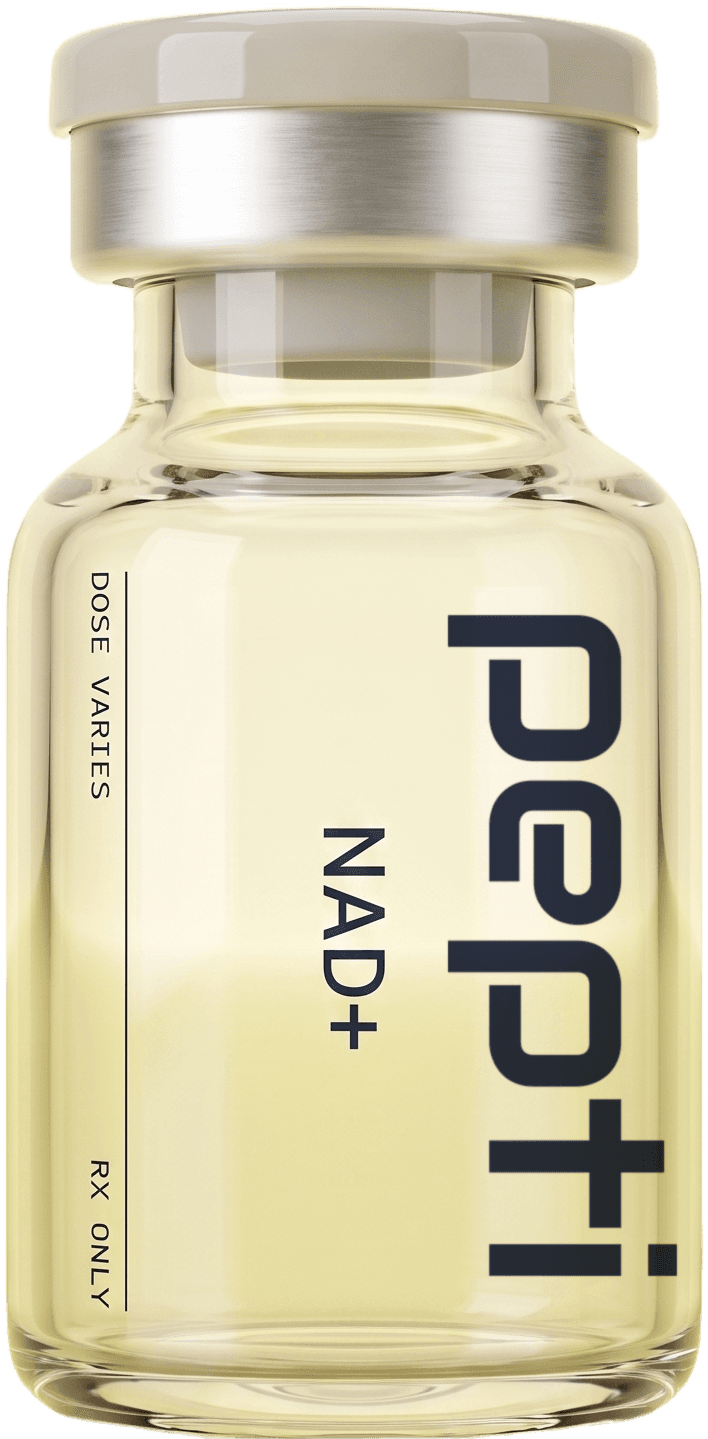
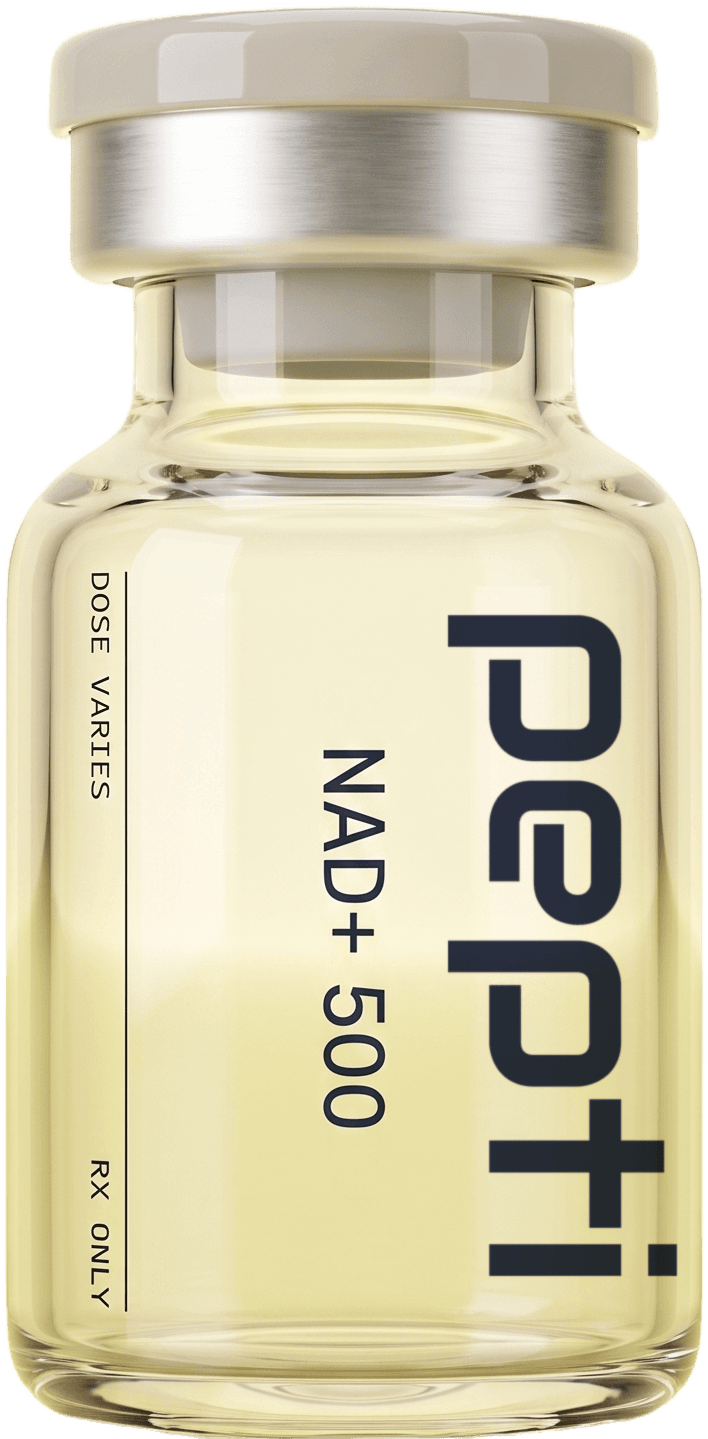
The medications this page covers:
| Product | What is in it | Typical printed directions | NAD+ per dose | Price |
|---|---|---|---|---|
| NAD+ Injection | 10 mL multi-dose vial, 100 mg/mL (1000 mg NAD+) | 0.83 mL (83 units) subcutaneously three times per week | 83 mg | $249/mo |
| NAD+ Injection (500 mg) | 10 mL multi-dose vial, 50 mg/mL (500 mg NAD+) | 0.83 mL (83 units) subcutaneously three times per week | 41.5 mg | $229/mo |
The per-dose figures are arithmetic from each vial's concentration, on a U-100 insulin syringe; the full chart is in NAD+ injection dosage. Each vial holds 12 doses at that volume, about four weeks. Your physician sets your directions after reviewing your intake, and they are printed on the vial. Every price is all-in: medication, physician review, refill management and shipping, with no membership fee. Compounded medications are not FDA approved.
NAD+ Injection Side Effects
Why NAD+ side effects look the way they do
NAD+ is nicotinamide adenine dinucleotide, a coenzyme every cell already makes and uses. It carries electrons through the reactions that turn nutrients into usable energy, and it is consumed as a substrate by sirtuins and PARP enzymes involved in DNA repair and cellular stress responses. It is not a peptide, a hormone or a receptor agonist. Adding it changes the supply of a raw material enzymes were already using rather than switching on a new signal.
That is why the side-effect list is shaped by rate rather than by the molecule. The clearest human data on NAD+ given directly is a 2019 pilot in Frontiers in Aging Neuroscience that infused it intravenously for six hours. For the first two hours no rise in plasma NAD+ or its metabolites was detected: the molecule was removed from the circulation as fast as it arrived. By six hours the kidneys were excreting both NAD+ and methylnicotinamide, a pattern matching the body's normal NAD+-handling enzymes.
Two things follow. NAD+ does not accumulate; what is given is used, broken down or excreted, with the kidney as the exit route for the overflow, which is why kidney function appears in the cautions below. And the flushing, tightness and nausea people describe are the signature of that clearance system being outrun by a fast dose. A slow subcutaneous injection is absorbed at a pace the system largely keeps up with; a fast intravenous push is not.
NAD+ Injection Side Effects
Where the safety data comes from
| Source | What it tells you | What it does not |
|---|---|---|
| The 2019 intravenous pilot | How NAD+ is cleared and excreted | Tolerability or outcomes; it was a pharmacokinetic study, not a safety trial |
| Randomized trials of oral precursors (NR and NMN), 2018 to 2024 | Raising NAD+ over six weeks to six months in several hundred adults was well tolerated, with no recurring adverse-event pattern | Anything about injecting NAD+ itself |
| Prescriber and clinic experience with injections | The side-effect pattern on this page | Frequencies; it is uncontrolled and unpublished |
| Cell and animal work | No toxicity signal of the kind that stops a research programme | Human safety |
There are no randomized controlled trials of subcutaneous NAD+ injection in humans. The rates on this page are therefore descriptions, common or uncommon, not trial percentages. Nothing published covers years of continuous use by any route.
NAD+ Injection Side Effects
Common NAD+ injection side effects
Stinging, burning and lumps at the site
The dominant complaint with NAD+ injection is at the needle site. Stinging and burning during and shortly after the injection are the norm, and a small firm lump that resolves over a day or two is common. The measures prescribers describe:
What helps Why Inject slowly Less volume arriving at once Rotate between abdomen and thigh Gives each site time to settle Let the vial come toward room temperature before drawing Cold solution stings more Let the alcohol dry before injecting Wet alcohol stings on entry Use a fresh syringe every time Reduces irritation and infection risk The lower-concentration NAD+ Injection (500 mg) is the same volume at half the concentration, which some prescribers describe as easier on the site; see what is NAD+ 500. Whether it is right for you is set by your physician after reviewing your intake. Technique is in how to inject peptides safely.
Flushing, warmth, tightness and nausea
Flushing and warmth during or after a dose, a feeling of chest or abdominal tightness, and mild nausea are reported in proportion to how fast the dose goes in, and usually fade within minutes. They are typical of NAD+ rather than a sign of an allergy. The mechanism of flushing is not firmly established, and an oral NR trial in Scientific Reports in 2019 specifically reported no flushing, so it is not an inevitable property of raising NAD+. If these effects are marked, tell your care team; your directions can be changed, but do not change them yourself.
Headache and light-headedness
These are less common and reported with all routes, usually with larger doses or faster delivery. Report them, particularly if they persist.
Sleep disruption
Some people describe a wired feeling that interferes with sleep when NAD+ is taken late in the day. If that happens, tell your care team; timing can be changed on your label.
NAD+ Injection Side Effects
NAD+ injection vs an NAD+ IV
Many people asking about NAD+ side effects have had an IV. Pepti does not prescribe or ship IV NAD+; it is a clinic procedure. A fast NAD+ drip commonly produces chest tightness, a pressured full-body sensation, flushing, abdominal cramping and nausea, which are reported to ease within minutes when the drip is slowed. A subcutaneous injection does not produce that bolus, which is the main reason its side effects are mostly local.
| Subcutaneous injection | IV infusion | |
|---|---|---|
| Where it is given | At home, on the schedule printed on your vial | In a clinic |
| Dominant reported effect | Stinging or burning at the site, redness, a small lump | Chest tightness, flushing, nausea, cramping, a full-body pressure sensation |
| What drives it | Local volume and acidity | Infusion rate |
| What helps | Slow injection, rotating sites | Slowing the drip |
Chest discomfort that does not resolve when an infusion is slowed or stopped is not typical of the rate effect and needs emergency evaluation. The fuller comparison is in NAD+ IV vs injection.
NAD+ Injection Side Effects
The cautions that deserve a real conversation
Cancer history
NAD+ is a substrate for the PARP enzymes that repair DNA and for sirtuins, and the NAD+ recycling pathway is active in rapidly dividing cells. A 2019 paper in Nature Cell Biology reported that this pathway governs the tumor-promoting secretions of aging cells in mice, and the authors concluded that NAD+ augmentation "should be administered with precision." That is a mouse finding and does not show that supplemental NAD+ causes cancer in people, but the question is unsettled. A person with an active or recent cancer should not start NAD+ without their oncologist in the conversation. See can peptides cause cancer.
Kidney and liver function
The overflow from an NAD+ dose leaves in the urine, as NAD+ and methylnicotinamide. In significant chronic kidney disease, the handling of that load is not characterized, and materially reduced kidney function is a reason a physician may decline. Nicotinamide, the main breakdown product, is processed in the liver before excretion, so significant liver disease calls for a longer conversation rather than an automatic no.
Heart conditions
The chest tightness of a fast dose is understood as a rate effect in a person with a healthy heart. In someone with coronary disease, arrhythmia or heart failure, the same symptom cannot safely be put down to the rate without evaluation. Subcutaneous injection does not produce the bolus behind it, but a cardiac history still belongs on the intake.
Pregnancy and breastfeeding
There is no safety data for supplemental NAD+ in pregnancy or lactation, and none of the randomized precursor trials enrolled pregnant women. It is not prescribed in either situation. If you become pregnant on treatment, stop and contact your physician the same day. See can you take peptides while pregnant.
Other medications
There is no established interaction list for NAD+, because the trials that would produce one have not been run. NAD+ does not act through the liver enzymes that generate most drug interactions, and the precursor trials did not report interaction signals, but that is not evidence of safety alongside every drug. The intake asks for every prescription, supplement and recreational substance you use.
NAD+ Injection Side Effects
When to message your care team
- Stinging, redness or lumps that are getting worse rather than settling.
- An injection site that is hot, spreading or worse at 48 hours than at 24. This can be infection and needs a same-day message.
- Flushing, tightness or nausea that is marked or does not pass within minutes.
- Headache or light-headedness that persists.
- Sleep disruption after doses.
- Chills, shaking or vomiting after a dose. These are not expected; contact your physician the same day.
- Any chance you are pregnant, or a new cancer diagnosis or kidney or liver problem.
- You start any new medication or supplement.
- Your label and your syringe seem not to match. Do not inject; ask first.
Do not change your own dose, skip doses to manage a side effect, or take two doses to make up for a missed one. Your physician sets your directions after reviewing how you are doing, and any change is printed on the next label.
NAD+ Injection Side Effects
When to get emergency care
| Symptom | What it may be | What to do |
|---|---|---|
| Swelling of the face, lips or throat, widespread hives, wheeze or trouble breathing | Serious allergic reaction to the preparation | Call 911 first, then tell your care team |
| Chest pain that does not settle within minutes | Not typical of the rate effect | Call 911 |
| You think you injected far more than your directions | Possible overdose | Call Poison Control at 1-800-222-1222 and message your care team; call 911 for chest pain, fainting or breathing difficulty |
NAD+ Injection Side Effects
Who should not take NAD+ injections, or should discuss it first
| Situation | Status |
|---|---|
| Pregnancy or breastfeeding | Not used; safety data is absent |
| Active or recent cancer | Very unlikely to be prescribed without oncology involvement |
| Significant kidney disease | Clearance of the load is not characterized; may be declined |
| Significant liver disease | A longer conversation |
| Heart disease | Disclose at intake |
| Fatigue with no workup | Thyroid disease, anaemia, sleep apnoea, B12 deficiency and depression present the same way; see peptides for energy and fatigue |
| Tested athletes | NAD+ is not named on the 2026 WADA Prohibited List; check your sport's current rules |
| Under 18 | Pepti prescribes to adults only |
Bloodwork is not required for any Pepti treatment. If your physician wants labs for your care, they'll ask through your account.
NAD+ Injection Side Effects
Where NAD+ stands with the FDA
Nicotinamide adenine dinucleotide is in Category 1, "bulk drug substances under evaluation," on the FDA's 503A list updated 14 May 2026, and it has never been in Category 2. In October 2024 the FDA warned that food-grade NAD+ powder is not suitable for sterile injections after reports of endotoxin reactions. That warning is about ingredient sourcing rather than the molecule, and it is one reason the pharmacy matters. Compounded NAD+ is not FDA approved.
NAD+ Injection Side Effects
What the evidence shows, honestly
NAD+ is reported as well tolerated by injection, and its side effects are mostly local or rate-driven and manageable. Randomized trials of oral precursors over weeks to months have not produced a safety signal. But there are no randomized trials of subcutaneous NAD+ injection, the reported pattern comes from clinical experience rather than controlled data, and nothing covers years of continuous use. The benefit side is covered separately in NAD+ benefits, and side effects across the catalog in peptide side effects: what to watch for.
NAD+ Injection Side Effects
Where to get NAD+ prescribed
NAD+ injections cannot be bought legitimately without a prescription, and with NAD+ the FDA has specifically warned about unsuitable ingredients. Products sold "for research use only" have no accountable pharmacy behind their identity, purity, sterility or concentration. The prescription route:
- Complete a free online intake covering your history, medications and supplements, any cancer, kidney, liver or heart history, pregnancy status, and what you want help with.
- A physician licensed in your state reviews it, usually within 24 hours.
- If it is appropriate, a PCAB-accredited, FDA-registered US 503A compounding pharmacy prepares it to that prescription. Lot test results are published at /quality/lab-results.
- It ships refrigerated with ice packs, with sterile syringes and alcohol prep pads, and your directions printed on the vial. NAD+ degrades with heat and light, so keep it in the fridge.
- Your care team stays reachable for side effects and questions. Refills run every 28 days, one vial per fill.
Pepti is cash-pay and does not bill insurance. Step by step: how to get NAD+ prescribed online.
References
What this is based on.
References
- Massudi H, Grant R, Braidy N, et al.. Age-associated changes in oxidative stress and NAD+ metabolism in human tissue · PLOS ONE (2012) · PMID 22848760
- Yoshino J, Baur JA, Imai SI. NAD+ Intermediates: The Biology and Therapeutic Potential of NMN and NR · Cell Metabolism (2018) · PMID 29249689
- Verdin E. NAD⁺ in aging, metabolism, and neurodegeneration · Science (2015) · PMID 26785480
- Martens CR, Denman BA, Mazzo MR, et al.. Chronic nicotinamide riboside supplementation is well-tolerated and elevates NAD+ in healthy middle-aged and older adults · Nature Communications (2018) · PMID 29599478
- Dollerup OL, Christensen B, Svart M, et al.. A randomized placebo-controlled clinical trial of nicotinamide riboside in obese men: safety, insulin-sensitivity, and lipid-mobilizing effects · American Journal of Clinical Nutrition (2018) · PMID 29992272
- Yoshino M, Yoshino J, Kayser BD, et al.. Nicotinamide mononucleotide increases muscle insulin sensitivity in prediabetic women · Science (2021) · PMID 33888596
- Yi L, Maier AB, Tao R, et al.. The efficacy and safety of β-nicotinamide mononucleotide (NMN) supplementation in healthy middle-aged adults: a randomized, multicenter, double-blind, placebo-controlled, parallel-group, dose-dependent clinical trial · GeroScience (2023) · PMID 36482258
- Brakedal B, Dölle C, Riemer F, et al.. The NADPARK study: A randomized phase I trial of nicotinamide riboside supplementation in Parkinson's disease · Cell Metabolism (2022) · PMID 35235774
- McDermott MM, Martens CR, Domanchuk KJ, et al.. Nicotinamide riboside for peripheral artery disease: the NICE randomized clinical trial · Nature Communications (2024) · PMID 38871717
- Shiffman S, Stone AA, Hufford MR. Ecological momentary assessment · Annu Rev Clin Psychol (2008) · PMID 18509902
- Conze D, Brenner C, Kruger CL. Safety and Metabolism of Long-term Administration of NIAGEN (Nicotinamide Riboside Chloride) in a Randomized, Double-Blind, Placebo-controlled Clinical Trial of Healthy Overweight Adults · Scientific Reports (2019) · PMID 31278280
- Nacarelli T, Lau L, Fukumoto T, et al.. NAD+ metabolism governs the proinflammatory senescence-associated secretome · Nature Cell Biology (2019) · PMID 30778219
Citations are provided for educational purposes. They do not constitute medical advice. Always discuss any peptide protocol with your prescribing physician.
Common questions
NAD+ Injection Side Effects, answered.
Mostly stinging or burning at the injection site, redness or a small lump, and flushing, warmth or mild nausea during or after a dose. Headache, light-headedness and sleep disruption are less common. Most of it is tied to how fast the dose goes in.
NAD+ solutions are acidic, and the injected volume sits in the fat layer while it absorbs. Injecting slowly, rotating sites and letting the vial come toward room temperature are what prescribers describe.
Flushing, warmth and chest or abdominal tightness during a dose are commonly reported and usually fade within minutes; they are rate-related. Chest pain that does not settle is not typical and needs emergency care.
Mild nausea is reported, particularly with larger or faster doses. Tell your care team if it is marked; your directions can be changed, but do not change them yourself.
Some people describe a wired feeling that disrupts sleep, more with evening doses. Tell your care team; timing can be changed on your label.
Flushing, tightness and nausea usually fade within minutes, and a lump at the site usually resolves over a day or two. Anything that is getting worse, or a site that is worse at 48 hours, needs a same-day message.
It is the same volume at half the concentration, and some prescribers describe it as easier on the injection site. Which vial you are prescribed is set by your physician after reviewing your intake.
No. A fast IV commonly causes chest tightness, flushing, cramping and nausea tied to the drip rate. A subcutaneous injection does not produce that bolus, so its side effects are mostly at the site.
It is a genuine caution. A 2019 mouse study reported that the NAD+ recycling pathway drives tumor-promoting secretions of aging cells. Discuss it with your oncologist and your physician before starting.
In people with normal function, NAD+ and its metabolites are cleared through normal enzymes and excreted by the kidney. In significant kidney disease, the handling of the load is not characterized, and a physician may decline.
Call Poison Control at 1-800-222-1222 and message your care team. Call 911 for chest pain, fainting or trouble breathing. Do not adjust later doses on your own.
Bloodwork is not required for any Pepti treatment. If your physician wants labs for your care, they'll ask through your account. The free assessment goes to a physician licensed in your state. A consultation does not guarantee a prescription.
Related answers
Keep reading.
- NAD+ Injection: What It Is, Where to Get It Prescribed, and What It Costs
- NAD+ IV Therapy vs NAD+ Injections: Evidence, Side Effects, Cost and Which Fits
- NAD+ vs Epithalon: Energy Coenzyme vs Pineal Peptide, Compared
- NAD+ vs FOXO4-DRI: Mechanism, Evidence, FDA Status, Dosing and Cost
- Oxytocin Side Effects: What Is Reported, What to Watch and Who Should Not Take It
Next step
See what a physician recommends for you.
A licensed physician in your state reviews your intake to see whether treatment fits your history. A consultation does not guarantee a prescription.