Anti-Aging · Reference
NAD+ IV Therapy vs NAD+ Injections: Evidence, Side Effects, Cost and Which Fits
This page explains each route on its own terms, puts them side by side, covers what the research does and does not show, the side effects, where NAD+ stands with the FDA, how Pepti doses the injection, what it costs, and who tends to suit which.
NAD+ IV therapy and NAD+ injections deliver the same molecule, nicotinamide adenine dinucleotide, by different routes: an IV drip puts a large dose into a vein over a session lasting hours, while a subcutaneous injection puts a smaller dose under the skin a few times a week at home. Neither route has a randomized trial showing a clinical benefit. The only published study of NAD+ given directly to people, a 2019 six-hour intravenous pilot, found plasma NAD+ did not rise for the first two hours because the molecule was cleared as fast as it arrived. The practical differences are side effects and logistics: a fast IV drip commonly causes chest tightness, flushing, cramping and nausea that settle when it is slowed, while injections mostly cause stinging at the site. Pepti prescribes the injection, not IV therapy, and compounded NAD+ is not FDA approved.
This page explains each route on its own terms, puts them side by side, covers what the research does and does not show, the side effects, where NAD+ stands with the FDA, how Pepti doses the injection, what it costs, and who tends to suit which.
NAD+ IV Therapy vs NAD+ Injections
The short answer
| If what you want is | The route that fits | What it involves | Price |
|---|---|---|---|
| NAD+ at home on a regular schedule | NAD+ Injection | 1,000 mg in a 10 mL vial; 0.83 mL under the skin three times weekly | $249/mo |
| A gentler starting strength by injection | NAD+ Injection (500 mg) | 500 mg in a 10 mL vial; same 0.83 mL, half the NAD+ per dose | $229/mo |
| A large single dose in a clinic chair | IV NAD+ therapy | A drip into a vein over several hours, at an infusion clinic | Set by the clinic; not something Pepti offers |
| The most randomized human evidence for raising NAD+ | Oral precursors (NMN or NR) | Capsules sold as supplements | Not supplied by Pepti; see NMN vs NAD+ |
Pepti's prices are all-in, covering medication, physician review, refill management and shipping, with no separate membership fee. Pepti is cash-pay and does not bill insurance.
NAD+ IV Therapy vs NAD+ Injections
NAD+ itself, in one paragraph
NAD+ is a coenzyme, not a peptide, a vitamin or a hormone, though it is made from a form of vitamin B3. Every cell uses it to pick up electrons from broken-down glucose and fat and hand them to the mitochondria to make ATP, and two enzyme families, sirtuins and PARPs, consume it as fuel for stress responses and DNA repair. A 2012 study in PLOS ONE reported lower NAD+ in older human skin. That decline is the idea behind both IV and injected NAD+. Whether either route changes anything a person can measure has not been tested in a randomized trial. The full reference is what is NAD+ injection.
NAD+ IV Therapy vs NAD+ Injections
NAD+ IV therapy on its own terms
What it is
IV NAD+ therapy is a clinic service: a catheter is placed in a vein and NAD+ in solution runs in from a drip bag, usually as a high dose in one sitting. It is offered by infusion clinics and wellness centers, and it has been used in wellness and addiction-medicine settings for years. That use is real clinical experience, but it is uncontrolled and unpublished, so it cannot establish how often effects occur or whether there is a benefit.
Why a session takes hours
The defining feature of IV NAD+ is the rate problem. The cluster of chest tightness, a pressured full-body sensation, flushing, abdominal cramping and nausea appears in almost every account of a fast NAD+ drip. These are rate effects: they settle when the drip is slowed, which is why a properly run infusion takes hours rather than minutes, and why the standard clinic practice is to start slowly and increase the rate. The same total dose can feel fine over hours and dreadful over minutes.
What the one human study found
The only published study of NAD+ given directly to people is a 2019 pilot in Frontiers in Aging Neuroscience by Grant and colleagues: a six-hour intravenous infusion in healthy participants. Plasma NAD+ and its metabolites did not rise at all for the first two hours; the infused molecule was cleared as fast as it arrived, with a metabolite profile consistent with the enzymes that break NAD+ down, and the overflow left in the urine as NAD+ and methylnicotinamide. The likeliest reading is that infused NAD+ is broken down outside cells into fragments, including nicotinamide and NMN, which tissues rebuild into NAD+. The study was designed to track metabolism. It tested no clinical outcome, so it neither shows a benefit nor rules one out.
NAD+ IV Therapy vs NAD+ Injections
NAD+ injections on their own terms
What they are
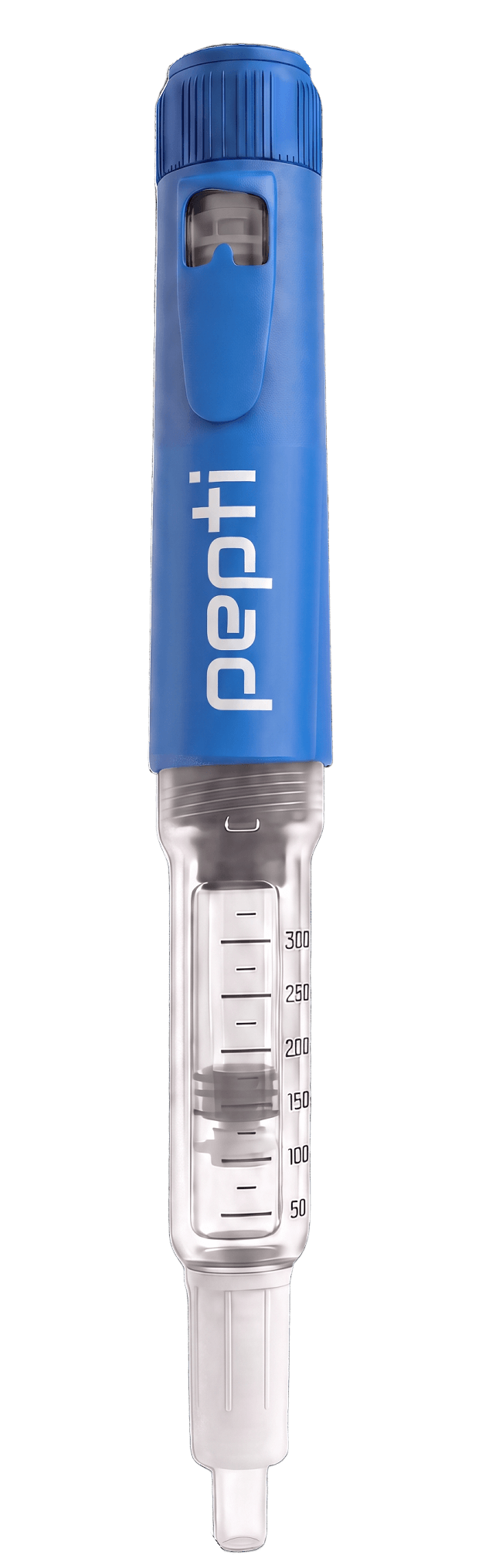
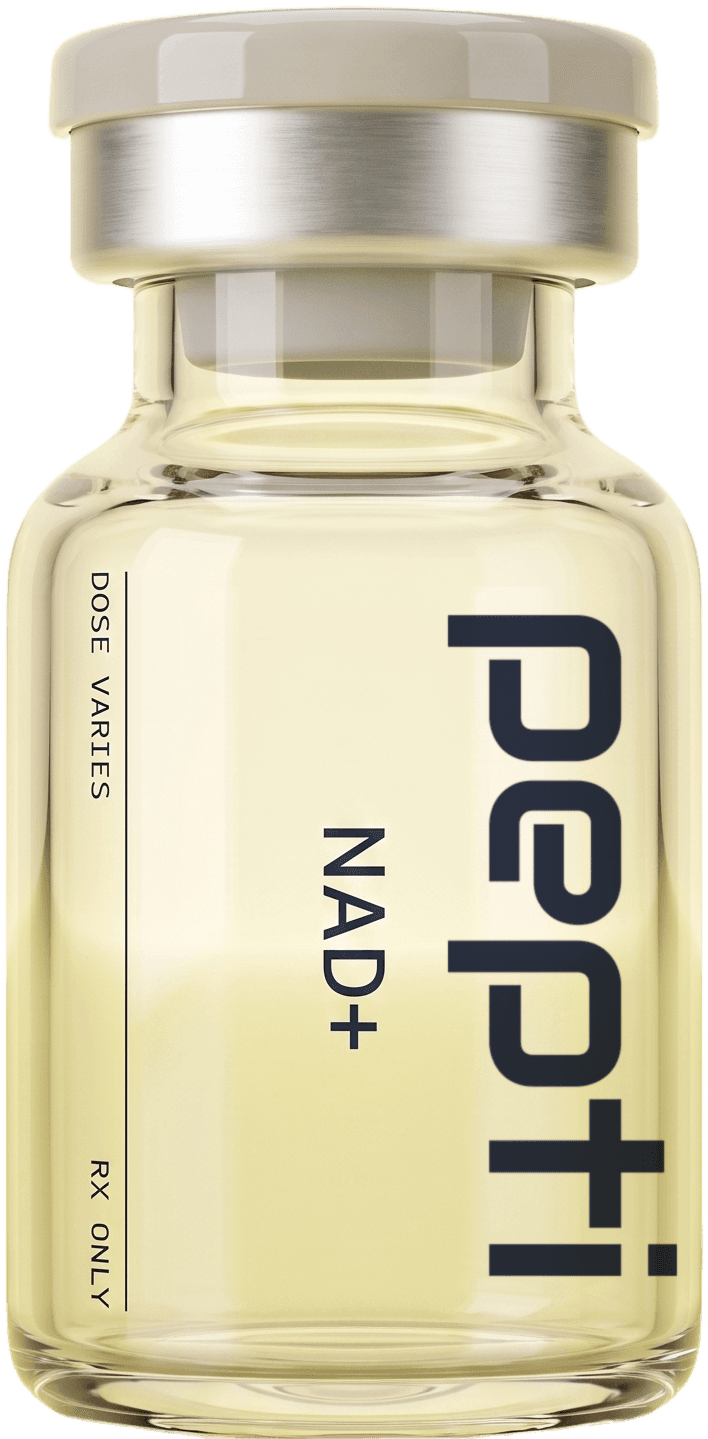
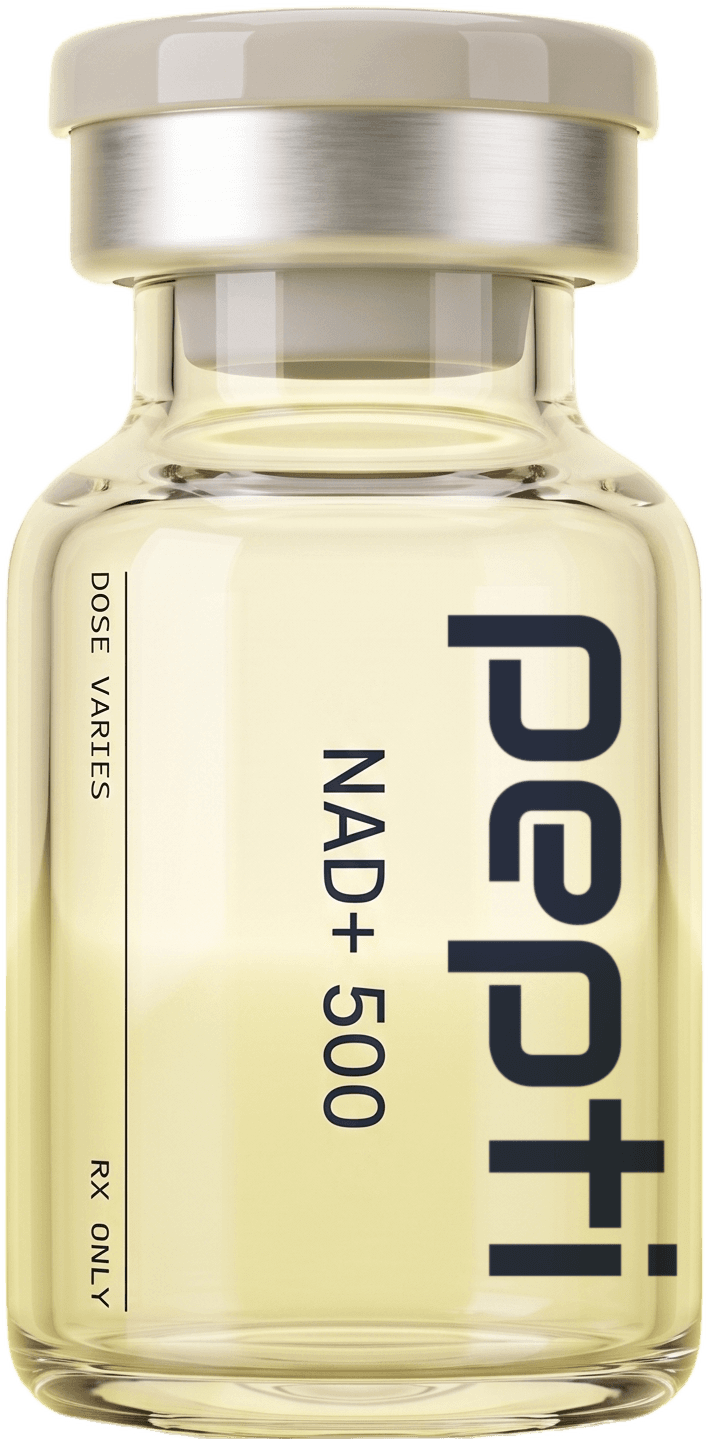
A subcutaneous NAD+ injection is a sterile solution drawn from a multi-dose vial and injected into the fat layer of the abdomen or thigh. At Pepti, the directions are 0.83 mL (83 units on a U-100 insulin syringe) three times per week. The 1,000 mg vial is 100 mg/mL, so each dose carries 83 mg; the 500 mg vial is 50 mg/mL, so the same draw carries 41.5 mg. Twelve doses per vial covers about four weeks. NAD+ Injection is also available as a pre-filled Pen cartridge containing 600 mg. The full arithmetic is in NAD+ injection dosage.
What it feels like
A slow subcutaneous dose is absorbed at a pace the body's clearance system keeps up with, where a fast IV push is not, so the rate problem largely disappears. What replaces it is the injection site: NAD+ solutions are acidic, so stinging or burning during and shortly after the injection is the norm, with local redness and sometimes a small firm lump that resolves over a day or two. A milder version of the IV reaction, flushing, tightness in the chest or abdomen, or nausea during the injection, is reported particularly when the dose is pushed quickly, and it fades within minutes. Prescribers consistently advise injecting slowly, and describe the reaction as milder at the 50 mg/mL strength.
What human data exists
There are no randomized controlled trials of subcutaneous NAD+ injection in humans, and no published pharmacokinetic study of the subcutaneous route. Whether a subcutaneous dose raises tissue NAD+, by how much or for how long, has not been measured.
NAD+ IV Therapy vs NAD+ Injections
Head to head
| IV NAD+ therapy | Subcutaneous NAD+ injection | |
|---|---|---|
| Where it is given | A clinic chair, through a vein | At home, into the fat layer of the abdomen or thigh |
| Dose pattern | A large dose in one sitting | 83 mg (or 41.5 mg) three times weekly at Pepti |
| How long each dose takes | Hours, because of the rate effects | One injection, pushed slowly |
| Human pharmacology | One 2019 six-hour infusion pilot | None published |
| Randomized trials with a clinical outcome | None | None |
| Characteristic side effects | Chest tightness, flushing, cramping, nausea, full-body pressure, settling when slowed | Stinging or burning at the site, redness, a small lump; brief flushing if injected quickly |
| Cardiac history | Harder to interpret chest tightness; evaluation needed | No bolus, so often the route a physician prefers |
| Who supervises | Infusion clinic staff during the session | Your prescribing physician, reachable between doses |
| At Pepti | Not offered | $249/mo (1,000 mg) or $229/mo (500 mg), all-in |
The real difference is delivery, not strength
People often ask whether IV NAD+ is "stronger." The infusion delivers more NAD+ at once, but the 2019 pilot showed the body clearing infused NAD+ as fast as it arrived, likely breaking it into fragments that cells rebuild from. Nobody has compared IV with subcutaneous NAD+ in the same people, so there is no basis for saying either delivers more benefit. What is known is that the IV route trades a few hours in a chair and rate-related discomfort for a large single dose, and the injection trades regular home dosing and site stinging for convenience and a smaller, spread-out exposure.
NAD+ IV Therapy vs NAD+ Injections
What the evidence shows, honestly
The biochemistry of NAD+ is textbook and not in question. What is thin is the clinical layer on top of it. Most of the widely cited human research used oral precursors, nicotinamide riboside (NR) and nicotinamide mononucleotide (NMN), which reliably raise blood NAD+ in randomized trials, with small and inconsistent effects on things people care about, such as insulin sensitivity and walking distance. For NAD+ given directly, by vein or under the skin, there is one infusion pilot and no outcome trial.
So a clinic promising that an IV drip will boost energy, reverse aging or reset the brain is going beyond the evidence, and so is a provider making the same promise for injections. There is also no validated routine clinical test for tissue NAD+, so nobody can show you your levels going up. The benefit-by-benefit picture is in NAD+ benefits.
NAD+ IV Therapy vs NAD+ Injections
Side effects, side by side
| What is reported | IV | Injection | What to do |
|---|---|---|---|
| Chest tightness, pressure, cramping | Common with a fast drip | Mild and brief if injected quickly | IV: tell the clinician so the rate is reduced. Injection: inject slowly |
| Flushing and warmth | Common | Common, fading within minutes | Usually rate-related; report it |
| Nausea | Common, more with faster or larger doses | Reported | Report it |
| Stinging, burning, redness, a small lump | Not the main issue | Common, because the solution is acidic | Inject slowly; rotate sites |
| Headache, light-headedness | Reported | Reported | Report it |
| A wired feeling that disrupts sleep | Reported | Reported, more with evening doses | Report it; timing can be changed |
| Chills, shaking or vomiting after a dose | Not expected | Not expected | Contact your physician the same day |
| Chest pain that does not settle when slowed or stopped | Emergency | Emergency | Call 911 |
| Face or throat swelling, widespread rash, difficulty breathing | Emergency | Emergency | Call 911 |
The chills-and-vomiting row has a history. In October 2024 the FDA warned that food-grade NAD+ powder is not suitable for sterile injections, after reports of severe chills, shaking and vomiting requiring medical treatment that were attributed to endotoxin. That is about ingredient sourcing, not the molecule, and it applies to any route that enters the body by needle. It is why an accountable pharmacy matters for this product. Pepti's lot test results are at /quality/lab-results.
The fuller safety picture is in is NAD+ safe. There is no controlled safety dataset for subcutaneous NAD+ and no long-term data by any route.
NAD+ IV Therapy vs NAD+ Injections
Who should not take NAD+ by either route, or should discuss it first
| Situation | Why |
|---|---|
| Pregnancy or breastfeeding | Not used |
| Active or recent cancer | A 2019 mouse study in Nature Cell Biology reported that the NAD+ recycling pathway drives tumor-promoting secretions of aging cells; involve your oncologist |
| Significant kidney disease | The kidney clears the overflow, and that load is not characterized in kidney disease |
| Significant liver disease | Needs a longer conversation with your physician |
| Heart disease, if considering IV | Chest tightness from a fast drip is harder to interpret, which is one reason subcutaneous dosing is often preferred |
| Tested athletes | NAD+ is not named on the 2026 WADA Prohibited List, but check with your governing body first |
Bloodwork is not required for any Pepti treatment. If your physician wants labs for your care, they'll ask through your account.
NAD+ IV Therapy vs NAD+ Injections
Where NAD+ stands with the FDA
NAD+ is in Category 1, "Bulk Drug Substances Under Evaluation," on the FDA's 503A list updated 14 May 2026, under which state-licensed 503A pharmacies may compound it while the evaluation is pending. It was never in Category 2, so the April 2026 peptide changes did not involve it. In 2017 the FDA's Pharmacy Compounding Advisory Committee voted 1 to 7 against listing a 5 mg oral capsule for fatigue in multiple sclerosis, and a 2019 proposed rule carrying that forward has not been finalized for NAD. The October 2024 warning about food-grade powder applies to anyone compounding sterile NAD+. Compounded NAD+, by IV or by injection, is not FDA approved.
NAD+ IV Therapy vs NAD+ Injections
Dosing and logistics at Pepti
| Detail | NAD+ Injection | NAD+ Injection (500 mg) |
|---|---|---|
| Vial | 10 mL, 100 mg/mL (1,000 mg) | 10 mL, 50 mg/mL (500 mg) |
| Directions | 0.83 mL (83 units) subcutaneously three times per week | 0.83 mL (83 units) subcutaneously three times per week |
| NAD+ per dose | 83 mg | 41.5 mg |
| Doses per vial | 12, about four weeks | 12, about four weeks |
| Other formats | Pre-filled Pen cartridge, 600 mg | Vial only |
| Price | $249/mo | $229/mo |
Your physician sets your directions after reviewing your intake, and your exact dose is printed on the vial. Refills run every 28 days, one vial per fill. Vials arrive as solutions ready to use, with sterile syringes and alcohol prep pads, shipped refrigerated with ice packs. NAD+ degrades with heat and light, so keep it in the fridge and out of light. The 500 mg strength is covered in what is NAD+ 500.
NAD+ IV Therapy vs NAD+ Injections
Who suits which
The injection
The injection suits people who want NAD+ as an ongoing routine without clinic visits, who are comfortable with a small injection three times a week, and who understand that the evidence for this route is thin. It is often the route a physician prefers for someone with a cardiac history, because it does not produce the bolus that drives the IV chest-tightness effect. Some prescribers describe the 500 mg strength as easier on the injection site for people starting out.
IV therapy
IV therapy suits people who prefer an occasional supervised session to regular self-injection and are prepared for a slow drip lasting hours. Tell the clinician immediately if chest tightness or nausea starts, so the rate is reduced, and raise any heart history before the session, not during it. Pepti does not provide IV therapy.
Neither, first
Situation What makes more sense Unexplained fatigue you have not had checked A medical look at the common causes first: low B12, thyroid, iron, sleep apnea, depression B12 deficiency is the likely cause Methylcobalamin; see B12 injections You want the most human trial evidence for raising NAD+ Oral NMN or NR; see NMN vs NAD+ Antioxidant support is the goal Glutathione, often prescribed alongside NAD+
NAD+ IV Therapy vs NAD+ Injections
Where to get NAD+ injections prescribed
NAD+ injections cannot be bought legitimately without a prescription. Products sold "for research use only" are not accountable for what is in the vial, and with NAD+ the FDA has specifically warned about contaminated ingredients. The prescription route:
- Complete a free online intake covering your history, medications and what you want help with.
- A physician licensed in your state reviews it, usually within 24 hours.
- If it is appropriate, a PCAB-accredited, FDA-registered US 503A pharmacy compounds it to that prescription. Lot test results are published at /quality/lab-results.
- It ships refrigerated with your directions printed on the vial.
- Your physician stays reachable for questions and dose changes.
Pepti prescribes NAD+ in every state except Oklahoma, plus DC Step by step: how to get NAD+ prescribed online. What to check on any seller is in where to buy NAD+ online.
References
What this is based on.
References
- Massudi H, Grant R, Braidy N, et al.. Age-associated changes in oxidative stress and NAD+ metabolism in human tissue · PLOS ONE (2012) · PMID 22848760
- Yoshino J, Baur JA, Imai SI. NAD+ Intermediates: The Biology and Therapeutic Potential of NMN and NR · Cell Metabolism (2018) · PMID 29249689
- Verdin E. NAD⁺ in aging, metabolism, and neurodegeneration · Science (2015) · PMID 26785480
- Martens CR, Denman BA, Mazzo MR, et al.. Chronic nicotinamide riboside supplementation is well-tolerated and elevates NAD+ in healthy middle-aged and older adults · Nature Communications (2018) · PMID 29599478
- Dollerup OL, Christensen B, Svart M, et al.. A randomized placebo-controlled clinical trial of nicotinamide riboside in obese men: safety, insulin-sensitivity, and lipid-mobilizing effects · American Journal of Clinical Nutrition (2018) · PMID 29992272
- Yoshino M, Yoshino J, Kayser BD, et al.. Nicotinamide mononucleotide increases muscle insulin sensitivity in prediabetic women · Science (2021) · PMID 33888596
- Yi L, Maier AB, Tao R, et al.. The efficacy and safety of β-nicotinamide mononucleotide (NMN) supplementation in healthy middle-aged adults: a randomized, multicenter, double-blind, placebo-controlled, parallel-group, dose-dependent clinical trial · GeroScience (2023) · PMID 36482258
- Brakedal B, Dölle C, Riemer F, et al.. The NADPARK study: A randomized phase I trial of nicotinamide riboside supplementation in Parkinson's disease · Cell Metabolism (2022) · PMID 35235774
- McDermott MM, Martens CR, Domanchuk KJ, et al.. Nicotinamide riboside for peripheral artery disease: the NICE randomized clinical trial · Nature Communications (2024) · PMID 38871717
- Shiffman S, Stone AA, Hufford MR. Ecological momentary assessment · Annu Rev Clin Psychol (2008) · PMID 18509902
- Conze D, Brenner C, Kruger CL. Safety and Metabolism of Long-term Administration of NIAGEN (Nicotinamide Riboside Chloride) in a Randomized, Double-Blind, Placebo-controlled Clinical Trial of Healthy Overweight Adults · Scientific Reports (2019) · PMID 31278280
- Nacarelli T, Lau L, Fukumoto T, et al.. NAD+ metabolism governs the proinflammatory senescence-associated secretome · Nature Cell Biology (2019) · PMID 30778219
Citations are provided for educational purposes. They do not constitute medical advice. Always discuss any peptide protocol with your prescribing physician.
Common questions
NAD+ IV Therapy vs NAD+ Injections, answered.
A clinic service in which NAD+ is infused into a vein from a drip bag, usually as a large dose over several hours. The session is slow because a fast drip causes chest tightness, flushing, cramping and nausea that settle when the rate is reduced.
No study has compared them. The only human study of infused NAD+ found plasma levels did not rise for the first two hours because it was cleared as fast as it arrived, and there are no outcome trials for either route. The differences are side effects, time and cost.
Almost always the infusion rate. Pushed quickly, NAD+ produces chest tightness, a pressured sensation, flushing, cramping and nausea, which settle when the drip is slowed. Tell the clinician while it is happening.
Nobody knows, because neither has been tested in a randomized trial with a clinical outcome. Subcutaneous injection delivers smaller doses spread through the week and largely avoids the IV rate effects.
A properly run infusion takes hours rather than minutes, because slowing the drip is what prevents the chest tightness and nausea of a fast infusion. The exact time is set by the clinic.
Mostly stinging or burning at the site, because the solution is acidic, with redness or a small lump. Flushing, chest or abdominal tightness or nausea during the injection can happen if it is pushed quickly and fades within minutes. Chills or vomiting after a dose are not expected and should be reported the same day.
At Pepti, 83 mg per 0.83 mL dose from the 1,000 mg vial, or 41.5 mg from the 500 mg vial, three times weekly. Your exact dose is printed on the vial.
No. Pepti prescribes NAD+ as a subcutaneous injection that ships to your home, in vials and as a Pen cartridge.
At Pepti, NAD+ Injection is $249 a month and NAD+ Injection (500 mg) is $229 a month, all-in, including medication, physician review, refill management and shipping. IV sessions are priced by the clinic that runs them.
The chest tightness of a fast infusion is a rate effect in a healthy heart, but in someone with coronary disease, arrhythmia or heart failure it cannot be safely attributed to the drip without evaluation. That is one reason subcutaneous dosing is often the route a physician prefers.
No. NAD+ is in 503A Category 1, under FDA evaluation, and compounded medications are not FDA approved, whatever the route.
Bloodwork is not required for any Pepti treatment. If your physician wants labs for your care, they'll ask through your account. The free assessment goes to a physician licensed in your state. A consultation does not guarantee a prescription.
Next step
See what a physician recommends for you.
A licensed physician in your state reviews your intake and decides what is appropriate. A consultation does not guarantee a prescription.