Anti-Aging · Reference
NAD+ Injection (500 mg): What It Is, Where to Get It Prescribed, and What It Costs
This page covers what the 500 mg presentation is for and how it differs from the standard 1,000 mg vial, what NAD+ is, what the published human work does and does not establish — keeping oral precursor trials separate from studies of NAD+ itself — where NAD+ stands with the FDA, how the vial is used, and how to get it prescribed.

Reviewed by Dr. Gene, MD · Board-certified Family Medicine
Every Pepti prescription is reviewed by a licensed U.S. physician before it's dispensed — and only provided if clinically appropriate.
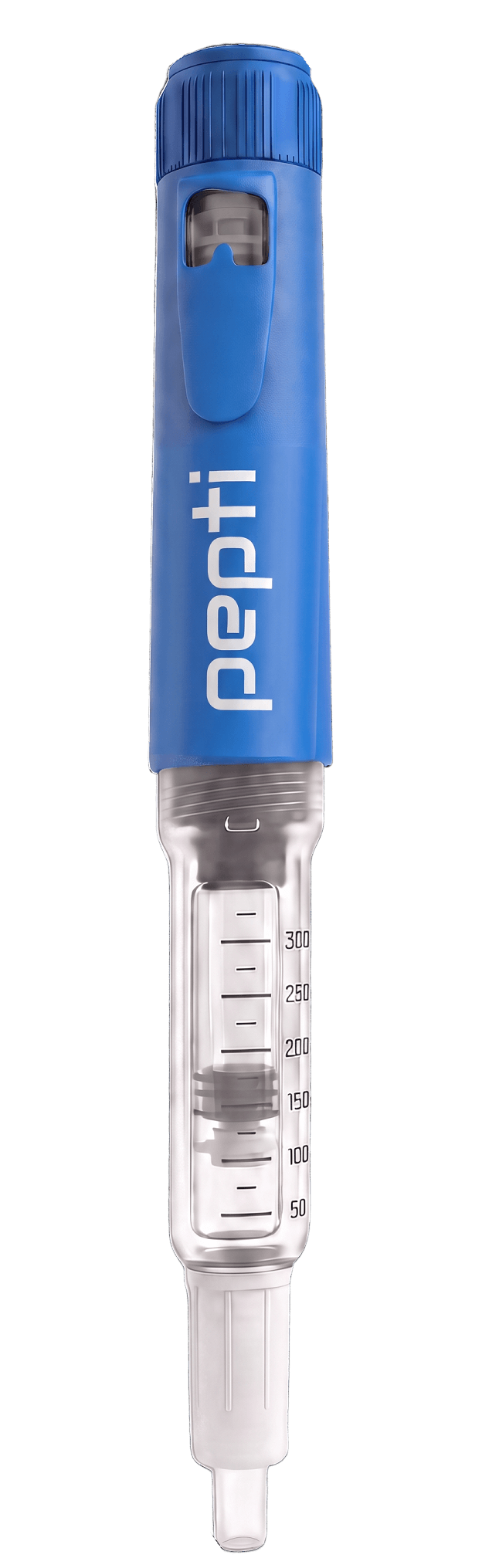
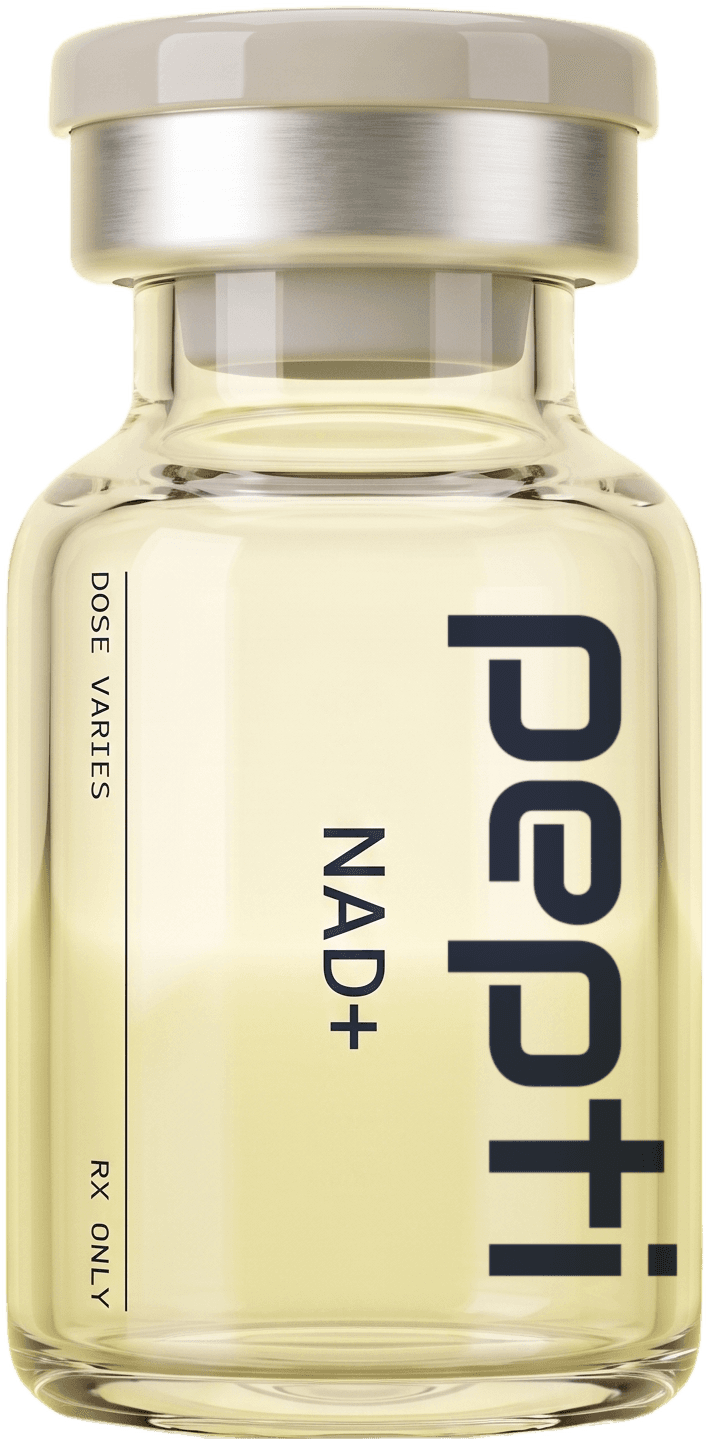
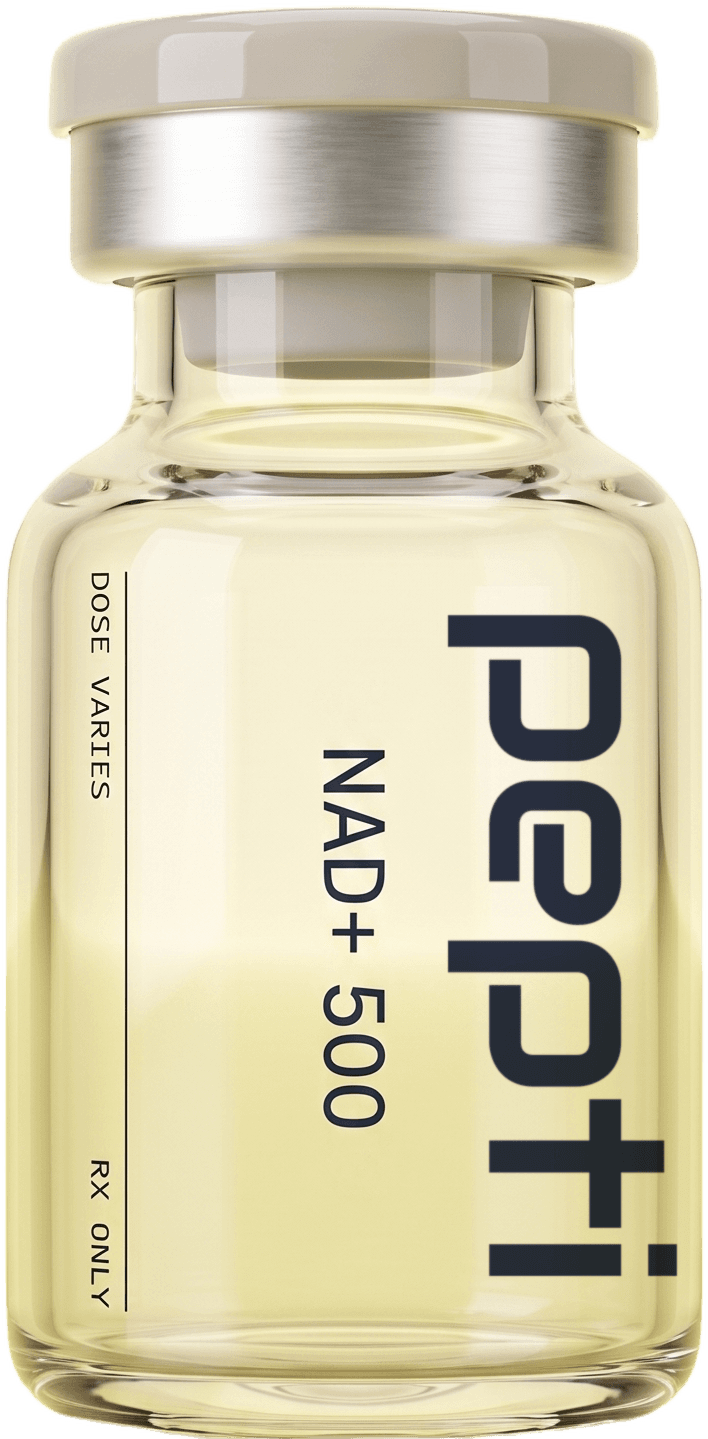
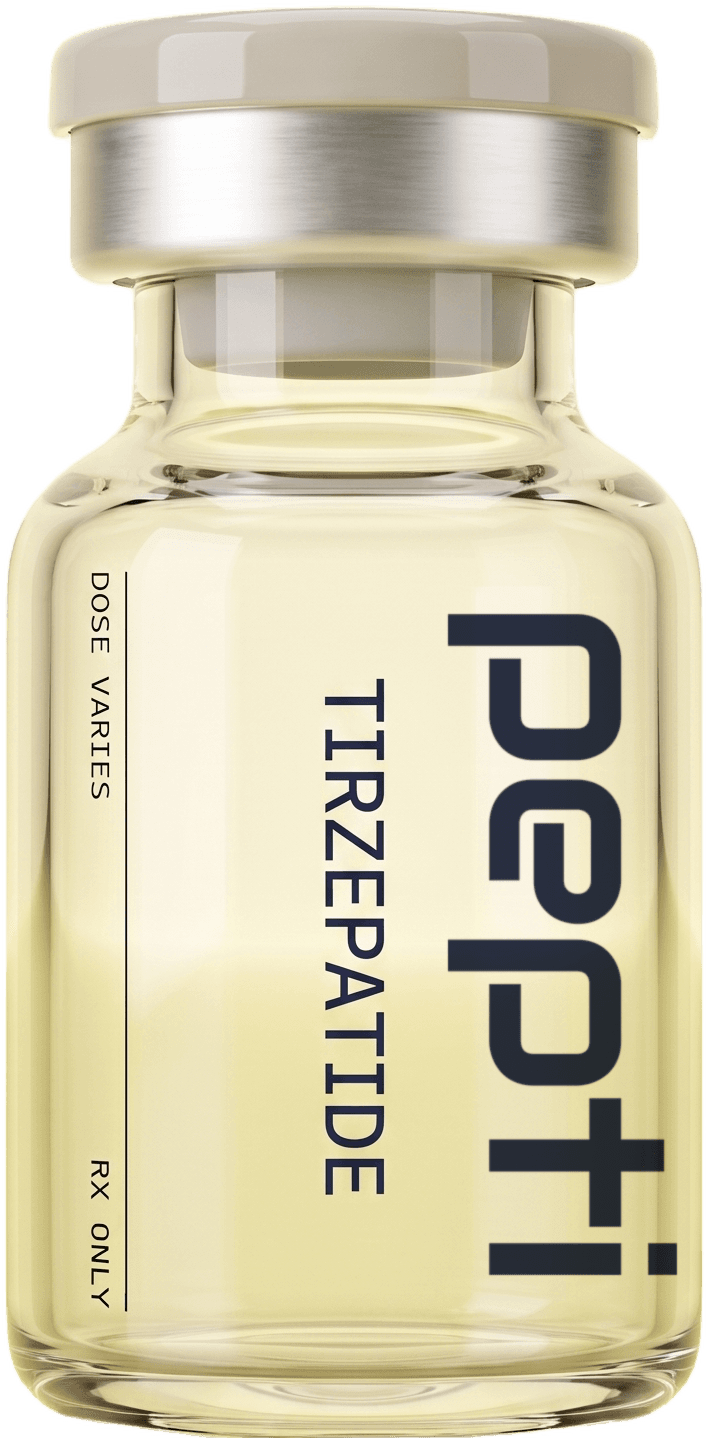
NAD+ Injection (500 mg) is a prescription injection supplied as 10 mL multi-dose vial, NAD+ 50 mg/mL (500 mg NAD+ per vial). The reviewed directions are: Inject 0.83 mL (83 units) subcutaneously three times per week. That is 12 doses per vial, about 4 weeks at three times per week. It requires a prescription from a physician licensed in your state, is compounded by a state-licensed US pharmacy, and is not FDA approved.
This page covers what the 500 mg presentation is for and how it differs from the standard 1,000 mg vial, what NAD+ is, what the published human work does and does not establish — keeping oral precursor trials separate from studies of NAD+ itself — where NAD+ stands with the FDA, how the vial is used, and how to get it prescribed.
NAD+ Injection (500 mg)
What NAD+ Injection (500 mg) actually is
The same molecule at half the concentration
Pepti supplies NAD+ as an injection in two vials. Both are 10 mL with the same directions: 0.83 mL, three times a week. The difference is what is dissolved in each millilitre. The standard NAD+ Injection is 100 mg/mL, so a 0.83 mL dose carries 83 mg of NAD+. This vial is 50 mg/mL, so the same 0.83 mL carries 41.5 mg: half the milligrams per injection, everything else unchanged.
That is the whole product difference. The 500 mg vial exists so a physician has a lower per-dose amount to prescribe without changing how the medication is drawn or given, and it is priced lower because it contains half as much active ingredient.
A coenzyme, not a peptide
NAD+ is nicotinamide adenine dinucleotide. It is not a peptide. It is a coenzyme — two nucleotides joined through a pyrophosphate bridge, one carrying nicotinamide, a form of vitamin B3, the other adenine. Every living cell makes it and uses it continuously. It sits alongside the peptides on this site because it is compounded and prescribed the same way, not because it is one.
The body makes it from tryptophan, from niacin, and — the main route in adult tissue — by recycling nicotinamide through nicotinamide mononucleotide (NMN); nicotinamide riboside (NR) is another entry into that loop. NMN and NR are the "precursors" sold as supplements, and most of the human trial literature is about them.
What it is not
It is not a vitamin, though it is built from one. It is not a hormone, a growth factor or a stimulant, and it does not bind a receptor the way a peptide does. It is not NMN or NR, so precursor results cannot simply be transferred to it. It has no approved indication for any disease. And it is not a "starter" product in any clinical sense: nothing in the literature describes a loading phase or threshold for NAD+ injection. It is a lower-dose presentation, and whether a lower dose is right for you is a physician's judgement.
NAD+ Injection (500 mg)
How NAD+ is described to work
Two roles are settled biochemistry from decades of cell and animal work; then there is the open question of what happens to an injected dose. None of it changes between the two vials — only how much of the molecule arrives per injection.
Carrying electrons in energy metabolism
The plus sign marks the oxidised form. NAD+ collects electrons from the breakdown of glucose and fatty acids, becomes NADH, and hands them to the mitochondrial electron transport chain, where ATP is made — then it is NAD+ again, thousands of times a second. This is textbook metabolism, and why extreme deficiency, pellagra, is a recognised disease. The injection contains the oxidised form.
Fuel for sirtuins and PARP enzymes
Sirtuins are seven enzymes, SIRT1 to SIRT7, that remove acetyl groups from proteins and consume one NAD+ each time they act. A 2015 review in Science by Verdin set out the case, from animal and cell work, that declining NAD+ with age constrains sirtuin function — a mechanism argument, not a human outcome. PARP enzymes respond to DNA damage by assembling chains of ADP-ribose at the break, each unit costing one NAD+; a 2017 review in Trends in Molecular Medicine by Fang and colleagues describes how PARPs and sirtuins draw on the same limited pool, so heavy repair demand can starve mitochondrial maintenance in cells and in animal models of accelerated ageing. The pool is also reported to shrink with age: a 2012 study in PLOS ONE by Massudi and colleagues measured NAD+ in human skin across age groups and reported lower NAD+ and higher oxidative-stress markers in older tissue. That is human data, and it is observational — it shows the decline exists, not that reversing it changes anything.
What happens to NAD+ after it is injected
NAD+ is a large, charged molecule and does not simply diffuse into cells. The only published study of NAD+ given directly to people — a 2019 pilot in Frontiers in Aging Neuroscience by Grant and colleagues, a six-hour intravenous infusion in healthy participants — reported that plasma NAD+ and its metabolites did not rise at all for the first two hours: the molecule was cleared as fast as it arrived, with a metabolite profile consistent with the enzymes that break NAD+ down. The likeliest reading is that injected NAD+ is broken down outside cells into fragments, including nicotinamide and NMN, which tissues rebuild through the same salvage pathway a precursor uses. That is a hypothesis from one small study; nothing equivalent exists for the subcutaneous route at either strength.
NAD+ Injection (500 mg)
What the research actually shows
Almost all human trial evidence concerns oral NMN and NR; it is the best human data on raising NAD+ in people, and each subsection names the molecule.
Metabolic and muscle measures (oral precursors)
The trials are mixed. A 2018 trial in the American Journal of Clinical Nutrition by Dollerup and colleagues gave 40 obese, insulin-resistant men NR or placebo for 12 weeks and reported no improvement in insulin sensitivity, glucose metabolism, energy expenditure or body composition. A 2021 trial in Science by Yoshino and colleagues gave postmenopausal women with prediabetes NMN or placebo for 10 weeks and reported increased skeletal-muscle insulin sensitivity on clamp testing — positive, in a small selected group. A 2023 GeroScience trial in 80 healthy middle-aged adults compared 300, 600 and 900 mg of daily NMN with placebo over 60 days and reported dose-dependent rises in blood NAD+, with six-minute walk distances higher than placebo in all three dose groups. Beyond metabolism, the NADPARK study in Cell Metabolism 2022 reported raised brain NAD on MR spectroscopy in 30 newly diagnosed Parkinson's patients after 30 days of NR, with the clinical change described as mild, and the 2024 NICE trial in Nature Communications reported a 17.6-metre between-group difference in six-minute walk distance in 90 people with peripheral artery disease after six months of NR, with a confirmatory trial called for. In sum: precursors reliably raise blood NAD+; functional effects are small, inconsistent, and most visible in older or impaired participants.
What human data exists
For NAD+ given directly, the honest summary is short. There is the 2019 intravenous pilot, which measured what happens to the molecule in blood and urine and tested no clinical outcome. There are no randomised controlled trials of subcutaneous NAD+ injection in humans, at any strength, and no randomised trial of NAD+ by any injected route with a clinical endpoint.
What the evidence does not establish
- It does not establish that subcutaneous NAD+ injection raises tissue NAD+ in humans, by how much, or for how long.
- It does not establish a dose–response for injected NAD+. The only dose-ranging work is oral NMN; nobody has compared a 41.5 mg injection with an 83 mg one, or either with placebo.
- It does not establish an effect on fatigue, cognition, longevity or any ageing marker from injected NAD+. Where those endpoints were tested, the molecule was an oral precursor and the results were small and mixed.
- It does not establish efficacy for any condition as an approved treatment. NAD+ is not approved for anything.
NAD+ Injection (500 mg)
Where NAD+ stands with the FDA right now
NAD+ has a different regulatory history from the peptides on this site, and its status is the same whichever vial is prescribed, because the FDA lists substances, not strengths.
Category 1, and what that means
Nicotinamide adenine dinucleotide (NAD) sits in Category 1 — "Bulk Drug Substances Under Evaluation" — of the FDA's list of substances nominated for the 503A bulks list, in the version updated 14 May 2026. Under the FDA's interim policy, the agency does not intend to take action against a compounder for compounding with a Category 1 substance while its evaluation is pending, provided the conditions in the guidance are met. That is the basis on which a state-licensed 503A pharmacy compounds NAD+ to a prescription today.
The 2017 advisory committee vote
The nomination was for fatigue in multiple sclerosis. At the Pharmacy Compounding Advisory Committee meeting on 8 May 2017 the FDA's reviewers recommended against listing, citing the molecule's instability — it degrades with light, moisture, alkaline pH and room temperature — and the absence of published studies for that use, and the committee voted not to include it. A September 2019 proposed rule carried that position forward and has not been finalised for NAD as of September 2026, which is why the substance remains in Category 1.
Not one of the April 2026 peptide changes
On 15 April 2026 the FDA removed twelve peptides from Category 2, and on 23–24 July 2026 the advisory committee reviewed several of them. NAD+ was not among the twelve, because it was never in Category 2. Separately, on 30 October 2024 the FDA reminded compounders that food-grade NAD+ ingredients are not suitable for sterile injectable compounding without appropriate processing, after adverse-event reports consistent with excessive endotoxin. That is about ingredient sourcing, not NAD+ as a molecule; Pepti's sourcing and testing is on the quality page.
So the accurate description today is: nominated, under FDA evaluation, compoundable under the interim policy. It is not an FDA-approved drug product, and compounded medications never are.
NAD+ Injection (500 mg)
Realistic expectations
These are patterns described by prescribers, not trial endpoints. A physician decides whether treatment is appropriate at all, and which vial.
The first few injections
The most consistently reported early experience is not a benefit but a sensation: flushing, tightness in the chest or abdomen, or nausea during the injection, fading within minutes. Prescribers describe it as tracking how much NAD+ enters the circulation and how fast — one practical reason a physician may choose the 500 mg vial for a first course, since at the same injection speed half the milligrams are arriving. Some people notice nothing at all on either vial. Neither says anything about the course.
Weeks two to four
If anything is reported subjectively, prescribers describe it in this window — usually a change in how tiring ordinary days feel, or in sleep. That is consistent with the precursor trials, where blood NAD+ was raised by day 30, and equally with placebo.
Moving between strengths
Because both vials share the same volume and schedule, changing the amount per dose means changing the vial, not the directions. Some prescribers describe a first course on the 500 mg vial and a decision at the first refill to continue, move to the standard 1,000 mg vial, or stop; others start on the higher strength. No published data favours either sequence. Stopping is uneventful: NAD+ has no receptor to downregulate and no feedback loop to suppress, so nothing in the literature describes withdrawal or rebound.
NAD+ Injection (500 mg)
When something else makes more sense
Some honest cases where the 500 mg NAD+ vial is not the first thing to reach for:
- Your fatigue has a findable cause. Low B12, thyroid dysfunction, iron deficiency, sleep apnoea and depression all produce the tiredness people describe when they ask about NAD+, and all have real tests and treatments. At-home blood testing is the cheaper first step, and if B12 is the finding, methylcobalamin is the direct answer.
- Your physician wants the higher per-dose amount, or you want the Pen. The standard NAD+ Injection delivers 83 mg per dose at the same volume, also comes in a 2,000 mg strength, and is the only NAD+ injection supplied as a pre-filled Pen cartridge. This presentation is vial and syringe only.
- You would rather not inject. NAD+ Nasal Spray is a separate product with its own directions: no needles and no injection-speed reaction, at the cost of a less predictable absorbed dose.
- The goal is mitochondrial function specifically. MOTS-c and SS-31 are aimed at the mitochondrion through different described mechanisms.
- Weight and metabolic health are the actual goal. Semaglutide and tirzepatide have large randomised human trials for that purpose; the NAD+ precursor trials do not.
Your physician will tell you if NAD+ is not the right tool, or if the other vial is. A consultation does not guarantee a prescription, and being declined is refunded.
NAD+ Injection (500 mg)
Dosing, and how a vial is actually used
Why the dose is measured in units
The directions are written in millilitres and in insulin-syringe units because that is what you can read off the barrel. 0.83 mL is 83 units on a U-100 syringe. You are not calculating anything — the number is printed on your medication, and it is the same on both NAD+ vials.
What 0.83 mL carries at this strength
This is the one place the two vials part ways. At 50 mg/mL, 0.83 mL contains 41.5 mg of NAD+, about 125 mg a week; twelve doses use the 500 mg in the vial. At 100 mg/mL the identical draw contains 83 mg, about 250 mg a week. If you are switched between vials, your technique does not change; the label does. This product comes in one strength; the 1,000 mg and 2,000 mg strengths belong to the standard NAD+ Injection.
Subcutaneous, and why injection speed matters
Subcutaneous means into the fat layer, not the muscle. Abdomen and thigh are the usual sites, rotated. With NAD+ specifically, prescribers consistently advise injecting slowly: the flushing and nausea described under safety track with how fast the molecule enters the circulation. The reaction is described as milder at this concentration, but slow injection is still the advice. Your directions will say.
Why a vial covers about four weeks
12 doses at three times per week is four weeks, which is why refills run on a 28-day cycle. One vial per fill, always — not a stockpile. A 500 mg vial does not last longer than a 1,000 mg vial; both are used up in twelve draws.
Storage, and why NAD+ is fussier than most
Refrigerated, and it ships that way in insulated packaging with ice packs. Storage matters more than usual here: the FDA's own review describes the molecule as degrading with light, moisture, alkaline pH and room temperature. Keep it in the fridge, out of light, and follow the beyond-use date on the label, which runs from first puncture. How to store peptides covers the general rules.
NAD+ Injection (500 mg)
Safety and side effects
The characteristic side effect happens during the injection rather than afterwards: flushing, pressure or tightness in the chest or abdomen, nausea and light-headedness, widely reported with intravenous infusion and in milder form with subcutaneous injection, particularly when a dose is given quickly. It passes within minutes. Prescribers describe it as less pronounced at this strength, which follows from there being half as much NAD+ per dose, though the two vials have not been formally compared. Injection-site reactions — redness, mild soreness, occasional bruising — are the other common report.
The precursor trials reported no serious adverse events over 12-week and 60-day courses. There is no controlled safety dataset for subcutaneous NAD+ injection at any strength, and no long-term data by any route.
The FDA's October 2024 adverse-event reports — severe chills, shaking and vomiting — were attributed to endotoxin from food-grade ingredients, not to NAD+ itself. They are a pharmacy-quality problem, and the reason an accountable, FDA-registered pharmacy matters more for this product than for most. A lower-strength vial does not protect against a contaminated ingredient; sourcing does.
There is no established interaction list, because the trials that would produce one have not been run, which is why a physician reviews every medication you take. Stop and contact your physician for any reaction that is severe, spreading, or involves difficulty breathing, and for chills, rigors or vomiting after an injection.
NAD+ Injection (500 mg)
How NAD+ Injection (500 mg) compares
NAD+ Injection (500 mg) vs NAD+ Injection (1,000 mg)
Same molecule, same 10 mL vial, same 0.83 mL dose, same schedule, same four-week refill. This vial delivers 41.5 mg per injection; the 1,000 mg vial delivers 83 mg. The 500 mg vial is priced lower and is vial only; the standard product also comes in a 2,000 mg strength and as a pre-filled Pen cartridge.
Who each suits, as prescribers describe it: the 500 mg vial for a first course, for someone expected to be sensitive to the injection reaction, or where the physician wants to start with less; the 1,000 mg vial for a continuing course, a larger per-dose amount, or anyone who wants the Pen. No trial distinguishes them.
NAD+ Injection (500 mg) vs NAD+ Nasal Spray
Pepti separately supplies an NAD+ Nasal Spray, a different product with its own directions. The nasal route avoids needles and the injection-speed reaction, at the cost of a less predictable absorbed dose. There is no published human pharmacokinetic comparison between the two routes, nor between either and oral NMN or NR, which have the trial evidence but must survive the gut.
NAD+ Injection (500 mg)
Availability and formats
| Question | Answer |
|---|---|
| Can I get it by telehealth? | Yes, where a physician licensed in your state prescribes it |
| Which states? | All 50 states and DC |
| Does it come as a pen? | No, this one is a vial and syringe only |
| Does it come as a capsule? | No |
| Does it come as a nasal spray? | No |
| Is bloodwork required first? | Not routinely; your physician decides |
NAD+ Injection (500 mg)
Where to get NAD+ Injection (500 mg) prescribed
NAD+ Injection (500 mg) cannot be bought legitimately without a prescription. Sites shipping it with no prescription are selling a research-use-only product, where no pharmacy is accountable for identity, purity, sterility or concentration.
The prescription route works like this:
- Complete a medical intake covering your history, medications, allergies and what you are treating.
- A physician licensed in your state reviews it.
- If appropriate, a state-licensed, FDA-registered pharmacy compounds it to that prescription.
- It ships refrigerated with your directions printed on the vial.
- Your physician stays reachable afterwards for dose questions and side effects.
Current all-in pricing for NAD+ Injection (500 mg) is published: medication, physician review, refill management and shipping in one figure, with no separate membership fee. What to check on any provider is in how to tell if a peptide seller is legitimate.
NAD+ Injection (500 mg)
Who should not take it, or should discuss it first
| Situation | Why |
|---|---|
| Personal history of cancer | since NAD metabolism intersects with cell proliferation pathways |
| Pregnancy or breastfeeding | Not used; safety data is absent |
| Tested athletes | Many peptides are prohibited in competition; check the current list |
Full specification
Everything on the label.
Product
NAD+ Injection (500 mg)
How supplied
10 mL multi-dose vial, NAD+ 50 mg/mL (500 mg NAD+ per vial)
Typical directions
Inject 0.83 mL (83 units) subcutaneously three times per week.
Dose volume
0.83 mL (83 units on a U-100 insulin syringe)
Doses per vial
12
Coverage per vial
about 4 weeks at three times per week
Formats
Vial and syringe
Available in
All 50 states and DC
Bloodwork
Not routinely required; your physician decides
Legal status
Prescription-only, compounded, not FDA approved
Category
Anti-Aging
References
What this is based on.
References
- Massudi H, Grant R, Braidy N, et al.. Age-associated changes in oxidative stress and NAD+ metabolism in human tissue · PLOS ONE (2012) · PMID 22848760
- Yoshino J, Baur JA, Imai SI. NAD+ Intermediates: The Biology and Therapeutic Potential of NMN and NR · Cell Metabolism (2018) · PMID 29249689
- Verdin E. NAD⁺ in aging, metabolism, and neurodegeneration · Science (2015) · PMID 26785480
- Martens CR, Denman BA, Mazzo MR, et al.. Chronic nicotinamide riboside supplementation is well-tolerated and elevates NAD+ in healthy middle-aged and older adults · Nature Communications (2018) · PMID 29599478
- Dollerup OL, Christensen B, Svart M, et al.. A randomized placebo-controlled clinical trial of nicotinamide riboside in obese men: safety, insulin-sensitivity, and lipid-mobilizing effects · American Journal of Clinical Nutrition (2018) · PMID 29992272
- Yoshino M, Yoshino J, Kayser BD, et al.. Nicotinamide mononucleotide increases muscle insulin sensitivity in prediabetic women · Science (2021) · PMID 33888596
- Yi L, Maier AB, Tao R, et al.. The efficacy and safety of β-nicotinamide mononucleotide (NMN) supplementation in healthy middle-aged adults: a randomized, multicenter, double-blind, placebo-controlled, parallel-group, dose-dependent clinical trial · GeroScience (2023) · PMID 36482258
- Brakedal B, Dölle C, Riemer F, et al.. The NADPARK study: A randomized phase I trial of nicotinamide riboside supplementation in Parkinson's disease · Cell Metabolism (2022) · PMID 35235774
- McDermott MM, Martens CR, Domanchuk KJ, et al.. Nicotinamide riboside for peripheral artery disease: the NICE randomized clinical trial · Nature Communications (2024) · PMID 38871717
- Shiffman S, Stone AA, Hufford MR. Ecological momentary assessment · Annu Rev Clin Psychol (2008) · PMID 18509902
- Conze D, Brenner C, Kruger CL. Safety and Metabolism of Long-term Administration of NIAGEN (Nicotinamide Riboside Chloride) in a Randomized, Double-Blind, Placebo-controlled Clinical Trial of Healthy Overweight Adults · Scientific Reports (2019) · PMID 31278280
- Nacarelli T, Lau L, Fukumoto T, et al.. NAD+ metabolism governs the proinflammatory senescence-associated secretome · Nature Cell Biology (2019) · PMID 30778219
Citations are provided for educational purposes. They do not constitute medical advice. Always discuss any peptide protocol with your prescribing physician.
Common questions
NAD+ Injection (500 mg), answered.
Through a telehealth provider where a physician licensed in your state reviews a medical intake and a licensed US pharmacy compounds the prescription. Pepti prescribes NAD+ Injection (500 mg) in all 50 states and DC; start with the free assessment.
10 mL multi-dose vial, NAD+ 50 mg/mL (500 mg NAD+ per vial)
Inject 0.83 mL (83 units) subcutaneously three times per week. Your physician sets your own dose and it is printed on your medication.
12 at the standard volume, about 4 weeks at three times per week.
NAD+ Injection (500 mg) is supplied as a vial, drawn with an insulin syringe. It is not available as a pen or capsule.
Not routinely, though your physician may want labs depending on your history. at-home blood testing covers hormone, metabolic and thyroid markers without a lab visit.
It is legal to prescribe and dispense in the United States with a valid prescription. It is not FDA approved: compounded medications are prepared by licensed pharmacies pursuant to a prescription rather than approved as manufactured products. See are peptides FDA approved.
Pricing is published on the NAD+ Injection (500 mg) page as one all-in figure covering medication, physician review, refill management and shipping. What drives peptide pricing generally is in how much do peptides cost.
Concentration. Both are 10 mL vials with the same directions — 0.83 mL three times a week — but this one is 50 mg/mL and the standard NAD+ Injection is 100 mg/mL, so each dose carries 41.5 mg here against 83 mg there. Both give 12 doses; this one does not last longer. The 500 mg vial is priced lower and is vial only; the standard product also comes in a 2,000 mg strength and as a pepti Pen cartridge.
As prescribers describe it: a first course, someone expected to be sensitive to the flushing NAD+ can cause during injection, or a physician who wants to begin with a smaller per-dose amount. No trial shows one strength is better than the other; the choice is your physician's.
No. NAD+ is a coenzyme — a molecule every cell makes and uses in energy metabolism and as a substrate for sirtuin and PARP enzymes. It is listed alongside peptides because it is compounded and prescribed the same way, not because it is one.
No. No subcutaneous dose of NAD+ has been tested in a randomised trial; the one published study of NAD+ given directly to people was a 2019 intravenous infusion pilot with no clinical endpoint. The randomised human trials in this field are of oral NMN and NR.
Prescribers describe it as milder at the lower concentration, since the reaction tracks how much NAD+ enters the circulation and how fast, and they advise injecting slowly with either vial. Severe chills, rigors or vomiting are not part of that reaction and should be reported to your physician.
No. NAD+ was never in Category 2, so it was not among the twelve peptides removed on 15 April 2026, and it was not part of the July 2026 advisory committee review. It sits in Category 1 — under evaluation — and is compoundable under the FDA's interim policy, whichever vial is prescribed.
Next step
See what a physician recommends for you.
A licensed physician in your state reviews your intake and decides what is appropriate. A consultation does not guarantee a prescription.