Anti-Aging · Reference
MOTS-c vs AOD-9604: Mechanism, Evidence, FDA Status, Cost, and Which One Fits
MOTS-c and AOD-9604 are both prescribed around body composition, but they come from different places and carry very different evidence.
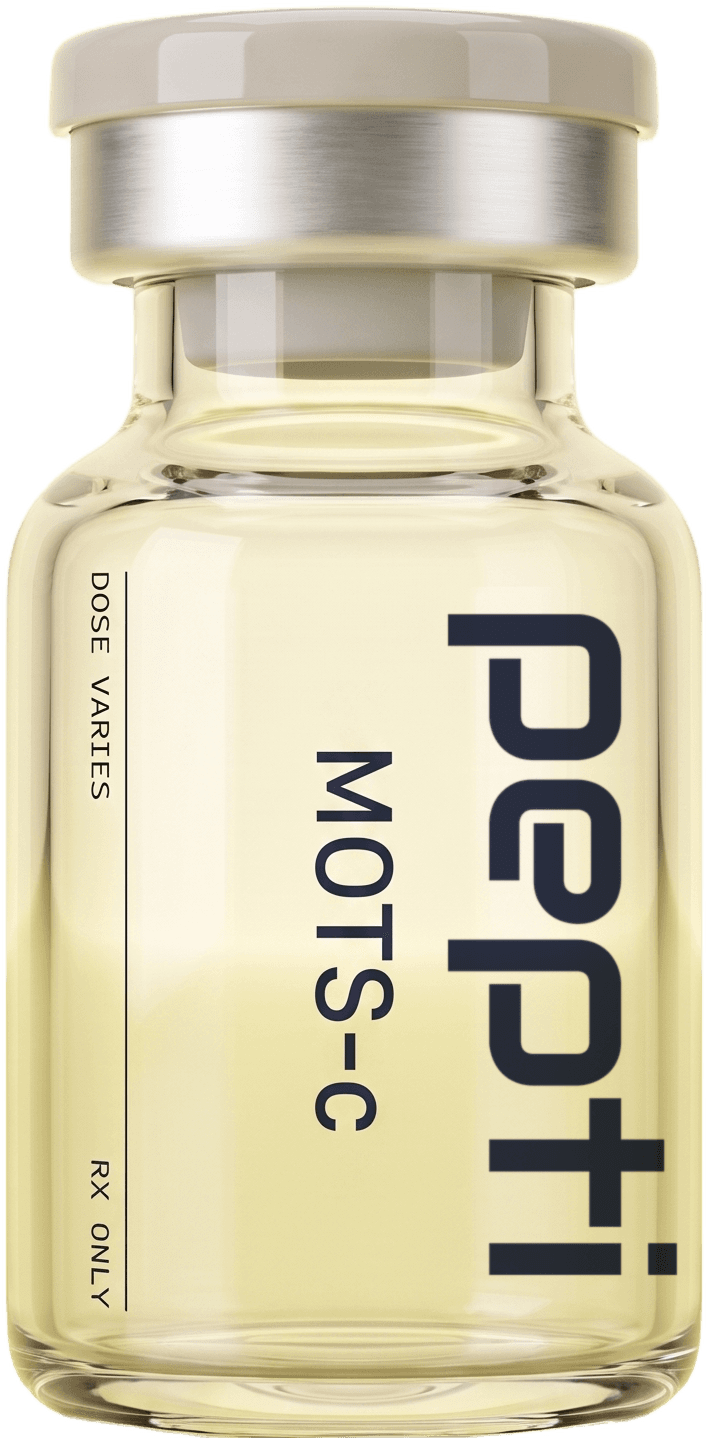
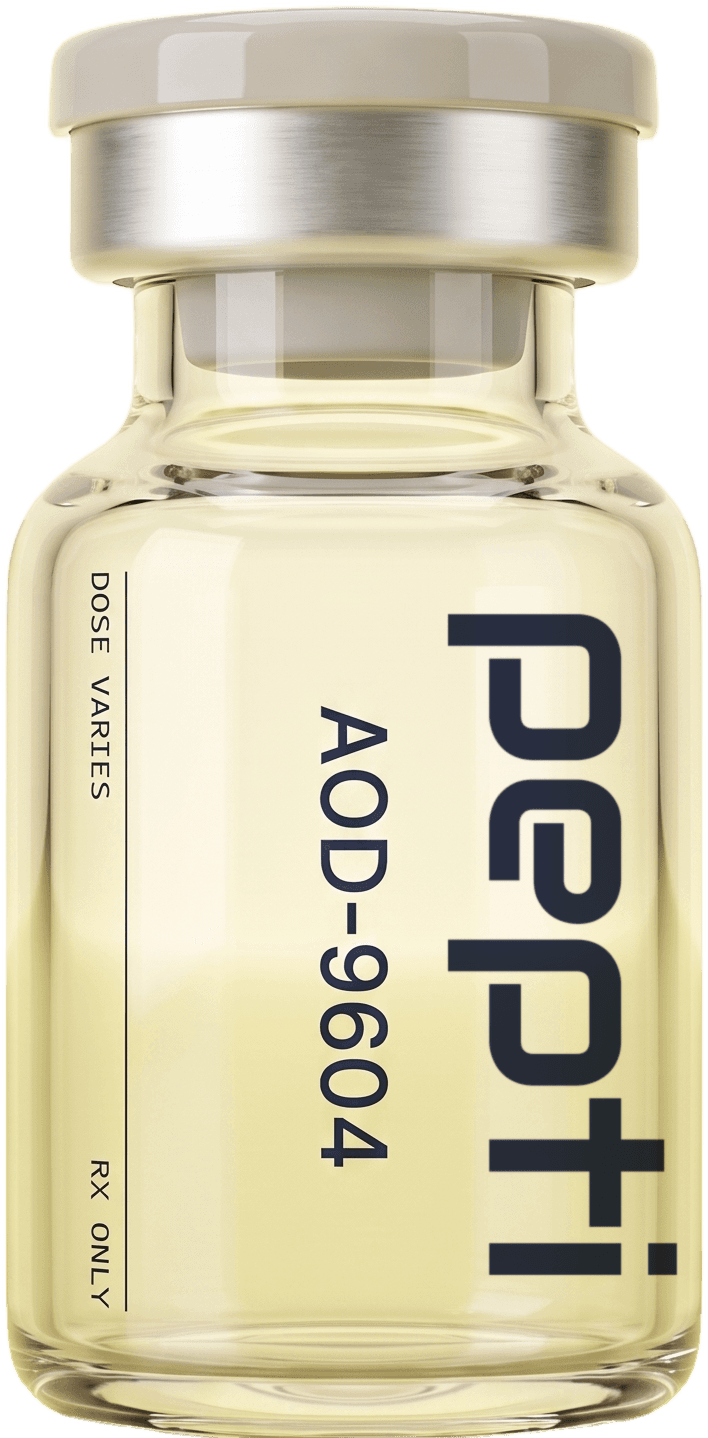
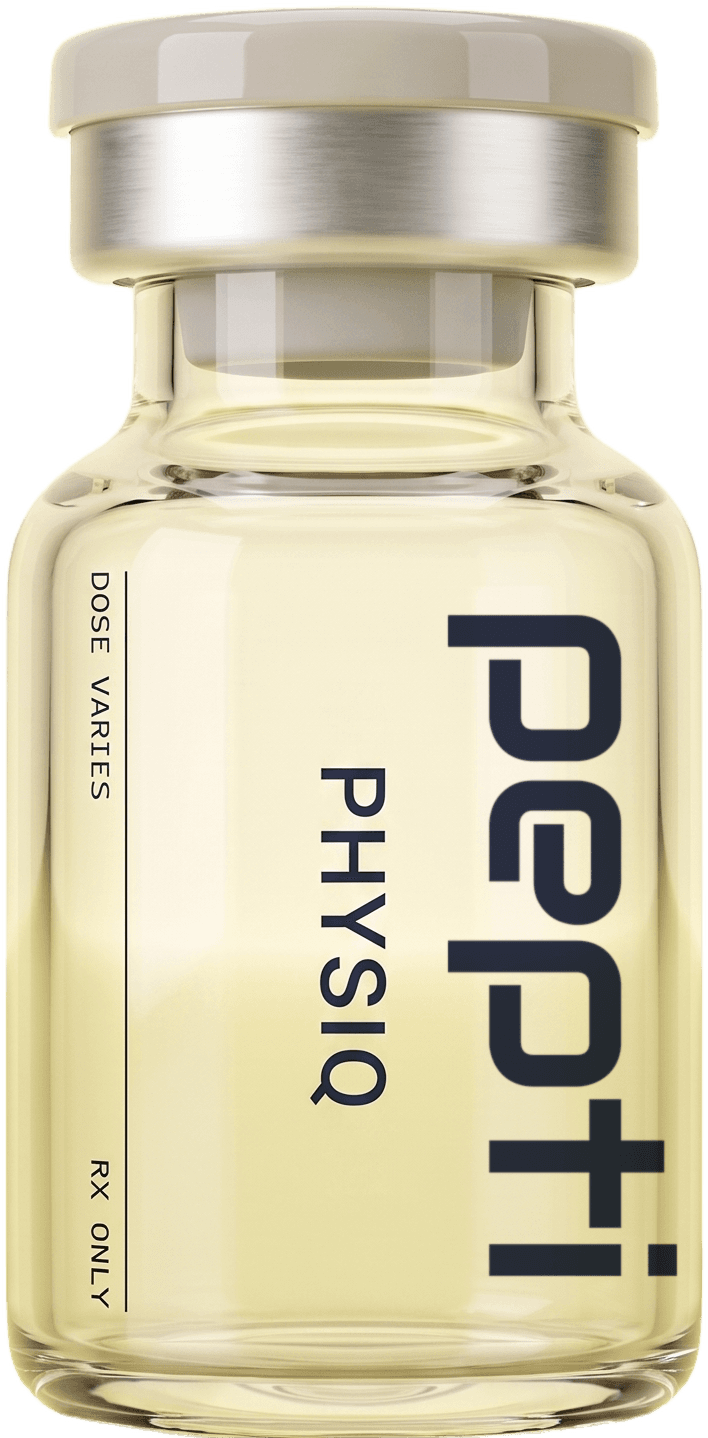
MOTS-c is a 16-amino-acid peptide encoded in mitochondrial DNA, described in mouse and cell work around AMPK and how muscle handles fuel; it has no human treatment trials. AOD-9604 is a modified fragment of the tail end of growth hormone, described in animal work around fat-cell breakdown; it is one of the few compounded peptides that went through large randomised human trials, and those trials found no significant weight loss over placebo. Neither is a substitute for a GLP-1 medication, and both are often prescribed together inside the SHRED and PHYSIQ blends. Both are prescription-only, compounded by a licensed US pharmacy, and neither is FDA approved.
This page explains each on its own terms, puts them side by side, covers what the research does and does not show, where each stands with the FDA, how each is dosed, what each costs at Pepti, and who tends to suit which.
MOTS-c vs AOD-9604
The short answer
| If your main goal is | The usual prescription | What is in it | Price |
|---|---|---|---|
| Metabolic and training support, muscle fuel handling | MOTS-c | 10 mg MOTS-c in a 5 mL vial | $259/mo |
| A fat-focused peptide that leaves the growth hormone axis alone | AOD-9604 | 10 mg AOD-9604 in a 5 mL vial | $229/mo |
| Both, with CJC-1295 and ipamorelin | SHRED Blend | AOD-9604, CJC-1295, ipamorelin and MOTS-c | $279/mo |
| Both, with tesamorelin and ipamorelin | PHYSIQ Blend | Tesamorelin, ipamorelin, AOD-9604 and MOTS-c | $289/mo |
| Weight loss as the primary goal | Semaglutide or tirzepatide | Dose-specific GLP-1 vials | from $99/mo or from $159/mo |
Every figure is an all-in monthly price covering the medication, physician review, refill management and shipping. There is no separate membership fee. GLP-1 prices are "from" prices because the vial depends on the dose. Current pricing always lives on each product page.
MOTS-c vs AOD-9604
MOTS-c on its own terms
What it is
MOTS-c is a 16-amino-acid peptide whose gene sits in the mitochondrial genome, inside the gene for the 12S ribosomal RNA, rather than in the cell nucleus. It was identified in a 2015 paper in Cell Metabolism from the University of Southern California. It is not a hormone in the classical sense, not a growth hormone secretagogue, not a stimulant and not a GLP-1; it does not work through appetite. The full reference is at what is MOTS-c.
How MOTS-c is described to work
- Folate cycle and AMPK. In cultured cells it was reported to slow the folate cycle, letting a molecule called AICAR build up, which activates AMPK, the cell's low-fuel sensor that exercise also switches on. Skeletal muscle appeared to be the main target.
- Signalling to the nucleus. A 2018 Cell Metabolism paper reported it moving into the nucleus under glucose restriction and changing which genes are switched on.
- Muscle and the exercise link. A 2021 Nature Communications paper reported better physical performance in treated mice of several ages, and that exercise raised the body's own MOTS-c in people.
- Fat and bone in mice. Studies in ovariectomised mice (2019 and 2016) reported more brown-fat activity, less fat gain and less bone loss.
All of the treatment work is in mice and cells.
MOTS-c vs AOD-9604
AOD-9604 on its own terms
What it is
AOD-9604 is a synthetic copy of the last fifteen amino acids of human growth hormone, positions 177 to 191, with an extra tyrosine at the front. It is often called "hGH fragment 176-191." AOD stands for Anti-Obesity Drug; it came out of work at Monash University and was developed in the late 1990s by an Australian company as an oral obesity treatment. It is not growth hormone and does not behave like it: cell work reports it does not bind the growth hormone receptor, and the human trials reported no change in IGF-1. It is not an appetite drug. The full reference is at what is AOD-9604.
How AOD-9604 is described to work
- The "lipolytic domain" idea. A 2000 paper in Hormone Research proposed that growth hormone's effect on fat sits in its tail and can be separated from its growth and blood-sugar effects. Obese rats given the fragment gained less weight than controls.
- Beta-3 receptors in fat. A 2001 Endocrinology paper reported its effects in obese mice disappeared in mice lacking the beta-3 adrenergic receptor.
- Fat oxidation. A 2001 International Journal of Obesity paper reported higher fat oxidation and plasma glycerol in obese mice, without the rise in blood glucose growth hormone causes.
The FDA's 2024 review noted that the actual molecular target has never been identified.
MOTS-c vs AOD-9604
Head to head
| MOTS-c | AOD-9604 | |
|---|---|---|
| Origin | Encoded in mitochondrial DNA | Fragment of growth hormone, plus one amino acid |
| Length | 16 amino acids | 16 amino acids |
| Main described mechanism | AMPK activation, muscle fuel handling | Fat-cell breakdown, beta-3 receptor dependent in mice |
| Main tissue | Skeletal muscle | Fat tissue |
| Effect on growth hormone or IGF-1 | Not described as acting on that axis | No change in IGF-1 in human trials |
| Appetite effect | Not described | Not described |
| Human treatment trials | None of MOTS-c itself | Six randomised trials, IV and oral, close to 900 people |
| What the human trials found | Not applicable | No significant weight loss over placebo in the largest trial |
| Subcutaneous human data | None | None |
| Typical directions at Pepti | 0.25 mL (25 units) Monday through Friday mornings | 0.25 mL (25 units) once daily Monday through Friday |
| Vial at Pepti | 5 mL, 2 mg/mL (10 mg) | 5 mL, 2 mg/mL (10 mg) |
| Doses per vial | 20, about 4 weeks | 20, about 4 weeks |
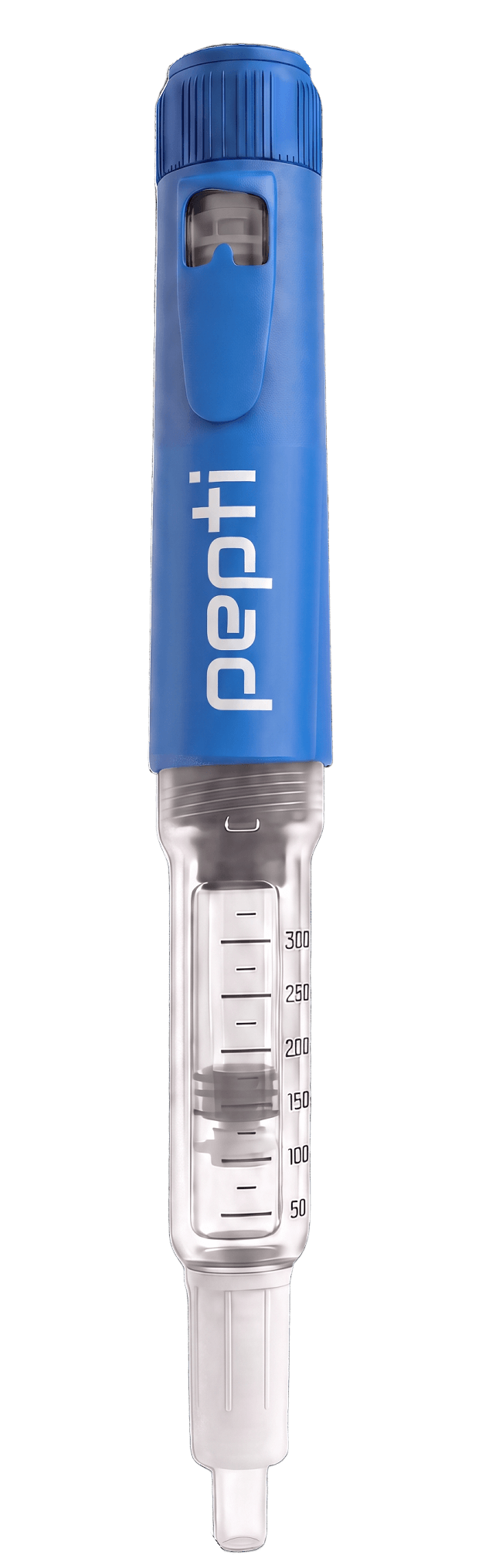
| Pen option | Yes, a 3 mL Pen cartridge with 30 mg | No, vial only |
| Price at Pepti | $259 a month | $229 a month |
The real difference is the kind of evidence
People often ask which is "better for fat loss." The honest answer is that neither has been shown to cause weight loss in people. The difference is what kind of unknown each carries. MOTS-c has a coherent mouse story and no human treatment trial, so the question is open. AOD-9604 has a mouse story and a large human answer: the OPTIONS trial gave 502 randomised adults with obesity a supervised diet and exercise program with or without oral AOD-9604 for 24 weeks, and the peptide did not add significant weight loss. The injection route used today was never tested in people, which leaves some room, but the starting point is a negative result rather than a blank.
MOTS-c vs AOD-9604
Who suits which
MOTS-c
MOTS-c is usually chosen by someone who is training and wants something described around muscle energy and fuel handling, with metabolic markers as the wider interest. Prescribers describe it as something taken alongside a training and nutrition plan, not instead of one, because the mechanism is an exercise-signalling pathway.
AOD-9604
AOD-9604 is usually chosen by someone who wants a fat-focused peptide that, by design and by the trial data, leaves growth hormone and IGF-1 alone, and who understands its human obesity trials were negative. Physicians who prescribe it are relying on the animal mechanism and their own clinical judgement.
Both, in a blend
Because they are described around different tissues, prescribers often put them in the same vial. SHRED pairs them with CJC-1295 and ipamorelin; PHYSIQ pairs them with tesamorelin and ipamorelin, dosed at bedtime. In both blends, each 0.25 mL dose carries 0.5 mg of MOTS-c and 0.5 mg of AOD-9604, the same amounts as the single vials, plus the other two peptides. No study has tested either blend.
When neither is the right first step
Situation What makes more sense Meaningful weight loss is the main goal Semaglutide or tirzepatide, which have large randomised human trials for weight Abdominal fat specifically Tesamorelin, which has human trial data on visceral fat in a specific population Mitochondrial function itself SS-31, or NAD+ A joint problem Not AOD-9604; its cartilage claim rests on one rabbit study You compete in a tested sport Not MOTS-c; see below Can you take MOTS-c and AOD-9604 together?
Yes, they are commonly prescribed together, which is why two blends contain both. There is no study of the combination. Whether a blend or two single vials fits is set by your physician after reviewing your intake.
MOTS-c vs AOD-9604
What the evidence shows, honestly
There are no randomised controlled trials of MOTS-c in humans. The human data is observational, measuring the body's own MOTS-c: exercise raises it, and studies disagree on whether levels differ with type 2 diabetes or obesity. The closest thing to a treatment trial was a modified analogue, CB4211, in a small four-week Phase 1b study reported by the company in 2021; that is a different molecule and the program did not advance.
AOD-9604 has six randomised human trials, all intravenous or oral, and the largest found no significant weight loss over placebo. On 21 February 2007 the developer ended its obesity program. What the trials do support is safety and pharmacology: no change in IGF-1, no impaired glucose tolerance, and no serious adverse event judged related to treatment. There is no human study of the subcutaneous injection or of any joint use.
Any provider presenting either as a proven fat-loss peptide is overstating it. For a deeper look at each, see MOTS-c benefits and AOD-9604 benefits.
MOTS-c vs AOD-9604
Where each stands with the FDA
| MOTS-c | AOD-9604 | |
|---|---|---|
| 2023 | Category 2 | Category 2 |
| Left Category 2 | 15 April 2026 | 27 September 2024 |
| Advisory committee | 23 July 2026: voted 7 to 5, two abstentions, to recommend adding it to the 503A Bulks List, for obesity and osteoporosis | 4 December 2024: voted 0 to 12 against adding it, for obesity |
| Final FDA determination | Pending | No final rule; nothing scheduled |
An advisory committee vote is a recommendation, not a decision. Both remain legal for a physician to prescribe and a licensed pharmacy to compound, and compounded medications are not FDA approved. Are peptides FDA approved explains the difference.
MOTS-c vs AOD-9604
Dosing, side by side
Both are injected under the skin (subcutaneously), usually into the abdomen or thigh, rotating sites, at 0.25 mL, which is 25 units on a U-100 insulin syringe, Monday through Friday with weekends off. MOTS-c's directions specify mornings.
| Typical printed direction (math only, U-100 syringe) | MOTS-c | AOD-9604 |
|---|---|---|
| Volume | 0.25 mL (25 units) | 0.25 mL (25 units) |
| Concentration | 2 mg/mL | 2 mg/mL |
| mg per dose | 0.5 mg | 0.5 mg |
| Doses per week | 5 | 5 |
| Doses per 5 mL vial | 20 | 20 |
| How long one vial lasts | About 4 weeks | About 4 weeks |
You do not need to calculate anything: your directions are printed on the vial, and your physician sets them after reviewing your intake. Refills run every 28 days, one vial per fill. Both ship refrigerated with ice packs, with sterile syringes and alcohol prep pads. More detail is on MOTS-c dosage and AOD-9604 dosage.
MOTS-c vs AOD-9604
Side effects
MOTS-c. Mostly injection-site redness, mild soreness or occasional bruising. Because it acts on an energy-sensing pathway, some people describe transient jitteriness, a faster pulse or mild light-headedness in the hour or two after a morning dose, particularly early on. More at MOTS-c side effects.
AOD-9604. In the company trials, intravenous dosing was linked with headache, fatigue, dizziness and low blood sugar; oral dosing with headache, diarrhoea, flatulence, increased appetite and nausea, more so at the highest dose, with adverse events reported as similar between peptide and placebo groups. Clinically, the usual reports are injection-site reactions. More at AOD-9604 side effects.
If you take anything that lowers blood glucose, say so at intake. Message your care team about any side effect that does not settle. For a reaction that is severe or involves difficulty breathing, call 911.
MOTS-c vs AOD-9604
Who should not take either, or should discuss it first
| Situation | MOTS-c | AOD-9604 |
|---|---|---|
| Pregnancy or breastfeeding | Not used; safety data is absent | Not used; safety data is absent |
| Glucose-lowering medication | Mention it at intake | Mention it at intake |
| Tested athletes | On the WADA Prohibited List at all times as an AMPK activator; USADA has said it is not eligible for a therapeutic use exemption | Check your sport's current list |
MOTS-c vs AOD-9604
Where to get MOTS-c or AOD-9604 prescribed
Neither can be bought legitimately without a prescription. Sites selling them "for research use only" are not accountable for what is in the vial. The prescription route:
- Complete a free online intake covering your history, medications and what you want help with.
- A physician licensed in your state reviews it, usually within 24 hours.
- If it is appropriate, a PCAB-accredited, FDA-registered US 503A pharmacy compounds it to that prescription. Lot test results are published at /quality/lab-results.
- It ships refrigerated with your directions printed on the vial.
- Your care team stays reachable for questions.
Step-by-step pages: how to get MOTS-c prescribed online, how to get AOD-9604 prescribed online and how to get the SHRED Blend prescribed online.
References
What this is based on.
References
- Heffernan M, Summers RJ, Thorburn A et al.. The effects of human GH and its lipolytic fragment (AOD9604) on lipid metabolism following chronic treatment in obese mice and beta(3)-AR knock-out mice · Endocrinology (2001) · PMID 11713213
- Ng FM, Sun J, Sharma L et al.. Metabolic studies of a synthetic lipolytic domain (AOD9604) of human growth hormone · Hormone Research (2000) · PMID 11146367
- Heffernan MA, Thorburn AW, Fam B et al.. Increase of fat oxidation and weight loss in obese mice caused by chronic treatment with human growth hormone or a modified C-terminal fragment · International Journal of Obesity and Related Metabolic Disorders (2001) · PMID 11673763
- Wilding J. AOD-9604 Metabolic · Current Opinion in Investigational Drugs (2004) · PMID 15134286
- Kwon DR, Park GY. Effect of Intra-articular Injection of AOD9604 with or without Hyaluronic Acid in Rabbit Osteoarthritis Model · Annals of Clinical and Laboratory Science (2015) · PMID 26275694
- Cox HD, Smeal SJ, Hughes CM et al.. Detection and in vitro metabolism of AOD9604 · Drug Testing and Analysis (2015) · PMID 25208511
- Orlovius AK, Thomas A, Schänzer W et al.. AOD-9604 does not influence the WADA hGH isoform immunoassay · Drug Testing and Analysis (2013) · PMID 24124033
- Mendias CL, Awan TM. Safety and Efficacy of Approved and Unapproved Peptide Therapies for Musculoskeletal Injuries and Athletic Performance · Sports Medicine (2026) · PMID 41966639
- Lee C, Zeng J, Drew BG et al.. The mitochondrial-derived peptide MOTS-c promotes metabolic homeostasis and reduces obesity and insulin resistance · Cell Metab (2015) · PMID 25738459
- Reynolds JC, Lai RW, Woodhead JST et al.. MOTS-c is an exercise-induced mitochondrial-encoded regulator of age-dependent physical decline and muscle homeostasis · Nat Commun (2021) · PMID 33473109
- Kim KH, Son JM, Benayoun BA et al.. The Mitochondrial-Encoded Peptide MOTS-c Translocates to the Nucleus to Regulate Nuclear Gene Expression in Response to Metabolic Stress · Cell Metab (2018) · PMID 29983246
- Zempo H, Kim SJ, Fuku N et al.. A pro-diabetogenic mtDNA polymorphism in the mitochondrial-derived peptide, MOTS-c · Aging (Albany NY) (2021) · PMID 33468709
Citations are provided for educational purposes. They do not constitute medical advice. Always discuss any peptide protocol with your prescribing physician.
Common questions
MOTS-c vs AOD-9604, answered.
MOTS-c is a mitochondrial signalling peptide described around AMPK and muscle fuel handling. AOD-9604 is a fragment of growth hormone described around fat-cell breakdown. They act on different tissues through different pathways.
Neither has been shown to cause weight loss in people. MOTS-c has no human treatment trial; AOD-9604's largest human trial found no significant weight loss over placebo. Semaglutide and tirzepatide are the options with large randomised human trials for weight.
They are commonly prescribed together, and the SHRED and PHYSIQ blends contain both. No study has tested the combination.
No. It is a fragment of growth hormone that does not bind the growth hormone receptor in cell work, and IGF-1 did not change in the human trials.
No. It does not act on appetite or gut hormone receptors. It is described around AMPK in muscle.
AOD-9604, by a wide margin: six randomised trials with close to 900 people. But those trials were negative for weight loss and used oral or intravenous dosing. MOTS-c has observational human data only.
At Pepti, MOTS-c is $259 a month and AOD-9604 is $229 a month, all-in. SHRED, with both plus CJC-1295 and ipamorelin, is $279 a month; PHYSIQ is $289 a month.
No human trial establishes a timeline for either by injection. The MOTS-c work measured insulin resistance, physical performance and bone in mice. The AOD-9604 OPTIONS trial ran 24 weeks with oral dosing and measured weight, and found no significant difference from placebo.
Yes. MOTS-c is on the World Anti-Doping Agency Prohibited List at all times, under S4.4 metabolic modulators, and a validated plasma test was published in 2019. If you compete in a tested sport, check your sport's current list for AOD-9604 as well.
No. Compounded medications are not FDA approved. MOTS-c was recommended for the 503A Bulks List on a split advisory vote in July 2026; AOD-9604 received a unanimous negative vote in December 2024. Both remain legal to prescribe.
No. Bloodwork is not required for any Pepti treatment. If your physician wants labs for your care, they'll ask through your account. The free assessment goes to a physician licensed in your state. A consultation does not guarantee a prescription.
Related answers
Keep reading.
- What Is MOTS-c? Research, 10 to 50 mg Vials, Dosing & Cost
- AOD-9604: What It Is, Where to Get It Prescribed, and What It Costs
- MOTS-c vs Semaglutide: Not Competing for the Same Job
- MOTS-c vs Tirzepatide: Two Receptors for Appetite vs One Pathway in Muscle
- NAC vs NAD+: What Each Is, How They Differ, and Whether to Take Both
Next step
See what a physician recommends for you.
A licensed physician in your state reviews your intake to see whether treatment fits your history. A consultation does not guarantee a prescription.