Anti-Aging · Reference
MOTS-c vs Tirzepatide: Two Receptors for Appetite vs One Pathway in Muscle
This page explains each on its own terms, puts them side by side, covers what the research does and does not show, where each stands with the FDA, how each is dosed, what each costs at Pepti, and what is known about taking them together.
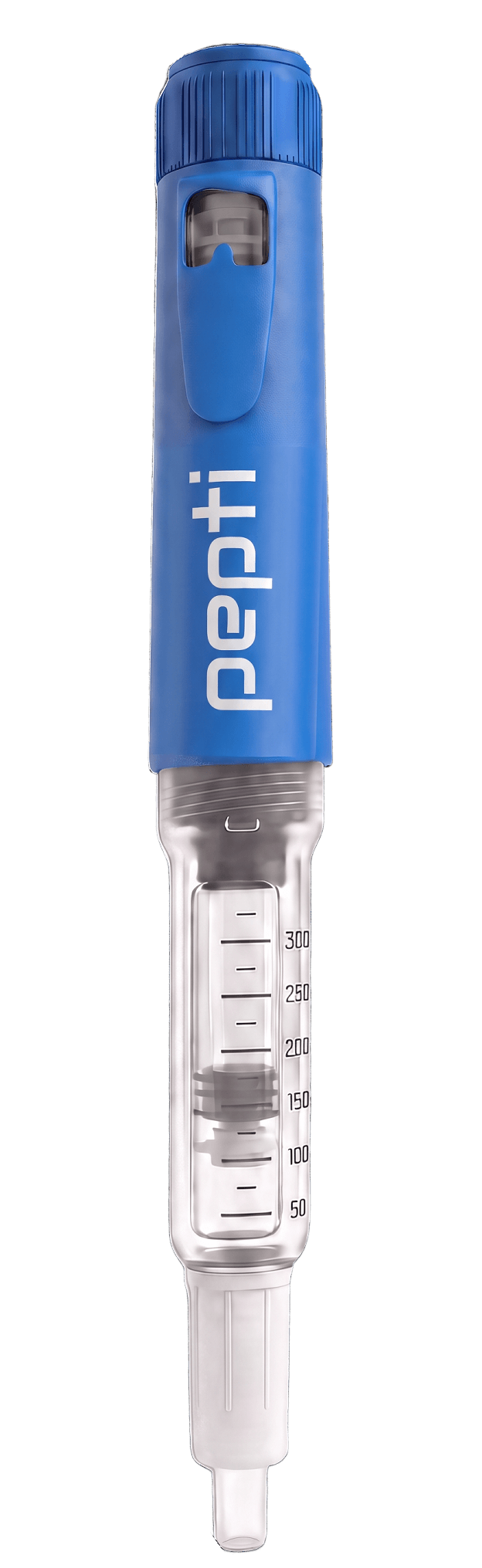
Treatments mentioned
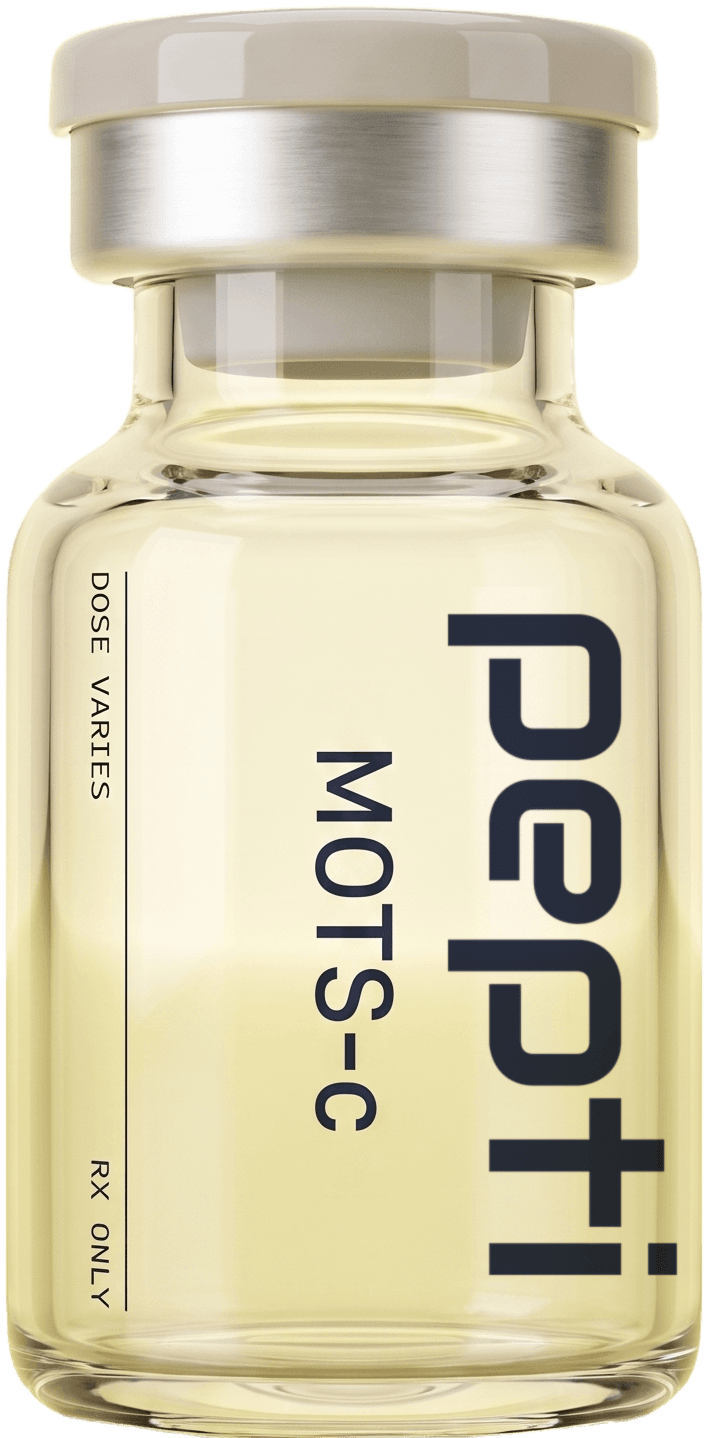
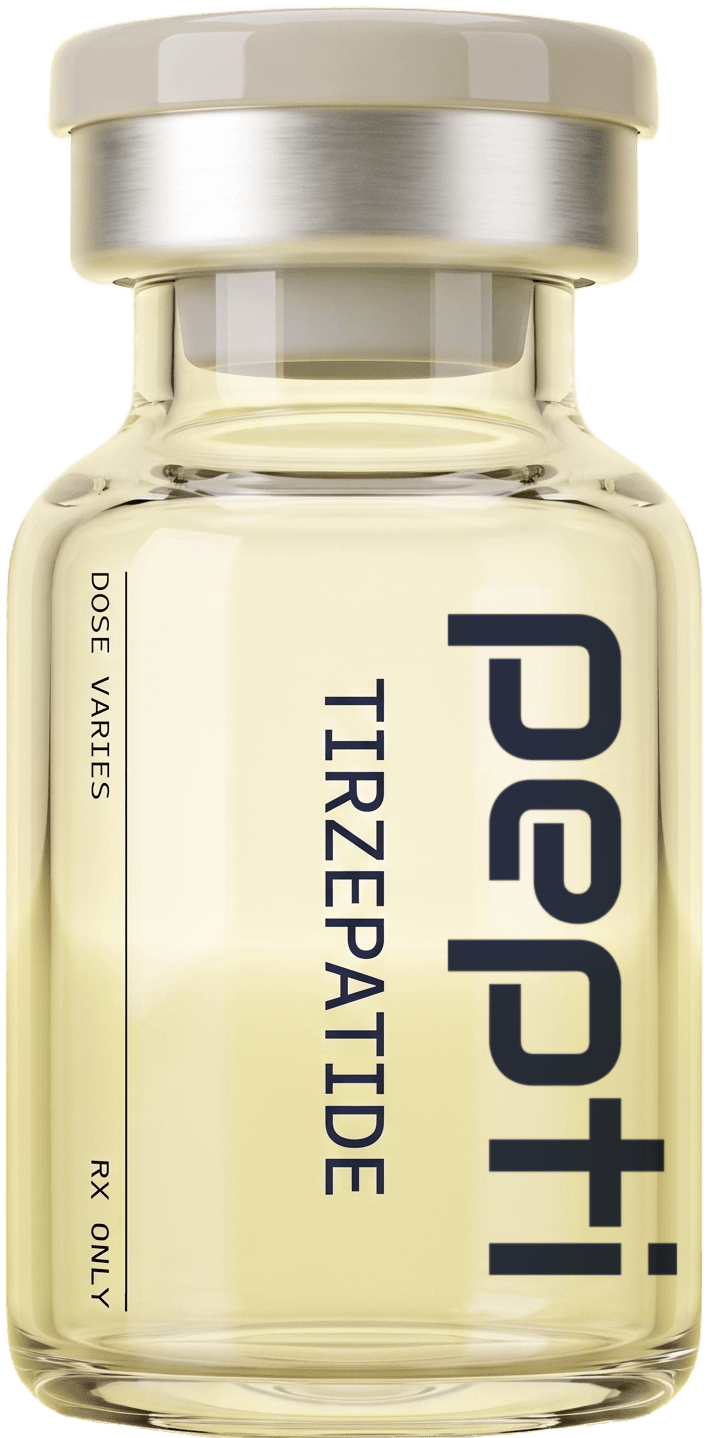
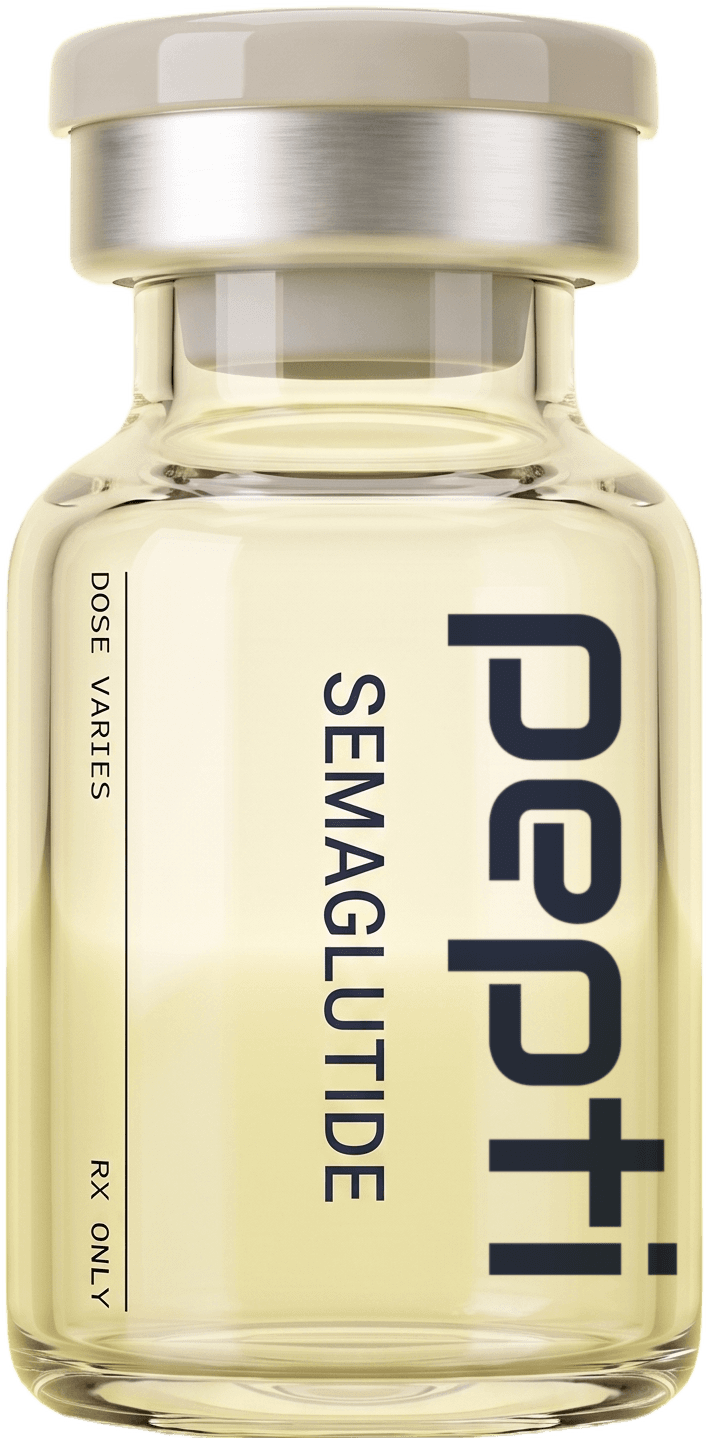
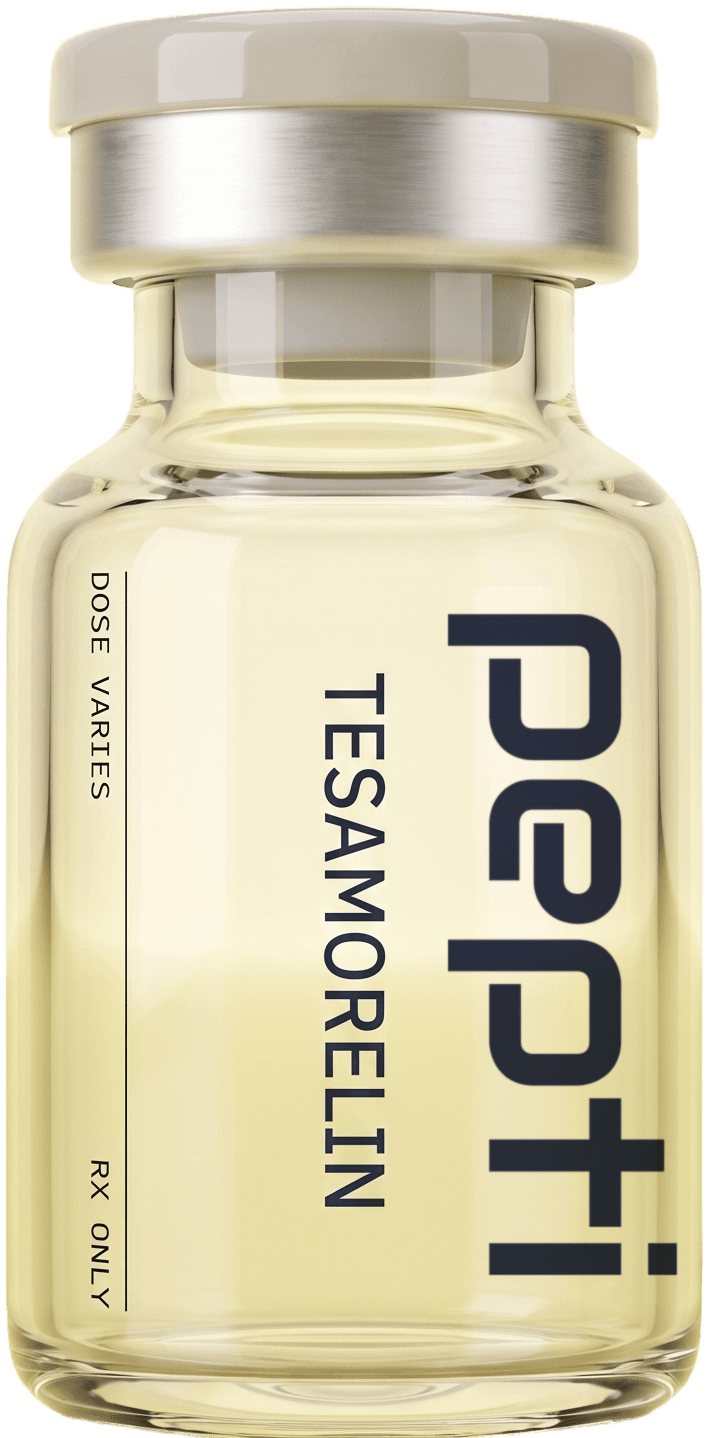
Tirzepatide and MOTS-c are sometimes mentioned in the same breath as "metabolic" injections, but only one of them has human evidence for weight. Tirzepatide is a once-weekly peptide that activates two gut hormone receptors, GIP and GLP-1, acting on appetite, stomach emptying and insulin; its large randomised trials measured body weight, and in a head-to-head trial it produced more weight loss than semaglutide. MOTS-c is a 16-amino-acid peptide encoded in mitochondrial DNA, described in mouse and cell work as activating AMPK in muscle, with no human treatment trials. Tirzepatide is the weight medication; MOTS-c is sometimes prescribed alongside it for training and muscle-energy reasons, and no trial has tested the pairing. Both are prescription-only, compounded by a licensed US pharmacy, and neither compounded product is FDA approved.
This page explains each on its own terms, puts them side by side, covers what the research does and does not show, where each stands with the FDA, how each is dosed, what each costs at Pepti, and what is known about taking them together.
MOTS-c vs Tirzepatide
The short answer
| If your main goal is | The usual prescription | What is in it | Price |
|---|---|---|---|
| Appetite and body weight, dual-receptor option | Tirzepatide | Dose-specific 2 mL vials, one strength per dose step | From $159/mo, priced by dose |
| Appetite and body weight, single-receptor option | Semaglutide | Dose-specific vials, one strength per dose step | From $99/mo, priced by dose |
| Muscle fuel handling and training tolerance | MOTS-c | 10 mg MOTS-c in a 5 mL vial | $259/mo |
| Several body-composition targets in one vial | PHYSIQ Blend | Tesamorelin, ipamorelin, AOD-9604 and MOTS-c | $289/mo |
| MOTS-c with gut and repair peptides | FUSION Blend | BPC-157, MOTS-c, 5-Amino-1MQ and tesamorelin | $279/mo |
Every figure is an all-in monthly price covering the medication, physician review, refill management and shipping. There is no separate membership fee. Tirzepatide is priced by strength, from $159 a month at 2.5 mg to $319 at 15 mg. Current pricing always lives on each product page.
MOTS-c vs Tirzepatide
Tirzepatide on its own terms
What it is
Tirzepatide is a 39-amino-acid peptide built on the backbone of GIP, one of the two gut incretin hormones, engineered to activate both the GIP receptor and the GLP-1 receptor. Its half-life is about five days, so it is injected once a week. It is not a stimulant. The full reference is at what is tirzepatide.
How it is described to work
- Glucose-dependent insulin release. Insulin is released only when blood glucose is raised, and glucagon is suppressed.
- Slower stomach emptying. Fullness lasts longer, which also explains the most common side effects.
- Appetite signalling in the brain. Receptors in the hypothalamus and brainstem regulate hunger; patients most often describe "food noise" going quiet.
- A second receptor. The GIP action is the difference from semaglutide, and tirzepatide's trials also measured insulin sensitivity and sleep apnoea.
What human data exists for tirzepatide
A very large amount, for the FDA-approved versions alongside diet and activity counselling:
Study Who What it measured SURMOUNT-1, New England Journal of Medicine, 2022 2,539 adults with obesity, 72 weeks Body weight at three doses against placebo SURMOUNT-5, New England Journal of Medicine, 2025 751 adults with obesity, open-label, 72 weeks Tirzepatide against semaglutide; more weight loss and a larger fall in waist circumference on tirzepatide These are trial results for the approved products at full trial doses. No trial has tested a compounded vial, and none forecasts what any individual will see.
MOTS-c vs Tirzepatide
MOTS-c on its own terms
What it is
MOTS-c is a 16-amino-acid peptide whose gene sits in the mitochondrial genome rather than the cell nucleus. It was identified in a 2015 paper in Cell Metabolism from the University of Southern California. It is not a GLP-1, does not act on GIP, is not described as acting on appetite, and is not a stimulant. The full reference is at what is MOTS-c.
How it is described to work
- Folate cycle and AMPK. In cultured cells it was reported to slow the folate cycle, letting AICAR build up, which activates AMPK, the low-fuel sensor exercise also switches on. Skeletal muscle appeared to be the main target.
- Insulin sensitivity in mice. The 2015 work reported treated mice were protected from age-related and high-fat-diet insulin resistance.
- A genetic clue in people. A 2021 paper in Aging linked an East Asian mitochondrial DNA variant that changes one amino acid in MOTS-c with more type 2 diabetes in men across three cohorts totalling 27,527 people; the variant peptide lost its insulin-sensitising activity in mice and cells.
- The exercise link. A 2021 Nature Communications paper reported better physical performance in treated mice, and that exercise raised the body's own MOTS-c in people.
What human data exists for MOTS-c
There are no randomised controlled trials of MOTS-c in humans. The human data is observational, measuring the body's own MOTS-c or its genetic variants. The closest thing to a treatment trial was a modified analogue, CB4211, in a small four-week Phase 1b study reported by its developer in 2021; it is a different molecule and the program did not advance.
MOTS-c vs Tirzepatide
Head to head
| Tirzepatide | MOTS-c | |
|---|---|---|
| Class | Dual GIP and GLP-1 receptor agonist | Mitochondrial-derived signalling peptide |
| Length | 39 amino acids | 16 amino acids |
| Acts on | Appetite, stomach emptying, insulin, insulin sensitivity | Described as activating AMPK in muscle |
| Human treatment trials | Very large, for the approved versions | None |
| What the trials measured | Body weight, glucose, sleep apnoea | Not applicable; mouse work measured insulin resistance and physical performance |
| Approved product with this molecule | Yes | No |
| Schedule at Pepti | Once weekly | Monday through Friday mornings |
| Volume per dose | 0.50 mL (50 units) at every strength | 0.25 mL (25 units) |
| Doses per vial | 4, one 28-day fill | 20, about 4 weeks |
| Common side effects | Nausea, diarrhoea, vomiting, constipation, reduced appetite | Injection-site reactions; transient jitteriness in some people |
| Tested sport | Not among prohibited classes; confirm your own medication | On the WADA Prohibited List at all times |
| Price at Pepti | From $159 a month | $259 a month |
The insulin-sensitivity overlap, and why it does not make them equivalent
The one place the two stories touch is insulin sensitivity. Tirzepatide's trials measured it in people. MOTS-c's case for it is mouse work and a genetic association in people. A shared topic is not shared evidence: one has been tested by injection in thousands of humans and the other has not been tested by injection in any. For body weight specifically, the comparison is not close.
MOTS-c vs Tirzepatide
Can you take MOTS-c with tirzepatide?
They act through unrelated pathways. Tirzepatide reduces appetite, and MOTS-c is described in animal work around fuel handling in muscle. Some patients use MOTS-c, or a blend containing it, alongside a GLP-1. What is known and not known:
- No trial has tested the pairing. Nothing shows MOTS-c adds weight loss on top of tirzepatide.
- What prescribers describe is subtle, such as better training tolerance and steadier afternoon energy, not a weight effect.
- They are separate prescriptions on separate schedules. Tirzepatide once a week; MOTS-c on weekday mornings. No Pepti vial combines a GLP-1 with MOTS-c.
- Blends with tesamorelin need glucose attention. PHYSIQ and FUSION contain tesamorelin, which can raise blood glucose; for anyone taking one of those with a GLP-1, glucose is what the physician watches.
- Never combine tirzepatide with semaglutide or any other GLP-1 medication.
The full list of common pairings and what not to combine is in what peptides can you take with tirzepatide. Protein, resistance training and a deliberate approach to meals remain the countermeasures with the most behind them.
MOTS-c vs Tirzepatide
Who suits which
Tirzepatide
Tirzepatide is the usual choice when appetite and total body weight are the problem and the dual-receptor option is wanted; it produced more weight loss than semaglutide in SURMOUNT-5. Semaglutide has the longer track record and the lower price. Semaglutide vs tirzepatide covers that choice.
MOTS-c
MOTS-c suits someone who is training and wants something described around muscle energy and fuel handling, who accepts that its human evidence is blank, and who does not compete in a tested sport. On its own, it is not a weight program.
Both
Someone on tirzepatide who is training may be prescribed MOTS-c, or a blend containing it, alongside. That choice is set by your physician after reviewing your intake. MOTS-c vs semaglutide covers the same question for the single-receptor GLP-1.
MOTS-c vs Tirzepatide
Where each stands with the FDA
| Tirzepatide | MOTS-c | |
|---|---|---|
| Approved product | Approved for type 2 diabetes in May 2022 and chronic weight management in November 2023 | None |
| Shortage history | Shortage declared resolved 2 October 2024, reaffirmed 19 December 2024 | Not applicable |
| Bulks list | Not applicable | Category 2 from 2023; removed 15 April 2026; advisory committee voted 7 to 5, two abstentions, on 23 July 2026 to recommend adding it to the 503A Bulks List |
| Pending action | 30 April 2026 proposal to exclude from the 503B bulks list, not final | Final FDA determination pending |
| Compounded status | Not FDA approved; 503A compounding for an identified patient where the prescriber documents the reason | Not FDA approved |
The 503B proposal concerns outsourcing facilities that compound in bulk; it does not by itself change the 503A pathway under which a pharmacy compounds for a named patient. Are peptides FDA approved explains the difference between not approved and not legal.
MOTS-c vs Tirzepatide
Dosing, side by side
Both are injected under the skin (subcutaneously), rotating sites.
Tirzepatide is once weekly on a six-step ladder. Every step is its own 2 mL vial, concentrated so that the same 0.50 mL draw, 50 units on a U-100 syringe, delivers that step's dose:
| Weekly dose | Vial | Concentration | Draw | Doses per vial |
|---|---|---|---|---|
| 2.5 mg | 10 mg per 2 mL, with glycine | 5 mg/mL | 0.50 mL, 50 units | 4 |
| 5 mg | 20 mg per 2 mL | 10 mg/mL | 0.50 mL, 50 units | 4 |
| 7.5 mg | 30 mg per 2 mL, with glycine | 15 mg/mL | 0.50 mL, 50 units | 4 |
| 10 mg | 40 mg per 2 mL | 20 mg/mL | 0.50 mL, 50 units | 4 |
| 12.5 mg | 50 mg per 2 mL | 25 mg/mL | 0.50 mL, 50 units | 4 |
| 15 mg | 60 mg per 2 mL | 30 mg/mL | 0.50 mL, 50 units | 4 |
Because the units never change, the dose is set by the vial, not the draw; check the strength on the label each fill. The full chart is at tirzepatide dosing chart.
MOTS-c is 0.25 mL, 25 units, Monday through Friday mornings. At 2 mg/mL that is 0.5 mg per dose (math only), 2.5 mg a week, and 20 doses per 5 mL vial, about four weeks. More at MOTS-c dosage.
Your physician sets your directions after reviewing your intake, and they are printed on the vial. Refills run every 28 days, one vial per fill. Both ship refrigerated with ice packs, with sterile syringes and alcohol prep pads.
MOTS-c vs Tirzepatide
Side effects
Tirzepatide. Nausea, diarrhoea, vomiting, constipation and reduced appetite are the most common, mostly around dose increases, usually easing as the body adjusts. Less common but important: pancreatitis, gallbladder disease and dehydration. On insulin or a sulfonylurea, low blood sugar is possible. The approved labels carry a warning about thyroid C-cell tumours seen in rodents. More at tirzepatide side effects and GLP-1 nausea and how to manage it.
MOTS-c. Mostly injection-site redness, mild soreness or occasional bruising. Some people describe transient jitteriness, a faster pulse or mild light-headedness in the hour or two after a morning dose, particularly early on. More at MOTS-c side effects.
Message your care team about any side effect that does not settle. Call 911 for severe, persistent abdominal pain, a reaction that is severe, or difficulty breathing.
MOTS-c vs Tirzepatide
Who should not take them, or should discuss it first
| Situation | Tirzepatide | MOTS-c |
|---|---|---|
| Pregnancy or breastfeeding | Not used | Not used; safety data is absent |
| Personal or family history of medullary thyroid carcinoma or MEN 2 | Contraindicated | Not a described concern |
| History of pancreatitis | Needs careful discussion | Not a described concern |
| Insulin or a sulfonylurea | Raise it at intake; low blood sugar is possible | Raise it at intake |
| Tested athletes | Confirm your own medication | Prohibited at all times by WADA |
MOTS-c vs Tirzepatide
What the evidence shows, honestly
Tirzepatide has among the strongest human evidence of anything in the Pepti catalogue, for the FDA-approved versions those trials studied. MOTS-c has mouse and cell work, a genetic association in people, observational data on the body's own peptide, and no human treatment trial. No trial has tested a compounded vial of either, and no trial has tested them together. Any provider presenting MOTS-c as working like tirzepatide, or a tirzepatide "stack" as shown to work better than tirzepatide alone, is overstating what exists.
MOTS-c vs Tirzepatide
Where to get tirzepatide or MOTS-c prescribed
Neither can be bought legitimately without a prescription. Sites selling them "for research use only" are not accountable for what is in the vial. The prescription route:
- Complete a free online intake covering your history, medications and what you want help with.
- A physician licensed in your state reviews it, usually within 24 hours.
- If it is appropriate, a PCAB-accredited, FDA-registered US 503A pharmacy compounds it to that prescription. Lot test results are published at /quality/lab-results.
- It ships refrigerated with your directions printed on the vial.
- Your care team stays reachable for questions.
Step-by-step pages: how to get tirzepatide prescribed online and how to get MOTS-c prescribed online.
References
What this is based on.
References
- Jastreboff AM, Aronne LJ, Ahmad NN, et al.. Tirzepatide Once Weekly for the Treatment of Obesity (SURMOUNT-1) · New England Journal of Medicine (2022) · PMID 35658024
- Garvey WT, Frias JP, Jastreboff AM, et al.. Tirzepatide once weekly for the treatment of obesity in people with type 2 diabetes (SURMOUNT-2) · Lancet (2023) · PMID 37385275
- Frías JP, Davies MJ, Rosenstock J, et al.. Tirzepatide versus Semaglutide Once Weekly in Patients with Type 2 Diabetes (SURPASS-2) · New England Journal of Medicine (2021) · PMID 34170647
- Inagaki N, Takeuchi M, Oura T, et al.. Effects of subcutaneous tirzepatide versus placebo or semaglutide on pancreatic islet function and insulin sensitivity in adults with type 2 diabetes: a multicentre, randomised, double-blind, parallel-arm, phase 1 clinical trial · The Lancet Diabetes & Endocrinology (2022) · PMID 35468322
- Malhotra A, Grunstein RR, Fietze I, et al.. Tirzepatide for the Treatment of Obstructive Sleep Apnea and Obesity (SURMOUNT-OSA) · New England Journal of Medicine (2024) · PMID 38912654
- Nicholls SJ, Pavo I, Bhatt DL, et al.. Cardiovascular Outcomes with Tirzepatide versus Dulaglutide in Type 2 Diabetes (SURPASS-CVOT) · New England Journal of Medicine (2025) · PMID 41406444
- Aronne LJ, Sattar N, Horn DB, et al.. Continued Treatment With Tirzepatide for Maintenance of Weight Reduction in Adults With Obesity: The SURMOUNT-4 Randomized Clinical Trial · JAMA (2024) · PMID 38078870
- Pasternak B, Wintzell V, Hviid A et al.. Glucagon-like peptide 1 receptor agonist use and risk of thyroid cancer: Scandinavian cohort study · BMJ (2024) · PMID 38683947
- Quddos F, Hubshman Z, Tegge A, et al.. Semaglutide and Tirzepatide reduce alcohol consumption in individuals with obesity · Scientific Reports (2023) · PMID 38017205
- Drummond RF, Seif KE, Reece EA. Glucagon-like peptide-1 receptor agonist use in pregnancy: a review · Am J Obstet Gynecol (2025) · PMID 39181497
- Wang S, Sun J, Wang J, et al.. Does obesity based on body mass index affect semen quality? A meta-analysis and systematic review from the general population rather than the infertile population · Andrologia (2021) · PMID 34028074
- Urva S, Coskun T, Loghin C, et al.. The novel dual glucose-dependent insulinotropic polypeptide and glucagon-like peptide-1 (GLP-1) receptor agonist tirzepatide transiently delays gastric emptying similarly to selective long-acting GLP-1 receptor agonists · Diabetes, Obesity and Metabolism (2020) · PMID 32519795
Citations are provided for educational purposes. They do not constitute medical advice. Always discuss any peptide protocol with your prescribing physician.
Common questions
MOTS-c vs Tirzepatide, answered.
No. Tirzepatide activates the GIP and GLP-1 receptors and acts on appetite, stomach emptying and insulin. MOTS-c is a mitochondrial peptide described in mouse work around AMPK in muscle.
Tirzepatide is the one with large human trials for weight. MOTS-c has mouse studies only and is not prescribed as a weight tool on its own.
Some patients use MOTS-c, or a blend containing it, alongside a GLP-1. No trial has tested the pairing. They are separate prescriptions on separate schedules.
In mice, MOTS-c was reported to protect against diet-induced insulin resistance, and a genetic variant of it is linked with type 2 diabetes in men. No human trial has tested injected MOTS-c for insulin sensitivity.
It is not described as acting on appetite. Its described mechanism is fuel handling in muscle.
No trial shows that. It is a rationale some people give, not a finding. Protein and resistance training are the countermeasures with the most behind them.
At Pepti, tirzepatide starts at $159 a month and steps up with the dose to $319 at 15 mg. MOTS-c is $259 a month. Every figure is all-in.
There is no promised timeline for either. The tirzepatide weight trials ran 72 weeks and measured body weight; the MOTS-c work measured insulin resistance and physical performance in mice. Neither translates into a timeline for an individual.
Yes. It is on the World Anti-Doping Agency Prohibited List at all times, under S4.4 metabolic modulators. GLP-1 receptor agonists are not among the prohibited classes, but a tested athlete should confirm their own medication.
The compounded vials are not; compounded medications are not FDA approved. Tirzepatide is the active ingredient of FDA-approved versions. MOTS-c is in no approved product.
No. Bloodwork is not required for any Pepti treatment. If your physician wants labs for your care, they'll ask through your account. The free assessment goes to a physician licensed in your state. A consultation does not guarantee a prescription.
Next step
See what a physician recommends for you.
A licensed physician in your state reviews your intake and decides what is appropriate. A consultation does not guarantee a prescription.