Weight Loss · Reference
AOD-9604 Side Effects: What the Trials Reported and What to Watch For
This page is a practical reference: what has been reported, where each report comes from, what the FDA's reviewers flagged, what to report and when, and who should not take AOD-9604. The broader picture, including the trial results for weight and the FDA history in full, is in what is AOD-9604.
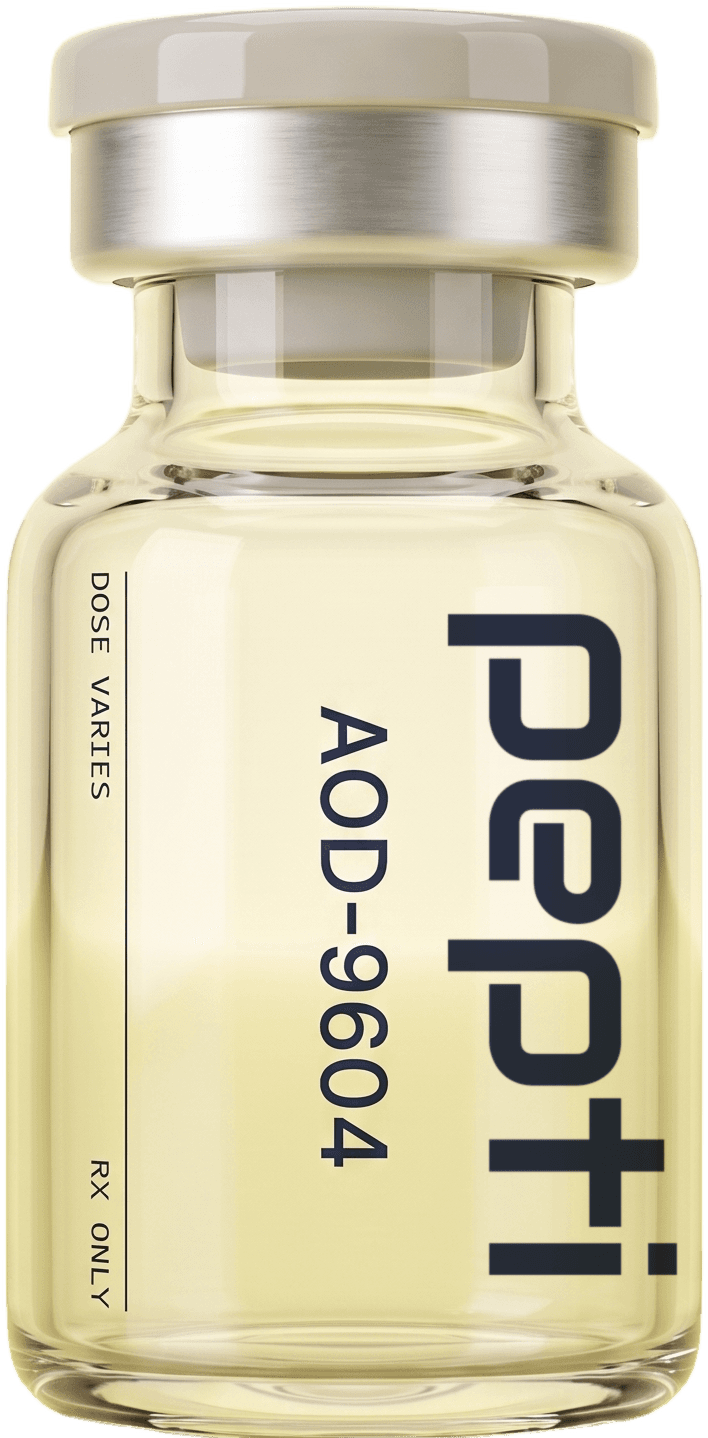
The side effects reported with AOD-9604 are mostly mild: with the injection, prescribers mainly see redness, soreness or bruising at the injection site. In the six human trials, intravenous dosing was associated with headache, fatigue, dizziness and low blood sugar, and oral dosing with headache, diarrhea, flatulence, increased appetite and nausea, more so at the highest oral dose. Adverse events were similarly distributed between AOD-9604 and placebo, IGF-1 did not change, glucose tolerance was not impaired and no antibodies were detected. No human trial has used the subcutaneous injection that is actually prescribed, and the longest trial ran 24 weeks.
This page is a practical reference: what has been reported, where each report comes from, what the FDA's reviewers flagged, what to report and when, and who should not take AOD-9604. The broader picture, including the trial results for weight and the FDA history in full, is in what is AOD-9604.
AOD-9604 Side Effects
The short answer
| Side effect | Where it was reported | How to read it | What to do |
|---|---|---|---|
| Injection-site redness, mild soreness, occasional bruising | What prescribers report with the subcutaneous injection | The most common thing people notice | Rotate sites; report it if it spreads or does not settle |
| Headache | Both the intravenous and the oral trials | Also reported on placebo | Report it if it persists |
| Fatigue, dizziness | The intravenous trials | Small studies, a different route | Report it if it persists |
| Low blood sugar | The intravenous trials, unspecified | Matters most if you take a glucose-lowering medication | Treat it, then report it |
| Diarrhea, flatulence, nausea | The oral trials, more so at the highest dose | A different route from the injection | Report it if it persists |
| Increased appetite | The oral trials | A different route from the injection | Report it if it persists |
| Swelling of the face, lips or throat, widespread rash, trouble breathing | Not a trial finding; possible with any injected peptide | A serious allergic reaction | Call 911 or get emergency care first |
The medication this page covers:
| Product | What is in it | Price |
|---|---|---|
| AOD-9604 | 5 mL multi-dose vial, AOD-9604 2 mg/mL (10 mg per vial) | $229/mo |
The price is all-in: medication, physician review, refill management and shipping, with no membership fee. AOD-9604 at Pepti is compounded by a PCAB-accredited, FDA-registered US 503A pharmacy. Compounded medications are not FDA approved, and AOD-9604 has no FDA-approved product of any kind.
AOD-9604 Side Effects
Why AOD-9604 has more safety data than most peptides
Most compounded peptides have no human trials at all. AOD-9604 has six. Between roughly 2001 and 2007 its developer, the Australian company Metabolic Pharmaceuticals, ran randomised, double-blind, placebo-controlled trials enrolling close to 900 people, mostly with obesity. The trials were designed to test weight loss, and the largest, OPTIONS, did not find statistically significant weight loss over placebo. But they produced a safety record, which a 2013 paper in the Journal of Endocrinology and Metabolism, written by people connected to the company, summarised across all six.
| Trial | Who | Route |
|---|---|---|
| Intravenous dose-escalation | 15 men | Intravenous |
| Second intravenous study | 23 men | Intravenous |
| Two short oral studies | 17 and 36 men | Oral |
| 12-week oral study | 300 men and women with obesity | Oral, five daily doses |
| OPTIONS, 24 weeks | 536 enrolled, 502 randomised | Oral, 0.25, 0.5 or 1 mg daily |
What that record reported:
- Adverse events similarly distributed between AOD-9604 and placebo.
- No change in IGF-1, the growth factor that growth hormone raises.
- No impairment of glucose tolerance.
- No anti-AOD-9604 antibodies detected in the subjects tested.
- No serious adverse event judged related to treatment.
Metabolic Pharmaceuticals also ran chronic oral toxicology in rats and monkeys and genotoxicity assays, and reported no concern. The FDA's reviewers read the same package as inconclusive because the published summary lacked data tables.
AOD-9604 Side Effects
Common AOD-9604 side effects
With the injection
What gets reported clinically with subcutaneous AOD-9604 is mostly at the injection site: redness, mild soreness and occasional bruising. Rotating sites between the abdomen and thigh, so the same spot is not used repeatedly, is the usual answer. Technique is in how to inject peptides safely. Because no trial has used the injected route, there is no reliable frequency for any of these.
On intravenous dosing in the trials
The two small intravenous studies most commonly reported headache, fatigue, dizziness and unspecified low blood sugar. They also reported a rise in circulating free fatty acids within hours of a dose, which is a blood marker rather than a side effect.
On oral dosing in the trials
The oral studies most commonly reported headache, diarrhea, flatulence, increased appetite and nausea, more so at the highest oral dose. Oral tablets reach the gut directly, so the gut effects in particular may not carry over to an injection. Nobody has tested whether they do.
Reading the placebo comparison
Adverse events were reported as similarly distributed between the peptide and placebo groups. That matters: in a trial, people on a dummy treatment also report headaches, tiredness and stomach upset. Not everything you feel after starting AOD-9604 is the medication, but anything that persists is worth telling your care team.
AOD-9604 Side Effects
What AOD-9604 does not appear to do
Several effects people worry about with growth hormone did not show up with AOD-9604. It is a fragment of growth hormone, not growth hormone itself, and it is not a secretagogue.
| Effect seen with growth hormone | What was reported with AOD-9604 | Evidence |
|---|---|---|
| Raised IGF-1 | No change | Human, across the six trials |
| Higher blood glucose, lower insulin sensitivity | Not seen; glucose tolerance not impaired | Animal and human |
| Binding the growth hormone receptor | No binding, no cell proliferation | Cell |
| Antibodies against the peptide | None detected in subjects tested | Human |
The water retention, joint aches and tingling hands associated with growth hormone secretagogues are not part of AOD-9604's reported profile. If you take AOD-9604 inside the SHRED or PHYSIQ blends, the other peptides in the vial do act on the growth hormone axis and bring their own side effects; see below.
AOD-9604 Side Effects
What the FDA flagged in 2024
The FDA's reviewers went through AOD-9604's safety record in 2024, ahead of the advisory committee vote on 4 December 2024 that went 0 to 12 against adding it to the 503A Bulks List for obesity. Two points from that review are worth knowing.
The cancers in the 300-patient study. Five serious adverse events in the 12-week oral study were cancers of various types. The investigators judged them unrelated to treatment, and none occurred in the highest-dose group. The FDA noted that the published summary did not contain enough detail to confirm that judgement either way. That is not evidence that AOD-9604 causes cancer; it is a gap in the record.
The injected route has never been tested. No human trial has used subcutaneous AOD-9604. The FDA's general concern about injected peptides, that they can provoke an immune response and that peptide impurities and aggregation add to that risk, applies here as it does to every compounded peptide injection. When AOD-9604 sat in Category 2 of the FDA's interim 503A list in 2023, the stated concerns were immunogenicity risk for certain routes, peptide impurities and characterisation, limited safety information, and serious adverse events possibly associated with the peptide without clear causality. It left Category 2 on 27 September 2024 when the nominations were withdrawn.
Those concerns are the reason the pharmacy matters. Lot test results for Pepti's medications are published at /quality/lab-results.
AOD-9604 Side Effects
What is not known
| Question | What exists |
|---|---|
| Side effects of the subcutaneous injection, with frequencies | No trial; clinical reports only |
| Safety beyond 24 weeks | Nothing; 24 weeks was the longest trial |
| Drug interactions | No established interaction list; no trial was designed to produce one |
| Safety in pregnancy or breastfeeding | No data; it is not used |
| Safety alongside a GLP-1 medication | No trial of the combination |
Because there is no interaction list, the intake asks for every medication and supplement you take, and a physician reviews it rather than a form. Anything that lowers blood sugar matters most, given the low blood sugar recorded in the intravenous studies.
AOD-9604 Side Effects
When to message your care team
Message your care team, through your account, if:
- Injection-site redness, swelling or soreness spreads, gets worse, or does not settle within a few days.
- Headache, dizziness, fatigue, nausea or diarrhea persists.
- You notice shakiness, sweating or confusion that could be low blood sugar, especially if you take insulin or another glucose-lowering medication. Treat it first, then report it.
- You become pregnant or are planning a pregnancy.
- You start any new medication or supplement.
- Your label and your syringe seem not to match. Do not inject; ask first.
Do not change your own dose in response to a side effect. Your physician sets your directions after reviewing how you are doing, and any new directions are printed on the next label.
AOD-9604 Side Effects
When to get emergency care
Call 911 or go to the nearest emergency department for:
- Swelling of the face, lips, tongue or throat.
- Trouble breathing or swallowing.
- A widespread rash or hives with feeling faint.
- Any reaction that is severe or spreading quickly.
Get emergency care first, then tell your physician.
AOD-9604 Side Effects
AOD-9604 in the SHRED and PHYSIQ blends
AOD-9604 is also prescribed inside two blends, and in a blend the side effects are those of every peptide in the vial.
| Blend | What else is in it | What that adds |
|---|---|---|
| SHRED, $279/mo | CJC-1295, ipamorelin, MOTS-c | Peptides that act on the growth hormone axis, plus MOTS-c |
| PHYSIQ, $289/mo | Tesamorelin, ipamorelin, MOTS-c | Peptides that act on the growth hormone axis, plus MOTS-c |
Fluid retention, joint aches and hand tingling are classic growth hormone effects and usually mean the dose is higher than the person needs; they come from the secretagogues, not from AOD-9604. Tesamorelin also reduces insulin sensitivity, so existing diabetes or borderline glucose needs discussing before PHYSIQ. MOTS-c is associated with transient jitteriness, a faster pulse or mild light-headedness after a dose, mostly early in a course. No study has tested either blend as a blend. More in what is SHRED and what is PHYSIQ.
AOD-9604 Side Effects
Who should not take AOD-9604, or should discuss it first
| Situation | Status |
|---|---|
| Pregnancy or breastfeeding | Not used; safety data is absent |
| Tested athletes | Prohibited at all times under the WADA List, S2.2.3, as a growth hormone fragment; a urine detection method has been published |
| Taking insulin or another glucose-lowering medication | Needs discussion, because low blood sugar was recorded in the intravenous studies |
| Any cancer history | Put it on the intake, given the gap the FDA noted in the 300-patient study |
| Previous reaction to AOD-9604 or an ingredient of the vial | Rules it out |
| Under 18 | Pepti prescribes to adults only |
Bloodwork is not required for any Pepti treatment. If your physician wants labs for your care, they'll ask through your account. Athletes should read peptides for athletes and do peptides show up on a drug test.
AOD-9604 Side Effects
What the evidence shows, honestly
AOD-9604 has a cleaner and better documented safety record than most compounded peptides, because six randomised trials were run. Across them, adverse events looked similar to placebo, IGF-1 and glucose tolerance were unaffected, and no antibodies were detected. The limits are real: the trials used oral and intravenous dosing, not injection; the longest lasted 24 weeks; the main safety summary was written by people connected to the developer; and the FDA's reviewers found parts of the record too thin to confirm. A clean safety record is also not evidence that the peptide does what it is prescribed for, and the largest trial found no significant weight loss over placebo. The benefits picture is in AOD-9604 benefits, and the general guide is peptide side effects: what to watch for.
AOD-9604 Side Effects
Where to get AOD-9604 prescribed
AOD-9604 cannot be bought legitimately without a prescription. Products sold "for research use only" have no accountable pharmacy behind their identity, purity, sterility or concentration, which are the very things the FDA's injected-peptide concerns are about. The prescription route:
- Complete a free online intake covering your history, medications and what you want help with.
- A physician licensed in your state reviews it, usually within 24 hours.
- If it is appropriate, a PCAB-accredited, FDA-registered US 503A compounding pharmacy prepares it to that prescription. Lot test results are published at /quality/lab-results.
- It ships refrigerated with ice packs, with sterile syringes and alcohol prep pads, and your directions printed on the vial.
- Your care team stays reachable for side effects and dose questions. Refills run every 28 days, one vial per fill.
Pepti is cash-pay and does not bill insurance. The step-by-step page is how to get AOD-9604 prescribed online, and the dose arithmetic is in AOD-9604 dosage.
References
What this is based on.
References
- Heffernan M, Summers RJ, Thorburn A et al.. The effects of human GH and its lipolytic fragment (AOD9604) on lipid metabolism following chronic treatment in obese mice and beta(3)-AR knock-out mice · Endocrinology (2001) · PMID 11713213
- Ng FM, Sun J, Sharma L et al.. Metabolic studies of a synthetic lipolytic domain (AOD9604) of human growth hormone · Hormone Research (2000) · PMID 11146367
- Heffernan MA, Thorburn AW, Fam B et al.. Increase of fat oxidation and weight loss in obese mice caused by chronic treatment with human growth hormone or a modified C-terminal fragment · International Journal of Obesity and Related Metabolic Disorders (2001) · PMID 11673763
- Wilding J. AOD-9604 Metabolic · Current Opinion in Investigational Drugs (2004) · PMID 15134286
- Kwon DR, Park GY. Effect of Intra-articular Injection of AOD9604 with or without Hyaluronic Acid in Rabbit Osteoarthritis Model · Annals of Clinical and Laboratory Science (2015) · PMID 26275694
- Cox HD, Smeal SJ, Hughes CM et al.. Detection and in vitro metabolism of AOD9604 · Drug Testing and Analysis (2015) · PMID 25208511
- Orlovius AK, Thomas A, Schänzer W et al.. AOD-9604 does not influence the WADA hGH isoform immunoassay · Drug Testing and Analysis (2013) · PMID 24124033
- Mendias CL, Awan TM. Safety and Efficacy of Approved and Unapproved Peptide Therapies for Musculoskeletal Injuries and Athletic Performance · Sports Medicine (2026) · PMID 41966639
Citations are provided for educational purposes. They do not constitute medical advice. Always discuss any peptide protocol with your prescribing physician.
Common questions
AOD-9604 Side Effects, answered.
With the injection, mostly injection-site redness, mild soreness and occasional bruising. In the human trials, intravenous dosing was associated with headache, fatigue, dizziness and low blood sugar, and oral dosing with headache, diarrhea, flatulence, increased appetite and nausea. Adverse events were similar between AOD-9604 and placebo.
It has more human safety data than most compounded peptides: six randomised trials with no serious adverse event judged related to treatment, no IGF-1 change and no antibodies detected. But no trial used the injected route, the longest ran 24 weeks, and the FDA's reviewers found parts of the record inconclusive. Compounded medications are not FDA approved.
Headache was among the most commonly reported effects in both the intravenous and the oral trials. It was also reported on placebo. Report a headache that persists.
Unspecified low blood sugar was recorded in the intravenous trials. Glucose tolerance was not impaired across the trials. If you take insulin or another glucose-lowering medication, it needs to be on your intake.
Those are growth hormone effects, and AOD-9604 did not raise IGF-1 in the trials. They are not part of its reported profile. If you take it in the SHRED or PHYSIQ blend, the secretagogues in the vial can cause them.
No. IGF-1 did not change across the six human trials, and cell work reports it does not bind the growth hormone receptor.
There is no evidence that it does. In one 300-patient oral study, five serious adverse events were cancers, judged unrelated by the investigators and absent from the highest-dose group; the FDA noted the published summary lacked detail to confirm that either way. Any cancer history belongs on your intake.
Nausea, diarrhea and flatulence were reported on oral dosing, more so at the highest dose. With the injection, prescribers mostly report injection-site reactions. Report nausea that persists.
Swelling of the face, lips or throat, trouble breathing or swallowing, or a widespread rash with feeling faint. Call 911 or get emergency care first, then tell your physician.
A standard workplace panel does not look for it. Under the WADA List it is prohibited at all times as a growth hormone fragment, and a urine detection method has been published. Tested athletes should not take it.
Some prescribers combine them, but there is no trial of the combination, so there is no combined side-effect data. Your physician sets your directions after reviewing your full medication list. The free assessment goes to a physician licensed in your state. A consultation does not guarantee a prescription.
Next step
See what a physician recommends for you.
A licensed physician in your state reviews your intake and decides what is appropriate. A consultation does not guarantee a prescription.