— Anti-Aging · Reference
MOTS-c: What It Is, Where to Get It Prescribed, and What It Costs
This page covers what MOTS-c is, the pathways researchers have described, what the published work does and does not establish, where it currently stands with the FDA, how it is dosed, and how to get it prescribed.
— Treatments mentioned
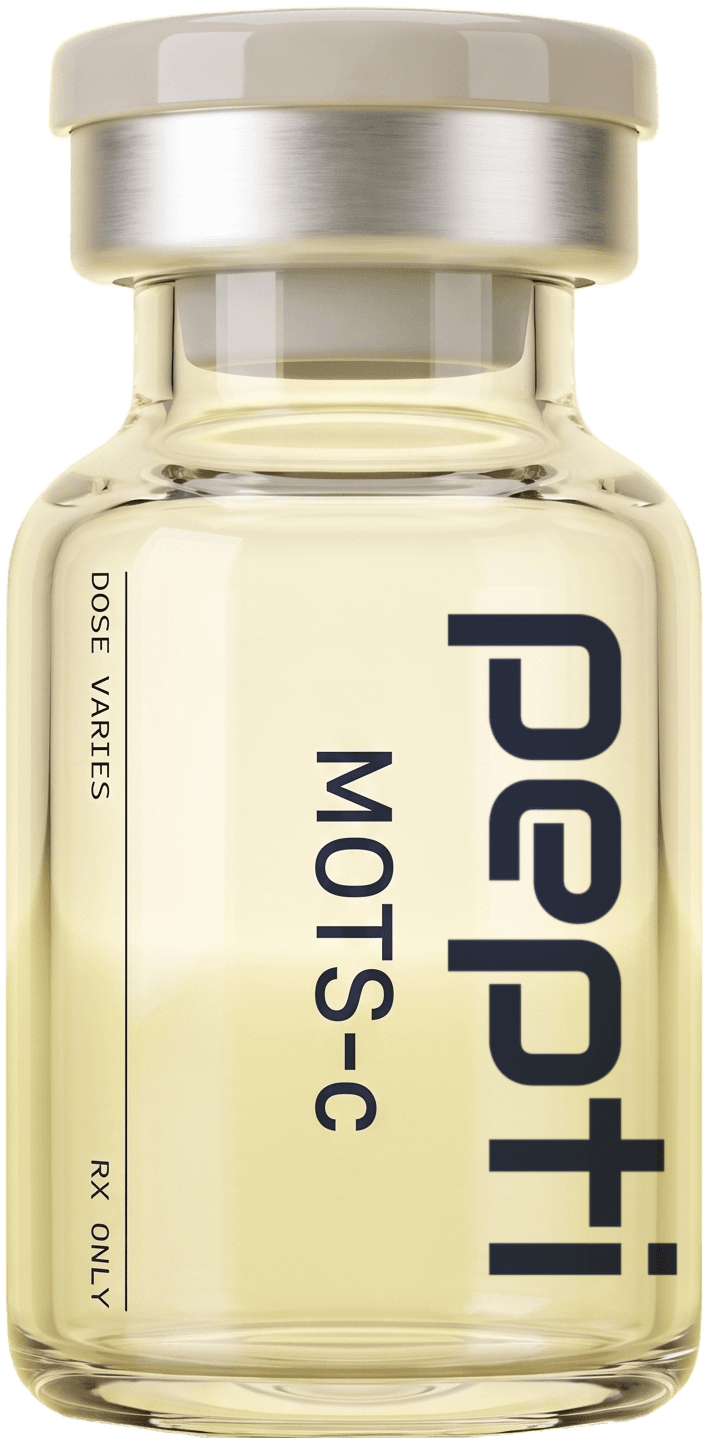
MOTS-c is a prescription injection supplied as 5 mL multi-dose vial, MOTS-C 2 mg/mL (10 mg MOTS-C per vial). The reviewed directions are: Inject 0.25 mL (25 units) subcutaneously Monday through Friday mornings. That is 20 doses per vial, about 4 weeks at Monday through Friday. It requires a prescription from a physician licensed in your state, is compounded by a state-licensed US pharmacy, and is not FDA approved.
This page covers what MOTS-c is, the pathways researchers have described, what the published work does and does not establish, where it currently stands with the FDA, how it is dosed, and how to get it prescribed.
— MOTS-c
What MOTS-c actually is
— A peptide encoded in mitochondrial DNA, not in the nucleus
MOTS-c is a 16-amino-acid peptide, and the unusual thing about it is where its gene sits. Almost every peptide in the body is encoded in the DNA of the cell nucleus. MOTS-c is encoded in the mitochondrial genome — the small, separate loop of DNA that mitochondria carry — inside a short open reading frame in the gene for the 12S ribosomal RNA. It was identified in a 2015 paper in Cell Metabolism from a group at the University of Southern California, and it belongs to a small family, alongside humanin, that changed the picture of mitochondria from energy factories taking orders from the nucleus to organelles that send their own signals back.
— Why the name looks like a code
MOTS-c stands for "mitochondrial open reading frame of the 12S rRNA-c" — a location on the mitochondrial genome, not a function. Pharmacies supply it as the free base or as an acetate salt; both are the same peptide, and the FDA reviewed both forms together in July 2026.
— What it is not
MOTS-c is not a hormone in the classical sense and not a growth hormone secretagogue — it does not act on the pituitary the way ipamorelin or sermorelin do. It is not a GLP-1 medication and does not work through appetite. It is not a stimulant, despite the "cellular energy" language online. And it is not an approved drug for any indication anywhere. The most accurate description is a signalling peptide the body makes in small amounts, which researchers have given to animals in larger amounts to see what changes.
— MOTS-c
How MOTS-c is described to work
Five mechanisms recur in the published work. All of the detail below comes from mouse and cell studies unless a human population is named.
— The folate cycle and AMPK
The central mechanism proposed in the original Cell Metabolism paper (2015) is metabolic rather than receptor-based. In cultured cells the peptide was reported to inhibit the folate cycle and the purine synthesis pathway tethered to it, causing a molecule called AICAR to accumulate. AICAR activates AMPK — the enzyme cells use as a low-fuel sensor, the same one exercise and calorie restriction switch on. So the described chain is: MOTS-c slows one pathway, a by-product builds up, and the cell reads it as a signal to burn rather than store. Skeletal muscle appeared to be the primary target.
— Moving into the nucleus under metabolic stress
A 2018 paper in Cell Metabolism from the same group reported that, when cells are stressed by glucose restriction, MOTS-c travels into the nucleus and changes which nuclear genes are switched on, in an AMPK-dependent way, interacting with stress-responsive transcription factors including NRF2. This is cell work, and the basis for calling MOTS-c a messenger from mitochondria to the nucleus.
— Skeletal muscle, glucose handling and the exercise connection
A 2021 paper in Nature Communications reported that MOTS-c treatment was associated with better physical performance in young, middle-aged and old mice, with changes in skeletal muscle metabolism. The same paper reported that in humans, a bout of exercise raised the body's own MOTS-c in muscle and blood. That human finding is observational — what the body does after exercise, not what happens when the peptide is injected — but it is why MOTS-c is often called an "exercise-mimetic," a label for a proposed mechanism rather than a demonstrated effect in people.
— Adipose tissue and brown fat
A 2019 paper in the Journal of Molecular Medicine used ovariectomised mice, a standard model of post-menopausal metabolic change, and reported more brown-fat activity, less fat accumulation and less inflammatory infiltration in white fat in treated animals, again through AMPK.
— Bone turnover
A 2016 paper in Biochemical and Biophysical Research Communications, also in ovariectomised mice, reported less bone loss on micro-CT in treated animals and that MOTS-c inhibited RANKL-driven osteoclast formation in an AMPK-dependent way. This is why osteoporosis sat alongside obesity as a nominated use at the FDA's 2026 review. Mouse and cell data only.
— MOTS-c
What the research actually shows
— Insulin sensitivity and diet-induced weight gain
This is the founding line of research. In the 2015 Cell Metabolism work, MOTS-c treatment in mice was reported to prevent both age-related insulin resistance and the insulin resistance and weight gain that develop on a high-fat diet. A 2021 paper in Aging added a genetic angle: an East Asian mitochondrial DNA variant that changes one amino acid in MOTS-c was associated, across three cohorts totalling 27,527 people, with a higher prevalence of type 2 diabetes in men — particularly sedentary men — and the variant peptide lost its insulin-sensitising activity in mice and cells.
— Physical capacity and ageing
The 2021 Nature Communications paper reported improved performance on physical tests in mice at every age tested, and that intermittent treatment started very late in life was associated with better physical capacity and a longer healthy lifespan. Those are mouse endpoints, as are the ovariectomy studies most often cited for MOTS-c in women: less fat gain, better glucose tolerance and less bone loss, all in mice.
— What human data exists
This is the part worth reading twice. There are no randomised controlled trials of MOTS-c in humans. What exists in people falls into two categories that should not be blurred together.
The first is observational work measuring the body's own MOTS-c. Exercise raises it in muscle and blood (Nature Communications, 2021). A cross-sectional study of 225 people in Qatar (Frontiers in Endocrinology, 2019) reported lower serum MOTS-c in people with type 2 diabetes than in controls. A Chilean study of ten lean and ten obese adults (Journal of Investigative Medicine, 2018) and a 2025 study of 85 adults in Türkiye (Archives of Endocrinology and Metabolism) both found similar levels with and without obesity. None of these gave anyone MOTS-c.
The second is the closest thing to a human treatment trial, and it was not MOTS-c. CohBar, a company co-founded by the peptide's discoverers, developed a modified analogue called CB4211 and ran a Phase 1a study in 65 healthy adults (ascending doses over one week), then a Phase 1b study: randomised, double-blind and placebo-controlled, once-daily subcutaneous injections for four weeks in 20 adults with obesity and non-alcoholic fatty liver disease. The company reported in 2021 that the primary safety and tolerability endpoint was met with no serious adverse events, and described reductions in the liver enzymes ALT and AST, a fall in glucose, and a trend toward lower body weight on exploratory endpoints. Those were company announcements rather than a peer-reviewed publication, the analogue is a different molecule from the compounded peptide, and the program did not advance beyond Phase 1.
So the honest framing is: a coherent preclinical story, human observational data on the natural peptide, and one small early-phase study of a related analogue. Any page describing MOTS-c as clinically proven for weight, energy or longevity is overstating it.
— What the evidence does not establish
- It does not establish that injected MOTS-c changes weight, glucose, fitness or lifespan in humans. Those trials have not been run.
- It does not establish an effect size or a timeline in people. Anything about "results in X weeks" is prescriber experience or extrapolation from mice.
- It does not establish that raising MOTS-c levels does what naturally high levels correlate with; two of the observational studies found levels rising with insulin resistance, not falling.
- It does not establish long-term safety over years of use, which is why prescribing is course-based and reviewed, and it does not establish efficacy for any condition as an approved treatment.
— MOTS-c
Where MOTS-c stands with the FDA right now
This has changed twice in 2026 and most pages online have not caught up.
MOTS-c was placed in Category 2 of the FDA's interim 503A bulk drug substances list in 2023. On 15 April 2026 the FDA removed MOTS-c from Category 2, one of twelve peptides removed after their original nominations were withdrawn. The FDA was explicit that removal does not by itself establish that a substance meets the 503A criteria; it means the substance is no longer flagged for significant safety concerns while review continues.
On 23 July 2026 the FDA's Pharmacy Compounding Advisory Committee reviewed MOTS-c (free base and acetate) for the nominated uses of obesity and osteoporosis and voted 7–5, with two abstentions, to recommend adding it to the 503A Bulks List. The FDA's own reviewers had recommended against inclusion, citing the absence of human clinical data; the committee voted in favour anyway, by the narrowest margin of the six peptides it recommended.
An advisory committee vote is a recommendation, not a decision. The FDA issues its own determination after weighing the vote, public comment and its scientific review, and adding a substance to the list formally requires rulemaking. As of late September 2026 that determination has not been issued. So the accurate description today is: no longer in Category 2, recommended for the Bulks List on a split advisory vote, awaiting final FDA action. It remains legal to prescribe and dispense, and it is still not an FDA-approved drug product — compounded medications never are.
— MOTS-c
Realistic expectations
These are patterns described by prescribers, not trial endpoints. No human trial tells you what to expect, and a physician decides whether treatment is appropriate at all.
— The first two weeks
Most people report nothing they can point to. Some describe feeling slightly more energetic during training; others mild jitteriness on injection mornings that settles. Neither is a measure of anything, and noticing nothing in this window is normal.
— Weeks two to eight
If MOTS-c does what the animal work describes — shifting muscle toward using fuel rather than storing it — this is the window in which prescribers say they would expect to see it, and why a course is usually at least two vials. What is reported is subtle: better training tolerance, steadier afternoon energy, sometimes changes in fasting glucose or waist measurement. Nobody can put a number on it.
— It is paired with training, or it is a much weaker idea
The mechanism is an exercise-signalling pathway, and the mice in the exercise study were tested on treadmills, not left in cages. Prescribers describe MOTS-c as something taken alongside a training and nutrition plan, not instead of one. A metabolic change from an injection alone is a job the evidence does not support.
— After the course
There is no withdrawal and no rebound described in the literature; it is a peptide the body already makes. Whether anything persists depends on whether habits changed during the course. There is no tapering.
— MOTS-c
When something else makes more sense
A reference that only ever recommends its own product is not much of a reference. Some honest cases where MOTS-c is not the first thing to reach for:
- Weight loss is the actual goal. Semaglutide and tirzepatide have large randomised human trials with weight as the primary endpoint. MOTS-c has none.
- You want MOTS-c as one part of a body-composition protocol. It is more often prescribed inside a blend than alone: PHYSIQ, SHRED and FUSION each combine it with other peptides in one vial.
- Mitochondrial function itself is the concern. SS-31 (elamipretide) targets the mitochondrial inner membrane directly and has its own human trial history; NAD+ addresses a coenzyme rather than a signalling peptide.
- The goal is broader "anti-ageing" rather than metabolism. EUPHORIA pairs MOTS-c with tissue and hormonal peptides; SYNAPSE pairs it with cognitive peptides.
- You have not had metabolic markers measured. If the concern is insulin resistance, at-home blood testing will show whether that is actually the picture.
Your physician will tell you if MOTS-c is not the right tool for what you have described. A consultation does not guarantee a prescription, and being declined is refunded.
— MOTS-c
Strengths available
| Strength | Directions |
|---|---|
| MOTS-C 10mg/5mL | Inject 0.25 mL (25 units) subcutaneously Monday through Friday mornings. |
| MOTS-C 20mg/10mL | Inject 0.50 mL (50 units) subcutaneously Monday through Friday mornings. |
| MOTS-C 30mg/5mL | Inject 0.25 mL (25 units) subcutaneously Monday through Friday mornings. |
| MOTS-C 50mg/5mL | Inject 0.25 mL (25 units) subcutaneously Monday through Friday mornings. |
A higher strength delivers more medication in the same volume. Which one you are prescribed is your physician's decision.
— MOTS-c
Dosing, and how a vial is actually used
— Why the dose is measured in units
The directions are written in millilitres and insulin-syringe units because that is what you can read off the barrel. 0.25 mL is 25 units on a U-100 syringe; the 20mg/10mL strength is directed at 0.50 mL, which is 50 units. The number is printed on your medication.
— Subcutaneous, mornings, Monday to Friday
Subcutaneous means into the fat layer, not the muscle. Abdomen and thigh are the usual sites, rotated. The morning timing places the dose near the day's activity, and the mild alertness some people report is less welcome at night. The five-days-on, two-off pattern is a prescriber convention rather than a trial-derived schedule; the late-life mouse work used intermittent rather than daily dosing. Your directions will say.
— Why a vial covers about four weeks
20 doses at five per week is four weeks, which is why refills run on a 28-day cycle. One vial per fill, always — not a stockpile.
— Storage
Refrigerated, and it ships that way in insulated packaging with ice packs. Keep it in the fridge between doses and out of light. Beyond-use dating runs from first puncture and is printed on the label.
— MOTS-c
Safety and side effects
MOTS-c is a peptide the body already produces, and the published animal work reports it being well tolerated. What gets reported clinically is mostly injection-site: redness, mild soreness, occasional bruising. Because it acts on an energy-sensing pathway, some people describe transient jitteriness, a faster pulse or mild light-headedness in the hour or two after a morning dose, particularly early in a course; this usually settles and is worth telling your physician about if it does not.
There is no established drug-interaction list, because the human trials that would produce one have not been run. That is why the intake asks for every medication you take and a physician reviews it. If you take anything that lowers blood glucose, say so.
One thing is settled: MOTS-c is on the World Anti-Doping Agency Prohibited List at all times, under S4.4 metabolic modulators as an AMPK activator, USADA has stated it is not eligible for a therapeutic use exemption, and a validated plasma test for it was published in 2019. If you compete in a tested sport, this is not a peptide for you.
Stop and contact your physician for any reaction that is severe, spreading, or involves difficulty breathing.
— MOTS-c
How MOTS-c compares
— MOTS-c vs SS-31 (elamipretide)
Both get called "mitochondrial peptides," which hides how different they are. MOTS-c is a peptide the mitochondria themselves encode and release as a signal. SS-31 is a synthetic peptide that binds cardiolipin in the inner mitochondrial membrane, described as stabilising the membrane and the electron transport chain. SS-31 has been through human trials in mitochondrial disease; MOTS-c has not.
— MOTS-c vs a GLP-1 medication
Semaglutide and tirzepatide reduce appetite and have large randomised human trials showing weight loss. MOTS-c works on fuel handling in muscle in animal models and has no human efficacy trial. They are not competing for the same job.
— MOTS-c vs 5-Amino-1MQ
Both are prescribed around body composition, through different pathways. 5-Amino-1MQ is a small molecule described as inhibiting the enzyme NNMT in fat cells; MOTS-c is a peptide described as activating AMPK in muscle. The FUSION blend contains both. Neither has randomised human trials.
— Vial vs Pen
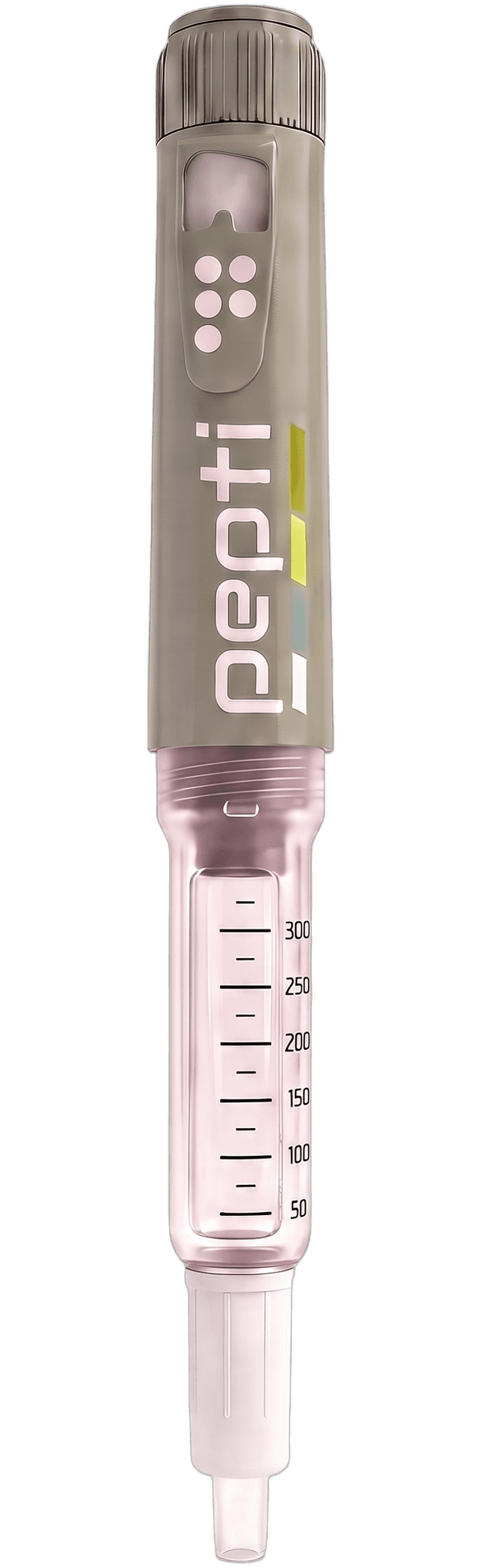
Identical medication. The pepti Pen is a pre-filled cartridge in a reusable click-dial injector, dosed in clicks rather than drawn from a vial with a syringe. It costs more and it removes the draw step. Neither is clinically better.
— MOTS-c
Availability and formats
| Question | Answer |
|---|---|
| Can I get it by telehealth? | Yes, where a physician licensed in your state prescribes it |
| Which states? | All 50 states and DC |
| Does it come as a pen? | Yes, as a pre-filled pepti Pen cartridge with a reusable click-dial injector |
| Does it come as a capsule? | No |
| Does it come as a nasal spray? | No |
| Is bloodwork required first? | Not routinely; your physician decides |
— MOTS-c
Where to get MOTS-c prescribed
MOTS-c cannot be bought legitimately without a prescription. Sites shipping it with no prescription are selling a research-use-only product, where no pharmacy is accountable for identity, purity, sterility or concentration.
The prescription route works like this:
- Complete a medical intake covering your history, medications, allergies and what you are treating.
- A physician licensed in your state reviews it.
- If appropriate, a state-licensed, FDA-registered pharmacy compounds it to that prescription.
- It ships refrigerated with your directions printed on the vial.
- Your physician stays reachable afterwards for dose questions and side effects.
Current all-in pricing for MOTS-c is published: medication, physician review, refill management and shipping in one figure, with no separate membership fee. What to check on any provider is in how to tell if a peptide seller is legitimate.
— MOTS-c
Who should not take it, or should discuss it first
| Situation | Why |
|---|---|
| Pregnancy or breastfeeding | Not used; safety data is absent |
| Tested athletes | Many peptides are prohibited in competition; check the current list |
— Full specification
Everything on the label.
— Product
MOTS-c (Injectable)
— How supplied
5 mL multi-dose vial, MOTS-C 2 mg/mL (10 mg MOTS-C per vial); as the Pen: 3 mL pre-filled Pen cartridge containing 30 mg MOTS-C
— Typical directions
Inject 0.25 mL (25 units) subcutaneously Monday through Friday mornings.
— Dose volume
0.25 mL (25 units on a U-100 insulin syringe)
— Doses per vial
20
— Coverage per vial
about 4 weeks at Monday through Friday
— Formats
Vial and syringe · pepti Pen cartridge with a reusable injector
— Available in
All 50 states and DC
— Bloodwork
Not routinely required; your physician decides
— Strengths available
4
— Legal status
Prescription-only, compounded, not FDA approved
— Category
Anti-Aging
— References
What this is based on.
References
- Lee C, Zeng J, Drew BG et al.. The mitochondrial-derived peptide MOTS-c promotes metabolic homeostasis and reduces obesity and insulin resistance · Cell Metab (2015) · PMID 25738459
- Reynolds JC, Lai RW, Woodhead JST et al.. MOTS-c is an exercise-induced mitochondrial-encoded regulator of age-dependent physical decline and muscle homeostasis · Nat Commun (2021) · PMID 33473109
- Kim KH, Son JM, Benayoun BA et al.. The Mitochondrial-Encoded Peptide MOTS-c Translocates to the Nucleus to Regulate Nuclear Gene Expression in Response to Metabolic Stress · Cell Metab (2018) · PMID 29983246
- Zempo H, Kim SJ, Fuku N et al.. A pro-diabetogenic mtDNA polymorphism in the mitochondrial-derived peptide, MOTS-c · Aging (Albany NY) (2021) · PMID 33468709
- Ramanjaneya M, Bettahi I, Jerobin J et al.. Mitochondrial-Derived Peptides Are Down Regulated in Diabetes Subjects · Front Endocrinol (Lausanne) (2019) · PMID 31214116
- Cataldo LR, Fernández-Verdejo R, Santos JL et al.. Plasma MOTS-c levels are associated with insulin sensitivity in lean but not in obese individuals · J Investig Med (2018) · PMID 29593067
- Lu H, Wei M, Zhai Y et al.. MOTS-c peptide regulates adipose homeostasis to prevent ovariectomy-induced metabolic dysfunction · J Mol Med (Berl) (2019) · PMID 30725119
- Ming W, Lu G, Xin S et al.. Mitochondria related peptide MOTS-c suppresses ovariectomy-induced bone loss via AMPK activation · Biochem Biophys Res Commun (2016) · PMID 27237975
- Knoop A, Thomas A, Thevis M. Development of a mass spectrometry based detection method for the mitochondrion-derived peptide MOTS-c in plasma samples for doping control purposes · Rapid Commun Mass Spectrom (2019) · PMID 30394592
- Ozkaya DY, Haymana C, Demirci I et al.. MOTS-C levels in individuals with and without obesity and its association with inflammation, insulin resistance and endothelial dysfunction · Arch Endocrinol Metab (2025) · PMID 41004666
Citations are provided for educational purposes. They do not constitute medical advice. Always discuss any peptide protocol with your prescribing physician.
— Common questions
MOTS-c, answered.
Through a telehealth provider where a physician licensed in your state reviews a medical intake and a licensed US pharmacy compounds the prescription. Pepti prescribes MOTS-c in all 50 states and DC; start with the free assessment.
5 mL multi-dose vial, MOTS-C 2 mg/mL (10 mg MOTS-C per vial); as the Pen: 3 mL pre-filled Pen cartridge containing 30 mg MOTS-C
Inject 0.25 mL (25 units) subcutaneously Monday through Friday mornings. Your physician sets your own dose and it is printed on your medication.
20 at the standard volume, about 4 weeks at Monday through Friday.
MOTS-c is available as a vial with syringes and as a pre-filled pepti Pen cartridge with a reusable injector.
Not routinely, though your physician may want labs depending on your history. at-home blood testing covers hormone, metabolic and thyroid markers without a lab visit.
It is legal to prescribe and dispense in the United States with a valid prescription. It is not FDA approved: compounded medications are prepared by licensed pharmacies pursuant to a prescription rather than approved as manufactured products. See are peptides FDA approved.
Pricing is published on the MOTS-c page as one all-in figure covering medication, physician review, refill management and shipping. What drives peptide pricing generally is in how much do peptides cost.
No. It was placed in Category 2 of the FDA's interim 503A bulk substances list in 2023, and the FDA removed it from Category 2 on 15 April 2026 after the original nomination was withdrawn. On 23 July 2026 the FDA's Pharmacy Compounding Advisory Committee voted 7–5, with two abstentions, to recommend adding it to the 503A Bulks List; the FDA's final determination is pending. It remains legal to prescribe and dispense.
There are no randomised controlled trials of MOTS-c in humans. Human data is observational — the body's own MOTS-c rises with exercise and is reported lower in people with type 2 diabetes — plus one small company-reported Phase 1a/1b study of a modified analogue called CB4211, a different molecule that did not progress beyond Phase 1. The weight, glucose and physical-performance findings are from mice.
A peptide whose gene sits in the mitochondria's own DNA rather than in the cell nucleus. MOTS-c was identified in 2015 inside the gene for the mitochondrial 12S ribosomal RNA; humanin is the other well-known example.
Mouse studies report less weight gain on a high-fat diet and better insulin sensitivity in treated animals. There is no human trial showing weight loss from MOTS-c. If weight loss is the goal, semaglutide and tirzepatide have human trial evidence and are the more direct conversation to have with your physician.
That label comes from research showing exercise raises the body's own MOTS-c in humans and that the peptide activates AMPK, the energy sensor exercise switches on, in animal muscle. It is a proposed mechanism, not a demonstrated effect in people.
The five-on, two-off schedule is a prescriber convention; the late-life mouse work used intermittent rather than daily dosing. A 20-dose vial also lands on a 28-day refill cycle. Your physician sets your schedule.
Yes. It is on the WADA Prohibited List at all times under S4.4 as an AMPK activator, USADA has stated it is not eligible for a therapeutic use exemption, and a validated plasma test for it exists.
— Next step
See what a physician
recommends for you.
A licensed physician in your state reviews your intake and decides what is appropriate. A consultation does not guarantee a prescription.
Important legal & safety information
The assessment process available on the Pepti website asks a series of medical questions, and the answers provided are reviewed by an independent licensed physician affiliated with our partner physician network. The licensed providers have established exclusionary criteria, and the answers provided determine if the individual is screened out of eligibility for treatment. The licensed clinicians retain the sole decision to prescribe peptide therapy and other compounded medications to patients. Treatment may be denied at the physician's sole discretion. If a prescription is not approved, you will not be charged for the medication.
Pharmacy Providers. Pepti is a technology platform and is not a healthcare provider, pharmacy, or prescriber. All medications offered through the platform are compounded by independent FDA-registered 503A or 503B compounding pharmacies based on a valid prescription written by a licensed physician for an individual patient. Compounded medications are not FDA-approved as products. The active pharmaceutical ingredients used by our partner pharmacies are sourced from FDA-registered facilities. Compounded medications may not undergo the same testing or quality control as commercially manufactured FDA-approved drugs.
Results vary. Results from peptide therapy and other compounded treatments vary based on individual factors, including age, weight, medical history, adherence to the prescribed protocol, lifestyle factors, and physiological response. Pepti makes no guarantee of any specific outcome. Statements about peptide therapy and compounded medications offered through the platform have not been evaluated by the Food and Drug Administration. These products are not intended to diagnose, treat, cure, or prevent any disease.
Product images. Product photographs and renderings shown on this website are for illustrative purposes only. The appearance of vials, packaging, labeling, and other materials you receive may vary and is determined by the dispensing compounding pharmacy.
Off-label use.Many peptides offered through the platform are prescribed for off-label use. “Off-label” means the medication is being prescribed for a use, dose, or patient population that is not specifically approved by the FDA. Off-label prescribing is legal and common in U.S. medical practice when supported by clinical experience and judgment.
Mailing & shipping. Pepti currently dispenses prescription medication to patients in 50 states. All orders ship in unbranded, tamper-evident packaging via expedited delivery from our partner compounding pharmacies. Temperature-sensitive medications ship with insulated packaging and ice packs. Shipping is included at no additional cost. We do not currently ship medication outside 50 states, internationally, or to APO/FPO addresses.
Not for emergencies. Pepti is not designed for medical emergencies. If you are experiencing a medical emergency, call 911 or go to your nearest emergency room immediately. For urgent but non-emergency medical questions, contact your primary care provider or use an urgent care service.
No doctor-patient relationship with Pepti. Your use of the platform does not create a doctor-patient relationship between you and pepti LLC. A doctor-patient relationship is established only between you and the independent licensed physician who reviews your intake and prescribes your treatment. The physicians who use the platform are independent contractors and are solely responsible for the medical care they provide.
Prescription medications. All prescription products require a valid prescription from a licensed healthcare provider. By using the platform, you acknowledge that you are at least 18 years old and that the information you provide is true, accurate, current, and complete. Providing false information may result in inappropriate treatment recommendations or denial of service.
Cosmetic & wellness products.Certain products offered through Pepti — including skincare, hair care, body care, supplements, men's grooming, sports recovery, and sexual wellness products — are cosmetic or dietary supplement products, not prescription medications. These products do not require a prescription and are not reviewed or prescribed by a physician. Statements regarding dietary supplements have not been evaluated by the Food and Drug Administration. These products are not intended to diagnose, treat, cure, or prevent any disease. Results vary by individual. Consult your healthcare provider before starting any new supplement or topical product, especially if you are pregnant, nursing, or taking other medications.
pepti LLC · Delaware Limited Liability Company · 131 Continental Dr, Suite 305, Newark, DE 19713 · For media or partnership inquiries, email hello@hellopepti.com. For patient support, email support@hellopepti.com. For privacy and HIPAA inquiries, email privacy@hellopepti.com.