Anti-Aging · Reference
Ipamorelin + Sermorelin Benefits: What the Research Actually Shows
This page takes each claimed benefit in turn and says which component the evidence is about, what kind of study it is, and how much weight it can bear. It then covers side effects, FDA status and how Pepti supplies the vial. For the product reference, see what is Ipamorelin + Sermorelin; for the numbers on the label, Ipamorelin + Sermorelin dosage.
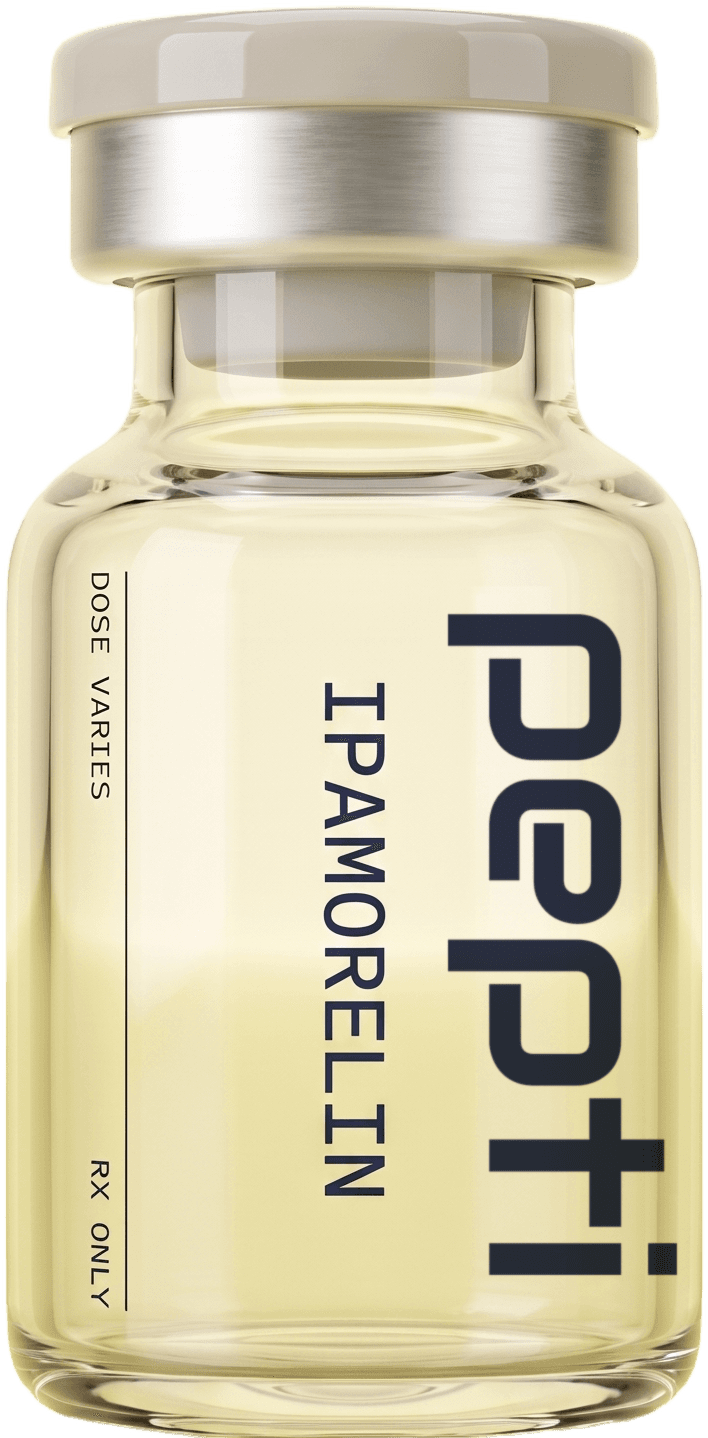
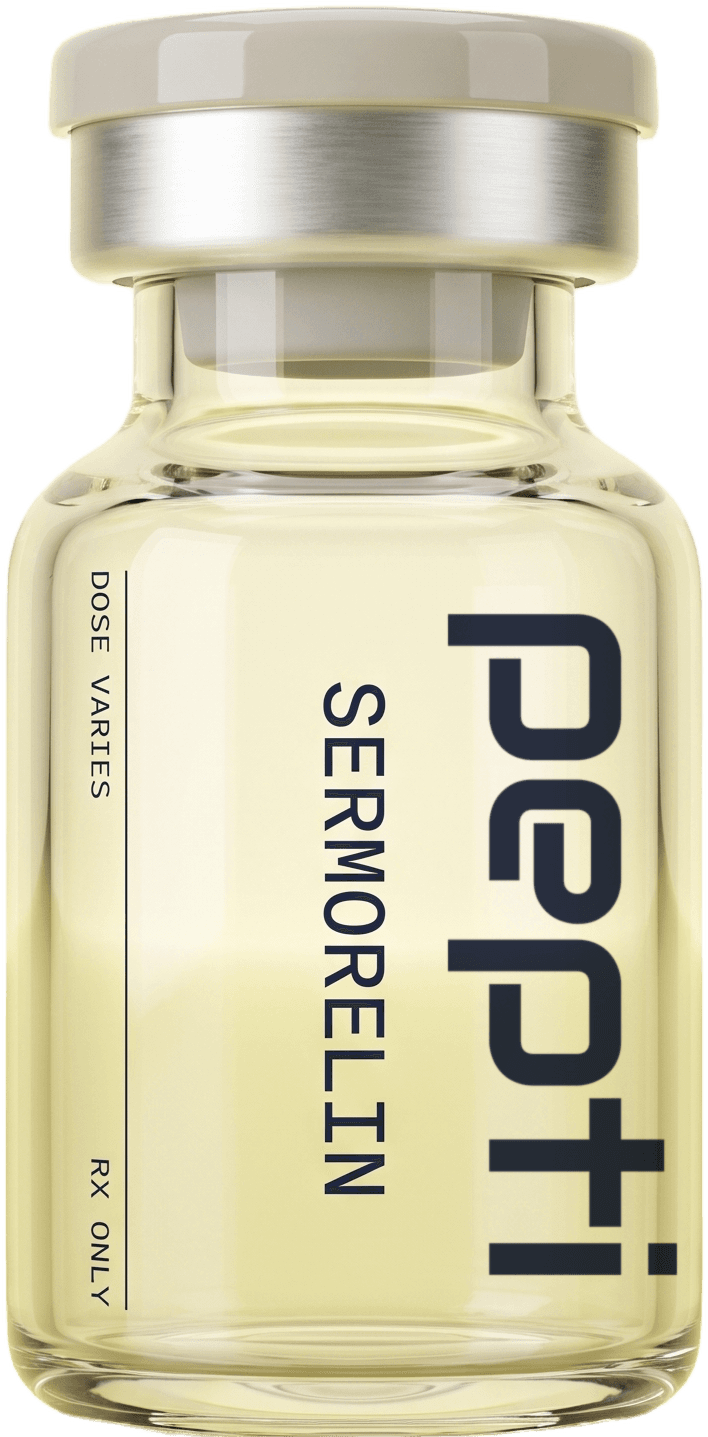
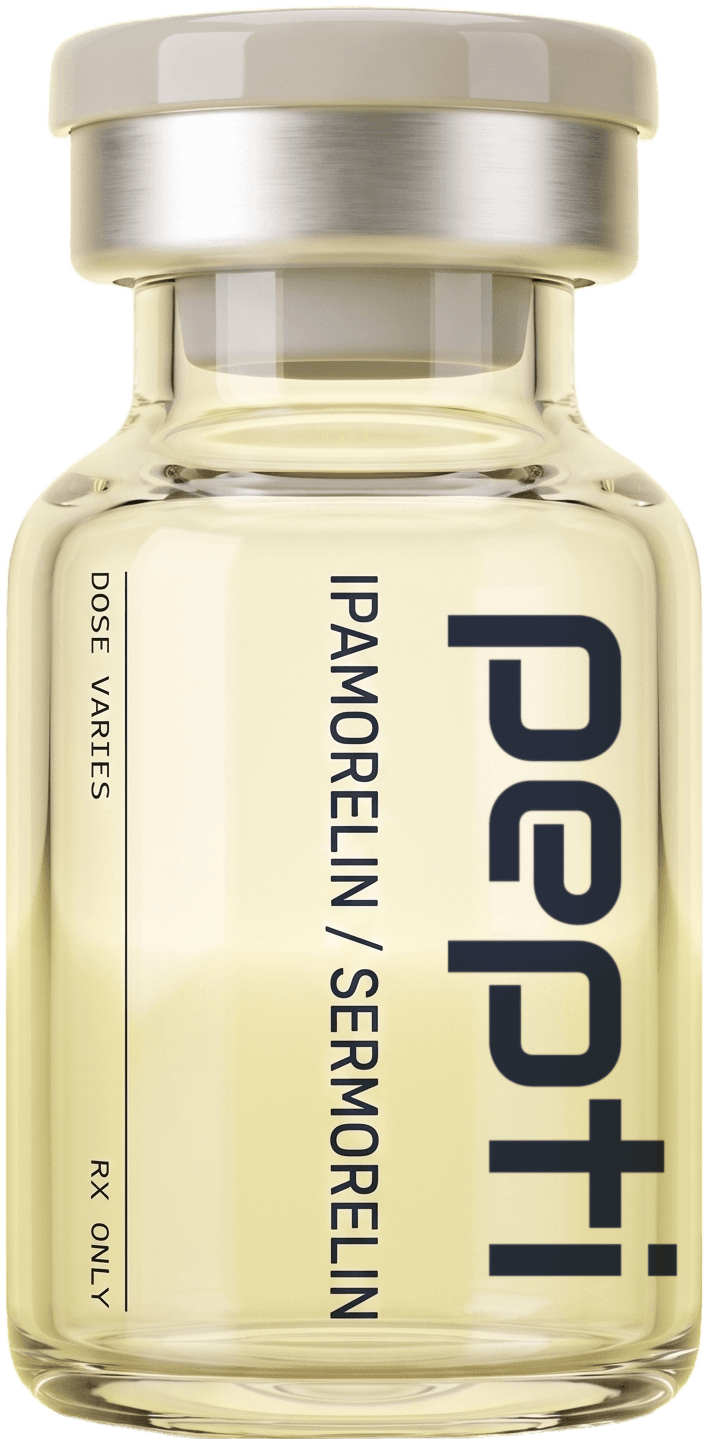
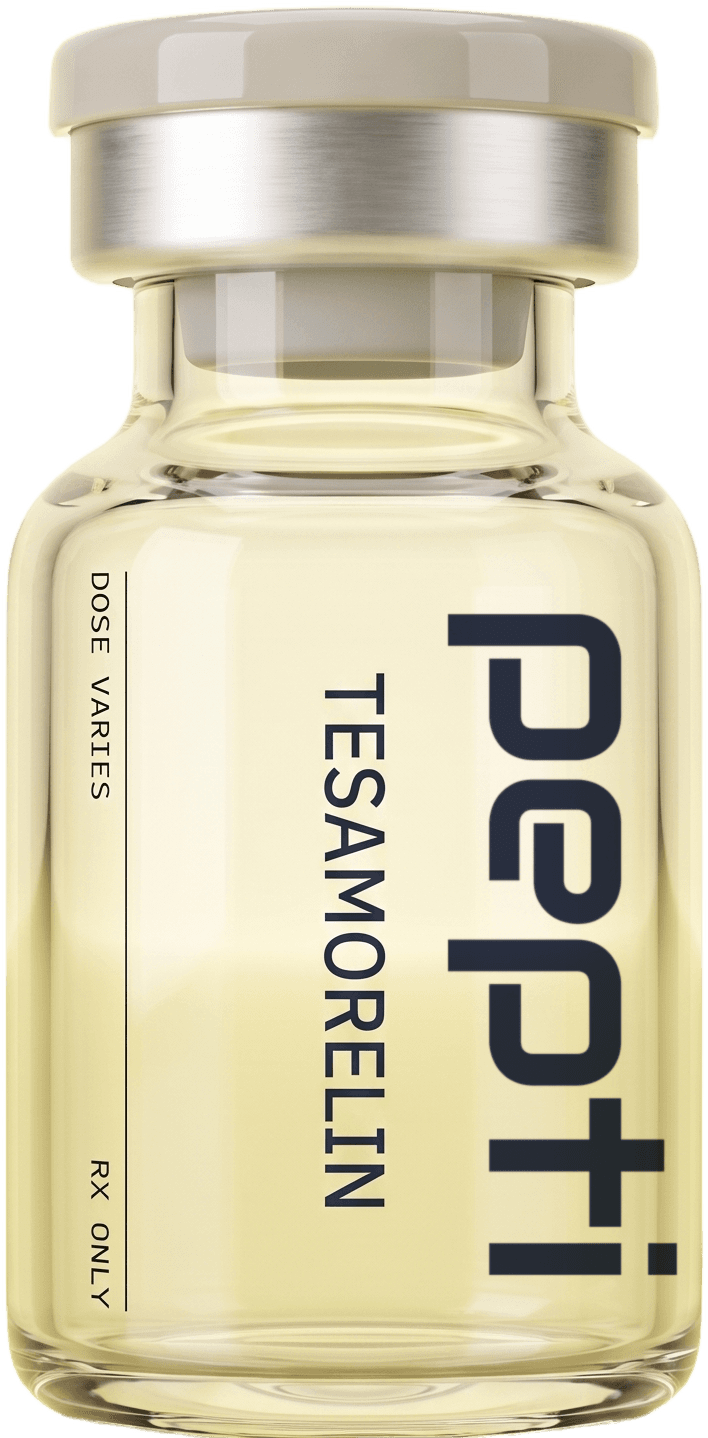
The benefit of Ipamorelin + Sermorelin with the most support is the most basic one: each peptide prompts your own pituitary to release a pulse of growth hormone, through two different receptors, and a 1995 study of the same two classes given together in healthy men reported a larger growth hormone response than either alone, roughly the sum of the two. That is human pharmacology. The benefits people usually search for, deeper sleep, recovery, lean mass and skin, rest on sermorelin's small trials in older adults, on animal work for ipamorelin, and on prescriber experience. The combination itself has never been studied, and there are no randomized controlled trials of this blend in humans. Compounded medications are not FDA approved.
This page takes each claimed benefit in turn and says which component the evidence is about, what kind of study it is, and how much weight it can bear. It then covers side effects, FDA status and how Pepti supplies the vial. For the product reference, see what is Ipamorelin + Sermorelin; for the numbers on the label, Ipamorelin + Sermorelin dosage.
Ipamorelin + Sermorelin Benefits
The short answer
| Claimed benefit | What the evidence is | Strength of evidence |
|---|---|---|
| A larger growth hormone pulse from two signals | Human: a 1995 study of GHRH(1-29) plus GHRP-2 in eight healthy men; never tested with this pairing | Mechanism shown for the classes, not this blend |
| Raises your own growth hormone | Human: sermorelin's decades of diagnostic use; ipamorelin's 1999 intravenous study | Established, for the hormone pulse itself |
| Raises IGF-1 | Human: sermorelin-class trials in older adults; dose-dependent, and faded by 16 weeks in one | Moderate, inconsistent |
| Keeps the natural pulse pattern | Human: a 1992 sermorelin-sequence study in older men; ipamorelin produced a single pulse in 1999 | Moderate |
| Growth hormone without a cortisol rise | Animal: ipamorelin's 1998 founding study in pigs | Preclinical; not measured in humans |
| Lean mass and body composition | Human: one 16-week GHRH-analogue trial reported more lean mass in men; a six-week trial found no change | Mixed and small |
| Skin thickness | Human: the same 16-week trial | Single small trial |
| Better sleep | No sleep outcome for either component; a review found a short-acting GHRH did not improve measured sleep | Reported, not demonstrated |
| Recovery and energy | Prescriber reports only | No trial evidence |
| Fat loss | Animal: a 2001 mouse study of ipamorelin reported more body fat and food intake | Evidence runs the other way |
The closer a claim sits to the hormone itself, the better the evidence; the closer it gets to how someone looks, sleeps or feels, the thinner it gets.
Ipamorelin + Sermorelin Benefits
What Ipamorelin + Sermorelin is, briefly
This is not one molecule. It is two independently studied peptides, in equal amounts, in one vial. Sermorelin is a synthetic copy of the first 29 amino acids of growth-hormone-releasing hormone (GHRH), the "go" signal the hypothalamus sends to the pituitary. Ipamorelin is a five-amino-acid peptide that acts at the ghrelin receptor, which amplifies each growth hormone pulse and is described in animal work as restraining somatostatin, the "stop" signal. Neither contains growth hormone; both are signals to the pituitary, which still decides how much to release. Because the combination has never been studied, "what does it do" is really two questions, one per component, plus one untested question about the pairing.
Ipamorelin + Sermorelin Benefits
Benefit by benefit
1. A larger pulse from two signals
What the research describes. A 1995 paper in Clinical Endocrinology gave eight healthy men GHRH(1-29), the sermorelin sequence, and GHRP-2, a peptide from ipamorelin's class, separately and together. The combination produced the largest growth hormone response, roughly the sum of the two, with no synergy.
What it does not show. It used GHRP-2, not ipamorelin, and measured the hormone response, not anything a person notices. Whether this pairing behaves the same way at nightly subcutaneous doses has not been tested. This is the rationale for the blend, not a finding about it.
2. It raises your own growth hormone
What the research describes. For sermorelin, this is settled human pharmacology: before it was a treatment it was a diagnostic test of pituitary function, and a 1997 trial in older adults measured growth hormone rising within about ten minutes of a nightly injection of a GHRH(1-29) analogue and lasting around two hours. For ipamorelin, a 1999 dose-escalation study in Pharmaceutical Research gave healthy men intravenous doses and reported, at every dose, a single episode of growth hormone release peaking at about 40 minutes, with a half-life of about two hours.
What it does not show. A growth hormone rise is a laboratory finding, not a felt effect, and ipamorelin's study used the intravenous route rather than the subcutaneous injection prescribed today.
3. It raises IGF-1, depending on dose and schedule
What the research describes. Growth hormone acts largely through IGF-1 made in the liver. A 1992 study gave ten healthy men aged about 68 GHRH(1-29) twice daily for 14 days; IGF-1 rose to young-adult levels only at the higher dose. A 1997 trial of a closely related analogue nightly for 16 weeks in nineteen adults aged 55 to 71 saw IGF-1 rise within two weeks, then drift back toward baseline by week 16.
What it does not show. A 1997 Johns Hopkins study of single nightly 2 mg injections in eleven men aged 64 to 76 for six weeks found nocturnal growth hormone rose but IGF-1 did not, and the authors concluded single nightly doses are less effective than multiple daily doses. No study has measured IGF-1 on this two-peptide vial.
4. It keeps the natural pulse pattern
What the research describes. The 1992 work described GHRH(1-29) in older men raising the amplitude of growth hormone peaks while keeping the pulsatile pattern intact, and ipamorelin's 1999 study showed a pulse that fell back to negligible levels, not a sustained elevation. Because both work upstream of the gland, somatostatin and IGF-1 feedback still apply. A 2018 review in Sexual Medicine Reviews makes this the central argument for secretagogues over growth hormone itself.
What it does not show. It is a mechanism argument, not a head-to-head trial, and it does not mean the dose cannot be too high. See peptides vs HGH.
5. Growth hormone without a cortisol rise
What the research describes. Ipamorelin's founding 1998 paper in the European Journal of Endocrinology called it "the first selective growth hormone secretagogue." In rats and pigs it released growth hormone with potency similar to GHRP-6 but, unlike GHRP-6 and GHRP-2, did not raise ACTH or cortisol above the levels seen with GHRH itself, even at more than 200 times its growth-hormone-releasing dose. None of the peptides tested affected prolactin, LH, FSH or TSH.
What it does not show. The human volunteer study measured growth hormone only, so in people the selectivity is inferred from animal data. It is the reason ipamorelin, rather than an older peptide, is the ghrelin-receptor half of the vial.
6. Lean mass and body composition
What the research describes. The 16-week trial reported increased lean body mass and improved insulin sensitivity in men only. A 2003 review in Endocrine concluded that several months of GHRH increases lean mass.
What it does not show. The six-week Johns Hopkins study found no change in weight, body composition, glucose, insulin or lipids. The lean-mass finding appeared in men, not women, in one small trial of a related analogue, and has not been followed up. No trial has tested ipamorelin for body composition in people. There is no established body-composition effect in adults.
7. Skin thickness
What the research describes. The same 16-week trial reported skin thickness increasing in both sexes.
What it does not show. One finding, in nineteen people, and not a cosmetic study: nothing measured appearance. If skin is the main goal, GHK-Cu is aimed at it more directly.
8. Sleep
What the research describes. Nothing directly for either component. The largest natural growth hormone pulse arrives in the first hours of deep sleep, which is why this vial is dosed at bedtime, and prescribers describe sleep as one of the most consistent early reports.
What it does not show. The 2003 Endocrine review notes that a short-acting GHRH did not improve measured sleep under trial conditions, and the 16-week trial found sleep quality unchanged. Treat sleep as reported, not demonstrated. If sleep is the whole goal, DSIP and the SERENITY Blend are aimed at it more directly; see peptides for sleep.
9. Recovery and energy
What the research describes. No trial has measured recovery or energy as an outcome for sermorelin, ipamorelin or the pairing. These are prescriber reports, consistent with the mechanism, and they vary widely between people.
What it does not show. Anything measurable. For a specific soft-tissue injury, secretagogues are not injury treatments; BPC-157 is the tissue-repair conversation, and peptides for muscle growth and recovery sets out where each sits.
10. Fat loss, and the study that runs the other way
What is claimed. Fat loss is one of the most common claims made online for growth-axis blends.
What the research describes. A 2001 paper in Biochemical and Biophysical Research Communications reported that in mice, twice-daily ipamorelin increased body weight, fat-pad weight, leptin and food intake. That is consistent with ipamorelin acting at the receptor ghrelin uses to signal hunger.
What it does not show. It does not mean the blend makes people fatter; there is no human data either way. It means fat loss should not be described as an effect. If visceral fat is the target, tesamorelin is the growth-axis peptide with human trial data on it, and the Tesamorelin + Ipamorelin pairing exists for that reason.
Ipamorelin + Sermorelin Benefits
What the evidence shows, honestly
| What exists | What does not exist |
|---|---|
| Human evidence that each component prompts a growth hormone pulse | Any study of this combination |
| A 1995 human study showing two related signals together give a larger response | That result tested with ipamorelin and sermorelin at nightly subcutaneous doses |
| Small 1990s trials of the sermorelin sequence in healthy older adults | Any trial in adults under about 55, or of more than about six months |
| A sermorelin safety record from its approved-drug years | Human data for subcutaneous ipamorelin, or any ipamorelin exposure longer than seven days |
| A clear mechanism with feedback controls intact | Any measured outcome for sleep, recovery, body composition or ageing on this vial |
There are no randomized controlled trials of Ipamorelin + Sermorelin, or of any ipamorelin and sermorelin combination, in humans. The accurate framing is "described in pharmacology research and, for sermorelin, in small trials, and used clinically," not "proven in people" for what most adults take it for. Research does not establish an effect size or a timeline for anything on this page.
Ipamorelin + Sermorelin Benefits
Side effects
The side effects are covered in full in Ipamorelin + Sermorelin side effects. In brief:
| How often | What is reported | What to do |
|---|---|---|
| Common | Flushing or warmth after the injection; injection-site redness or soreness | Usually settles; rotate sites |
| Common | Headache early on, hunger, vivid dreams with bedtime dosing | Report it if it persists |
| Uncommon | Fluid retention, joint aches, tingling hands | Message your care team; these signal more growth hormone than you need |
| Rare | Facial or throat swelling, widespread rash, trouble breathing | Call 911 first, then tell your care team |
Growth hormone reduces insulin sensitivity, so diabetes or impaired glucose tolerance is raised at intake, and active cancer is a reason a physician declines any growth-axis peptide. Pregnancy and breastfeeding are exclusions. Sermorelin is named under S2.2.4 of the 2026 WADA Prohibited List and ipamorelin sits in the same section, prohibited at all times, so tested athletes should not start it. If you think you may have taken too much, call Poison Control at 1-800-222-1222 and message your care team.
Ipamorelin + Sermorelin Benefits
Where it stands with the FDA
The blend has no status of its own; the FDA regulates the bulk substances a pharmacy compounds from. Sermorelin acetate was the active ingredient of FDA-approved products from 1990 until the manufacturer discontinued them in 2008, and on 4 March 2013 the FDA determined they were not withdrawn for reasons of safety or effectiveness; sermorelin appears in no 503A category. Ipamorelin has never been approved; the FDA placed it in Category 2 in September 2023, its advisory committee voted 0 to 12, with one abstention, against adding it to the 503A bulks list in October 2024, and its 503A nomination has since been withdrawn, so as of the 14 May 2026 update it sits in no 503A category while remaining in Category 2 under the separate 503B policy. Compounded medications are not FDA approved.
Ipamorelin + Sermorelin Benefits
How Pepti supplies it
| Product | What is in the vial | Typical directions | Per dose | Price |
|---|---|---|---|---|
| Ipamorelin + Sermorelin | 5 mL, ipamorelin 2 mg/mL + sermorelin 2 mg/mL (10 mg of each) | 0.25 mL (25 units) subcutaneously Monday through Friday nights at bedtime | 0.5 mg of each | $219/mo |
| Sermorelin | 5 mL, 2 mg/mL (10 mg) | Its own printed directions | 0.5 mg at 25 units | $229/mo |
| Ipamorelin | 5 mL, 1 mg/mL (5 mg) | Its own printed directions | 0.25 mg at 25 units | $239/mo |
| CJC-1295 / Ipamorelin | 5 mL, CJC-1295 1.2 mg/mL + ipamorelin 2.4 mg/mL | Its own printed directions | 0.3 mg CJC-1295 + 0.6 mg ipamorelin at 25 units | $239/mo |
The paired vial holds 20 doses, about four weeks of weekday dosing, and the two peptides are in fixed 1:1 proportion. Your physician sets your directions after reviewing your intake, and they are printed on the vial. Every price is all-in, covering medication, physician review, refill management and shipping, with no membership fee. Pepti is cash-pay and does not bill insurance. Vials arrive as solutions ready to use, with sterile syringes and alcohol prep pads, shipped refrigerated with ice packs. Refills run every 28 days, one vial per fill. Lot test results are at /quality/lab-results.
For the single components, see sermorelin benefits and ipamorelin benefits; for the longer-acting pairing, CJC-1295 / Ipamorelin benefits and CJC-1295 vs sermorelin.
Ipamorelin + Sermorelin Benefits
Where to get Ipamorelin + Sermorelin prescribed
Ipamorelin + Sermorelin cannot be bought legitimately without a prescription. Sites selling it "for research use only" are not accountable for identity, purity, sterility or concentration. The prescription route:
- Complete a free online intake covering your history, medications and what you want help with.
- A physician licensed in your state reviews it, usually within 24 hours.
- If it is appropriate, a PCAB-accredited, FDA-registered US 503A compounding pharmacy prepares it to that prescription. Lot test results are published at /quality/lab-results.
- It ships refrigerated with your directions printed on the vial.
- Your physician stays reachable for questions and side effects.
Step by step: how to get ipamorelin plus sermorelin prescribed online. Bloodwork is not required for any Pepti treatment. If your physician wants labs for your care, they'll ask through your account.
References
What this is based on.
References
- Raun K, Hansen BS, Johansen NL et al.. Ipamorelin, the first selective growth hormone secretagogue · Eur J Endocrinol (1998) · PMID 9849822
- Walker RF. Sermorelin: a better approach to management of adult-onset growth hormone insufficiency? · Clin Interv Aging (2006) · PMID 18046908
- Tiulpakov AN, Brook CG, Pringle PJ et al.. GH responses to intravenous bolus infusions of GH releasing hormone and GH releasing peptide 2 separately and in combination in adult volunteers · Clin Endocrinol (Oxf) (1995) · PMID 7586605
- Sigalos JT, Pastuszak AW. The Safety and Efficacy of Growth Hormone Secretagogues · Sex Med Rev (2018) · PMID 28400207
- Greenwood-Van Meerveld B, Tyler K, Mohammadi E, Pietra C. Efficacy of ipamorelin, a ghrelin mimetic, on gastric dysmotility in a rodent model of postoperative ileus · Journal of Experimental Pharmacology (2012) · PMID 27186127
- Andersen NB, Malmlöf K, Johansen PB, et al.. The growth hormone secretagogue ipamorelin counteracts glucocorticoid-induced decrease in bone formation of adult rats · Growth Hormone & IGF Research (2001) · PMID 11735244
- Lall S, Tung LY, Ohlsson C, Jansson JO, Dickson SL. Growth hormone (GH)-independent stimulation of adiposity by GH secretagogues · Biochemical and Biophysical Research Communications (2001) · PMID 11162489
- Adeghate E, Ponery AS. Mechanism of ipamorelin-evoked insulin release from the pancreas of normal and diabetic rats · Neuro Endocrinology Letters (2004) · PMID 15665799
- Semenistaya E, Zvereva I, Thomas A et al.. Determination of growth hormone releasing peptides metabolites in human urine after nasal administration of GHRP-1, GHRP-2, GHRP-6, Hexarelin, and Ipamorelin · Drug Test Anal (2015) · PMID 25869809
- Nass R, Pezzoli SS, Oliveri MC et al.. Effects of an oral ghrelin mimetic on body composition and clinical outcomes in healthy older adults: a randomized trial · Ann Intern Med (2008) · PMID 18981485
- Moreno-Reyes R, Kerkhofs M, L'Hermite-Balériaux M, Thorner MO et al.. Evidence against a role for the growth hormone-releasing peptide axis in human slow-wave sleep regulation · Am J Physiol (1998) · PMID 9612233
- Copinschi G, Leproult R, Van Onderbergen A, Caufriez A et al.. Prolonged oral treatment with MK-677, a novel growth hormone secretagogue, improves sleep quality in man · Neuroendocrinology (1997) · PMID 9349662
Citations are provided for educational purposes. They do not constitute medical advice. Always discuss any peptide protocol with your prescribing physician.
Common questions
Ipamorelin + Sermorelin Benefits, answered.
Each prompts your own pituitary to release growth hormone through a different receptor, and a 1995 study of the same two classes together reported a larger, roughly additive response. Sleep, recovery, lean mass and skin rest on small trials of sermorelin's class, animal work and prescriber reports. The combination itself has never been studied.
Sermorelin reproduces the hypothalamic "go" signal at the GHRH receptor; ipamorelin acts at the ghrelin receptor, which amplifies the pulse. The rationale is two signals on one pulse. That rationale has not been tested with this pairing at these doses.
Nobody has compared them. Sermorelin alone is the component with the approval history and the trials; whether adding ipamorelin is worth it is a clinical judgement, not something a trial has answered.
Sleep is commonly reported, but no study has measured it as an outcome for either component, and a review found a short-acting GHRH did not improve measured sleep. It is reported, not demonstrated.
One 16-week trial of a related GHRH analogue reported more lean mass in older men, and a six-week trial found no change. No trial has tested the combination. There is no established muscle effect.
That is not established. The one direct animal study of ipamorelin and body fat, in mice, reported more fat and food intake, not less. No human data exists either way.
GHRH-class trials in older adults raised IGF-1 at adequate doses, inconsistently, and in one it drifted back by 16 weeks. No study has measured IGF-1 on this vial.
No. Both are signals to the pituitary, which releases its own growth hormone in a pulse that remains subject to normal feedback.
No study has measured a timeline for the combination. See how long does sermorelin take to work and how long does ipamorelin take to work for what the single-peptide studies measured.
At Pepti, Ipamorelin + Sermorelin is $219 a month, all-in, covering medication, physician review, refill management and shipping.
No. Bloodwork is not required for any Pepti treatment. If your physician wants labs for your care, they'll ask through your account. The free assessment goes to a physician licensed in your state. A consultation does not guarantee a prescription.
Next step
See what a physician recommends for you.
A licensed physician in your state reviews your intake and decides what is appropriate. A consultation does not guarantee a prescription.