Recovery · Reference
Peptides for Muscle Growth and Recovery: What Is Actually Used
This page covers what actually drives muscle growth and recovery, where each peptide sits in that picture, what the research does and does not establish, where each stands with the FDA and anti-doping bodies as of September 2026, what a physician rules out first, and what patients tend to describe and when.

Reviewed by Dr. Gene, MD · Board-certified Family Medicine
Every Pepti prescription is reviewed by a licensed U.S. physician before it's dispensed — and only provided if clinically appropriate.
Treatments mentioned
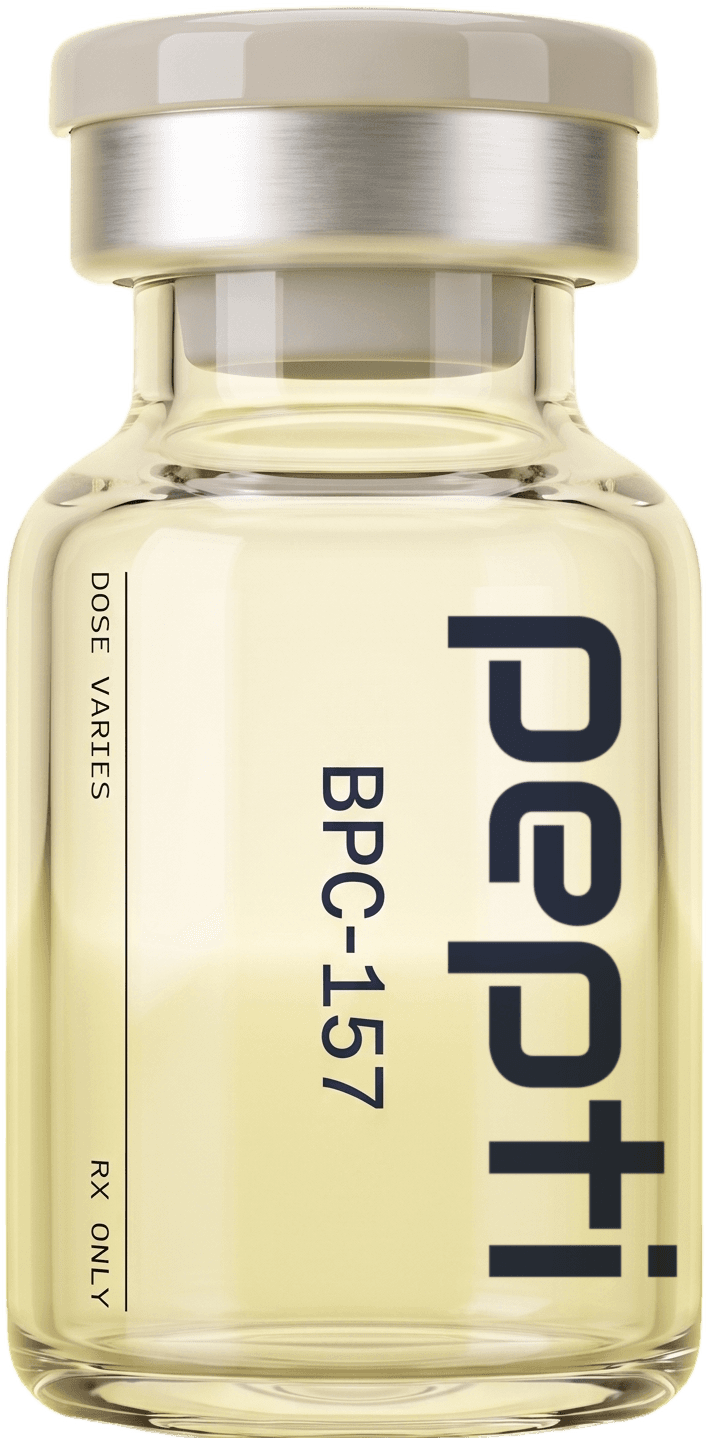
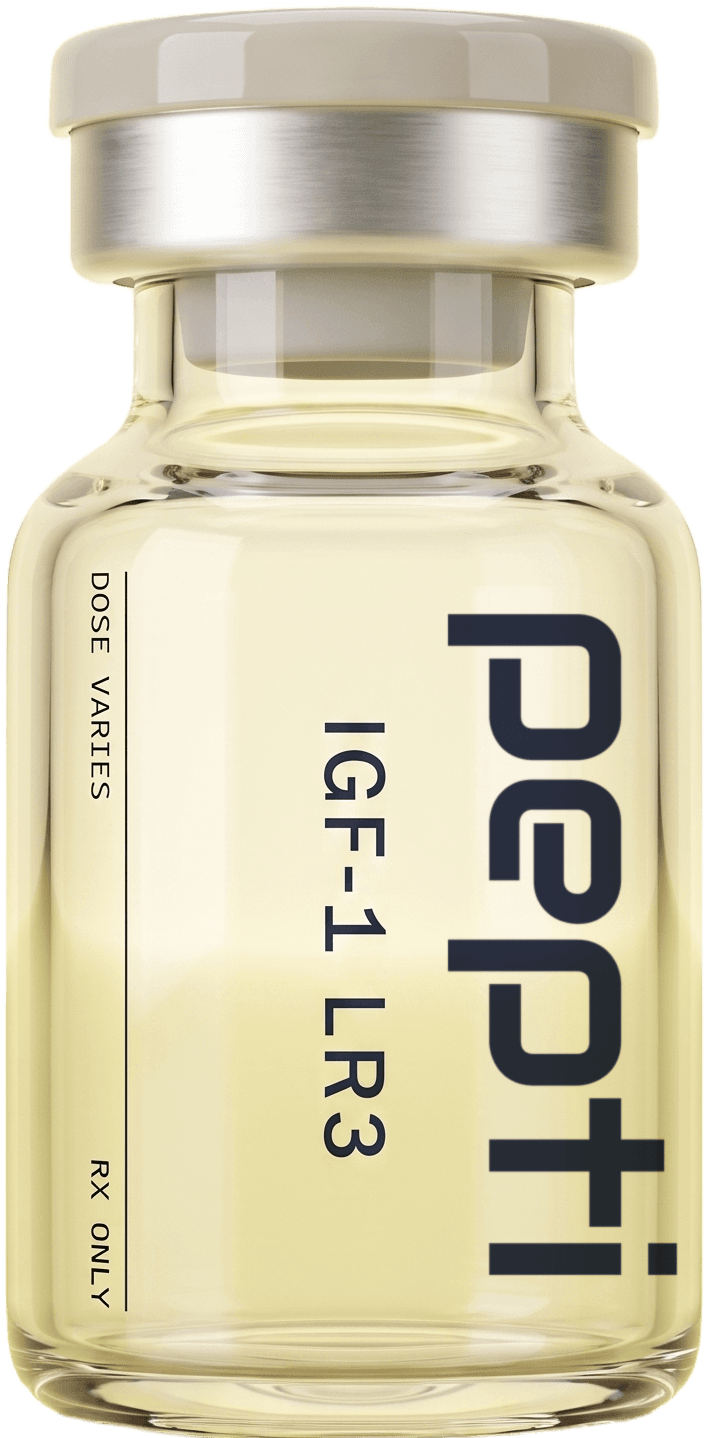
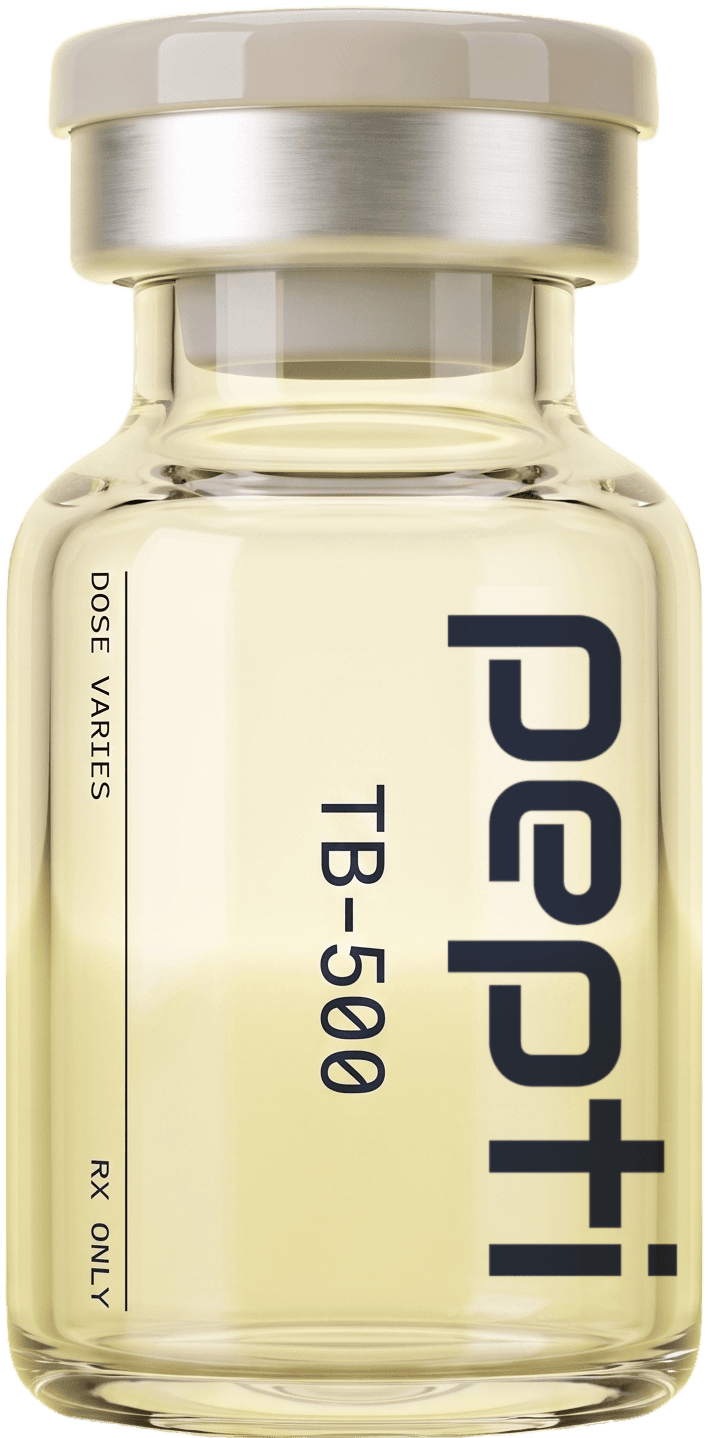
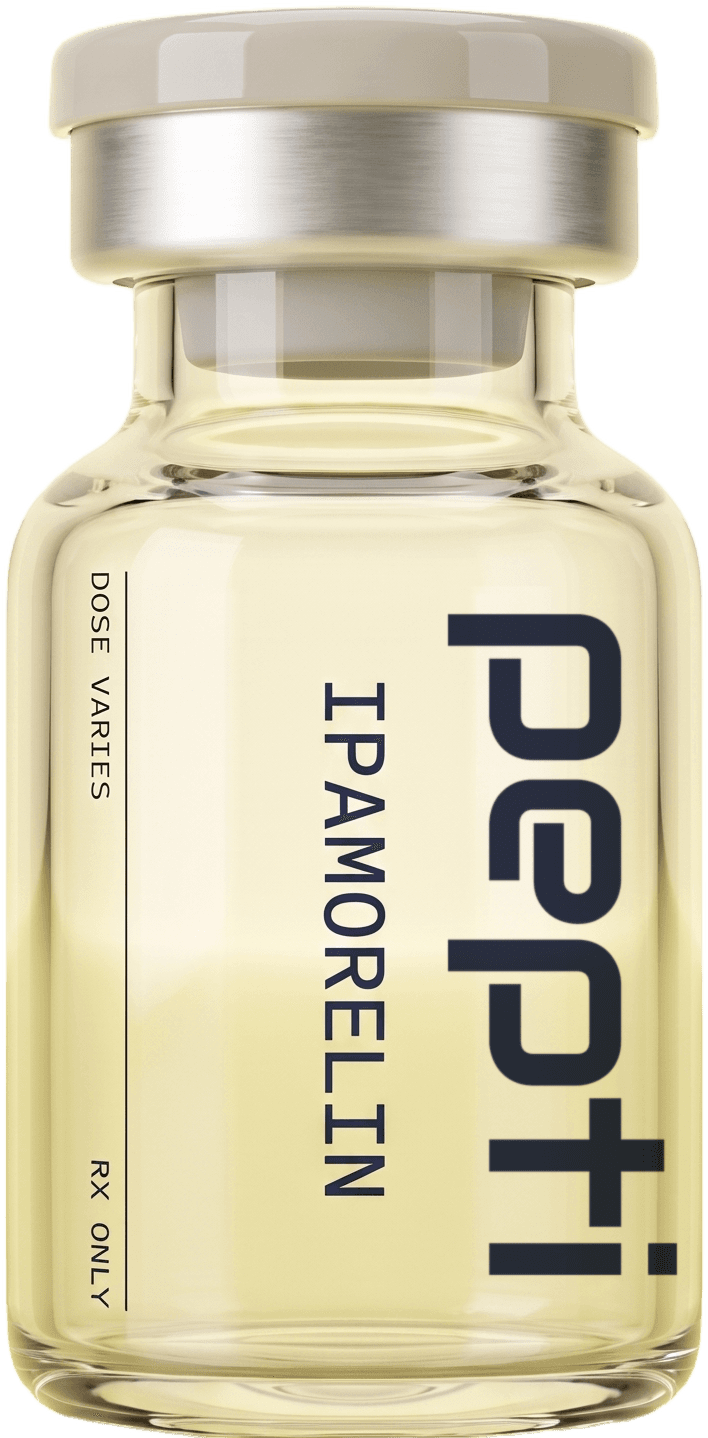
The peptides prescribed around training fall into three groups: growth-hormone-axis secretagogues such as CJC-1295, ipamorelin, sermorelin and tesamorelin, the direct growth factor IGF-1 LR3, and repair peptides such as BPC-157 and TB-500 that keep injuries from interrupting training. Only the second signals muscle growth directly, and it carries the most caution. None are anabolic steroids, none are FDA approved, and none create a training stimulus. If these names are new to you, each is explained below.
This page covers what actually drives muscle growth and recovery, where each peptide sits in that picture, what the research does and does not establish, where each stands with the FDA and anti-doping bodies as of September 2026, what a physician rules out first, and what patients tend to describe and when.
Peptides for Muscle Growth and Recovery
The short answer
| If your goal is | The usual prescription | What is in it | Price |
|---|---|---|---|
| Recovery between hard sessions, and deeper sleep | CJC-1295 / Ipamorelin | 6 mg CJC-1295, 12 mg Ipamorelin in 5 mL | $239 |
| The same, with a single shorter-acting molecule | Sermorelin | 10 mg Sermorelin in 5 mL | $229 |
| Recovery, body composition and tissue repair in one vial | TITAN | 10 mg Tesamorelin, 6 mg CJC-1295, 12 mg Ipamorelin, 10 mg BPC-157 | $279 |
| An injury that is limiting what you can train | BPC-157 + TB-500 | 5 mg BPC-157, 5 mg TB-500 in 5 mL | $259 |
| Direct growth-factor signalling, prescriber-led only | IGF-1 LR3 | 1000 mcg IGF-1 LR3 in 5 mL | $259 |
| The GH axis with IGF-1 included | ASCEND | 6 mg CJC-1295, 12 mg Ipamorelin, 10 mg Tesamorelin, 1 mg IGF-1 LR3 | $279 |
All-in monthly prices covering medication, physician review, refills and shipping, billed as a monthly subscription.
For most people training hard, the realistic value of this category is protecting consistency and improving recovery. The molecule that signals growth directly, IGF-1 LR3, has the least human data and the most cautions.
Peptides for Muscle Growth and Recovery
What is actually going on in muscle growth and recovery
Hypertrophy has a short list of non-negotiable inputs. Nothing in a vial substitutes for any of them.
| Driver of muscle growth | What it requires | Does a peptide provide it |
|---|---|---|
| Mechanical tension | Hard sets near failure, progressively loaded | No. This is training |
| Protein and total energy | Adequate daily protein and enough calories | No. This is diet |
| Recovery between sessions | Sleep, particularly slow-wave sleep | Where GH-axis peptides are discussed |
| Training consistency | Not being injured | Where repair peptides are discussed |
| Anabolic signalling | Growth factors acting at the muscle cell | IGF-1 LR3, with the most caution |
For most people the value here is protecting consistency and improving recovery, not adding an independent growth stimulus.
The training stimulus, and why no injection replaces it
Muscle grows because a fiber is loaded hard enough to be signaled to rebuild slightly larger; diet supplies the amino acids. A peptide cannot generate the tension and cannot supply the protein. The most any molecule here can do is change how well the body responds to a stimulus you have already provided, or how soon it is ready for the next one. That is a different claim from "this builds muscle," and any page that blurs the two is selling something.
The growth-hormone axis, explained from zero
Your pituitary releases growth hormone in pulses, the largest during deep sleep, prompted by growth-hormone-releasing hormone (GHRH) and restrained by somatostatin. Growth hormone then acts largely by prompting the liver to produce IGF-1, insulin-like growth factor 1, which does most of the anabolic and repair signaling in tissue. A 2000 paper in JAMA described the deep-sleep pulse declining with age alongside slow-wave sleep in healthy men, the observation behind the "recovery" use of this category.
A secretagogue makes your own pituitary release its own growth hormone, under its own feedback control. A 2006 paper in the Journal of Clinical Endocrinology and Metabolism reported that secretion stayed pulsatile in healthy adults even during continuous stimulation with CJC-1295. See peptides vs HGH.
IGF-1, the messenger that does the work
IGF-1 acts at its own receptor on muscle fibers and on the satellite cells that repair them; a 2007 review in In Vivo summarizes that role. Almost all circulating IGF-1 is bound to carrier proteins that control how much is free and for how long, covered in a 2018 review in Frontiers in Endocrinology. That buffering is where IGF-1 LR3 differs from the hormone.
Recovery and injury are where the value sits
Recovery between sessions is a sleep problem before it is a chemistry problem: the largest growth-hormone pulse and the repair of damaged fibers both happen in slow-wave sleep, and prescribers describe the GH-axis peptides mostly through that lens. The other way a program fails is a strained hamstring or an Achilles that will not tolerate load, which is where BPC-157 and TB-500 belong. Neither builds muscle; a tissue problem that resolves in four weeks rather than eight is four more weeks of training.
Peptides for Muscle Growth and Recovery
What physicians prescribe for muscle growth and recovery
Directions come from your prescribing physician and are printed on the vial. Nothing here is a protocol.
CJC-1295 / Ipamorelin
CJC-1295 / Ipamorelin is the most commonly prescribed option in this category. CJC-1295 is a GHRH analogue built for a longer duration of action than the natural hormone; a 2006 paper in the Journal of Clinical Endocrinology and Metabolism gave it to healthy adults and reported growth-hormone and IGF-1 raised for days after a dose. Ipamorelin acts through the ghrelin receptor instead; the 1998 paper in the European Journal of Endocrinology that introduced it reported, in animals, growth-hormone release without the cortisol and prolactin rises of older compounds in its class, and a 1999 study in Pharmaceutical Research characterized its response in human volunteers.
The pairing exists because two receptors converge on the same pulse. The human evidence for the combination as prescribed is clinical experience; ipamorelin's only randomized trial in patients, a 2014 study in the International Journal of Colorectal Disease, was intravenous, for post-operative ileus, and did not separate from placebo. It suits people whose limiting factor is sleep and recovery between sessions.
Sermorelin
Sermorelin is a 29-amino-acid analogue of GHRH and the shortest-acting option, the one peptide here with a full regulatory history (covered below) and the most adult human data of any GH-axis peptide. A 1992 paper in the Journal of Clinical Endocrinology and Metabolism reported that twice-daily GHRH(1-29) in older men restored growth-hormone and IGF-1 levels toward those of younger men; a 1997 paper in Metabolism studied single nightly injections in healthy elderly men; and a 1997 paper in the Journal of Clinical Endocrinology and Metabolism described long-term administration in age-advanced men and women. Those were older adults, not young athletes; what the studies establish is that the mechanism works in humans and what the side-effect profile looks like. It is the more conservative starting point: see CJC-1295 vs sermorelin.
Tesamorelin
Tesamorelin is a stabilized GHRH analogue with the strongest randomized evidence on this page, for a specific indication. The 2007 trial in the New England Journal of Medicine and the pooled phase 3 analysis in the Journal of Clinical Endocrinology and Metabolism in 2010 reported reductions in visceral adipose tissue in HIV-infected adults with abdominal fat accumulation; a 2014 trial in JAMA and a 2019 trial in Lancet HIV extended that to liver fat; and a 2012 randomized trial in the Journal of Clinical Endocrinology and Metabolism reported visceral-fat effects in obese adults with reduced growth-hormone secretion. None measured muscle or performance. It suits people whose goal is body composition alongside recovery, and it appears in TITAN, ASCEND and Tesamorelin + Ipamorelin for that reason.
TITAN
TITAN combines tesamorelin, CJC-1295 and ipamorelin with BPC-157: the full GH-axis stack plus a repair peptide for the tendon and soft-tissue complaints that accumulate under hard training. There is no trial of the combination; the evidence is the evidence for each component, and a physician chooses it when the picture is recovery plus a nagging tissue problem. See what is TITAN.
IGF-1 LR3
IGF-1 LR3 is a modified IGF-1 with an extended half-life and reduced binding to the proteins that normally sequester it, meaning more free peptide for longer; a 1992 paper in the Journal of Molecular Endocrinology described the design. It acts at the IGF-1 receptor directly, and it is the only molecule here that signals muscle growth directly.
The muscle research is animal: a 1998 paper in the Journal of Applied Physiology reported hypertrophy after localized IGF-1 infusion into rat muscle, a 2001 paper in Nature Genetics reported that localized IGF-1 expression sustained mass and regeneration in aged mouse muscle, and 1992 work in the Biochemical Journal reported IGF-1 variants were anabolic in rats given a catabolic steroid. There are no randomized human trials of IGF-1 LR3. Native IGF-1's human data is with mecasermin, an approved drug for children with severe IGF-1 deficiency, and a 1987 study in the New England Journal of Medicine reported that it lowered blood glucose in healthy adults. That is the caution a physician thinks about first. See what is IGF-1 LR3.
ASCEND
ASCEND is the GH-axis stack with IGF-1 LR3 included: CJC-1295, ipamorelin and tesamorelin acting upstream at the pituitary, IGF-1 LR3 acting downstream at the tissue. It is the most comprehensive option here and inherits every caution of IGF-1 LR3; a physician prescribing it will want baseline labs and a clear reason the downstream signal is wanted.
BPC-157 + TB-500
BPC-157 + TB-500 is the repair pairing. BPC-157 is a 15-amino-acid fragment of a protein found in human gastric juice, described in animal research as promoting new blood-vessel formation and, in a 2014 paper in Molecules, upregulating growth-hormone receptor expression in tendon fibroblasts. The muscle-specific work: a 2006 paper in the Journal of Orthopaedic Research reported faster functional recovery of a transected quadriceps in rats, a 2008 paper in Surgery Today the same in a crush model, and a 2009 paper in the Journal of Physiology and Pharmacology described blood-vessel formation in healing muscle and tendon.
TB-500 relates to thymosin beta-4 and binds actin, the protein that lets cells migrate; a 2005 review in Trends in Molecular Medicine covers the mechanism, and a 2021 paper in the American Journal of Physiology: Cell Physiology identified thymosin beta-4 as a protein released from human muscle during exercise. A 2010 randomized placebo-controlled study in the Annals of the New York Academy of Sciences gave intravenous thymosin beta-4 to healthy volunteers and reported it well tolerated. A 2026 paper in Joint Diseases and Related Surgery examined the two together in rat Achilles healing. Neither builds muscle; they belong here because a strained hamstring or an inflamed elbow is what ends a training block. See BPC-157 vs TB-500.
Peptides for Muscle Growth and Recovery
Why a GH-axis peptide is not a steroid
This gets conflated constantly, usually by someone selling something.
| Anabolic steroid | GH-axis secretagogue | IGF-1 LR3 | |
|---|---|---|---|
| What it is | Synthetic testosterone derivative | A signal to your own pituitary | A modified growth factor |
| Receptor | Androgen receptor in muscle | GHRH or ghrelin receptor | IGF-1 receptor in tissue |
| Your own hormone production | Suppresses the testicular axis | Pituitary feedback stays intact | No effect on the pituitary axis |
| Effect on lean mass in trained people | Large and well documented | Modest, described through recovery | Preclinical; human data absent |
| Main side-effect concerns | Lipids, fertility, cardiovascular, mood | Water retention, tingling hands, glucose | Growth signalling, hypoglycaemia |
Anyone advertising a secretagogue as producing steroid-like size gains is not describing the pharmacology. The people who get most from this category are those whose sleep and recovery were the limiting factor.
Peptides for Muscle Growth and Recovery
What the evidence shows, and what it does not
This category has the widest gap between marketing and data, so it is worth being precise about what has been tested in whom.
Growth hormone itself in athletes: the trials that exist
The best evidence about what raising growth hormone does in trained people comes from trials of growth hormone itself. A 2008 systematic review in the Annals of Internal Medicine pooled 27 randomized study samples in young, fit adults and reported that growth hormone increased lean body mass by about two kilograms, but that strength and exercise capacity did not appear to improve, lactate during exercise was higher, and treated participants more often had soft-tissue swelling and fatigue. A 2010 randomized placebo-controlled trial in the same journal gave eight weeks of growth hormone to 96 recreational athletes and reported reduced fat mass, a lean-mass increase accounted for by extracellular water, a small increase in sprint capacity that was gone six weeks after stopping, and no change in strength, power or endurance.
Those are studies of injected growth hormone at doses a secretagogue does not reproduce, so they are an upper bound: raising growth hormone in trained adults changed body composition and water more than performance, and a secretagogue working through an intact pituitary should be expected to do less.
The GH-axis peptides in humans
Sermorelin has randomized studies in older adults showing restored growth-hormone and IGF-1 levels and body-composition change. Tesamorelin has phase 3 trials showing visceral-fat reduction. Neither measured strength or training performance. CJC-1295 has healthy-volunteer pharmacology; ipamorelin has volunteer pharmacology and one negative surgical trial. A 2018 review in Sexual Medicine Reviews on growth-hormone secretagogues reached the honest conclusion: plausible mechanism, favorable short-term tolerability in the data that exist, and no long-term outcome studies.
IGF-1 LR3, BPC-157 and TB-500
All three are preclinical for this use. A 2010 paper in Growth Hormone and IGF Research analyzed a black-market IGF-1 LR3 product and found a manufacturing tag still attached to the peptide, a concrete illustration of why the pharmacy matters. There are no randomized human trials of IGF-1 LR3, BPC-157 or TB-500 for muscle, tendon or ligament injury.
What none of it establishes
- An effect size for muscle growth in trained adults, for any peptide here. That trial has not been run.
- A human timeline. What patients describe is clinical experience, not a trial endpoint.
- Long-term safety over years of continuous use for CJC-1295, ipamorelin, IGF-1 LR3, BPC-157 or TB-500, which is why bloodwork and physician review are part of treatment.
None are FDA approved for building muscle. GH-axis peptides are prescribed for recovery and sleep quality on a plausible mechanism and a limited evidence base, and anyone quoting a number of pounds of lean mass is making it up. If weight rather than muscle is the goal, see peptides for weight loss.
Peptides for Muscle Growth and Recovery
Where these stand with the FDA right now
This has moved a great deal since 2024, and most of what is online is out of date. Each fact below was checked against the FDA's own pages in September 2026.
The rule that decides what a pharmacy may compound
A state-licensed pharmacy compounding under section 503A may use a bulk substance only if it meets a USP or NF monograph, is a component of an FDA-approved drug product, or appears on the FDA's 503A bulks list; while nominations are evaluated, an interim policy sorts nominated substances into Category 1 (under evaluation), Category 2 (identified significant safety risks) and Category 3 (nominated without adequate support).
BPC-157 and TB-500
Both were placed in Category 2 in September 2023. On 15 April 2026 the FDA announced the removal of twelve peptides from Category 2 after their nominations were withdrawn, BPC-157 and TB-500 among them, and scheduled its Pharmacy Compounding Advisory Committee to consider them. The FDA's safety-risks page, current as of 22 April 2026, lists BPC-157 and "Thymosin beta-4, fragment (LKKTETQ), also known as TB-500" under substances nominated but withdrawn, with six substances remaining in 503A Category 2, none on this page. The committee met on 23–24 July 2026 with BPC-157 (evaluated for ulcerative colitis) and TB-500 (wound healing) on the first day's agenda, and voted 8 yes, 6 no, 1 abstaining to recommend adding each to the 503A bulks list. That is a recommendation; the FDA's final determination is pending as of September 2026.
CJC-1295 and ipamorelin
Both were placed in Category 2 in September 2023 and left it earlier than the April 2026 group, when their nominations were withdrawn in September 2024 and the FDA referred them to its advisory committee. The safety-risks page lists CJC-1295 and ipamorelin acetate among substances nominated but withdrawn; ipamorelin acetate separately remains in Category 2 of the 503B list that governs outsourcing facilities, which is not the route by which a pharmacy fills an individual prescription. On 29 October 2024 the committee voted 0 yes, 12 no, 1 abstaining against adding ipamorelin to the 503A bulks list for the uses evaluated, growth hormone deficiency and post-operative ileus. On 4 December 2024 it voted 0–13 against CJC-1295 (free base) and 1–12 against CJC-1295 acetate, evaluated for growth hormone deficiency. The 503A category list updated 14 May 2026 shows neither in Category 1, 2 or 3, and neither was on the July 2026 agenda. So: no longer flagged as a safety risk, recommended against by the committee for clinical uses that are not the uses they are prescribed for, and awaiting a final FDA determination. A committee vote is not a ban.
Sermorelin
Sermorelin acetate was the active ingredient of Geref, approved on 28 December 1990 (NDA 019863) and later discontinued; Drugs@FDA records a Federal Register determination that the product was not withdrawn for safety or effectiveness reasons. It does not appear in any category of the 503A list updated 14 May 2026 and was never part of the Category 2 episode. Its footing for compounding is its history as the active ingredient of an approved drug. There is no currently marketed FDA-approved sermorelin product.
Tesamorelin
Tesamorelin acetate is the active ingredient of Egrifta, approved on 10 November 2010 (BLA 022505), with the current label approved in March 2025. That label indicates it for the reduction of excess abdominal fat in HIV-infected adults with lipodystrophy and states it is not indicated for weight loss management. As a component of an approved drug it was never nominated to the 503A category list and does not appear on it. The approval belongs to that product and that indication, not to a compounded vial.
IGF-1 LR3
IGF-1 LR3 does not appear in Category 1, 2 or 3 of the 503A list updated 14 May 2026, is not on the safety-risks page current as of 22 April 2026, and was not on the July 2026 committee agenda; the FDA has published no position on it. Native IGF-1, as mecasermin, is the approved biologic Increlex, indicated for growth failure in children aged two and over with severe primary IGF-1 deficiency, with a warning for severe hypoglycemia including seizures and a contraindication in active or suspected malignancy. IGF-1 LR3 is a different molecule with no approved indication in anyone; none of that drug's evidence transfers to it except the cautions.
For all of these, a compounded medication is prepared by a licensed pharmacy to a physician's prescription for one patient and is never an FDA-approved drug product, whatever its regulatory category. See are peptides FDA approved.
Peptides for Muscle Growth and Recovery
What a physician rules out first
This is the category where a physician is most likely to redirect the conversation.
Sleep, protein and programming
If you are sleeping six hours, eating well under your protein needs, or training without progressive overload, a GH-axis peptide is being asked to compensate for something it cannot, and a physician will ask about all three. Untreated sleep apnea is the one to name: it undermines the deep-sleep pulse the whole category works through.
Glucose and insulin sensitivity
Growth hormone reduces insulin sensitivity; IGF-1 lowers blood glucose directly. Diabetes, impaired glucose tolerance and any glucose-lowering medication are asked about at intake, and IGF-1 LR3 is not prescribed alongside insulin without a specific plan.
Cancer history and growth signaling
IGF-1 promotes the growth and survival of cells, not only muscle cells. A 2004 systematic review in the Lancet reported that higher circulating IGF-1 was associated with higher risk of prostate, premenopausal breast and colorectal cancer, an association rather than proof of cause, and the approved native product is contraindicated in malignancy. A personal history of cancer is treated as a reason not to prescribe IGF-1 LR3 and a reason for caution with the whole axis; BPC-157's angiogenesis mechanism raises the same conversation.
Tested sport
If you compete under a testing body, check the current prohibited list before your intake. Growth-hormone secretagogues, GHRH analogues and IGF-1 are prohibited at all times in WADA-code sport, and several repair peptides are listed too: see is BPC-157 banned. Tell your physician you compete.
The 2026 Prohibited List, effective 1 January 2026, names CJC-1295, sermorelin and tesamorelin under growth hormone releasing factors, ipamorelin under growth hormone secretagogues and hexarelin under GH-releasing peptides, all in S2.2.4; IGF-1 and its analogues and thymosin-beta-4 and its derivatives including TB-500 under S2.3; and BPC-157 by name under S0, non-approved substances. Every one of those sections is prohibited at all times, in and out of competition.
Situation Why it matters Personal or family history of cancer Standard caution with growth signalling, strongest for IGF-1 LR3 Diabetes or impaired glucose tolerance Growth hormone reduces insulin sensitivity; IGF-1 cross-reacts with the insulin receptor Active malignancy or recent treatment Coordinate with the treating oncologist first Pregnancy or breastfeeding Not used; safety data is absent Tested athlete Prohibited in competition Untreated sleep apnoea It undermines the recovery you are paying to improve
Peptides for Muscle Growth and Recovery
What to expect, and when
These are patterns described by prescribers and patients, not trial endpoints. Response varies substantially, and a physician decides whether treatment is appropriate at all. GH-axis peptides are generally dosed at night, because the largest natural growth-hormone pulse occurs during deep sleep; repair peptides are usually a small subcutaneous injection on a weekday schedule. Your directions are printed on the vial.
The first two weeks
Sleep is what people mention first with the GH-axis peptides: falling asleep faster, or waking less. Some notice nothing in this window, which is normal. With BPC-157 and TB-500 the early reports are usually background soreness settling rather than the injury changing. Water retention and tingling in the hands are the side effects most likely to appear early with a secretagogue; both are reasons to tell your physician, not to stop on your own.
Weeks three to six
Patients typically mention reduced soreness the day after hard sessions in this window, and it is where tissue-level change with the repair peptides would be expected if it occurs, based on the animal timelines. Body-composition changes, where they happen at all, come later. IGF-1 is the marker physicians track on this axis, one reason baseline labs are usually requested: see do you need bloodwork before peptides.
Beyond six weeks
Treatment is long-term and refills run on a 28-day rhythm, one vial per fill. No withdrawal or rebound is described for any of these; the 2010 Annals of Internal Medicine trial reported that the sprint-capacity change with growth hormone itself was gone six weeks after stopping, a reasonable expectation for a signal rather than a structural change.
Peptides for Muscle Growth and Recovery
When a peptide is the wrong tool
A reference that only ever recommends its own product is not much of a reference. Some honest cases:
- You have not fixed sleep, protein or programming. That is free and it has trial evidence. A physician will say so.
- A structural injury. A complete tendon rupture, a displaced fracture or a significant meniscal tear is a surgical question. No peptide changes that.
- The problem is a specific tendon or ligament rather than general recovery. BPC-157, TB-500 or the combined BPC-157 + TB-500; see peptides for tendon and ligament injuries.
- The goal is fat loss rather than recovery. The evidence for tesamorelin is visceral fat and for semaglutide and tirzepatide it is weight; see peptides for weight loss.
- You want the direct growth signal without the cautions. There is no such product. A physician who declines IGF-1 LR3 is doing the job.
- You want the GHRH analogue with the most human data. Sermorelin, or tesamorelin for body composition.
- You compete in tested sport. Everything on this page is prohibited at all times under the WADA code. That is a stop, not a caution.
Your physician will tell you if none of these is the right tool for what you have described.
Peptides for Muscle Growth and Recovery
Monitoring and bloodwork
Bloodwork is not routinely required for BPC-157 or TB-500 alone. For the GH-axis peptides and IGF-1 LR3 a physician usually wants a baseline and a follow-up.
- IGF-1. A baseline shows whether there is anything to restore; a follow-up shows the response and catches a level running higher than a physician wants.
- Fasting glucose and HbA1c. Growth hormone reduces insulin sensitivity and IGF-1 lowers glucose; both directions matter.
- Lipids and liver enzymes. Standard with any long-term treatment affecting metabolism.
- Thyroid and testosterone. A low baseline on either explains poor recovery better than a growth-hormone pulse does.
At-home blood testing covers these markers without a lab visit, and results go to the prescribing physician. Anyone prescribed IGF-1 LR3 is told what low blood sugar feels like, and what to do about it, before the first dose.
References
What this is based on.
References
- Chang CH, Tsai WC, Hsu YH, Pang JH. Pentadecapeptide BPC 157 enhances the growth hormone receptor expression in tendon fibroblasts · Molecules (2014) · PMID 25415472
- Krivic A, Anic T, Seiwerth S, et al.. Achilles detachment of rat and stable gastric pentadecapeptide BPC 157 · Journal of Orthopaedic Research (2006) · PMID 16583442
- Sikiric P, Seiwerth S, Rucman R, et al.. Stable gastric pentadecapeptide BPC 157: novel therapy in gastrointestinal tract · Current Pharmaceutical Design (2011) · PMID 21548867
- Cerovecki T, Bojanic I, Brcic L, Radic B, et al.. Pentadecapeptide BPC 157 (PL 14736) improves ligament healing in the rat · J Orthop Res (2010) · PMID 20225319
- Sikiric P, Seiwerth S, Rucman R, Turkovic B, et al.. Stable gastric pentadecapeptide BPC 157-NO-system relation · Curr Pharm Des (2014) · PMID 23755725
- Cox HD, Miller GD, Eichner D. Detection and in vitro metabolism of the confiscated peptides BPC 157 and MGF R23H · Drug Test Anal (2017) · PMID 28035768
- Thomas A, Görgens C, Guddat S et al.. Simplifying and expanding the screening for peptides <2 kDa by direct urine injection, liquid chromatography, and ion mobility mass spectrometry · J Sep Sci (2016) · PMID 26578461
- Farrar JT, Young JP Jr, LaMoreaux L, Werth JL et al.. Clinical importance of changes in chronic pain intensity measured on an 11-point numerical pain rating scale · Pain (2001) · PMID 11690728
- Meyer JD, Ho B, Manning MC. Effects of conformation on the chemical stability of pharmaceutically relevant polypeptides · Pharm Biotechnol (2002) · PMID 11987755
- Xu C, Sun L, Ren F, Huang P, et al.. Preclinical Safety Evaluation of Body Protective Compound-157, a Potential Drug for Treating Various Wounds · Regul Toxicol Pharmacol (2020) · PMID 32334036
- He L, Feng D, Guo H, et al.. Pharmacokinetics, distribution, metabolism, and excretion of body-protective compound 157, a potential drug for treating various wounds, in rats and dogs · Front Pharmacol (2022) · PMID 36588717
- Lee E, Padgett B. Intra-Articular Injection of BPC 157 for Multiple Types of Knee Pain · Altern Ther Health Med (2021) · PMID 34324435
Citations are provided for educational purposes. They do not constitute medical advice. Always discuss any peptide protocol with your prescribing physician.
Common questions
Peptides for Muscle Growth and Recovery, answered.
No peptide here has human trial evidence for building muscle in trained adults. The most commonly prescribed option for recovery and sleep quality is CJC-1295 with ipamorelin at $239 a month. IGF-1 LR3 is the only one signalling growth directly, and it carries the most caution.
They prompt your own pituitary to release growth hormone, which acts largely through IGF-1. What patients typically describe is better sleep and less soreness between sessions rather than rapid size changes. Treating them as a recovery tool matches both the pharmacology and the evidence. Even injected growth hormone did not improve strength in randomized trials of fit young adults.
Different mechanisms, so the comparison is not straightforward. Secretagogues do not suppress your own testosterone production the way anabolic steroids do, but the human safety data behind them is much thinner.
Most prescribers direct these at bedtime, because the largest natural growth-hormone pulse happens during deep sleep. Follow the directions printed on your vial; your physician sets timing, dose and frequency.
Combining a repair peptide with a GH-axis peptide is common, and blends such as TITAN exist for that reason at $279 a month. Do not stack anything without telling your prescriber what you already take.
Growth-hormone secretagogues, GHRH analogues and IGF-1 are prohibited at all times under the WADA code, and testing methods exist for several. If you compete in tested sport, assume the answer is yes. Workplace drug panels are a separate question.
No. Mecasermin, sold as Increlex, is native human IGF-1 and is FDA approved for children with severe primary IGF-1 deficiency. IGF-1 LR3 is a modified analogue built to escape the binding proteins, with no approved indication in anyone and no human trials. The approved drug's hypoglycemia warning and cancer contraindication transfer to the analogue; its evidence does not.
No. It was placed in Category 2 of the FDA's 503A bulk substances list in 2023 and removed on 15 April 2026 when its nomination was withdrawn. On 23 July 2026 the FDA's Pharmacy Compounding Advisory Committee voted 8–6, with one abstention, to recommend adding it to the 503A bulks list; the FDA's final determination is pending. It remains legal to prescribe and dispense and is not an FDA-approved drug.
No. Both left Category 2 in September 2024 when their nominations were withdrawn. The advisory committee voted against recommending them for the 503A bulks list in late 2024, for growth hormone deficiency and post-operative ileus rather than the uses they are prescribed for, and the FDA has not issued a final determination. Neither sits in any category on the list as updated in May 2026, and neither is an FDA-approved drug.
Tesamorelin, then sermorelin. Tesamorelin has phase 3 randomized trials for visceral fat in HIV-associated lipodystrophy; sermorelin has randomized studies in older adults and a history as an approved drug. IGF-1 LR3, BPC-157 and TB-500 have no randomized human trials.
For BPC-157 or TB-500 alone, not routinely. For the GH-axis peptides and especially IGF-1 LR3, a physician usually wants baseline IGF-1, fasting glucose and HbA1c, and lipids, with a follow-up on treatment. At-home blood testing covers these without a lab visit.
Water retention, tingling in the hands, joint aches and injection-site reactions, the same ones reported in the growth-hormone trials of fit adults. With IGF-1 LR3 the specific concern is low blood sugar after a dose. Report anything severe, spreading or involving difficulty breathing to your physician.
Treatment is long-term, with refills on a 28-day rhythm and one vial per fill. Your physician reviews bloodwork and your response along the way; no withdrawal or rebound is described for any of these. The free assessment goes to a physician licensed in your state. A consultation does not guarantee a prescription.
Next step
See what a physician recommends for you.
A licensed physician in your state reviews your intake and decides what is appropriate. A consultation does not guarantee a prescription.