Weight Loss · Reference
GLP-1 Injection Site Reactions: Redness, Itching, Bumps and Bruising on Semaglutide or Tirzepatide
Injection site reactions on a GLP-1 are usually minor and local: redness, itching, a small bruise or brief tenderness where the needle went in.
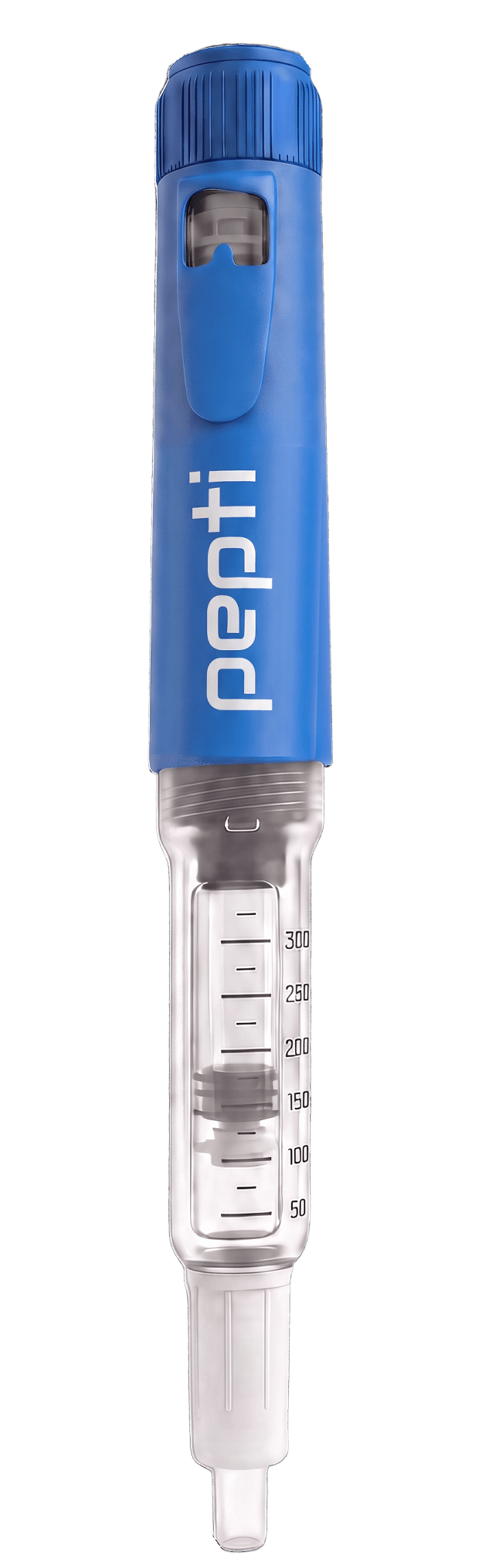
Treatments mentioned
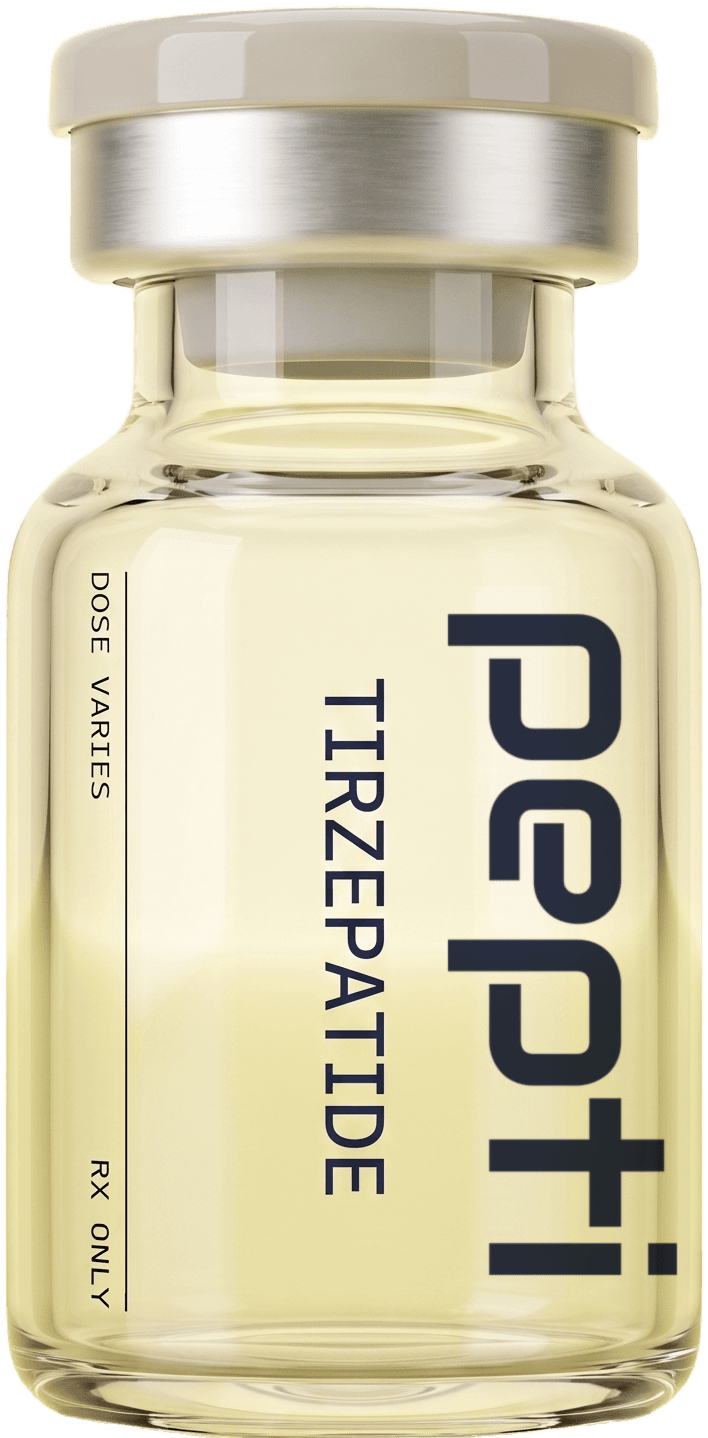
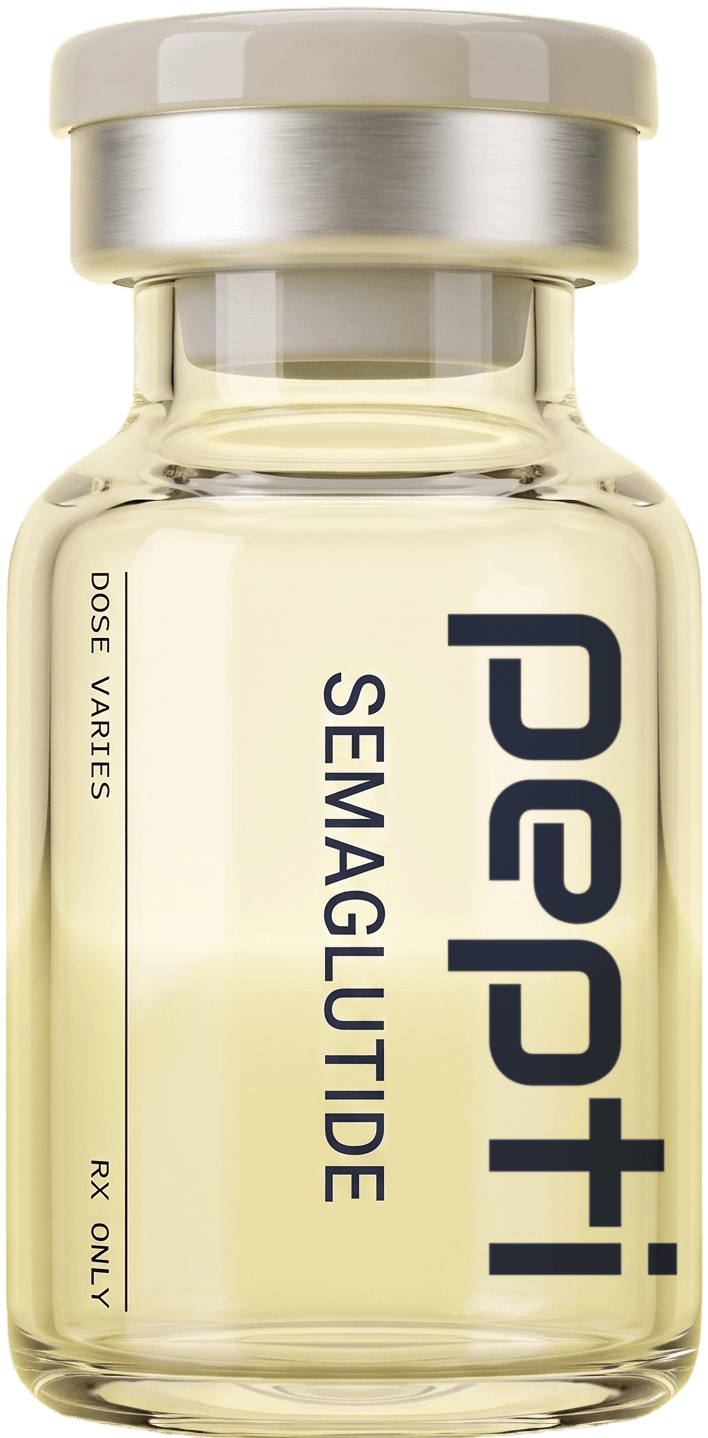
On the approved weight-management labels they were reported in 1.4% of people on semaglutide against 1.0% on placebo, and 6 to 8% on tirzepatide against 2%. Rotating sites every dose is the main fix. A site that becomes hot, swollen or more painful over several days may be infected and needs a message with a photo, and swelling of the face or throat or trouble breathing is an emergency: call 911.
This page covers what is normal at a GLP-1 injection site, what is not, why lumps form, and how technique changes it.
GLP-1 Injection Site Reactions
The short answer
| Question | Answer |
|---|---|
| How common on semaglutide? | 1.4% against 1.0% on placebo |
| How common on tirzepatide? | 6 to 8% against 2% on placebo |
| What they usually look like | Redness, itching, mild soreness, a small bruise |
| Main fix | Rotate sites every dose, at least an inch from the last |
| A lump still there next week | Possible lipohypertrophy; stop using that spot and tell your care team |
| Hot, swollen, more painful over days | Possible infection; message your care team with a photo |
| Facial or throat swelling, trouble breathing | Call 911 |
The GLP-1 medications Pepti prescribes:
| Medication | How it acts | What is in it | Price |
|---|---|---|---|
| Semaglutide | GLP-1 receptor only | Dose-specific vials at six strengths, starting with 1 mg per 1 mL at the 0.25 mg starting dose | From $99/mo, priced by dose |
| Tirzepatide | GIP and GLP-1 receptors | Dose-specific 2 mL vials at six strengths, 2.5 mg to 15 mg; the 2.5 mg and 7.5 mg vials include glycine | From $159/mo, priced by dose |
Prices are all-in: medication, physician review, refill management and shipping, with no membership fee. Injectables ship with sterile syringes and alcohol prep pads. Compounded medications are not FDA approved; the reaction rates below come from trials of the approved manufactured products, which contain the same molecules.
GLP-1 Injection Site Reactions
How common injection site reactions are
| Reaction | On the medication | On placebo |
|---|---|---|
| Injection-site reactions, semaglutide | 1.4% | 1.0% |
| Injection-site reactions, tirzepatide | 6 to 8% | 2% |
| Hypersensitivity, mostly rash and itching, not only at the site (tirzepatide) | About 5% | 3% |
| Severe hypersensitivity (tirzepatide trials) | 0.1% | None |
The semaglutide rates come from three placebo-controlled trials in 2,116 adults; the tirzepatide rates from two trials in 2,519 adults. They are different trials in different populations, so the higher tirzepatide figure is not proof that one medication is harder on the skin. The placebo columns matter too: a dummy injection also produced site reactions, which is a reminder that some of this is the needle and the technique rather than the drug.
Both sets of trials used the approved manufactured products. Pepti's compounded vials are drawn with a U-100 insulin syringe, and no trial has measured site reactions with compounded vials.
GLP-1 Injection Site Reactions
What each kind of reaction usually means
| What you see or feel | What it usually is | What to do |
|---|---|---|
| Stinging during the injection | Often alcohol that has not dried, or a blunted needle | Let the swab dry fully; use a new needle every time |
| Mild redness or itching that settles | A common local reaction | Rotate sites; mention it if it keeps happening |
| A small bruise or spot of blood | A nicked capillary | Press gently with gauze; move your rotation if it keeps happening in one area |
| A firm area right after injecting | The volume you just delivered | Settles within the hour |
| A lump still there next week | Possible lipohypertrophy | Stop using that spot; tell your care team |
| A red, warm, painful or swollen site that is not settling | Possible site reaction or infection | Message your care team with a photograph |
| Spreading rash, hives, or swelling away from the site | Possible allergic reaction | Contact your care team promptly |
| Swelling of the face, lips or throat, or trouble breathing | Serious allergic reaction | Call 911 |
Most people describe a subcutaneous insulin-syringe injection as minor; the needles are short and fine. Pain that is increasing, or a site that stays hot and red, is the reason to message rather than wait.
GLP-1 Injection Site Reactions
Lipohypertrophy: why the same spot causes lumps
Repeatedly injecting the same spot produces lipohypertrophy: thickened, rubbery tissue that absorbs unevenly. Among insulin users it is the best-documented complication of self-injection. A 2021 meta-analysis in Therapie pooled 45 studies and 26,865 participants and found it in 41.8%, with duration of injecting the strongest predictor. That evidence is from insulin, but the principle carries over: a dose delivered into thickened tissue is not reliably the dose that was written. The FITTER injection-technique recommendations, published in Mayo Clinic Proceedings in 2016, state that injections should not be given into these lesions and that correct rotation helps prevent them.
Lipohypertrophy is easier to feel than to see and is often painless, which is why it goes unnoticed. Once a month, feel over the areas you use with flat fingertips for anything raised, rubbery or firmer than the tissue around it. If you find something, stop injecting there and tell your care team, because moving out of altered tissue can change how much medication reaches the circulation.
GLP-1 Injection Site Reactions
Technique that prevents most reactions
| Step | Why it helps |
|---|---|
| Rotate every dose, at least an inch from the last site, in a pattern | Prevents soreness, lumps and lipohypertrophy |
| Use the abdomen (two inches from the navel), front or outer thigh, or back of the upper arm | These are the subcutaneous sites for both medications |
| Avoid scars, stretch marks, moles, bruises and skin that is tender, red or hard | Damaged skin reacts more and absorbs less predictably |
| Swab the site and let it dry fully | Wet alcohol stings on the way in |
| A new needle every time | A reused tip is blunted and burred and tears rather than pierces |
| Pinch a fold of skin and inject slowly | Keeps the dose in the fat layer, not the muscle |
| Use clean, unbroken skin, never through clothing | Lowers infection risk |
The semaglutide label states that the injection site can be changed without any dose adjustment, so moving between the abdomen, thigh and upper arm does not change your directions. Your directions are printed on your vial. Step-by-step guides: how to inject semaglutide, how to inject tirzepatide, peptide injection sites and how to inject peptides safely.
Never share
Never share a vial or a syringe. CDC guidance is explicit that a syringe must not be reused between people even with a new needle; sharing is a bloodborne infection route, not a hygiene nicety.
GLP-1 Injection Site Reactions
When a reaction is not just local
| Situation | What to do |
|---|---|
| A site that is red, hot, swollen or more painful over several days | Message your care team with a photograph |
| Fever with a painful site | Contact your care team the same day |
| Rash, itching or hives spreading beyond the site | Contact your care team promptly |
| Swelling of the face, lips or throat, or trouble breathing | Call 911, then tell your care team |
| A neck lump, persistent hoarseness or trouble swallowing | Not an injection-site issue; the thyroid symptoms the label asks people to watch for. Contact your physician promptly |
On tirzepatide, anaphylaxis and angioedema have been reported after marketing, and a previous serious reaction to tirzepatide or any ingredient is a contraindication. The same applies to semaglutide. If you have had a serious reaction to any GLP-1 before, say so on your intake.
Bloodwork is not required for any Pepti treatment. If your physician wants labs for your care, they'll ask through your account.
GLP-1 Injection Site Reactions
What the evidence shows, honestly
The reaction rates on this page come from large placebo-controlled trials of the approved products, which is firmer than what exists for most injectables. The technique evidence, on rotation, needles and lipohypertrophy, comes from insulin practice, which has the largest body of self-injection evidence there is.
The limits are plain. The trials used the manufactured products rather than compounded vials drawn by syringe, and the two labels' rates cannot be compared head to head. No trial has measured site reactions with compounded vials. And the insulin findings on lipohypertrophy are applied here by principle, not because a GLP-1 trial measured them. The wider picture is in GLP-1 side effects, semaglutide side effects and tirzepatide side effects.
GLP-1 Injection Site Reactions
Where to get a GLP-1 prescribed
GLP-1 medications cannot be bought legitimately without a prescription. Products sold "for research use only" have no accountable pharmacy behind their identity, purity, sterility or concentration, and a non-sterile product is its own injection-site risk. The prescription route:
- Complete a free online intake covering your history, medications and what you want help with.
- A physician licensed in your state reviews it, usually within 24 hours.
- If it is appropriate, a PCAB-accredited, FDA-registered US 503A pharmacy compounds it to that prescription. Lot test results are published at /quality/lab-results.
- It ships refrigerated with ice packs, with sterile syringes and alcohol prep pads, and your directions printed on the vial.
- Your care team stays reachable for side effects and dose questions. Refills run every 28 days, one vial per fill.
Pepti is cash-pay and does not bill insurance. Step-by-step pages: how to get semaglutide prescribed online and how to get tirzepatide prescribed online.
References
What this is based on.
References
- Wilding JPH, Batterham RL, Calanna S, et al.. Once-Weekly Semaglutide in Adults with Overweight or Obesity (STEP 1) · New England Journal of Medicine (2021) · PMID 33567185
- Lincoff AM, Brown-Frandsen K, Colhoun HM, et al.. Semaglutide and Cardiovascular Outcomes in Obesity without Diabetes (SELECT) · New England Journal of Medicine (2023) · PMID 37952131
- Wadden TA, Bailey TS, Billings LK, et al.. Effect of subcutaneous semaglutide vs placebo as an adjunct to intensive behavioral therapy on body weight in adults with overweight or obesity (STEP 3) · JAMA (2021) · PMID 33625476
- Rubino D, Abrahamsson N, Davies M, et al.. Effect of Continued Weekly Subcutaneous Semaglutide vs Placebo on Weight Loss Maintenance in Adults With Overweight or Obesity: The STEP 4 Randomized Clinical Trial · JAMA (2021) · PMID 33755728
- Marso SP, Bain SC, Consoli A, et al.. Semaglutide and Cardiovascular Outcomes in Patients with Type 2 Diabetes (SUSTAIN-6) · New England Journal of Medicine (2016) · PMID 27633186
- Davies M, Færch L, Jeppesen OK, et al.. Semaglutide 2.4 mg once a week in adults with overweight or obesity, and type 2 diabetes (STEP 2): a randomised, double-blind, double-dummy, placebo-controlled, phase 3 trial · The Lancet (2021) · PMID 33667417
- Garvey WT, Batterham RL, Bhatta M, et al.. Two-year effects of semaglutide in adults with overweight or obesity: the STEP 5 trial · Nature Medicine (2022) · PMID 36216945
- Rubino DM, Greenway FL, Khalid U, et al.. Effect of Weekly Subcutaneous Semaglutide vs Daily Liraglutide on Body Weight in Adults With Overweight or Obesity Without Diabetes: The STEP 8 Randomized Clinical Trial · JAMA (2022) · PMID 35015037
- Aronne LJ, Horn DB, le Roux CW, et al.. Tirzepatide as Compared with Semaglutide for the Treatment of Obesity (SURMOUNT-5) · New England Journal of Medicine (2025) · PMID 40353578
- Sanyal AJ, Newsome PN, Kliers I, et al.. Phase 3 Trial of Semaglutide in Metabolic Dysfunction-Associated Steatohepatitis (ESSENCE) · New England Journal of Medicine (2025) · PMID 40305708
- Wilding JPH, Batterham RL, Davies M, Van Gaal LF, Kandler K et al.. Weight regain and cardiometabolic effects after withdrawal of semaglutide: The STEP 1 trial extension · Diabetes Obes Metab (2022) · PMID 35441470
- Batsis JA, Gavras A, Gross DC, Cheever CR, Da Silva BR et al.. Effect of Incretin-Based and Nonpharmacologic Weight Loss on Body Composition: A Systematic Review · Ann Intern Med (2026) · PMID 41996180
Citations are provided for educational purposes. They do not constitute medical advice. Always discuss any peptide protocol with your prescribing physician.
Common questions
GLP-1 Injection Site Reactions, answered.
Minor redness, itching or a small bruise can happen. On the approved label, injection-site reactions were reported in 1.4% on semaglutide against 1.0% on placebo. Rotate sites, and message your care team if it is not settling.
Redness or itching at the site was reported in 6 to 8% on tirzepatide against 2% on placebo. Rotating sites is the main fix. Itching or rash that spreads beyond the site should be reported promptly.
Usually a small red patch, itching, mild soreness or a bruise at the spot, settling over a day or two. A site that grows, stays hot or gets more painful is different and needs a message with a photo.
A firm area right after injecting is the volume you delivered and settles within the hour. A lump still there a week later may be lipohypertrophy from repeated injections in one area; stop using that spot and tell your care team.
A bruise usually means the needle nicked a small capillary. Press gently with gauze. If it keeps happening in the same area, change your rotation.
Keep the site clean and avoid injecting there again until it has settled. If you are unsure what helps for your reaction, ask your care team, and send a photo if it is spreading or not improving.
A site that is red, hot, swollen or more painful over several days, especially with fever, may be infected. Message your care team the same day with a photograph.
It can. Rash or hives spreading beyond the site needs prompt contact with your care team. Swelling of the face, lips or throat, or trouble breathing, is an emergency: call 911.
No. The semaglutide label states the site can be changed without any dose adjustment. Your directions are printed on your vial.
No trial has compared them. The same molecule is involved, and technique, rotation and a new needle each time matter more than anything else you control. Lot test results are at /quality/lab-results. The free assessment goes to a physician licensed in your state. A consultation does not guarantee a prescription.
Related answers
Keep reading.
- What Is a GLP-1? Meaning, How GLP-1 Medications Work, and the List by Generic Name
- GLP-1 Long-Term Side Effects: What Years of Semaglutide and Tirzepatide Data Show
- GLP-1 Online Red Flags: The Warning Signs Before, During and After Checkout
- GLP-1 Overdose: What to Do If You Took Too Much Semaglutide or Tirzepatide
- GLP-1 Sulfur Burps: Why Semaglutide and Tirzepatide Cause Burping and What Helps
Next step
See what a physician recommends for you.
A licensed physician in your state reviews your intake to see whether treatment fits your history. A consultation does not guarantee a prescription.