Anti-Aging · Reference
GHK-Cu Side Effects: The Injection Site, the Copper Signs, and What to Report
The most common GHK-Cu side effects are at the injection site: redness, itching, stinging, tenderness or a small lump, and sometimes a faint blue-green mark that is copper not yet dispersed.
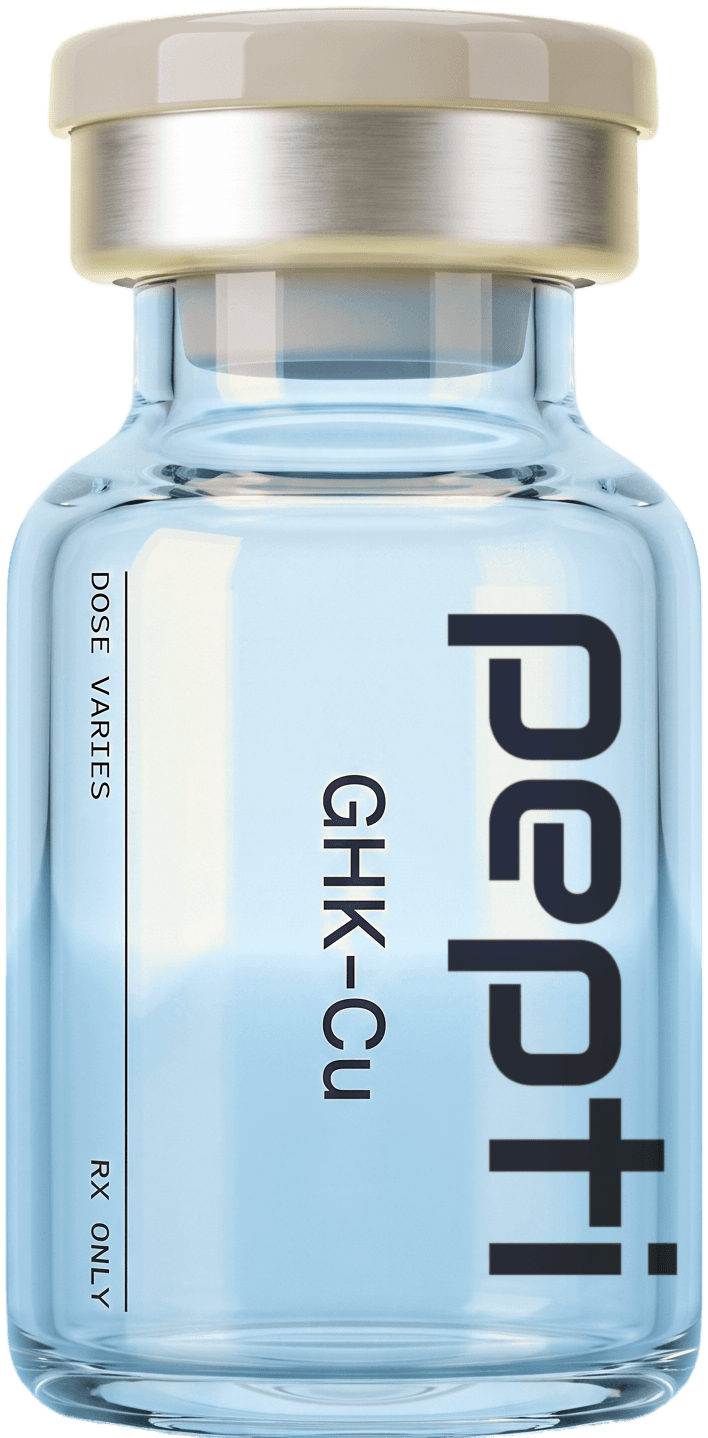
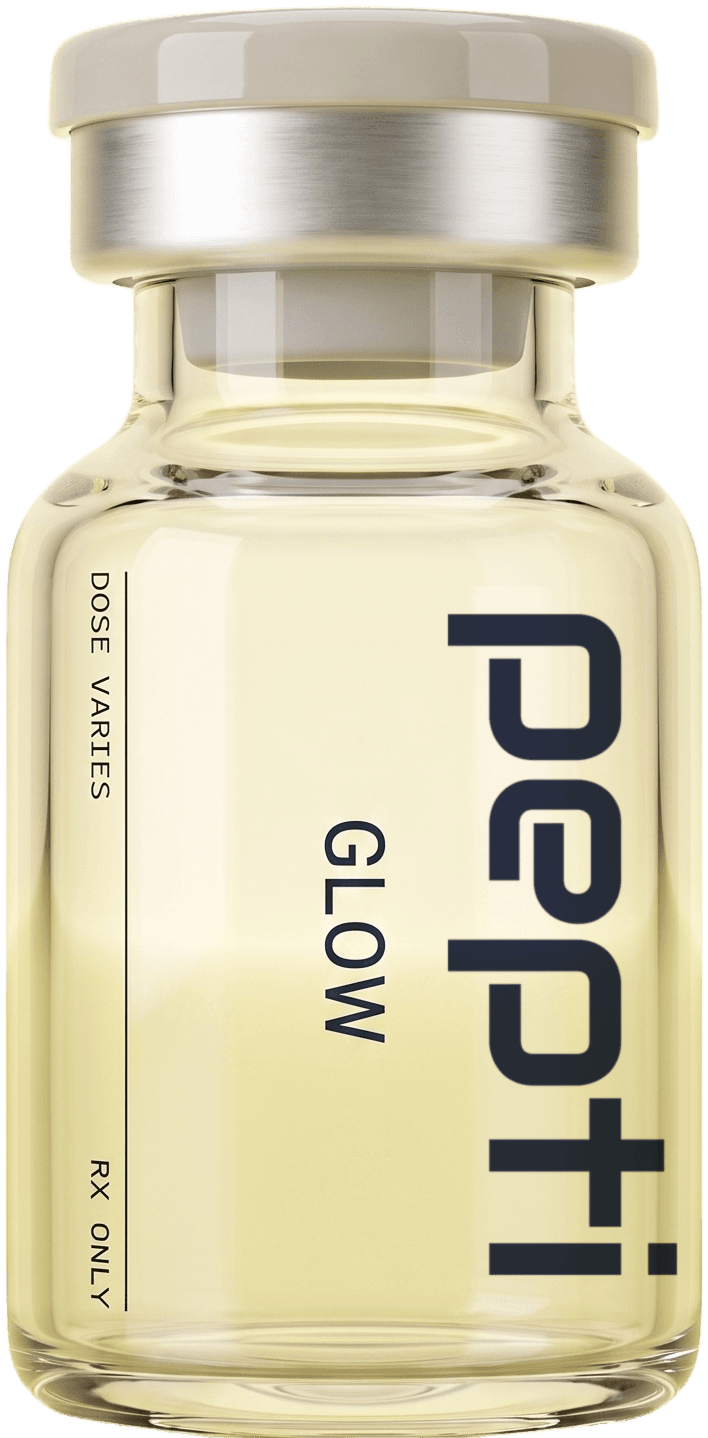
Less often, people report nausea, a metallic taste, headache or light-headedness after a dose. The pattern to know is copper excess, persistent nausea and vomiting, abdominal pain, yellowing skin or eyes, or new confusion, which is not reported at prescribed doses but is a reason to stop and contact your care team the same day. There are no randomized human trials of injectable GHK-Cu, so these are reported effects rather than measured rates, and compounded GHK-Cu is not FDA approved.
This page is a practical reference: what is common, what is uncommon, what each one usually means, what to do, and who should not take GHK-Cu. The full safety review, including the evidence base and monitoring, is in is GHK-Cu safe; the product reference is what is GHK-Cu.
GHK-Cu Side Effects
The short answer
| Side effect | How often | What it usually means | What to do |
|---|---|---|---|
| Injection-site redness, itching, stinging, tenderness, a small lump | Common | Irritation from the needle, the solution and the copper | Rotate sites; mention at follow-up |
| A faint blue-green mark at the site | Common | Copper that has not yet dispersed | Nothing; it clears |
| Nausea or a metallic taste | Uncommon | The kind of symptom copper produces at higher exposure | Message your care team |
| Headache or light-headedness after dosing | Uncommon | A transient blood-pressure dip is a plausible mechanism, not measured | Message your care team, especially on blood-pressure medication |
| A site that is hot, spreading or worse after 48 hours | Uncommon | Possible infection | Same-day message |
| Persistent vomiting, abdominal pain, jaundice, new confusion | Not reported at prescribed doses | The pattern of copper excess | Stop dosing; contact your care team the same day |
| Facial or throat swelling, widespread rash, breathing difficulty | Rare | Allergic reaction | Call 911 first, then tell your care team |
The products this page covers all contain GHK-Cu at the same strength:
| Product | What is in it | Typical directions | Price |
|---|---|---|---|
| GHK-Cu | 5 mL multi-dose vial, GHK-Cu 10 mg/mL (50 mg per vial) | 0.25 mL (25 units) once daily Monday through Friday | $239/mo |
| RADIANCE Blend | 50 mg GHK-Cu, 10 mg tesamorelin in 5 mL | 0.25 mL (25 units) once daily Monday through Friday | $249/mo |
| GLOW | 50 mg GHK-Cu, 10 mg BPC-157, 10 mg TB-500 in 5 mL | 0.25 mL (25 units) Monday through Friday mornings | $259/mo |
| KLOW Blend | 50 mg GHK-Cu, 10 mg KPV, 10 mg BPC-157, 10 mg TB-500 in 5 mL | 0.25 mL (25 units) Monday through Friday mornings | $259/mo |
At 10 mg/mL, 0.25 mL carries 2.5 mg of GHK-Cu per dose (arithmetic from the vial strength, on a U-100 insulin syringe), and each vial holds 20 doses. Your physician sets your directions after reviewing your intake, and they are printed on the vial. The blends add the side effects of their other ingredients, covered in GLOW side effects and KLOW side effects.
GHK-Cu Side Effects
Why copper shapes the side-effect list
GHK-Cu is a copper-binding tripeptide, glycine-histidine-lysine, that occurs naturally in human plasma and declines with age. Its described role is as a copper carrier, delivering copper to copper-dependent enzymes. Copper is essential in small amounts and harmful in excess, and the body regulates it tightly through absorption and excretion through the liver into bile.
That is why the side-effect picture has two layers. The everyday layer is local and mild, and it is what nearly everyone who reports anything describes. The second layer is copper-specific, belongs to identifiable people, such as those with Wilson's disease or significant liver disease, and is screened for at intake. It is also why "it occurs naturally in the body" is not a safety argument: so does copper, and copper causes disease when it accumulates.
GHK-Cu Side Effects
Common side effects
Injection-site reactions
Three things happen at once. The needle causes a small mechanical injury; the solution is at a different pH and osmolality from tissue fluid; and copper compounds are mildly irritant to skin, which Dermatologic Therapy reviewed in 2004 alongside the much rarer phenomenon of true copper hypersensitivity. A small red itchy spot after a GHK-Cu injection is almost always irritation rather than allergy, should fade over a day or two, and is helped by rotating sites. Technique is covered in how to inject peptides safely.
The blue-green mark
The solution is blue because copper complexes are blue, which is explained in why is GHK-Cu blue. A faint blue-green mark at the site is copper that has not yet dispersed, and it clears. People who have not been told about it often assume bruising. It is expected and not a fault in the vial.
| What you see | What it usually is | When to message |
|---|---|---|
| Small pink spot that itches, gone in a day or two | Irritation | Only if it keeps happening at every site |
| Faint blue-green tint under the skin | Copper not yet dispersed | No need |
| Small firm lump that softens over days | Local reaction to the injection | Mention at follow-up |
| Redness that grows, spreads, feels hot or lasts past 48 hours | Possible infection | Same day |
GHK-Cu Side Effects
Less common side effects
Nausea and a metallic taste
Nausea and a metallic taste are reported occasionally. They are the kind of symptom copper produces at higher exposure, and they are more often reported by people injecting larger volumes or more than one copper-containing product. They are a reason to tell your care team, not a reason to push through, and never a reason to change your dose yourself.
Headache and light-headedness
A minority report feeling light-headed shortly after dosing, and some report headache. GHK-Cu is described as supporting vascular signalling, and a transient blood-pressure dip is a plausible mechanism, though it has not been measured in a trial. If you take blood-pressure medication, say so at intake, and message your care team if it happens.
GHK-Cu Side Effects
Serious side effects: what to report urgently
The copper-excess pattern
The symptoms of copper excess are gastrointestinal first, nausea, vomiting and abdominal pain, followed by liver involvement, which can show as jaundice, and in severe accumulation neurological effects such as confusion. A 2003 review in Toxicology attributes the tissue injury to copper-driven oxidative stress. This pattern is not reported at prescribed GHK-Cu doses in people with normal copper handling. It is worth knowing anyway, because it is recognisable: if it appears, stop dosing and contact your care team the same day.
Allergic reaction
True allergy to GHK-Cu is rare but, as with any injected peptide, possible. Facial or throat swelling, widespread rash, wheeze or breathing difficulty after an injection is an emergency: call 911 first, then tell your care team.
Immune reaction and product quality
When the FDA placed injectable GHK-Cu on its Category 2 list in 2023, its stated concern was not copper. It was that compounded injectable GHK-Cu "may pose risk for immunogenicity due to the potential for aggregation and peptide-related impurities." That is a manufacturing-quality concern, and it is the strongest argument for getting GHK-Cu from a licensed pharmacy that tests each batch rather than from a vial labelled "research use only." Certificates of analysis are at /quality/lab-results.
If too much was injected
If you think you injected more than your printed dose, or took a dose twice, call Poison Control at 1-800-222-1222 and message your care team. Do not skip or double the next dose to make up for it; follow the directions on your vial and what your care team tells you. Severe symptoms, such as trouble breathing, fainting or confusion, mean calling 911.
GHK-Cu Side Effects
Who should not take GHK-Cu
| Situation | Why it matters |
|---|---|
| Wilson's disease | The liver cannot excrete copper into bile; an absolute reason to avoid copper peptides |
| Any other copper-metabolism disorder or known copper overload | Same reasoning |
| Significant liver disease or heavy alcohol use | The liver is the copper exit route, so the margin narrows |
| High-dose zinc supplementation | Zinc and copper compete; your physician needs to know your zinc dose to judge copper balance |
| Already on another GHK-Cu product | Every blend above carries the same 50 mg of GHK-Cu per vial; two products doubles the copper |
| Active or recent cancer | GHK-Cu is described as supporting new blood-vessel formation |
| Pregnancy or breastfeeding | Not used; safety data is absent |
The caution that catches people most often is the second product. GHK-Cu is in more Pepti products than any other single peptide, so someone on GLOW who adds standalone GHK-Cu for hair, or who is on KLOW and asks for ETERNAL, is doubling the copper without meaning to. Your physician needs to see every product you take, from any source. Alcohol is covered in can you drink alcohol on GHK-Cu, and a GLP-1 alongside it in can you take GHK-Cu with tirzepatide.
GHK-Cu Side Effects
When to message your care team, and when to call 911
| Situation | What to do |
|---|---|
| Mild redness, itch or a blue-green mark | Nothing urgent; rotate sites |
| Nausea, metallic taste, headache or light-headedness | Message your care team |
| A site that is hot, spreading or worse after 48 hours | Same-day message |
| Persistent vomiting, abdominal pain, yellowing skin or eyes, new confusion | Stop dosing; contact your care team the same day |
| Possible double dose or too much injected | Poison Control 1-800-222-1222, and message your care team |
| Facial or throat swelling, widespread rash, trouble breathing, fainting | Call 911, then tell your care team |
Your care team stays reachable after prescribing. A side effect you report goes to your physician, who may revise your directions; never change your own dose.
GHK-Cu Side Effects
What the evidence shows, honestly
| Question | What is known | What is not |
|---|---|---|
| Which side effects are reported? | Local site reactions most often; occasional nausea, metallic taste, headache, light-headedness | Rates; there are no randomized trials of the injection |
| Is copper toxicity a risk? | A recognisable clinical pattern, not reported at prescribed doses in people with normal copper handling | Cumulative copper load over years of injections; no published schedule exists |
| Does the profile differ by sex? | Nothing in the published research suggests it does | Not studied separately |
| Long-term safety? | Most human work is topical and short | Injectable use over years has not been studied |
| Interactions? | Zinc, a second GHK-Cu product, liver disease and blood-pressure medication are the known considerations | No interaction list, because the trials that would produce one have not been run |
Most of the human research on GHK-Cu is topical, in creams, mostly in women with photoaged facial skin. That tells you little about injected side effects. The honest summary is that GHK-Cu is generally reported as well tolerated and that the cautions which matter are copper cautions, identifiable at intake.
GHK-Cu Side Effects
Where GHK-Cu stands with the FDA
Injectable GHK-Cu was placed in Category 2 of the FDA's 503A bulk substances list in 2023 and was among the peptides the FDA removed on 15 April 2026; the safety-risks page now lists it as withdrawn. The 14 May 2026 update restores non-injectable GHK-Cu to Category 1, and the FDA has said it intends to consult the Pharmacy Compounding Advisory Committee on GHK-Cu before the end of February 2027. Compounded medications are not FDA approved.
GHK-Cu Side Effects
Where to get GHK-Cu prescribed
GHK-Cu cannot be bought legitimately without a prescription, and with this peptide the FDA's stated concern is exactly the impurities a research-use-only vial is not tested for. The prescription route:
- Complete a free online intake covering your history, liver health, Wilson's disease or a family history of it, supplements including zinc, every other peptide product you use, and cancer history.
- A physician licensed in your state reviews it, usually within 24 hours.
- If it is appropriate, a PCAB-accredited, FDA-registered US 503A compounding pharmacy prepares it to that prescription. Lot test results are published at /quality/lab-results.
- It ships refrigerated with ice packs, with sterile syringes, alcohol prep pads and your directions printed on the vial.
- Your care team stays reachable for questions and side effects.
Every price is all-in, covering medication, physician review, refill management and shipping, with no membership fee. Pepti is cash-pay and does not bill insurance. Refills run every 28 days, one vial per fill. Step by step: how to get GHK-Cu prescribed online; dosing detail is in GHK-Cu dosage. Bloodwork is not required for any Pepti treatment. If your physician wants labs for your care, they'll ask through your account.
References
What this is based on.
References
- Maquart FX, Pickart L, Laurent M, et al.. Stimulation of collagen synthesis in cultured fibroblasts by GHK-Cu · FEBS Letters (1988) · PMID 3169264
- Pickart L, Margolina A. GHK peptide as a natural modulator of multiple cellular pathways in skin regeneration · BioMed Research International (2015) · PMID 26236730
- Pickart L, Margolina A. Regenerative and protective actions of the GHK-Cu peptide in the light of the new gene data · International Journal of Molecular Sciences (2018) · PMID 29986520
- Pickart L. The human tri-peptide GHK and tissue remodeling · Journal of Biomaterials Science, Polymer Edition (2008) · PMID 18644225
- Pickart L, Thaler MM. Tripeptide in human serum which prolongs survival of normal liver cells and stimulates growth in neoplastic liver · Nature: New Biology (1973) · PMID 4349963
- Lane TF, et al.. SPARC is a source of copper-binding peptides that stimulate angiogenesis · Journal of Cell Biology (1994) · PMID 7514608
- Maquart FX, et al.. In vivo stimulation of connective tissue accumulation by the tripeptide-copper complex glycyl-L-histidyl-L-lysine-Cu2+ in rat experimental wounds · Journal of Clinical Investigation (1993) · PMID 8227353
- Mulder GD, et al.. Enhanced healing of ulcers in patients with diabetes by topical treatment with glycyl-l-histidyl-l-lysine copper · Wound Repair and Regeneration (1994) · PMID 17147644
- Siméon A, et al.. Expression and activation of matrix metalloproteinases in wounds: modulation by the tripeptide-copper complex glycyl-L-histidyl-L-lysine-Cu2+ · Journal of Investigative Dermatology (1999) · PMID 10383745
- Siméon A, et al.. The tripeptide-copper complex glycyl-L-histidyl-L-lysine-Cu2+ stimulates matrix metalloproteinase-2 expression by fibroblast cultures · Life Sciences (2000) · PMID 11045606
- Miller TR, et al.. Effects of topical copper tripeptide complex on CO2 laser-resurfaced skin · Archives of Facial Plastic Surgery (2006) · PMID 16847171
- Pyo HK, et al.. The effect of tripeptide-copper complex on human hair growth in vitro · Archives of Pharmacal Research (2007) · PMID 17703734
Citations are provided for educational purposes. They do not constitute medical advice. Always discuss any peptide protocol with your prescribing physician.
Common questions
GHK-Cu Side Effects, answered.
Mostly injection-site redness, itching, stinging, tenderness or a small lump, and sometimes a faint blue-green mark. Less often, nausea, a metallic taste, headache or light-headedness after a dose.
It is copper that has not yet dispersed. GHK-Cu solution is blue because copper complexes are blue, and the mark clears on its own. It is not a bruise and not a fault in the vial.
Almost always it is irritation, from the needle, the solution and the copper, and it fades over a day or two. Rotate sites. Redness that grows, spreads, feels hot or lasts past 48 hours needs a same-day message; facial or throat swelling or trouble breathing means calling 911.
It is reported occasionally, along with a metallic taste, and more often in people injecting larger volumes or more than one copper-containing product. Message your care team rather than pushing through.
Copper excess is a real pattern, nausea and vomiting, abdominal pain, jaundice, confusion, but it is not reported at prescribed doses in people with normal copper handling. Wilson's disease, other copper disorders and significant liver disease are the situations where it matters, and they are screened for at intake.
Some people report headache or light-headedness after a dose. A transient blood-pressure dip is a plausible mechanism but has not been measured. Tell your care team, especially if you take blood-pressure medication.
Tell your physician your zinc dose. Zinc and copper compete, and long-term high-dose zinc can cause copper deficiency, so your physician needs it to judge your copper balance. Do not change your supplements on your own.
Only if your physician has reviewed both. Every Pepti blend that contains GHK-Cu carries 50 mg per vial, so two products doubles the copper.
Unknown. Injectable use over years has not been studied, and there is no published schedule for cumulative copper from repeated injections.
Call Poison Control at 1-800-222-1222 and message your care team. Do not skip or double the next dose to compensate. Call 911 for trouble breathing, fainting or confusion.
No. Compounded medications are not FDA approved. Injectable GHK-Cu was removed from the FDA's Category 2 list on 15 April 2026, and the FDA intends to consult its advisory committee on GHK-Cu before the end of February 2027.
No. Bloodwork is not required for any Pepti treatment. If your physician wants labs for your care, they'll ask through your account. The free assessment goes to a physician licensed in your state. A consultation does not guarantee a prescription.
Related answers
Keep reading.
- GHK-Cu: What It Is, Where to Get It Prescribed, and What It Costs
- GHK-Cu vs KLOW: One Peptide or Four, and Which One Fits
- How Long Does GHK-Cu Take to Work? What the Studies Measured, and by Which Route
- Is GHK-Cu Banned in Sports? WADA Status, the Blends and Drug Tests
- GLOW Peptide Side Effects: What Is Reported, What Is Rare, and Who Should Avoid It
Next step
See what a physician recommends for you.
A licensed physician in your state reviews your intake to see whether treatment fits your history. A consultation does not guarantee a prescription.