Anti-Aging · Reference
Epithalon vs Glutathione: A Signalling Peptide and the Body's Main Antioxidant, Compared
Epithalon and glutathione are both short peptides on anti-aging lists, but they do completely different kinds of work.
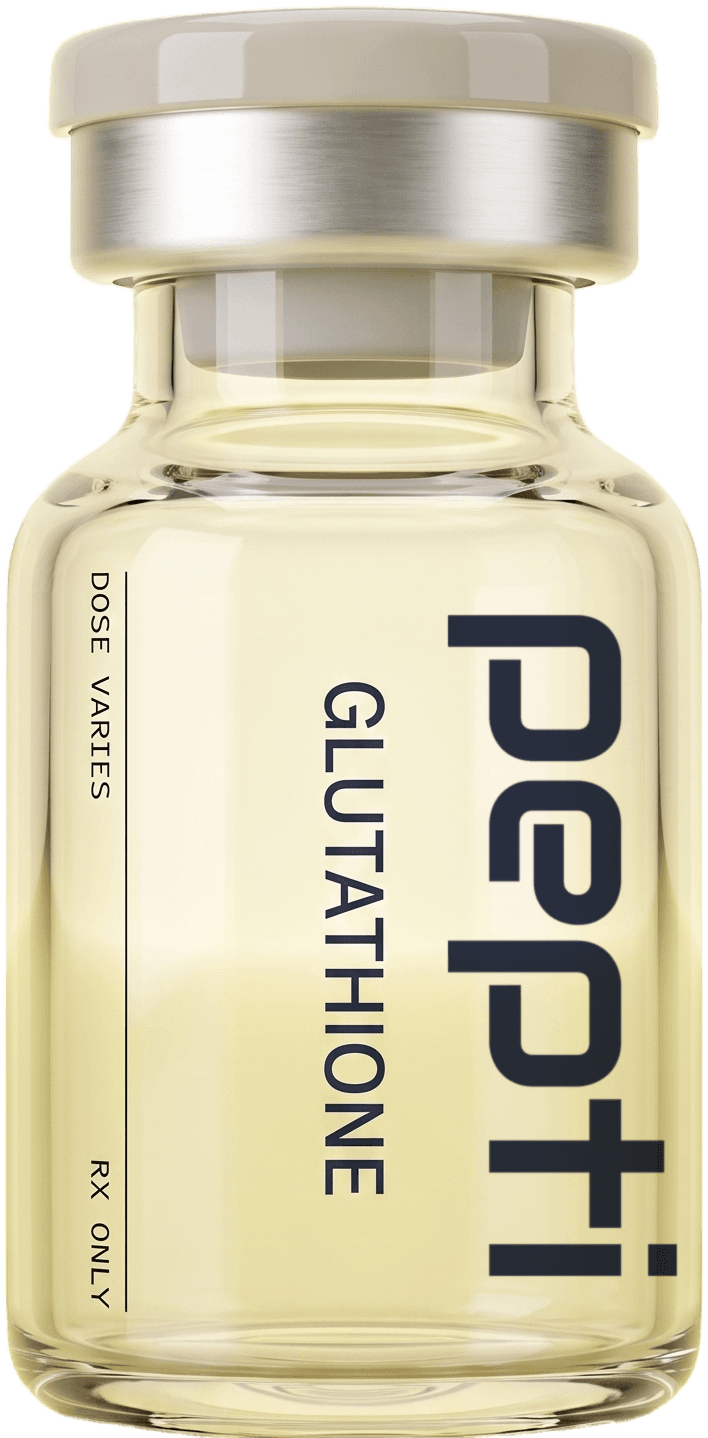
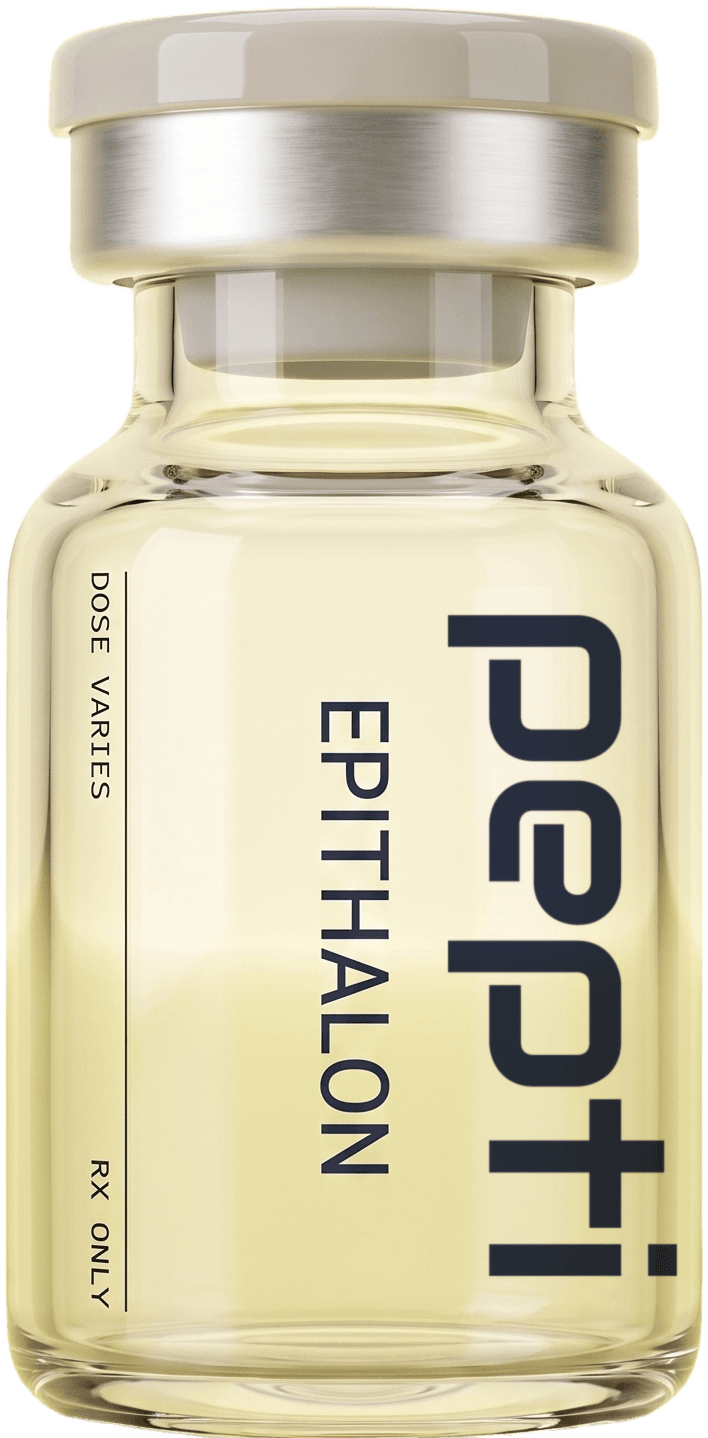
Epithalon is a four-amino-acid signalling peptide from Russian pineal research, described in cell work around telomerase and in animals and older people around evening melatonin; its human record is small, old and mostly with its parent extract. Glutathione is a three-amino-acid antioxidant that every cell already makes, the body's main defence against reactive oxygen species, with randomized human trials by mouth, by vein, by nose and on the skin, though none by the subcutaneous route Pepti uses. Glutathione is the one with the larger evidence base; Epithalon is the one built around a specific ageing hypothesis. Both are compounded prescriptions, and neither is FDA approved.
This page explains each on its own terms, puts them side by side, covers what the research does and does not show, where each stands with the FDA, how each is dosed at Pepti, what each costs, and who tends to suit which.
Epithalon vs Glutathione
The short answer
| If your main interest is | The usual prescription | What is in it | Price |
|---|---|---|---|
| Oxidative burden and antioxidant support | Glutathione | 1,000 mg glutathione in a 5 mL vial | $199/mo |
| The pineal, melatonin-rhythm and telomerase hypothesis | Epithalon | 10 mg Epithalon in a 5 mL vial | $249/mo |
| Cellular energy, often alongside glutathione | NAD+ injection | 1,000 mg NAD+ in a 10 mL vial | $249/mo |
| Epithalon inside a repair and skin stack | ETERNAL Blend | GHK-Cu, BPC-157, TB-500, Epithalon | $279/mo |
| Skin quality | GHK-Cu | 50 mg GHK-Cu in a 5 mL vial | $239/mo |
Every figure is an all-in monthly price covering the medication, physician review, refill management and shipping. There is no separate membership fee, and Pepti is cash-pay and does not bill insurance. Current pricing always lives on each product page.
Epithalon vs Glutathione
Epithalon on its own terms
What it is
Epithalon is a tetrapeptide, Ala-Glu-Asp-Gly (AEDG), designed in the 1990s at the St Petersburg Institute of Bioregulation and Gerontology, led by Vladimir Khavinson, to reproduce the amino-acid composition of Epithalamin, a crude bovine pineal extract. Much of the "human data" quoted online was generated with the extract, not the peptide. The FDA spells it Epitalon. It is not melatonin, not a sedative and not a hormone. The full reference is at what is Epithalon.
How Epithalon is described to work
- Telomerase in cultured cells. A 2003 paper reported Epithalon inducing telomerase and lengthening telomeres in cultured human fetal fibroblasts. In 2025 a Brunel University London group published the first independent replication in normal human cell lines, and also reported telomere extension in breast cancer cell lines.
- Evening melatonin. In old rhesus monkeys (2001), evening melatonin rose more than fourfold and evening cortisol fell; the parent extract raised night-time melatonin in elderly people with low pineal output. The effect appears where output is already low.
- Antioxidant activity in cells. A 2022 Aging paper reported Epithalon protecting mouse egg cells from oxidative damage in a dish, and a 2022 paper described effects on inflammatory signalling in a human cell line. This is the only point where its research overlaps with glutathione's.
What human data exists for Epithalon
There are no randomized, placebo-controlled trials of injectable Epithalon in humans. The human work is the Khavinson elderly cohorts, open-label and with the extract; a small Russian randomized study of a sublingual spray in women working night shifts that measured a melatonin metabolite, not sleep; and an uncontrolled retinitis pigmentosa series. The FDA found no study of the subcutaneous route.
Epithalon vs Glutathione
Glutathione on its own terms
What it is
Glutathione is glutamate, cysteine and glycine joined together. Every nucleated cell makes it, and it sits inside cells at millimolar concentrations, the most abundant small thiol in the body. Unlike most peptides, it does not bind a receptor; it is a working molecule, consumed and regenerated continuously. The active form is reduced glutathione (GSH), and the compounded injection is that form. It is not a hormone or a stimulant, and it is not "detox" in the marketing sense. The full reference is at what is glutathione, and whether it counts as a peptide is covered in is glutathione a peptide.
How glutathione works
The biochemistry is established in human tissue:
- Scavenging reactive oxygen species. Its cysteine thiol donates an electron to peroxides and radicals, which is what most people mean by "antioxidant."
- Enzyme cofactor. Glutathione peroxidases use it to reduce peroxides, and glutathione S-transferases attach it to reactive drug metabolites so they can be excreted. Acetaminophen overdose becomes dangerous when liver glutathione runs out.
- Immune cells. Lymphocyte function depends on intracellular glutathione; the proposed effect of supplementing is repletion, not stimulation.
Whether giving more from outside changes anything, and by which route, is a separate question.
What human data exists for glutathione
Glutathione has randomized human trials by several routes, and the results differ by route:
Study Route What was reported European Journal of Nutrition, 2015, 54 adults, six months Oral Body stores 30 to 35 percent above baseline at 1,000 mg daily; back to baseline a month after stopping Journal of Alternative and Complementary Medicine, 2011, 40 adults, four weeks Oral No change Journal of Clinical Oncology, 1995 Intravenous, with cisplatin Less peripheral neuropathy in patients with advanced gastric cancer Movement Disorders, 2009, 21 patients Intravenous Well tolerated; no difference from placebo on Parkinson's rating scores There are no randomized controlled trials of subcutaneous glutathione, the route Pepti uses. Whether a small subcutaneous dose raises tissue glutathione has not been measured.
Epithalon vs Glutathione
Head to head
| Epithalon | Glutathione | |
|---|---|---|
| Size | 4 amino acids | 3 amino acids |
| Made by the body? | No; designed to match a pineal extract | Yes, in every nucleated cell |
| Kind of molecule | Signalling peptide | Working antioxidant and enzyme cofactor |
| Core idea | Restore pineal rhythm; activate telomerase | Replenish the main cellular antioxidant |
| Receptor | None identified; in vivo mechanism called unknown by the FDA | None; acts chemically |
| Human randomized trials | None of the injection; small sublingual study measuring a melatonin metabolite | Several, by mouth, vein, nose and skin; none subcutaneous |
| Main research origin | One Russian and Ukrainian network | Many independent groups worldwide |
| Key safety question | Continuous telomerase activation and cancer | Ingredient quality (a 2019 endotoxin alert); asthma with inhaled forms |
| FDA status | Category 2 until April 2026; committee voted 7 to 4 in favour in July 2026 | Category 1, under evaluation; never Category 2 |
| Vial at Pepti | 5 mL, 2 mg/mL (10 mg) | 5 mL, 200 mg/mL (1,000 mg) |
| Typical directions | 0.25 mL (25 units) once daily, Monday through Friday | 0.41 mL (41 units) three times per week |
| Per dose | 0.5 mg | 82 mg |
| Doses per vial | 20, about 4 weeks | 12, about 4 weeks |
| Price at Pepti | $249 a month | $199 a month |
The real difference is what each is for
These are not two versions of the same thing. Glutathione is a molecule your cells use by the gram every day, and the question with an injection is whether topping it up from outside changes stores or outcomes. Epithalon is a tiny signal the body does not make, prescribed on a specific hypothesis about the pineal gland and telomeres. The difference in dose, 82 mg against 0.5 mg, reflects that: one is replenishing a working molecule, the other is delivering a signal. Milligrams do not measure strength across different molecules, and no study has compared them.
The evidence gap runs the other way from what people expect
Glutathione is often treated as a commodity and Epithalon as the advanced option. On evidence it is the reverse. Glutathione's biology is established in human tissue and it has controlled human trials, even though none used subcutaneous injection. Epithalon's telomerase and melatonin findings are from cells, monkeys and open-label work with an extract, almost all from one research network.
Epithalon vs Glutathione
Who suits which
Glutathione
Glutathione suits a person whose reason for prescribing is oxidative burden, and who wants the molecule with the deeper human research record. It is maintained while it is given rather than resetting a baseline: in the six-month oral trial, levels were back at baseline within a month of stopping. Pepti does not prescribe it for skin lightening; there is no controlled evidence that injected glutathione changes skin tone. More in glutathione benefits.
Epithalon
Epithalon suits a person interested in the pineal and circadian side of ageing, particularly where evening melatonin output is likely to be low. It is intermittent by design: the Khavinson protocols were courses separated by months. More in Epithalon benefits.
Glutathione with NAD+
NAD+ is the coenzyme behind the reaction that regenerates reduced glutathione, and the two are frequently prescribed together. That pairing has a clearer biochemical rationale than glutathione with Epithalon.
Can you take Epithalon and glutathione together?
They act on unrelated systems, and nothing in the research suggests they interfere, but no study has tested the combination. Some physicians prescribe them side by side. Starting with one makes it easier to tell what, if anything, is doing what.
Epithalon vs Glutathione
When neither is the right first step
| Situation | What makes more sense |
|---|---|
| Skin is the goal | GHK-Cu; the glutathione skin trials were oral and topical |
| Energy or fatigue is the goal | NAD+ injection, MOTS-c or SS-31 |
| Sleep is the goal | DSIP, studied for sleep directly; Epithalon has no sleep endpoint |
| Immune support is the goal | Thymosin alpha-1, which has a larger human evidence base there |
| You would rather take something by mouth | Ask your physician about oral glutathione or its precursors; the strongest controlled evidence for correcting low glutathione used oral glycine plus N-acetylcysteine |
Epithalon vs Glutathione
Where each stands with the FDA
| Epithalon (Epitalon) | Glutathione | |
|---|---|---|
| 503A category | Category 2 from 2023; removed 15 April 2026 | Category 1, "Bulk Drug Substances Under Evaluation," as of 14 May 2026; never in Category 2 |
| Advisory committee | 24 July 2026: voted 7 to 4, one abstention, to recommend the 503A Bulks List for insomnia, against the FDA staff position | Not applicable while in Category 1 |
| Other FDA action | None | A 2019 compounding alert about endotoxin in one supplier's dietary-grade powder used for IV injections |
| Final FDA determination | Pending | Evaluation ongoing |
The 2019 glutathione alert was about ingredient sourcing, not the molecule: a sterile injectable must be compounded from a pharmaceutical-grade active by a pharmacy accountable for endotoxin testing. Both remain legal to prescribe and dispense as compounded medications. Compounded medications are not FDA approved, and neither Epithalon nor glutathione injection is an FDA-approved drug. Are peptides FDA approved explains the difference.
Epithalon vs Glutathione
Dosing, side by side
| Epithalon | Glutathione | |
|---|---|---|
| Printed direction | Inject 0.25 mL (25 units) subcutaneously once daily Monday through Friday | Inject 0.41 mL (41 units) subcutaneously three times per week |
| Concentration | 2 mg/mL | 200 mg/mL |
| Per dose (math from the label) | 0.5 mg | 82 mg |
| Doses per week | 5 | 3 |
| Doses per vial | 20 | 12 (5 mL divided by 0.41 mL, whole doses) |
| Time per vial | 4 weeks | 4 weeks |
Both are injected under the skin (subcutaneously) into the abdomen or thigh, rotating sites. Glutathione must never be injected into a vein, and at 41 units its draw is larger than most peptide doses, so injecting slowly matters more. You do not need to calculate anything: your directions are printed on the vial, and your physician sets them after reviewing your intake. Never carry a unit number from one vial to the other. Refills run every 28 days, one vial per fill. Vials are multi-dose solutions shipped ready to use, refrigerated with ice packs, with sterile syringes and alcohol prep pads; glutathione oxidizes on contact with air, so keep it cold and capped. The unit charts are in Epithalon dosage and glutathione dosage.
Bloodwork is not required for any Pepti treatment. If your physician wants labs for your care, they'll ask through your account.
Epithalon vs Glutathione
Side effects
Epithalon. Generally described as well tolerated in the animal work and the Russian reports, which give no details. Reported clinically: injection-site redness, mild soreness, occasional bruising, and some early drowsiness or vivid dreams. The FDA found no human pharmacokinetic data, no clinical safety study and no adverse-event reports, which is an absence of data rather than evidence of safety.
Glutathione. An unusually deep tolerability record for a compounded injectable: the 2009 intravenous trial reported adverse events similar to placebo at 1,400 mg three times weekly. Reported with subcutaneous use: injection-site redness, mild soreness, occasional bruising, and brief light-headedness or nausea in some people. Fever, chills or shaking shortly after a dose are not expected; stop and contact your physician the same day. Mention asthma, because inhaled glutathione has been reported to provoke bronchospasm. More in glutathione side effects.
For both, there is no established interaction list. Stop and contact your physician for any reaction that is severe or spreading. Swelling of the face, lips or throat, a widespread rash or difficulty breathing needs emergency care first: call 911, then tell your care team.
Epithalon vs Glutathione
Who should not take either, or should discuss it first
| Situation | Why |
|---|---|
| Personal or strong family history of cancer | Especially for Epithalon, which activates telomerase in cell studies |
| Asthma | Especially for glutathione |
| Liver or kidney disease | Raise it at intake for glutathione |
| Pregnancy or breastfeeding | Not used; safety data is absent |
| Tested athletes | Check your sport's current prohibited list before starting |
Epithalon vs Glutathione
What the evidence shows, honestly
Glutathione's biochemistry is established in humans, and it has controlled human trials, but those trials used other routes, and the controlled Parkinson's trials did not separate from placebo; there is no trial of subcutaneous glutathione. Epithalon has telomerase findings in cells from two independent labs, rodent lifespan work, a melatonin effect in old monkeys, and a human record that is small, old, open-label and mostly with the extract. Neither has been shown to slow ageing in people. Any provider claiming either has is overstating it.
Epithalon vs Glutathione
Where to get Epithalon or glutathione prescribed
Neither can be bought legitimately without a prescription. Sites selling them "for research use only" are not accountable for what is in the vial: identity, purity, sterility and concentration are untested, which is exactly the problem the 2019 glutathione alert described. The prescription route:
- Complete a free online intake covering your history, medications and what you want help with.
- A physician licensed in your state reviews it, usually within 24 hours.
- If it is appropriate, a PCAB-accredited, FDA-registered US 503A compounding pharmacy prepares it to that prescription. Lot test results are published at /quality/lab-results.
- It ships refrigerated with your directions printed on the vial.
- Your physician stays reachable for questions and dose changes.
Pepti prescribes both in every state except Oklahoma, plus DC Step-by-step pages: how to get Epithalon prescribed online and how to get glutathione prescribed online.
References
What this is based on.
References
- Khavinson VKh, Bondarev IE, Butyugov AA. Epithalon peptide induces telomerase activity and telomere elongation in human somatic cells · Bull Exp Biol Med (2003) · PMID 12937682
- Anisimov VN, Khavinson VKh, Popovich IG et al.. Effect of Epitalon on biomarkers of aging, life span and spontaneous tumor incidence in female Swiss-derived SHR mice · Biogerontology (2003) · PMID 14501183
- Al-Dulaimi S, Thomas R, Matta S, Roberts T. Epitalon increases telomere length in human cell lines through telomerase upregulation or ALT activity · Biogerontology (2025) · PMID 40908429
- Araj SK, Brzezik J, Mądra-Gackowska K, Szeleszczuk Ł. Overview of Epitalon—Highly Bioactive Pineal Tetrapeptide with Promising Properties · Int J Mol Sci (2025) · PMID 40141333
- Khavinson VKh, Morozov VG. Peptides of pineal gland and thymus prolong human life · Neuro Endocrinol Lett (2003) · PMID 14523363
- Korkushko OV, Khavinson VKh, Shatilo VB, Antonyk-Sheglova IA. Peptide geroprotector from the pituitary gland inhibits rapid aging of elderly people: results of 15-year follow-up · Bull Exp Biol Med (2011) · PMID 22451889
- Korkushko OV, Khavinson VKh, Shatilo VB, Magdich LV. Effect of peptide preparation epithalamin on circadian rhythm of epiphyseal melatonin-producing function in elderly people · Bull Exp Biol Med (2004) · PMID 15452611
- Goncharova ND, Khavinson BK, Lapin BA. Regulatory effect of Epithalon on production of melatonin and cortisol in old monkeys · Bull Exp Biol Med (2001) · PMID 11550036
- Djeridane Y, Khavinson VKh, Anisimov VN, Touitou Y. Effect of a synthetic pineal tetrapeptide (Ala-Glu-Asp-Gly) on melatonin secretion by the pineal gland of young and old rats · J Endocrinol Invest (2003) · PMID 12809170
- Khavinson V, Razumovsky M, Trofimova S, Grigorian R, Razumovskaya A. Pineal-regulating tetrapeptide epitalon improves eye retina condition in retinitis pigmentosa · Neuro Endocrinol Lett (2002) · PMID 12195242
- Vinogradova IA, Bukalev AV, Zabezhinski MA, Semenchenko AV et al.. Effect of Ala-Glu-Asp-Gly peptide on life span and development of spontaneous tumors in female rats exposed to different illumination regimes · Bull Exp Biol Med (2007) · PMID 18856211
- Ivko OM, Linkova NS, Ilina AR, Sharova AA, Ryzhak GA. AEDG peptide regulates human circadian rhythms genes expression during pineal gland accelerated aging · Adv Gerontol (2020) · PMID 33280326
Citations are provided for educational purposes. They do not constitute medical advice. Always discuss any peptide protocol with your prescribing physician.
Common questions
Epithalon vs Glutathione, answered.
No study has compared them, and neither has been shown to slow ageing in people. Glutathione has the larger human evidence base by other routes; Epithalon is built around a specific pineal and telomerase hypothesis with thinner human data.
Epithalon is a four-amino-acid signalling peptide the body does not make, from Russian pineal research. Glutathione is a three-amino-acid antioxidant every cell makes and uses continuously. One delivers a signal; the other replenishes a working molecule.
Cell studies describe antioxidant activity for Epithalon, but that is not its main research story, which is telomerase and melatonin. Glutathione is the body's main antioxidant, with established biochemistry in human tissue.
Some physicians prescribe them together, since they act on unrelated systems. No study has tested the combination. Glutathione is more often paired with NAD+, which regenerates it.
Glutathione, clearly: randomized trials by mouth, by vein, by nose and on the skin. Epithalon has no randomized trial of the injection, and much of its human work used the parent extract.
Because they do different jobs. Glutathione is a working molecule the body uses in large amounts, so doses are in tens of milligrams; Epithalon is a signal, dosed in fractions of a milligram. The numbers are not a measure of strength.
Neither has a sleep endpoint in a trial. Epithalon raised evening melatonin in old monkeys and older people with low output, but sleep was not measured. If sleep is the goal, DSIP is the peptide studied for it directly.
At Pepti, Epithalon is $249 a month and glutathione is $199 a month, all-in, covering medication, physician review, refill management and shipping.
There is no trial-established timeline for either as an injection, so no one can tell you when, or whether, you will notice anything. The oral glutathione trial measured body stores at three and six months; the Epithalon rodent work ran over the animals' lifetimes. Neither telomere length nor glutathione level is something you can feel.
No. Compounded medications are not FDA approved. Glutathione is in 503A Category 1, under evaluation. Epithalon was removed from Category 2 in April 2026 and recommended for the 503A Bulks List by the advisory committee in July 2026, with the final determination pending. Both remain legal to prescribe.
No. Bloodwork is not required for any Pepti treatment. If your physician wants labs for your care, they'll ask through your account. The free assessment goes to a physician licensed in your state. A consultation does not guarantee a prescription.
Related answers
Keep reading.
- Epithalon: What It Is, Where to Get It Prescribed, and What It Costs
- Glutathione: What It Is, Where to Get It Prescribed, and What It Costs
- Epithalon vs MOTS-c: Pineal Rhythm or Mitochondrial Signalling, and Which One Fits
- Epithalon vs SS-31: Telomeres vs Mitochondria, Evidence, Cost, and Which One Fits
- Epithalon vs Thymalin: The Two Khavinson Peptides, Side by Side
Next step
See what a physician recommends for you.
A licensed physician in your state reviews your intake to see whether treatment fits your history. A consultation does not guarantee a prescription.