Anti-Aging · Reference
Epithalon Peptide Benefits: What the Research Actually Shows
This page takes each claimed benefit in turn and says what was studied, in what, and how much weight it can bear. It describes research, not results anyone should expect. For the biology and the FDA history in full, read what is epithalon; for directions, epithalon dosage.
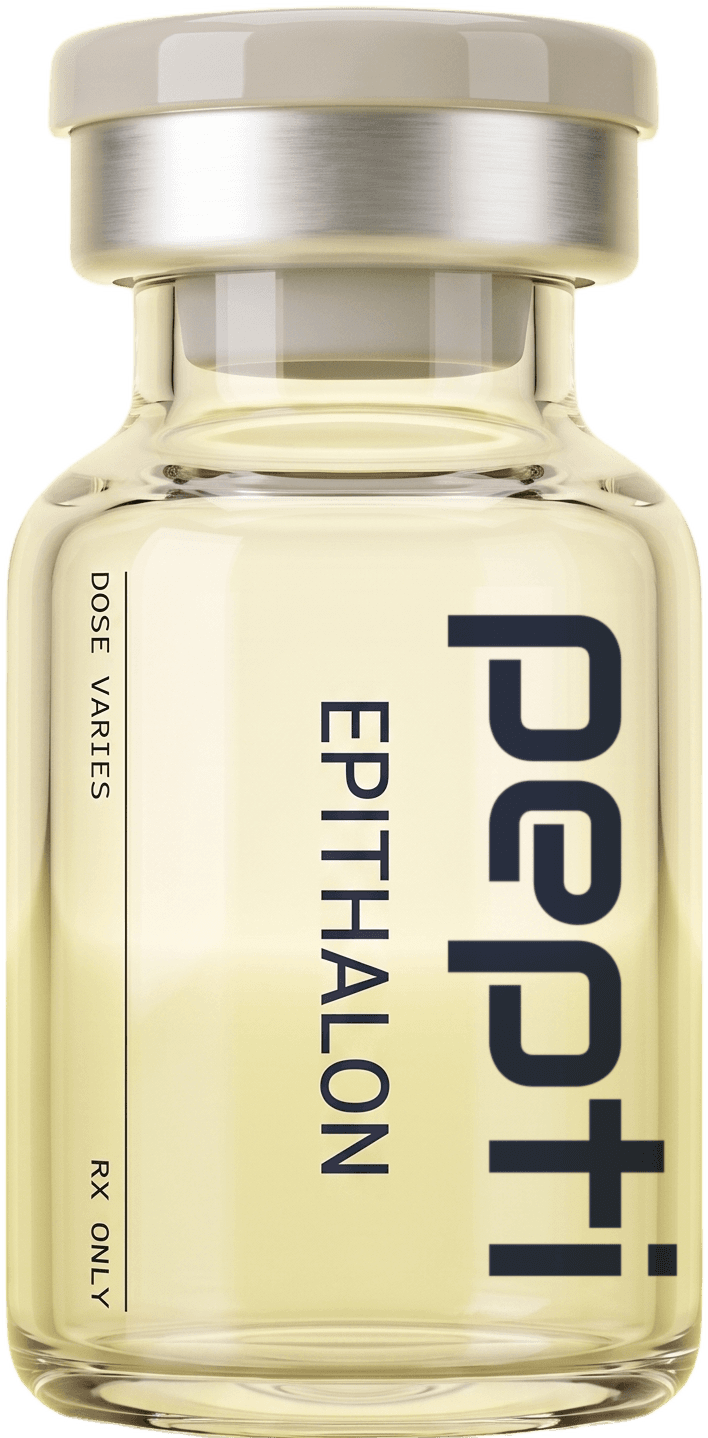
The benefits claimed for epithalon, longer telomeres, a restored melatonin rhythm, better sleep and a longer life, come mostly from cell and animal studies from one research network in Russia. Telomerase activation has been shown in cultured human cells, including a 2025 independent replication, but no one has measured telomeres in a person over the course of treatment. The human data is small, old, mostly open-label, and largely generated with Epithalamin, a pineal extract, rather than synthetic epithalon. There are no randomised, placebo-controlled trials of injectable epithalon in humans for any indication. Epithalon is a compounded prescription injection at Pepti; compounded medications are not FDA approved.
This page takes each claimed benefit in turn and says what was studied, in what, and how much weight it can bear. It describes research, not results anyone should expect. For the biology and the FDA history in full, read what is epithalon; for directions, epithalon dosage.
Epithalon Peptide Benefits
The short answer
| Claimed benefit | What the evidence is | Strength of evidence |
|---|---|---|
| Activating telomerase and lengthening telomeres | Cell (cultured human cells, 2003; independent replication, Biogerontology 2025) | Cell only; never measured in a person |
| Restoring evening melatonin | Animal (old rhesus monkeys, 2001); human with the extract, not the peptide (2004); human gene-expression and urinary-metabolite studies | Animal, plus small indirect human studies |
| Better sleep | No study of sleep as an outcome; FDA found no insomnia efficacy data (2026) | No direct evidence |
| Antioxidant and anti-inflammatory effects | Cell (mouse oocytes, human monocyte line, 2022) | Cell only |
| Longer lifespan | Animal (mice, Biogerontology 2003): mean lifespan unchanged, longest survivors lived longer | Preclinical, partial |
| Fewer tumours | Animal (same mouse study): overall tumour incidence unchanged, leukaemia less frequent | Preclinical, partial |
| Retinal function | Animal (rats, 2002); uncontrolled human case series | Preclinical, plus an uncontrolled series |
| Lower mortality and less disease in older people | Human cohorts, open-label, using Epithalamin extract (2003, 2011) | Human, but a different preparation and low quality |
The honest summary of the table: an interesting cell finding that has now been replicated once, a consistent melatonin signal where output is already low, and no controlled human trial of the injectable peptide at all.
Epithalon Peptide Benefits
What epithalon is, in one paragraph
Epithalon (also spelled Epitalon or Epithalone) is a tetrapeptide, four amino acids with the sequence Ala-Glu-Asp-Gly, abbreviated AEDG. It was designed in the 1990s at the St Petersburg Institute of Bioregulation and Gerontology, led by Vladimir Khavinson, to reproduce the amino-acid composition of Epithalamin, a crude bovine pineal extract the same group had been giving to elderly patients since the Soviet era. That lineage is the key to reading every benefit below: much of the "human data" quoted online for epithalon was generated with the extract, not the peptide. It is not melatonin, not a sedative and not a hormone.
Epithalon Peptide Benefits
Benefit 1: Telomerase and telomeres
What the research describes. The finding that made epithalon famous is a 2003 paper in the Bulletin of Experimental Biology and Medicine by Khavinson and colleagues. Adding epithalon to cultured human fetal fibroblasts, cells that do not normally express telomerase, induced the enzyme and lengthened telomeres, the protective caps on chromosome ends that shorten with each division. A companion paper the next year reported the treated cells dividing past their usual limit.
The replication. For two decades that single-laboratory result was all there was. In 2025 a group at Brunel University London published in Biogerontology the first independent replication: dose-dependent telomere lengthening in normal human epithelial and fibroblast lines. The same paper reported telomere extension in breast cancer cell lines by a different route.
Evidence type. Cell.
What it means. This is a finding in a dish. No study has measured telomere length in a living person across a course, and commercial telomere tests are too noisy to show anything. It is also double-edged: telomerase induction is the mechanism by which cells escape senescence, which is why the FDA raised continuous long-term telomerase activation as a concern in 2026, and why a history of cancer is something to raise first. Can peptides cause cancer covers the question across peptides.
Epithalon Peptide Benefits
Benefit 2: Melatonin and circadian rhythm
What the research describes. In 2001, a group at the Institute of Medical Primatology in Sochi reported that a short course of epithalon in old female rhesus monkeys raised evening melatonin more than fourfold and lowered evening cortisol, restoring the day and night swing the old animals had lost; younger monkeys showed no change. A 2004 paper reported the parent extract, Epithalamin, raising night-time melatonin in healthy elderly people whose pineal output was low, with little effect where output was normal.
The human studies of the peptide itself. A small Russian-language randomised, placebo-controlled study gave a sublingual spray to night-shift workers (20 of 75 women aged 40 to 50 received the peptide, for 20 days) and reported a 1.7-fold rise in a urinary melatonin metabolite; blinding was not specified and sleep was not measured. A 2020 paper in Advances in Gerontology reported a sublingual form altering the expression of clock genes in blood cells of middle-aged women with low melatonin output.
The complication. The mechanism is not direct. A 2003 study that perfused rat pineal glands with the peptide found no effect on melatonin secretion, and the FDA's 2026 review called the in-vivo mechanism unknown.
Evidence type. Animal, plus small indirect human studies, two of them using a sublingual form rather than an injection.
Strength. The most consistent epithalon finding: across monkeys, elderly people and shift workers, the effect appears where melatonin output is already low and is absent where it is normal. It is still a hormone and gene-expression readout, not a measured change in anyone's sleep.
Epithalon Peptide Benefits
Benefit 3: Sleep
What the research describes. Nothing directly. When the FDA reviewed epithalon for insomnia in July 2026, it found no publication reporting efficacy in patients with insomnia and no study of the subcutaneous route at all. The sleep claim is an inference from the melatonin work.
What prescribers report. The earliest thing some people describe is a subtle change in sleep timing, sleepy earlier or waking more consistently; people whose rhythm is already regular are the least likely to notice anything. These are prescriber descriptions, not trial endpoints.
Evidence type. None direct.
What it means. If sleep is the actual concern, a diagnosed sleep problem has treatments with human evidence, and DSIP is the peptide studied for sleep directly. Peptides for sleep sets out the options.
Epithalon Peptide Benefits
Benefit 4: Antioxidant and anti-inflammatory effects
What the research describes. A 2022 paper in Aging reported epithalon protecting mouse oocytes from oxidative damage in vitro, and a 2022 paper in the International Journal of Molecular Sciences described effects on inflammatory signalling in a human monocyte cell line. A 2025 review from the Medical University of Warsaw concludes that it remains uncertain whether these mechanisms are the whole story.
Evidence type. Cell.
Strength. Cell findings only, and far from anything a person would notice. If oxidative load is the concern, glutathione addresses it directly and has its own human data; see glutathione benefits.
Epithalon Peptide Benefits
Benefit 5: Lifespan in animals
What the research describes. The anchor study is Anisimov and colleagues, Biogerontology 2003. Female mice received epithalon in brief monthly courses from three months of age until natural death, 54 per group. Treatment did not change food intake, body weight or mean lifespan. It did slow the age-related shutdown of oestrous cycling, reduce chromosome aberrations in bone-marrow cells, and extend the lifespan of the last ten per cent of survivors by about 13 per cent. A 2007 paper extended the question to rats under disrupted lighting.
Evidence type. Animal.
What it means. The headline "extends lifespan" is narrower than it sounds: average lifespan was unchanged in the main study. The FDA noted a single fixed dose, female animals only and intermittent exposure. Lifespan in mice is not lifespan in people, and nothing here supports a claim about ageing in humans.
Epithalon Peptide Benefits
Benefit 6: Tumour incidence
What the research describes. In the same 2003 mouse study, overall tumour incidence was unchanged, and leukaemia was less frequent in treated animals.
Evidence type. Animal.
What it means. This finding is quoted as if epithalon protects against cancer. It does not show that. It came from intermittent courses totalling a few months of exposure, and it sits alongside the 2025 cell finding of telomere extension in cancer cell lines and the FDA's concern about continuous telomerase activation. The honest reading is that the cancer question is open in both directions.
Epithalon Peptide Benefits
Benefit 7: The retina
What the research describes. A 2002 paper in Neuro Endocrinology Letters reported the peptide preserving retinal function in rats with hereditary retinal degeneration and "a positive clinical effect" in patients with retinitis pigmentosa.
Evidence type. Animal, plus an uncontrolled human case series.
Strength. The human part is an uncontrolled series from the originating institute. It is included because it is frequently cited, not because it settles anything. Epithalon is not a treatment for any eye disease.
Epithalon Peptide Benefits
Benefit 8: The elderly cohort studies
What the research describes. This is the source of the "extends human life" claims. In 2003, Khavinson and Morozov published a summary of 266 elderly patients followed for six to eight years in St Petersburg and Kiev, treated for the first two to three years with Thymalin (a thymus extract), Epithalamin, or both. They reported fewer respiratory infections, less cardiovascular and musculoskeletal disease, and lower mortality with Epithalamin alone. A later randomised comparative study (Bulletin of Experimental Biology and Medicine, 2011) followed 39 elderly coronary patients on repeated Epithalamin courses against 40 on standard care for fifteen years and reported slower cardiovascular ageing and lower mortality.
Three things to hold in mind. The preparation was Epithalamin, the extract, not synthetic epithalon; that the peptide reproduces the extract's effects is the group's inference. The 2003 work was open-label, run by the institute that developed the products, and published as a summary rather than a full trial report. The 2011 study is the best-designed in the literature, and it is small, from the same network, and about the extract.
Evidence type. Human, but a different preparation, from a single research network.
What it means. These studies cannot support any claim about what an epithalon injection does for a person's health or lifespan. The cohort also carried most of its infection findings on Thymalin; what is Thymalin covers that sister peptide.
Epithalon Peptide Benefits
What the evidence does not establish
- That epithalon lengthens telomeres in a living person. No study has measured it.
- Any effect on human lifespan or healthspan. The cohort data are from the extract, open-label, and from the originating institute.
- Any effect on sleep. A melatonin metabolite rose in one small study; sleep was not measured.
- Long-term safety in humans. The FDA found no pharmacokinetic data, no safety study and no adverse-event reports, which is an absence of data, not evidence of safety.
- Efficacy for any condition. Epithalon is not an approved drug for anything.
Epithalon Peptide Benefits
Where epithalon stands with the FDA
Epitalon was placed in Category 2 of the FDA's 503A bulk drug substances list in 2023 and removed on 15 April 2026, after the nominators withdrew their nominations; the FDA was explicit that removal does not mean the substance meets the criteria for compounding. On 24 July 2026 the FDA's Pharmacy Compounding Advisory Committee reviewed it for the proposed use of insomnia. FDA staff recommended against inclusion; the committee voted 7 to 4, with one abstention, to recommend adding it to the 503A Bulks List. A committee vote is advice, and the FDA's final determination is pending. Epithalon remains legal to prescribe and dispense. See are peptides FDA approved.
Epithalon Peptide Benefits
Side effects, in brief
| What is reported | When | What to do |
|---|---|---|
| Injection-site redness, mild soreness, occasional bruising | Any time | Rotate sites |
| Early drowsiness or vivid dreams | Early in a course | Usually settles; report it if it persists |
| A severe or spreading reaction, facial or throat swelling, difficulty breathing | Rare | Emergency care first (call 911), then tell your physician |
The Russian clinical reports state, without details, that pineal peptide preparations had no side effects in elderly people. There is no established interaction list, which is why the intake asks for every medication you take. Anyone with a personal or strong family history of cancer should raise it explicitly. Epithalon is not used in pregnancy or breastfeeding. It is not named on the 2026 WADA Prohibited List, but the S0 class covers substances without approval for human use, so tested athletes should check first.
Epithalon Peptide Benefits
How Pepti supplies epithalon
| Product | What is in it | Typical directions | Price |
|---|---|---|---|
| Epithalon | 5 mL multi-dose vial, 2 mg/mL (10 mg epithalon) | 0.25 mL (25 units) subcutaneously once daily Monday through Friday; 20 doses, about 4 weeks | $249/mo |
| ETERNAL Blend | 50 mg GHK-Cu, 10 mg BPC-157, 10 mg TB-500, 10 mg epithalon in 5 mL | 0.25 mL (25 units) subcutaneously once daily Monday through Friday | $279/mo |
Every price is all-in, covering medication, physician review, refill management and shipping, with no separate membership fee. Pepti is cash-pay and does not bill insurance. Vials are multi-dose solutions shipped ready to use, refrigerated with ice packs, with sterile syringes and alcohol prep pads. Refills run every 28 days, one vial per fill, and the research protocols were intermittent courses rather than indefinite dosing. Your physician sets your directions after reviewing your intake, and they are printed on the vial. What is the ETERNAL blend covers the blend, and peptides for longevity and anti-aging compares epithalon with the other compounds discussed for ageing.
Epithalon Peptide Benefits
Where to get epithalon prescribed
Epithalon cannot be bought legitimately without a prescription. Sites selling it "for research use only" are not accountable for identity, purity, sterility or concentration. The prescription route:
- Complete a free online intake covering your history, medications and what you want help with.
- A physician licensed in your state reviews it, usually within 24 hours.
- If it is appropriate, a PCAB-accredited, FDA-registered US 503A compounding pharmacy prepares it to that prescription. Lot test results are published at /quality/lab-results.
- It ships refrigerated with your directions printed on the vial.
- Your physician stays reachable for questions and side effects.
Pepti prescribes epithalon in every state except Oklahoma, plus DC The step-by-step page is how to get epithalon prescribed online.
References
What this is based on.
References
- Khavinson VKh, Bondarev IE, Butyugov AA. Epithalon peptide induces telomerase activity and telomere elongation in human somatic cells · Bull Exp Biol Med (2003) · PMID 12937682
- Anisimov VN, Khavinson VKh, Popovich IG et al.. Effect of Epitalon on biomarkers of aging, life span and spontaneous tumor incidence in female Swiss-derived SHR mice · Biogerontology (2003) · PMID 14501183
- Al-Dulaimi S, Thomas R, Matta S, Roberts T. Epitalon increases telomere length in human cell lines through telomerase upregulation or ALT activity · Biogerontology (2025) · PMID 40908429
- Araj SK, Brzezik J, Mądra-Gackowska K, Szeleszczuk Ł. Overview of Epitalon—Highly Bioactive Pineal Tetrapeptide with Promising Properties · Int J Mol Sci (2025) · PMID 40141333
- Khavinson VKh, Morozov VG. Peptides of pineal gland and thymus prolong human life · Neuro Endocrinol Lett (2003) · PMID 14523363
- Korkushko OV, Khavinson VKh, Shatilo VB, Antonyk-Sheglova IA. Peptide geroprotector from the pituitary gland inhibits rapid aging of elderly people: results of 15-year follow-up · Bull Exp Biol Med (2011) · PMID 22451889
- Korkushko OV, Khavinson VKh, Shatilo VB, Magdich LV. Effect of peptide preparation epithalamin on circadian rhythm of epiphyseal melatonin-producing function in elderly people · Bull Exp Biol Med (2004) · PMID 15452611
- Goncharova ND, Khavinson BK, Lapin BA. Regulatory effect of Epithalon on production of melatonin and cortisol in old monkeys · Bull Exp Biol Med (2001) · PMID 11550036
- Djeridane Y, Khavinson VKh, Anisimov VN, Touitou Y. Effect of a synthetic pineal tetrapeptide (Ala-Glu-Asp-Gly) on melatonin secretion by the pineal gland of young and old rats · J Endocrinol Invest (2003) · PMID 12809170
- Khavinson V, Razumovsky M, Trofimova S, Grigorian R, Razumovskaya A. Pineal-regulating tetrapeptide epitalon improves eye retina condition in retinitis pigmentosa · Neuro Endocrinol Lett (2002) · PMID 12195242
- Vinogradova IA, Bukalev AV, Zabezhinski MA, Semenchenko AV et al.. Effect of Ala-Glu-Asp-Gly peptide on life span and development of spontaneous tumors in female rats exposed to different illumination regimes · Bull Exp Biol Med (2007) · PMID 18856211
- Ivko OM, Linkova NS, Ilina AR, Sharova AA, Ryzhak GA. AEDG peptide regulates human circadian rhythms genes expression during pineal gland accelerated aging · Adv Gerontol (2020) · PMID 33280326
Citations are provided for educational purposes. They do not constitute medical advice. Always discuss any peptide protocol with your prescribing physician.
Common questions
Epithalon Peptide Benefits, answered.
The research describes epithalon activating telomerase in cultured human cells, raising evening melatonin in old monkeys and in people with low output, and, in one mouse study, extending the lifespan of the longest-lived animals without changing average lifespan. None of these has been tested in a randomised trial of injectable epithalon in people.
In cells it induces telomerase, the enzyme that maintains telomeres. In animals and small human studies it is associated with higher evening melatonin where output was low. How it does that in the body is unknown; the FDA called the in-vivo mechanism unknown in 2026.
In cultured human cells, yes, in the original 2003 work and a 2025 independent replication. In a living person, nobody knows: no study has measured it.
There is no study of epithalon in people with insomnia, and sleep has not been measured as an outcome. What exists is a melatonin signal in people and animals with low output. DSIP is the peptide studied for sleep directly.
There is no human evidence that epithalon affects ageing. The ageing claims come from cell telomere work, a mouse lifespan study and elderly cohorts that used a pineal extract rather than the peptide.
No. Epithalamin is the original bovine pineal extract. Epithalon is a synthetic four-amino-acid peptide designed to reproduce its composition. Most of the human studies quoted online used Epithalamin.
Very little for the peptide itself: a small sublingual study in night-shift workers measuring a melatonin metabolite, a gene-expression study, and an uncontrolled retinal case series. There are no randomised, placebo-controlled trials of injectable epithalon in humans.
No study shows that. A mouse study found overall tumour incidence unchanged with less leukaemia, while a 2025 cell study found telomere extension in cancer cell lines and the FDA has raised continuous telomerase activation as a concern. Raise any cancer history on your intake.
Mostly injection-site redness, mild soreness or bruising, and some early drowsiness or vivid dreams. The FDA found no human safety study and no adverse-event reports, which is an absence of data rather than proof of safety.
No. Compounded medications are not FDA approved, and epithalon is not an approved drug for anything. The FDA's advisory committee voted in July 2026 to recommend adding it to the 503A Bulks List; the final determination is pending.
At Pepti, the epithalon vial is $249 a month and the ETERNAL Blend is $279, all-in, covering medication, physician review, refill management and shipping.
No. Bloodwork is not required for any Pepti treatment. If your physician wants labs for your care, they'll ask through your account. The free assessment goes to a physician licensed in your state. A consultation does not guarantee a prescription.
Next step
See what a physician recommends for you.
A licensed physician in your state reviews your intake and decides what is appropriate. A consultation does not guarantee a prescription.