Anti-Aging · Reference
Epithalon vs SS-31: Telomeres vs Mitochondria, Evidence, Cost, and Which One Fits
This page explains each on its own terms, puts them side by side, covers what the research does and does not show, where each stands with the FDA, how each is dosed, what each costs at Pepti, and who tends to suit which.
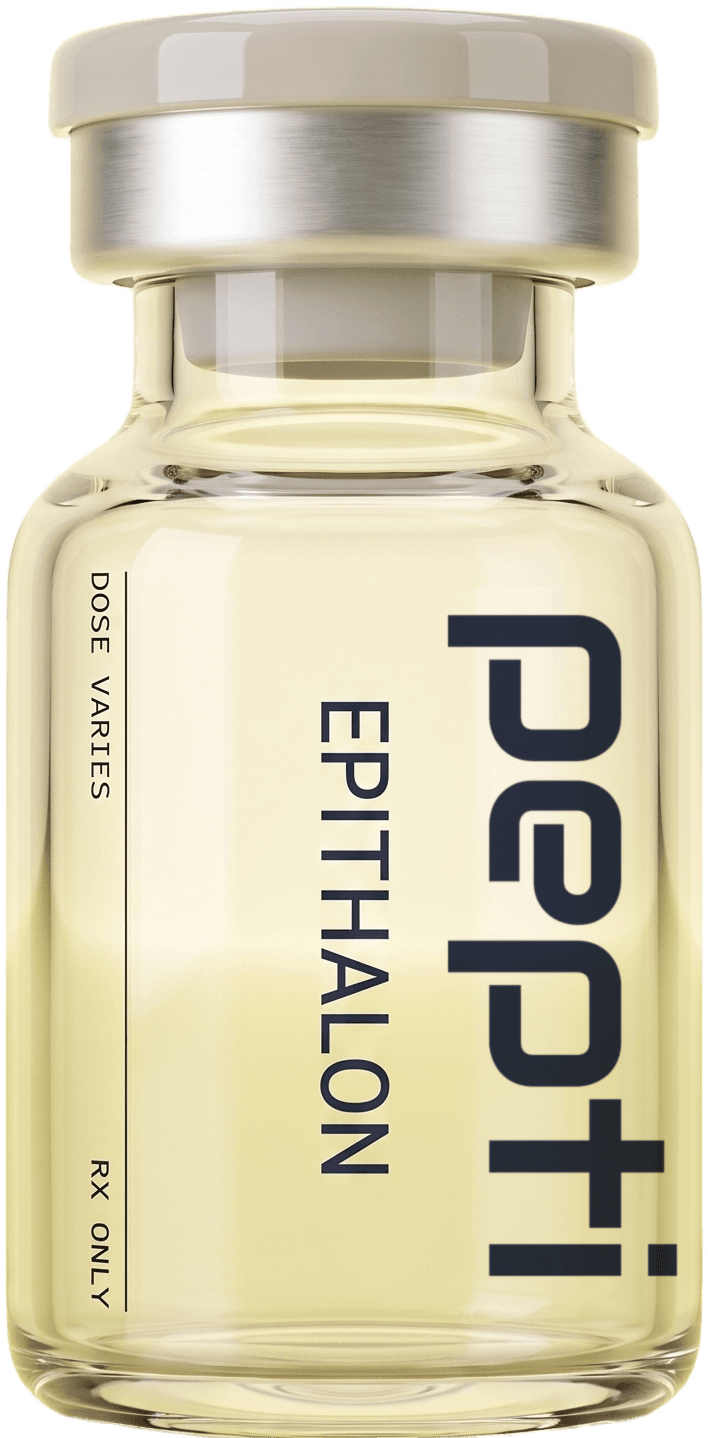
Treatments mentioned
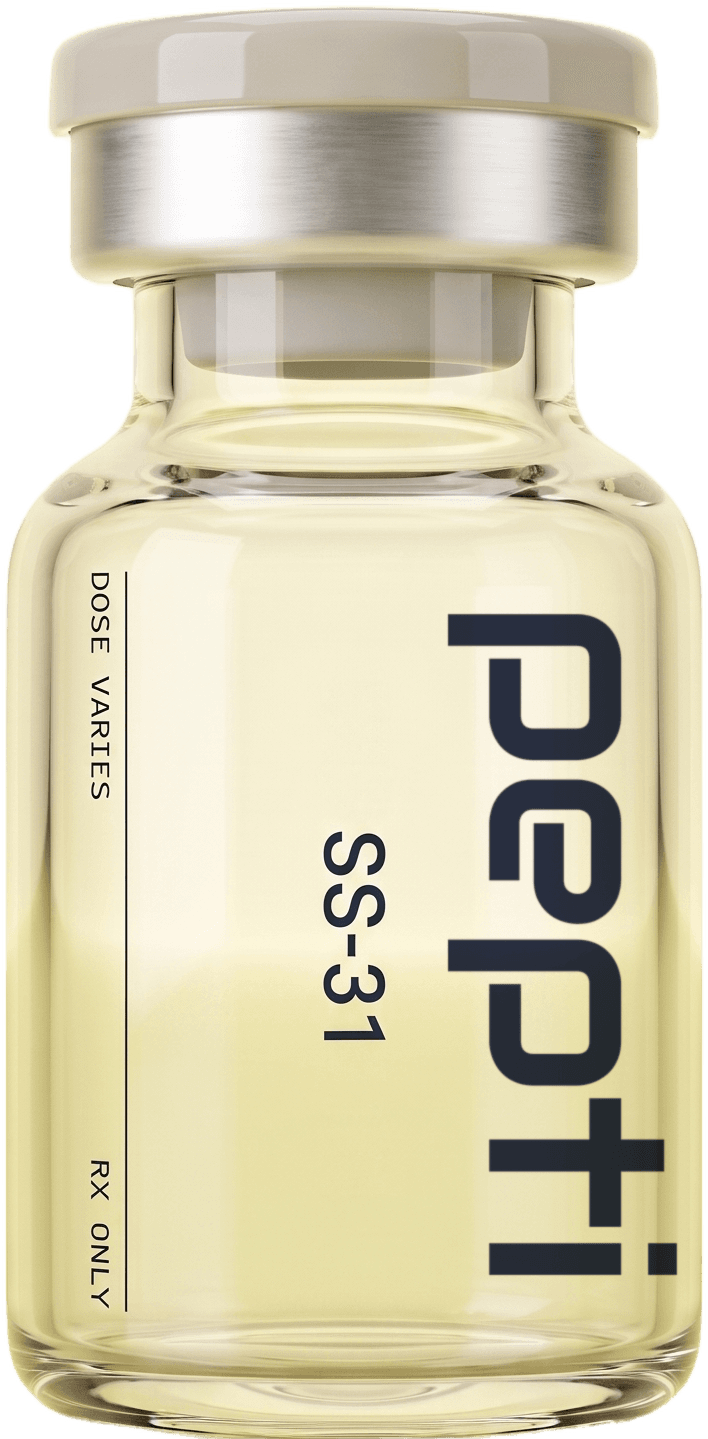
Epithalon and SS-31 are both prescribed as anti-aging peptides, but they work on different parts of the cell and sit on very different evidence. Epithalon is a four-amino-acid peptide from a Russian ageing programme, described around telomerase in cultured cells and evening melatonin in old animals, with a small human record made mostly with its parent extract. SS-31 (elamipretide) is a four-amino-acid peptide that binds cardiolipin in the inner mitochondrial membrane, with randomized human trials in four diseases whose primary endpoints were missed. Both are prescription-only, compounded by a licensed US pharmacy, and neither compounded product is FDA approved.
This page explains each on its own terms, puts them side by side, covers what the research does and does not show, where each stands with the FDA, how each is dosed, what each costs at Pepti, and who tends to suit which.
Epithalon vs SS-31
The short answer
| If your main question is | The usual prescription | What is in it | Price |
|---|---|---|---|
| The telomere and circadian side of ageing | Epithalon | 10 mg epithalon in a 5 mL vial | $249/mo |
| Cellular energy and mitochondrial structure | SS-31 (Elamipretide) | 10 mg SS-31 in a 5 mL vial | $249/mo |
| Epithalon alongside skin and repair peptides | ETERNAL Blend | Epithalon with GHK-Cu, BPC-157 and TB-500 | $279/mo |
| Mitochondrial signalling rather than structure | MOTS-c | 10 mg MOTS-c in a 5 mL vial | $259/mo |
| A coenzyme the respiratory chain uses | NAD+ Injection | 1000 mg NAD+ in a 10 mL vial | $249/mo |
Every figure is an all-in monthly price covering the medication, physician review, refill management and shipping. There is no separate membership fee, and Pepti is cash-pay and does not bill insurance. Epithalon and SS-31 cost the same at Pepti, so the choice between them is about which question you are asking, not about price.
Epithalon vs SS-31
Epithalon on its own terms
What it is
Epithalon is a tetrapeptide, Ala-Glu-Asp-Gly (AEDG). It was designed in the 1990s at the St Petersburg Institute of Bioregulation and Gerontology, led by Vladimir Khavinson, to reproduce the amino-acid composition of Epithalamin, a crude bovine pineal extract the same group had given to elderly patients for years. That lineage matters: much of the human data quoted online for epithalon was generated with the extract, not the synthetic peptide. It is not melatonin, not a sedative and not a hormone. The full reference is at what is Epithalon.
How epithalon is described to work
- Telomerase in cultured human cells. A 2003 paper in the Bulletin of Experimental Biology and Medicine reported that epithalon induced telomerase and lengthened telomeres in cultured human fetal fibroblasts. In 2025 a group at Brunel University London published in Biogerontology the first independent replication in normal human cell lines, and also reported telomere extension in breast cancer cell lines.
- Evening melatonin where it is low. A 2001 study in old female rhesus monkeys reported evening melatonin rising more than fourfold and evening cortisol falling; younger monkeys showed no change. A 2004 paper reported the parent extract raising night-time melatonin in elderly people whose pineal output was low.
- Antioxidant and anti-inflammatory activity in cells. 2022 papers in Aging and the International Journal of Molecular Sciences describe effects on oxidative damage in mouse oocytes and on inflammatory signalling in a human monocyte line.
What human data exists for epithalon
There are no randomized, placebo-controlled trials of injectable epithalon in humans for any indication. What exists in people is the Khavinson elderly cohorts (with the Epithalamin extract, open-label, from the originating institute), a small Russian-language study of a sublingual spray in women working night shifts that measured a urinary melatonin metabolite rather than sleep, and an uncontrolled retinal case series. When the FDA reviewed epithalon in July 2026 it found no human pharmacokinetic data and no study of the subcutaneous route.
Epithalon vs SS-31
SS-31 on its own terms
What it is
SS-31 is also a tetrapeptide, built in an alternating aromatic and cationic pattern that lets it cross cell membranes and concentrate on the inner mitochondrial membrane without depending on membrane potential. It was developed by Hazel Szeto and Peter Schiller; its development code was MTP-131 and its generic name is elamipretide. In September 2025 the FDA granted accelerated approval to a branded elamipretide product for one rare genetic disease, Barth syndrome. The compounded vial is not that product. The full reference is at what is SS-31.
How SS-31 is described to work
- Binding cardiolipin. A 2013 paper in the Journal of the American Society of Nephrology reported high-affinity binding to cardiolipin, a lipid found almost only in the inner mitochondrial membrane, and protection of the cristae (the membrane folds where ATP is made) in rat kidneys after ischaemia.
- Stopping cytochrome c acting as a peroxidase. The same work reports the peptide and cardiolipin complex inhibiting a self-damaging peroxidase activity while leaving electron transport intact. That is the specific sense in which SS-31 is said to reduce reactive oxygen species.
- Faster ATP recovery. Animal work reports faster recovery of ATP once blood flow returns.
What human data exists for SS-31
SS-31 has more human trial data than almost any other compounded peptide, and the results are mixed. Randomized, double-blind, placebo-controlled trials ran in four diseases at 40 mg daily: TAZPOWER in Barth syndrome, MMPOWER-3 in primary mitochondrial myopathy (218 people), PROGRESS-HF in heart failure and ReCLAIM-2 in dry macular degeneration. The randomized primary endpoints were missed in every one. The positive findings are open-label improvements in Barth syndrome sustained to 168 weeks, a fatigue signal in a short myopathy crossover, a genotype subgroup in the phase 3, and a secondary imaging endpoint in the eye trial. There are no randomized trials in healthy adults or for any longevity use.
Epithalon vs SS-31
Head to head
| Epithalon | SS-31 | |
|---|---|---|
| Size | Four amino acids (AEDG) | Four amino acids |
| Origin | Modelled on a bovine pineal extract, St Petersburg, 1990s | Designed by Szeto and Schiller |
| Where it is described to act | Telomerase; pineal and circadian signalling | Cardiolipin in the inner mitochondrial membrane |
| Main described mechanism | Telomerase induction in cultured cells; restoring low evening melatonin | Protecting cristae; blocking cytochrome c peroxidase activity |
| Strongest independent evidence | 2025 Brunel replication in cultured cells | Randomized trials in four diseases |
| Randomized human trials | None for injectable epithalon | Yes, four diseases, all missed primary endpoints |
| Trials in healthy adults | None | None |
| An FDA-approved version exists | No | Yes, for Barth syndrome only, at 40 mg daily |
| Key safety question | Long-term telomerase activation and cancer | Injection-site reactions; hypersensitivity on the approved label |
| Vial at Pepti | 5 mL, 2 mg/mL (10 mg) | 5 mL, 2 mg/mL (10 mg) |
| Typical directions | 0.25 mL (25 units) once daily, Monday to Friday | 0.25 mL (25 units) Monday to Friday mornings |
| Per dose | 0.5 mg | 0.5 mg |
| Doses per vial | 20, about 4 weeks | 20, about 4 weeks |
| Price at Pepti | $249 a month | $249 a month |
| In a Pepti blend | ETERNAL | Single vial only |
The real difference is what each is aimed at
People ask which is "better for anti-aging." That framing hides the actual difference. Epithalon's story is about chromosome caps and the body's day and night timing signal. SS-31's story is about the machinery inside mitochondria that turns fuel into ATP. Neither has been tested for ageing in people, and no study has compared them. The useful question is which hypothesis fits what you are hoping to address, and how much uncertainty you are comfortable with.
The evidence is uneven in opposite ways
Epithalon has a long story and little controlled data: decades of Russian work, most of it in cells, animals and extract-treated cohorts. SS-31 has a lot of controlled data and a sobering result: well-run trials in people with specific diseases that mostly did not meet their main goals. Neither profile translates into a known effect for a healthy adult taking a compounded vial.
Epithalon vs SS-31
Who suits which
Epithalon
Epithalon is the one discussed when the interest is the telomere and circadian side of ageing, or the Khavinson longevity programme as a whole. Prescribers note the melatonin findings appear where output was already low, so people with a regular day and night rhythm are the least likely to notice anything. It is a more cautious conversation for anyone with a personal or strong family history of cancer.
SS-31
SS-31 is the one discussed when the interest is mitochondrial function and cellular energy. It suits someone who understands that the trial dose was 40 mg a day in people with diagnosed mitochondrial disease, that the compounded dose is a small fraction of that, and that no trial shows what the compounded dose does. Anyone with Barth syndrome or a diagnosed primary mitochondrial disease belongs with a specialist and the approved product, not a compounded vial.
Can you take epithalon and SS-31 together?
They act on different systems, and some physicians prescribe them in the same period. No study has tested the combination, so it means two unknowns at once. Whether a combination is appropriate for you is something your physician weighs after reviewing your intake.
Epithalon vs SS-31
When neither is the right first step
| Situation | What makes more sense |
|---|---|
| Tiredness you have not had checked | A medical work-up: iron, thyroid, B12, sleep and medications explain far more fatigue than mitochondria do |
| A diagnosed sleep disorder | Treatment for that diagnosis; epithalon has no insomnia evidence. DSIP is the peptide studied for sleep directly |
| Barth syndrome or a primary mitochondrial disease | A specialist and the FDA-approved product |
| Metabolic signalling and body composition | MOTS-c, described around AMPK rather than membrane structure |
| Immune ageing | Thymalin, epithalon's sister compound from the same institute |
Epithalon vs SS-31
Where each stands with the FDA
The two are in unusually different regulatory positions. As of the FDA pages checked in September 2026:
| Epithalon | SS-31 (elamipretide) | |
|---|---|---|
| 2023 | Placed in Category 2 of the 503A interim list | Never in Category 2 |
| 15 April 2026 | Removed from Category 2 after nominations were withdrawn | Not involved |
| Advisory committee | 24 July 2026: voted 7 to 4, one abstention, to recommend the 503A Bulks List, against FDA staff advice | Not applicable |
| Route to compounding | Awaiting final FDA determination on the bulks list | A component of an FDA-approved drug since September 2025, subject to the "essentially a copy" rule |
| FDA-approved product | None | One branded product, for Barth syndrome only |
For SS-31, the approved product is an 80 mg/mL solution given as 40 mg once daily, for one rare disease. A compounded 2 mg/mL multi-dose vial is a different strength and is not that product. For both, a committee vote or an approval of a different product does not make the compounded vial approved. Compounded medications are not FDA approved. Are peptides FDA approved explains the difference between not approved and not legal.
Epithalon vs SS-31
Dosing, side by side
Both vials are 5 mL at 2 mg/mL, and both are drawn to the same 0.25 mL, which is 25 units on a U-100 insulin syringe, under the skin into the abdomen or thigh, rotating sites. Epithalon is once daily Monday through Friday; SS-31 is Monday through Friday mornings. At 2 mg/mL that volume delivers 0.5 mg of either peptide. You do not need to calculate anything: your directions are printed on the vial, and your physician sets them after reviewing your intake.
| What you read | Epithalon | SS-31 |
|---|---|---|
| Dose volume | 0.25 mL | 0.25 mL |
| On a U-100 syringe | 25 units | 25 units |
| Per dose | 0.5 mg | 0.5 mg |
| Doses per week | 5 | 5 |
| Doses per vial | 20 | 20 |
| Time per vial | About 4 weeks | About 4 weeks |
Twenty doses per vial covers about four weeks, which is why refills run every 28 days, one vial at a time. Both ship refrigerated with ice packs, ready to use, with sterile syringes and alcohol prep pads. Epithalon's research protocols were intermittent courses separated by months, and prescribers generally follow that pattern; how long a course runs is set by your physician. The detail is in epithalon dosage and SS-31 dosage.
Epithalon vs SS-31
Side effects
Epithalon. What gets reported is mostly injection-site redness, mild soreness and occasional bruising, with some early drowsiness or vivid dreams. The FDA's 2026 review found no human safety study, no formal toxicology and no adverse-event reports, which is an absence of data rather than evidence of safety. Its specific concern was that continuous, long-term telomerase activation could in principle let cells escape senescence.
SS-31. Injection-site reactions dominate across every trial: itching, pain, bruising and redness, reported by most participants and usually mild, at the 40 mg trial dose. The approved product's label warns of hypersensitivity reactions, including serious allergic reactions, and reduces the dose in severe kidney impairment.
For both, a severe or spreading reaction, swelling of the face or throat, or difficulty breathing needs emergency care first (call 911), then tell your physician.
Epithalon vs SS-31
Who should not take either, or should discuss it first
| Situation | Why |
|---|---|
| Pregnancy or breastfeeding | Not used; safety data is absent |
| Personal or strong family history of cancer | Especially for epithalon, because of telomerase activation |
| Severe kidney impairment | Especially for SS-31; the approved label adjusts the dose |
| Past allergic reaction to an injected medicine | The SS-31 label warns of hypersensitivity |
| Tested athletes | Neither is named on the 2026 WADA Prohibited List; the S0 class covers substances without approval for human use, which can reach epithalon. Check before starting |
Epithalon vs SS-31
What the evidence shows, honestly
Neither peptide has been shown to slow ageing in people. Epithalon has a consistent cell finding on telomerase, now independently replicated in a dish, animal work on melatonin and lifespan, and human cohorts that used a different preparation. SS-31 has a precise mechanism and a large trial programme, and the trials mostly missed their primary endpoints, in people with diagnosed diseases, at a dose many times higher than the compounded one. Any provider claiming either reverses ageing is overstating it. The deeper read on each is in epithalon benefits and SS-31 benefits.
Epithalon vs SS-31
Where to get epithalon or SS-31 prescribed
Neither can be bought legitimately without a prescription. Sites selling them "for research use only" are not accountable for what is in the vial: identity, purity, sterility and concentration are untested. The prescription route:
- Complete a free online intake covering your history, medications and what you want help with.
- A physician licensed in your state reviews it, usually within 24 hours.
- If it is appropriate, a PCAB-accredited, FDA-registered US 503A compounding pharmacy prepares it to that prescription. Lot test results are published at /quality/lab-results.
- It ships refrigerated with your directions printed on the vial.
- Your physician stays reachable for questions and dose changes.
Pepti prescribes both in every state except Oklahoma, plus DC Step-by-step pages: how to get epithalon prescribed online and how to get SS-31 prescribed online.
References
What this is based on.
References
- Khavinson VKh, Bondarev IE, Butyugov AA. Epithalon peptide induces telomerase activity and telomere elongation in human somatic cells · Bull Exp Biol Med (2003) · PMID 12937682
- Anisimov VN, Khavinson VKh, Popovich IG et al.. Effect of Epitalon on biomarkers of aging, life span and spontaneous tumor incidence in female Swiss-derived SHR mice · Biogerontology (2003) · PMID 14501183
- Al-Dulaimi S, Thomas R, Matta S, Roberts T. Epitalon increases telomere length in human cell lines through telomerase upregulation or ALT activity · Biogerontology (2025) · PMID 40908429
- Araj SK, Brzezik J, Mądra-Gackowska K, Szeleszczuk Ł. Overview of Epitalon—Highly Bioactive Pineal Tetrapeptide with Promising Properties · Int J Mol Sci (2025) · PMID 40141333
- Khavinson VKh, Morozov VG. Peptides of pineal gland and thymus prolong human life · Neuro Endocrinol Lett (2003) · PMID 14523363
- Korkushko OV, Khavinson VKh, Shatilo VB, Antonyk-Sheglova IA. Peptide geroprotector from the pituitary gland inhibits rapid aging of elderly people: results of 15-year follow-up · Bull Exp Biol Med (2011) · PMID 22451889
- Korkushko OV, Khavinson VKh, Shatilo VB, Magdich LV. Effect of peptide preparation epithalamin on circadian rhythm of epiphyseal melatonin-producing function in elderly people · Bull Exp Biol Med (2004) · PMID 15452611
- Goncharova ND, Khavinson BK, Lapin BA. Regulatory effect of Epithalon on production of melatonin and cortisol in old monkeys · Bull Exp Biol Med (2001) · PMID 11550036
- Djeridane Y, Khavinson VKh, Anisimov VN, Touitou Y. Effect of a synthetic pineal tetrapeptide (Ala-Glu-Asp-Gly) on melatonin secretion by the pineal gland of young and old rats · J Endocrinol Invest (2003) · PMID 12809170
- Khavinson V, Razumovsky M, Trofimova S, Grigorian R, Razumovskaya A. Pineal-regulating tetrapeptide epitalon improves eye retina condition in retinitis pigmentosa · Neuro Endocrinol Lett (2002) · PMID 12195242
- Vinogradova IA, Bukalev AV, Zabezhinski MA, Semenchenko AV et al.. Effect of Ala-Glu-Asp-Gly peptide on life span and development of spontaneous tumors in female rats exposed to different illumination regimes · Bull Exp Biol Med (2007) · PMID 18856211
- Ivko OM, Linkova NS, Ilina AR, Sharova AA, Ryzhak GA. AEDG peptide regulates human circadian rhythms genes expression during pineal gland accelerated aging · Adv Gerontol (2020) · PMID 33280326
Citations are provided for educational purposes. They do not constitute medical advice. Always discuss any peptide protocol with your prescribing physician.
Common questions
Epithalon vs SS-31, answered.
Neither has been shown to slow ageing in people, and no study has compared them. Epithalon is described around telomerase and melatonin rhythm; SS-31 around mitochondrial membranes and ATP production. They answer different questions rather than competing for the same job.
SS-31, by a wide margin. It has randomized trials in four diseases, though the primary endpoints were missed in each. Injectable epithalon has no randomized human trials, and most of its human data used the parent pineal extract.
A branded elamipretide product was granted accelerated approval in September 2025 for Barth syndrome only, at 40 mg daily. The compounded SS-31 vial is a different product and is not FDA approved. Compounded medications are not FDA approved.
Nobody knows. Telomere lengthening has been reported in cultured human cells, in 2003 and in a 2025 independent replication. No study has measured whether a course changes telomere length in a person.
Some physicians prescribe them in the same period because they act on different systems, but no study has tested the combination. Your physician reviews that question with your intake.
SS-31 has the larger human safety record, from hundreds of trial participants, with injection-site reactions the main issue. Epithalon has no human safety study, and the FDA raised a theoretical concern about long-term telomerase activation.
There is no trial-established timeline for either in healthy adults. The SS-31 trials ran from four to 48 weeks in people with specific diseases; the epithalon human work is mostly extract cohorts and short courses. Neither tells you when or whether you will notice anything.
At Pepti, both are $249 a month, all-in, including the medication, physician review, refill management and shipping. The ETERNAL Blend, which contains epithalon, is $279 a month.
The trials used 40 mg a day. Pepti's typical directions deliver 0.5 mg. No trial shows what the compounded dose does in any population. Your directions are printed on the vial; never change them yourself.
Neither is named on the 2026 WADA Prohibited List. The S0 class covers substances without approval for human use, which can reach epithalon. Tested athletes should confirm with their anti-doping organization and tell their physician before starting either.
Bloodwork is not required for any Pepti treatment. If your physician wants labs for your care, they'll ask through your account. The free assessment goes to a physician licensed in your state. A consultation does not guarantee a prescription.
Next step
See what a physician recommends for you.
A licensed physician in your state reviews your intake and decides what is appropriate. A consultation does not guarantee a prescription.