Weight Loss · Reference
Can You Take ELEVATE Blend With Tirzepatide or Semaglutide?
This page covers what ELEVATE is, how each component sits next to a GLP-1, what is and is not known, the symptoms that could come from either, psychiatric medication, how the schedules fit, and how to add ELEVATE properly. Everything here applies to semaglutide the same way.
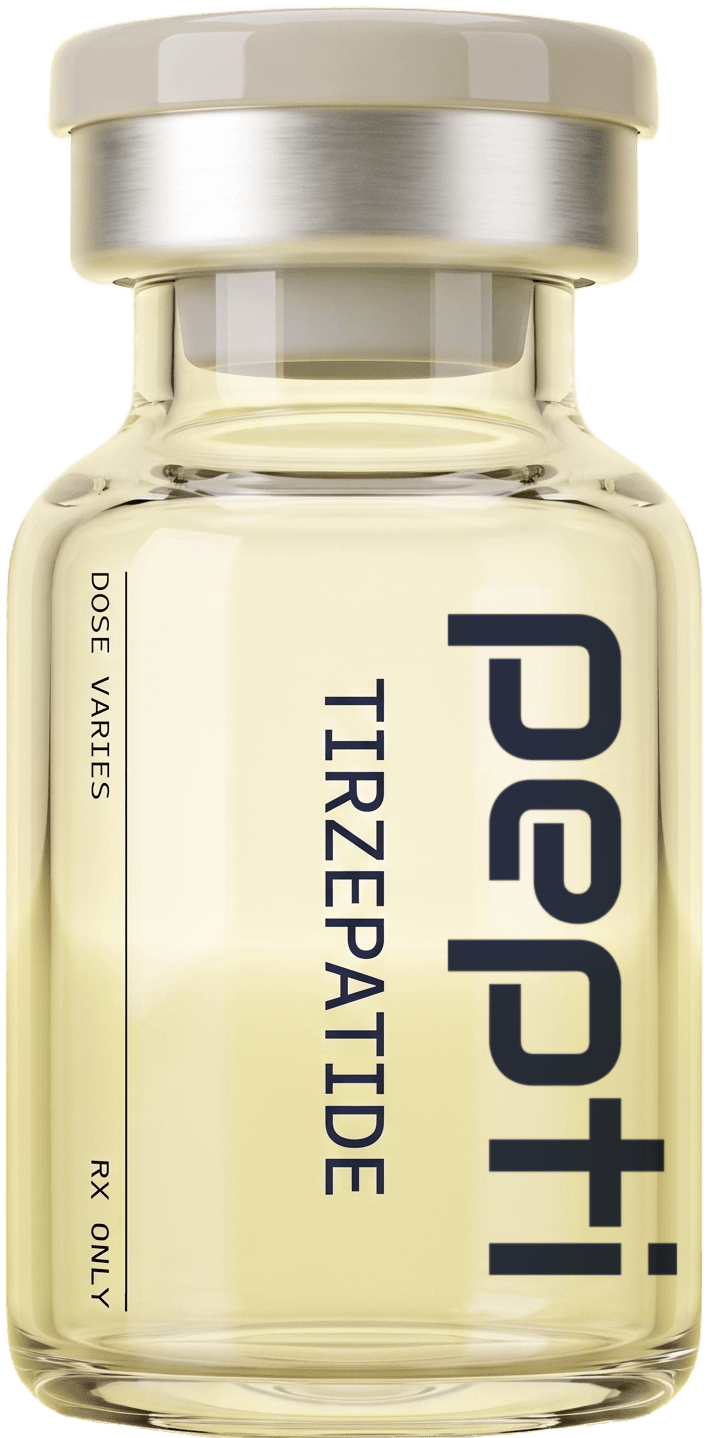
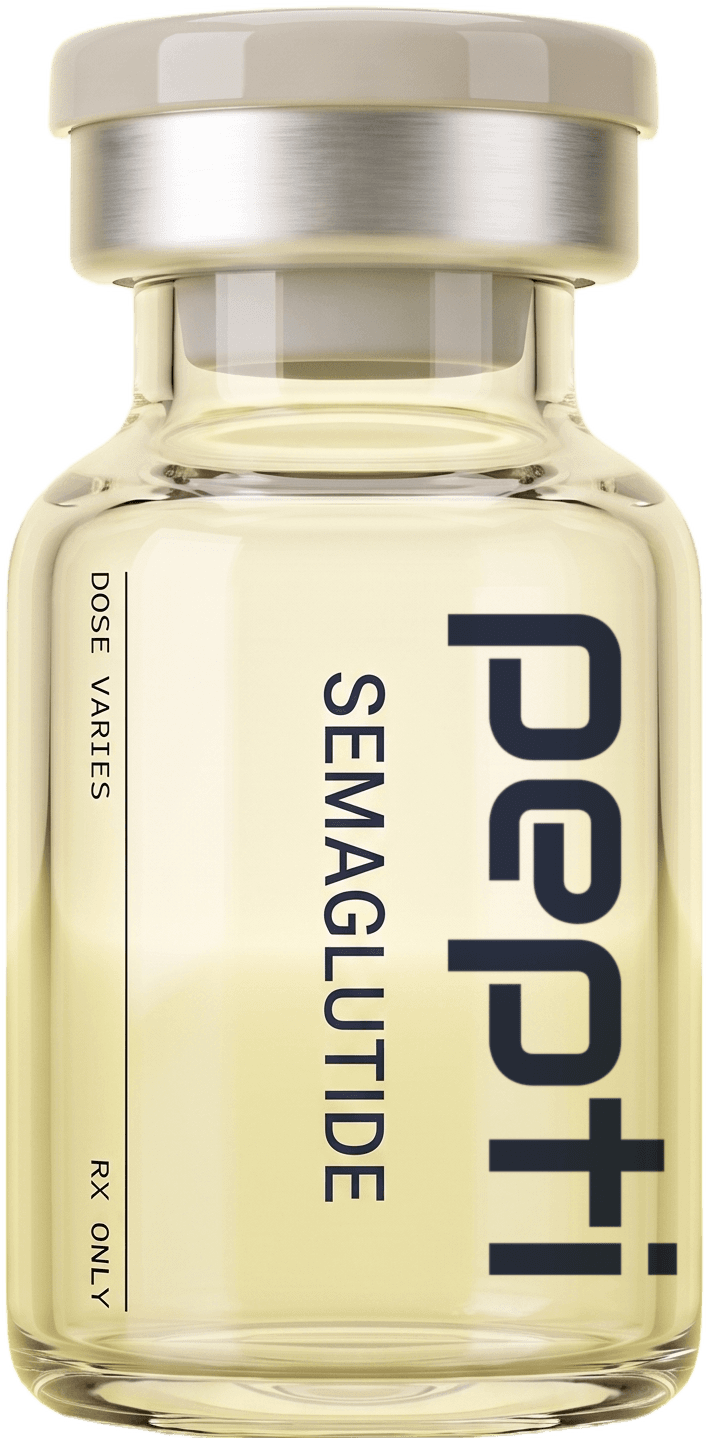
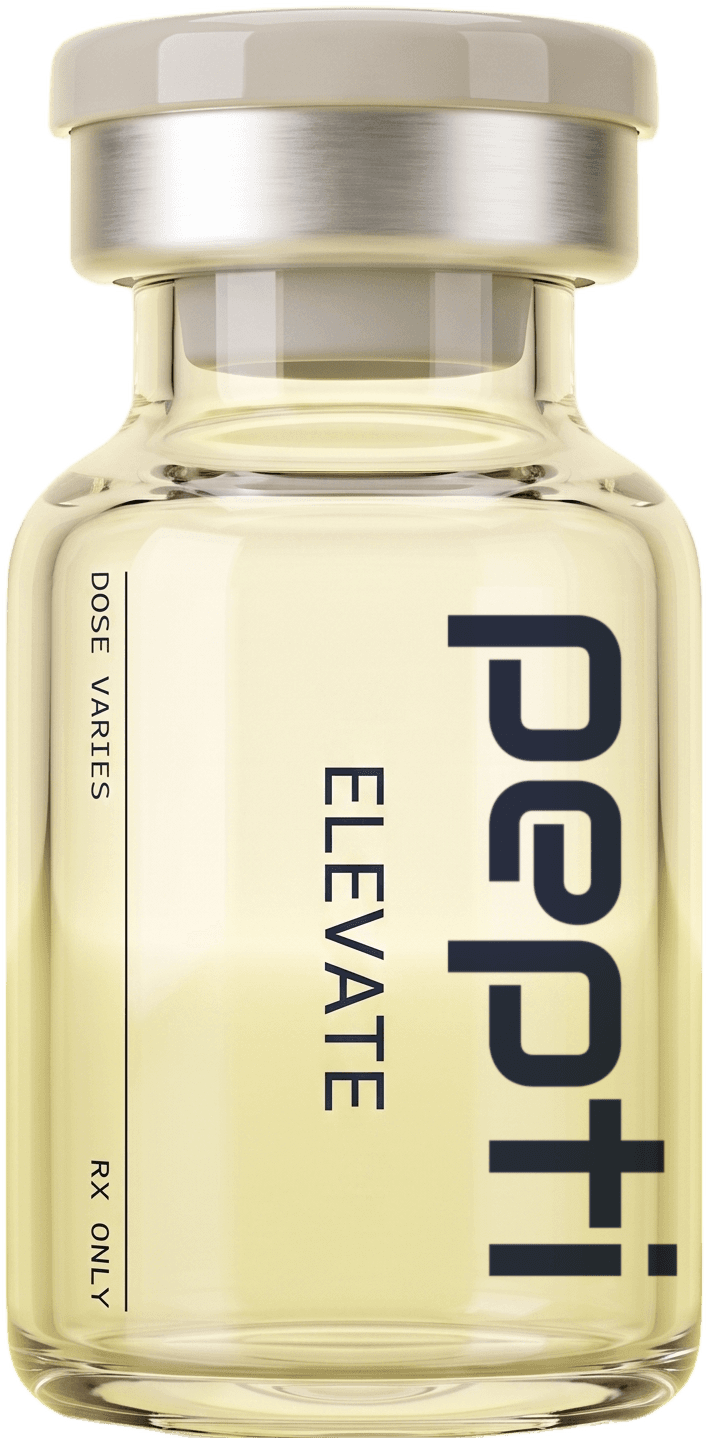
ELEVATE can be prescribed alongside tirzepatide or semaglutide when a physician reviewing your intake judges it appropriate, but no study has tested the blend with a GLP-1, and the blend itself has never been studied as a blend. ELEVATE combines two neuropeptides, Semax and Selank, with two gut peptides, BPC-157 and KPV; none of the four acts on appetite, insulin or the GLP-1 receptor, so it does a different job from tirzepatide rather than adding to it. Two points matter most. Its gut components are not a treatment for GLP-1 nausea, reflux or constipation, which come from slowed stomach emptying. And if anxiety or brain fog started after a GLP-1, the physical GLP-1 effects that feel like anxiety are reported to your care team before anything is added.
This page covers what ELEVATE is, how each component sits next to a GLP-1, what is and is not known, the symptoms that could come from either, psychiatric medication, how the schedules fit, and how to add ELEVATE properly. Everything here applies to semaglutide the same way.
Can You Take ELEVATE Blend With Tirzepatide or Semaglutide?
The short answer
| Question | Answer |
|---|---|
| Can they be prescribed together? | Yes, when a physician reviewing your intake judges it appropriate |
| Has the combination been studied? | No. Neither ELEVATE with a GLP-1, nor ELEVATE's four components together |
| Does any component act on appetite or insulin? | No |
| Does ELEVATE help GLP-1 nausea or constipation? | Not on any evidence; those are a dose and titration question for your physician |
| Does ELEVATE treat anxiety that began on a GLP-1? | Not tested; report new anxiety to your care team first |
| Is there an established interaction? | No interaction list exists for ELEVATE or any of its components |
| What belongs on the intake? | Psychiatric medication, stimulants, immunosuppressants or biologics for a gut condition |
| Same answer for semaglutide? | Yes |
The medications this page covers:
| Product | What is in it | Typical directions | Price |
|---|---|---|---|
| ELEVATE Blend | 5 mL multi-dose vial: Semax 1 mg/mL, Selank 1 mg/mL, BPC-157 2 mg/mL, KPV 2 mg/mL (5 / 5 / 10 / 10 mg per vial) | 0.25 mL (25 units) under the skin once daily Monday through Friday | $249/mo |
| Tirzepatide | Dose-specific 2 mL vials at six strengths, 2.5 mg to 15 mg weekly; glycine in the 2.5 mg and 7.5 mg vials | 0.50 mL (50 units) once weekly at every strength | From $159/mo |
| Semaglutide | Dose-specific vials at six strengths, starting with 1 mg per 1 mL at the 0.25 mg starting dose | Printed on the vial for your strength | From $99/mo |
Prices are all-in, covering medication, physician review, refill management and shipping, with no membership fee. GLP-1 prices are "from" prices, set by dose. Compounded medications are not FDA approved.
Can You Take ELEVATE Blend With Tirzepatide or Semaglutide?
What ELEVATE is, next to a GLP-1
Tirzepatide is a single peptide that activates the GIP and GLP-1 receptors, acting on appetite centres in the brain, gastric emptying, and insulin and glucagon signalling (what is tirzepatide). ELEVATE is four separate peptides dissolved in one vial, each with its own literature (what is the ELEVATE blend). By mass it is two-thirds a gut preparation: BPC-157 and KPV are 20 of the 30 mg.
| Component | Per dose | What it is described around | Human evidence | Relation to tirzepatide |
|---|---|---|---|---|
| Semax | 0.25 mg | BDNF and neurotrophin signalling, attention (rat work) | Russian clinical series in stroke and cerebrovascular disease, intranasal | No shared pathway |
| Selank | 0.25 mg | GABA-A modulation, enkephalin breakdown, stress reactivity | Small Russian trials against benzodiazepines, intranasal | No shared pathway |
| BPC-157 | 0.5 mg | Gut-lining protection, angiogenesis, tendon repair (animal work) | Early-phase work for inflammatory bowel indications; no large randomised trials | No shared pathway |
| KPV | 0.5 mg | Damping inflammatory signalling via NF-kB, mouse colitis models | None | No shared pathway |
None of the four binds the GIP or GLP-1 receptor, acts on appetite, or is described as changing insulin or glucose. That makes a direct interaction with tirzepatide unlikely on mechanism. ELEVATE is injected, so the way a GLP-1 slows the absorption of oral medications does not apply to it. With no study of the pairing, that is the limit of what can be said.
Can You Take ELEVATE Blend With Tirzepatide or Semaglutide?
Why ELEVATE's gut components are not a fix for GLP-1 stomach side effects
This is the question most people mean. Nearly every common GLP-1 side effect follows from one action: the stomach empties more slowly, most after the first dose and after each increase. Food stays longer, and nausea, reflux, burping and early fullness follow. Constipation can persist at a steady dose. None of that is inflammation of the gut lining.
BPC-157's animal work is protection of the gut lining against damage from NSAIDs and alcohol, and KPV's is in inflamed mouse colon. The live gut-health reference is explicit that GLP-1 nausea, reflux and constipation are a dose and titration question for the prescribing physician, not a reason to add a second vial, and that there is no reason from the literature to expect KPV to do much in a gut that is not inflamed.
| GLP-1 side effect | Where it comes from | Usual approach | Is ELEVATE a treatment for it? |
|---|---|---|---|
| Nausea, early fullness | Slowed gastric emptying | Portion size, meal composition, titration pace | No |
| Reflux, burping | Slowed gastric emptying | Smaller meals; report it | No |
| Constipation | Slower transit, eating and drinking less | Fluid, fiber, movement; report it by name | No |
| Persistent vomiting, severe abdominal pain | Needs assessment | Same-day call to your care team | No |
These are covered in GLP-1 nausea: how to manage it and peptides for gut health. Never change your own dose; any change your physician makes is printed on your next vial.
Can You Take ELEVATE Blend With Tirzepatide or Semaglutide?
Rule out the GLP-1 before treating anxiety or fog
ELEVATE is in Pepti's cognitive category, and people sometimes ask about it because they feel anxious, foggy or flat after starting a GLP-1. Several physical GLP-1 effects produce sensations that feel like anxiety or poor focus.
| What you feel | A possible GLP-1 cause | What to do |
|---|---|---|
| Shakiness, sweating, confusion | Low blood sugar, mainly with insulin or a sulfonylurea | Treat it, then report it |
| Dizziness, light-headedness on standing | Low blood pressure or dehydration | Drink enough; same-day call if you cannot keep fluids down |
| A faster resting heart rate, palpitations | A small heart-rate rise on the labels | Report palpitations at rest |
| Tiredness, low energy, fog | Eating and drinking too little | Report it if it persists |
| A knotted, queasy stomach | Slower gastric emptying | Smaller meals; report it |
Describe exactly what you feel and when, so your care team can tell these apart. Adding ELEVATE to treat what is actually low blood sugar or dehydration would miss the cause. More is in GLP-1 anxiety and depression. Any marked change in mood is reported to your physician promptly. If you are in crisis or thinking about harming yourself, call or text 988 in the US, or call 911.
Can You Take ELEVATE Blend With Tirzepatide or Semaglutide?
Symptoms that could come from either
| Symptom | On tirzepatide | On ELEVATE |
|---|---|---|
| Nausea | The most common effect, around starting and dose increases | Occasional, mostly early, tracking KPV |
| Dizziness or light-headedness | 4 to 5% on the approved weight-management label, against 2% | Occasional light-headedness |
| Fatigue or a flat feeling | Fatigue reported by 5 to 7% against 3% on placebo | Early fatigue in some people, tracking Selank, usually settling |
| Feeling wired or restless | A faster heart rate can feel similar | Some people, mainly if Semax is dosed late in the day |
| Injection-site redness or soreness | 6 to 8% on the label | The most common report |
Two sources of tiredness or queasiness are hard to tell apart, which is the main reason to start ELEVATE at a point when your GLP-1 dose is steady, not in the same week as an increase. The GLP-1 side-effect reference is tirzepatide side effects; ELEVATE's is ELEVATE blend side effects.
Can You Take ELEVATE Blend With Tirzepatide or Semaglutide?
Psychiatric medication and stimulants
There is no interaction list for ELEVATE or any component, because the trials that would produce one have not been run. Selank with a benzodiazepine was studied in one supervised Russian trial. Selank or Semax with SSRIs, SNRIs, stimulants or antipsychotics has not been studied at all, and a mouse study cited in the FDA's Semax briefing reported Semax potentiating amphetamine-induced dopamine release.
If you take an SSRI, SNRI, benzodiazepine, stimulant or antipsychotic, or have been diagnosed with panic disorder, bipolar disorder or major depression, that treatment comes first, and ELEVATE is at most an adjunct your prescriber may or may not agree to. A GLP-1 slows stomach emptying, which can change how quickly oral medications are absorbed in the first weeks after starting or increasing the dose. List every medication on your intake, and if another prescriber manages your mood, tell them you have started a GLP-1 and ELEVATE. Never stop or reduce a psychiatric medication to make room for either.
Can You Take ELEVATE Blend With Tirzepatide or Semaglutide?
Fitting the schedules together
| ELEVATE | Tirzepatide | |
|---|---|---|
| Draw | 0.25 mL (25 units on a U-100 insulin syringe) | 0.50 mL (50 units) |
| Medication per dose | 0.25 mg Semax, 0.25 mg Selank, 0.5 mg BPC-157, 0.5 mg KPV | Your weekly strength, 2.5 mg to 15 mg |
| How often | Once daily Monday through Friday, weekends off | Once weekly, same day each week |
| Usual time of day | Morning, because some people describe restlessness if Semax is taken late | Your chosen weekly day |
| Doses per vial | 20 | 4 |
| One vial lasts | About four weeks | Four weeks |
The ELEVATE figures are math from the vial: 0.25 mL carries a quarter of each component's per-mL concentration, and 5 mL at 0.25 mL is 20 doses. Because the proportions are fixed, every dose delivers the same split. Both run on a 28-day refill cycle, one vial per fill.
- Two vials, two syringes, two sites. Never mix ELEVATE and tirzepatide in one syringe.
- Keep your tirzepatide day fixed. On a shared weekday, inject each at a different site.
- Refrigerate both, and do not keep a multi-peptide vial past its beyond-use date.
The dose math is in ELEVATE blend dosage, and how each vial is counted is in how long does a peptide vial last.
Can You Take ELEVATE Blend With Tirzepatide or Semaglutide?
Who should discuss it first
| Situation | Why |
|---|---|
| A psychiatric diagnosis under active treatment | That treatment comes first |
| Taking a stimulant | The mouse amphetamine finding with Semax |
| Immunosuppressants or biologic therapy for a gut condition | Not studied; raise it specifically |
| A diagnosed inflammatory bowel disease | Belongs with the specialist treating it |
| Personal or family history of medullary thyroid carcinoma or MEN 2 | Rules out tirzepatide and semaglutide |
| Insulin or a sulfonylurea | Low blood glucose on tirzepatide becomes more likely |
| Pregnancy, planning pregnancy or breastfeeding | Neither is used |
| Already taking Semax, Selank, BPC-157, KPV, Semax + Selank, SYNAPSE, KLOW or FORTIFY | ELEVATE would duplicate components |
| Tested athlete | ELEVATE contains BPC-157, named under S0 of the 2026 WADA Prohibited List |
Bloodwork is not required for any Pepti treatment. If your physician wants labs for your care, they'll ask through your account.
Can You Take ELEVATE Blend With Tirzepatide or Semaglutide?
Semaglutide works the same way
Semaglutide acts at GLP-1 only, where tirzepatide acts at GLP-1 and GIP, but both act through appetite and gastric emptying and bring the same early side effects. Nothing on this page changes for semaglutide. Semaglutide and tirzepatide are never taken together; see semaglutide vs tirzepatide.
Can You Take ELEVATE Blend With Tirzepatide or Semaglutide?
How to add ELEVATE to a GLP-1 properly
- Name the goal that is separate from weight, such as stress reactivity or focus alongside a gut complaint that predates the GLP-1.
- Report GLP-1 side effects first, so a dose or titration question is not treated with a second vial.
- List everything, including psychiatric medication, stimulants and any blend you already take, so components are not duplicated.
- Start when your GLP-1 dose is steady.
- Report what happens, including nothing.
Your physician sets your directions after reviewing your intake, and every vial arrives with its directions printed on the label. More on combining is in what peptides can you take with tirzepatide, can you take Semax with tirzepatide, can you take Selank with tirzepatide, can you take BPC-157 with tirzepatide and can you take KPV with tirzepatide. Step by step: how to get tirzepatide prescribed and how to get ELEVATE prescribed online.
Can You Take ELEVATE Blend With Tirzepatide or Semaglutide?
What the evidence shows, honestly
Tirzepatide has a large human trial base in its approved form. ELEVATE has never been studied as a blend; its evidence is per component and uneven, from Russian intranasal clinical work for Semax and Selank, to early-phase human work for BPC-157, to no human trials at all for KPV. There is no study of ELEVATE or any component with a GLP-1. On regulation, the FDA's advisory committee voted in July 2026 to recommend Semax (8 to 5), and BPC-157 and KPV (8 to 6 each), for the 503A Bulks List, with final determinations pending; Selank's Category 2 nomination was withdrawn in September 2024 and it has never been reviewed. The pairing is reasonable to discuss when there is a separate reason for ELEVATE. It is not a stack shown to work better than tirzepatide alone.
References
What this is based on.
References
- Dolotov OV, Karpenko EA, Inozemtseva LS et al.. Semax, an analog of ACTH(4-10) with cognitive effects, regulates BDNF and trkB expression in the rat hippocampus · Brain Res (2006) · PMID 16996037
- Sikiric P, Seiwerth S, Rucman R et al.. Brain-gut Axis and Pentadecapeptide BPC 157: Theoretical and Practical Implications · Curr Neuropharmacol (2016) · PMID 27138887
- Vukojevic J, Milavić M, Perović D et al.. Pentadecapeptide BPC 157 and the central nervous system · Neural Regen Res (2022) · PMID 34380875
- Wilding JPH, Batterham RL, Calanna S, et al.. Once-Weekly Semaglutide in Adults with Overweight or Obesity (STEP 1) · New England Journal of Medicine (2021) · PMID 33567185
- Lincoff AM, Brown-Frandsen K, Colhoun HM, et al.. Semaglutide and Cardiovascular Outcomes in Obesity without Diabetes (SELECT) · New England Journal of Medicine (2023) · PMID 37952131
- Wadden TA, Bailey TS, Billings LK, et al.. Effect of subcutaneous semaglutide vs placebo as an adjunct to intensive behavioral therapy on body weight in adults with overweight or obesity (STEP 3) · JAMA (2021) · PMID 33625476
- Rubino D, Abrahamsson N, Davies M, et al.. Effect of Continued Weekly Subcutaneous Semaglutide vs Placebo on Weight Loss Maintenance in Adults With Overweight or Obesity: The STEP 4 Randomized Clinical Trial · JAMA (2021) · PMID 33755728
- Marso SP, Bain SC, Consoli A, et al.. Semaglutide and Cardiovascular Outcomes in Patients with Type 2 Diabetes (SUSTAIN-6) · New England Journal of Medicine (2016) · PMID 27633186
- Davies M, Færch L, Jeppesen OK, et al.. Semaglutide 2.4 mg once a week in adults with overweight or obesity, and type 2 diabetes (STEP 2): a randomised, double-blind, double-dummy, placebo-controlled, phase 3 trial · The Lancet (2021) · PMID 33667417
- Garvey WT, Batterham RL, Bhatta M, et al.. Two-year effects of semaglutide in adults with overweight or obesity: the STEP 5 trial · Nature Medicine (2022) · PMID 36216945
- Rubino DM, Greenway FL, Khalid U, et al.. Effect of Weekly Subcutaneous Semaglutide vs Daily Liraglutide on Body Weight in Adults With Overweight or Obesity Without Diabetes: The STEP 8 Randomized Clinical Trial · JAMA (2022) · PMID 35015037
- Aronne LJ, Horn DB, le Roux CW, et al.. Tirzepatide as Compared with Semaglutide for the Treatment of Obesity (SURMOUNT-5) · New England Journal of Medicine (2025) · PMID 40353578
Citations are provided for educational purposes. They do not constitute medical advice. Always discuss any peptide protocol with your prescribing physician.
Common questions
Can You Take ELEVATE Blend With Tirzepatide or Semaglutide?, answered.
It can be prescribed alongside tirzepatide when a physician reviewing your intake judges it appropriate. None of its components acts on the GLP-1 system, but no study has tested the combination.
The answer is the same as for tirzepatide.
No. None of its four components acts on appetite or is a weight treatment.
There is no evidence that they do. GLP-1 nausea, reflux and constipation come from slowed stomach emptying, not an inflamed gut, and are a dose and titration question for your physician.
That has not been tested. Low blood sugar, dehydration, a faster heart rate and eating too little can all feel like anxiety or fog on a GLP-1, so report new symptoms to your care team first.
Yes, as two separate injections from two separate vials, each with its own syringe and at a different site.
No interaction is described, and no interaction list exists for ELEVATE or its components because the trials have not been run.
Tell every prescriber. Semax and Selank have not been studied alongside SSRIs, and your existing treatment comes first. Do not stop or reduce a psychiatric medication on your own.
Neither has been studied with one. SYNAPSE replaces BPC-157 and KPV with MOTS-c and tesamorelin, and tesamorelin reduces insulin sensitivity, so glucose is watched alongside a GLP-1.
No. Bloodwork is not required for any Pepti treatment. If your physician wants labs for your care, they'll ask through your account. The free assessment goes to a physician licensed in your state. A consultation does not guarantee a prescription.
Next step
See what a physician recommends for you.
A licensed physician in your state reviews your intake and decides what is appropriate. A consultation does not guarantee a prescription.