Recovery · Reference
Can You Take KPV With Tirzepatide or Semaglutide?
This page covers what KPV is, why it does not map onto GLP-1 side effects, the gut symptoms that need a diagnosis rather than a peptide, the KPV blends, and how KPV and a GLP-1 fit together when there is a separate reason to take both.
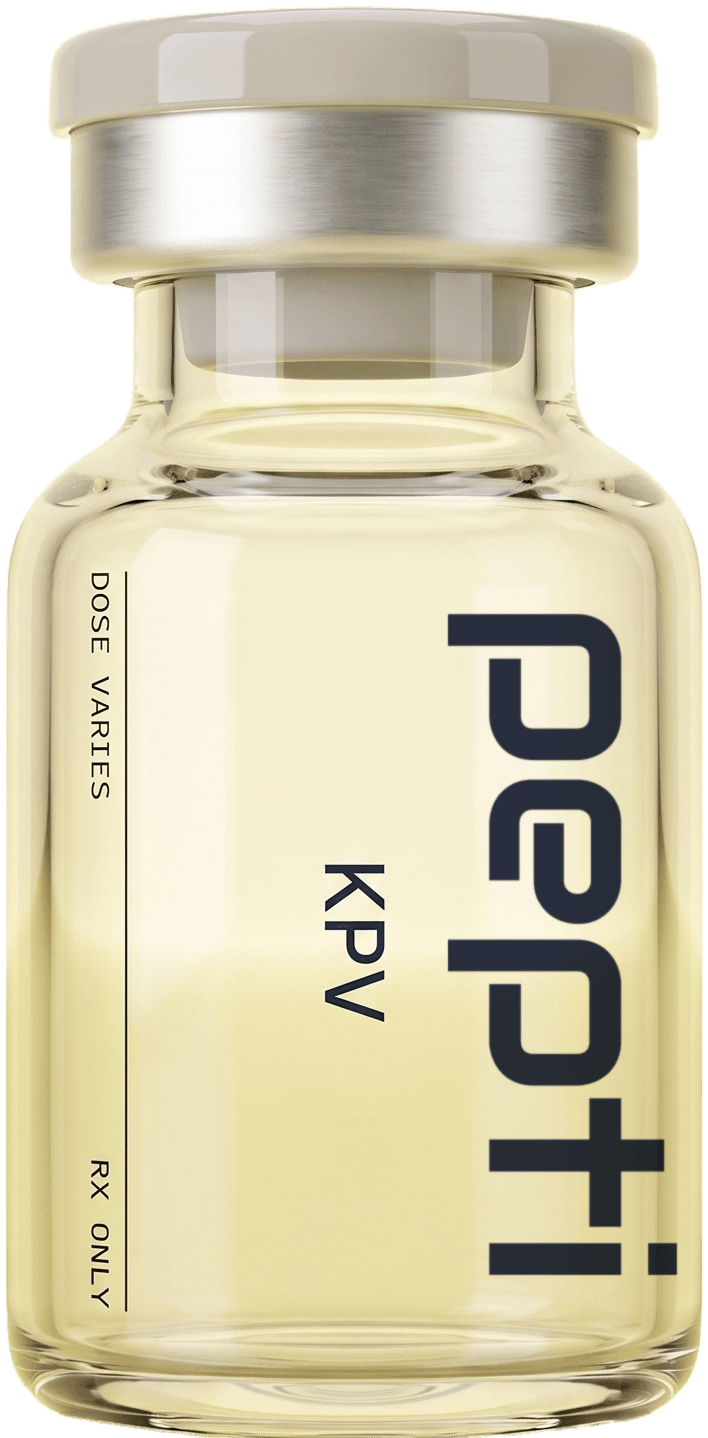
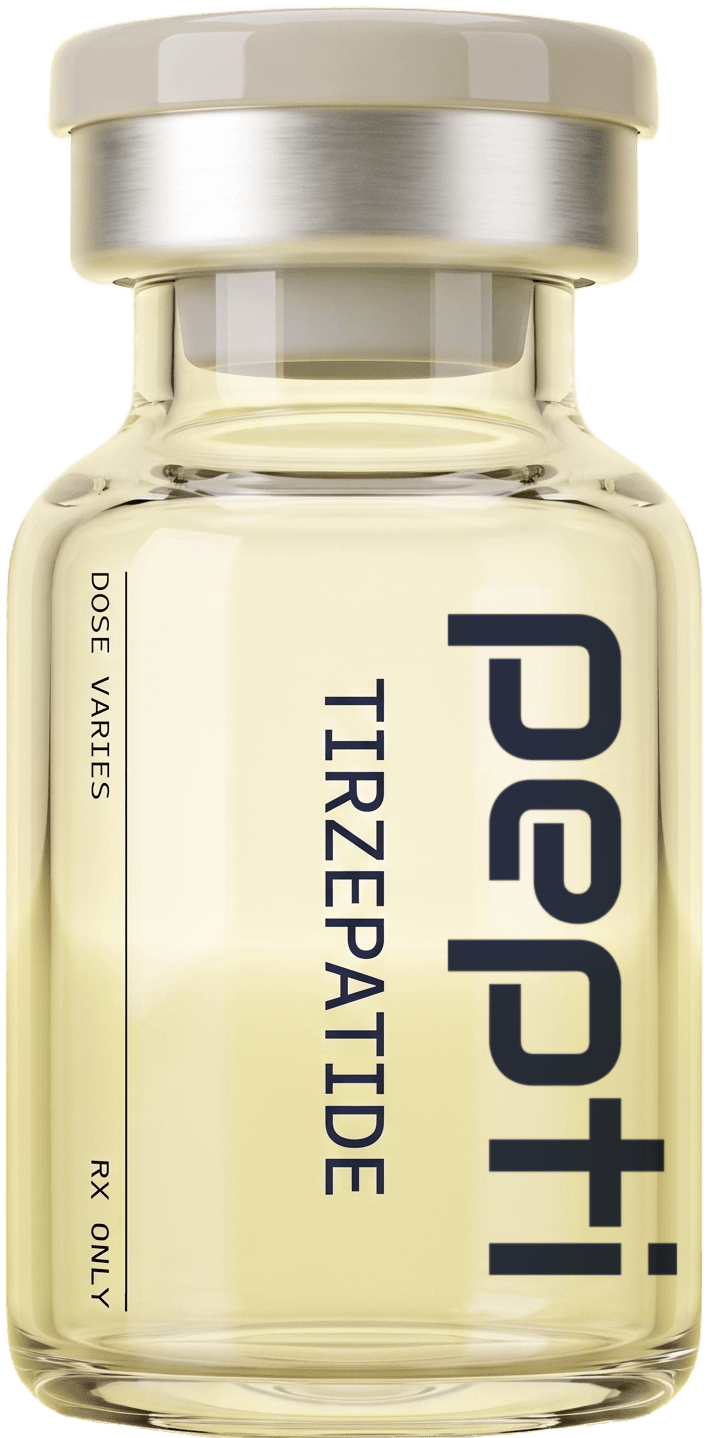
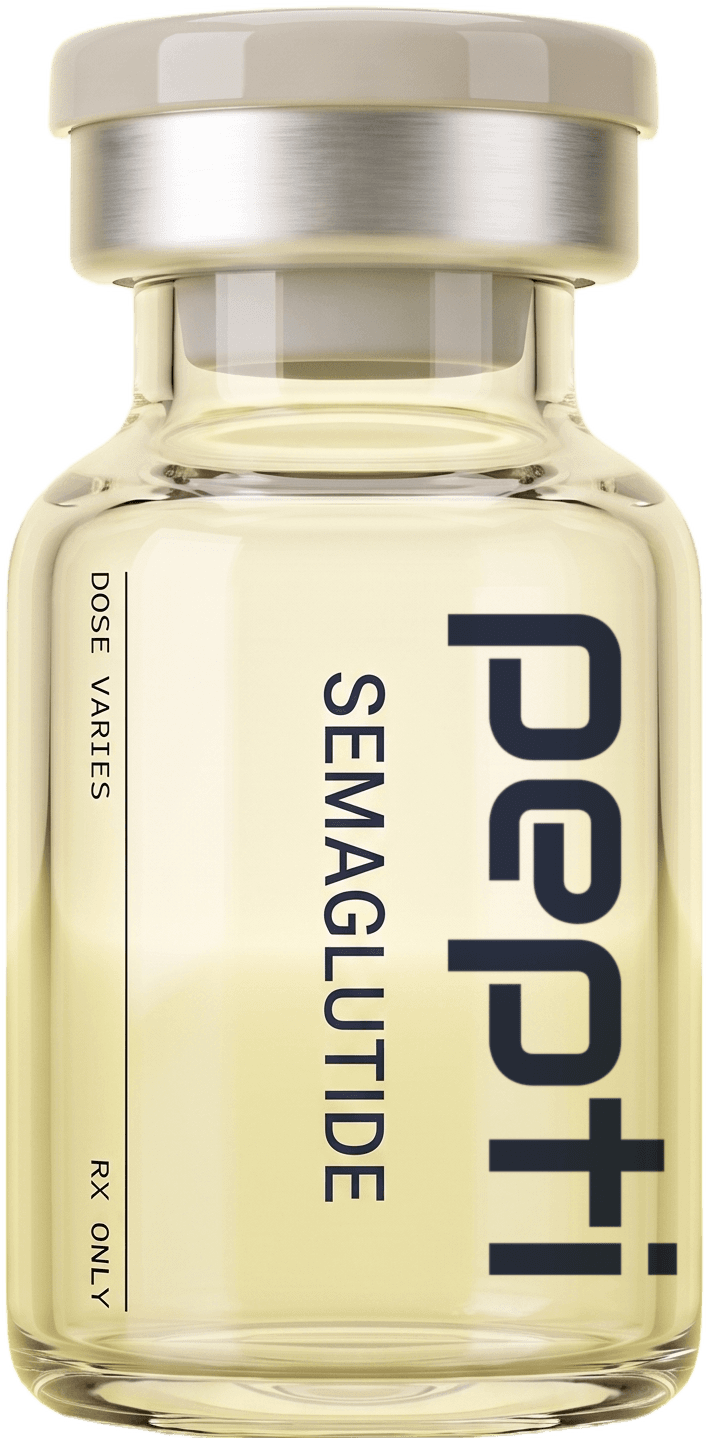
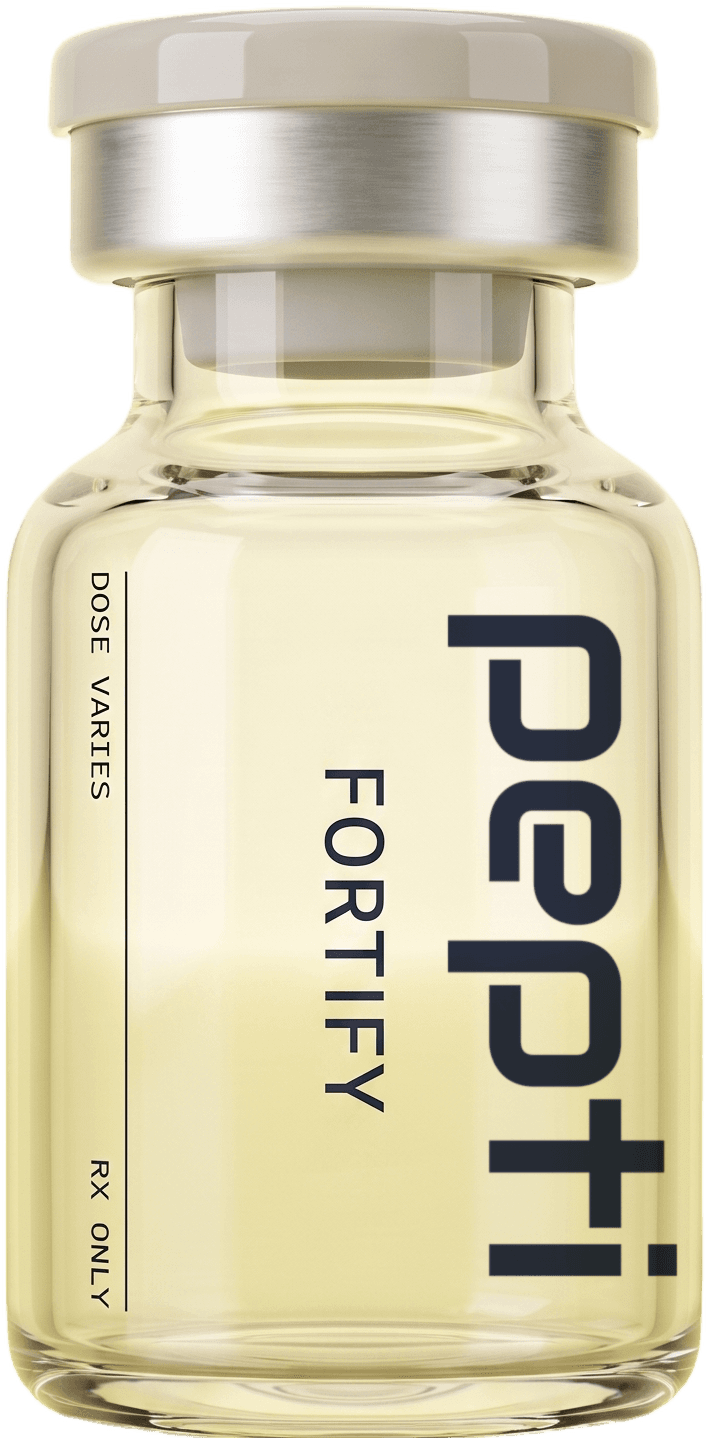
KPV can be prescribed alongside tirzepatide or semaglutide: they work through unrelated mechanisms and no interaction is described, though no study has tested them together. The question people usually mean is whether KPV, an anti-inflammatory peptide studied in mouse colitis models, will settle GLP-1 nausea, reflux or constipation. The honest answer is that it is not a treatment for them. Those effects come from slowed gastric emptying, not an inflamed gut, and they are a dose and titration question for your physician rather than a reason to add a second vial. Everything on this page applies to semaglutide the same way.
This page covers what KPV is, why it does not map onto GLP-1 side effects, the gut symptoms that need a diagnosis rather than a peptide, the KPV blends, and how KPV and a GLP-1 fit together when there is a separate reason to take both.
Can You Take KPV With Tirzepatide or Semaglutide?
The short answer
| Question | Answer |
|---|---|
| Can KPV and tirzepatide be taken together? | Yes, a physician can prescribe both after reviewing your intake |
| Is there a known interaction? | None is described; KPV has no established interaction list |
| Has the combination been studied? | No. KPV has never been studied in humans in any condition |
| Will KPV fix GLP-1 nausea or constipation? | It is not a treatment for them; those are managed through dose, titration and meals |
| Does KPV add weight loss? | No study shows that |
| Same answer for semaglutide? | Yes |
The medications this page covers:
| Product | What is in it | KPV per 0.25 mL dose | Price |
|---|---|---|---|
| KPV | 5 mL multi-dose vial, 2 mg/mL (10 mg KPV) | 0.5 mg | $229/mo |
| KLOW Blend | 50 mg GHK-Cu, 10 mg KPV, 10 mg BPC-157, 10 mg TB-500 in 5 mL | 0.5 mg | $259/mo |
| ELEVATE Blend | 5 mg Semax, 5 mg Selank, 10 mg BPC-157, 10 mg KPV in 5 mL | 0.5 mg | $249/mo |
| FORTIFY Blend | 5 mg thymosin alpha-1, 5 mg BPC-157, 2 mg KPV, 1 mg LL-37 in 5 mL | 0.1 mg | $289/mo |
| Tirzepatide | Dose-specific 2 mL vials, 2.5 mg to 15 mg weekly | Not applicable | From $159/mo |
| Semaglutide | Dose-specific vials at six strengths | Not applicable | From $99/mo |
Every price is all-in, covering medication, physician review, refill management and shipping, with no membership fee. GLP-1 prices are "from" prices because they are priced by dose. Compounded medications are not FDA approved.
Can You Take KPV With Tirzepatide or Semaglutide?
What KPV is, and what it is not
KPV is a tripeptide, three amino acids: lysine, proline and valine. It is the tail end of alpha-melanocyte-stimulating hormone (alpha-MSH), the part linked to that hormone's anti-inflammatory activity, without the part that drives pigmentation. In cell and mouse work it is carried into cells by the PepT1 transporter and described as damping NF-kB and MAPK signalling, lowering inflammatory cytokines such as TNF-alpha and IL-6. Its gut research is in chemically induced and genetic colitis in mice. It is not a steroid, not a hormone in its own right, and not an appetite or weight medication. The full reference is what is KPV.
Tirzepatide activates the GIP and GLP-1 receptors, acts on appetite centres in the brain, slows gastric emptying and changes insulin and glucagon signalling. See what is tirzepatide.
| KPV | Tirzepatide | |
|---|---|---|
| Described target | Inflammatory signalling inside cells, via PepT1 | GIP and GLP-1 receptors |
| Research setting | Mouse colitis, cell lines | Large randomised human trials |
| Acts on appetite? | Not described to | Yes, its main action |
| Acts on gastric emptying? | Not described to | Yes, slows it |
| Schedule | Weekdays | Once weekly |
Can You Take KPV With Tirzepatide or Semaglutide?
Why KPV is not a fix for GLP-1 stomach side effects
Different problem, different mechanism
Nearly every common GLP-1 side effect follows from one action: the stomach empties more slowly, most after the first dose and after each increase. Food stays longer, the old portion size overshoots, and nausea, reflux, burping and early fullness follow. Constipation can persist at a steady dose. None of that is inflammation of the gut lining.
KPV's animal work is in inflamed colon. The gut-health reference is explicit that there is no reason from the literature to expect KPV to do much in a gut that is not inflamed, and that GLP-1 nausea, reflux and constipation are a dose and titration question for the prescribing physician, not a reason to add a second vial.
What does help
Most manageable GLP-1 nausea responds to portion size, meal composition and titration pace. Constipation responds to fluid, fiber and movement, and is worth reporting by name. These are covered in GLP-1 nausea: how to manage it, GLP-1 constipation and what to eat on a GLP-1. If side effects are not settling, message your care team. Never change your own dose; any change your physician makes is printed on your next vial.
| GLP-1 side effect | Where it comes from | Usual approach | Is KPV a treatment for it? |
|---|---|---|---|
| Nausea | Slower gastric emptying | Smaller meals, eat slowly, titration pace | No |
| Reflux, burping, early fullness | Slower gastric emptying | Earlier last meal, stay upright after eating | No |
| Constipation | Slower gut transit, less food and fluid | Fluid, fiber, movement; report it | No |
| Diarrhea | Around dose increases | Fluids; report if persistent | No |
| Severe abdominal pain, often into the back | Possible pancreatitis | Same-day medical care | No |
Can You Take KPV With Tirzepatide or Semaglutide?
Gut symptoms that need investigation, not a peptide
KPV's own references set out a short list of symptoms that mean a diagnosis comes first: blood in the stool, unintentional weight loss, persistent vomiting, or symptoms that wake you at night. On a GLP-1 some of these need extra care to read. Weight change is expected on tirzepatide, so the question is whether it is in line with your programme. Vomiting that will not stop, or not keeping fluids down, is a same-day call on a GLP-1 because of dehydration. Right upper abdominal pain with fever or yellowing skin can be gallbladder disease. Report any of these promptly; do not try to treat them with a peptide.
If you have a diagnosed inflammatory bowel condition on prescribed treatment, KPV is not a replacement for it. Stay on that treatment, keep your specialist aware, and put any immunosuppressant or biologic on your intake. More is in peptides for gut health.
Can You Take KPV With Tirzepatide or Semaglutide?
When there is a separate reason to take both
People are prescribed KPV, or a blend containing it, for its own reasons, and some of them are also on a GLP-1. That is a legitimate combination: different jobs, no described interaction. A few practical points make it easier.
Side effects that overlap
Effect On KPV On tirzepatide or semaglutide Nausea Some people report mild nausea early, usually settling The most common side effect: 25 to 29% on tirzepatide against 8% on placebo Headache A transient headache early on in some people Reported, often linked to eating and drinking less early on Light-headedness Reported by some people Dizziness 4 to 5%; low blood pressure and dehydration are possible Injection-site reactions The most common report 6 to 8% on tirzepatide against 2% Because nausea is on both lists, start KPV away from a tirzepatide dose increase, so any change has one plausible cause.
How the two schedules fit
KPV Tirzepatide Draw 0.25 mL (25 units) on a U-100 insulin syringe 0.50 mL (50 units) at every strength Per dose 0.5 mg KPV (2 mg/mL vial) Depends on the vial strength, 2.5 mg to 15 mg When Once daily, Monday through Friday Once weekly Doses per vial 20, about four weeks 4, four weeks Refills Every 28 days, one vial per fill Every 28 days, one vial per fill Use a separate fresh syringe for each and never draw both into one. Dosing detail is in KPV dosage and tirzepatide dosing chart.
If your KPV comes in a blend
In KLOW, ELEVATE and FORTIFY, KPV is one of four ingredients, and the other three bring their own cautions. KLOW carries 50 mg of GHK-Cu, so the copper cautions apply (Wilson's disease, high-dose zinc, never two GHK-Cu products), plus BPC-157 and TB-500, which add cancer-history and anticoagulant cautions. ELEVATE and FORTIFY both contain BPC-157. If you take a blend, read its own page rather than assuming it behaves like KPV alone. The KLOW detail is in KLOW side effects.
Can You Take KPV With Tirzepatide or Semaglutide?
What not to combine
| Combination | Why not |
|---|---|
| Tirzepatide with semaglutide or any other GLP-1 | Same receptor system, stacked side effects, no mechanism gained |
| KPV alone plus a blend that contains KPV | Changes the KPV dose without anyone deciding it should change |
| KPV in place of a prescribed inflammatory bowel treatment | KPV is not a replacement; it has no human studies |
| Two of your vials in one syringe | Neither label describes the mixture |
| Anything sold "for research use only" | Nobody is accountable for identity, purity, sterility or concentration |
Can You Take KPV With Tirzepatide or Semaglutide?
Semaglutide works the same way
Everything above applies to semaglutide. Its common side effects are gastrointestinal in the same way, from the same slowing of gastric emptying (nausea was reported by 44% of adults on the top dose of the approved weight-management label against 16% on placebo), and KPV is no more a treatment for them than it is for tirzepatide's. Semaglutide and tirzepatide are never taken together. See semaglutide side effects.
Can You Take KPV With Tirzepatide or Semaglutide?
What the evidence shows, honestly
KPV has the thinnest human evidence base of the commonly prescribed recovery peptides. The FDA's review for its July 2026 advisory committee found no published studies in which KPV products were used in humans. The committee voted 8 to 6, with one abstention, to recommend adding it to the 503A Bulks List, against the FDA reviewers' own recommendation, and the FDA's final determination is pending. Its gut evidence is mouse colitis, much of it with KPV given orally in drinking water, a route the injection has not been compared with.
There is no study of KPV with a GLP-1 medication, and nothing shows that KPV eases GLP-1 side effects or adds to weight loss. What can be said is that the two act on unrelated systems and no interaction is described. The fuller safety picture is in KPV side effects and tirzepatide side effects, and pairings in general are in what peptides can you take with tirzepatide.
Can You Take KPV With Tirzepatide or Semaglutide?
How to add KPV to a GLP-1 properly
- Name the reason. If it is GLP-1 stomach side effects, say so, because the answer is usually a dose or meal change rather than a second vial.
- List everything at intake. Include any immunosuppressant, biologic or bowel medication, and any blend you already take.
- Start one thing at a time. Begin KPV away from a GLP-1 dose increase.
- Report what happens, including nothing. Your care team is reachable through your account.
Bloodwork is not required for any Pepti treatment. If your physician wants labs for your care, they'll ask through your account.
Can You Take KPV With Tirzepatide or Semaglutide?
Where to get KPV prescribed
- Complete a free online intake covering your history, medications and what you want help with.
- A physician licensed in your state reviews it, usually within 24 hours.
- If it is appropriate, a PCAB-accredited, FDA-registered US 503A compounding pharmacy prepares it to that prescription. Lot test results are published at /quality/lab-results.
- It ships refrigerated with ice packs, with sterile syringes and alcohol prep pads, and your directions printed on the vial.
- Your care team stays reachable for side effects and questions. Refills run every 28 days, one vial per fill.
Pepti is cash-pay and does not bill insurance. Step-by-step pages: how to get KPV prescribed online and how to get tirzepatide prescribed online.
References
What this is based on.
References
- Dalmasso G, Charrier-Hisamuddin L, Nguyen HT et al.. PepT1-mediated tripeptide KPV uptake reduces intestinal inflammation · Gastroenterology (2008) · PMID 18061177
- Kannengiesser K, Maaser C, Heidemann J et al.. Melanocortin-derived tripeptide KPV has anti-inflammatory potential in murine models of inflammatory bowel disease · Inflamm Bowel Dis (2008) · PMID 18092346
- Xiao B, Xu Z, Viennois E et al.. Orally Targeted Delivery of Tripeptide KPV via Hyaluronic Acid-Functionalized Nanoparticles Efficiently Alleviates Ulcerative Colitis · Mol Ther (2017) · PMID 28143741
- Land SC. Inhibition of cellular and systemic inflammation cues in human bronchial epithelial cells by melanocortin-related peptides: mechanism of KPV action and a role for MC3R agonists · Int J Physiol Pathophysiol Pharmacol (2012) · PMID 22837805
- Cutuli M, Cristiani S, Lipton JM et al.. Antimicrobial effects of alpha-MSH peptides · J Leukoc Biol (2000) · PMID 10670585
- Schaible EV, Steinsträßer A, Jahn-Eimermacher A et al.. Single administration of tripeptide α-MSH(11-13) attenuates brain damage by reduced inflammation and apoptosis after experimental traumatic brain injury in mice · PLoS One (2013) · PMID 23940690
- Bonfiglio V, Camillieri G, Avitabile T et al.. Effects of the COOH-terminal tripeptide alpha-MSH(11-13) on corneal epithelial wound healing: role of nitric oxide · Exp Eye Res (2006) · PMID 16965771
- Wilding JPH, Batterham RL, Calanna S, et al.. Once-Weekly Semaglutide in Adults with Overweight or Obesity (STEP 1) · New England Journal of Medicine (2021) · PMID 33567185
- Lincoff AM, Brown-Frandsen K, Colhoun HM, et al.. Semaglutide and Cardiovascular Outcomes in Obesity without Diabetes (SELECT) · New England Journal of Medicine (2023) · PMID 37952131
- Wadden TA, Bailey TS, Billings LK, et al.. Effect of subcutaneous semaglutide vs placebo as an adjunct to intensive behavioral therapy on body weight in adults with overweight or obesity (STEP 3) · JAMA (2021) · PMID 33625476
- Rubino D, Abrahamsson N, Davies M, et al.. Effect of Continued Weekly Subcutaneous Semaglutide vs Placebo on Weight Loss Maintenance in Adults With Overweight or Obesity: The STEP 4 Randomized Clinical Trial · JAMA (2021) · PMID 33755728
- Marso SP, Bain SC, Consoli A, et al.. Semaglutide and Cardiovascular Outcomes in Patients with Type 2 Diabetes (SUSTAIN-6) · New England Journal of Medicine (2016) · PMID 27633186
Citations are provided for educational purposes. They do not constitute medical advice. Always discuss any peptide protocol with your prescribing physician.
Common questions
Can You Take KPV With Tirzepatide or Semaglutide?, answered.
Yes, a physician can prescribe both after reviewing your intake. They act through unrelated mechanisms and no interaction is described, but the combination has not been studied.
The answer is the same as for tirzepatide. Neither shares a mechanism with the other.
It is not a treatment for it. GLP-1 nausea comes from slower gastric emptying, not gut inflammation, and it is managed through portion size, meal composition and titration pace. Message your care team if it is not settling.
No study shows that. Constipation on a GLP-1 responds to fluid, fiber and movement and is worth reporting by name to your care team.
KPV's gut research is in mice with chemically induced colitis, a model of inflamed tissue. There are no human studies of KPV in any condition, so it is not established as a treatment for anything.
Some people report mild nausea, headache or light-headedness early on KPV, which overlap with GLP-1 side effects. Starting them on different dates makes it easier to tell which is responsible.
The same reasoning applies, but each blend's other ingredients bring their own cautions, and both contain BPC-157. Tell your physician every product you take.
The schedules are independent, and there is no described need to separate them by hours. Use a separate syringe for each, never mix them, and follow the directions printed on each vial.
No. It is not described to act on appetite or metabolism, and no study has looked at it for weight.
No. Bloodwork is not required for any Pepti treatment. If your physician wants labs for your care, they'll ask through your account. The free assessment goes to a physician licensed in your state. A consultation does not guarantee a prescription.
Next step
See what a physician recommends for you.
A licensed physician in your state reviews your intake and decides what is appropriate. A consultation does not guarantee a prescription.