Weight Loss · Reference
Is Tirzepatide a Peptide? What It Is Made Of and Why It Matters
Yes. Tirzepatide is a peptide: a synthetic chain of 39 amino acids built on the backbone of GIP, one of the gut's own hormones, and engineered to activate both the GIP and GLP-1 receptors.
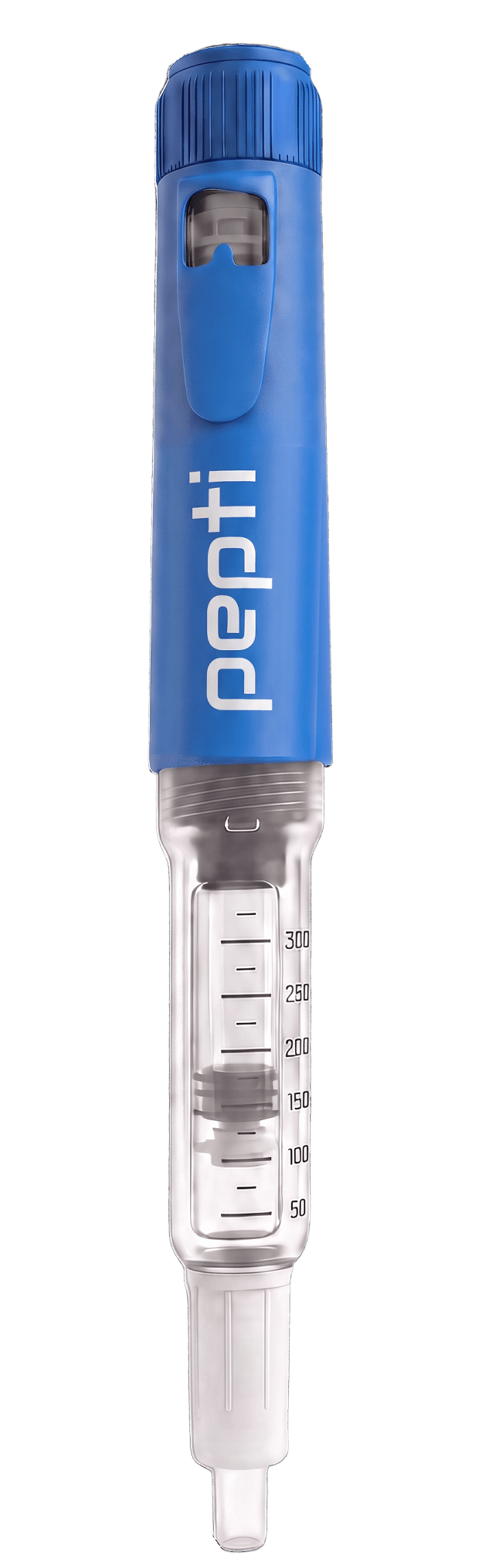
Treatments mentioned
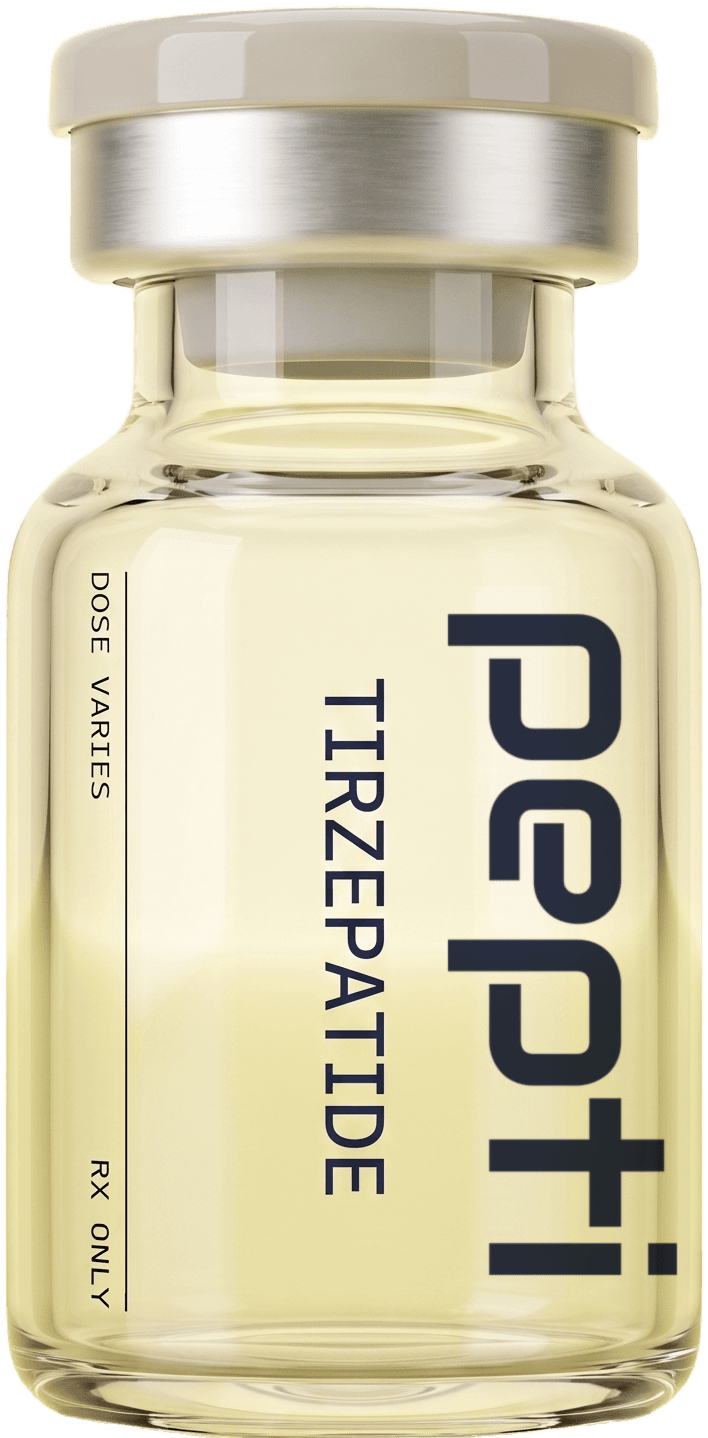
A fatty-acid side chain lets it bind albumin in the blood, which is why it lasts long enough for a once-weekly injection. At 39 amino acids it falls under the FDA's working definition of a peptide (40 or fewer) and is regulated as a drug rather than a biologic. At Pepti it is a compounded prescription injection, which, like all compounded medications, is not FDA approved.
This page explains what makes something a peptide, how tirzepatide is built, how it compares with the hormones it imitates and with semaglutide, why its size decides how it is regulated and taken, and what it is not.
Is Tirzepatide a Peptide? What It Is Made Of and Why It Matters
The short answer
| Question | Answer |
|---|---|
| Is tirzepatide a peptide? | Yes, a 39-amino-acid synthetic peptide |
| What is it built on? | The sequence of GIP, glucose-dependent insulinotropic polypeptide |
| What does it act on? | Both the GIP receptor and the GLP-1 receptor |
| Is it a GLP-1? | It is a dual GIP/GLP-1 receptor agonist, so it is a GLP-1 receptor agonist and more |
| Why does it last a week? | A fatty-acid side chain that binds albumin; half-life about five days |
| Drug or biologic? | Regulated as a drug: 40 amino acids or fewer |
| Is it a hormone? | It is a synthetic analogue of a hormone, not the hormone itself |
| Is it a steroid or a stimulant? | Neither |
| At Pepti | Tirzepatide, dose-specific vials, from $159/mo all-in |
Is Tirzepatide a Peptide? What It Is Made Of and Why It Matters
What makes something a peptide
A peptide is a short chain of amino acids. Amino acids are the building blocks of protein; when one joins the next, the two are linked by an amide bond, called in this context a peptide bond. Link a few dozen together and you have a peptide; link hundreds and you have a protein.
The boundary is a convention. Most textbooks and regulators put it around 40 to 50 amino acids, and the FDA's working definition treats a chain of 40 or fewer as a peptide and anything longer as a protein. Tirzepatide, at 39, sits just inside that line. The general background is in what are peptides.
Size matters for practical reasons. A chain under about forty amino acids can be built by chemical synthesis one amino acid at a time, which is why a state-licensed pharmacy can obtain it as a bulk substance with a certificate of analysis and compound it. Larger proteins, such as growth hormone at 191 amino acids, and antibodies are biologics made by living cells, and nobody compounds those.
Is Tirzepatide a Peptide? What It Is Made Of and Why It Matters
How tirzepatide is built
Tirzepatide starts from the sequence of GIP, the second of the two incretin hormones the gut releases after a meal. It is then modified in two ways.
First, the sequence is altered so that it activates the GLP-1 receptor as well as the GIP receptor. The discovery paper, in Molecular Metabolism in 2018, reported roughly native affinity at the GIP receptor and weaker affinity at the GLP-1 receptor. That is why it is described as a different scaffold that reaches the same receptor semaglutide does, and one more, rather than "semaglutide plus something".
Second, it carries a C20 fatty diacid side chain that lets it bind albumin, the main protein in blood. Albumin binding protects the peptide from being broken down and cleared quickly. The approved labels give an elimination half-life of about five days, with about 99 percent bound to albumin, which is what makes once-weekly dosing possible. More on what that means for how long it lasts is in how long does tirzepatide stay in your system.
Is Tirzepatide a Peptide? What It Is Made Of and Why It Matters
How tirzepatide compares with related peptides
| Peptide | Length | What it is | How long it lasts |
|---|---|---|---|
| GLP-1, the body's own | 30 amino acids | Gut hormone released after a meal | Destroyed by the enzyme DPP-4 within about two minutes |
| GIP, the body's own | 42 amino acids | The other gut incretin hormone | Not modified to resist breakdown |
| Semaglutide | 31 amino acids | Synthetic GLP-1 analogue with a fatty-acid chain | Half-life roughly a week |
| Tirzepatide | 39 amino acids | Synthetic GIP-based analogue that also activates GLP-1 receptors | Half-life about five days |
| Tesamorelin | 44 amino acids | Synthetic analogue of growth-hormone-releasing hormone | Regulated as a biologic since 2020 because of its length |
| Insulin | 51 amino acids in two chains | Pancreatic hormone | Sits on the peptide and protein boundary |
Two things stand out. Native GIP is 42 amino acids, longer than tirzepatide, so tirzepatide is not a copy of the hormone but a shortened, engineered analogue of it. And the length line is real in regulation: tesamorelin, at 44 amino acids, was deemed a biologic in March 2020, while tirzepatide and semaglutide are approved under New Drug Applications because they are 40 or fewer.
Natural, synthetic and analogue
A native peptide is one the body makes, such as GLP-1 or GIP. A synthetic peptide is a manufactured copy of a native sequence or a fragment of one. An analogue has been deliberately altered, with an amino acid swapped or a fatty acid attached, so that it resists breakdown or binds differently. Tirzepatide and semaglutide are both analogues.
Is Tirzepatide a Peptide? What It Is Made Of and Why It Matters
Is tirzepatide a GLP-1?
It is a GLP-1 receptor agonist, and it is also a GIP receptor agonist, which is why it is called a dual agonist. The GLP-1 arm increases insulin release when glucose is high, suppresses glucagon, slows stomach emptying and acts on appetite centres in the brain. The proposed contributions of the GIP arm include effects on insulin sensitivity and on how fat tissue handles energy, and possibly on nausea tolerance; some of that remains hypothesis. A 2022 phase 1 study in The Lancet Diabetes & Endocrinology, using clamp techniques in adults with type 2 diabetes, reported improvements in insulin secretion and sensitivity, which is direct human evidence that it acts on glucose handling through more than one route. The class is explained in what is a GLP-1, and the comparison with semaglutide in semaglutide vs tirzepatide.
Is Tirzepatide a Peptide? What It Is Made Of and Why It Matters
Why being a peptide matters in practice
| Consequence | Why |
|---|---|
| It is injected, not swallowed | Peptides are generally broken down in the gut and cleared quickly, so most are injections |
| It is kept refrigerated | Pepti ships tirzepatide refrigerated with ice packs, and it is kept refrigerated between weekly doses |
| It can be compounded | Its size allows chemical synthesis, and it qualifies as a bulk substance because it is the active ingredient of an approved drug |
| It is a prescription medication | Not a supplement, and not legitimately sold without a prescription |
| It is regulated as a drug, not a biologic | At 39 amino acids it falls within the 40-or-fewer definition |
It is not a steroid or a stimulant
Anabolic steroids are small lipid molecules that act on the androgen receptor; tirzepatide is an amino-acid chain that acts on incretin receptors. It is also not a stimulant or a thermogenic and does not force the body to burn anything. It changes signalling around food intake and insulin.
It is not a "research peptide"
Tirzepatide sold online "for research use only" is a different category. There is no prescriber, no pharmacy and nobody accountable for identity, purity, sterility or concentration. See research peptides vs prescription peptides.
Drug tests and sport
Tirzepatide is not something employment drug panels look for, and as a larger peptide it has no structural relationship to the drugs those tests target. In sport, GLP-1 medications are not currently listed as prohibited, but WADA's 2026 and 2027 Monitoring Programs include semaglutide and tirzepatide, which means laboratories report prevalence data. Prohibited lists are revised annually, and the responsibility to check sits with the athlete.
Is Tirzepatide a Peptide? What It Is Made Of and Why It Matters
How Pepti supplies tirzepatide
Pepti's tirzepatide is a compounded prescription injection, supplied as six dose-specific 2 mL vials from 2.5 mg to 15 mg weekly. Each vial is concentrated so that 0.50 mL, which is 50 units on a U-100 insulin syringe, delivers that vial's weekly dose. According to the current catalogue, the 2.5 mg and 7.5 mg vials include glycine, an amino acid, and the vials contain no B12.
| Detail | What it is |
|---|---|
| Product | Tirzepatide, injectable |
| Vials | Six strengths, 10 mg to 60 mg per 2 mL |
| Directions | Inject 0.50 mL (50 units) subcutaneously once weekly, at every strength |
| Doses per vial | 4, one 28-day fill |
| Price | From $159 a month, all-in, priced by dose |
| Format | Vial and syringe only, not a pen |
Your physician sets your dose after reviewing your intake, and your directions are printed on the vial. The full ladder is in the tirzepatide dosing chart, and what compounding changes is in what is compounded tirzepatide.
Is Tirzepatide a Peptide? What It Is Made Of and Why It Matters
What the evidence shows, honestly
That tirzepatide is a peptide is chemistry, not a claim: its sequence and structure are published, and the length places it inside the FDA's peptide definition. The large human trials of tirzepatide, the SURPASS and SURMOUNT programmes, were run on the manufactured product. A compounded vial contains the same peptide, but no trial has been run on a compounded preparation, and compounded medications are not FDA approved. Being a peptide also says nothing about safety on its own; tirzepatide's documented side effects and warnings are in is tirzepatide safe.
Is Tirzepatide a Peptide? What It Is Made Of and Why It Matters
Where to get tirzepatide prescribed
- Complete a free online intake covering your history, medications and what you want help with.
- A physician licensed in your state reviews it, usually within 24 hours.
- If it is appropriate, a PCAB-accredited, FDA-registered US 503A pharmacy compounds it to that prescription. Lot test results are published at /quality/lab-results.
- It ships refrigerated with ice packs, sterile syringes and alcohol prep pads, with your directions printed on the vial.
- Your care team stays reachable for questions. Refills run every 28 days, one vial per fill.
Bloodwork is not required for any Pepti treatment. If your physician wants labs for your care, they'll ask through your account. The step-by-step page is how to get tirzepatide prescribed online.
References
What this is based on.
References
- Jastreboff AM, Aronne LJ, Ahmad NN, et al.. Tirzepatide Once Weekly for the Treatment of Obesity (SURMOUNT-1) · New England Journal of Medicine (2022) · PMID 35658024
- Garvey WT, Frias JP, Jastreboff AM, et al.. Tirzepatide once weekly for the treatment of obesity in people with type 2 diabetes (SURMOUNT-2) · Lancet (2023) · PMID 37385275
- Frías JP, Davies MJ, Rosenstock J, et al.. Tirzepatide versus Semaglutide Once Weekly in Patients with Type 2 Diabetes (SURPASS-2) · New England Journal of Medicine (2021) · PMID 34170647
- Inagaki N, Takeuchi M, Oura T, et al.. Effects of subcutaneous tirzepatide versus placebo or semaglutide on pancreatic islet function and insulin sensitivity in adults with type 2 diabetes: a multicentre, randomised, double-blind, parallel-arm, phase 1 clinical trial · The Lancet Diabetes & Endocrinology (2022) · PMID 35468322
- Malhotra A, Grunstein RR, Fietze I, et al.. Tirzepatide for the Treatment of Obstructive Sleep Apnea and Obesity (SURMOUNT-OSA) · New England Journal of Medicine (2024) · PMID 38912654
- Nicholls SJ, Pavo I, Bhatt DL, et al.. Cardiovascular Outcomes with Tirzepatide versus Dulaglutide in Type 2 Diabetes (SURPASS-CVOT) · New England Journal of Medicine (2025) · PMID 41406444
- Aronne LJ, Sattar N, Horn DB, et al.. Continued Treatment With Tirzepatide for Maintenance of Weight Reduction in Adults With Obesity: The SURMOUNT-4 Randomized Clinical Trial · JAMA (2024) · PMID 38078870
- Pasternak B, Wintzell V, Hviid A et al.. Glucagon-like peptide 1 receptor agonist use and risk of thyroid cancer: Scandinavian cohort study · BMJ (2024) · PMID 38683947
- Quddos F, Hubshman Z, Tegge A, et al.. Semaglutide and Tirzepatide reduce alcohol consumption in individuals with obesity · Scientific Reports (2023) · PMID 38017205
- Drummond RF, Seif KE, Reece EA. Glucagon-like peptide-1 receptor agonist use in pregnancy: a review · Am J Obstet Gynecol (2025) · PMID 39181497
- Wang S, Sun J, Wang J, et al.. Does obesity based on body mass index affect semen quality? A meta-analysis and systematic review from the general population rather than the infertile population · Andrologia (2021) · PMID 34028074
- Urva S, Coskun T, Loghin C, et al.. The novel dual glucose-dependent insulinotropic polypeptide and glucagon-like peptide-1 (GLP-1) receptor agonist tirzepatide transiently delays gastric emptying similarly to selective long-acting GLP-1 receptor agonists · Diabetes, Obesity and Metabolism (2020) · PMID 32519795
Citations are provided for educational purposes. They do not constitute medical advice. Always discuss any peptide protocol with your prescribing physician.
Common questions
Is Tirzepatide a Peptide? What It Is Made Of and Why It Matters, answered.
Yes. It is a 39-amino-acid synthetic peptide built on the sequence of GIP and engineered to activate both the GIP and GLP-1 receptors.
A peptide. The FDA's working definition treats a chain of 40 amino acids or fewer as a peptide, and tirzepatide is 39. It is regulated as a drug rather than a biologic for that reason.
It is a synthetic analogue of a hormone. It is built on GIP, a gut hormone, and modified to act at the GLP-1 receptor too and to last about five days rather than minutes.
It is a dual GIP/GLP-1 receptor agonist. It acts at the GLP-1 receptor like semaglutide does, and also at the GIP receptor. See what is a GLP-1.
39. For comparison, the body's own GLP-1 is 30, GIP is 42 and semaglutide is 31.
Yes. Semaglutide is a 31-amino-acid GLP-1 analogue with a fatty-acid chain that binds albumin, giving it a half-life of roughly a week.
No. Steroids are small lipid molecules that act on hormone receptors such as the androgen receptor. Tirzepatide is an amino-acid chain that acts on incretin receptors.
Peptides are generally broken down in the digestive tract and cleared quickly, so most peptide medications are injected. Pepti supplies tirzepatide as a once-weekly subcutaneous injection from a multi-dose vial.
Not when it is prescribed. Pepti's tirzepatide is compounded by a state-licensed pharmacy on a prescription. Products sold "for research use only" are a different category with nobody accountable for what is in the vial.
No. Compounded medications are not FDA approved. The legal position, with dates, is in is compounded tirzepatide legal.
No. Bloodwork is not required for any Pepti treatment. If your physician wants labs for your care, they'll ask through your account. The free assessment goes to a physician licensed in your state. A consultation does not guarantee a prescription.
Related answers
Keep reading.
- Tirzepatide: What It Is, Where to Get It Prescribed, and What It Costs
- Tirzepatide 2.5 mg First Week: What to Expect, What Helps, and What to Report
- Tirzepatide and Birth Control: The Four-Week Rule for the Pill, Explained
- Tirzepatide Benefits: What the Research Has Looked At
- Natural GLP-1 Boosters: What "Natural GLP-1" Means and What the Evidence Supports
Next step
See what a physician recommends for you.
A licensed physician in your state reviews your intake to see whether treatment fits your history. A consultation does not guarantee a prescription.