Weight Loss · Reference
Semaglutide Telehealth: How It Works From Intake to Refills
This page walks through the whole process as it works at Pepti, from the first question to month six and beyond.
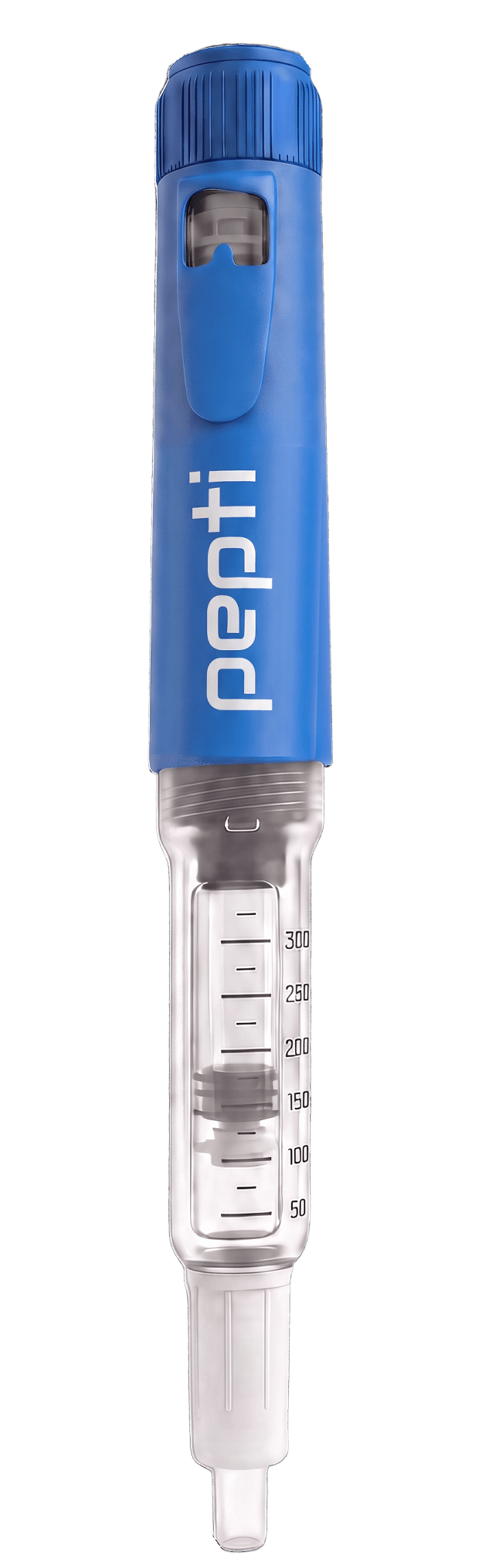
Treatments mentioned
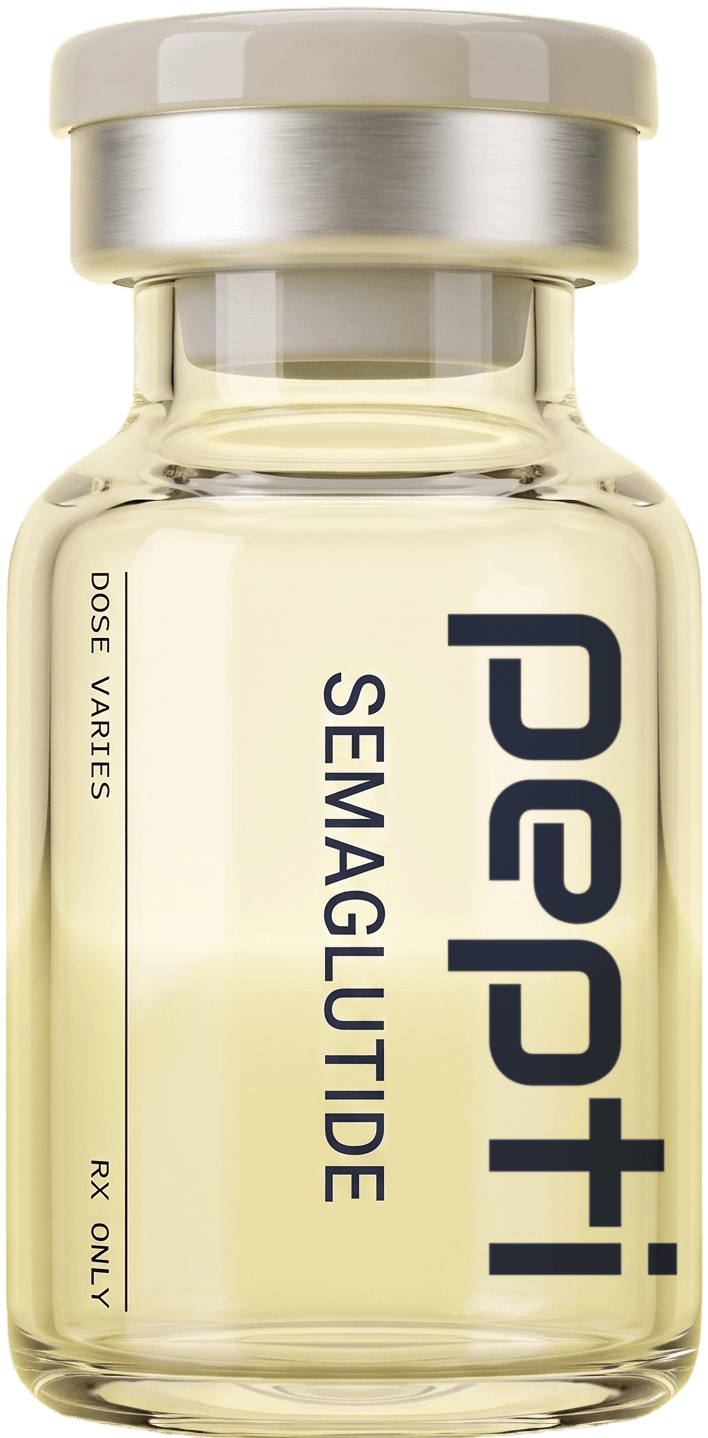
Semaglutide telehealth works in three parts: you complete an online medical intake, a physician licensed in your state reviews it and either prescribes, asks a follow-up question or declines, and a licensed compounding pharmacy prepares a dose-specific vial and ships it to your door with your directions printed on it. After that, treatment runs on a refill cycle: every 28 days your care team checks how the current dose step went before the next vial is sent, and you can message them at any point in between. No in-person visit is required, because semaglutide is not a controlled substance, but the physician must be licensed in the state where you are. Compounded semaglutide is not FDA approved.
What to check before choosing any provider is in best online provider for compounded semaglutide, and the legal background is in is it legal to buy semaglutide online.
Semaglutide Telehealth
The short answer
| Stage | What happens | Who does it |
|---|---|---|
| 1. Assessment | Online intake: goals, health history, medications, allergies, height and weight | You |
| 2. Identity | A photo of a government-issued ID, matched to your intake | You, then Pepti |
| 3. Physician review | Your history screened against semaglutide, usually within 24 hours | A physician licensed in your state |
| 4. Decision | Approve, ask you a question through your account, or decline (refunded in full) | The physician |
| 5. Compounding | A dose-specific vial made to your prescription | A PCAB-accredited, FDA-registered US 503A pharmacy |
| 6. Delivery | Refrigerated shipping with ice packs, syringes and prep pads | The pharmacy |
| 7. Weekly injection | One subcutaneous injection a week, directions printed on the vial | You |
| 8. Refills | Every 28 days, one vial per fill, reviewed before each | Your care team and physician |
Semaglutide Telehealth
Before you start: is telehealth allowed for semaglutide?
Yes. Federal law sets in-person evaluation requirements for prescribing controlled substances online, and semaglutide is not on the DEA schedules, so those rules do not apply. What governs the consultation is your state's medical practice and telemedicine rules, and the one constant is that the physician must be licensed where you are. Most states consider an online questionnaire alone inadequate, which is why a real review sometimes pauses to ask you something, or moves to video where needed. More is in is peptide telehealth legit and can you get a GLP-1 without a doctor.
Semaglutide Telehealth
Step 1: the assessment
The free online assessment asks about your goals, your health history, every medication you take, your allergies, and your height and weight. Medications and allergies are mandatory, and "none" is an answer. For semaglutide, the questions the physician pays most attention to are these:
| Question | Why it is asked |
|---|---|
| Personal or family history of medullary thyroid carcinoma or MEN 2 | A contraindication on the approved semaglutide labeling |
| Pancreatitis | It has been reported with GLP-1 medications, and a prior episode changes the conversation |
| Gallbladder disease | Rapid weight loss raises gallstone risk |
| Pregnancy, breastfeeding or plans for pregnancy | Semaglutide is not used in pregnancy |
| Insulin or a sulfonylurea | Together with semaglutide they raise the question of low blood sugar |
| Other oral medications | Semaglutide slows gastric emptying, which can change how quickly they are absorbed |
| Any history of disordered eating | An appetite-suppressing drug can be the wrong tool |
| Current or past GLP-1 use | Whether you continue at a dose or start at the first step |
If you are already on semaglutide elsewhere, say so, with your current dose and how long you have been on it. That information decides whether your physician can continue you rather than restart you.
Semaglutide Telehealth
Step 2: identity
You upload a photo of a government-issued ID, which is matched to your intake. No prescription is written for an unverified identity. This is one of the quieter differences between a medical provider and a storefront.
Semaglutide Telehealth
Step 3: the physician review
A physician licensed in your state reads your intake, usually within 24 hours. There are three possible outcomes:
- Approve. A prescription is written for a starting dose step and sent to the pharmacy.
- Hold. The physician asks you a question through your account, for example about a medication or a past diagnosis. Answering promptly is what moves things forward.
- Decline. If semaglutide is not appropriate for your history, the physician says so, and the declined medication is refunded in full. Being told no is some of the clearest evidence a review was real.
A consultation does not guarantee a prescription. Bloodwork is not required for any Pepti treatment. If your physician wants labs for your care, they'll ask through your account.
Semaglutide Telehealth
Step 4: the pharmacy
Your prescription goes to a PCAB-accredited, FDA-registered US 503A compounding pharmacy, which prepares a vial for you by name. Since the semaglutide shortage ended in 2025, compounding has been patient by patient, on a prescription written for an individual, which is exactly what this step is. Lot test results are published at /quality/lab-results.
Each dose step is its own vial with its own concentration:
| Weekly dose step | Vial | Concentration |
|---|---|---|
| 0.25 mg | 1 mg per 1 mL | 1 mg/mL |
| 0.5 mg | 2 mg per 2 mL | 1 mg/mL |
| 1 mg | 4 mg per 2 mL | 2 mg/mL |
| 1.7 mg | 7.5 mg per 3 mL | 2.5 mg/mL |
| 2 mg | 10 mg per 2 mL | 5 mg/mL |
| 2.5 mg | 10 mg per 2 mL | 5 mg/mL |
Because the concentration changes between steps, the number of units you draw can change too. The draw for your step is printed on your vial; the conversions are in the semaglutide dosing chart and semaglutide units to mg. Pepti's semaglutide vials contain semaglutide only, no B12.
Semaglutide Telehealth
Step 5: what arrives
The vial is a multi-dose solution, shipped ready to use, so there is nothing to mix. It comes refrigerated with ice packs, with sterile syringes and alcohol prep pads, and the label carries your name, the drug and strength, your directions, the pharmacy and a beyond-use date. Put it in the refrigerator when it arrives. Storage detail is in how to store compounded GLP-1.
Semaglutide Telehealth
Step 6: your weekly injection
Semaglutide is injected under the skin once a week, on the same day each week, at any time of day, with or without meals. The day is your choice; keeping it steady is what matters. GLP-1 weekly injection day covers choosing and changing it, and how to inject semaglutide walks through the injection itself. Never change the amount you draw on your own; the directions printed on the vial are the ones to follow.
Semaglutide Telehealth
Step 7: between refills
Your care team is reachable by message at any point. The things people most often write in about are the expected early effects, which are dose-related and tend to be most noticeable in the days after a step up:
| Common question | Where to read more |
|---|---|
| Nausea, reflux, constipation | GLP-1 nausea, how to manage it and semaglutide side effects |
| A missed weekly dose | Message your care team before your next dose |
| A new medication from another doctor | Tell your care team, and tell that doctor you take semaglutide |
| An upcoming surgery or procedure | Tell your physician and your surgical team |
| Travel with a refrigerated vial | Traveling with GLP-1 |
Severe or persistent abdominal pain, vomiting that will not stop, or symptoms of low blood sugar are reasons to contact your care team the same day. For a medical emergency, call 911.
Semaglutide Telehealth
Step 8: refills and dose steps
Refills run every 28 days, one vial per fill. Before each one, your care team checks how the current step went. That check is how dose steps work in practice:
- Stepping up. The approved semaglutide labeling describes about four weeks at each step during escalation. Four weeks is the earliest point an increase is considered, not a schedule that moves you up automatically.
- Holding a step. Staying on a step for several fills is ordinary, and it is the main adjustment when side effects have not settled. The approved label allows the next increase to be delayed for four weeks if a dose is not tolerated.
- A new vial at a new step. A step change arrives as a new vial with a new label, and possibly a new draw volume. Read it each time.
Your physician sets the dose for each fill after reviewing how you are doing. Not everyone reaches the top step, and reaching it is not the goal. Semaglutide is used long-term, and the trials found that stopping is often followed by regain, which is why the plan is built around steady 28-day refills. You can cancel in your account.
Semaglutide Telehealth
What it costs
Semaglutide starts from $99 a month all-in at the 0.25 mg step, and each step is published on the semaglutide cost page. The price covers medication, physician review, refill management and shipping, with no membership fee. Pepti is cash-pay and does not bill insurance; if your plan covers an FDA-approved semaglutide product, check that first, as described in does insurance cover compounded GLP-1. Pepti prescribes in most US states, not currently in Oklahoma, and the assessment confirms availability for your state.
Semaglutide Telehealth
What the evidence shows, honestly
Telehealth changes how you access semaglutide, not what the evidence says about it. The large trials, including the STEP program and SELECT, were run on the branded products, with in-person trial visits and lifestyle support alongside the medication. Compounded preparations share the active ingredient and have not been studied in randomized trials, and compounded medications are not FDA approved. Response varies widely between people. What a good telehealth setup can do is make the parts the trials relied on routine: careful screening, slow dose steps, a clinician you can reach, and review at every refill. Safety detail is in is compounded semaglutide safe.
References
What this is based on.
References
- Wilding JPH, Batterham RL, Calanna S, et al.. Once-Weekly Semaglutide in Adults with Overweight or Obesity (STEP 1) · New England Journal of Medicine (2021) · PMID 33567185
- Lincoff AM, Brown-Frandsen K, Colhoun HM, et al.. Semaglutide and Cardiovascular Outcomes in Obesity without Diabetes (SELECT) · New England Journal of Medicine (2023) · PMID 37952131
- Wadden TA, Bailey TS, Billings LK, et al.. Effect of subcutaneous semaglutide vs placebo as an adjunct to intensive behavioral therapy on body weight in adults with overweight or obesity (STEP 3) · JAMA (2021) · PMID 33625476
- Rubino D, Abrahamsson N, Davies M, et al.. Effect of Continued Weekly Subcutaneous Semaglutide vs Placebo on Weight Loss Maintenance in Adults With Overweight or Obesity: The STEP 4 Randomized Clinical Trial · JAMA (2021) · PMID 33755728
- Marso SP, Bain SC, Consoli A, et al.. Semaglutide and Cardiovascular Outcomes in Patients with Type 2 Diabetes (SUSTAIN-6) · New England Journal of Medicine (2016) · PMID 27633186
- Davies M, Færch L, Jeppesen OK, et al.. Semaglutide 2.4 mg once a week in adults with overweight or obesity, and type 2 diabetes (STEP 2): a randomised, double-blind, double-dummy, placebo-controlled, phase 3 trial · The Lancet (2021) · PMID 33667417
- Garvey WT, Batterham RL, Bhatta M, et al.. Two-year effects of semaglutide in adults with overweight or obesity: the STEP 5 trial · Nature Medicine (2022) · PMID 36216945
- Rubino DM, Greenway FL, Khalid U, et al.. Effect of Weekly Subcutaneous Semaglutide vs Daily Liraglutide on Body Weight in Adults With Overweight or Obesity Without Diabetes: The STEP 8 Randomized Clinical Trial · JAMA (2022) · PMID 35015037
- Aronne LJ, Horn DB, le Roux CW, et al.. Tirzepatide as Compared with Semaglutide for the Treatment of Obesity (SURMOUNT-5) · New England Journal of Medicine (2025) · PMID 40353578
- Sanyal AJ, Newsome PN, Kliers I, et al.. Phase 3 Trial of Semaglutide in Metabolic Dysfunction-Associated Steatohepatitis (ESSENCE) · New England Journal of Medicine (2025) · PMID 40305708
- Wilding JPH, Batterham RL, Davies M, Van Gaal LF, Kandler K et al.. Weight regain and cardiometabolic effects after withdrawal of semaglutide: The STEP 1 trial extension · Diabetes Obes Metab (2022) · PMID 35441470
- Batsis JA, Gavras A, Gross DC, Cheever CR, Da Silva BR et al.. Effect of Incretin-Based and Nonpharmacologic Weight Loss on Body Composition: A Systematic Review · Ann Intern Med (2026) · PMID 41996180
Citations are provided for educational purposes. They do not constitute medical advice. Always discuss any peptide protocol with your prescribing physician.
Common questions
Semaglutide Telehealth, answered.
You complete an online intake, a physician licensed in your state reviews it, and if it is appropriate a licensed 503A pharmacy compounds a dose-specific vial and ships it refrigerated with your directions printed on it. Refills come every 28 days after a check on how the current dose went.
Not always. Semaglutide is not a controlled substance, so federal in-person rules do not apply. Some state rules or individual situations call for live contact, and the physician will ask if that applies to you.
At Pepti, a physician licensed in your state usually reviews your intake within 24 hours. If they need more information, they ask through your account.
The declined medication is refunded in full. A physician may decline because of a contraindication, pregnancy, a medication that needs coordinating, or a history that points elsewhere.
No. Pepti's semaglutide is a dose-specific vial drawn with a syringe, shipped ready to use with syringes and alcohol prep pads.
Before each 28-day refill, your care team checks how the current step went, and your physician sets the dose for the next fill. Holding a step is common.
Yes, if your physician finds it appropriate. Tell them your current dose and how long you have been on it, and they can often continue you rather than restart.
That is a conversation with your care team. See switching from semaglutide to tirzepatide.
No. Bloodwork is not required for any Pepti treatment. If your physician wants labs for your care, they'll ask through your account.
Compounded semaglutide is not FDA approved, whether it is prescribed by telehealth or in person. The pharmacy is FDA registered, which is a different status. The free assessment goes to a physician licensed in your state. A consultation does not guarantee a prescription.
Related answers
Keep reading.
- Semaglutide: What It Is, Where to Get It Prescribed, and What It Costs
- Semaglutide Units to mg: Conversion Chart for U-100 Syringes
- Semaglutide With B12: Why Compounded Semaglutide Often Contains B12, and Whether It Matters
- Switching From Semaglutide to Tirzepatide: How the Switch Is Handled
- Tirzepatide Telehealth: How It Works From Intake to Refills
Next step
See what a physician recommends for you.
A licensed physician in your state reviews your intake to see whether treatment fits your history. A consultation does not guarantee a prescription.