Weight Loss · Reference
Switching From Semaglutide to Tirzepatide: How the Switch Is Handled
This page explains why people switch, how the switch is handled at Pepti, what changes on the vial, what to expect from side effects, and the questions people ask most. It does not give a dose to switch to, because that depends on you.
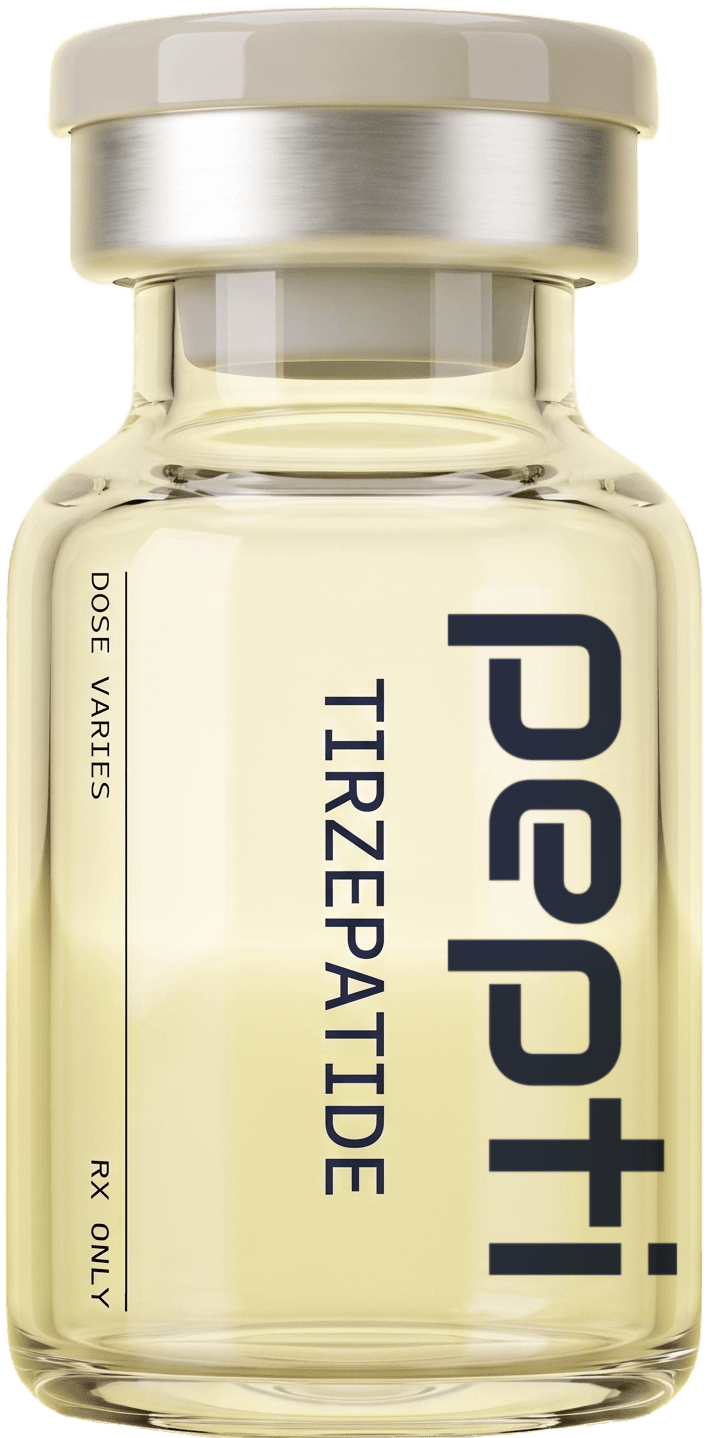
Treatments mentioned
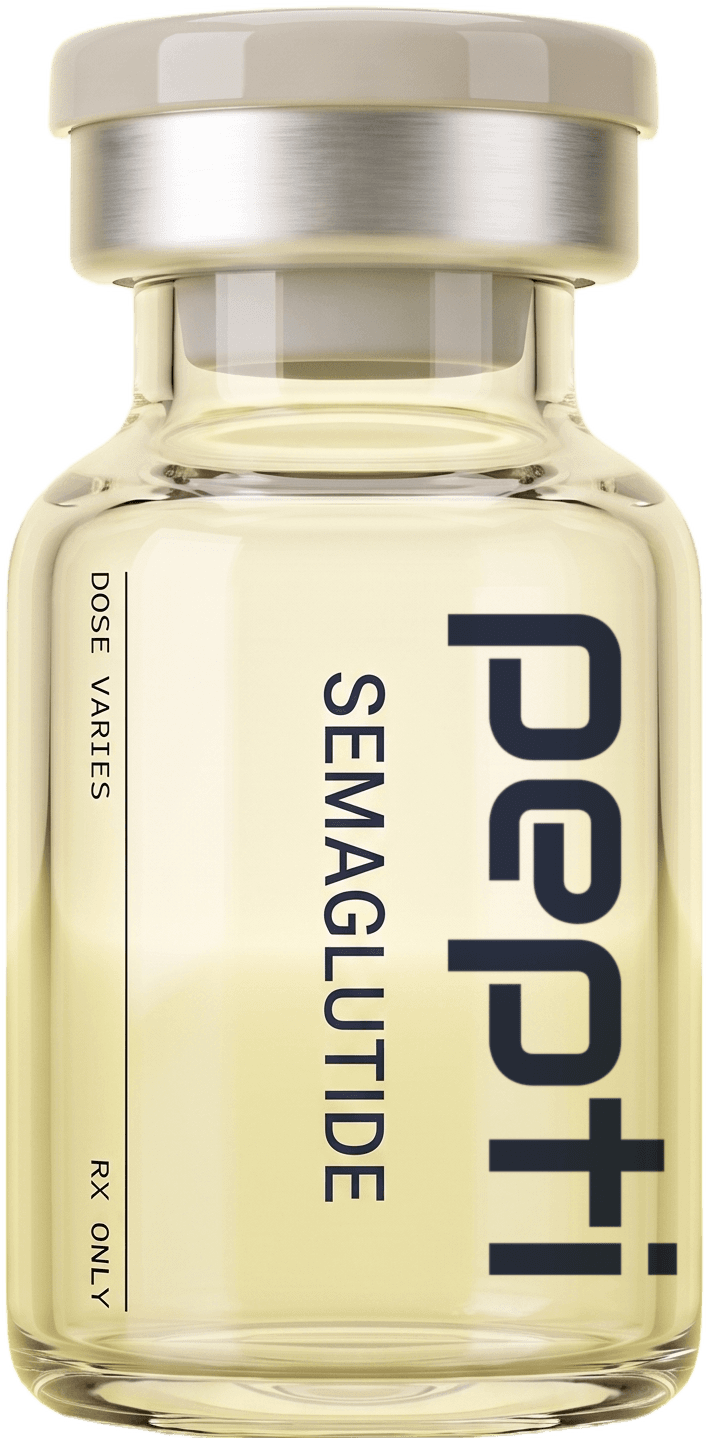
Switching from semaglutide to tirzepatide is common, and it is handled by your physician as a new prescription rather than a swap you make yourself. The two medications are not dose-equivalent, so there is no conversion chart; the usual approach described on Pepti's reference pages is to start lower on tirzepatide's ladder and step up again, because the GIP arm is new to the body and tolerance built on semaglutide does not fully transfer. The last semaglutide dose is taken on its usual day and the first tirzepatide dose the following week, never both together. Your physician sets your tirzepatide dose after reviewing your history, and the directions are printed on the new vial.
This page explains why people switch, how the switch is handled at Pepti, what changes on the vial, what to expect from side effects, and the questions people ask most. It does not give a dose to switch to, because that depends on you.
Switching From Semaglutide to Tirzepatide
The short answer
| Question | Answer |
|---|---|
| Can I switch from semaglutide to tirzepatide? | Yes, through your physician |
| Is there a conversion dose? | No. The two are not dose-equivalent |
| What usually happens? | A start lower on the tirzepatide ladder, then stepping up again, as set by your physician |
| When is the first tirzepatide dose? | The week after your last semaglutide dose, on your usual day |
| Can I use up my semaglutide alongside it? | No. Taking both together is not recommended on either approved label |
| Do the units on the vial change? | Yes. Pepti's tirzepatide is 50 units at every strength; semaglutide varies by strength |
| Cost at Pepti | Semaglutide from $99/mo; tirzepatide from $159/mo, both priced by dose |
Every price is all-in, covering medication, physician review, refill management and shipping, with no membership fee.
Switching From Semaglutide to Tirzepatide
Why people switch
The two medications are more alike than different in everyday use. Both are once-weekly injections that act on the GLP-1 receptor; tirzepatide also acts on the GIP receptor. The reasons for switching usually fall into a few groups:
| Reason | What the reference pages describe |
|---|---|
| Progress has stalled at the top of semaglutide's range | The commoner reason for moving to tirzepatide |
| Nausea has stopped someone moving past a middle strength | A switch is one option; holding a step is another |
| Sleep apnoea is part of the picture | The tirzepatide trial SURMOUNT-OSA, and the approved indication, belong to tirzepatide |
| Wanting the dual-receptor mechanism | SURMOUNT-5, the head-to-head trial of the branded products, reported a larger average reduction with tirzepatide |
| Cost | Usually the reason for the opposite switch, tirzepatide to semaglutide |
SURMOUNT-5, in the New England Journal of Medicine in 2025, is the one randomized head-to-head trial in adults with obesity and no diabetes. It was open-label, it compared the branded products rather than compounded preparations, and a difference in group averages says nothing about where any individual lands. A stall also has several possible causes, only one of which is the medication, which is covered in why am I not losing weight on semaglutide. Starting on tirzepatide without trying semaglutide first is also reasonable; nothing in either label or in compounding law requires a sequence.
Switching From Semaglutide to Tirzepatide
Why there is no conversion chart
People search for a semaglutide-to-tirzepatide conversion because it seems as though a given semaglutide dose should equal a given tirzepatide dose. It does not work that way.
- They are different molecules. Semaglutide is a GLP-1 analogue; tirzepatide is built on GIP and acts at two receptors. Milligram for milligram they are not comparable.
- The ladders are different. Pepti's semaglutide runs from 0.25 mg to 2.5 mg weekly; tirzepatide runs from 2.5 mg to 15 mg weekly. A number on one ladder has no matching rung on the other.
- Tolerance does not fully transfer. Gastrointestinal side effects cluster around starting a medication and each increase. The GIP arm is new to the body, which is why the usual approach is to start lower and step up again.
So the right question is not "what is my equivalent dose" but "what does my physician want my first tirzepatide vial to be". That is answered on your prescription after a review of your history, how semaglutide went for you, and where you are now. Never work out a switch dose yourself, and never use a figure from someone else's switch.
Switching From Semaglutide to Tirzepatide
How the switch is handled at Pepti
- Tell your care team you want to discuss switching. Say which semaglutide strength you are on, how long you have been on it, and what is prompting the change: a stall, side effects, cost or something else.
- Your physician reviews it. The review covers your history, how you tolerated semaglutide, your current medications, and anything that changes the picture, such as pregnancy plans or oral contraceptives.
- A new prescription is written. If the switch is appropriate, your physician sets your tirzepatide dose and writes a new prescription. Your physician may also suggest staying on semaglutide, holding your current strength, or a different plan.
- The pharmacy sends the tirzepatide vial. It arrives as a new vial with its own label and directions. Until it arrives, your semaglutide directions are the ones that apply.
- The timing is set for you. The usual approach is to take the last semaglutide dose on its usual day and start tirzepatide the following week. Follow the timing your care team gives you.
- Step-ups follow from there. Your physician reviews how each tirzepatide step goes before any increase, with at least four weeks on a step before an increase is considered.
If you are moving to Pepti from another provider rather than switching molecule, say the exact medication and strength you are on. The semaglutide vs tirzepatide page covers that case as well.
Switching From Semaglutide to Tirzepatide
What changes on the vial
This is the practical detail that catches people out. Pepti's semaglutide and tirzepatide vials are built differently.
| Pepti semaglutide | Pepti tirzepatide | |
|---|---|---|
| Strengths | Six, 0.25 mg to 2.5 mg weekly | Six, 2.5 mg to 15 mg weekly |
| Vial sizes | 1 mL, 2 mL or 3 mL depending on strength | 2 mL at every strength |
| Units drawn | Varies by strength, from 25 to 68 units | 50 units (0.50 mL) at every strength |
| Inactive ingredients | Semaglutide alone | Glycine in the 2.5 mg and 7.5 mg vials; the others tirzepatide alone; no B12 |
| Format | Vial and insulin syringe | Vial and insulin syringe |
Never carry the units from your semaglutide vial over to tirzepatide, or the reverse. A unit is a volume mark on a U-100 syringe, not a measure of medication, and the same number of units from two different vials can be very different doses. Read the new label, and if anything on it does not match what you were told, message your care team before injecting. The tirzepatide steps are set out in the tirzepatide dosing chart.
Switching From Semaglutide to Tirzepatide
Timing: why the doses are not stacked
Semaglutide has an elimination half-life of about a week, and the approved weight-management label states it is present in the circulation for about five to seven weeks after the last dose. That means semaglutide is still in your system when tirzepatide starts. Both act at the GLP-1 receptor, so taking them together stacks GLP-1 exposure and its side effects with no mechanism gained, and both approved labels state that coadministration with another GLP-1 receptor agonist is not recommended.
That is why the switch is a clean handover on the weekly schedule, not an overlap. Do not use up leftover semaglutide alongside tirzepatide, and do not take an extra dose of either to bridge a gap. How long each stays in the body is set out in how long does tirzepatide stay in your system.
Switching From Semaglutide to Tirzepatide
Side effects after a switch
The side effects of the two medications are the same family: nausea, early fullness, reflux, constipation, diarrhea and vomiting, clustered in the days after starting and after each increase. In SURPASS-2, the trial that measured them side by side at diabetes doses, nausea, diarrhea and vomiting rates were within a few percentage points of each other. How fast the dose climbs matters more than which molecule is in the vial.
| After the switch | What patients commonly describe | What to do |
|---|---|---|
| First tirzepatide weeks | Some queasiness or fullness for a few days after the injection | Tell your care team if it has not settled before your next refill |
| Each step up | A few days of adjustment | Holding a step is the main adjustment; never change your own dose |
| Persistent vomiting or no fluids kept down | Not normal adjustment | Contact your care team the same day; dehydration can affect the kidneys |
| Severe abdominal pain, often radiating to the back | Possible pancreatitis | Seek urgent care. Call 911 for severe symptoms |
| Facial or throat swelling, or difficulty breathing | Possible allergic reaction | Call 911 |
Birth control pills
This matters at a switch specifically. The approved tirzepatide label advises anyone taking an oral contraceptive to switch to a non-oral method, or add a barrier method, for four weeks after starting tirzepatide and four weeks after each dose increase, because slower stomach emptying reduces absorption. Starting tirzepatide counts as starting, even if you were on semaglutide before. The full side-effect picture is in tirzepatide side effects and managing nausea in GLP-1 nausea.
Switching From Semaglutide to Tirzepatide
Cost after a switch
Tirzepatide is priced from $159 a month and semaglutide from $99 a month at Pepti, both by dose, because a higher strength is a vial with more medication in it. When your physician switches you, the tirzepatide price for the strength on your prescription applies from that fill. Each price covers one vial per 28-day fill, physician review, refill management and refrigerated shipping with ice packs, sterile syringes and alcohol prep pads. Pepti is cash-pay and does not bill insurance. Current prices by strength are on the tirzepatide and semaglutide product pages.
Switching From Semaglutide to Tirzepatide
What the evidence shows, honestly
Both medications have large trial programmes behind the branded products, and SURMOUNT-5 compared them directly. What the trials did not test is switching itself: no randomized trial in Pepti's reference pages studied people moved from semaglutide to tirzepatide, and none established a conversion between them. The approach of starting lower and stepping up again comes from how the side effects behave and from the labels' escalation schedules, not from a switching trial. Compounded semaglutide and tirzepatide contain the same active ingredients as the approved products but are not FDA approved, and no trial has been run on either compounded preparation.
Switching From Semaglutide to Tirzepatide
Where to get tirzepatide prescribed
- Complete a free online intake covering your history, medications and what you want help with, including your current semaglutide strength.
- A physician licensed in your state reviews it, usually within 24 hours.
- If it is appropriate, a PCAB-accredited, FDA-registered US 503A pharmacy compounds it to that prescription. Lot test results are published at /quality/lab-results.
- It ships refrigerated with ice packs, sterile syringes and alcohol prep pads, with your directions printed on the vial.
- Your care team stays reachable for side effects and dose questions. Refills run every 28 days, one vial per fill.
Bloodwork is not required for any Pepti treatment. If your physician wants labs for your care, they'll ask through your account. The step-by-step page is how to get tirzepatide prescribed online.
References
What this is based on.
References
- Wilding JPH, Batterham RL, Calanna S, et al.. Once-Weekly Semaglutide in Adults with Overweight or Obesity (STEP 1) · New England Journal of Medicine (2021) · PMID 33567185
- Lincoff AM, Brown-Frandsen K, Colhoun HM, et al.. Semaglutide and Cardiovascular Outcomes in Obesity without Diabetes (SELECT) · New England Journal of Medicine (2023) · PMID 37952131
- Wadden TA, Bailey TS, Billings LK, et al.. Effect of subcutaneous semaglutide vs placebo as an adjunct to intensive behavioral therapy on body weight in adults with overweight or obesity (STEP 3) · JAMA (2021) · PMID 33625476
- Rubino D, Abrahamsson N, Davies M, et al.. Effect of Continued Weekly Subcutaneous Semaglutide vs Placebo on Weight Loss Maintenance in Adults With Overweight or Obesity: The STEP 4 Randomized Clinical Trial · JAMA (2021) · PMID 33755728
- Marso SP, Bain SC, Consoli A, et al.. Semaglutide and Cardiovascular Outcomes in Patients with Type 2 Diabetes (SUSTAIN-6) · New England Journal of Medicine (2016) · PMID 27633186
- Davies M, Færch L, Jeppesen OK, et al.. Semaglutide 2.4 mg once a week in adults with overweight or obesity, and type 2 diabetes (STEP 2): a randomised, double-blind, double-dummy, placebo-controlled, phase 3 trial · The Lancet (2021) · PMID 33667417
- Garvey WT, Batterham RL, Bhatta M, et al.. Two-year effects of semaglutide in adults with overweight or obesity: the STEP 5 trial · Nature Medicine (2022) · PMID 36216945
- Rubino DM, Greenway FL, Khalid U, et al.. Effect of Weekly Subcutaneous Semaglutide vs Daily Liraglutide on Body Weight in Adults With Overweight or Obesity Without Diabetes: The STEP 8 Randomized Clinical Trial · JAMA (2022) · PMID 35015037
- Aronne LJ, Horn DB, le Roux CW, et al.. Tirzepatide as Compared with Semaglutide for the Treatment of Obesity (SURMOUNT-5) · New England Journal of Medicine (2025) · PMID 40353578
- Sanyal AJ, Newsome PN, Kliers I, et al.. Phase 3 Trial of Semaglutide in Metabolic Dysfunction-Associated Steatohepatitis (ESSENCE) · New England Journal of Medicine (2025) · PMID 40305708
- Wilding JPH, Batterham RL, Davies M, Van Gaal LF, Kandler K et al.. Weight regain and cardiometabolic effects after withdrawal of semaglutide: The STEP 1 trial extension · Diabetes Obes Metab (2022) · PMID 35441470
- Batsis JA, Gavras A, Gross DC, Cheever CR, Da Silva BR et al.. Effect of Incretin-Based and Nonpharmacologic Weight Loss on Body Composition: A Systematic Review · Ann Intern Med (2026) · PMID 41996180
Citations are provided for educational purposes. They do not constitute medical advice. Always discuss any peptide protocol with your prescribing physician.
Common questions
Switching From Semaglutide to Tirzepatide, answered.
Yes. It is a common change, made through your physician as a new prescription. Your physician reviews your history and how semaglutide went, and sets your tirzepatide dose.
The dose your physician prescribes after reviewing your history. There is no conversion chart, because the two medications are not dose-equivalent. The usual approach is to start lower on the tirzepatide ladder and step up again.
No reliable one exists. They are different molecules on different dose ladders, and tolerance built on semaglutide does not fully transfer. Be wary of any chart that claims to match the numbers.
The usual approach is to take the last semaglutide dose on its usual day and start tirzepatide the following week. Follow the timing your care team gives you, and never take both in the same week.
No. Both act at the GLP-1 receptor, and both approved labels state that coadministration with another GLP-1 receptor agonist is not recommended.
Do not use it alongside tirzepatide. Ask your care team what to do with any remaining vial.
They can. Side effects cluster around starting a medication and each increase, and the GIP arm is new to the body. That is one reason the usual approach starts lower and steps up again.
Because Pepti's tirzepatide vials are concentrated so that 0.50 mL (50 units) delivers the weekly dose at every strength, while semaglutide's draw varies by strength. Always use the units on the vial in hand.
In SURMOUNT-5, the head-to-head trial of the branded products, tirzepatide produced a larger average reduction. Averages do not predict an individual result, and tolerability, history and cost matter too. See semaglutide vs tirzepatide.
Yes, through your physician. The same principle applies in reverse: the two are not dose-equivalent, and the new dose is set on your prescription.
No. Bloodwork is not required for any Pepti treatment. If your physician wants labs for your care, they'll ask through your account. The free assessment goes to a physician licensed in your state. A consultation does not guarantee a prescription.
Next step
See what a physician recommends for you.
A licensed physician in your state reviews your intake and decides what is appropriate. A consultation does not guarantee a prescription.