Weight Loss · Reference
Does Insurance Cover Compounded GLP-1? Semaglutide, Tirzepatide and What Plans Actually Pay For
Insurance does not cover compounded semaglutide or compounded tirzepatide, because plans pay for FDA-approved products listed on a formulary, and a medication compounded for one patient is neither.
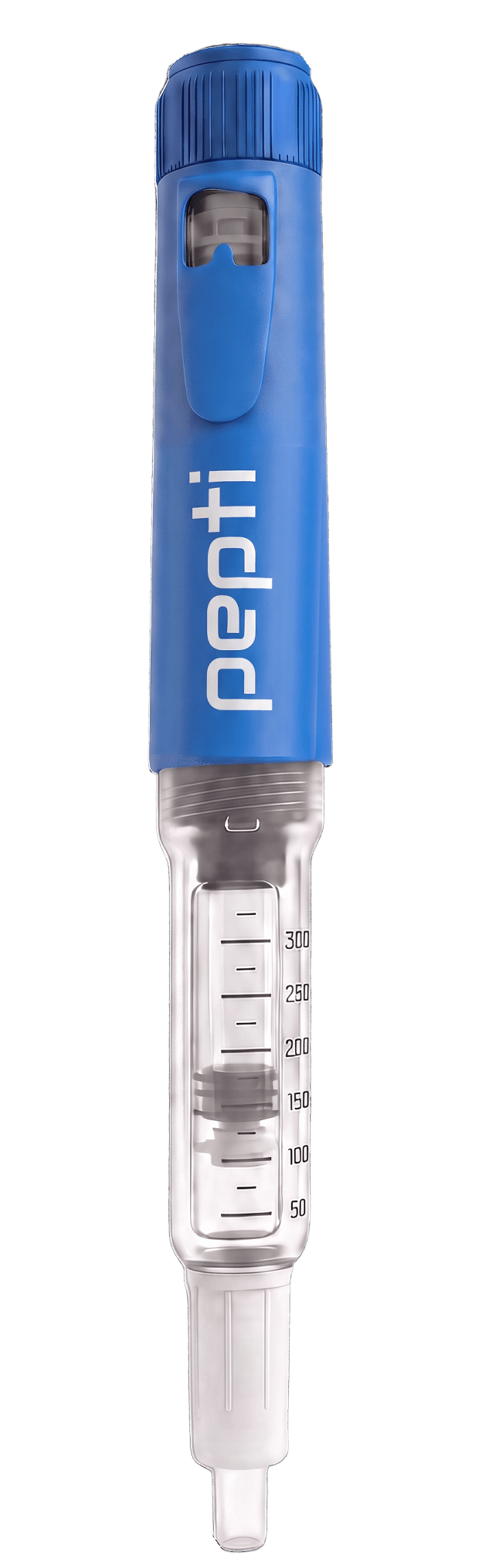
Treatments mentioned
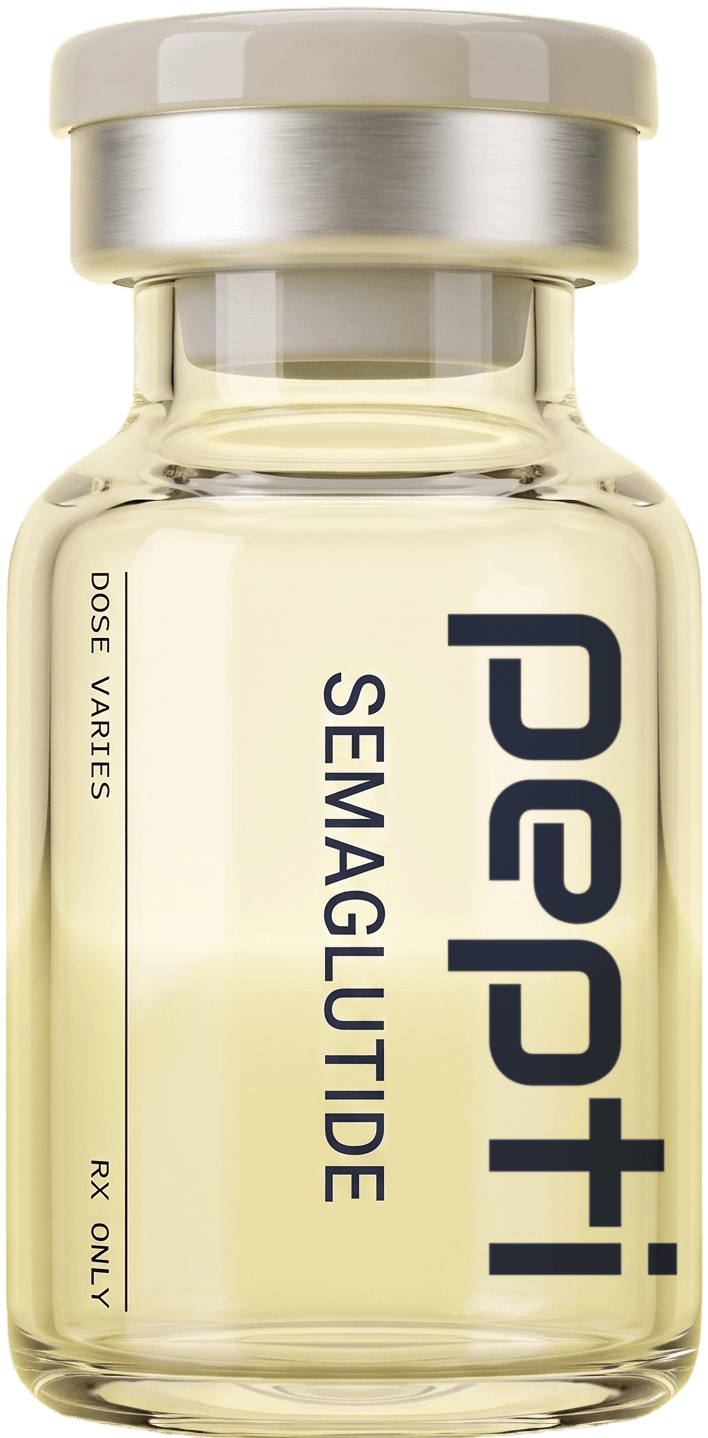
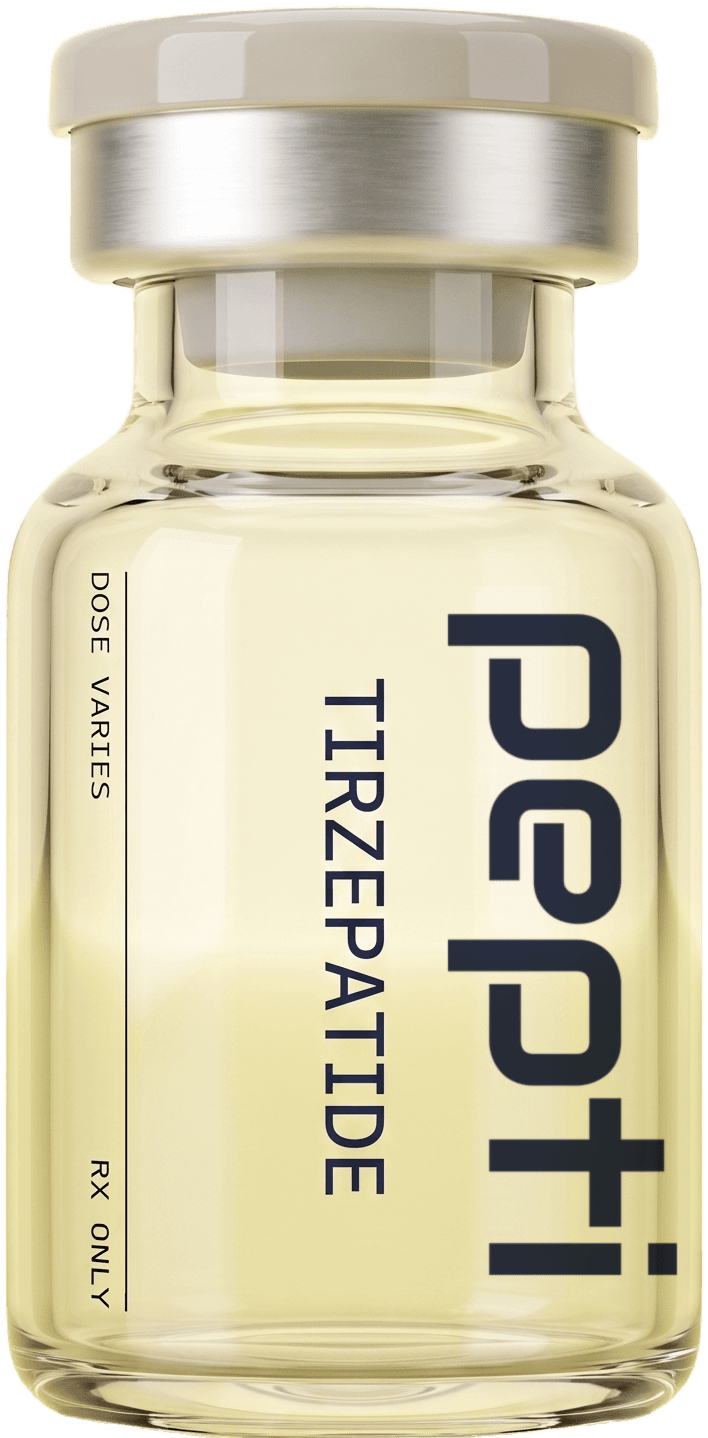
Some plans do cover the branded, approved GLP-1 products for approved uses, usually with prior authorization and documented criteria, and that coverage varies plan by plan, even between two plans from the same insurer, whether that is Aetna, Cigna or any other carrier. Pepti is cash-pay and does not bill insurance; compounded semaglutide starts from $99 a month and tirzepatide from $159, all-in. HSA and FSA funds can usually be used for a prescribed medication.
This page explains why compounded GLP-1s sit outside coverage, when the branded route is worth checking, the exact questions to ask your plan, how Medicare handles weight-loss drugs, and where HSA and FSA funds help.
Does Insurance Cover Compounded GLP-1? Semaglutide, Tirzepatide and What Plans Actually Pay For
The short answer
| What you are trying to claim | Typical outcome | Why |
|---|---|---|
| Compounded semaglutide | Not covered | Compounded, not the approved product; no formulary listing |
| Compounded tirzepatide | Not covered | Same |
| A branded GLP-1 through your own prescriber | Sometimes covered | An approved product on some formularies, usually with prior authorization |
| A branded GLP-1 when your plan excludes weight management | Not covered for that use | A benefit exclusion ends the question regardless of product |
| Any prescribed medication paid with HSA or FSA funds | Usually allowed | A prescribed drug is a qualified medical expense in most plans |
At Pepti, compounded semaglutide is from $99 a month and compounded tirzepatide from $159 a month. Both are "from" prices, because the vials are dose-specific and the price moves with the strength, and both are all-in, covering medication, physician review, refill management and shipping, with no separate membership fee. Compounded medications are not FDA approved.
Does Insurance Cover Compounded GLP-1? Semaglutide, Tirzepatide and What Plans Actually Pay For
Why compounded GLP-1s sit outside coverage
This is structural, not a judgement about whether the medication helps you.
| What a pharmacy benefit needs | What a compounded GLP-1 offers | Result |
|---|---|---|
| The drug is on the plan formulary | Formularies list approved manufactured products | Nothing to pay against |
| A National Drug Code the plan can process | A 503A preparation is made for one named patient, not commercially distributed, so it has no finished-product code | The claim cannot be processed normally |
| An approved product | Compounded preparations are exempt from new drug approval by statute | Not a covered product |
The statute behind it
Compounding for an identified patient is governed by section 503A of the Federal Food, Drug, and Cosmetic Act, which exempts a compounded preparation from three sections of the Act, including section 505, new drug approval. That exemption is what makes compounding lawful, and it is also what makes it unclaimable: a pharmacy benefit pays for products that went through approval. The FDA states it plainly: "Compounded drugs are not FDA-approved."
Same molecule, different legal object
The branded product has an approval, a label, a National Drug Code and a negotiated formulary position. A compounded semaglutide preparation has a prescription and a pharmacy. The benefit does not compare active ingredients; it looks up a product identifier. That is why coverage of the branded medication tells you nothing about coverage of a compounded one, and why a compounded vial is never the branded medication under another name. The longer explanation is in does insurance cover peptide therapy.
Does Insurance Cover Compounded GLP-1? Semaglutide, Tirzepatide and What Plans Actually Pay For
When the branded GLP-1 may be covered
Branded semaglutide and tirzepatide are approved products, and some plans cover them for approved indications. If you might qualify, it is worth finding out before paying for anything directly, because a covered copay usually costs less than cash pay.
Three gates people confuse
Gate What it means What you can do Benefit exclusion The plan excludes a whole category, most often weight management, whatever the product Nothing, for that use; this most often ends the conversation Formulary exclusion The product is not on the plan's list Nothing to authorize; ask whether an alternative is listed Prior authorization The product is listed but needs documentation first, typically diagnosis, measurements and prior attempts Your own prescriber submits it Check the benefit exclusion first. If weight management is excluded outright, the formulary question does not matter.
What to ask your plan, word for word
Ask in writing through the plan's message portal, so you have a record.
- Does my plan document contain a weight-management exclusion, and does it apply to all products or only some?
- Is the branded GLP-1 I am asking about on formulary, and on which tier?
- What are the prior authorization criteria, and what must my prescriber submit?
- Does step therapy apply, meaning I must try something else first?
- What is my copay if it is approved?
- Does my plan have a compounded drug benefit, and does it require every active ingredient to be individually covered?
The pharmacy benefit is often run by a different organization from the medical benefit, and one cannot speak for the other. If a reply does not make clear which provision it rests on, ask again.
Why "does Aetna cover GLP-1" has no single answer
People search by insurer name, but coverage is set by the specific plan: an employer's plan, an individual marketplace plan and a Medicare plan from the same insurer can have different formularies and different exclusions. The answer for your plan is in your plan documents and in a written reply from your plan, not in a general statement about the insurer. Pepti does not bill any insurer, so the question only matters for the branded route through your own prescriber.
Does Insurance Cover Compounded GLP-1? Semaglutide, Tirzepatide and What Plans Actually Pay For
Medicare, specifically
Medicare is where the exclusions are written into statute rather than into a plan document.
A covered Part D drug is defined by reference to drugs approved for safety and effectiveness under section 505. A compounded preparation is exempt from section 505, so it does not meet the definition, and no plan has authority to waive that. Part D also incorporates the Medicaid list of excludable categories, which includes "agents when used for anorexia, weight loss, or weight gain." That is a use-based exclusion, so coverage of a branded GLP-1 turns on the documented indication and the plan's criteria. Ask your plan in writing which provision applies, and have your own prescriber handle any submission.
Does Insurance Cover Compounded GLP-1? Semaglutide, Tirzepatide and What Plans Actually Pay For
HSA and FSA: where money can be saved
IRS Publication 502 says you can include in medical expenses "amounts you pay for prescribed medicines and drugs," and defines a prescribed drug as one that requires a prescription by a doctor. A compounded GLP-1 dispensed on a prescription from a physician licensed in your state fits that description. The tax test does not mention FDA approval or formulary status, which is why an expense your plan will not touch can still be a qualified one.
| Account | How it works | What to keep |
|---|---|---|
| HSA | Self-directed; you keep the records | Prescription label or pharmacy paperwork, itemized receipt |
| Health FSA | Administered; the administrator may ask for documentation first | The same, plus a letter of medical necessity if asked |
A letter of medical necessity is a short note from the prescribing physician naming the condition, the medication and why it is indicated; ask through your account. Rules differ by administrator, so check your own plan documents. More is in can you use HSA or FSA for peptides.
What does not help
- Asking a pharmacy to bill a compounded vial under the branded product's code. That is a false claim.
- Asking a prescriber to document a diagnosis you do not have. That is insurance fraud.
- Appealing a denial of a compounded GLP-1. The denial is a category mismatch, and no fact you can add makes a compounded preparation an approved product.
An appeal is worth filing only for a branded product on formulary, denied on criteria you can document.
Does Insurance Cover Compounded GLP-1? Semaglutide, Tirzepatide and What Plans Actually Pay For
What Pepti prescribes, and what it costs
| Medication | What is in it | Price |
|---|---|---|
| Semaglutide | Dose-specific vials at six strengths, starting with 1 mg per 1 mL at the 0.25 mg starting dose; once-weekly injection | From $99/mo |
| Tirzepatide | Dose-specific 2 mL vials at six strengths, 2.5 mg to 15 mg; the 2.5 mg and 7.5 mg vials include glycine; once-weekly injection | From $159/mo |
Each vial holds four weekly doses, one 28-day fill. Both ship refrigerated with ice packs, sterile syringes and alcohol prep pads, with your directions printed on the vial. Both are compounded by PCAB-accredited, FDA-registered US 503A pharmacies, with lot test results at /quality/lab-results. Pepti's GLP-1 vials contain no B12. Per-strength pricing is on /cost/semaglutide and /cost/tirzepatide.
Does Insurance Cover Compounded GLP-1? Semaglutide, Tirzepatide and What Plans Actually Pay For
What the evidence shows, honestly
Semaglutide and tirzepatide have large randomized trials behind the approved products, the STEP, SELECT, SURPASS and SURMOUNT programs, and that evidence is why approved GLP-1 products exist and why some plans have criteria for them. Compounded preparations share the active ingredient, not those trials or the approval.
Coverage is not a verdict on whether a medication works. Plans decline plenty of things that help people, and coverage tracks approval rather than evidence. There is no published dataset on how often compounded GLP-1 claims are paid, so no honest provider can quote a percentage. The structure is what is documented: plans pay against formularies and product codes, and compounded preparations sit outside both.
Does Insurance Cover Compounded GLP-1? Semaglutide, Tirzepatide and What Plans Actually Pay For
Where to get a GLP-1 prescribed
- Complete a free online intake covering your history, medications and what you want help with.
- A physician licensed in your state reviews it, usually within 24 hours.
- If it is appropriate, a PCAB-accredited, FDA-registered US 503A pharmacy compounds it to that prescription.
- It ships refrigerated with ice packs, sterile syringes and alcohol prep pads, with your directions printed on the vial.
- Refills run every 28 days, one vial per fill, and your care team stays reachable for questions.
Step-by-step pages: how to get semaglutide prescribed online and how to get tirzepatide prescribed online.
References
What this is based on.
References
- Wilding JPH, Batterham RL, Calanna S, et al.. Once-Weekly Semaglutide in Adults with Overweight or Obesity (STEP 1) · New England Journal of Medicine (2021) · PMID 33567185
- Lincoff AM, Brown-Frandsen K, Colhoun HM, et al.. Semaglutide and Cardiovascular Outcomes in Obesity without Diabetes (SELECT) · New England Journal of Medicine (2023) · PMID 37952131
- Wadden TA, Bailey TS, Billings LK, et al.. Effect of subcutaneous semaglutide vs placebo as an adjunct to intensive behavioral therapy on body weight in adults with overweight or obesity (STEP 3) · JAMA (2021) · PMID 33625476
- Rubino D, Abrahamsson N, Davies M, et al.. Effect of Continued Weekly Subcutaneous Semaglutide vs Placebo on Weight Loss Maintenance in Adults With Overweight or Obesity: The STEP 4 Randomized Clinical Trial · JAMA (2021) · PMID 33755728
- Marso SP, Bain SC, Consoli A, et al.. Semaglutide and Cardiovascular Outcomes in Patients with Type 2 Diabetes (SUSTAIN-6) · New England Journal of Medicine (2016) · PMID 27633186
- Davies M, Færch L, Jeppesen OK, et al.. Semaglutide 2.4 mg once a week in adults with overweight or obesity, and type 2 diabetes (STEP 2): a randomised, double-blind, double-dummy, placebo-controlled, phase 3 trial · The Lancet (2021) · PMID 33667417
- Garvey WT, Batterham RL, Bhatta M, et al.. Two-year effects of semaglutide in adults with overweight or obesity: the STEP 5 trial · Nature Medicine (2022) · PMID 36216945
- Rubino DM, Greenway FL, Khalid U, et al.. Effect of Weekly Subcutaneous Semaglutide vs Daily Liraglutide on Body Weight in Adults With Overweight or Obesity Without Diabetes: The STEP 8 Randomized Clinical Trial · JAMA (2022) · PMID 35015037
- Aronne LJ, Horn DB, le Roux CW, et al.. Tirzepatide as Compared with Semaglutide for the Treatment of Obesity (SURMOUNT-5) · New England Journal of Medicine (2025) · PMID 40353578
- Sanyal AJ, Newsome PN, Kliers I, et al.. Phase 3 Trial of Semaglutide in Metabolic Dysfunction-Associated Steatohepatitis (ESSENCE) · New England Journal of Medicine (2025) · PMID 40305708
- Wilding JPH, Batterham RL, Davies M, Van Gaal LF, Kandler K et al.. Weight regain and cardiometabolic effects after withdrawal of semaglutide: The STEP 1 trial extension · Diabetes Obes Metab (2022) · PMID 35441470
- Batsis JA, Gavras A, Gross DC, Cheever CR, Da Silva BR et al.. Effect of Incretin-Based and Nonpharmacologic Weight Loss on Body Composition: A Systematic Review · Ann Intern Med (2026) · PMID 41996180
Citations are provided for educational purposes. They do not constitute medical advice. Always discuss any peptide protocol with your prescribing physician.
Common questions
Does Insurance Cover Compounded GLP-1? Semaglutide, Tirzepatide and What Plans Actually Pay For, answered.
No. Coverage attaches to the approved branded product, not to a compounded preparation of the same active ingredient. Compounded semaglutide has no formulary listing and no finished-product code for a plan to pay against.
No, for the same reasons. A plan may cover the branded tirzepatide product for an approved use if you meet its criteria.
It depends on the specific plan, not on the insurer's name. Plans from the same insurer can have different formularies and exclusions, so ask your plan in writing using the questions above. No plan covers a compounded GLP-1 as if it were the branded product.
The same answer: coverage varies by plan. Check for a weight-management exclusion first, then whether the branded product is on formulary and what prior authorization requires.
No. Pepti is cash-pay and does not bill insurance. Prices are published per treatment and are all-in, covering medication, physician review, refill management and shipping.
Usually, yes. IRS Publication 502 includes prescribed medicines and drugs as medical expenses. Some FSA administrators ask for a letter of medical necessity; confirm with your own plan.
Because plans look up a product identifier, not an active ingredient. The branded product has an approval, a code and a formulary position; the compounded preparation has a prescription and a pharmacy.
Part D treats agents used for weight loss as an excludable category, and compounded preparations do not meet the definition of a covered Part D drug at all. Coverage of a branded product turns on the documented indication and the plan's criteria.
No. The denial reflects a category mismatch, not a clinical judgement. An appeal is worth the effort only for a branded product on formulary denied on criteria you can document.
A receipt does not change how a plan processes a compounded preparation. It is useful for HSA or FSA records.
No. Compounded medications are not FDA approved. The FDA does not review compounded drugs for safety, effectiveness or quality before they are marketed.
No. Bloodwork is not required for any Pepti treatment. If your physician wants labs for your care, they'll ask through your account. The free assessment goes to a physician licensed in your state. A consultation does not guarantee a prescription.
Related answers
Keep reading.
- What Is a GLP-1? Meaning, How GLP-1 Medications Work, and the List by Generic Name
- Eating Out on a GLP-1: A Practical Guide to Restaurants on Semaglutide and Tirzepatide
- GLP-1 Acid Reflux: Why Semaglutide and Tirzepatide Cause Heartburn, and What Helps
- GLP-1 and Blood Pressure: What Semaglutide and Tirzepatide Do, and the Low Blood Pressure Risk
- GLP-1 Online Red Flags: The Warning Signs Before, During and After Checkout
Next step
See what a physician recommends for you.
A licensed physician in your state reviews your intake to see whether treatment fits your history. A consultation does not guarantee a prescription.