— Recovery · Reference
Is Peptide Telehealth Legit? How to Tell Medicine From a Storefront
This page covers the statutes that govern the question, how the three parties divide the work, what makes a prescription valid rather than decorative, how to verify each party yourself, and the failure modes — including the legal ones.
— Treatments mentioned
Peptide telehealth is legitimate when three things are true: a real medical intake, a physician licensed in the state where you are, and a state-licensed, FDA-registered compounding pharmacy that fills the prescription. Telemedicine prescribing is legal in the United States and regulated state by state, and peptides are not controlled substances, so the stricter federal rules that govern remote prescribing of controlled drugs do not apply here. What does apply is state licensure and the requirement for a genuine patient relationship. A service missing any of those is not practising telehealth; it is selling vials with a review-shaped step in the checkout.
This page covers the statutes that govern the question, how the three parties divide the work, what makes a prescription valid rather than decorative, how to verify each party yourself, and the failure modes — including the legal ones.
— Is Peptide Telehealth Legit? How to Tell Medicine From a Storefront
The short answer
| What you want treated | A commonly prescribed option | What is in it | Price |
|---|---|---|---|
| Immune support | Thymosin Alpha-1 | 10 mg Thymosin A-1 in 5 mL | $249 |
| Cellular energy | MOTS-c | 10 mg MOTS-c in 5 mL | $259 |
| Mitochondrial support | SS-31 (Elamipretide) | 10 mg SS-31 in 5 mL | $249 |
| Recovery and repair | BPC-157 + TB-500 | 5 mg each in 5 mL | $259 |
| Weight and metabolic | Tirzepatide | Dose-specific vials with cyanocobalamin | From $159 |
| Immune plus repair together | FORTIFY | 5 mg Thymosin A-1, 5 mg BPC-157, 2 mg KPV, 1 mg LL-37 | $279 |
All-in monthly prices covering medication, physician review, refill management and shipping, on a subscription you cancel in your account.
— Is Peptide Telehealth Legit? How to Tell Medicine From a Storefront
What is actually legal, and what the rules require
| Question | The answer |
|---|---|
| Is prescribing by telemedicine legal? | Yes, in every state, subject to that state's rules on how the patient relationship is established |
| Must the prescriber be licensed in my state? | Yes. Licensure follows the patient's location, not the clinician's |
| Are peptides controlled substances? | No. The federal framework for remote prescribing of controlled substances does not apply to them |
| Can the review be asynchronous, without a video call? | In many states, yes, provided the information gathered is sufficient to make the decision. Some states require synchronous contact for certain situations |
| Is compounded peptide medication FDA approved? | No. It is legally compounded by a licensed pharmacy against a valid prescription, which is a different thing |
| Can a telehealth provider decline to treat me? | Yes, and a provider whose physicians never decline is not reviewing anything |
The distinction people find hardest is the last regulatory one. Legal and approved are different words. See are peptides FDA approved and are peptides legal in the US.
— The statute that makes a peptide prescription-only
The rule that puts a physician in the middle of this at all is section 503(b) of the Federal Food, Drug, and Cosmetic Act, at 21 U.S.C. § 353(b). It defines a prescription drug as one that, because of its toxicity or other potentiality for harmful effect, or the method of its use, "is not safe for use except under the supervision of a practitioner licensed by law to administer such drug" — and says such a drug "shall be dispensed only" upon that practitioner's written or oral prescription, or an authorised refill.
The enforcement clause is worth reading twice: "the act of dispensing a drug contrary to the provisions of this paragraph shall be deemed to be an act which results in the drug being misbranded while held for sale." Dispensing an injectable peptide without a prescription is not a paperwork lapse. It makes the product misbranded as a matter of federal law, which is why a site advertising "no prescription needed" has already told you what it is.
— The statute that makes compounding lawful
The second statute is section 503A, at 21 U.S.C. § 353a, titled "Pharmacy compounding." It exempts a compounded drug from new-drug approval, from the adequate-directions-for-use labeling requirement, and from current good manufacturing practice — but only on conditions. The central one is that the drug is "compounded for an identified individual patient based on the receipt of a valid prescription order," by "a licensed pharmacist in a State licensed pharmacy or a Federal facility" or a licensed physician, on a prescription "made by a licensed physician or other licensed practitioner authorized by State law to prescribe drugs."
Read the two together and the architecture of legitimate peptide telehealth falls out of them: an identified individual patient, a valid prescription order, a licensed prescriber and a state-licensed pharmacy. Everything else is logistics wrapped around those four facts.
— Why the controlled-substance telemedicine rules do not apply
People often arrive here having read about federal restrictions on prescribing over the internet. Those are real, but written for controlled substances specifically. 21 U.S.C. § 829(e)(1) provides that "no controlled substance that is a prescription drug as determined under the Federal Food, Drug, and Cosmetic Act may be delivered, distributed, or dispensed by means of the Internet without a valid prescription," then defines a valid prescription in terms of an in-person medical evaluation, with defined telemedicine exceptions.
The threshold word is "controlled." A controlled substance is defined at 21 U.S.C. § 802(6) as "a drug or other substance, or immediate precursor, included in schedule I, II, III, IV, or V." Peptides such as BPC-157, tesamorelin, thymosin alpha-1, GHK-Cu, semaglutide and tirzepatide are not in those schedules, so the federal in-person-evaluation machinery is not the law governing your consultation. That cuts both ways: no federal in-person requirement stands between you and a prescription, and equally, the federal government has not set the floor for what your evaluation must contain.
— Where state law takes over
What fills the space is state law: the medical practice act, the medical board's telemedicine rules, and the state board of pharmacy's rules on dispensing and shipping. These are genuinely state-specific and not uniform. States differ on how a physician-patient relationship may be established remotely, on whether an asynchronous questionnaire review suffices or live contact is required in some circumstances, and on what a prescriber must do before writing for particular categories of medication.
Listing states here would not help, because the rules move and because your situation, not just your address, determines which applies. The practical version: the relevant licensure covers where you are sitting during the consultation. A provider that cannot say which physician is licensed in your state cannot answer the only regulatory question that matters to you.
— Legal and FDA approved are different words
FDA is explicit. Its compounding question-and-answer page states that "compounded drugs are not FDA-approved" and that "FDA does not verify the safety, effectiveness or quality of compounded drugs before they are marketed." Both are true of every compounded medication in the United States, from a dermatology cream to a peptide.
What compounded medication has instead is a different chain of accountability: a licensed prescriber responsible for the clinical decision, and a state-licensed pharmacy under board oversight and applicable sterile-compounding standards. A provider that calls a compounded peptide FDA approved is either confused about its own supply chain or hoping you are.
— Is Peptide Telehealth Legit? How to Tell Medicine From a Storefront
How the pieces fit together
A telehealth platform is not a pharmacy and not a medical practice. It is the layer connecting the two, and knowing that makes it much easier to work out whether a given service is sound.
| Party | Decides | Answerable to |
|---|---|---|
| The platform | Nothing clinical. It handles intake, orders, refills and support | Consumer and privacy law |
| The physician | Whether to treat, with what, at what strength, with what directions | The medical board in your state |
| The compounding pharmacy | How the medication is prepared, labelled and shipped | The state board of pharmacy, plus FDA registration and inspection |
When a service will not tell you who the physician is or which pharmacy fills the order, it is withholding the two parties who carry the accountability. That is the single most useful thing to notice.
Why the three are usually separate
It surprises people that the company whose name is on the box often does not employ the doctor or own the pharmacy. That is normal and, done properly, a feature: a physician's judgement should be independent of whoever sells the subscription, and a pharmacy's release decision on a batch independent of whether the shipment is late. What matters is that the separation is disclosed rather than hidden.
The platform cannot decide whether you are treated, what molecule you get, at what strength, or on what directions. If a checkout lets you pick a strength and a dose and then merely confirms it, the clinical decision was made by a dropdown. The order of operations matters: intake, then review, then a prescription that may or may not match what you selected.
— Is Peptide Telehealth Legit? How to Tell Medicine From a Storefront
What makes a prescription valid rather than decorative
Section 503A's phrase is "a valid prescription order." Four things have to be true for a prescription to earn it.
— An identified patient, and a prescriber licensed where you are
Compounding under 503A is patient-specific by statute. FDA's summary of the law is that under 503A "the drugs must be compounded based on the receipt of valid patient-specific prescriptions." Your name is on the prescription and on the vial, and the strength and directions are yours. A generic vial pulled from a shelf and shipped against a list is a different legal creature. The prescriber behind it must be, in the statute's words, "licensed by law to administer such drug" — and which law, and where, is the state question, answered by where the patient is.
— An evaluation sufficient to the decision
The standard is not "did you fill in a form" but "did the prescriber have enough to decide." For a repair peptide in a healthy adult with no relevant history, a thorough written intake may genuinely be enough. For a growth-hormone-axis medication, a metabolic medication, or anyone with cancer history, pregnancy, diabetes or significant interactions, it is not, and a competent reviewer asks for more or declines. The tell is not the format but whether anything you wrote could have changed the outcome.
— A legitimate medical purpose in the usual course of practice
The phrase comes from the controlled-substance side of the law, but it describes the standard every medical board applies. Prescribing is a clinical act with a clinical reason behind it, not a fulfilment step. A provider whose physicians approve everything, for everyone, in seconds is not meeting it, even though nothing in the checkout looks illegal.
— Is Peptide Telehealth Legit? How to Tell Medicine From a Storefront
How to verify each party yourself, in about ten minutes
You do not have to take any of this on trust. Three public registries settle most of it.
— Verify the physician in the NPI registry
The NPPES NPI Registry at npiregistry.cms.hhs.gov is the federal public directory of healthcare providers, free and unauthenticated. A search on a physician's name and state returns the NPI number, credential, primary practice address, enumeration date, and a taxonomy block giving the specialty together with the state licence number the provider has recorded.
A worked example: querying an internal medicine physician in Texas returns one entry with a ten-digit NPI, the credential "MD", a practice address, an active status flag, and a taxonomy of "Internal Medicine" carrying a Texas licence number.
— Verify the licence with the state medical board
The NPI registry confirms identity and specialty. It does not confirm a licence is current and it does not show disciplinary history — that is the medical board's job. Every state publishes a licensee lookup: search the name, confirm the status is active and the expiry is in the future, and read whatever the board publishes about actions. If the provider will not give you the physician's name and state of licensure, there is nothing to verify, and that is itself the finding.
— Verify the pharmacy, and check it against FDA's BeSafeRx criteria
Pharmacies are licensed by state boards of pharmacy, and one shipping into your state usually needs a non-resident licence there as well as one where it operates. FDA is explicit that state boards carry "primary responsibility for the day-to-day oversight" of 503A pharmacies.
FDA also runs a consumer campaign, BeSafeRx, to help people "recognize the signs of safe online pharmacies and the warning signs of websites that appear to be pharmacies but may be unsafe." Its criteria for a safe one: it "always requires a doctor's prescription," "is licensed with a state board of pharmacy," "provides a physical address and telephone number in the United States," and "has a licensed pharmacist on staff to answer your questions." Those four are a better checklist than anything a marketing page will give you, because a regulator with no product to sell wrote them.
— Is Peptide Telehealth Legit? How to Tell Medicine From a Storefront
Green flags
- An intake that takes several minutes and asks about conditions, medications, allergies, cancer history and pregnancy
- A named physician with credentials and state licensure you can verify through the public board register
- The pharmacy identified on request, by name
- Bloodwork offered or required where the molecule warrants it
- Messaging with the prescriber after the order, not just a support inbox
- A plain statement that compounded medication is not FDA approved
- One all-in price, and cancellation you can do yourself
- The possibility of being declined
Two more belong on that list: batch-level testing you can actually see, since a page of per-lot potency, sterility and endotoxin results beats a badge; and a documented position on which states the service covers, because a provider that ships everywhere regardless of pharmacy licensure has told you it is not tracking pharmacy licensure.
— Is Peptide Telehealth Legit? How to Tell Medicine From a Storefront
Red flags
| What you see | What it means |
|---|---|
| "No prescription needed" or "no doctor required" | Not telehealth. A research-chemical storefront |
| Guaranteed approval, or approval in seconds | The review is decorative |
| No clinician named anywhere on the site | There may be no clinician |
| The pharmacy cannot be named | The party responsible for sterility is hidden from you |
| Claims of FDA approval for a compounded product | False, and disqualifying |
| Outcome promises with numbers or timelines | No prescriber makes them honestly |
| Prescribing without any question about cancer history, pregnancy or diabetes | The screening that matters was skipped |
| Cancellation by phone only, during business hours | Design, not oversight |
| Support that cannot escalate to a clinician | A sales funnel |
The verification steps behind these are in how to tell if a peptide seller is legitimate.
The two that are not judgement calls
Most red flags are matters of degree. Two are not. "No prescription needed" is decisive, and FDA lists it first among its warning signs — a site selling BPC-157 or tesamorelin without a prescription step is outside the system entirely, not a cheaper version of it. The second is an unnameable pharmacy, worse than an unnamed doctor: a prescriber's error can be caught by a second opinion, but a sterility failure cannot be caught by you at all.
— Is Peptide Telehealth Legit? How to Tell Medicine From a Storefront
What a storefront actually looks like
A research-chemical vendor buys bulk peptide powder, has it filled or sells it lyophilised, and lists it with a disclaimer that it is for laboratory research and not for human consumption. There is no prescriber because the disclaimer is doing the legal work, and no pharmacy in the chain, so no 503A exemption applies: there is no identified individual patient and no valid prescription order. What you lose is everything that makes the prescription route worth using — nobody has confirmed the powder is the peptide named, nobody has confirmed the concentration matches the label, nobody has released the lot against a sterility and endotoxin specification, and nobody is clinically responsible if it interacts with something else you take.
The more confusing variant is the middle case: a site that is not openly a research-chemical vendor, but where the consultation is a page of questions with no answer that leads anywhere except approval. Nothing on it is a lie. What is missing is the possibility of being told no — and that is what distinguishes an evaluation from a checkout step.
— Is Peptide Telehealth Legit? How to Tell Medicine From a Storefront
The awkward middle: legal but poor
The binary between real clinic and fake clinic misses the most common disappointment, which is a service that is technically legitimate and still bad.
The tells: a review so fast nothing could have been read, no follow-up after the first shipment, no way to reach the person who prescribed, a pharmacy that takes weeks, refills that arrive whether or not you are still taking it, and a cancellation process built to be annoying. None of that is illegal. All of it is a reason to choose someone else.
The useful question is not only "is there a doctor" but "can I reach that doctor next Tuesday when something feels wrong". Ask it before you pay. The other side of the review-speed test is the decline rate: a practice where nobody is ever declined, redirected, or asked for labs first is not exercising judgement.
— Is Peptide Telehealth Legit? How to Tell Medicine From a Storefront
Failure modes, and where each one breaks
Every failure below maps to a specific broken link in the chain above.
— The prescriber is real but not licensed where you are
Real physician, real credentials, wrong state — the most common technical failure in multi-state telehealth, and invisible unless you check. The NPI registry gives the licence state; the state board confirms it is current.
— The pharmacy is real but the medication is not verified
A licensed pharmacy that neither publishes nor provides per-lot testing is asking you to take potency and sterility on trust, and FDA does not verify these for compounded products before marketing.
— The intake is real but nobody read it
The form asked about cancer history and medications; the approval came back in seconds anyway. This matters most for growth-hormone-axis products and for anyone with a complex medication list.
— The medicine is real but wrong for the problem
Everything is licensed, everything is tested, and the molecule still does not address what you described, because nobody asked enough to find out. A physician who redirects you to a different product, or says a peptide is not the right tool at all, is the system working.
— Is Peptide Telehealth Legit? How to Tell Medicine From a Storefront
What the evidence shows, honestly
Telehealth being legitimate says nothing about whether a given peptide works. Those are separate questions and providers sometimes blur them deliberately.
The evidence base is uneven. GLP-1s such as semaglutide and tirzepatide have large randomised trials behind the branded products. GHK-Cu has a deep literature including human skin studies. Tesamorelin has an approved product for a specific indication. BPC-157, TB-500, KPV, epithalon, DSIP and most of the rest rest on animal and cell research plus prescriber experience, with no large human trials.
A telehealth provider that presents preclinical findings as proven human outcomes has failed a test that matters more than its licensing. Honest uncertainty is a feature of a real practice.
— Where the human trial evidence is substantial
Semaglutide was studied in STEP 1, published in the New England Journal of Medicine in 2021 in adults with overweight or obesity, and in SELECT in the same journal in 2023 in adults with obesity and cardiovascular disease without diabetes. Tirzepatide was studied in SURMOUNT-1 in the New England Journal of Medicine in 2022 and in SURMOUNT-OSA in obstructive sleep apnea with obesity in 2024. That evidence attaches to the branded products studied; compounded semaglutide and tirzepatide are not themselves FDA-approved finished products.
Tesamorelin has randomised human data too: the New England Journal of Medicine reported in 2007 on a growth-hormone-releasing factor in patients with HIV and abdominal fat accumulation, with further randomised work in JAMA in 2014 and Lancet HIV in 2019, so tesamorelin is prescribed off that base rather than on mechanism alone. Thymosin alpha-1 has a randomised literature as well — the TESTS trial in the BMJ in 2025 in sepsis, a randomised study in Hepatology in 1998 in chronic hepatitis B, and a Cochrane review in 2026 — though those are hospital populations, not the wellness contexts Thymosin Alpha-1 is usually discussed in.
— Where the evidence is preclinical
BPC-157 is the clearest example of the other end. The tendon work — a 2006 paper in the Journal of Orthopaedic Research on Achilles detachment in rats, a 2014 paper in Molecules on growth hormone receptor expression in tendon fibroblasts — is animal and cell research, and there are no large randomised controlled trials of BPC-157 in humans. That does not make BPC-157 useless, since much prescribing rests on mechanism plus clinical experience, but the honest phrasing is "described in preclinical research and used clinically." MOTS-c is similar: the foundational work is a 2015 paper in Cell Metabolism describing effects on metabolic homeostasis in mice. MOTS-c has no randomised human efficacy trials.
— Where a middle ground exists
GHK-Cu and SS-31 sit between. GHK-Cu has human work — collagen synthesis in cultured fibroblasts in FEBS Letters in 1988, topical studies on diabetic ulcers in Wound Repair and Regeneration in 1994 and on laser-resurfaced skin in Archives of Facial Plastic Surgery in 2006 — but that is topical and dermatological, not systemic injection, and GHK-Cu is prescribed with the distinction made explicit.
SS-31, as elamipretide, has randomised trials in rare disease: MMPOWER-3 in primary mitochondrial myopathy in Neurology in 2023, a phase 2/3 trial in Barth syndrome in Genetics in Medicine in 2021, and ReCLAIM-2 in age-related macular degeneration in 2024. SS-31 prescribed for general mitochondrial support extrapolates from those defined populations, and a provider that says so is being straight with you.
— Is Peptide Telehealth Legit? How to Tell Medicine From a Storefront
Where compounded peptides stand with the FDA right now
Compounded medications are not FDA approved, and FDA does not verify their safety, effectiveness or quality before marketing. That is a structural fact about compounding, not a finding about peptides. The framework came from the Drug Quality and Security Act, enacted 27 November 2013, which preserved section 503A and created the 503B outsourcing facility category.
Separately, FDA maintains an interim policy sorting bulk drug substances nominated for 503A compounding into categories — broadly, those that may be eligible for the list, those with identified safety risks where FDA would consider action, and those nominated with insufficient supporting information. As of that page's May 2026 update the interim policy remains in effect, and FDA has stated it does not intend to place substances nominated on or after 7 January 2025 into these categories. Individual substances move between categories, so the position for any particular peptide should be checked against the current list rather than an article written two years ago.
Neither fact is a reason to avoid compounded medication; both are reasons to want a named prescriber, a named pharmacy and per-lot testing you can read.
— Is Peptide Telehealth Legit? How to Tell Medicine From a Storefront
Monitoring, bloodwork, and what happens after the first shipment
Bloodwork is not a universal requirement, and a provider that orders it for everything is not being more careful, just more expensive. It is warranted where the molecule acts on a measurable axis or where your history makes a baseline meaningful — growth-hormone-axis products, metabolic medications such as semaglutide and tirzepatide, hormonal complaints, and anyone with diabetes, thyroid disease or a significant medication list. At-home blood testing covers hormone, metabolic and thyroid markers without a lab visit.
Ongoing review should mean a channel to the prescriber, a record of what was prescribed and why, and a refill process that involves someone considering whether treatment should continue. Treatment here is long-term with 28-day refills rather than a course with an end date, which makes the review cadence more important, not less — a refill is a clinical event, not a calendar event.
Some people should not start without a conversation: anyone pregnant or breastfeeding, anyone with a personal history of cancer considering an angiogenic peptide such as BPC-157, anyone on anticoagulants, and any tested athlete, since many peptides are prohibited in competition. These are exactly the questions a decorative review skips.
— Is Peptide Telehealth Legit? How to Tell Medicine From a Storefront
How Pepti is set up
Described only from what the site itself states, so you can check every sentence.
The intake and the physician
The assessment is a free medical intake, described as an intake so a licensed provider has what they need to review your goals and treatment options, with responses confidential and protected by HIPAA. The quality page states that every Pepti prescription is reviewed by a licensed U.S. physician before it is dispensed, and only provided if clinically appropriate. Pepti prescribes in all 50 states and DC, so the licensure question resolves the same way wherever you are, though state telehealth rules still determine the form your evaluation takes.
The pharmacy and the published lab results
The quality page states that every Pepti prescription is compounded by a PCAB-accredited, FDA-registered U.S. pharmacy, and that batch-specific Certificates of Analysis with applicable potency, sterility and endotoxin reports are available to patients on request. Potency is described there as an assay verifying that the labelled concentration of the active peptide is what is in the vial; sterility as USP <71>, confirming the preparation is free of viable microorganisms.
Rather than asserting that testing happens, Pepti publishes it. Lab results lists per-lot potency, sterility and bacterial endotoxin results across the catalogue, with the testing laboratories named — Eagle Analytical Services Inc. of Houston TX, SaphoBio, and Biolink Life Sciences Carolinas Inc. of Cary NC. That is the document a storefront cannot produce.
— References
What this is based on.
References
- Chang CH, Tsai WC, Hsu YH, Pang JH. Pentadecapeptide BPC 157 enhances the growth hormone receptor expression in tendon fibroblasts · Molecules (2014) · PMID 25415472
- Krivic A, Anic T, Seiwerth S, et al.. Achilles detachment of rat and stable gastric pentadecapeptide BPC 157 · Journal of Orthopaedic Research (2006) · PMID 16583442
- Sikiric P, Seiwerth S, Rucman R, et al.. Stable gastric pentadecapeptide BPC 157: novel therapy in gastrointestinal tract · Current Pharmaceutical Design (2011) · PMID 21548867
- Cerovecki T, Bojanic I, Brcic L, Radic B, et al.. Pentadecapeptide BPC 157 (PL 14736) improves ligament healing in the rat · J Orthop Res (2010) · PMID 20225319
- Sikiric P, Seiwerth S, Rucman R, Turkovic B, et al.. Stable gastric pentadecapeptide BPC 157-NO-system relation · Curr Pharm Des (2014) · PMID 23755725
- Cox HD, Miller GD, Eichner D. Detection and in vitro metabolism of the confiscated peptides BPC 157 and MGF R23H · Drug Test Anal (2017) · PMID 28035768
- Thomas A, Görgens C, Guddat S et al.. Simplifying and expanding the screening for peptides <2 kDa by direct urine injection, liquid chromatography, and ion mobility mass spectrometry · J Sep Sci (2016) · PMID 26578461
- Farrar JT, Young JP Jr, LaMoreaux L, Werth JL et al.. Clinical importance of changes in chronic pain intensity measured on an 11-point numerical pain rating scale · Pain (2001) · PMID 11690728
- Meyer JD, Ho B, Manning MC. Effects of conformation on the chemical stability of pharmaceutically relevant polypeptides · Pharm Biotechnol (2002) · PMID 11987755
- Xu C, Sun L, Ren F, Huang P, et al.. Preclinical Safety Evaluation of Body Protective Compound-157, a Potential Drug for Treating Various Wounds · Regul Toxicol Pharmacol (2020) · PMID 32334036
- He L, Feng D, Guo H, et al.. Pharmacokinetics, distribution, metabolism, and excretion of body-protective compound 157, a potential drug for treating various wounds, in rats and dogs · Front Pharmacol (2022) · PMID 36588717
- Lee E, Padgett B. Intra-Articular Injection of BPC 157 for Multiple Types of Knee Pain · Altern Ther Health Med (2021) · PMID 34324435
Citations are provided for educational purposes. They do not constitute medical advice. Always discuss any peptide protocol with your prescribing physician.
— Common questions
Is Peptide Telehealth Legit? How to Tell Medicine From a Storefront, answered.
Yes, when a physician licensed in your state reviews a genuine intake and a licensed pharmacy compounds the prescription. Peptides are not controlled substances, so the remote-prescribing rules for controlled drugs do not apply. The statutes doing the work are 21 U.S.C. § 353(b), requiring a prescription from a practitioner licensed by law, and 21 U.S.C. § 353a, which exempts a drug compounded for an identified individual patient on a valid prescription order from the new-drug approval requirement.
Not always. Many states allow an asynchronous review when the information gathered is sufficient for the decision, and some require live contact in certain circumstances. A provider should be able to tell you which applies to you. There is no federal in-person requirement here; the in-person evaluation language at 21 U.S.C. § 829(e) applies to controlled substances, which peptides are not.
Ask for the name and the state of licensure, then check the public register your state medical board publishes. It takes about a minute. You can also search the federal NPI registry at npiregistry.cms.hhs.gov, which returns the provider's NPI number, credential, specialty and the state licence number recorded on the taxonomy entry.
Compounded medication from a state-licensed, FDA-registered pharmacy is prepared to sterile-compounding standards under board oversight. It is not FDA approved, and no provider can promise an outcome. FDA does not verify the safety, effectiveness or quality of compounded drugs before marketing, which is why per-lot testing matters and why lab results are published rather than described. See are peptides safe long term.
Because it depends on the molecule. Growth-hormone secretagogues and hormonal complaints usually warrant labs; repair peptides often do not. A provider that never orders labs for anything is the one to question.
Only if it has physicians licensed there, and pharmacy licensure also varies, which is why some products are unavailable in some places. A legitimate provider tells you rather than shipping anyway. Pepti prescribes in all 50 states and DC.
You should be able to message the prescriber and get a clinical response, with the dose reviewed or treatment stopped. If the only channel is a support inbox that cannot escalate, that is your answer about the service.
A 503A pharmacy compounds against patient-specific prescriptions under state board of pharmacy oversight. A 503B outsourcing facility registers with FDA, must comply with current good manufacturing practice, and may distribute to providers as office stock without an identified patient. Both come from the Drug Quality and Security Act of 2013, and neither produces an FDA-approved product.
That the finished product was not reviewed and approved by FDA as a manufactured drug, and that FDA did not evaluate its safety, effectiveness or quality before marketing. It does not mean unregulated: it is compounded by a state-licensed pharmacy under board oversight, against a prescription from a licensed physician, under the exemption in 21 U.S.C. § 353a.
Get the name, then use your state board of pharmacy's licensee search. FDA's BeSafeRx criteria for a safe online pharmacy are that it always requires a prescription, is licensed with a state board of pharmacy, provides a US physical address and telephone number, and has a licensed pharmacist on staff to answer questions.
Because the 503A exemption that makes compounding lawful requires the drug to be "compounded for an identified individual patient based on the receipt of a valid prescription order." That is why your name, strength and directions are on the label, and why compounded medication is not supposed to be filled in advance against a list.
Not on that basis alone — the licensure that matters covers where you are during the consultation. The NPI registry shows the state on the licence recorded against the physician's taxonomy entry, and your state medical board confirms whether it is current.
A provider that will not name it is withholding the party accountable for identity, purity, potency and sterility. Pepti's quality page states that prescriptions are compounded by a PCAB-accredited, FDA-registered U.S. pharmacy, and per-lot results with the testing laboratories named are published at lab results.
Not by itself — a straightforward intake in a healthy adult can be reviewed quickly. What matters is whether a decline is possible and whether anything you wrote could have changed the outcome.
No, and conflating the two is a common sales move. Semaglutide and tirzepatide have large randomised trials behind the branded products; tesamorelin has randomised human data in a defined population; thymosin alpha-1 has a randomised literature in hospital populations; BPC-157 and MOTS-c rest on animal and cell research plus prescriber experience. The free assessment goes to a physician licensed in your state. A consultation does not guarantee a prescription.
— Next step
See what a physician
recommends for you.
A licensed physician in your state reviews your intake and decides what is appropriate. A consultation does not guarantee a prescription.
Important legal & safety information
The assessment process available on the Pepti website asks a series of medical questions, and the answers provided are reviewed by an independent licensed physician affiliated with our partner physician network. The licensed providers have established exclusionary criteria, and the answers provided determine if the individual is screened out of eligibility for treatment. The licensed clinicians retain the sole decision to prescribe peptide therapy and other compounded medications to patients. Treatment may be denied at the physician's sole discretion. If a prescription is not approved, you will not be charged for the medication.
Pharmacy Providers. Pepti is a technology platform and is not a healthcare provider, pharmacy, or prescriber. All medications offered through the platform are compounded by independent FDA-registered 503A or 503B compounding pharmacies based on a valid prescription written by a licensed physician for an individual patient. Compounded medications are not FDA-approved as products. The active pharmaceutical ingredients used by our partner pharmacies are sourced from FDA-registered facilities. Compounded medications may not undergo the same testing or quality control as commercially manufactured FDA-approved drugs.
Results vary. Results from peptide therapy and other compounded treatments vary based on individual factors, including age, weight, medical history, adherence to the prescribed protocol, lifestyle factors, and physiological response. Pepti makes no guarantee of any specific outcome. Statements about peptide therapy and compounded medications offered through the platform have not been evaluated by the Food and Drug Administration. These products are not intended to diagnose, treat, cure, or prevent any disease.
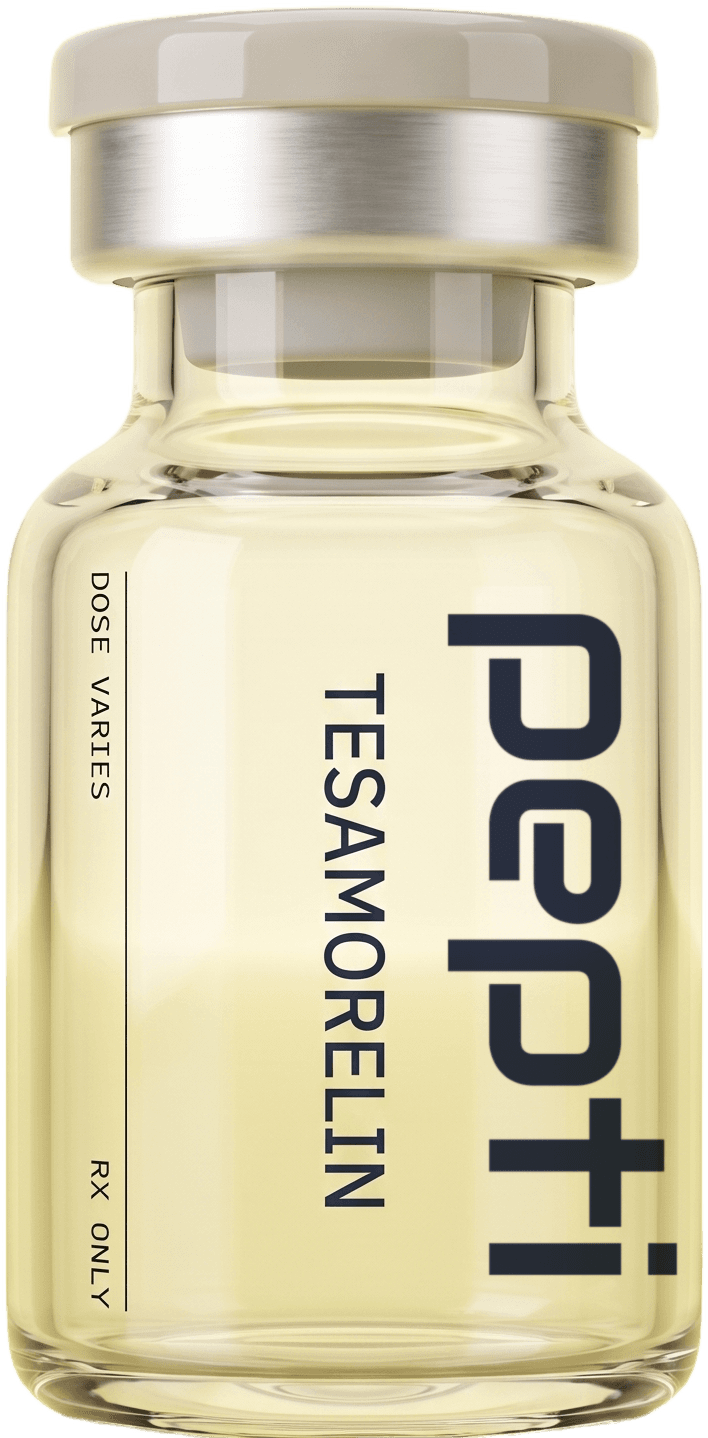
Product images. Product photographs and renderings shown on this website are for illustrative purposes only. The appearance of vials, packaging, labeling, and other materials you receive may vary and is determined by the dispensing compounding pharmacy.
Off-label use.Many peptides offered through the platform are prescribed for off-label use. “Off-label” means the medication is being prescribed for a use, dose, or patient population that is not specifically approved by the FDA. Off-label prescribing is legal and common in U.S. medical practice when supported by clinical experience and judgment.
Mailing & shipping. Pepti currently dispenses prescription medication to patients in all 50 states and Washington, D.C.. All orders ship in unbranded, tamper-evident packaging via expedited delivery from our partner compounding pharmacies. Temperature-sensitive medications ship with insulated packaging and ice packs. Shipping is included at no additional cost. We do not currently ship medication outside all 50 states and Washington, D.C., internationally, or to APO/FPO addresses.
Not for emergencies. Pepti is not designed for medical emergencies. If you are experiencing a medical emergency, call 911 or go to your nearest emergency room immediately. For urgent but non-emergency medical questions, contact your primary care provider or use an urgent care service.
No doctor-patient relationship with Pepti. Your use of the platform does not create a doctor-patient relationship between you and pepti LLC. A doctor-patient relationship is established only between you and the independent licensed physician who reviews your intake and prescribes your treatment. The physicians who use the platform are independent contractors and are solely responsible for the medical care they provide.
Prescription medications. All prescription products require a valid prescription from a licensed healthcare provider. By using the platform, you acknowledge that you are at least 18 years old and that the information you provide is true, accurate, current, and complete. Providing false information may result in inappropriate treatment recommendations or denial of service.
Cosmetic & wellness products.Certain products offered through Pepti — including skincare, hair care, body care, supplements, men's grooming, sports recovery, and sexual wellness products — are cosmetic or dietary supplement products, not prescription medications. These products do not require a prescription and are not reviewed or prescribed by a physician. Statements regarding dietary supplements have not been evaluated by the Food and Drug Administration. These products are not intended to diagnose, treat, cure, or prevent any disease. Results vary by individual. Consult your healthcare provider before starting any new supplement or topical product, especially if you are pregnant, nursing, or taking other medications.
pepti LLC · Delaware Limited Liability Company · 131 Continental Dr, Suite 305, Newark, DE 19713 · For media or partnership inquiries, email hello@hellopepti.com. For patient support, email support@hellopepti.com. For privacy and HIPAA inquiries, email privacy@hellopepti.com.