Anti-Aging · Reference
NAD+ vs Glutathione: Which One, What Each Does, Evidence, Dosing and Cost
This page explains each on its own terms, how the two are linked biochemically, what the research shows route by route, where each stands with the FDA, how each is dosed, what each costs at Pepti, and who tends to suit which.
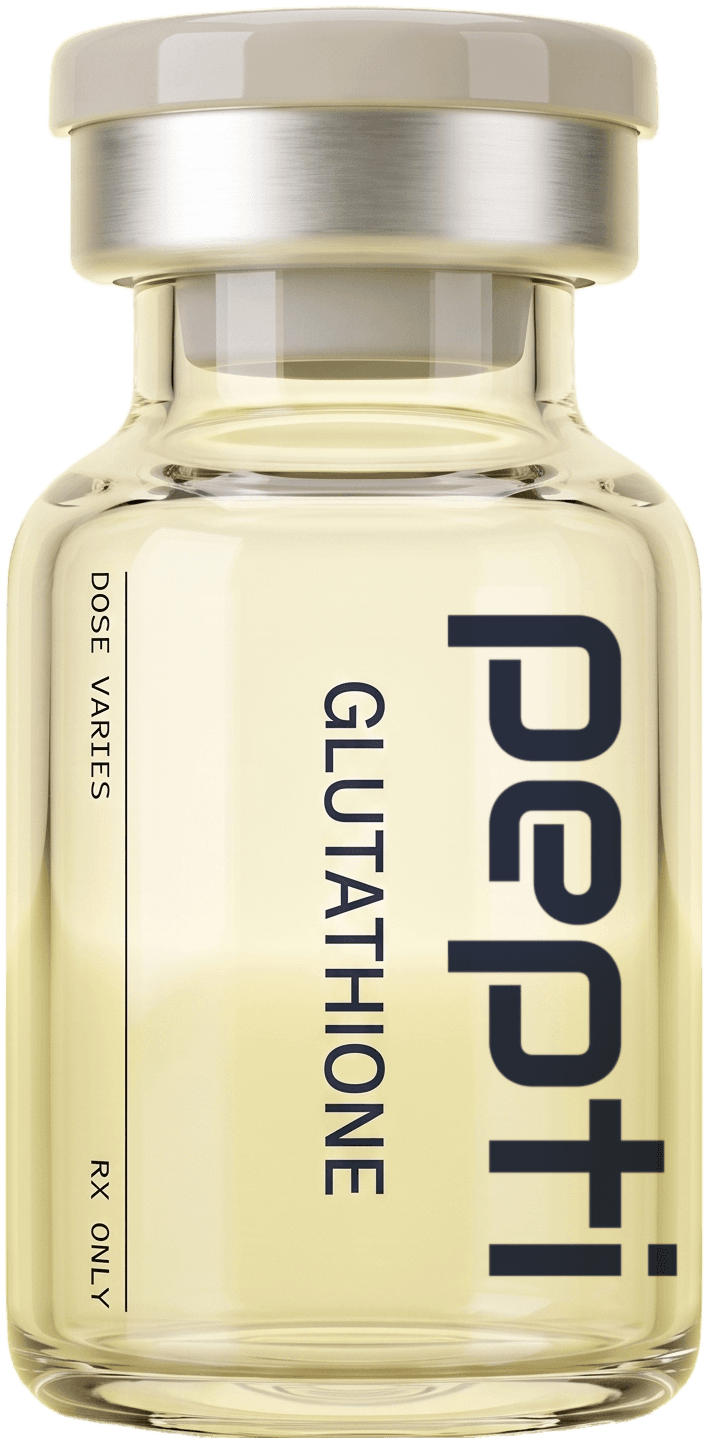
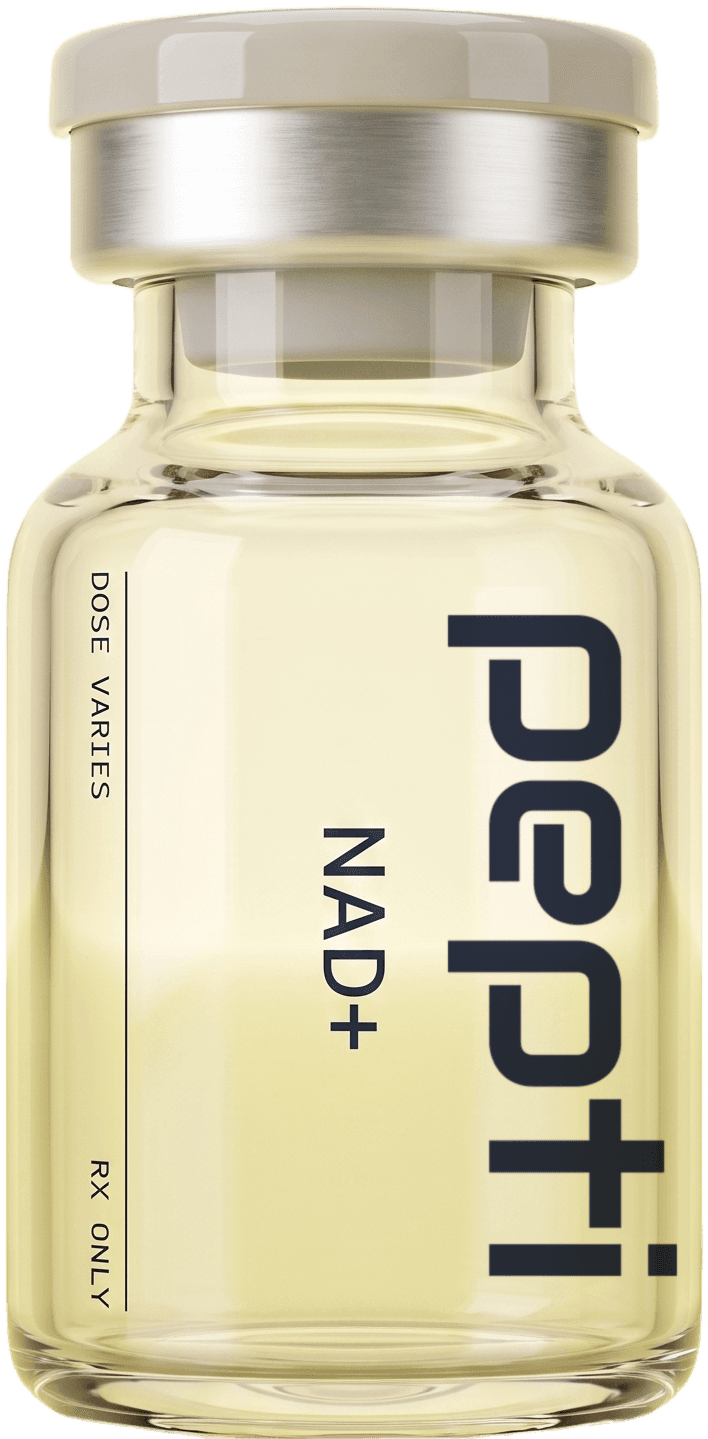
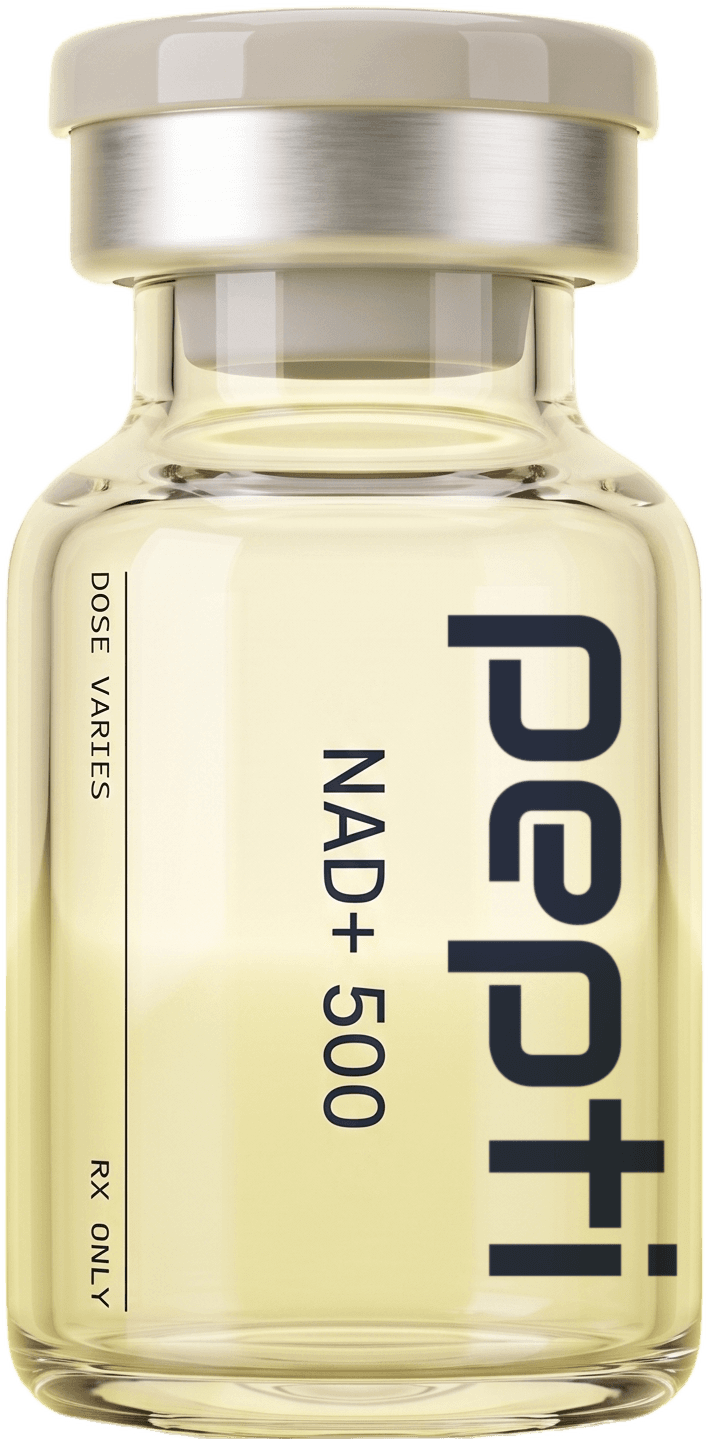
NAD+ and glutathione are both molecules every cell already makes, but they do different jobs: NAD+ is the coenzyme that carries electrons for energy production and fuels repair enzymes, while glutathione is the cell's main antioxidant and a cofactor in detoxification enzymes. Both are compounded as injections given three times a week, both sit in Category 1 of the FDA's compounding list, and both have randomized human trials by other routes but none by subcutaneous injection. NAD+ is usually the starting point when energy is the question; glutathione when oxidative load is the reason for prescribing. They are often prescribed together, and neither compounded product is FDA approved.
This page explains each on its own terms, how the two are linked biochemically, what the research shows route by route, where each stands with the FDA, how each is dosed, what each costs at Pepti, and who tends to suit which.
NAD+ vs Glutathione
The short answer
| If your main goal is | The usual prescription | What is in it | Price |
|---|---|---|---|
| Cellular energy, fatigue that has been worked up | NAD+ Injection | 1,000 mg NAD+ in a 10 mL vial | $249/mo |
| The same, at a lower dose per injection | NAD+ Injection (500 mg) | 500 mg NAD+ in a 10 mL vial | $229/mo |
| Antioxidant support where oxidative load is the concern | Glutathione | 1,000 mg glutathione in a 5 mL vial | $199/mo |
| Mitochondrial function specifically | SS-31 or MOTS-c | Mitochondrial peptides | $249/mo or $259/mo |
Every figure is an all-in monthly price covering the medication, physician review, refill management and shipping. There is no separate membership fee, and Pepti is cash-pay and does not bill insurance. Current pricing always lives on each product page.
NAD+ vs Glutathione
NAD+ on its own terms
What it is
NAD+ is nicotinamide adenine dinucleotide, a coenzyme made from a form of vitamin B3. It is not a peptide. Every cell makes it, mostly by recycling nicotinamide through nicotinamide mononucleotide (NMN); nicotinamide riboside (NR) is another way into that recycling route. NMN and NR are the supplement "precursors," and most of the human research is about them. The full reference is at what is NAD+ injection.
How NAD+ is described to work
- Energy metabolism. NAD+ collects electrons from the breakdown of glucose and fat, becomes NADH, and delivers them to the mitochondria to make ATP. Severe deficiency is a recognized disease, pellagra.
- Sirtuins. These seven enzymes consume NAD+ each time they act. A 2015 review in Science set out the case, from cell and animal work, that falling NAD+ limits them with age.
- PARP enzymes and DNA repair. PARPs spend NAD+ responding to DNA damage, drawing on the same pool as sirtuins (Cell Cycle, 2014).
- Decline with age. A 2012 PLOS ONE study found lower NAD+ in older human skin. That is observational.
What human data exists for NAD+
Oral NR and NMN reliably raise blood NAD+ in randomized trials from 2018 to 2024, with small and mixed effects: one negative trial on insulin sensitivity in men (American Journal of Clinical Nutrition, 2018), one positive in women with prediabetes (Science, 2021), and modest gains in walking distance in two others. The only study of NAD+ given directly, a 2019 intravenous pilot in Frontiers in Aging Neuroscience, found the infused molecule cleared as fast as it arrived for the first two hours. There are no randomized trials of subcutaneous NAD+ injection. More is in NAD+ benefits.
NAD+ vs Glutathione
Glutathione on its own terms
What it is
Glutathione is a tripeptide, three amino acids: glutamate, cysteine and glycine. Every nucleated cell makes it, and it is the most abundant small thiol in the body. The active form is reduced glutathione (GSH); when it neutralizes a reactive molecule it becomes glutathione disulfide (GSSG), and the enzyme glutathione reductase turns it back. The compounded injection is the reduced form. Like NAD+, it does not bind a receptor; it is a working molecule consumed and regenerated continuously. The full reference is at what is glutathione.
How glutathione is described to work
- Scavenging reactive oxygen. The cysteine thiol donates an electron to peroxides and radicals. This is what "antioxidant" means here.
- Detoxification enzymes. Glutathione peroxidases use it to reduce peroxides, and glutathione S-transferases attach it to reactive drug metabolites so they can be excreted. Acetaminophen overdose turns dangerous when liver glutathione runs out, which is why the antidote is a glutathione precursor.
- Pigment. It interacts with tyrosinase, the enzyme behind melanin, which is where the skin research comes from.
- Immune cells. Lymphocytes depend on intracellular glutathione; the proposed effect is repletion, not stimulation.
What human data exists for glutathione
Glutathione has randomized trials by mouth, by vein, by nose and on the skin. A six-month oral trial (European Journal of Nutrition, 2015) raised body stores 30 to 35 percent at the higher dose, and levels returned to baseline a month after stopping. Intravenous glutathione reduced nerve injury alongside cisplatin chemotherapy in a 1995 controlled trial, but a 2009 controlled pilot in Parkinson's disease did not separate from placebo. There are no randomized trials of subcutaneous glutathione, the route this product uses. More is in glutathione benefits.
NAD+ vs Glutathione
How the two are connected
The link is real biochemistry, not marketing. When glutathione neutralizes a reactive molecule it is oxidized, and glutathione reductase recycles it back to the active form using NADPH, the phosphorylated form of NAD. So the NAD system supplies the reducing power that keeps glutathione working, and glutathione does the antioxidant work itself. That connection is the reason prescribers often pair them. It is a mechanism argument: no study has tested whether injecting NAD+ changes glutathione levels in people, or whether the two together do more than either alone.
NAD+ vs Glutathione
Head to head
| NAD+ | Glutathione | |
|---|---|---|
| What it is | A coenzyme (not a peptide) | A tripeptide |
| Main job | Electron carrier for energy; fuel for sirtuins and PARP enzymes | Antioxidant; cofactor for detoxification enzymes |
| What it is usually chosen for | Energy, fatigue that has been worked up, longevity conversations | Oxidative load; sometimes as a partner to NAD+ |
| Randomized human trials | Oral NR and NMN; one intravenous pilot | Oral, intravenous, intranasal and topical |
| Subcutaneous trials | None | None |
| FDA position | 503A Category 1, under evaluation | 503A Category 1, under evaluation |
| Ingredient-sourcing alert | October 2024, food-grade NAD+ powder and endotoxin | June 2019, supplement-grade powder and endotoxin |
| Characteristic side effect | Flushing, chest tightness or nausea during the injection | Injection-site reactions; brief lightheadedness or nausea |
| Storage sensitivity | Degrades with heat, alkaline pH and light | Oxidizes on exposure to air |
| Vial at Pepti | 10 mL, 100 mg/mL (1,000 mg) | 5 mL, 200 mg/mL (1,000 mg) |
| Typical directions | 0.83 mL (83 units) three times per week | 0.41 mL (41 units) three times per week |
| Per dose | 83 mg | 82 mg |
| Doses per vial | 12, about 4 weeks | 12, about 4 weeks |
| Formats | Vial or pre-filled pepti Pen | Vial only |
| Price at Pepti | $249 a month | $199 a month |
Same total, different jobs
The vials happen to hold the same 1,000 mg and deliver almost the same amount per dose, but that says nothing about strength. They are different molecules doing different work, and milligram for milligram comparisons between them are meaningless. The useful question is which job you and your physician are trying to support.
NAD+ vs Glutathione
Who suits which
NAD+ first
NAD+ is the usual starting point when the complaint is energy or fatigue, after ordinary causes have been checked. Its human research, though mostly oral precursors, is the larger body of work on raising levels in people, and it is the coenzyme the glutathione page itself says many prescribers consider first. The 500 mg vial is the same draw at half the concentration, which some prescribers describe as easier on the injection site at the start.
Glutathione
Glutathione is the more specific choice when oxidative burden is the reason for the conversation. It is also the less expensive of the two. If skin tone is what you are after, note that the pigmentation trials were oral and topical, there is no controlled evidence for injected glutathione and skin, and Pepti does not supply glutathione for skin lightening. More is in glutathione for skin.
Both together
They are frequently prescribed together, because of the NADPH link above. Both run on the same three-times-a-week schedule and both are 12-dose vials, so the refills line up. No trial has tested the combination. Tell your physician you are interested in both, and each comes with its own directions printed on its vial.
NAD+ vs Glutathione
When neither is the right first step
| Situation | What makes more sense |
|---|---|
| Fatigue you have not had checked | Low B12, thyroid, iron, sleep apnea and depression are common causes; methylcobalamin if B12 is the finding |
| Mitochondrial function itself is the concern | SS-31 or MOTS-c, described around mitochondria directly |
| Skin is the priority | GHK-Cu or the KLOW blend, aimed at skin more directly |
| Immune support | Thymosin alpha-1, with a larger human evidence base there |
| You would rather take something by mouth | Oral options exist for both; see NAC vs NAD+ and liposomal glutathione vs injectable |
NAD+ vs Glutathione
Where each stands with the FDA
Both are in the same category, and neither was involved in the 2026 peptide changes:
| NAD+ | Glutathione | |
|---|---|---|
| 503A list (14 May 2026) | Category 1, under evaluation | Category 1, under evaluation |
| Ever in Category 2? | No | No |
| Earlier review | 2017 advisory committee voted against listing a 5 mg oral capsule for fatigue in multiple sclerosis; a 2019 proposed rule has not been finalized | Also in Category 1 of the separate 503B list (March 2025) |
| Safety alert | October 2024: food-grade NAD+ powder unsuitable for sterile injections after endotoxin reactions | June 2019: supplement-grade glutathione powder used for intravenous injections contained endotoxin; eight patients reacted |
| What the alerts were about | Ingredient sourcing, not the molecule | Ingredient sourcing, not the molecule |
The two alerts are the clearest reason to get either from an accountable pharmacy. Compounded medications are not FDA approved, and neither compounded NAD+ nor compounded glutathione is an FDA-approved drug product. Pepti's lot test results are at /quality/lab-results.
NAD+ vs Glutathione
Dosing, side by side
Both are injected under the skin into the abdomen or thigh, rotating sites, three times a week. Both come as multi-dose solutions shipped ready to use, refrigerated with ice packs, with sterile syringes and alcohol prep pads.
| NAD+ Injection | Glutathione | |
|---|---|---|
| Typical printed directions | Inject 0.83 mL (83 units) subcutaneously three times per week | Inject 0.41 mL (41 units) subcutaneously three times per week |
| Concentration | 100 mg/mL | 200 mg/mL |
| Per dose (math only) | 0.83 mL x 100 mg/mL = 83 mg | 0.41 mL x 200 mg/mL = 82 mg |
| Doses per vial | 12 (10 mL divided by 0.83 mL) | 12 (5 mL divided by 0.41 mL) |
| How long a vial lasts | About 4 weeks | About 4 weeks |
| Practical note | Inject slowly; the flushing reaction tracks with speed | Never into a vein; keep capped and cold |
On a U-100 insulin syringe, 1 unit is 0.01 mL. The milligram figures are arithmetic for reading a label, not a way to set a dose. Your physician sets your directions after reviewing your intake, and your exact dose is printed on the vial. The subcutaneous doses are a small fraction of the gram-level intravenous doses in the published glutathione trials, which is one reason those findings should not be assumed to transfer. Refills run every 28 days, one vial per fill. More is in NAD+ injection dosage and glutathione dosage.
NAD+ vs Glutathione
Side effects
NAD+. Flushing, warmth, tightness in the chest or abdomen, or nausea during the injection, fading within minutes, mostly driven by injection speed. Stinging at the site is common because the solution is acidic. Some people feel wired if they dose late in the day. The full picture is in is NAD+ safe.
Glutathione. Mostly injection-site redness, mild soreness or bruising, and in some people brief lightheadedness or nausea after a dose. The intravenous Parkinson's trial at far higher doses reported adverse events similar to placebo. Mention asthma, because inhaled glutathione has been reported to provoke bronchospasm. More is in glutathione side effects.
For both. Fever, chills, shaking or vomiting after a dose are not expected reactions; they are what the endotoxin alerts described. Message your care team the same day. Facial or throat swelling, a widespread rash or difficulty breathing is an emergency: call 911 first, then tell your physician.
NAD+ vs Glutathione
Who should not take either, or should discuss it first
| Situation | Why |
|---|---|
| Pregnancy or breastfeeding | Not used for either; safety data is absent |
| Active or recent cancer | Especially for NAD+, whose metabolism intersects with cell growth pathways |
| Significant kidney or liver disease | Especially for NAD+, because those organs clear and process it |
| Asthma | Especially for glutathione, because of the inhaled bronchospasm reports |
| Many other medications | Glutathione is a cofactor in drug metabolism, and neither has an established interaction list |
| Tested athletes | NAD+ is not named on the 2026 WADA Prohibited List; check your sport's current rules for either |
NAD+ vs Glutathione
What the evidence shows, honestly
The biochemistry of both molecules is textbook and not in question. What is thin is the clinical layer for the route Pepti uses. NAD+ has oral precursor trials and one intravenous pilot; glutathione has oral, intravenous, intranasal and topical trials, with mixed results. Neither has a randomized trial of subcutaneous injection, and neither has been shown to treat any disease by that route. Claims that either "detoxes" the body in the marketing sense, reverses aging or lightens skin by injection are ahead of the evidence. What is fair: both are molecules the body already uses, both are reported as well tolerated, and both have a real research base by other routes.
NAD+ vs Glutathione
Where to get NAD+ or glutathione prescribed
Neither can be bought legitimately as an injection without a prescription. Products sold "for research use only" are not accountable for identity, purity, sterility or concentration, and for both molecules the FDA has specifically warned about contaminated ingredients. The prescription route:
- Complete a free online intake covering your history, medications and what you want help with.
- A physician licensed in your state reviews it, usually within 24 hours.
- If it is appropriate, a PCAB-accredited, FDA-registered US 503A compounding pharmacy prepares it to that prescription. Lot test results are published at /quality/lab-results.
- It ships refrigerated with ice packs and your directions printed on the vial.
- Your physician stays reachable for questions and dose changes.
Pepti prescribes both in every state except Oklahoma, plus DC Step by step: how to get NAD+ prescribed online and how to get glutathione prescribed online.
References
What this is based on.
References
- Richie JP Jr, Nichenametla S, Neidig W et al.. Randomized controlled trial of oral glutathione supplementation on body stores of glutathione · Eur J Nutr (2015) · PMID 24791752
- Allen J, Bradley RD. Effects of oral glutathione supplementation on systemic oxidative stress biomarkers in human volunteers · J Altern Complement Med (2011) · PMID 21875351
- Sinha R, Sinha I, Calcagnotto A et al.. Oral supplementation with liposomal glutathione elevates body stores of glutathione and markers of immune function · Eur J Clin Nutr (2018) · PMID 28853742
- Witschi A, Reddy S, Stofer B, Lauterburg BH. The systemic availability of oral glutathione · Eur J Clin Pharmacol (1992) · PMID 1362956
- Aebi S, Assereto R, Lauterburg BH. High-dose intravenous glutathione in man. Pharmacokinetics and effects on cyst(e)ine in plasma and urine · Eur J Clin Invest (1991) · PMID 1907548
- Arjinpathana N, Asawanonda P. Glutathione as an oral whitening agent: a randomized, double-blind, placebo-controlled study · J Dermatolog Treat (2012) · PMID 20524875
- Weschawalit S, Thongthip S, Phutrakool P, Asawanonda P. Glutathione and its antiaging and antimelanogenic effects · Clin Cosmet Investig Dermatol (2017) · PMID 28490897
- Watanabe F, Hashizume E, Chan GP, Kamimura A. Skin-whitening and skin-condition-improving effects of topical oxidized glutathione: a double-blind and placebo-controlled clinical trial in healthy women · Clin Cosmet Investig Dermatol (2014) · PMID 25378941
- Sonthalia S, Daulatabad D, Sarkar R. Glutathione as a skin whitening agent: Facts, myths, evidence and controversies · Indian J Dermatol Venereol Leprol (2016) · PMID 27088927
- Sechi G, Deledda MG, Bua G et al.. Reduced intravenous glutathione in the treatment of early Parkinson's disease · Prog Neuropsychopharmacol Biol Psychiatry (1996) · PMID 8938817
- Hauser RA, Lyons KE, McClain T, Carter S, Perlmutter D. Randomized, double-blind, pilot evaluation of intravenous glutathione in Parkinson's disease · Mov Disord (2009) · PMID 19230029
- Mischley LK, Lau RC, Shankland EG, Wilbur TK, Padowski JM. Phase IIb Study of Intranasal Glutathione in Parkinson's Disease · J Parkinsons Dis (2017) · PMID 28436395
Citations are provided for educational purposes. They do not constitute medical advice. Always discuss any peptide protocol with your prescribing physician.
Common questions
NAD+ vs Glutathione, answered.
Neither is better in general; they do different jobs. NAD+ is the energy coenzyme and is the usual choice when fatigue or energy is the question. Glutathione is the antioxidant and is the more specific choice when oxidative load is the reason for prescribing. No study has compared them directly.
NAD+ is a coenzyme that carries electrons for ATP production and fuels sirtuin and PARP enzymes. Glutathione is a three-amino-acid antioxidant that neutralizes reactive molecules and helps the liver process drugs and toxins. Both are made by every cell.
They are frequently prescribed together, partly because glutathione is recycled using NADPH, a form of NAD. Both run three times a week on 12-dose vials. No trial has tested the combination, so tell your physician you want both and follow the directions printed on each vial.
Follow the directions on each vial. Some people find NAD+ makes them feel wired late in the day, which is why morning dosing is commonly directed for it. If you have questions about timing, message your care team.
Glutathione is a tripeptide, three amino acids long. NAD+ is not a peptide; it is a coenzyme. Both are compounded and prescribed the same way peptides are. More is in is glutathione a peptide and is NAD+ a peptide.
Neither by injection has controlled evidence for skin. The glutathione pigmentation trials were oral and topical, in healthy volunteers, for up to three months. Pepti does not supply glutathione for skin lightening. GHK-Cu is described around skin more directly.
NAD+ is the one tied to energy metabolism, but there are no randomized trials of subcutaneous NAD+ for fatigue; the fatigue trials used oral NADH. Glutathione has no stimulant action. Fatigue often has a treatable cause worth checking first.
NAD+ has the more noticeable one: flushing, chest tightness or nausea during the injection, fading within minutes and tied to injection speed. Glutathione mostly causes injection-site reactions and occasional brief lightheadedness. Chills or fever after either is not expected and should be reported the same day.
No trial gives a timeline for either by subcutaneous injection. The oral NAD+ precursor trials ran six weeks to six months. The longest oral glutathione trial ran six months and measured body stores at one, three and six months.
At Pepti, NAD+ Injection is $249 a month, NAD+ Injection (500 mg) is $229 a month, and glutathione is $199 a month, all-in, including medication, physician review, refill management and shipping.
Pepti does not supply IV infusions. The trade-offs are covered in NAD+ IV vs injection and glutathione IV vs injection.
Bloodwork is not required for any Pepti treatment. If your physician wants labs for your care, they'll ask through your account. The free assessment goes to a physician licensed in your state. A consultation does not guarantee a prescription.
Next step
See what a physician recommends for you.
A licensed physician in your state reviews your intake and decides what is appropriate. A consultation does not guarantee a prescription.