Weight Loss · Reference
Tirzepatide and Birth Control: The Four-Week Rule for the Pill, Explained
This page covers what the label says and why, how the four-week windows line up with a tirzepatide dose ladder, which methods are and are not affected, why semaglutide is different on this point, why fertility can rise during GLP-1 treatment, what happens if you become pregnant, and the questions to bring to your care team. It is general education. Your own physician's advice comes first.
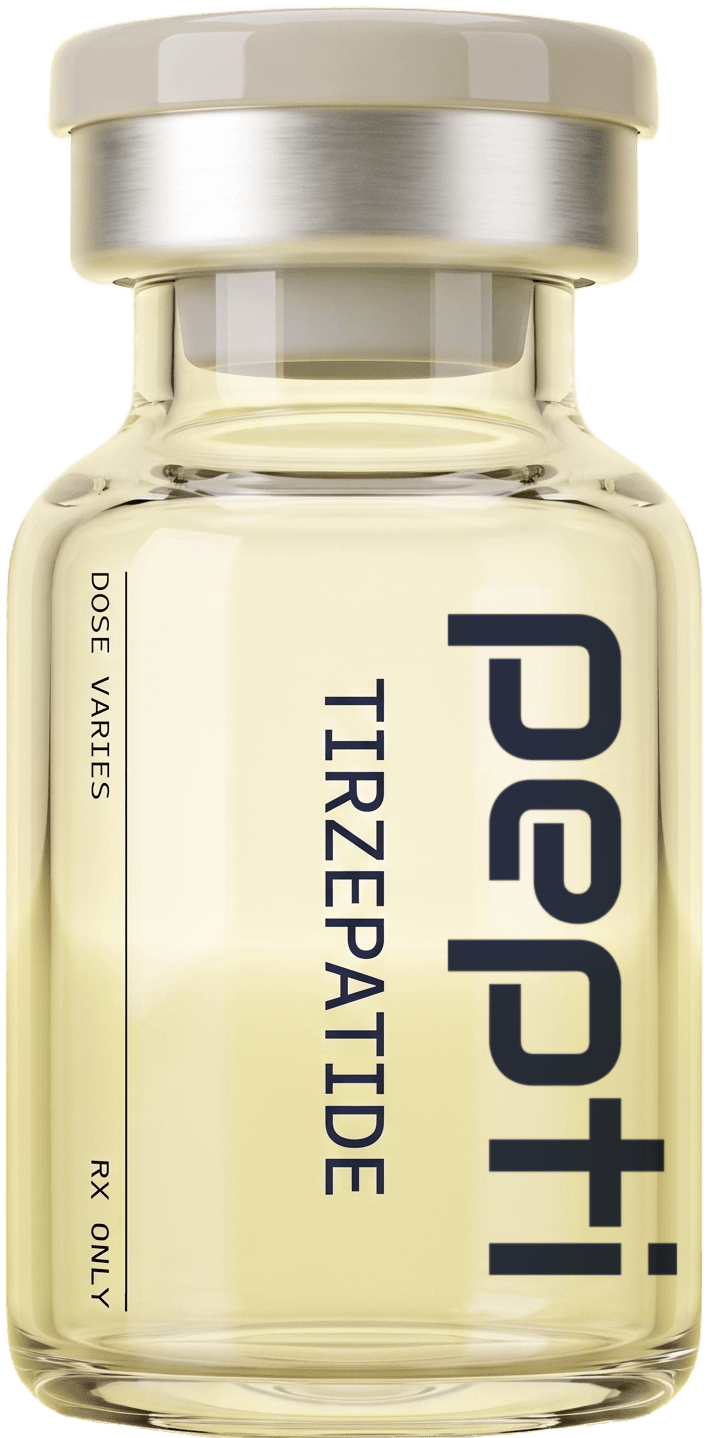
Treatments mentioned
Tirzepatide can make birth control pills less reliable for a while, because it slows how fast the stomach empties and the pill is absorbed later and less sharply. The approved tirzepatide label advises anyone using an oral hormonal contraceptive to switch to a non-oral method, or add a barrier method such as condoms, for four weeks after starting tirzepatide and for four weeks after each dose increase. Hormonal methods that are not taken by mouth, such as the ring, patch, implant or a hormonal IUD, are not expected to be affected. Tell your physician and care team which method you use, so your plan accounts for it from the first dose.
This page covers what the label says and why, how the four-week windows line up with a tirzepatide dose ladder, which methods are and are not affected, why semaglutide is different on this point, why fertility can rise during GLP-1 treatment, what happens if you become pregnant, and the questions to bring to your care team. It is general education. Your own physician's advice comes first.
Tirzepatide and Birth Control
The short answer
| Question | Answer |
|---|---|
| Does tirzepatide affect birth control pills? | It can, mainly after the first dose and after each dose increase |
| Why? | Slower stomach emptying delays and blunts absorption of the pill |
| What does the label advise? | Switch to a non-oral method, or add a barrier method, for 4 weeks after starting and 4 weeks after each increase |
| Are the ring, patch, implant or IUD affected? | Hormonal methods not taken by mouth are not expected to be affected |
| Does semaglutide do the same? | Its approved label reports no clinically significant change in the pill's hormones |
| Can fertility change on tirzepatide? | Yes; weight reduction can restore ovulation in people who were not ovulating regularly |
| Is tirzepatide used in pregnancy? | No; the label's instruction is to stop when pregnancy is recognized |
| What should I do? | Tell your physician and care team your method at intake, and again whenever your dose changes |
The medication this page covers:
| Medication | How it acts | What is in it | Price |
|---|---|---|---|
| Tirzepatide | GIP and GLP-1 receptors | Dose-specific 2 mL vials at six strengths, 2.5 mg to 15 mg weekly; the 2.5 mg and 7.5 mg vials include glycine | From $159/mo, priced by dose |
| Semaglutide | GLP-1 receptor only | Dose-specific vials at six strengths, 0.25 mg to 2.5 mg weekly | From $99/mo, priced by dose |
Prices are all-in: medication, physician review, refill management and shipping, with no membership fee. Both are compounded by PCAB-accredited, FDA-registered US 503A pharmacies. Compounded medications are not FDA approved, and a compounded vial does not come with the approved label; the guidance on this page comes from the approved tirzepatide labeling, which physicians use as the reference for the molecule.
Tirzepatide and Birth Control
Why tirzepatide affects the pill
GLP-1 is a gut hormone, and activating its receptor slows gastric emptying: food, and anything swallowed with it, leaves the stomach more slowly. That effect is strongest in the early weeks of treatment and after each step up, before the body adapts. It is the same mechanism behind the stomach side effects that cluster around dose increases, covered in tirzepatide side effects.
A pill has to get past the stomach before it can be absorbed. When emptying slows, the pill's hormones reach the blood later and with a lower peak. The approved label's pharmacology section measured this directly. After a single 5 mg dose of tirzepatide, the peak concentrations of the three components of a combined oral contraceptive fell:
| Pill component | Fall in peak concentration | Fall in total exposure |
|---|---|---|
| Ethinyl estradiol | 59 percent | 20 to 23 percent across the components |
| Norgestimate | 66 percent | 20 to 23 percent across the components |
| Norelgestromin | 55 percent | 20 to 23 percent across the components |
The time to peak was also delayed by several hours. Total exposure fell far less than the peak did: the pill is absorbed later and less sharply, not removed. But an oral contraceptive works by keeping hormone levels in a range, and the label treats that change as enough to reduce its efficacy. The label also states that the delay is largest after the first dose and diminishes over time, which is why its advice is tied to specific windows rather than the whole course.
The same effect on other pills
The mechanism applies to any oral medication. The label illustrates it with acetaminophen: its peak concentration fell 55 percent after a first 5 mg dose of tirzepatide, but by week 6 on 15 mg there was no meaningful effect. It also singles out medicines with a narrow therapeutic window, warfarin being the example, for monitoring at the start. That pattern, a large early effect that fades as the stomach adapts, is the reasoning behind the four-week windows for the pill.
Tirzepatide and Birth Control
The four-week rule
The approved tirzepatide label states that patients using oral hormonal contraceptives should switch to a non-oral contraceptive method, or add a barrier method, for four weeks after starting tirzepatide and for four weeks after each dose escalation.
How the windows line up with a dose ladder
Pepti prescribes tirzepatide on a six-step weekly ladder, 2.5 mg, 5 mg, 7.5 mg, 10 mg, 12.5 mg and 15 mg, each supplied as its own vial holding four weekly doses, one 28-day fill. Your physician sets your dose after reviewing your intake and how you are doing, and moves you up the ladder, holds you at a step, or adjusts your plan. Two practical consequences follow:
| Situation | What the label's windows mean |
|---|---|
| First four weeks on tirzepatide | Backup or non-oral method throughout |
| Moved up a step at a refill | A new four-week window starts with the first dose at the new strength |
| Moved up at several consecutive refills | The windows run back to back, so a backup method covers the whole climb |
| Held at the same step | No new window starts from the hold itself |
| Restarted after a gap, at any dose | Raise it with your care team; a restart can behave like a new start for the stomach |
Because the vial strength changes at each step rather than the volume you draw, a dose increase arrives as a new vial with new directions printed on it. That label change is a useful prompt: a new strength means a new four-week window for the pill.
What counts as a backup
The label names two options: switch to a non-oral method, or add a barrier method. A barrier method means something like condoms used every time. Which option suits you is a conversation with your physician or whoever prescribes your contraception, not something to settle from a page.
Tirzepatide and Birth Control
Which methods are and are not affected
| Method | Affected by slower stomach emptying? | Notes |
|---|---|---|
| Combined oral contraceptive pill | Yes, in the label's windows | The label's pharmacology data used a combined pill |
| Other oral hormonal contraceptives | The label's advice covers oral hormonal contraceptives as a group | Ask about your specific pill |
| Vaginal ring | Not expected to be affected | Not taken by mouth |
| Skin patch | Not expected to be affected | Not taken by mouth |
| Implant | Not expected to be affected | Not taken by mouth |
| IUD | Not affected by slower stomach emptying | Not taken by mouth |
| Condoms and other barrier methods | Not affected | Also the label's add-on option |
The approved labeling states that hormonal contraceptives not taken by mouth are not expected to be affected. If you already use one of those methods, the four-week windows do not apply to it, though your physician still needs to know what you use.
Tirzepatide and Birth Control
Why semaglutide is different
Semaglutide slows gastric emptying too, but on this specific point the two molecules differ. The drug interactions section of the approved semaglutide label reports no clinically significant differences in the pharmacokinetics of ethinyl estradiol or levonorgestrel when given alongside semaglutide, and it carries no equivalent four-week instruction. That is a documented difference, not a reason to assume anything about your own situation. If you are choosing between the two or switching from semaglutide to tirzepatide, the contraception question changes with the switch, and it is worth raising before the first tirzepatide dose.
Tirzepatide and Birth Control
Fertility can rise during treatment
This is the part that makes the pill question matter more, not less. Weight loss can restore ovulation in people who were not ovulating regularly, including in the context of PCOS. Someone who had organized contraception around the assumption that conception was unlikely can find that assumption is no longer accurate during treatment.
The live evidence for that is indirect but consistent. A randomized controlled study in the Journal of Clinical Endocrinology and Metabolism in 2015 assigned 149 women with infertility due to PCOS to sixteen weeks of oral contraceptive pills, a lifestyle weight-loss program, or both, before ovulation induction; cumulative ovulation rates were 46 percent with the pill alone, 60 percent with lifestyle and 67 percent combined, a statistically significant difference favoring weight loss. A randomized trial in Reproductive Biology and Endocrinology in 2025 reported a higher natural pregnancy rate in women with PCOS on semaglutide plus metformin than on metformin alone. Neither is a tirzepatide trial, but both point the same way: the window in which contraception is least reliable on tirzepatide can overlap with a window in which fertility is rising. That is why contraception belongs in the first conversation. More is in do peptides affect fertility.
Tirzepatide and Birth Control
Pregnancy and planning a pregnancy
| Situation | What the live pages say |
|---|---|
| Currently pregnant | Tirzepatide is not used. The label states weight loss offers no benefit in pregnancy and may cause fetal harm; its instruction is to stop when pregnancy is recognized |
| Pregnancy discovered on treatment | Tell your physician and care team the same day, and tell whoever provides your maternity care |
| Planning a pregnancy | Raise it now. The tirzepatide label carries no published pre-pregnancy interval, so timing is worked out with your physician |
| Breastfeeding | Effects on a breastfed infant are unstudied; Pepti physicians do not prescribe it while breastfeeding |
For comparison, the approved semaglutide label advises stopping at least two months before a planned pregnancy, because of semaglutide's long half-life. Tirzepatide is cleared faster, with a half-life of about five days, but a shorter half-life is not a published interval. Can you take peptides while pregnant covers the wider picture, and how long does tirzepatide stay in your system covers clearance.
Hormonal changes during treatment can show up in other ways too. Changes to cycles on a GLP-1 are covered in GLP-1 and period changes.
Tirzepatide and Birth Control
What to tell your care team
| Tell them | Why it matters |
|---|---|
| Which contraceptive you use, by name | The four-week windows apply to oral hormonal methods only |
| Whether you could become pregnant | It shapes the whole contraception conversation |
| If you are planning a pregnancy, and roughly when | Timing is worked out in advance |
| If your dose is going up at the next refill | A new four-week window starts with the new strength |
| If you stop and restart after a gap | A restart can reset the stomach's adaptation |
| Every other medication you take | The same absorption effect applies to other oral drugs |
| A positive pregnancy test | Same day, so your physician can advise you |
Questions worth asking: "Does my method need a backup on tirzepatide, and for how long?", "Does my dose change next month?", and "What should I do if I become pregnant unexpectedly?" Knowing the answers before you need them is the point.
Tirzepatide and Birth Control
What the evidence shows, honestly
The interaction itself is well characterized: the approved label's pharmacology study measured falls in peak hormone levels after a single tirzepatide dose, and the four-week advice comes straight from that labeling. What the live pages do not contain is a study measuring pregnancy rates on the pill during tirzepatide treatment, so the four-week rule is a precaution built on pharmacology, not on counted failures. The fertility evidence comes from weight-loss and semaglutide studies in people with PCOS, not from tirzepatide trials. Compounded tirzepatide contains the same active ingredient as the approved product, so the same absorption effect applies, but a compounded vial does not carry the approved label, which is exactly why this guidance does not reach you automatically. Your physician's advice for your own method is what counts.
Tirzepatide and Birth Control
Where to get tirzepatide prescribed
- Complete a free online intake covering your history, medications, contraception and pregnancy plans, and what you want help with.
- A physician licensed in your state reviews it, usually within 24 hours.
- If it is appropriate, a PCAB-accredited, FDA-registered US 503A pharmacy compounds it to that prescription. Lot test results are published at /quality/lab-results.
- It ships refrigerated with ice packs, with sterile syringes and alcohol prep pads, and your directions printed on the vial.
- Your care team stays reachable for questions, and refills run every 28 days, one vial per fill.
Pepti is cash-pay and does not bill insurance. Bloodwork is not required for any Pepti treatment. If your physician wants labs for your care, they'll ask through your account. Step by step: how to get tirzepatide prescribed online.
References
What this is based on.
References
- Jastreboff AM, Aronne LJ, Ahmad NN, et al.. Tirzepatide Once Weekly for the Treatment of Obesity (SURMOUNT-1) · New England Journal of Medicine (2022) · PMID 35658024
- Garvey WT, Frias JP, Jastreboff AM, et al.. Tirzepatide once weekly for the treatment of obesity in people with type 2 diabetes (SURMOUNT-2) · Lancet (2023) · PMID 37385275
- Frías JP, Davies MJ, Rosenstock J, et al.. Tirzepatide versus Semaglutide Once Weekly in Patients with Type 2 Diabetes (SURPASS-2) · New England Journal of Medicine (2021) · PMID 34170647
- Inagaki N, Takeuchi M, Oura T, et al.. Effects of subcutaneous tirzepatide versus placebo or semaglutide on pancreatic islet function and insulin sensitivity in adults with type 2 diabetes: a multicentre, randomised, double-blind, parallel-arm, phase 1 clinical trial · The Lancet Diabetes & Endocrinology (2022) · PMID 35468322
- Malhotra A, Grunstein RR, Fietze I, et al.. Tirzepatide for the Treatment of Obstructive Sleep Apnea and Obesity (SURMOUNT-OSA) · New England Journal of Medicine (2024) · PMID 38912654
- Nicholls SJ, Pavo I, Bhatt DL, et al.. Cardiovascular Outcomes with Tirzepatide versus Dulaglutide in Type 2 Diabetes (SURPASS-CVOT) · New England Journal of Medicine (2025) · PMID 41406444
- Aronne LJ, Sattar N, Horn DB, et al.. Continued Treatment With Tirzepatide for Maintenance of Weight Reduction in Adults With Obesity: The SURMOUNT-4 Randomized Clinical Trial · JAMA (2024) · PMID 38078870
- Pasternak B, Wintzell V, Hviid A et al.. Glucagon-like peptide 1 receptor agonist use and risk of thyroid cancer: Scandinavian cohort study · BMJ (2024) · PMID 38683947
- Quddos F, Hubshman Z, Tegge A, et al.. Semaglutide and Tirzepatide reduce alcohol consumption in individuals with obesity · Scientific Reports (2023) · PMID 38017205
- Drummond RF, Seif KE, Reece EA. Glucagon-like peptide-1 receptor agonist use in pregnancy: a review · Am J Obstet Gynecol (2025) · PMID 39181497
- Wang S, Sun J, Wang J, et al.. Does obesity based on body mass index affect semen quality? A meta-analysis and systematic review from the general population rather than the infertile population · Andrologia (2021) · PMID 34028074
- Urva S, Coskun T, Loghin C, et al.. The novel dual glucose-dependent insulinotropic polypeptide and glucagon-like peptide-1 (GLP-1) receptor agonist tirzepatide transiently delays gastric emptying similarly to selective long-acting GLP-1 receptor agonists · Diabetes, Obesity and Metabolism (2020) · PMID 32519795
Citations are provided for educational purposes. They do not constitute medical advice. Always discuss any peptide protocol with your prescribing physician.
Common questions
Tirzepatide and Birth Control, answered.
It can make birth control pills less reliable, mainly in the four weeks after starting and after each dose increase, because slower stomach emptying reduces how well the pill is absorbed. Methods not taken by mouth are not expected to be affected.
The approved label advises a non-oral method or an added barrier method for four weeks after starting and for four weeks after each dose increase. Ask your physician what they recommend for you.
The approved labeling states that hormonal contraceptives not taken by mouth are not expected to be affected. A copper IUD and barrier methods do not depend on absorption at all.
The label's advice covers oral hormonal contraceptives as a group, and the measured data used a combined pill. Ask your physician about your specific pill rather than assuming it is exempt.
The approved semaglutide label reports no clinically significant differences in the pill hormones ethinyl estradiol or levonorgestrel alongside semaglutide, and carries no four-week instruction. That is a documented difference from tirzepatide.
It can, indirectly. Weight reduction can restore ovulation in people who were not ovulating regularly, including with PCOS, so pregnancy is possible even if it was not before. Plan contraception from the start.
Yes. The label ties the window to starting and to each dose escalation, so each step up starts a new four-week window.
Raise it with your care team. After a gap the stomach's adaptation fades, which is why a restart is often treated like a new start.
Tell your physician and care team the same day, and tell whoever provides your maternity care. Tirzepatide is not used in pregnancy, and the label's instruction is to stop when pregnancy is recognized.
The tirzepatide label carries no published pre-pregnancy interval; the semaglutide label advises at least two months. Raise your plans early, so the timing is worked out with your physician.
No. Effects on a breastfed infant are unstudied, and Pepti physicians do not prescribe it while breastfeeding. The free assessment goes to a physician licensed in your state. A consultation does not guarantee a prescription.
Next step
See what a physician recommends for you.
A licensed physician in your state reviews your intake and decides what is appropriate. A consultation does not guarantee a prescription.