— Anti-Aging · Reference
ETERNAL Blend (GHK-Cu / BPC-157 / TB-500 / Epithalon): What It Is, Where to Get It Prescribed, and What It Costs
This page covers what ETERNAL is, what each of the four components is and the pathways researchers have described for it, why they are compounded into one vial, what the published work does and does not establish, where each component currently stands with the FDA, how a vial is dosed, and how to get it prescribed.
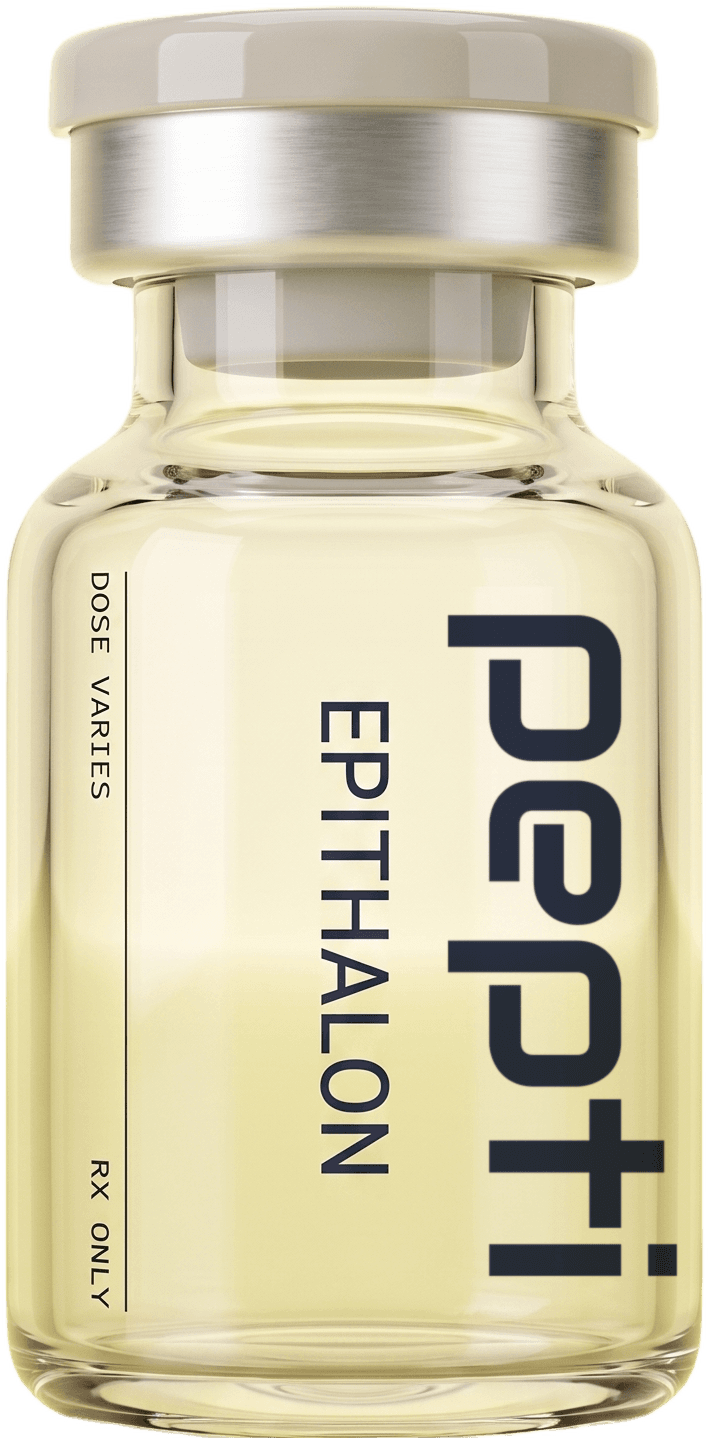
— Treatments mentioned
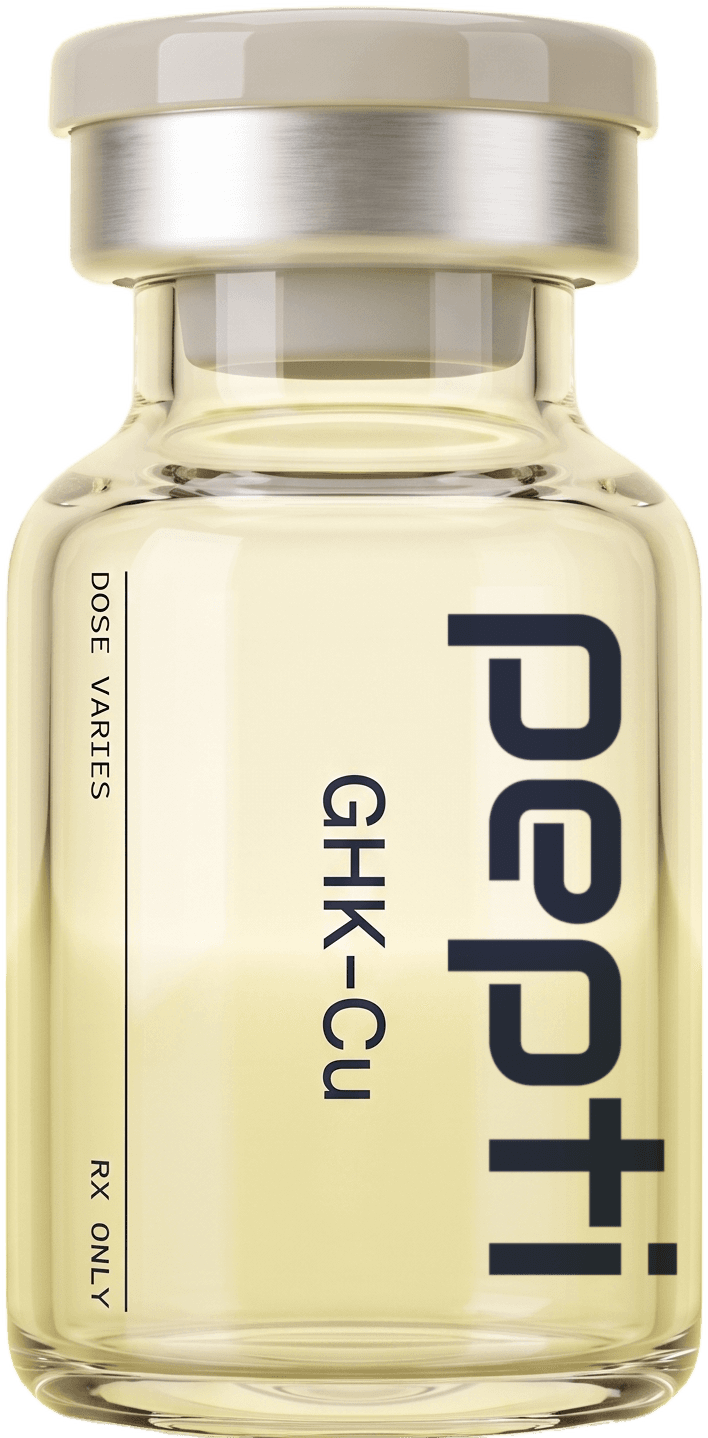
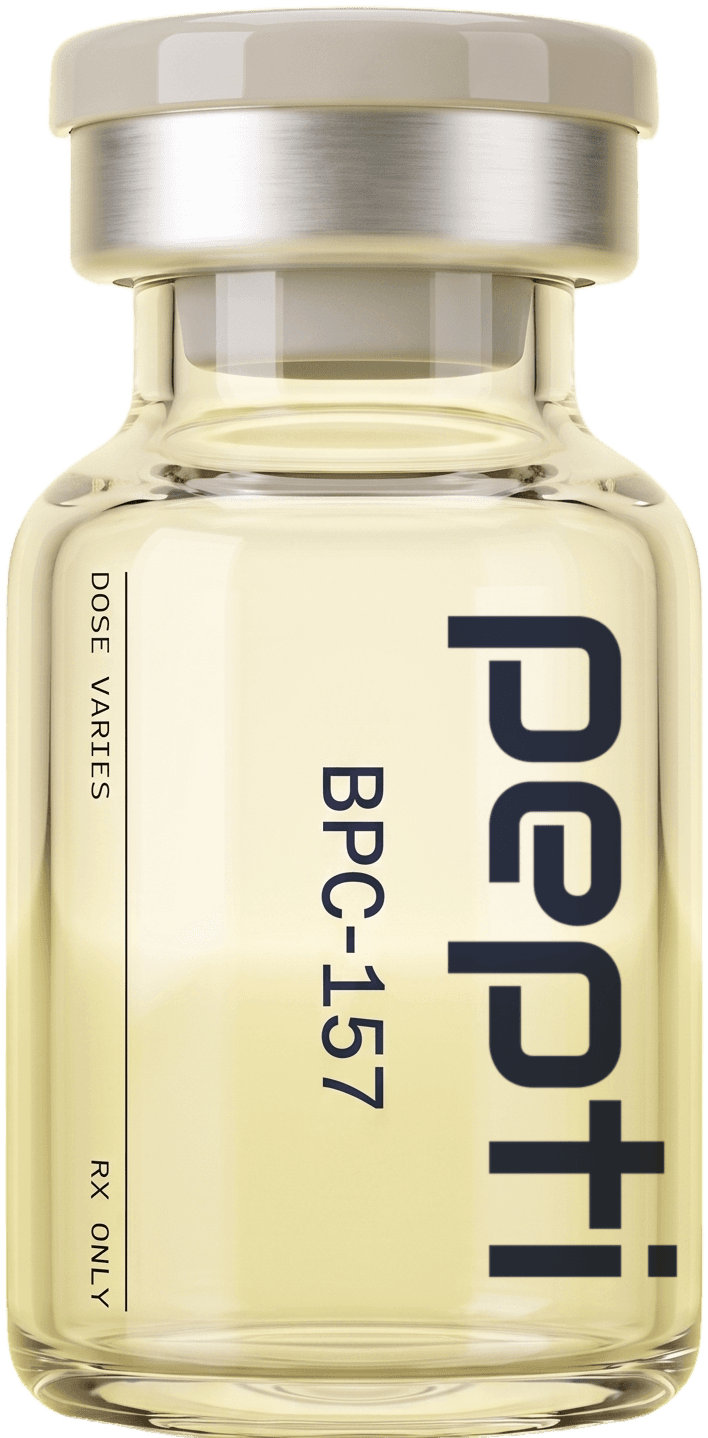
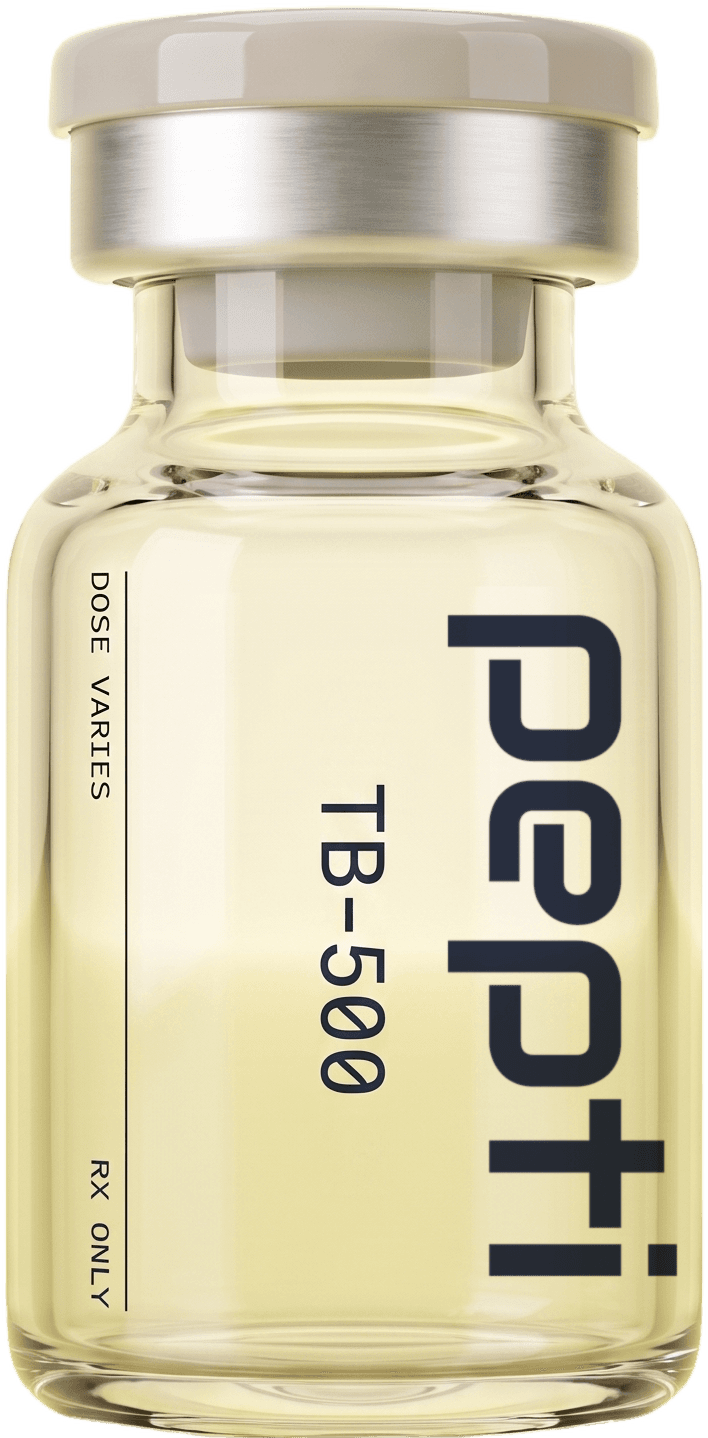
ETERNAL Blend (GHK-Cu / BPC-157 / TB-500 / Epithalon) is a prescription injection supplied as 5 mL multi-dose vial, GHK-Cu 10 mg/mL + BPC-157 2 mg/mL + TB-500 2 mg/mL + Epithalon 2 mg/mL (50 mg GHK-Cu / 10 mg BPC-157 / 10 mg TB-500 / 10 mg Epithalon per vial). The reviewed directions are: Inject 0.25 mL (25 units) subcutaneously once daily Monday through Friday. That is 20 doses per vial, about 4 weeks at Monday through Friday. It requires a prescription from a physician licensed in your state, is compounded by a state-licensed US pharmacy, and is not FDA approved.
This page covers what ETERNAL is, what each of the four components is and the pathways researchers have described for it, why they are compounded into one vial, what the published work does and does not establish, where each component currently stands with the FDA, how a vial is dosed, and how to get it prescribed.
— ETERNAL Blend (GHK-Cu / BPC-157 / TB-500 / Epithalon)
What ETERNAL actually is
— Four separate peptides, one vial
ETERNAL is not a single molecule. It is four independently studied peptides — GHK-Cu, BPC-157, TB-500 and epithalon — dissolved together in one sterile multi-dose vial by a compounding pharmacy. Each has its own research literature, its own described mechanism and its own regulatory file at the FDA. The name is a brand name for the combination; it does not appear in any journal. That shapes everything on this page: "does ETERNAL work" has to be broken into four questions, because the combination itself has never been studied as a combination.
Component Per vial What it is Studied for GHK-Cu 50 mg Copper-binding tripeptide found in human plasma Collagen synthesis, matrix remodelling, skin and hair support BPC-157 10 mg 15-amino-acid fragment from a gastric protein Tendon, ligament and gut-lining repair, angiogenesis TB-500 10 mg Synthetic fragment related to thymosin beta-4 Cell migration into damaged tissue, actin regulation Epithalon 10 mg Synthetic tetrapeptide modelled on a pineal extract Telomerase activity in cells, circadian rhythm and melatonin in aged animals and people — Why these four: a repair blend with a longevity lean
Three of the components — GHK-Cu, BPC-157 and TB-500 — are the same repair trio found in GLOW and KLOW. The fourth is what makes ETERNAL different. Epithalon has no tissue-repair literature; it comes from a separate Russian line of gerontology research on pineal peptides, telomerase and circadian rhythm. The rationale prescribers give is that someone whose goal is ageing well — skin, connective tissue, sleep rhythm — is asking a broader question than someone with a sore tendon, and the fourth slot is filled accordingly.
The proportions are worth noticing. GHK-Cu is 50 of the 80 mg in the vial, so by mass ETERNAL is mostly a GHK-Cu preparation with three smaller components. The ratio is fixed by the pharmacy's formulation and cannot be adjusted per component, which is the genuine trade-off of any blend.
— What it is not
It is not an anti-ageing drug in any established sense; no component is approved for any indication. It is not a hormone, a steroid or a growth-hormone secretagogue. It is not a painkiller. It is not a treatment for a structural problem: a full-thickness tendon rupture, a displaced fracture or a locking joint is a surgical or imaging question. And it is not a sleep medication: the epithalon circadian work is about melatonin rhythm in aged subjects, not sedation.
— ETERNAL Blend (GHK-Cu / BPC-157 / TB-500 / Epithalon)
How each component is described to work
All of the mechanistic detail below is from animal and cell studies unless a human population is named. Each component has its own section because each has its own literature; no study has looked at what the four do together.
— GHK-Cu: copper delivery and matrix synthesis
GHK-Cu is a tripeptide — glycine, histidine, lysine — that binds copper with high affinity. It occurs naturally in human plasma, where its concentration is reported to decline with age. The copper-carrying role is the basis for most of its described effects, because collagen cross-linking, elastin formation and several antioxidant enzymes are copper-dependent.
In cell and animal work, and in reviews in Biomed Research International (2015) and the International Journal of Molecular Sciences (2018), GHK-Cu is described as increasing synthesis of collagen, elastin, proteoglycans and glycosaminoglycans, and as shifting the balance between matrix metalloproteinases, which break tissue down, and their inhibitors. Gene-expression work reports effects across a large number of genes rather than one pathway. It is also described as supporting angiogenesis and as having antioxidant and anti-inflammatory activity in those models. A fuller treatment is on the GHK-Cu page.
— BPC-157: angiogenesis and cell migration
BPC-157 is a fifteen-amino-acid partial sequence of a protein originally isolated from human gastric juice. Animal work describes it activating the VEGFR2 receptor and downstream nitric-oxide signalling, which is the axis the body uses to grow new blood vessels into healing tissue. A 2014 paper in Molecules reported that BPC-157 increased growth hormone receptor expression in cultured tendon fibroblasts and activated the FAK–paxillin pathway that governs cell attachment and migration. The receptor finding is often misread: it describes making those cells more responsive to growth hormone already present, not raising growth hormone.
Separately, the largest body of BPC-157 research concerns protection of the gastrointestinal lining in animal models, which is where the compound was first identified. A fuller treatment is on the BPC-157 page.
— TB-500: actin binding and cell motility
TB-500 is a synthetic peptide reproducing the actin-binding segment of thymosin beta-4, a 43-amino-acid protein that is one of the most abundant inside many human cells. Thymosin beta-4's primary described function is binding actin monomers, the protein that gives a cell its shape and lets it move.
The consequence described in the research is cell migration: repair cells moving into a wound. A 1999 paper in the Journal of Investigative Dermatology reported faster wound closure and increased cell migration with thymosin beta-4 in rats and in cultured human cells, and a 2012 review in Expert Opinion on Biological Therapy summarises the wider literature. One point of precision: most of that literature concerns the full-length protein. TB-500, the fragment, is assumed to share the actin-binding mechanism; the direct evidence for the fragment itself is much thinner. A fuller treatment is on the TB-500 page.
— Epithalon: telomerase, the pineal gland and circadian rhythm
Epithalon is a synthetic tetrapeptide — alanine, glutamate, aspartate, glycine — designed in St Petersburg in the 1990s to reproduce the activity of epithalamin, a peptide extract of the pineal gland that the same group had studied since the 1970s. Almost all of the literature comes from that group, led by Vladimir Khavinson, which is the first thing to know about it.
Two mechanisms are described. The first is telomerase: a 2003 paper in the Bulletin of Experimental Biology and Medicine reported that epithalon induced telomerase activity and telomere elongation in cultured human somatic cells, which otherwise have the enzyme switched off. That is a cell-culture finding; it has not been shown to occur in a living person. The second is the pineal gland and melatonin: animal work describes epithalon and epithalamin restoring the night-time melatonin peak in aged monkeys and rats, and the same group reported epithalamin normalising the circadian rhythm of melatonin production in elderly people. A fuller treatment is on the epithalon page.
— How the four are meant to fit together
The map below is the clinical rationale for the blend. It is a rationale, not a finding — no study has confirmed that the four act together when injected together.
Goal What is described Which component Skin and connective tissue Collagen, elastin and matrix synthesis; remodelling GHK-Cu Soft-tissue repair New blood-vessel growth, cell migration into injured tissue BPC-157, TB-500 Background inflammation Anti-inflammatory activity in repair models GHK-Cu, BPC-157, TB-500 Cellular ageing and sleep rhythm Telomerase activity in cells; melatonin rhythm in aged animals and people Epithalon
— ETERNAL Blend (GHK-Cu / BPC-157 / TB-500 / Epithalon)
What the research actually shows
— Skin and connective tissue
GHK-Cu has the deepest literature of the four and is the only repair component with human studies of any size. The human work is mostly small studies of topical GHK-Cu on facial skin — reporting changes in firmness, fine lines and elasticity — and observational wound-healing reports, summarised in the 2015 and 2018 reviews above. None of the human studies used the injectable form.
— Tendon, ligament and muscle
This rests on BPC-157 and, by extension from thymosin beta-4, on TB-500. A 2003 paper in the Journal of Orthopaedic Research examined transected Achilles tendon in rats and reported faster reattachment and better functional recovery in treated animals. Animal models of muscle crush injury report faster functional recovery. For TB-500, the tendon and muscle case is inferred from the full-length protein's wound-healing work rather than shown directly.
— Ageing, telomeres and sleep rhythm
This is epithalon's territory and it needs careful reading. The telomerase finding is from cultured cells; nobody has measured telomere length in a person taking epithalon. In female SHR mice, a 2003 paper in Biogerontology reported that epithalon slowed several biomarkers of ageing and reduced spontaneous tumour incidence, without extending maximum lifespan; a 2002 paper in the Bulletin of Experimental Biology and Medicine reported similar findings in a breast-cancer-prone strain. The human work concerns epithalamin, the parent pineal extract, rather than the synthetic tetrapeptide: a 2004 report in the same Bulletin described it normalising the night-time melatonin rhythm in elderly people, and a 2006 paper described a long-term follow-up of elderly subjects with "accelerated ageing" in which epithalamin courses were associated with lower mortality than controls. Those studies are small, from a single group, and not blinded randomised trials. The honest framing is "described in cell and animal work and in small Russian clinical reports," not "proven to slow ageing."
— What human data exists
This is the honest part, and the part worth understanding before starting.
There are no randomised controlled trials of ETERNAL, or of any four-peptide combination of these components, in humans. The blend has never been studied as a blend. Evidence is per component, and it is uneven:
- GHK-Cu has small human studies, mostly of topical application to skin. There are no randomised controlled trials of injectable GHK-Cu.
- BPC-157 has early-phase human work for inflammatory bowel indications and substantial prescribing experience. There are no large randomised controlled trials in humans, and none for tendon or soft-tissue injury.
- TB-500 has no randomised human trials. The full-length thymosin beta-4 protein has been studied in early-phase human trials for chronic dermal wounds and corneal conditions, but those used the whole protein, not the fragment.
- Epithalon has no randomised controlled trials. Its human data is a handful of small studies of the parent extract epithalamin in elderly Russian patients, from one research group, none independently replicated.
Much of medicine rests on mechanism plus clinical experience, and that is the basis physicians prescribe ETERNAL on. But the accurate framing is "described in preclinical research and used clinically," not "proven in people."
— What the evidence does not establish
- That four peptides together do more than any one alone. No study has compared the blend with its components.
- That epithalon lengthens telomeres, slows ageing or extends life in humans. The telomerase work is in cultured cells; the lifespan work is in mice.
- An effect size for any indication, because those trials have not been run.
- A timeline in humans. Timelines given by prescribers are clinical experience, not trial endpoints.
- Long-term safety over years of continuous use, which is part of why a physician reviews each refill.
- Efficacy for any condition as an FDA-approved treatment. Neither ETERNAL nor any component is approved for anything.
— ETERNAL Blend (GHK-Cu / BPC-157 / TB-500 / Epithalon)
Where ETERNAL stands with the FDA right now
ETERNAL has no regulatory status of its own; the FDA regulates the bulk substances a pharmacy compounds from, not the brand name of a blend. So the question is where each component stands, and that has moved recently; a lot of what is published online is out of date.
— The 15 April 2026 Category 2 removals
From 2023 to early 2026 all four components sat in Category 2 of the FDA's 503A bulk drug substances list, the category for substances flagged as presenting significant safety risks. On 15 April 2026 the FDA announced the removal of twelve peptides from Category 2, effective within seven days, and BPC-157, TB-500, epitalon and injectable GHK-Cu were all among them. The non-injectable form of GHK-Cu, which had sat in Category 1, was removed from that list at the same time.
Removal from Category 2 lifts the safety-risk designation. It does not, by itself, place a substance on the positive 503A Bulks List; that requires an advisory committee review and a final FDA determination.
— The 23–24 July 2026 advisory committee votes
On 23 July 2026 the FDA's Pharmacy Compounding Advisory Committee voted 8–6, with one abstention in each case, to recommend adding BPC-157 and TB-500 — each as the free base and the acetate — to the 503A Bulks List. On 24 July 2026 the committee voted 7–4, with one abstention, to recommend adding epitalon, which had been nominated for insomnia. FDA's own scientists had recommended against inclusion for each, citing insufficient safety, efficacy and characterisation data; the committee weighed the presentations and voted the other way.
A committee vote is a recommendation, not a decision. The FDA issues its own determination through notice-and-comment rulemaking, and that determination is still pending as of September 2026.
— GHK-Cu is on a later schedule
GHK-Cu was not on the July agenda. The FDA has said the committee will consider it, along with several other April removals, at a meeting to be held before the end of February 2027. Until then it is where the other three were between April and July: no longer flagged, not yet reviewed for the positive list.
— What that adds up to
None of the four components is restricted; three have been formally recommended for the positive list and await final FDA action; the fourth is scheduled for review. None is an FDA-approved drug product, and compounded medications never are — they are prepared by a licensed pharmacy to a physician's prescription, not approved as manufactured products.
— ETERNAL Blend (GHK-Cu / BPC-157 / TB-500 / Epithalon)
Realistic expectations
These are patterns described by prescribers, not trial endpoints. Individual response varies widely, and a physician decides whether treatment is appropriate at all.
— The first one to two weeks
Most people notice little or nothing. Injection-site tenderness is the most commonly reported observation. Some describe sleeping more regularly, which prescribers attribute to the epithalon component; noticing nothing in this window is normal and is not a sign the course is not working.
— Weeks two to four
This is where prescribers most often describe a reduced background ache in a problem area and, for those tracking skin, a sense of better hydration. It is the window one vial covers on a weekday schedule.
— Weeks four to eight
Where tissue-level change happens, this is where it would be expected to show, based on the animal timelines for the tendon and soft-tissue work. Skin turnover is slow; texture and tone changes, where they occur, are described as a two-month-plus proposition. It typically takes a second vial to reach.
— The longevity question, and after the course
Nothing about cellular ageing is something you will feel, and there is no marker on a blood panel that ETERNAL is expected to move. Anyone who tells you they can see telomeres lengthening on a course is guessing. After a course there is no withdrawal and no rebound described for any component; whether any benefit persists depends on whether the underlying tissue actually changed.
— ETERNAL Blend (GHK-Cu / BPC-157 / TB-500 / Epithalon)
When something else makes more sense
Defaulting to the formula with the most ambitious name is the commonest mistake with ETERNAL. Some honest cases where it is not the first thing to reach for:
- A single tendon or ligament problem, nothing else. The two-peptide BPC-157 + TB-500 stack covers the injury case without GHK-Cu or epithalon you do not need. A gut complaint narrows further, to BPC-157 alone.
- Repair and skin, without the longevity component. GLOW is the same three repair peptides without epithalon. If persistent inflammation is part of the picture, KLOW swaps epithalon for the anti-inflammatory tripeptide KPV.
- Sleep or circadian rhythm is the whole goal. Epithalon on its own delivers the component doing that work; DSIP and the SERENITY blend are aimed at sleep more directly.
- Skin is the whole goal. GHK-Cu on its own is the component doing the skin work; the RADIANCE blend pairs it with tesamorelin.
- Repair alongside a growth-hormone secretagogue. The REVIVE blend combines GHK-Cu and TB-500 with CJC-1295 and ipamorelin. Which, if any, fits is a physician's call.
- A structural injury, or a tendon you have not loaded. Complete ruptures, displaced fractures and significant meniscal tears are surgical problems. For tendinopathy, progressive loading under a physiotherapist has human trial evidence behind it, which none of ETERNAL's components does.
Your physician will tell you if ETERNAL is not the right tool for what you have described. A consultation does not guarantee a prescription, and being declined is refunded.
— ETERNAL Blend (GHK-Cu / BPC-157 / TB-500 / Epithalon)
Dosing, and how a vial is actually used
— Why the dose is measured in units
The directions are written in millilitres and in insulin-syringe units because that is what you can actually read off the barrel. 0.25 mL is 25 units on a U-100 syringe. You are not calculating anything — the number is printed on your medication. Because the four are in fixed proportion, every dose delivers the same split: 2.5 mg GHK-Cu, 0.5 mg BPC-157, 0.5 mg TB-500 and 0.5 mg epithalon; you cannot take more of one and less of another.
— Subcutaneous, and where
Subcutaneous means into the fat layer, not the muscle. Abdomen and thigh are the usual sites, rotated so the same spot is not used repeatedly. Some prescribers direct injection near an affected area; others do not, because the mechanisms described are systemic. Your directions will say.
— Why a vial covers about four weeks
20 doses at five per week is four weeks of weekday dosing, which is why refills run on a 28-day cycle. Weekends off is part of the schedule, not a missed dose. One vial per fill, always — not a stockpile.
— Storage
Refrigerated, and it ships that way in insulated packaging with ice packs. Beyond-use dating runs from first puncture and is on the label; a multi-peptide vial is not something to keep past it.
— ETERNAL Blend (GHK-Cu / BPC-157 / TB-500 / Epithalon)
Safety and side effects
Each component is generally described as well tolerated in its own published animal work, and clinical reports on the blend are consistent with that. What gets reported is mostly injection-site: redness, mild soreness, occasional bruising. Some people report nausea or light-headedness early on. The small epithalamin studies in elderly subjects report no notable adverse effects, though they were not designed to detect them.
Two things are specific to GHK-Cu. It delivers copper, so anyone with Wilson's disease or another copper-metabolism disorder should not take it. And high-dose zinc supplementation competes with copper, which is why the intake asks about supplements as well as prescriptions.
One thing is specific to the combination. Three components are described as supporting angiogenesis, and epithalon is described as activating telomerase in cultured cells. None of that has been shown to promote cancer — the mouse work reported fewer spontaneous tumours, not more — but it is why a personal history of cancer is raised at intake and approached cautiously.
There is no established interaction list, because the trials that would produce one have not been run — for the blend or for any component. That is precisely why the intake asks for every medication you take and why a physician reviews it rather than a form.
Stop and contact your physician for any reaction that is severe, spreading, or involves difficulty breathing.
— ETERNAL Blend (GHK-Cu / BPC-157 / TB-500 / Epithalon)
How ETERNAL compares
— ETERNAL vs KLOW
The only difference is the fourth peptide. KLOW carries KPV, an anti-inflammatory fragment of alpha-MSH, in the slot ETERNAL gives to epithalon; the other three components and their amounts are identical. If persistent inflammation is the reason for a repair blend, KLOW is the closer match; if the interest is repair alongside sleep rhythm and cellular ageing, ETERNAL is. KLOW is also available as a Pen; ETERNAL is vial-only.
— ETERNAL vs GLOW
GLOW is the same three repair peptides with nothing added. It is the version to prefer when the goal is skin and soft tissue and nothing else, and a physician may reasonably choose it over ETERNAL for that reason.
— ETERNAL vs epithalon alone
Epithalon on its own is the way to take the pineal peptide without 70 mg of repair peptides alongside it, and is what a physician will usually suggest if sleep rhythm or the longevity research is the whole reason for the conversation. The blend makes sense when the repair trio was already going to be prescribed.
— ETERNAL Blend (GHK-Cu / BPC-157 / TB-500 / Epithalon)
Availability and formats
| Question | Answer |
|---|---|
| Can I get it by telehealth? | Yes, where a physician licensed in your state prescribes it |
| Which states? | All 50 states and DC |
| Does it come as a pen? | No, this one is a vial and syringe only |
| Does it come as a capsule? | No |
| Does it come as a nasal spray? | No |
| Is bloodwork required first? | Not routinely; your physician decides |
— ETERNAL Blend (GHK-Cu / BPC-157 / TB-500 / Epithalon)
Where to get ETERNAL Blend (GHK-Cu / BPC-157 / TB-500 / Epithalon) prescribed
ETERNAL Blend (GHK-Cu / BPC-157 / TB-500 / Epithalon) cannot be bought legitimately without a prescription. Sites shipping it with no prescription are selling a research-use-only product, where no pharmacy is accountable for identity, purity, sterility or concentration.
The prescription route works like this:
- Complete a medical intake covering your history, medications, allergies and what you are treating.
- A physician licensed in your state reviews it.
- If appropriate, a state-licensed, FDA-registered pharmacy compounds it to that prescription.
- It ships refrigerated with your directions printed on the vial.
- Your physician stays reachable afterwards for dose questions and side effects.
Current all-in pricing for ETERNAL Blend (GHK-Cu / BPC-157 / TB-500 / Epithalon) is published: medication, physician review, refill management and shipping in one figure, with no separate membership fee. What to check on any provider is in how to tell if a peptide seller is legitimate.
— ETERNAL Blend (GHK-Cu / BPC-157 / TB-500 / Epithalon)
Who should not take it, or should discuss it first
| Situation | Why |
|---|---|
| Wilson's disease or any copper-metabolism disorder | Raised at intake |
| High-dose zinc supplementation | which competes with copper absorption |
| Personal history of cancer | because angiogenesis supports any tissue needing blood supply |
| Anticoagulant therapy | given the vascular mechanisms |
| Personal history of cancer | Raised at intake |
| Anticoagulant therapy | Raised at intake |
| Pregnancy or breastfeeding | Not used; safety data is absent |
| Tested athletes | Many peptides are prohibited in competition; check the current list |
— Full specification
Everything on the label.
— Product
ETERNAL Blend (GHK-Cu / BPC-157 / TB-500 / Epithalon)
— How supplied
5 mL multi-dose vial, GHK-Cu 10 mg/mL + BPC-157 2 mg/mL + TB-500 2 mg/mL + Epithalon 2 mg/mL (50 mg GHK-Cu / 10 mg BPC-157 / 10 mg TB-500 / 10 mg Epithalon per vial)
— Typical directions
Inject 0.25 mL (25 units) subcutaneously once daily Monday through Friday.
— Dose volume
0.25 mL (25 units on a U-100 insulin syringe)
— Doses per vial
20
— Coverage per vial
about 4 weeks at Monday through Friday
— Formats
Vial and syringe
— Available in
All 50 states and DC
— Bloodwork
Not routinely required; your physician decides
— Legal status
Prescription-only, compounded, not FDA approved
— Category
Anti-Aging
— References
What this is based on.
References
- Chang CH, Tsai WC, Hsu YH, Pang JH. Pentadecapeptide BPC 157 enhances the growth hormone receptor expression in tendon fibroblasts · Molecules (2014) · PMID 25415472
- Krivic A, Anic T, Seiwerth S, et al.. Achilles detachment of rat and stable gastric pentadecapeptide BPC 157 · Journal of Orthopaedic Research (2006) · PMID 16583442
- Sikiric P, Seiwerth S, Rucman R, et al.. Stable gastric pentadecapeptide BPC 157: novel therapy in gastrointestinal tract · Current Pharmaceutical Design (2011) · PMID 21548867
- Cerovecki T, Bojanic I, Brcic L, Radic B, et al.. Pentadecapeptide BPC 157 (PL 14736) improves ligament healing in the rat · J Orthop Res (2010) · PMID 20225319
- Sikiric P, Seiwerth S, Rucman R, Turkovic B, et al.. Stable gastric pentadecapeptide BPC 157-NO-system relation · Curr Pharm Des (2014) · PMID 23755725
- Cox HD, Miller GD, Eichner D. Detection and in vitro metabolism of the confiscated peptides BPC 157 and MGF R23H · Drug Test Anal (2017) · PMID 28035768
- Thomas A, Görgens C, Guddat S et al.. Simplifying and expanding the screening for peptides <2 kDa by direct urine injection, liquid chromatography, and ion mobility mass spectrometry · J Sep Sci (2016) · PMID 26578461
- Farrar JT, Young JP Jr, LaMoreaux L, Werth JL et al.. Clinical importance of changes in chronic pain intensity measured on an 11-point numerical pain rating scale · Pain (2001) · PMID 11690728
- Meyer JD, Ho B, Manning MC. Effects of conformation on the chemical stability of pharmaceutically relevant polypeptides · Pharm Biotechnol (2002) · PMID 11987755
- Xu C, Sun L, Ren F, Huang P, et al.. Preclinical Safety Evaluation of Body Protective Compound-157, a Potential Drug for Treating Various Wounds · Regul Toxicol Pharmacol (2020) · PMID 32334036
- He L, Feng D, Guo H, et al.. Pharmacokinetics, distribution, metabolism, and excretion of body-protective compound 157, a potential drug for treating various wounds, in rats and dogs · Front Pharmacol (2022) · PMID 36588717
- Lee E, Padgett B. Intra-Articular Injection of BPC 157 for Multiple Types of Knee Pain · Altern Ther Health Med (2021) · PMID 34324435
Citations are provided for educational purposes. They do not constitute medical advice. Always discuss any peptide protocol with your prescribing physician.
— Common questions
ETERNAL Blend (GHK-Cu / BPC-157 / TB-500 / Epithalon), answered.
Through a telehealth provider where a physician licensed in your state reviews a medical intake and a licensed US pharmacy compounds the prescription. Pepti prescribes ETERNAL Blend (GHK-Cu / BPC-157 / TB-500 / Epithalon) in all 50 states and DC; start with the free assessment.
5 mL multi-dose vial, GHK-Cu 10 mg/mL + BPC-157 2 mg/mL + TB-500 2 mg/mL + Epithalon 2 mg/mL (50 mg GHK-Cu / 10 mg BPC-157 / 10 mg TB-500 / 10 mg Epithalon per vial)
Inject 0.25 mL (25 units) subcutaneously once daily Monday through Friday. Your physician sets your own dose and it is printed on your medication.
20 at the standard volume, about 4 weeks at Monday through Friday.
ETERNAL Blend (GHK-Cu / BPC-157 / TB-500 / Epithalon) is supplied as a vial, drawn with an insulin syringe. It is not available as a pen or capsule.
Not routinely, though your physician may want labs depending on your history. at-home blood testing covers hormone, metabolic and thyroid markers without a lab visit.
It is legal to prescribe and dispense in the United States with a valid prescription. It is not FDA approved: compounded medications are prepared by licensed pharmacies pursuant to a prescription rather than approved as manufactured products. See are peptides FDA approved.
Pricing is published on the ETERNAL Blend (GHK-Cu / BPC-157 / TB-500 / Epithalon) page as one all-in figure covering medication, physician review, refill management and shipping. What drives peptide pricing generally is in how much do peptides cost.
At the standard 0.25 mL dose: 2.5 mg GHK-Cu, 0.5 mg BPC-157, 0.5 mg TB-500 and 0.5 mg epithalon. The ratio is fixed by the formulation; if your physician wants a different balance, the components are prescribed separately.
No. The four-peptide combination has never been studied as a combination, in humans or in animals. The evidence is per component, and none of it is a randomised controlled trial: GHK-Cu has small human skin studies, mostly topical; BPC-157 has early-phase human work for inflammatory bowel indications; TB-500 has no human trials of the fragment; epithalon's human data is a few small Russian studies of the parent extract epithalamin.
In cultured human cells, a 2003 study reported epithalon inducing telomerase activity and telomere elongation. In mice, the same research group reported slower ageing biomarkers and fewer spontaneous tumours. Neither has been shown in a living person; nobody has measured telomere length in someone taking epithalon. It is a research lead, not an established effect.
No. All four were placed in Category 2 of the FDA's 503A bulk substances list in 2023, and the FDA removed them from Category 2 in April 2026. In July 2026 the Pharmacy Compounding Advisory Committee voted to recommend adding BPC-157 and TB-500 (8–6 each) and epitalon (7–4) to the 503A Bulks List; GHK-Cu is scheduled for review before the end of February 2027. The FDA's final determinations are pending. All four remain legal to prescribe and dispense.
One component. Both contain 50 mg GHK-Cu, 10 mg BPC-157 and 10 mg TB-500 per vial; ETERNAL adds 10 mg epithalon, while KLOW adds 10 mg KPV, an anti-inflammatory peptide. KLOW leans toward inflammation and injury; ETERNAL leans toward skin, sleep rhythm and cellular ageing.
There is no trial-established timeline in humans. Prescribers generally describe injection-site tenderness and little else in the first two weeks, reduced background ache in weeks two to four, and skin texture change, where it happens, from week eight onward. Any effect on cellular ageing is not something you would feel or that a blood panel would show. Those are clinical patterns, not endpoints.
No. None of the four components is a hormone or a secretagogue. Cell research describes BPC-157 increasing growth hormone receptor expression in tendon fibroblasts, which is different from raising the level. Products that act on growth hormone release are things like CJC-1295 / Ipamorelin and sermorelin.
— Next step
See what a physician
recommends for you.
A licensed physician in your state reviews your intake and decides what is appropriate. A consultation does not guarantee a prescription.
Important legal & safety information
The assessment process available on the Pepti website asks a series of medical questions, and the answers provided are reviewed by an independent licensed physician affiliated with our partner physician network. The licensed providers have established exclusionary criteria, and the answers provided determine if the individual is screened out of eligibility for treatment. The licensed clinicians retain the sole decision to prescribe peptide therapy and other compounded medications to patients. Treatment may be denied at the physician's sole discretion. If a prescription is not approved, you will not be charged for the medication.
Pharmacy Providers. Pepti is a technology platform and is not a healthcare provider, pharmacy, or prescriber. All medications offered through the platform are compounded by independent FDA-registered 503A or 503B compounding pharmacies based on a valid prescription written by a licensed physician for an individual patient. Compounded medications are not FDA-approved as products. The active pharmaceutical ingredients used by our partner pharmacies are sourced from FDA-registered facilities. Compounded medications may not undergo the same testing or quality control as commercially manufactured FDA-approved drugs.
Results vary. Results from peptide therapy and other compounded treatments vary based on individual factors, including age, weight, medical history, adherence to the prescribed protocol, lifestyle factors, and physiological response. Pepti makes no guarantee of any specific outcome. Statements about peptide therapy and compounded medications offered through the platform have not been evaluated by the Food and Drug Administration. These products are not intended to diagnose, treat, cure, or prevent any disease.
Product images. Product photographs and renderings shown on this website are for illustrative purposes only. The appearance of vials, packaging, labeling, and other materials you receive may vary and is determined by the dispensing compounding pharmacy.
Off-label use.Many peptides offered through the platform are prescribed for off-label use. “Off-label” means the medication is being prescribed for a use, dose, or patient population that is not specifically approved by the FDA. Off-label prescribing is legal and common in U.S. medical practice when supported by clinical experience and judgment.
Mailing & shipping. Pepti currently dispenses prescription medication to patients in all 50 states and Washington, D.C.. All orders ship in unbranded, tamper-evident packaging via expedited delivery from our partner compounding pharmacies. Temperature-sensitive medications ship with insulated packaging and ice packs. Shipping is included at no additional cost. We do not currently ship medication outside all 50 states and Washington, D.C., internationally, or to APO/FPO addresses.
Not for emergencies. Pepti is not designed for medical emergencies. If you are experiencing a medical emergency, call 911 or go to your nearest emergency room immediately. For urgent but non-emergency medical questions, contact your primary care provider or use an urgent care service.
No doctor-patient relationship with Pepti. Your use of the platform does not create a doctor-patient relationship between you and pepti LLC. A doctor-patient relationship is established only between you and the independent licensed physician who reviews your intake and prescribes your treatment. The physicians who use the platform are independent contractors and are solely responsible for the medical care they provide.
Prescription medications. All prescription products require a valid prescription from a licensed healthcare provider. By using the platform, you acknowledge that you are at least 18 years old and that the information you provide is true, accurate, current, and complete. Providing false information may result in inappropriate treatment recommendations or denial of service.
Cosmetic & wellness products.Certain products offered through Pepti — including skincare, hair care, body care, supplements, men's grooming, sports recovery, and sexual wellness products — are cosmetic or dietary supplement products, not prescription medications. These products do not require a prescription and are not reviewed or prescribed by a physician. Statements regarding dietary supplements have not been evaluated by the Food and Drug Administration. These products are not intended to diagnose, treat, cure, or prevent any disease. Results vary by individual. Consult your healthcare provider before starting any new supplement or topical product, especially if you are pregnant, nursing, or taking other medications.
pepti LLC · Delaware Limited Liability Company · 131 Continental Dr, Suite 305, Newark, DE 19713 · For media or partnership inquiries, email hello@hellopepti.com. For patient support, email support@hellopepti.com. For privacy and HIPAA inquiries, email privacy@hellopepti.com.