— Immune · Reference
Thymalin: What It Is, Where to Get It Prescribed, and What It Costs
This page covers what thymalin is and where it came from, the immune pathways researchers have described, what the published work does and does not establish, where it currently stands with the FDA, how it is dosed, how it differs from thymosin alpha-1, and how to get it prescribed.

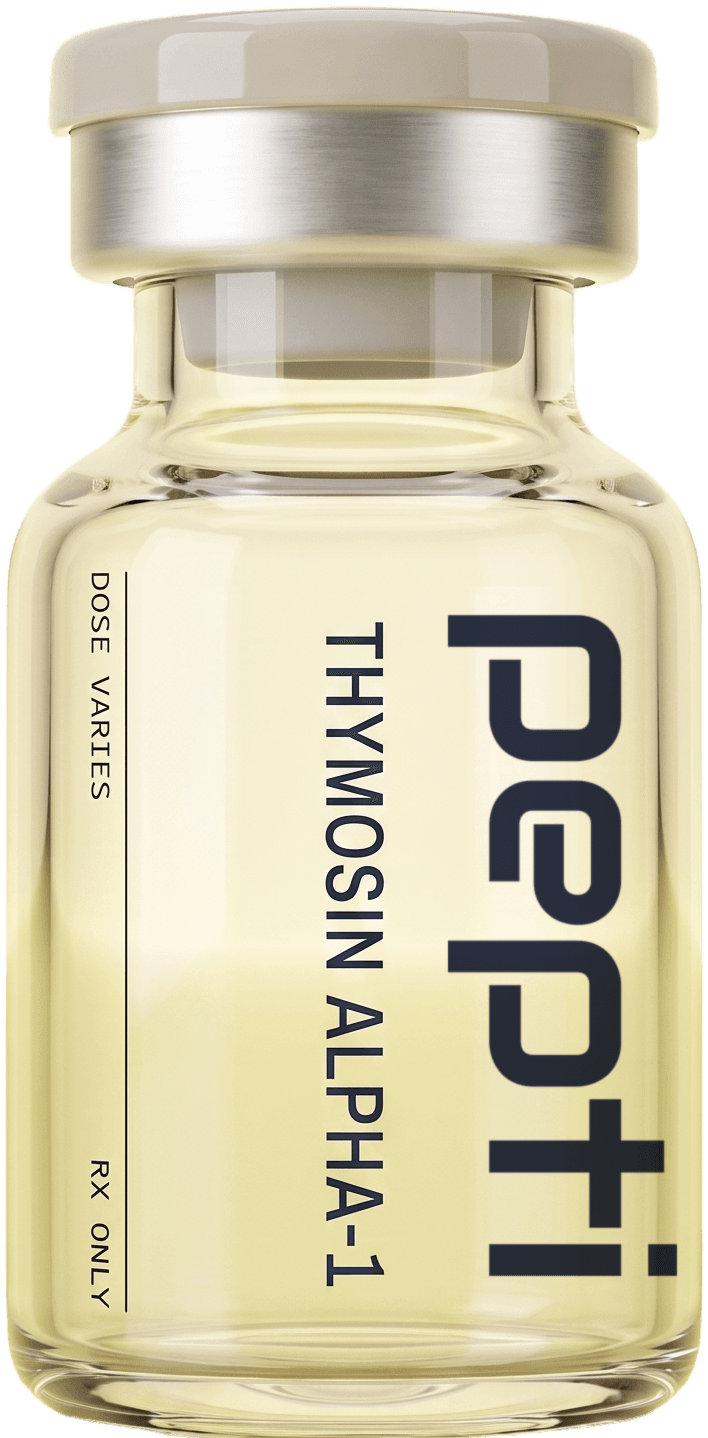
Thymalin is a prescription injection supplied as vial — Thymalin 5mg/5mL 1mg/mL (5mL). The reviewed directions are: Inject 0.25 mL (25 units) subcutaneously once daily Monday through Friday. That is 20 doses per vial, about 4 weeks at Monday through Friday. It requires a prescription from a physician licensed in your state, is compounded by a state-licensed US pharmacy, and is not FDA approved.
This page covers what thymalin is and where it came from, the immune pathways researchers have described, what the published work does and does not establish, where it currently stands with the FDA, how it is dosed, how it differs from thymosin alpha-1, and how to get it prescribed.
— Thymalin
What thymalin actually is
— An extract of the thymus, not a single sequence
Thymalin is a polypeptide complex — a mixture of short peptides — extracted from the thymus gland of young cattle. That separates it from almost every other peptide on this site. BPC-157, thymosin alpha-1 and semaglutide are each one defined amino acid sequence a chemist can synthesise; thymalin is a standardised extract. The group that developed it describes two dipeptides — Lys-Glu (KE) and Glu-Trp (EW) — as the active components inside the mixture, and most of the later mechanism work has been done on those two fragments.
The thymus is the organ in which T-lymphocytes mature. It is large in childhood and shrinks steadily from puberty onward, and the loss of thymic output is one of the best-described contributors to the weakening of the immune system in older age. The rationale behind thymalin is to supply signalling peptides from thymic tissue to a body whose own thymus has largely stopped producing them.
— Where it comes from: Leningrad, the 1970s
Thymalin was developed in the Soviet Union by Vladimir Khavinson and Vyacheslav Morozov, working from 1973 onward at what became the St. Petersburg Institute of Bioregulation and Gerontology. It was the first of a family of tissue-specific peptide preparations the group went on to produce, including the pineal extract Epithalamin and its synthetic successor Epitalon. Thymalin has been used clinically in Russia for decades, including in hospital treatment of COVID-19, which is where the most recent human reports come from.
This provenance matters for reading the evidence. Almost all of the literature comes from one research group and its collaborators, much of it in Russian-language journals, and the study designs described are not the randomised, blinded trials Western regulators require. That does not make the work wrong. It means it should be read as what it is: a long clinical tradition from one country, with a mechanistic story only recently examined outside it.
— What it is not
Thymalin is not thymosin alpha-1. Both are "thymic peptides" sold for immune support, and that is roughly where the resemblance ends. Thymosin alpha-1 is a single 28-amino-acid synthetic sequence with a branded product approved in a number of countries outside the United States and a large international trial literature. Thymalin is a natural extract with a Russian literature. A physician choosing between them is choosing between two kinds of evidence, not two doses of the same thing. The comparison section below covers this.
It is not a hormone, not a steroid and not a vaccine. It is not an antibiotic or an antiviral and does not treat an infection directly; the research describes it acting on the immune cells that respond to infection, which is a different claim. And it is not a treatment for a diagnosed immunodeficiency, which is a specialist question with its own established therapies.
— Thymalin
How thymalin is described to work
Four lines of mechanism appear in the published work. The first three are from cell studies; the fourth is from human blood-marker data in Russian hospital patients.
— Pushing blood stem cells toward mature T-lymphocytes
A 2020 paper in the Bulletin of Experimental Biology and Medicine exposed human hematopoietic stem cells — the bone-marrow cells that give rise to every blood cell — to thymalin in culture. It reported reduced expression of CD44 and CD117, markers of stem cells and of an intermediate stage of differentiation, by two to three times, and increased expression of CD28, a marker of mature T-lymphocytes, by nearly seven times. The authors read this as thymalin nudging progenitor cells along the path to mature T-cells. It is a cell-culture finding, and the paper says the molecular mechanism still requires study, but it is the clearest description of what "restoring T-cell function" is supposed to mean at the cellular level.
— Two dipeptides acting on inflammatory gene expression
The group's 2023 paper in the International Journal of Molecular Sciences took the two active dipeptides, KE and EW, and asked what they might be doing inside a cell. Molecular modelling described each binding preferentially to a short DNA sequence, and bioinformatics linked their potential target genes to the AKT1 and AKT2 proteins involved in cytokine signalling. Tested on human peripheral blood mononuclear cells stimulated with bacterial lipopolysaccharide, thymalin and both dipeptides were reported to reduce synthesis of the inflammatory cytokines IL-1β, IL-6 and TNF-α by 1.4 to 6 times. The proposed model is that the extract's immune effect runs through its dipeptides regulating proteins in an inflammatory cascade.
— Dampening monocyte and macrophage inflammation
A 2022 study in the same journal, run in Italy with the St. Petersburg group as co-authors, tested thymalin alongside four other Khavinson peptides on THP-1 cells, a human monocyte line that can be driven to become macrophages. All five reduced expression of TNF and IL-6 in differentiated cells stimulated with lipopolysaccharide, and reduced adhesion of those cells to activated endothelial cells, an early step of an inflammatory response. The authors' interpretation is that the peptides act as natural inducers of TNF tolerance, a documented mechanism by which monocytes attenuate their own inflammatory output. Again, cells in a dish.
— Inflammatory and clotting markers in hospital patients
The human data comes from Russian COVID-19 wards. A 2021 paper in Stem Cell Reviews and Reports reported that patients receiving thymalin alongside standard treatment showed a faster decline in IL-6, C-reactive protein and D-dimer than controls on standard treatment alone, along with changes in T-cell indicators. A 2022 paper in Advances in Gerontology, in middle-aged and elderly patients with severe COVID-19, described the thymalin group with higher lymphocyte and monocyte counts and lower fibrinogen, lactate dehydrogenase and D-dimer than standard care. The mechanistic reading is that the cell effects show up as movement in inflammation and coagulation markers in people. Whether they translate into outcomes is the next section's question.
— Thymalin
What the research actually shows
— Immune ageing in older adults
The foundational human work is the long observational programme reported in Advances in Gerontology in 2002 and, in English, in Neuroendocrinology Letters in 2003. Researchers in St. Petersburg and Kiev followed 266 elderly and older persons over six to eight years, treating with thymalin, with the pineal extract Epithalamin, or with both, for the first two to three years, and compared them with controls. The papers report improvements across cardiovascular, endocrine, immune and nervous system indices, a 2.0 to 2.4-fold reduction in the incidence of acute respiratory disease, and a mortality rate over the observation period 2.0 to 2.1 times lower in the thymalin group than in controls, with larger differences reported for the combination.
Those are striking numbers and they need to be read carefully. The abstracts do not describe randomisation, blinding or placebo, and the work has not been replicated by an independent group. It is the largest and longest body of human experience with thymalin and the reason the compound is used for age-related immune decline; it is not a trial in the sense a regulator would use the word.
— COVID-19
Two hospital studies, both described above. The 2021 paper framed the faster fall in IL-6, C-reactive protein and D-dimer as a reduced risk of clotting complications. The 2022 paper, in severe disease in middle-aged and elderly patients, reported lower in-hospital mortality in the thymalin group than in the standard-care group, and a more favourable profile of blood counts and clotting markers than with tocilizumab. Neither abstract describes randomisation or blinding, group sizes are not given, and the second paper's English and Russian abstracts report slightly different mortality figures, which is why no percentage is quoted here. This was pandemic-era work done under pressure in one country's health system: real clinical experience, and not an RCT.
— Respiratory and other Russian indications
The St. Petersburg group's papers state that thymalin has been used in the therapy of acute respiratory distress syndrome, chronic obstructive bronchitis and other immunopathology. Those statements reflect its clinical use in Russia rather than trials that can be examined here: reported by the developers, not established in published controlled studies.
— Cell and animal work
Beyond the immune-cell studies above, thymalin appears in a scattering of animal work — a 2018 rat study of tumour and thymus tissue in the Bulletin of Experimental Biology and Medicine, and 2024 Ukrainian papers on experimental jaw-bone defects in rats. These are peripheral to why it is prescribed and are mentioned for completeness, not as support.
— What human data exists
There are no randomised controlled trials of thymalin. The human evidence is a long-running Russian observational programme in older adults, reported in 2002 and 2003, and two Russian hospital studies in COVID-19 patients from 2021 and 2022, none of whose published abstracts describes randomisation, blinding or placebo control. Several of the underlying papers are available only in Russian. There is no Western trial of thymalin, and the mechanism work outside Russia consists of cell studies co-authored with the developing group.
That is a thinner and more regionally concentrated human record than thymosin alpha-1 has, and it is fair to say so. It is also a longer clinical tradition than most compounded peptides can claim. The honest framing is "used clinically in Russia for decades, with mechanistic support from cell studies, and without controlled trials," and any source describing it as proven is overstating it.
— What the evidence does not establish
- It does not establish that thymalin reduces infections or extends life in people. Those are the outcomes the Russian programme reports, and they have not been tested in a controlled design.
- It does not establish an effect size or a timeline in any population, because no trial has measured one.
- It does not establish that the cell-culture effects on T-cell maturation or cytokine output occur at the doses used in people.
- It does not establish long-term safety under modern pharmacovigilance.
- It does not establish efficacy for any condition as an FDA-approved treatment. It is not approved for anything in the United States.
— Thymalin
Where thymalin stands with the FDA right now
Verified against the FDA's own documents in September 2026, and different from most peptides on this site.
Thymalin has never been nominated for the FDA's 503A bulk drug substances list. It does not appear in Category 1, 2 or 3 of the FDA's interim list of nominated substances, which was last updated on 14 May 2026. The only similarly named entry on that document is "Thymulin acetate," a different thymic nonapeptide, which sits in Category 3, the category for substances nominated without adequate supporting information. It is not on the 503A bulks list itself, which is codified at 21 CFR 216.23 and contains six substances, none of them a thymic peptide.
That also means thymalin was never in Category 2, the category for substances the FDA has flagged as raising significant safety risks. The FDA's safety-risks page, current as of 22 April 2026, does not mention it — neither among the six substances currently in Category 2 nor among the peptides previously in Category 2 whose nominations were withdrawn. The removal of twelve peptides from Category 2 on 15 April 2026 therefore did not involve it, and it was not on the agenda when the Pharmacy Compounding Advisory Committee met on 23 and 24 July 2026 to review BPC-157, KPV, TB-500, MOTS-c, DSIP, Semax and Epitalon. No advisory committee review of thymalin has been announced.
So the accurate description today is: never nominated, never flagged, never reviewed. The FDA has expressed no view on thymalin either way, which is a different position from a substance that has been through the process and been recommended for or against. It is not an FDA-approved drug product, and compounded medications never are. Where a substance sits with the FDA is one input into a compounding pharmacy's decision to prepare it; state pharmacy law and the pharmacy's own regulatory judgement are the others, and those are the pharmacy's questions.
— Thymalin
Realistic expectations
These are patterns described by prescribers, not trial endpoints. Individual response varies, and a physician decides whether treatment is appropriate at all.
— The first two weeks
Nothing about thymalin is expected to be felt. It does not act on energy, mood or sleep in any direct way, and prescribers generally describe the first fortnight as uneventful. Injection-site reactions, if any, tend to show up here and settle.
— Weeks two to four
If the T-cell effects described in cell work happen in people, this is the window in which prescribers describe looking for them, usually indirectly: fewer or shorter minor infections over a season, or movement in immune markers if a physician has chosen to measure them. One vial is sized to this window.
— Whether a course is repeated
The Russian programme treated older adults in courses repeated annually over several years, and that is the pattern most prescribers reference: a course, then reassessment against whatever was being watched, rather than open-ended daily use. Whether to repeat is your physician's call and depends on why it was started.
— After the course
No withdrawal, rebound or dependence has been described. The compound is intended to shift the state of a cell population rather than to substitute for something the body makes each day, so nothing is expected to happen when it stops. Whether any benefit persists is a question nobody has run the study to answer.
— Thymalin
When something else makes more sense
A reference that only ever recommends its own product is not much of a reference. Some honest cases where thymalin is not the first thing to reach for:
- You want the immune peptide with the deepest human trial record. Thymosin alpha-1 is a single defined sequence with international randomised trials behind it, in hepatitis B, as a vaccine adjuvant and in sepsis. If a physician is choosing on the strength of controlled evidence, that is the stronger file.
- You want immune coverage alongside gut, inflammation and antimicrobial support. The FORTIFY blend combines thymosin alpha-1 with BPC-157, KPV and LL-37 in one vial, and may be the better conversation if the picture is broader than the immune system alone.
- Your problem is inflammatory rather than immune-deficient. If the question is inflammation that will not settle rather than a weakened response, KPV is described around melanocortin signalling in inflammatory pathways and is a more direct fit.
- You are interested in the Khavinson ageing work as a whole. The same group's pineal peptide, Epithalon, was the other half of the Russian programme, and prescribers who use one often discuss the other.
- You have an active infection, a diagnosed immunodeficiency or an autoimmune condition. Those are questions for your physician and, usually, a specialist, and a thymic peptide is not a substitute for their treatment.
Your physician will tell you if thymalin is not the right tool for what you have described. A consultation does not guarantee a prescription, and being declined is refunded.
— Thymalin
Strengths available
| Strength | Directions |
|---|---|
| Thymalin 5mg/5mL | Inject 0.25 mL (25 units) subcutaneously once daily Monday through Friday. |
One strength is supplied. The schedule is your physician's decision.
— Thymalin
Dosing, and how a vial is actually used
— Why the dose is measured in units
The directions are written in millilitres and in insulin-syringe units because that is what you can read off the barrel. 0.25 mL is 25 units on a U-100 syringe. You are not calculating anything — the number is printed on your medication, and it is the same draw every time.
— Subcutaneous, and where
Subcutaneous means into the fat layer, not the muscle. Abdomen and thigh are the usual sites, rotated so the same spot is not used repeatedly. Because the mechanisms described are systemic — circulating immune cells, not a local tissue — there is no reason to inject near anything in particular. Your directions will say.
— Why Monday through Friday, and why a vial covers about four weeks
Five doses a week rather than seven is a pattern shared by a number of peptides on this site, and it reflects prescribing convention rather than a pharmacokinetic finding. 20 doses at five a week is four weeks, which is why refills run on a 28-day cycle. One vial per fill, always — not a stockpile.
— Storage
Refrigerated, and it ships that way in insulated packaging with ice packs. Keep it cold, out of light, and do not freeze it. Beyond-use dating runs from first puncture and is on the label.
— Thymalin
Safety and side effects
Thymalin has been given to people in Russia for decades and the published clinical reports do not describe a characteristic toxicity. What gets reported is mostly injection-site: redness, mild soreness, occasional bruising or itching. As a protein extract of animal origin it carries a theoretical allergy risk that a single synthetic sequence does not, so any rash, hives or swelling beyond the injection site should be reported to your physician rather than waited out.
There is no established interaction list, because the trials that would produce one have not been run. The obvious caution is with anything else that acts on the immune system — immunosuppressants, biologics, or an autoimmune diagnosis — which is why those are raised at intake and reviewed by a physician rather than a form.
Stop and contact your physician for any reaction that is severe, spreading, or involves difficulty breathing.
— Thymalin
How thymalin compares
— Thymalin vs thymosin alpha-1
These are the two immune peptides Pepti supplies, so this is the comparison that matters. Thymosin alpha-1 is a single 28-amino-acid sequence, first isolated from a thymic fraction in the United States in the 1970s and now made synthetically; a branded version is approved in a number of countries outside the US, and it has randomised human trials. Thymalin is a natural extract from calf thymus, developed in Leningrad in the same decade, with two identified active dipeptides, a long Russian clinical history and no randomised trials. Both are described around T-cell maturation and immune regulation. Thymosin alpha-1 is the choice when a physician wants the controlled-evidence file; thymalin is the choice when the interest is specifically in the Russian geroprotective programme and the whole-extract approach. They are not the same thing under two names, and neither is FDA approved.
— Thymalin vs Epithalon
These are the two halves of the Khavinson programme. Epithalon is the synthetic tetrapeptide derived from the pineal extract Epithalamin, which was studied alongside thymalin in the 266-person Russian cohort. Thymalin is aimed at the thymus and the immune system; Epithalon is described around the pineal gland, melatonin rhythms and telomerase. Physicians familiar with that literature sometimes discuss them together rather than as alternatives.
— Thymalin vs the FORTIFY blend
The FORTIFY blend is Pepti's multi-component immune preparation, built around thymosin alpha-1 rather than thymalin, with BPC-157, KPV and LL-37 alongside. Thymalin on its own is for a physician who has decided a thymic extract is specifically what they want; FORTIFY is for when the immune component is one piece of a broader picture. Which is appropriate is your physician's decision.
— Thymalin
Availability and formats
| Question | Answer |
|---|---|
| Can I get it by telehealth? | Yes, where a physician licensed in your state prescribes it |
| Which states? | All 50 states and DC |
| Does it come as a pen? | No, this one is a vial and syringe only |
| Does it come as a capsule? | No |
| Does it come as a nasal spray? | No |
| Is bloodwork required first? | Not routinely; your physician decides |
— Thymalin
Where to get Thymalin prescribed
Thymalin cannot be bought legitimately without a prescription. Sites shipping it with no prescription are selling a research-use-only product, where no pharmacy is accountable for identity, purity, sterility or concentration.
The prescription route works like this:
- Complete a medical intake covering your history, medications, allergies and what you are treating.
- A physician licensed in your state reviews it.
- If appropriate, a state-licensed, FDA-registered pharmacy compounds it to that prescription.
- It ships refrigerated with your directions printed on the vial.
- Your physician stays reachable afterwards for dose questions and side effects.
Current all-in pricing for Thymalin is published: medication, physician review, refill management and shipping in one figure, with no separate membership fee. What to check on any provider is in how to tell if a peptide seller is legitimate.
— Thymalin
Who should not take it, or should discuss it first
| Situation | Why |
|---|---|
| Autoimmune disease or immunosuppressive therapy | Raised at intake |
| Pregnancy or breastfeeding | Not used; safety data is absent |
| Tested athletes | Many peptides are prohibited in competition; check the current list |
— Full specification
Everything on the label.
— Product
Thymalin (Injectable)
— How supplied
vial — Thymalin 5mg/5mL 1mg/mL (5mL)
— Typical directions
Inject 0.25 mL (25 units) subcutaneously once daily Monday through Friday.
— Dose volume
0.25 mL (25 units on a U-100 insulin syringe)
— Doses per vial
20
— Coverage per vial
about 4 weeks at Monday through Friday
— Formats
Vial and syringe
— Available in
All 50 states and DC
— Bloodwork
Not routinely required; your physician decides
— Legal status
Prescription-only, compounded, not FDA approved
— Category
Immune
— References
What this is based on.
References
- Khavinson VKh, Morozov VG. [Geroprotective effect of thymalin and epithalamin] · Adv Gerontol (2002) · PMID 12577695
- Khavinson VKh. Peptides and Ageing · Neuro Endocrinol Lett (2002) · PMID 12374906
- Khavinson VK, Linkova NS, Kvetnoy IM, Polyakova VO, Drobintseva AO, Kvetnaia TV, Ivko OM. Thymalin: Activation of Differentiation of Human Hematopoietic Stem Cells · Bull Exp Biol Med (2020) · PMID 33237528
- Khavinson VK, Kuznik BI, Trofimova SV, Volchkov VA, Rukavishnikova SA, Titova ON, Akhmedov TA, Trofimov AV, Potemkin VV, Magen E. Results and Prospects of Using Activator of Hematopoietic Stem Cell Differentiation in Complex Therapy for Patients with COVID-19 · Stem Cell Rev Rep (2021) · PMID 33575961
- Kuznik BI, Shapovalov KG, Smolyakov YN, Lukyanov SA, Tereshkov PP, Kazantseva LS, Linkova NS. [Morphological compound and indicators of the blood clotting system in severe COVID-19 patients of middle aged and elderly during treatment of Tocilizumab and Thymalin] · Adv Gerontol (2022) · PMID 36169363
- Avolio F, Martinotti S, Khavinson VK, Esposito JE, Giambuzzi G, Marino A, Mironova E, Pulcini R, Robuffo I, Bologna G, Simeone P, Lanuti P, Guarnieri S, Trofimova S, Procopio AD, Toniato E. Peptides Regulating Proliferative Activity and Inflammatory Pathways in the Monocyte/Macrophage THP-1 Cell Line · Int J Mol Sci (2022) · PMID 35408963
- Linkova N, Khavinson V, Diatlova A, Petukhov M, Vladimirova E, Sukhareva M, Ilina A. The Influence of KE and EW Dipeptides in the Composition of the Thymalin Drug on Gene Expression and Protein Synthesis Involved in the Pathogenesis of COVID-19 · Int J Mol Sci (2023) · PMID 37686182
Citations are provided for educational purposes. They do not constitute medical advice. Always discuss any peptide protocol with your prescribing physician.
— Common questions
Thymalin, answered.
Through a telehealth provider where a physician licensed in your state reviews a medical intake and a licensed US pharmacy compounds the prescription. Pepti prescribes Thymalin in all 50 states and DC; start with the free assessment.
vial — Thymalin 5mg/5mL 1mg/mL (5mL)
Inject 0.25 mL (25 units) subcutaneously once daily Monday through Friday. Your physician sets your own dose and it is printed on your medication.
20 at the standard volume, about 4 weeks at Monday through Friday.
Thymalin is supplied as a vial, drawn with an insulin syringe. It is not available as a pen or capsule.
Not routinely, though your physician may want labs depending on your history. at-home blood testing covers hormone, metabolic and thyroid markers without a lab visit.
It is legal to prescribe and dispense in the United States with a valid prescription. It is not FDA approved: compounded medications are prepared by licensed pharmacies pursuant to a prescription rather than approved as manufactured products. See are peptides FDA approved.
Pricing is published on the Thymalin page as one all-in figure covering medication, physician review, refill management and shipping. What drives peptide pricing generally is in how much do peptides cost.
No. Thymosin alpha-1 is a single 28-amino-acid synthetic sequence with international randomised trials and a branded product approved in several countries outside the US. Thymalin is a polypeptide extract of calf thymus developed in Russia, with a Russian clinical literature and no randomised trials. Both are described around T-cell function; they are different compounds with different evidence. Pepti supplies both — see thymosin alpha-1.
No, because it was never on it. Thymalin has never been nominated for the FDA's 503A bulk drug substances list, so it appears in none of the three categories, was not among the twelve peptides removed from Category 2 in April 2026, and was not reviewed by the Pharmacy Compounding Advisory Committee in July 2026. It remains a compounded, prescription-only medication that is not FDA approved.
Yes, but not controlled trials. A Russian observational programme followed 266 older adults over six to eight years and reported fewer respiratory infections and lower mortality in the thymalin-treated group, and two Russian hospital studies in COVID-19 patients reported faster normalisation of inflammatory and clotting markers. None of the published abstracts describes randomisation or blinding, and there are no randomised controlled trials of thymalin. It has been used clinically in Russia for decades.
Cell studies describe it pushing human blood stem cells toward mature CD28-positive T-lymphocytes, and its two active dipeptides reducing production of the inflammatory cytokines IL-1β, IL-6 and TNF-α in stimulated human immune cells. In Russian hospital patients it was described lowering IL-6, C-reactive protein and D-dimer faster than standard care. These are described mechanisms, not established outcomes.
Five days a week is a prescribing convention shared by several peptides rather than a finding from a trial. It gives 20 doses per vial, which is about four weeks, matching the 28-day refill cycle. Your physician may set a different schedule, and whatever they set is printed on your vial.
Thymalin and Epithalon were studied together in the Russian ageing programme, and physicians familiar with that work sometimes discuss them as a pair. Thymalin and thymosin alpha-1 are both thymic immune peptides and are not usually combined. Whether any combination is appropriate for you is your physician's decision.
Mostly injection-site reactions — redness, mild soreness, occasional bruising or itching. Because it is a protein extract of animal origin, a rash, hives or swelling beyond the injection site should be reported to your physician promptly. There is no established interaction list, and anything acting on the immune system, or an autoimmune diagnosis, is raised at intake so a physician can review it.
— Next step
See what a physician
recommends for you.
A licensed physician in your state reviews your intake and decides what is appropriate. A consultation does not guarantee a prescription.
Important legal & safety information
The assessment process available on the Pepti website asks a series of medical questions, and the answers provided are reviewed by an independent licensed physician affiliated with our partner physician network. The licensed providers have established exclusionary criteria, and the answers provided determine if the individual is screened out of eligibility for treatment. The licensed clinicians retain the sole decision to prescribe peptide therapy and other compounded medications to patients. Treatment may be denied at the physician's sole discretion. If a prescription is not approved, you will not be charged for the medication.
Pharmacy Providers. Pepti is a technology platform and is not a healthcare provider, pharmacy, or prescriber. All medications offered through the platform are compounded by independent FDA-registered 503A or 503B compounding pharmacies based on a valid prescription written by a licensed physician for an individual patient. Compounded medications are not FDA-approved as products. The active pharmaceutical ingredients used by our partner pharmacies are sourced from FDA-registered facilities. Compounded medications may not undergo the same testing or quality control as commercially manufactured FDA-approved drugs.
Results vary. Results from peptide therapy and other compounded treatments vary based on individual factors, including age, weight, medical history, adherence to the prescribed protocol, lifestyle factors, and physiological response. Pepti makes no guarantee of any specific outcome. Statements about peptide therapy and compounded medications offered through the platform have not been evaluated by the Food and Drug Administration. These products are not intended to diagnose, treat, cure, or prevent any disease.
Product images. Product photographs and renderings shown on this website are for illustrative purposes only. The appearance of vials, packaging, labeling, and other materials you receive may vary and is determined by the dispensing compounding pharmacy.
Off-label use.Many peptides offered through the platform are prescribed for off-label use. “Off-label” means the medication is being prescribed for a use, dose, or patient population that is not specifically approved by the FDA. Off-label prescribing is legal and common in U.S. medical practice when supported by clinical experience and judgment.
Mailing & shipping. Pepti currently dispenses prescription medication to patients in all 50 states and Washington, D.C.. All orders ship in unbranded, tamper-evident packaging via expedited delivery from our partner compounding pharmacies. Temperature-sensitive medications ship with insulated packaging and ice packs. Shipping is included at no additional cost. We do not currently ship medication outside all 50 states and Washington, D.C., internationally, or to APO/FPO addresses.
Not for emergencies. Pepti is not designed for medical emergencies. If you are experiencing a medical emergency, call 911 or go to your nearest emergency room immediately. For urgent but non-emergency medical questions, contact your primary care provider or use an urgent care service.
No doctor-patient relationship with Pepti. Your use of the platform does not create a doctor-patient relationship between you and pepti LLC. A doctor-patient relationship is established only between you and the independent licensed physician who reviews your intake and prescribes your treatment. The physicians who use the platform are independent contractors and are solely responsible for the medical care they provide.
Prescription medications. All prescription products require a valid prescription from a licensed healthcare provider. By using the platform, you acknowledge that you are at least 18 years old and that the information you provide is true, accurate, current, and complete. Providing false information may result in inappropriate treatment recommendations or denial of service.
Cosmetic & wellness products.Certain products offered through Pepti — including skincare, hair care, body care, supplements, men's grooming, sports recovery, and sexual wellness products — are cosmetic or dietary supplement products, not prescription medications. These products do not require a prescription and are not reviewed or prescribed by a physician. Statements regarding dietary supplements have not been evaluated by the Food and Drug Administration. These products are not intended to diagnose, treat, cure, or prevent any disease. Results vary by individual. Consult your healthcare provider before starting any new supplement or topical product, especially if you are pregnant, nursing, or taking other medications.
pepti LLC · Delaware Limited Liability Company · 131 Continental Dr, Suite 305, Newark, DE 19713 · For media or partnership inquiries, email hello@hellopepti.com. For patient support, email support@hellopepti.com. For privacy and HIPAA inquiries, email privacy@hellopepti.com.