Recovery · Reference
Thymosin Alpha-1 vs KPV: Immune Modulation or Inflammation Control, and Which One Fits
This page explains each on its own terms, puts them side by side, covers what the research does and does not show, where each stands with the FDA, how each is dosed, what each costs at Pepti, and who tends to suit which.
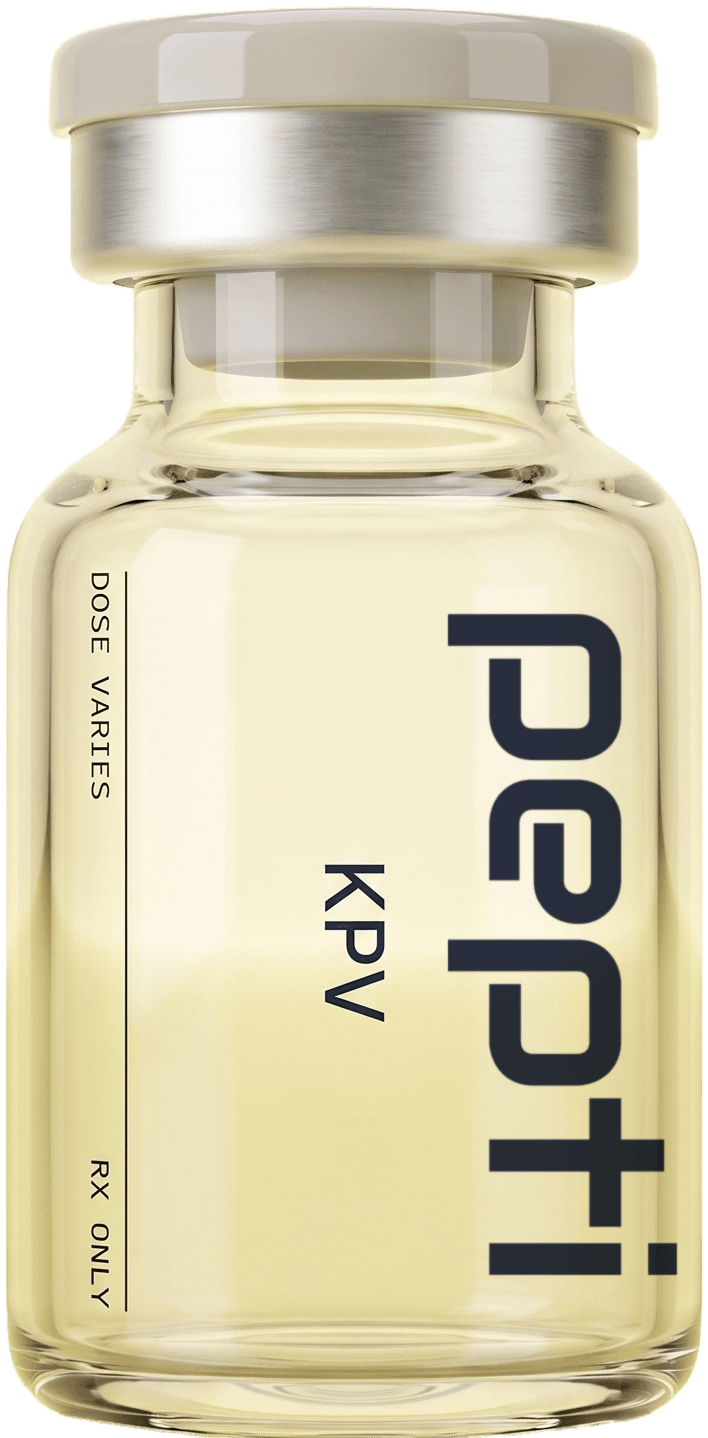
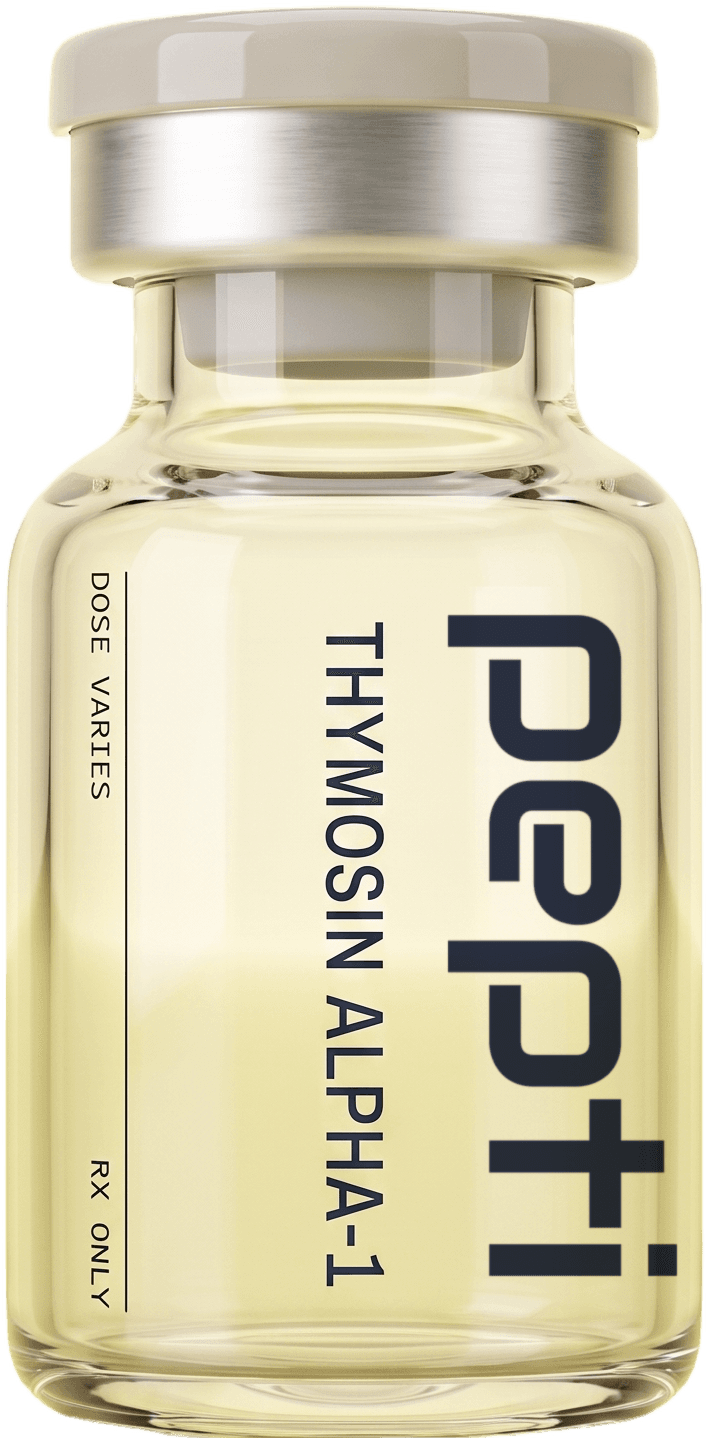
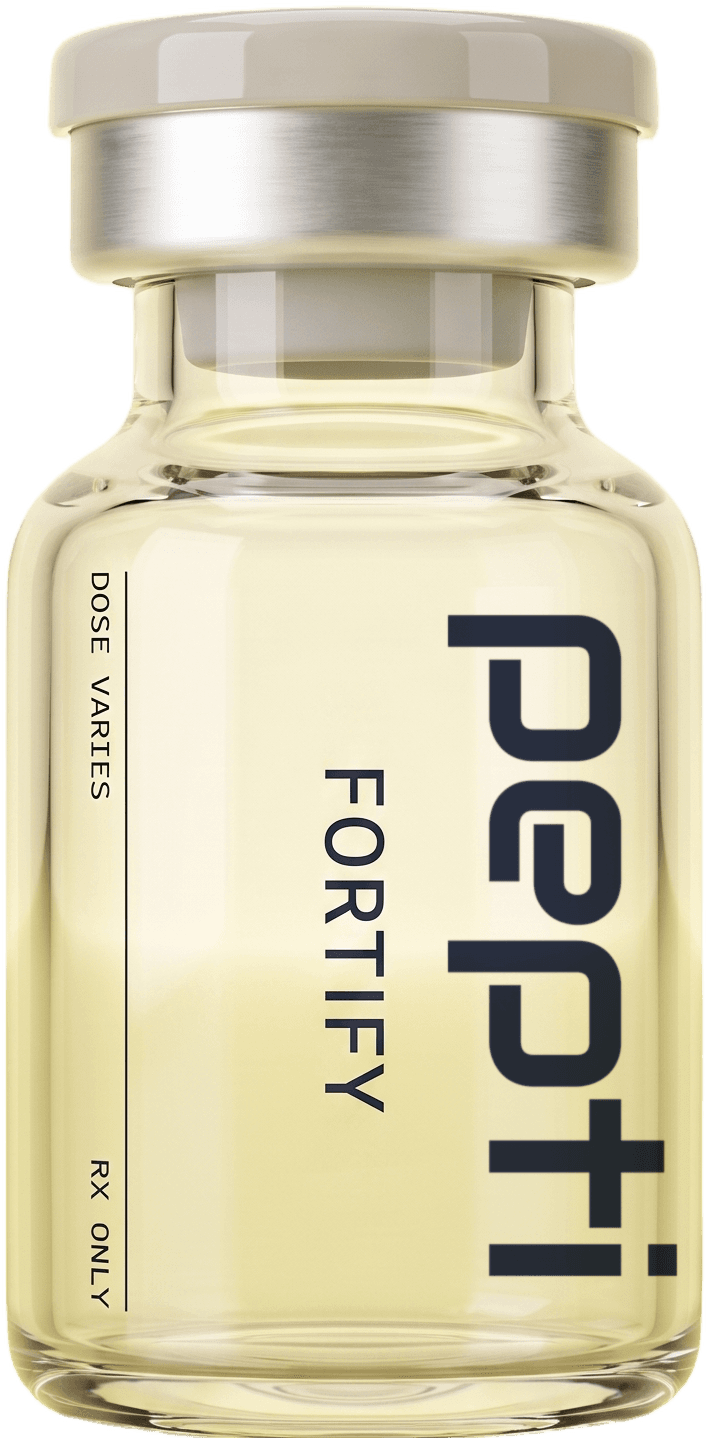
Thymosin alpha-1 and KPV both come up when the question is immunity or inflammation, but they push in different directions and have very different evidence. Thymosin alpha-1 is a 28-amino-acid thymic peptide described as sharpening immune recognition where it is deficient, with randomized human trials over thirty years in hepatitis B, sepsis, melanoma and vaccine response, mixed results, and none in healthy adults. KPV is a three-amino-acid fragment of alpha-MSH described as turning down inflammatory signalling inside cells, with cell and mouse studies and no human studies at all. Thymosin alpha-1 is the conversation when the concern is immune function; KPV is the conversation when the body is producing more inflammation than it should, especially in the gut. The FORTIFY Blend contains both. Both are prescription-only, compounded by a licensed US pharmacy, and neither is FDA approved.
This page explains each on its own terms, puts them side by side, covers what the research does and does not show, where each stands with the FDA, how each is dosed, what each costs at Pepti, and who tends to suit which.
Thymosin Alpha-1 vs KPV
The short answer
| If your main goal is | The usual prescription | What is in it | Price |
|---|---|---|---|
| Immune modulation | Thymosin Alpha-1 | 10 mg thymosin alpha-1 in a 5 mL vial (2 mg/mL); also a Pen | $249/mo |
| Inflammation without a specific injury, often gut-related | KPV | 10 mg KPV in a 5 mL vial (2 mg/mL) | $229/mo |
| Both, plus gut-lining and antimicrobial-peptide coverage | FORTIFY Blend | 5 mg thymosin alpha-1, 5 mg BPC-157, 2 mg KPV, 1 mg LL-37 in 5 mL | $289/mo |
| Inflammation alongside skin and tissue repair | KLOW Blend | 50 mg GHK-Cu, 10 mg KPV, 10 mg BPC-157, 10 mg TB-500 in 5 mL | $259/mo |
| Inflammation alongside focus | ELEVATE Blend | 5 mg Semax, 5 mg Selank, 10 mg BPC-157, 10 mg KPV in 5 mL | $249/mo |
Every figure is an all-in monthly price covering the medication, physician review, refill management and shipping. There is no separate membership fee. Current pricing always lives on each product page.
Thymosin Alpha-1 vs KPV
Thymosin alpha-1 on its own terms
What it is
Thymosin alpha-1 is a 28-amino-acid peptide with an acetyl group on its N-terminus. The body cuts it from a larger precursor, prothymosin alpha, and it was first isolated in 1977 from a calf thymus preparation called thymosin fraction 5. Its generic name is thymalfasin. A synthetic branded version has been sold since the 1990s in a number of countries outside the US, mainly for hepatitis B and as a vaccine adjuvant; it has never been approved by the FDA, and compounded thymosin alpha-1 carries none of those foreign approvals. It is not an antiviral, not an immunosuppressant and not TB-500. The full reference is at what is thymosin alpha-1.
How thymosin alpha-1 is described to work
- Dendritic cells and Toll-like receptors. In mouse and cell work, action on TLR9 and TLR2 increases cytokine production and antigen presentation, which is why it was studied as a vaccine adjuvant.
- T-cell maturation. It promotes immature T cells becoming functional CD4 and CD8 populations; a 2020 report in severe COVID-19 measured circulating CD4 and CD8 T cells rising in treated patients.
- Natural killer cells. Cell and animal work describes increased NK activity and MHC class I expression on tumour cells.
- Restraint as well as stimulation. A 2010 review called it "the regulator of regulators," describing a push toward regulatory T cells and tolerance in mouse work. The research frames it as a modulator, not a booster.
What human data exists for thymosin alpha-1
Randomized trials exist in chronic hepatitis B (a 1998 Hepatology trial of 98 people and a 2026 Cochrane review of ten trials graded very low certainty), hepatitis C (a 552-person trial, negative), sepsis (a 361-person 2013 trial with a marginal mortality difference, then the 1,106-person double-blind TESTS trial in the BMJ in 2025, which found no clear mortality benefit), metastatic melanoma (a 488-person 2010 trial with a signal short of significance) and vaccine response in older trials. The trials report adverse-event rates similar to placebo. There are no randomized trials of thymosin alpha-1 for immune support in otherwise healthy adults. Detail is in thymosin alpha-1 benefits.
Thymosin Alpha-1 vs KPV
KPV on its own terms
What it is
KPV is a tripeptide, lysine-proline-valine: the last three amino acids of alpha-melanocyte-stimulating hormone (alpha-MSH). Alpha-MSH drives pigmentation and also acts as an anti-inflammatory signal. A 2008 review in Endocrine Reviews described the tail of the molecule keeping much of the anti-inflammatory activity in cell and animal models while pigmentation depends on a different part. KPV is not a steroid, not a painkiller and not a tanning peptide. The full reference is at what is KPV.
How KPV is described to work
- Entry through PepT1. A 2008 Gastroenterology paper reported KPV carried into intestinal cells by the PepT1 peptide transporter, with its effect depending on that transporter. PepT1 is described as upregulated in inflamed intestine.
- NF-kB and MAPK. Reduced NF-kB activation in cells and inflamed mouse colon (Gastroenterology and Inflammatory Bowel Diseases, 2008); a 2012 study in human bronchial cells described it stabilizing the protein that holds NF-kB inactive.
- Lower cytokines. Less TNF-alpha, IL-6, IL-1 beta and IL-8 in cell and mouse models.
- Antimicrobial activity in a test tube. A 2000 paper in the Journal of Leukocyte Biology reported reduced growth of Staphylococcus aureus and Candida albicans in the laboratory.
What human data exists for KPV
None. There are no human studies of KPV of any design, and the FDA's review for its July 2026 advisory committee found none. The deepest work is several mouse colitis studies (2008 and 2017), with single studies in skin, airway and brain-injury models. Detail is in KPV benefits.
Thymosin Alpha-1 vs KPV
Head to head
| Thymosin alpha-1 | KPV | |
|---|---|---|
| Built from | A natural thymic peptide, 28 amino acids | The last three amino acids of alpha-MSH |
| Direction of effect | Sharpens immune recognition where deficient; restrains it elsewhere | Turns down inflammatory signalling |
| How it acts | On immune cells: dendritic cells, T cells, NK cells | Inside cells, after entering through PepT1 |
| Where the research is deepest | Human trials in infection and cancer | Mouse models of gut inflammation |
| Human trials | Randomized, over thirty years; none in healthy adults | None of any design |
| Largest trial | 1,106 adults with sepsis; no clear mortality benefit | Not applicable |
| Approval anywhere | Branded version in some countries outside the US | None |
| FDA status | Out of Category 2 since 2024; advisory committee voted 4 to 17 against the Bulks List | Out of Category 2 since April 2026; advisory committee voted 8 to 6 for the Bulks List |
| Sport | Not named on the 2026 WADA list; S0 applies | Not named on the WADA list; S0 applies |
| Vial at Pepti | 5 mL, 2 mg/mL (10 mg) | 5 mL, 2 mg/mL (10 mg) |
| Standard directions | 0.25 mL (25 units) once daily, Monday to Friday | 0.25 mL (25 units) once daily, Monday to Friday |
| Per dose | 0.5 mg | 0.5 mg |
| Doses per vial | 20, about 4 weeks | 20, about 4 weeks |
| Price at Pepti | $249 a month | $229 a month |
| Also found in | FORTIFY; available as a Pen | FORTIFY, KLOW and ELEVATE |
The real difference: restoring a response or quieting one
The live KPV reference puts it plainly. If the question is "my immune system needs support," thymosin alpha-1 is the more direct conversation. If it is "my body is producing more inflammatory signalling than it should," KPV is. Thymosin alpha-1 also has a regulatory, calming side in the research, which is why the two can sit in one vial without contradicting each other. They differ most in how much is known: thymosin alpha-1 has a human trial file; KPV has a laboratory one. No study has compared them directly.
Thymosin Alpha-1 vs KPV
Who suits which
Thymosin alpha-1
It suits a question that is specifically about immune function, such as a sense of catching everything going around, once ordinary causes have been considered. It is the choice when the depth of human evidence matters most, with the honest caveat that no trial was in healthy adults. Autoimmune disease and immunosuppressive treatment must be on the intake.
KPV
It suits inflammation-led complaints without a specific injury, most often gut-related ones, where its mouse work is strongest. On its own, KPV is one variable, which makes it easier to judge whether anything is changing. If the gut lining itself is the concern, BPC-157 has the deeper literature there; see KPV vs BPC-157.
Both, in FORTIFY
The FORTIFY Blend holds 5 mg thymosin alpha-1, 5 mg BPC-157, 2 mg KPV and 1 mg LL-37 in a 5 mL vial, printed at the same 0.25 mL weekday direction. Per dose that is 0.25 mg of thymosin alpha-1 and 0.1 mg of KPV, less of each than the single vials hold in the same volume (0.5 mg). A blend is a convenience for someone who wants all four in one injection, not a stronger version of either. No study has tested thymosin alpha-1 in combination with the other ingredients. More is in what is the FORTIFY blend.
Thymosin Alpha-1 vs KPV
When neither is the right first step
| Situation | What makes more sense |
|---|---|
| A diagnosed infection or immune disease | The FDA-approved treatments for it; thymosin alpha-1 was studied alongside them, never instead |
| A diagnosed inflammatory disease on prescribed treatment | Stay on that treatment and keep your specialist aware |
| Blood in the stool, unintentional weight loss or persistent vomiting | Investigation by a gastroenterologist or your primary physician first |
| A specific tendon, ligament or muscle injury | BPC-157 or TB-500 |
| Skin appearance is the priority | GHK-Cu or the KLOW Blend |
Thymosin Alpha-1 vs KPV
Where each stands with the FDA
| Thymosin alpha-1 | KPV | |
|---|---|---|
| 2023 | Category 2 | Category 2 |
| Removal | Effective 27 September 2024, after the nomination was withdrawn | Announced 15 April 2026, effective 22 April |
| Advisory committee | 4 December 2024: voted 4 to 17 against the 503A Bulks List | 23 July 2026: voted 8 to 6, one abstention, for the Bulks List, against FDA staff advice |
| Final determination | None issued | Pending |
Committee votes are recommendations, not rules. Both remain legal to prescribe and dispense as compounded medications, and compounded medications are not FDA approved. Are peptides FDA approved explains the process.
Thymosin Alpha-1 vs KPV
Dosing, side by side
At Pepti the two single vials are the same strength, 2 mg/mL, with the same printed direction: 0.25 mL, which is 25 units on a U-100 insulin syringe, under the skin into the abdomen or thigh, once daily Monday through Friday. That is 0.5 mg of either per dose. The branded thymosin alpha-1 schedule abroad, 1.6 mg twice weekly, is not the compounded direction. Your physician sets your directions after reviewing your intake, and they are printed on the vial. The arithmetic is in thymosin alpha-1 dosage and KPV dosage.
| Volume | Units (U-100) | Thymosin alpha-1 at 2 mg/mL | KPV at 2 mg/mL |
|---|---|---|---|
| 0.10 mL | 10 | 0.2 mg | 0.2 mg |
| 0.20 mL | 20 | 0.4 mg | 0.4 mg |
| 0.25 mL | 25 | 0.5 mg | 0.5 mg |
The table is math only, to read a syringe; it is not a dosing recommendation. Twenty doses per vial covers about four weeks, so refills run every 28 days, one vial per fill. Both ship refrigerated with ice packs, ready to use, with sterile syringes and alcohol prep pads.
Thymosin Alpha-1 vs KPV
Side effects
Thymosin alpha-1. Randomized trials report adverse-event rates similar to placebo. What is reported clinically is mostly injection-site redness, mild soreness or bruising. The FDA's 2024 review raised immunogenicity from aggregated or impure compounded material, a manufacturing-quality question. More is in thymosin alpha-1 side effects.
KPV. Animal work has not reported toxicity at the doses studied; there are no human trials. Reported: injection-site redness, soreness or bruising, and in some people mild nausea, a transient headache or light-headedness early on. It is not expected to darken skin. More is in KPV side effects.
For both, there is no established interaction list. Immunosuppressants, biologics and autoimmune disease matter most and belong on the intake. Message your care team about anything that persists. Facial or throat swelling or difficulty breathing needs emergency care first (call 911), then tell your physician.
Thymosin Alpha-1 vs KPV
Who should not take either, or should discuss it first
| Situation | Why |
|---|---|
| Pregnancy or breastfeeding | Not used; safety data is absent |
| Autoimmune disease or immunosuppressive therapy | Both act on immune signalling; raise it at intake |
| Biologic therapy | Raise it at intake |
| Tested athletes | Neither is named on the WADA list, but S0 covers substances without regulatory approval for human use; check first |
Thymosin Alpha-1 vs KPV
What the evidence shows, honestly
Thymosin alpha-1 has far more human evidence than KPV: a compound that is consistently well tolerated, measurably changes immune-cell counts in people, has positive signals in some diseases and a clear negative in its largest trial, and has never been tested in the healthy population that usually asks about it. KPV has a coherent, repeated anti-inflammatory story in cells and mice and nothing in people. Neither has an established effect size or timeline for anyone, and anyone describing either as shown to work for general immune support or inflammation is overstating it.
Thymosin Alpha-1 vs KPV
Where to get thymosin alpha-1 or KPV prescribed
Neither can be bought legitimately without a prescription. Sites selling them "for research use only" are not accountable for identity, purity, sterility or concentration. The prescription route:
- Complete a free online intake covering your history, medications and what you want help with.
- A physician licensed in your state reviews it, usually within 24 hours.
- If it is appropriate, a PCAB-accredited, FDA-registered US 503A pharmacy compounds it to that prescription. Lot test results are published at /quality/lab-results.
- It ships refrigerated with your directions printed on the vial.
- Your physician stays reachable for questions and side effects.
Pepti prescribes both in every state except Oklahoma, plus DC, and is cash-pay with no insurance billing. Step-by-step pages: how to get thymosin alpha-1 prescribed online and how to get KPV prescribed online.
References
What this is based on.
References
- Dalmasso G, Charrier-Hisamuddin L, Nguyen HT et al.. PepT1-mediated tripeptide KPV uptake reduces intestinal inflammation · Gastroenterology (2008) · PMID 18061177
- Kannengiesser K, Maaser C, Heidemann J et al.. Melanocortin-derived tripeptide KPV has anti-inflammatory potential in murine models of inflammatory bowel disease · Inflamm Bowel Dis (2008) · PMID 18092346
- Xiao B, Xu Z, Viennois E et al.. Orally Targeted Delivery of Tripeptide KPV via Hyaluronic Acid-Functionalized Nanoparticles Efficiently Alleviates Ulcerative Colitis · Mol Ther (2017) · PMID 28143741
- Land SC. Inhibition of cellular and systemic inflammation cues in human bronchial epithelial cells by melanocortin-related peptides: mechanism of KPV action and a role for MC3R agonists · Int J Physiol Pathophysiol Pharmacol (2012) · PMID 22837805
- Cutuli M, Cristiani S, Lipton JM et al.. Antimicrobial effects of alpha-MSH peptides · J Leukoc Biol (2000) · PMID 10670585
- Schaible EV, Steinsträßer A, Jahn-Eimermacher A et al.. Single administration of tripeptide α-MSH(11-13) attenuates brain damage by reduced inflammation and apoptosis after experimental traumatic brain injury in mice · PLoS One (2013) · PMID 23940690
- Bonfiglio V, Camillieri G, Avitabile T et al.. Effects of the COOH-terminal tripeptide alpha-MSH(11-13) on corneal epithelial wound healing: role of nitric oxide · Exp Eye Res (2006) · PMID 16965771
- Dominari A, Hathaway Iii D, Pandav K et al.. Thymosin alpha 1: A comprehensive review of the literature · World J Virol (2020) · PMID 33362999
- Pierluigi B, D'Angelo C, Fallarino F et al.. Thymosin alpha1: the regulator of regulators? · Ann N Y Acad Sci (2010) · PMID 20536444
- Wu J et al.. The efficacy and safety of thymosin α1 for sepsis (TESTS): multicentre, double blinded, randomised, placebo controlled, phase 3 trial · BMJ (2025) · PMID 39814420
- Wu J et al.. The efficacy of thymosin alpha 1 for severe sepsis (ETASS): a multicenter, single-blind, randomized and controlled trial · Crit Care (2013) · PMID 23327199
- Naing C et al.. Thymosin-ɑ1 for people with chronic hepatitis B · Cochrane Database Syst Rev (2026) · PMID 42713852
Citations are provided for educational purposes. They do not constitute medical advice. Always discuss any peptide protocol with your prescribing physician.
Common questions
Thymosin Alpha-1 vs KPV, answered.
Neither is better in general; they do different jobs. Thymosin alpha-1 is an immune modulator with randomized human trials. KPV damps inflammatory signalling, with cell and mouse work only. No study has compared them.
Thymosin alpha-1 is a 28-amino-acid thymic peptide acting on immune cells. KPV is a three-amino-acid fragment of alpha-MSH acting inside cells to reduce inflammatory signalling.
KPV is the one whose research centres on the gut, in mouse colitis models. Thymosin alpha-1 has no gut-specific research. Neither has been tested for gut inflammation in people.
Thymosin alpha-1 is the more direct conversation for immune function, and it has the human trials. None of those trials was in healthy adults.
They are combined in the FORTIFY Blend with BPC-157 and LL-37. No study has tested the combination. Your physician works out whether it fits after reviewing your intake.
No. At the same 0.25 mL dose, FORTIFY holds 0.25 mg of thymosin alpha-1 and 0.1 mg of KPV, while each single vial holds 0.5 mg. It is a convenience blend, not a stronger version.
Thymosin alpha-1 does: hepatitis B, hepatitis C, sepsis, melanoma and vaccine response. KPV has no human studies of any design.
It is not expected to. Pigmentation from alpha-MSH depends on a part of the hormone KPV does not contain.
Both mostly cause injection-site redness, soreness or bruising. Some people report early nausea or headache with KPV. Thymosin alpha-1 trials report adverse events similar to placebo.
At Pepti, thymosin alpha-1 is $249 a month and KPV is $229 a month, all-in. FORTIFY, which contains both, is $289 a month.
No. Compounded medications are not FDA approved. Both have left Category 2; the advisory committee voted against thymosin alpha-1 in 2024 and for KPV in 2026, and neither has a final FDA determination.
No. Bloodwork is not required for any Pepti treatment. If your physician wants labs for your care, they'll ask through your account. The free assessment goes to a physician licensed in your state. A consultation does not guarantee a prescription.
Next step
See what a physician recommends for you.
A licensed physician in your state reviews your intake and decides what is appropriate. A consultation does not guarantee a prescription.