Recovery · Reference
REVIVE Blend Benefits: What the Research Behind Each of Its Four Peptides Shows
This page goes benefit by benefit: what each claim is, which component it comes from, what was studied, in what, and how much weight it can bear. It describes research, not results anyone should expect. For the full specification and the FDA history of each component, read what is the REVIVE blend.

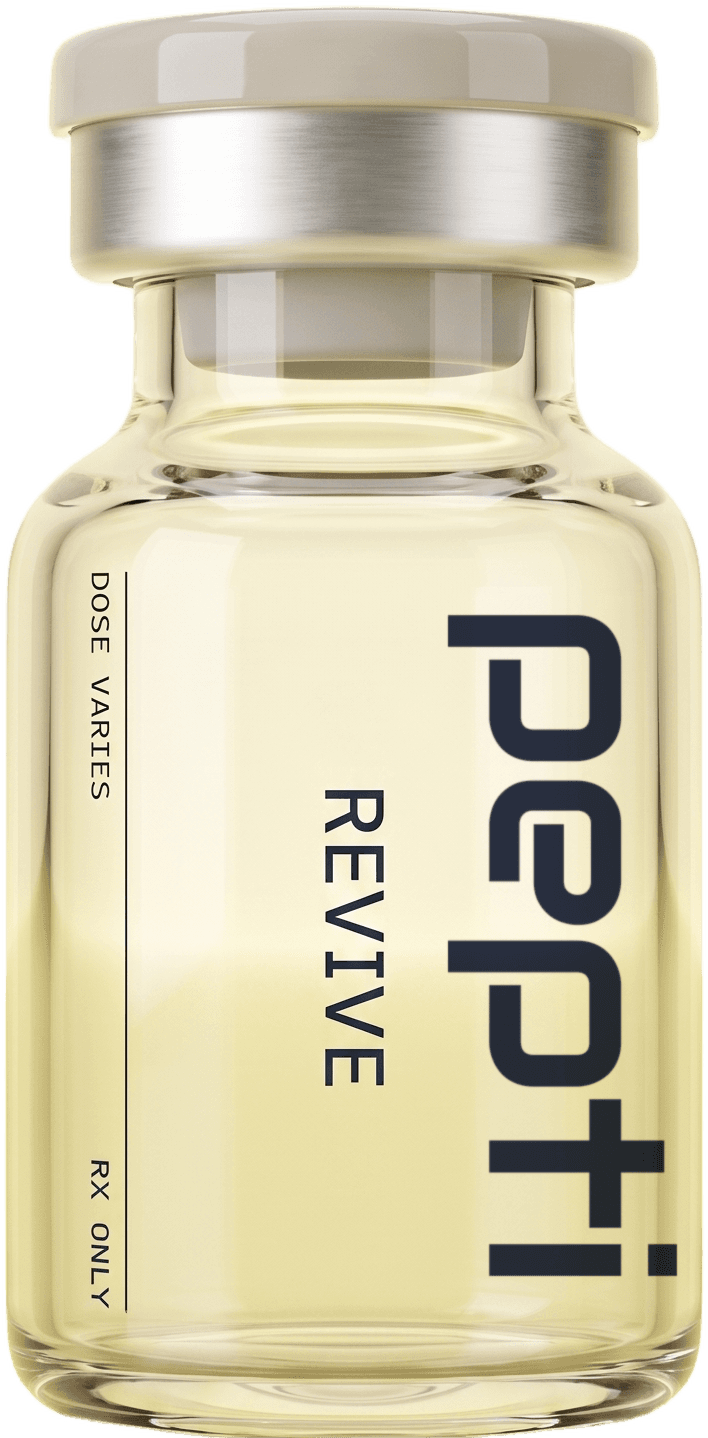
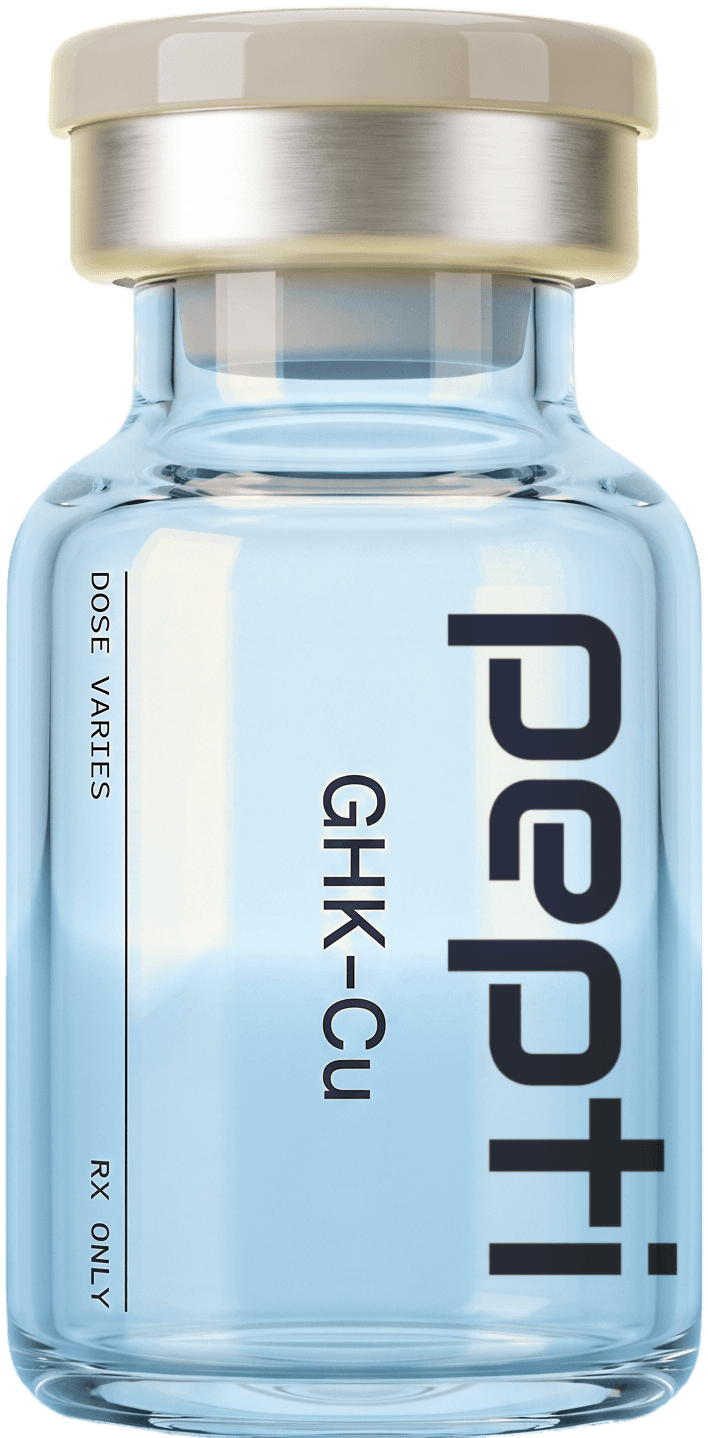
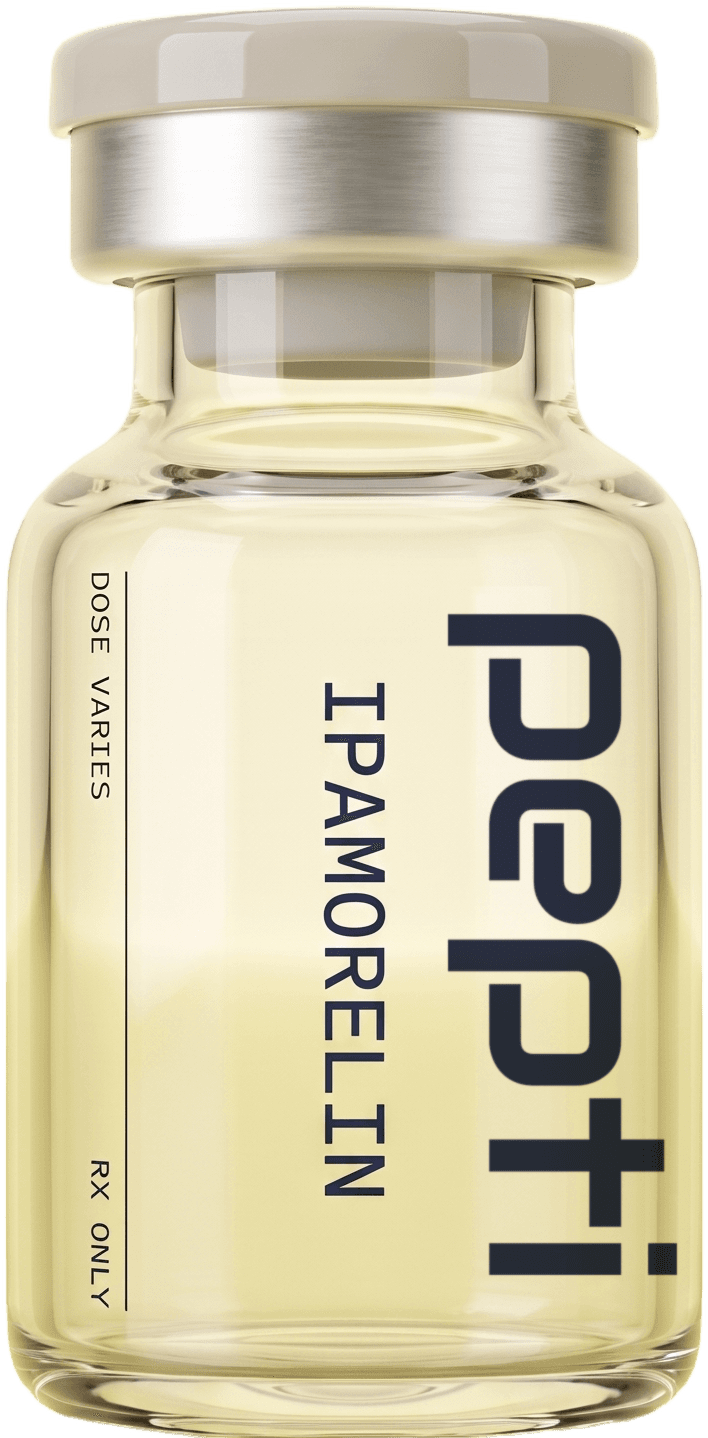
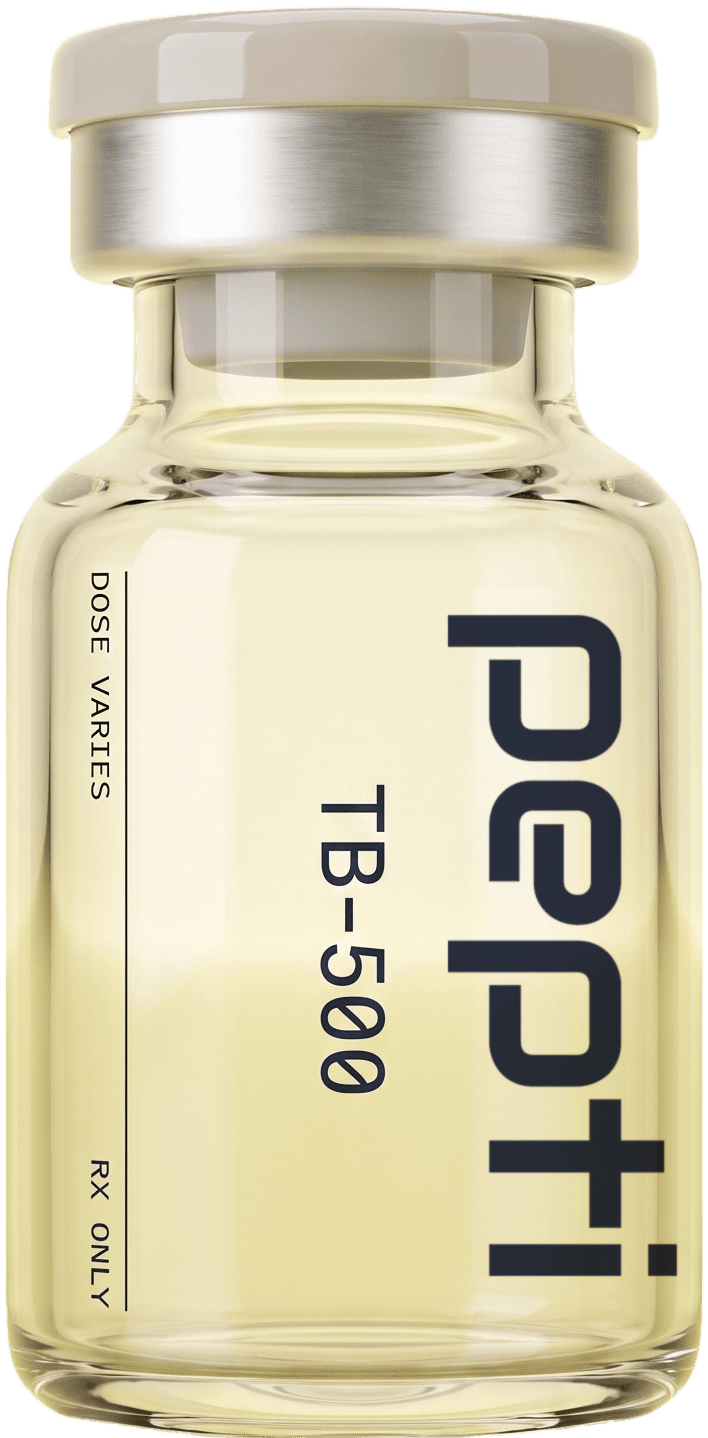
REVIVE is four peptides in one vial, 50 mg GHK-Cu, 6 mg CJC-1295, 12 mg ipamorelin and 2 mg TB-500, and every benefit claimed for it is a benefit described for one of those four. The only benefit shown in humans belongs to the two secretagogues: small studies in healthy adults reported CJC-1295 and ipamorelin raising growth hormone, and CJC-1295 raising IGF-1, with the body's own pulsatile pattern preserved. The repair and skin claims rest on cell and animal research for TB-500 and GHK-Cu, plus small topical human studies of GHK-Cu. Sleep, recovery and body composition, the reasons REVIVE is usually prescribed, have never been measured in a trial of any component. The blend has never been studied as a blend, and compounded medications are not FDA approved.
This page goes benefit by benefit: what each claim is, which component it comes from, what was studied, in what, and how much weight it can bear. It describes research, not results anyone should expect. For the full specification and the FDA history of each component, read what is the REVIVE blend.
REVIVE Blend Benefits
The short answer
| Claimed benefit | Component it comes from | What the evidence is | Strength of evidence |
|---|---|---|---|
| A larger growth hormone pulse | CJC-1295, ipamorelin | Healthy-adult studies (CJC-1295 with DAC, 2006; ipamorelin, 1999) | Human, small; did not measure outcomes |
| Raised IGF-1 | CJC-1295 | 2006 study of the DAC form in healthy adults | Human, small; a different form from the blend |
| Growth hormone without a cortisol rise | Ipamorelin | 1998 animal work in pigs | Animal |
| Soft-tissue and tendon repair | TB-500 | Animal and cell studies, mostly of the full-length parent protein | Preclinical only |
| Wound repair | TB-500, GHK-Cu | Animal; human phase 2 of the full-length protein; human topical GHK-Cu gel (1994) | Limited human data, none for the injected blend |
| Skin quality and collagen | GHK-Cu | Cell and animal; human topical creams on facial skin | Limited human data, topical only |
| Sleep, recovery and body composition | The secretagogues | None; inferred from physiology and prescribing experience | No trial in any component |
| The four together doing more than one alone | The blend | None; never studied as a combination | No evidence either way |
Read the last two rows first. "REVIVE benefits" is shorthand for four separate literatures, and the outcomes people most want from it are the ones nobody has measured.
REVIVE Blend Benefits
What is in REVIVE
| Component | Per vial | Per 0.25 mL dose | What it is |
|---|---|---|---|
| GHK-Cu | 50 mg | 2.5 mg | Copper-binding tripeptide found in human plasma |
| CJC-1295 | 6 mg | 0.3 mg | Modified fragment of growth-hormone-releasing hormone, the form without DAC |
| Ipamorelin | 12 mg | 0.6 mg | Five-amino-acid secretagogue acting at the ghrelin receptor |
| TB-500 | 2 mg | 0.1 mg | Synthetic fragment related to thymosin beta-4, an actin-binding protein |
Two components are repair peptides and two are growth hormone secretagogues. The rationale prescribers give is that recovery has two halves: a local half, in which damaged tissue needs cells to migrate in, new vessels and new collagen, which TB-500 and GHK-Cu are described as acting on; and a systemic half, the growth hormone pulse that accompanies early deep sleep, which CJC-1295 and ipamorelin are dosed at bedtime to add to. That is a rationale, not a finding.
The proportions matter. By mass REVIVE is mostly a GHK-Cu preparation, 50 of the 70 mg in the vial. The secretagogues are in the same two-to-one ratio, and the same amounts per dose, as the standalone CJC-1295 / Ipamorelin vial. TB-500 is the smallest component, 0.1 mg per dose, much less than a standalone TB-500 prescription delivers.
REVIVE Blend Benefits
Benefit 1: A larger overnight growth hormone pulse (CJC-1295 and ipamorelin)
What was studied. A 2006 study in the Journal of Clinical Endocrinology and Metabolism gave healthy adults single and repeated doses of CJC-1295 with DAC and reported dose-dependent rises in growth hormone lasting days. A second 2006 paper in the same journal sampled blood every ten minutes and reported that the pituitary's pulsatile pattern was preserved during stimulation: more hormone per pulse rather than a flat elevation. For ipamorelin, a 1999 study in Pharmaceutical Research modelled the response to intravenous ipamorelin in healthy male volunteers and reported a single episode of growth hormone release peaking at about forty minutes and returning to baseline.
Why two signals. CJC-1295 acts at the GHRH receptor and ipamorelin at the growth hormone secretagogue receptor, the receptor ghrelin uses: two receptors on the same pituitary cells converging on one pulse.
The limits. The CJC-1295 trials used the DAC form, which carries an albumin-binding tag and circulates for about a week. REVIVE contains CJC-1295 without DAC, which lasts roughly half an hour. What carries over is how the pituitary responds to GHRH stimulation, not the duration. The ipamorelin data were intravenous, not subcutaneous. None of these studies measured sleep, recovery, tissue repair or body composition. The difference between the two CJC-1295 forms is in CJC-1295 with DAC vs without DAC.
Evidence type. Human, small, pharmacological.
REVIVE Blend Benefits
Benefit 2: Raised IGF-1 (CJC-1295)
What was studied. The same 2006 healthy-adult study reported IGF-1, the hormone the liver makes in response to growth hormone, rising for more than a week after CJC-1295 with DAC, described as well tolerated.
What it means for REVIVE. IGF-1 is the measurable marker that the secretagogue half is reaching the pituitary. It is a measurement, not a benefit in itself, and the long-lasting rise belongs to the DAC form.
Evidence type. Human, small.
REVIVE Blend Benefits
Benefit 3: Growth hormone without a cortisol rise (ipamorelin)
What was studied. Ipamorelin was described in the European Journal of Endocrinology in 1998 as "the first selective growth hormone secretagogue." In pigs, the older secretagogues GHRP-6 and GHRP-2 released growth hormone but also raised ACTH and cortisol, whereas ipamorelin released growth hormone at comparable potency without raising either.
The limit. That selectivity was shown in animals. It is the reason prescribers choose ipamorelin over older secretagogues, not a human outcome. Ipamorelin benefits covers it in depth.
Evidence type. Animal.
REVIVE Blend Benefits
Benefit 4: Soft-tissue and tendon repair (TB-500)
What the research describes. A 2005 review in Trends in Molecular Medicine describes thymosin beta-4's primary function as binding actin monomers, the protein that gives a cell its shape and lets it move, with cell migration into a wound as the described consequence. A 2012 review in Expert Opinion on Biological Therapy covers described effects on angiogenesis, inflammatory mediators and laminin-5. A July 2026 paper in Joint Diseases and Related Surgery put BPC-157, TB-500 and the combination in one experiment in 32 rats with a repaired Achilles tendon: TB-500 reached statistical significance on load-to-failure and histology.
The limits. Most of the literature concerns the full-length thymosin beta-4 protein. TB-500, the fragment, is assumed to share the actin-binding mechanism; the direct evidence for the fragment itself is much thinner. No study has looked at the 0.1 mg per dose that REVIVE delivers. There are no randomised human trials of TB-500 for injury. For a single soft-tissue injury, the BPC-157 + TB-500 stack or TB-500 alone delivers far more TB-500 per dose. More in TB-500 benefits.
Evidence type. Animal and cell.
REVIVE Blend Benefits
Benefit 5: Wound repair (TB-500 and GHK-Cu)
What the research describes. A 1999 paper in the Journal of Investigative Dermatology reported faster wound closure and increased cell migration with thymosin beta-4 in rats and in cultured human cells. A 1994 study in Wound Repair and Regeneration reported improved closure of diabetic ulcers with a topical GHK-Cu gel.
The human data. Full-length thymosin beta-4 has been given to people: a 2010 study reported intravenous dosing well tolerated in healthy volunteers, and a 2012 paper reported phase 2 results in chronic pressure and venous stasis ulcers. Those used the whole protein, not the TB-500 fragment, and the GHK-Cu study was a gel applied to the wound.
Evidence type. Animal, plus human data for related molecules and routes. None of it is for the injected blend.
REVIVE Blend Benefits
Benefit 6: Skin quality and collagen (GHK-Cu)
What the research describes. A 1988 paper in FEBS Letters reported that GHK-Cu stimulated collagen synthesis in cultured human fibroblasts, and a 1993 Journal of Clinical Investigation paper reported more connective tissue in rat wound chambers treated with it. Reviews in BioMed Research International (2015) and the International Journal of Molecular Sciences (2018) describe increased synthesis of collagen, elastin and glycosaminoglycans, a shift in the balance between the enzymes that break tissue down and their inhibitors, and antioxidant and anti-inflammatory activity. Collagen cross-linking and elastin formation are copper-dependent.
The human data. Small studies of topical GHK-Cu creams on facial skin, reporting changes in firmness, fine lines and elasticity. None used the injectable form.
Evidence type. Cell, animal, and human topical. No study has shown injected GHK-Cu does what the creams were reported to do. See GHK-Cu benefits and GHK-Cu topical vs injection.
REVIVE Blend Benefits
Benefit 7: Sleep, recovery and body composition
These are the uses the secretagogue half is actually prescribed for, and there are no trials of CJC-1295 or ipamorelin, alone or together, measuring any of them. The case is inferred from physiology: the largest natural growth hormone pulse occurs in the first hours of sleep, and growth hormone acts on muscle, bone, connective tissue and fat through IGF-1. That inference is reasonable and is why physicians prescribe secretagogues; it is not the same as a measured outcome. Some prescribers describe patients reporting deeper sleep on bedtime secretagogue dosing; that is a clinical observation, not trial evidence. The one controlled clinical trial of ipamorelin, a 2014 randomised, placebo-controlled phase 2 trial in bowel-resection patients for postoperative ileus, did not meet its endpoints. More is in CJC-1295 / Ipamorelin benefits and peptides for sleep.
REVIVE Blend Benefits
Benefit 8: Four peptides doing more than one
This is the benefit the blend exists to deliver, and it has the least evidence. No study has compared REVIVE with its components, and the one rat study that compared BPC-157, TB-500 and the pair found the combination did not outperform either alone. A blend is a convenience: one injection, one schedule, one refill. It is not a stronger version of its parts.
REVIVE Blend Benefits
What the evidence does not establish
- That REVIVE does anything in people that its components do in cells and animals. The blend has never been tested.
- That a larger overnight growth hormone pulse produces a measurable recovery, sleep or body-composition change in the people typically prescribed it.
- That the short-acting CJC-1295 in the vial behaves like the DAC form in the 2006 trials, beyond the pituitary response.
- That 0.1 mg of TB-500 per dose does anything to a tendon.
- That injected GHK-Cu does for skin what topical GHK-Cu is reported to do.
- An effect size or a human timeline for any benefit above, long-term safety over years, or efficacy for any condition as an FDA-approved treatment. Neither REVIVE nor any component is approved for anything.
Where the components stand with the FDA
None of the four is currently in 503A Category 2. On 29 October 2024 the Pharmacy Compounding Advisory Committee voted 0 in favour, 12 against, with 1 abstention, on adding ipamorelin to the 503A Bulks List, evaluated for growth hormone deficiency and postoperative ileus. On 4 December 2024 it voted against the CJC-1295 family, evaluated for growth hormone deficiency. No final FDA determination has been issued for either. TB-500 and injectable GHK-Cu were among twelve peptides removed from Category 2 on 15 April 2026; on 23 July 2026 the committee voted 8 to 6, with one abstention, to recommend adding TB-500, with the final determination pending, and GHK-Cu is scheduled for the committee before the end of February 2027.
REVIVE Blend Benefits
Side effects, in brief
| What is reported | What it means |
|---|---|
| Injection-site redness, mild soreness, occasional bruising | The most common reports; rotate sites |
| A faint blue-green mark at the site | Copper from GHK-Cu; clears on its own |
| A brief flush, tingling or headache after a dose | Reported with the secretagogues; the 2006 CJC-1295 trials reported mainly transient injection-site reactions and headache |
| Water retention, tingling in the hands, joint aches | Growth hormone effects; message your care team |
| Hunger after a dose | Ipamorelin acts at the ghrelin receptor |
| Higher blood sugar | Growth hormone opposes insulin; raise diabetes at intake |
| Facial or throat swelling, widespread hives, breathing difficulty | Call 911 first, then tell your physician |
Who should not take REVIVE, or should discuss it first: anyone with Wilson's disease or another copper-metabolism disorder; anyone on another GHK-Cu product, which doubles the copper; anyone with diabetes or impaired glucose tolerance; anyone with an active or recent cancer; anyone pregnant or breastfeeding; and tested athletes, because growth hormone secretagogues and GHRH analogues are prohibited in sport. The component detail is in is GHK-Cu safe, is CJC-1295 / Ipamorelin safe and is TB-500 safe.
REVIVE Blend Benefits
How Pepti prescribes REVIVE
| Product | REVIVE Blend |
| Vial | 5 mL: GHK-Cu 10 mg/mL + CJC-1295 1.2 mg/mL + ipamorelin 2.4 mg/mL + TB-500 0.4 mg/mL |
| Typical directions | Inject 0.25 mL (25 units) subcutaneously Monday through Friday nights at bedtime |
| Per dose | 2.5 mg GHK-Cu, 0.3 mg CJC-1295, 0.6 mg ipamorelin, 0.1 mg TB-500 |
| Doses per vial | 20 (5 mL divided by 0.25 mL), about four weeks at five nights a week |
| Price | $279/mo, all-in |
The per-dose figures are arithmetic from the vial's concentrations on a U-100 insulin syringe, where 25 units is 0.25 mL; the full chart is in REVIVE blend dosage, and the side effects in REVIVE blend side effects. The four are in fixed proportion, so every draw delivers the same split. Your physician sets your directions after reviewing your intake, and they are printed on the vial. The price covers medication, physician review, refill management and shipping, with no membership fee. Pepti is cash-pay and does not bill insurance. Vials ship refrigerated with ice packs, ready to use, with sterile syringes and alcohol prep pads, one vial per 28-day fill.
If one goal dominates, a narrower product may be the more targeted prescription:
| If the goal is mainly | The narrower option | Price |
|---|---|---|
| The growth hormone pulse | CJC-1295 / Ipamorelin, the same two secretagogues at the same amounts | $239/mo |
| A single soft-tissue injury | BPC-157 + TB-500 | $259/mo |
| Repair without a growth hormone component | GLOW or KLOW | $259/mo |
| Skin | GHK-Cu, or the RADIANCE blend with tesamorelin | $239/mo, $249/mo |
REVIVE Blend Benefits
Where to get REVIVE prescribed
REVIVE cannot be bought legitimately without a prescription. Sites selling it "for research use only" are not accountable for identity, purity, sterility or concentration. The prescription route:
- Complete a free online intake covering your history, medications and supplements, blood sugar, cancer history and what you want help with.
- A physician licensed in your state reviews it, usually within 24 hours.
- If it is appropriate, a PCAB-accredited, FDA-registered US 503A compounding pharmacy prepares it to that prescription. Lot test results are published at /quality/lab-results.
- It ships refrigerated with your directions printed on the vial.
- Your physician stays reachable for questions and side effects.
REVIVE is supplied as a vial and syringe only. Bloodwork is not required for any Pepti treatment. If your physician wants labs for your care, they'll ask through your account.
References
What this is based on.
References
- Goldstein AL, Hannappel E, Kleinman HK. Thymosin beta4: actin-sequestering protein moonlights to repair injured tissues · Trends Mol Med (2005) · PMID 16099219
- Pickart L, Vasquez-Soltero JM, Margolina A. GHK Peptide as a Natural Modulator of Multiple Cellular Pathways in Skin Regeneration · Biomed Res Int (2015) · PMID 26236730
- Teichman SL, Neale A, Lawrence B et al.. Prolonged stimulation of growth hormone (GH) and insulin-like growth factor I secretion by CJC-1295, a long-acting analog of GH-releasing hormone, in healthy adults · J Clin Endocrinol Metab (2006) · PMID 16352683
Citations are provided for educational purposes. They do not constitute medical advice. Always discuss any peptide protocol with your prescribing physician.
Common questions
REVIVE Blend Benefits, answered.
The benefits claimed are those described for its four components. The only one shown in humans is that CJC-1295 and ipamorelin raise growth hormone, with CJC-1295 raising IGF-1, in small studies of healthy adults. The repair and skin claims rest on cell and animal research for TB-500 and GHK-Cu, plus topical GHK-Cu studies. The blend itself has never been studied.
That has not been measured. No trial of any component measured recovery, sleep or body composition. The case is inferred from growth hormone physiology and animal repair research.
No trial has measured sleep for CJC-1295 or ipamorelin. Some prescribers describe patients reporting deeper sleep on bedtime dosing, which is a clinical observation, not evidence.
The CJC-1295 and ipamorelin components prompt your pituitary to release your own growth hormone, which small human studies have measured. It contains no growth hormone itself.
No study has shown that. TB-500's repair research is mostly animal work on the full-length parent protein, and REVIVE contains 0.1 mg of TB-500 per dose, which has not been studied. A structural injury needs its own assessment.
There is no evidence that it is. REVIVE adds GHK-Cu and a small amount of TB-500 to the same secretagogue dose. For the growth hormone pulse alone, the two-peptide product is the more targeted prescription.
Both contain the same 2.5 mg GHK-Cu per dose. REVIVE pairs it with CJC-1295, ipamorelin and TB-500, dosed at bedtime; RADIANCE pairs it with tesamorelin, whose human trials are for visceral fat.
No. There are no randomised controlled trials of REVIVE or of any four-peptide combination of its components. The evidence is per component.
No. Compounded medications are not FDA approved, and none of REVIVE's components is an approved drug.
There is no human timeline for the blend or for the outcomes it is prescribed for. The component studies measured hormone levels over hours to days, or tissue in animals.
At Pepti, $279 a month, all-in, covering medication, physician review, refill management and shipping. The free assessment goes to a physician licensed in your state. A consultation does not guarantee a prescription.
Next step
See what a physician recommends for you.
A licensed physician in your state reviews your intake and decides what is appropriate. A consultation does not guarantee a prescription.