Anti-Aging · Reference
Ipamorelin vs Hexarelin: Selectivity, Potency, Desensitisation, Dosing and Cost
This page explains each on its own terms, puts them side by side, covers what the research does and does not show, where each stands with the FDA, how each is dosed, what each costs at Pepti, and who tends to suit which.
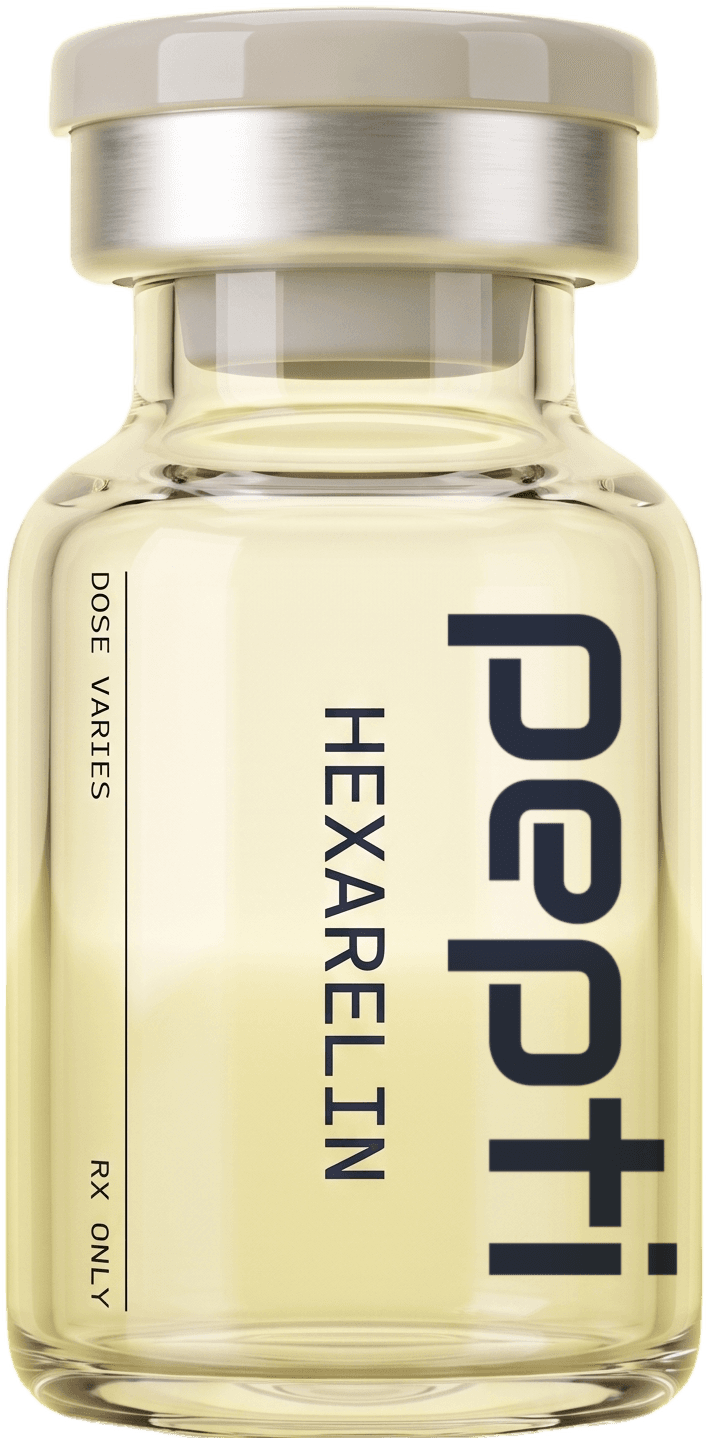
Treatments mentioned
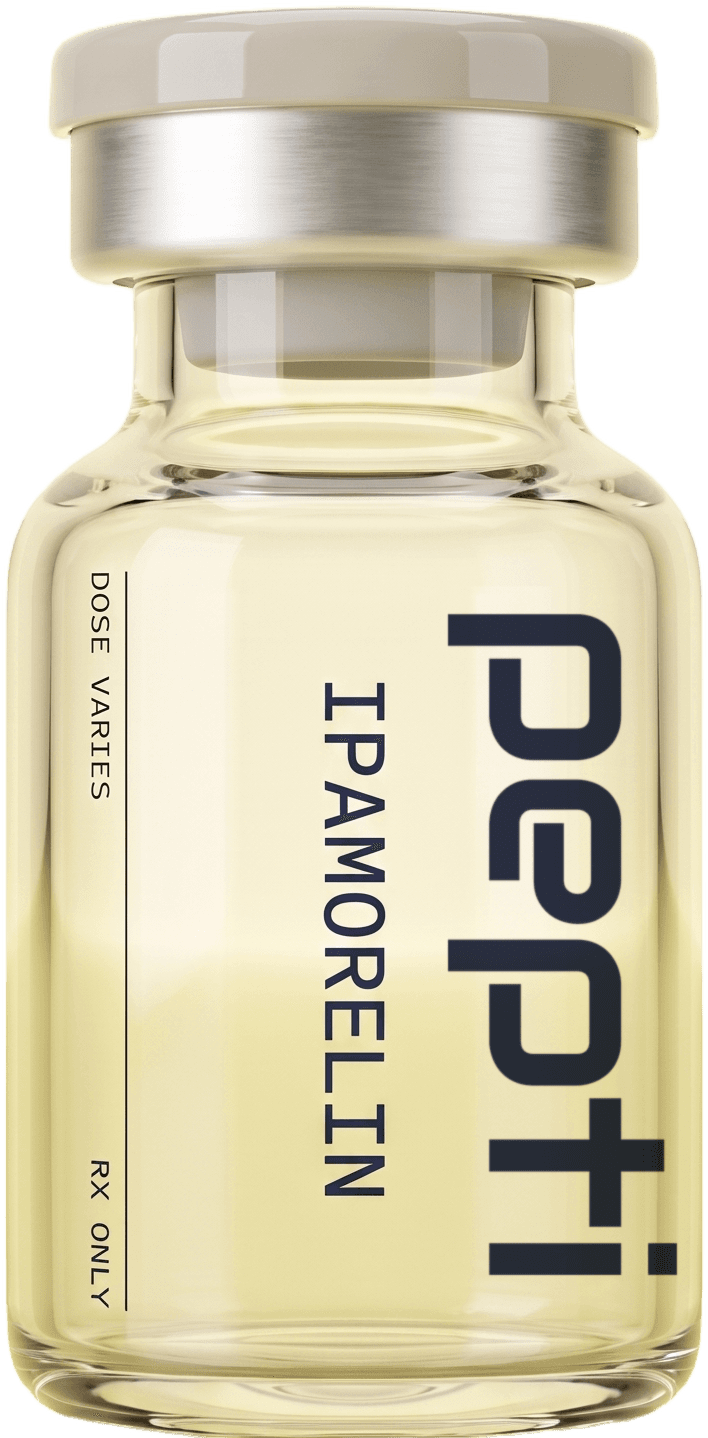
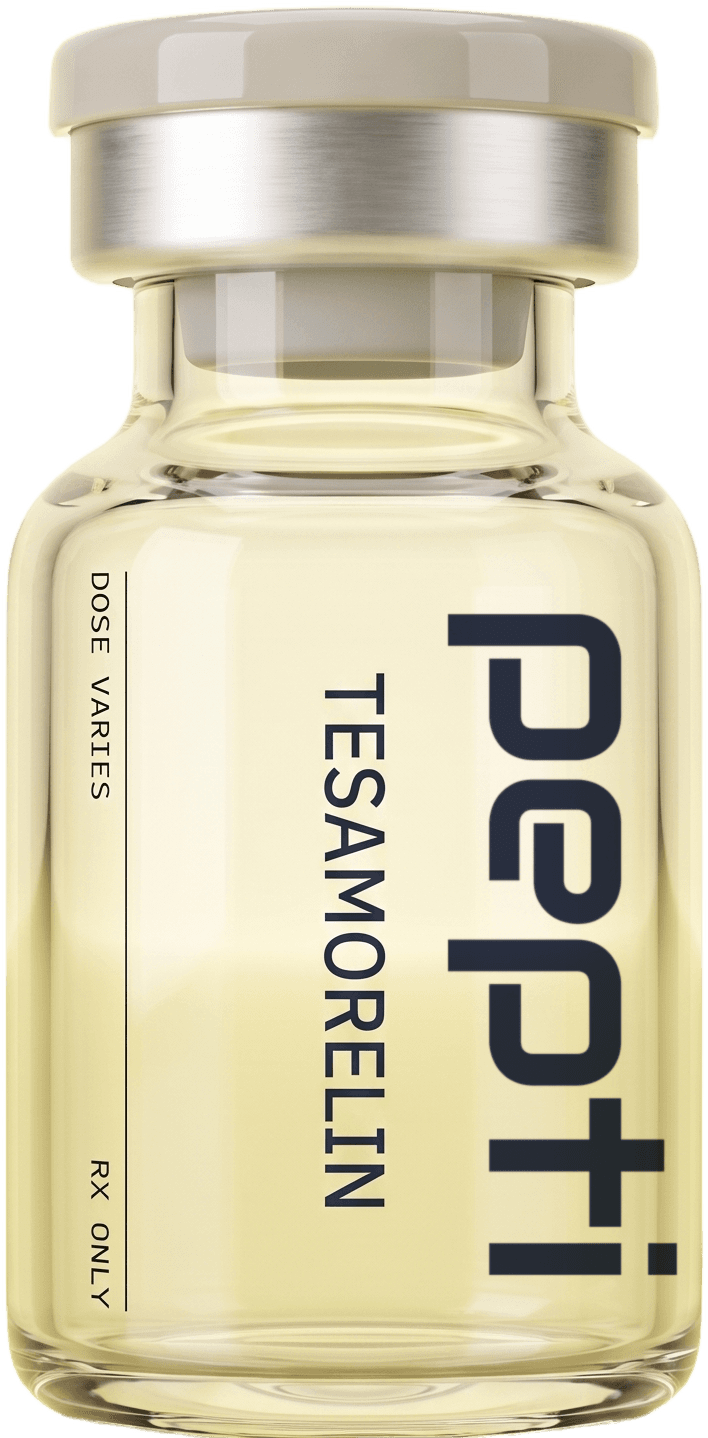
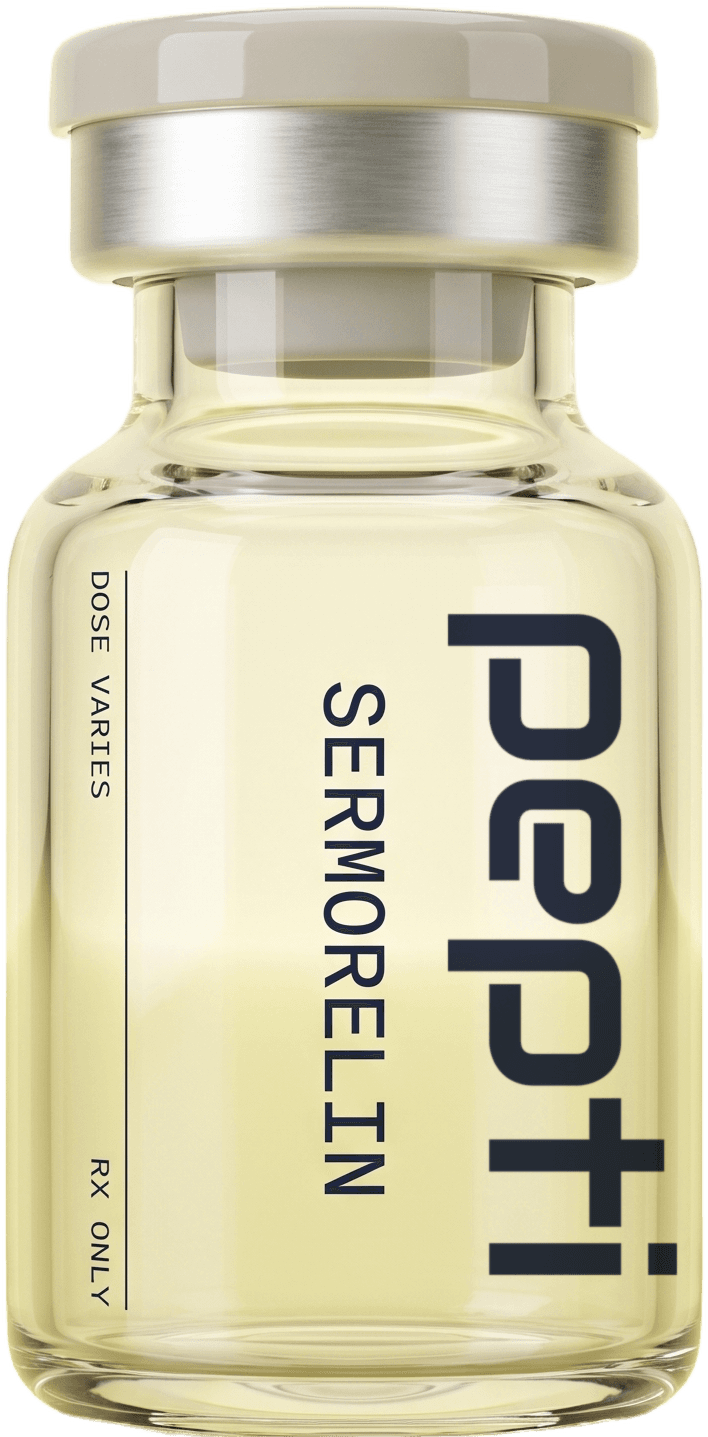
Ipamorelin and hexarelin both act at the same receptor, the ghrelin receptor on the pituitary, but hexarelin is the older, more potent and less selective compound and ipamorelin was built to keep the growth hormone pulse and drop the rest. Hexarelin, a six-amino-acid peptide from the early 1990s, releases a large growth hormone pulse along with a smaller rise in cortisol and prolactin, and its response fades with continuous dosing. Ipamorelin, a five-amino-acid peptide from the late 1990s, released growth hormone in animal work without raising cortisol or prolactin. Hexarelin actually has the larger human pharmacology record; neither has human trials for the uses they are prescribed for. Both are prescription-only, compounded by a licensed US pharmacy, and neither is FDA approved.
This page explains each on its own terms, puts them side by side, covers what the research does and does not show, where each stands with the FDA, how each is dosed, what each costs at Pepti, and who tends to suit which.
Ipamorelin vs Hexarelin
The short answer
| If your main goal is | The usual prescription | What is in it | Price |
|---|---|---|---|
| A longer course with the cleanest hormonal profile | Ipamorelin | 5 mg ipamorelin in a 5 mL vial (1 mg/mL) | $239/mo |
| The strongest single-agent ghrelin-receptor pulse, with breaks | Hexarelin | 12.5 mg hexarelin in a 5 mL vial (2.5 mg/mL) | $209/mo |
| Ipamorelin plus a GHRH analogue in one vial | CJC-1295 / Ipamorelin | 6 mg CJC-1295 and 12 mg ipamorelin | $239/mo |
| Ipamorelin plus sermorelin | Ipamorelin + Sermorelin | 10 mg each in a 5 mL vial | $219/mo |
| Ipamorelin plus tesamorelin | Tesamorelin + Ipamorelin | 10 mg tesamorelin and 5 mg ipamorelin | $259/mo |
Every figure is an all-in monthly price covering the medication, physician review, refill management and shipping. There is no separate membership fee. Current pricing always lives on each product page; the table is a guide to which product fits which goal.
Ipamorelin vs Hexarelin
Ipamorelin on its own terms
What it is
Ipamorelin is a pentapeptide, sequence Aib-His-D-2-Nal-D-Phe-Lys-NH2, entirely synthetic, that imitates ghrelin, the stomach hormone that signals hunger and tells the pituitary to release growth hormone. It contains no growth hormone. The full reference is at what is ipamorelin.
Why "selective" is in its description
Ipamorelin was developed at Novo Nordisk from a chemistry programme built on an earlier peptide, GHRP-1. The founding 1998 paper in the European Journal of Endocrinology called it "the first selective growth hormone secretagogue." In pigs, the older peptides GHRP-6 and GHRP-2 released growth hormone along with ACTH and cortisol, while ipamorelin released growth hormone at comparable potency without raising either above what GHRH itself produced, even at more than 200 times the half-maximal dose. None of the compounds affected prolactin, FSH, LH or TSH in that work. The human volunteer study measured growth hormone only, so in people the selectivity is inferred rather than measured.
What human data exists for ipamorelin
Study Who What was reported 1999, Pharmaceutical Research Healthy male volunteers, intravenous, five dose levels One sharp growth hormone pulse peaking at about 40 minutes; two-hour half-life 2014, International Journal of Colorectal Disease 114 adults after bowel surgery, intravenous, randomised Not statistically different from placebo; development stopped The longest human exposure on record is seven days. There are no human data for the subcutaneous route.
Ipamorelin vs Hexarelin
Hexarelin on its own terms
What it is
Hexarelin is a hexapeptide, sequence His-D-2-methyl-Trp-Ala-Trp-D-Phe-Lys-NH2, designed in the early 1990s as a more stable and more potent analogue of GHRP-6, the first growth-hormone-releasing peptide. Papers of the period call it a "super-analogue." The full reference is at what is hexarelin.
A large body of 1990s human pharmacology
The founding human study, in the Journal of Clinical Endocrinology and Metabolism in 1994, gave it to twelve healthy young volunteers by four routes. A single intravenous dose released about twice as much growth hormone as the same dose of GHRH, and the subcutaneous route delivered 77 percent of the intravenous response. Through the rest of the 1990s, groups including the University of Turin used it in hundreds of adults and children, mostly to study the growth hormone axis and as a diagnostic test. That is why hexarelin has more human pharmacology than almost any other compounded peptide, and also why almost none of it concerns how it is prescribed today.
Not selective
A 1997 study in Peptides reported that hexarelin and GHRP-2 both raised prolactin, ACTH and cortisol in young adults, with the ACTH and cortisol response similar in size to that from corticotropin-releasing hormone. A 2002 study in the European Journal of Endocrinology, giving six young men two or three subcutaneous injections a day, found 24-hour growth hormone secretion rose while 24-hour prolactin, ACTH and cortisol did not change. So each dose produces a transient rise in those hormones, without changing the daily total in that study.
Desensitisation
The most important hexarelin paper for anyone considering a course is a 1998 study in the Journal of Clinical Endocrinology and Metabolism. Healthy older volunteers took twice-daily subcutaneous hexarelin for sixteen weeks. The growth hormone response to a test dose fell by about a third by week one and by nearly half by week sixteen, then returned to baseline four weeks after stopping. Over the same sixteen weeks, IGF-1, total body fat, lean body mass and bone mineral density did not change significantly. Shorter intermittent schedules in older adults, published in 1996, did not show desensitisation.
Heart research
Hexarelin also binds CD36, a receptor on heart muscle cells. Three small Turin studies of single intravenous doses reported a short-lived rise in left ventricular ejection fraction independent of growth hormone, and rodent work describes cardiac protection. None dosed anyone more than once, none used the subcutaneous route, and hexarelin is not a heart treatment.
Ipamorelin vs Hexarelin
Head to head
| Ipamorelin | Hexarelin | |
|---|---|---|
| Length | 5 amino acids | 6 amino acids |
| Developed | Late 1990s, Novo Nordisk | Early 1990s, as a GHRP-6 analogue |
| Receptor | GHS-R1a (ghrelin receptor) | GHS-R1a, plus CD36 on heart tissue |
| Growth hormone pulse | Comparable potency to older GHRPs in animal work | Larger than GHRH in humans |
| Cortisol, ACTH, prolactin | Not raised in animal work | Transiently raised with each dose in humans |
| Desensitisation | Rat work reported only a marginally reduced response after 15 days | Response fell by nearly half over 16 weeks of twice-daily use; reversed after stopping |
| Human data | One volunteer study, one negative surgical trial | Hundreds of single-dose studies, a 16-week study, two small paediatric courses, three cardiac studies |
| Trials for sleep, recovery, body composition | None | None; the 16-week study found no body composition change |
| Typical directions at Pepti | 0.25 mL (25 units) Monday to Friday at bedtime | 0.25 mL (25 units) Monday to Friday at bedtime |
| Amount per dose | 0.25 mg (250 mcg) | 0.625 mg (625 mcg) |
| Price at Pepti | $239 a month | $209 a month |
The real difference is selectivity and fade
Ipamorelin and hexarelin have not been compared directly in people, so "which is stronger" has no trial answer. In the human literature hexarelin is grouped with the more potent secretagogues and releases more growth hormone than GHRH. The trade-offs are the two things ipamorelin was designed around: hexarelin adds a transient cortisol and prolactin pulse, and its response fades under continuous dosing. That is why prescribers describe ipamorelin as the default for a longer course and hexarelin as a choice when a stronger pulse is the priority and the course is structured with breaks.
Ipamorelin vs Hexarelin
Who suits which
Ipamorelin
Ipamorelin is the usual choice for a course expected to run for weeks or months, and for people with conditions sensitive to cortisol or prolactin. It also pairs with GHRH analogues in several Pepti vials. More detail: ipamorelin benefits and ipamorelin dosage.
Hexarelin
Hexarelin suits a physician and patient who want the strongest single-agent ghrelin-receptor pulse and are prepared to schedule around desensitisation. The five-nights-on, two-off schedule is the practical answer to the 1998 data, since intermittent exposure kept the receptor more responsive.
Can you take ipamorelin and hexarelin together?
They act at the same receptor, and a 2001 study found that hexarelin and ghrelin did not add to each other, which is what two ligands for the same receptor are expected to do. Combining them is not a usual prescription. Pairing either with a GHRH analogue is the combination with a pharmacological rationale. See what is CJC-1295 / Ipamorelin and sermorelin vs tesamorelin vs ipamorelin.
Ipamorelin vs Hexarelin
When neither is the right first step
| Situation | What makes more sense |
|---|---|
| Weight is the main goal | Semaglutide or tirzepatide; the one hexarelin study that measured body fat found no change |
| You want a molecule with controlled human trials | Sermorelin or tesamorelin, which have been through randomised trials |
| Sleep is the only goal | DSIP or the SERENITY Blend |
| A specific soft-tissue injury | BPC-157 or TB-500 |
| Possible growth hormone deficiency | An endocrinologist; in children with organic hypopituitarism, hexarelin released no growth hormone because there was nothing to stimulate |
Ipamorelin vs Hexarelin
Where each stands with the FDA
| Ipamorelin | Hexarelin | |
|---|---|---|
| 2023 | Ipamorelin acetate placed in Category 2 | Not on any category list |
| Since | Removed from Category 2 on 27 September 2024 | Never categorised |
| Advisory committee | 29 October 2024: 0 for, 12 against, 1 abstention, for growth hormone deficiency and postoperative ileus | Never reviewed |
| Current list (14 May 2026) | In no category | In no category |
| Final FDA determination | Not issued | None made |
Hexarelin's older relatives GHRP-2 and GHRP-6 sit in Category 3, which does not apply to hexarelin itself. A committee vote is a recommendation, not a ban. Both remain legal to prescribe and dispense as compounded medications, and compounded medications are not FDA approved. Are peptides FDA approved explains the difference.
Ipamorelin vs Hexarelin
Dosing, side by side
Both are injected under the skin (subcutaneously) into the abdomen or thigh, rotating sites, Monday through Friday nights at bedtime. Bedtime lands the pulse on top of the natural nighttime release rather than after a meal. The same volume carries different amounts because the vials differ in strength. This is arithmetic only, on a U-100 insulin syringe where 1 unit is 0.01 mL:
| Units | mL | Ipamorelin (1 mg/mL) | Hexarelin (2.5 mg/mL) |
|---|---|---|---|
| 10 | 0.10 | 0.10 mg | 0.25 mg |
| 20 | 0.20 | 0.20 mg | 0.50 mg |
| 25 (typical printed directions for both) | 0.25 | 0.25 mg (250 mcg) | 0.625 mg (625 mcg) |
At 0.25 mL a dose, each 5 mL vial holds 20 doses, about four weeks at five nights a week, which is why refills run every 28 days, one vial per fill. Your directions are printed on the vial, and your physician sets them after reviewing your intake. Both ship refrigerated with ice packs, sterile syringes and alcohol prep pads.
Bloodwork is not required for any Pepti treatment. If your physician wants labs for your care, they'll ask through your account.
Ipamorelin vs Hexarelin
Side effects
Ipamorelin. Reported as well tolerated in the volunteer and surgical studies. Clinically: headache, flushing or warmth, hunger, light-headedness, and injection-site redness or soreness, all short-lived. More: ipamorelin side effects.
Hexarelin. Single doses were consistently reported as well tolerated across the 1990s studies, and the sixteen-week study reported no significant adverse effects. Clinically: warmth or flushing, hunger, a transient headache, light-headedness and injection-site reactions. Each dose also raises cortisol and prolactin for a short time, and a single dose produced a short-lived rise in the heart's contractility in every human study that looked, so a cardiac diagnosis should be raised at intake.
For both, the class concerns of raising growth hormone and IGF-1 apply: glucose intolerance, fluid retention and a theoretical concern about existing tumours. Stop and contact your care team for any reaction that is severe or spreading. Difficulty breathing, chest pain or swelling of the face or throat needs emergency care: call 911.
Ipamorelin vs Hexarelin
Who should not take either, or should discuss it first
| Situation | Why |
|---|---|
| Personal history of cancer | IGF-1 supports tissue growth |
| Diabetes or impaired glucose tolerance | Growth hormone opposes insulin |
| A condition sensitive to cortisol or prolactin | Especially for hexarelin, which raises both transiently |
| A cardiac diagnosis | Especially for hexarelin, because of its direct effect on heart contractility |
| Pregnancy or breastfeeding | Not used; safety data is absent |
| Tested athletes | Growth hormone secretagogues are prohibited at all times under the World Anti-Doping Code |
Ipamorelin vs Hexarelin
What the evidence shows, honestly
Hexarelin has the deeper human pharmacology: its growth hormone release, its cortisol and prolactin effect and its desensitisation are all well documented in people. That record also contains the most inconvenient finding for anyone using it for body composition: sixteen weeks of twice-daily subcutaneous dosing in older adults changed neither body fat, lean mass nor bone density. Ipamorelin's selectivity is clear in animals but inferred in humans, and its only patient trial was negative. Neither has a human trial for sleep, recovery or body composition. The accurate description is "known to raise growth hormone; prescribed on mechanism and clinical experience."
Ipamorelin vs Hexarelin
Where to get ipamorelin or hexarelin prescribed
Neither can be bought legitimately without a prescription. Sites selling them "for research use only" are not accountable for what is in the vial: identity, purity, sterility and concentration are untested. The prescription route:
- Complete a free online intake covering your history, medications and what you want help with.
- A physician licensed in your state reviews it, usually within 24 hours.
- If it is appropriate, a PCAB-accredited, FDA-registered US 503A pharmacy compounds it to that prescription. Lot test results are published at /quality/lab-results.
- It ships refrigerated with your directions printed on the vial.
- Your care team stays reachable for questions and side effects.
Pepti is cash-pay and does not bill insurance. Step-by-step pages: how to get ipamorelin prescribed online and how to get hexarelin prescribed online.
References
What this is based on.
References
- Ghigo E, Arvat E, Gianotti L et al.. Growth hormone-releasing activity of hexarelin, a new synthetic hexapeptide, after intravenous, subcutaneous, intranasal, and oral administration in man · J Clin Endocrinol Metab (1994) · PMID 8126144
- Rahim A, O'Neill PA, Shalet SM. Growth hormone status during long-term hexarelin therapy · J Clin Endocrinol Metab (1998) · PMID 9589671
- Rahim A, Shalet SM. Does desensitization to hexarelin occur? · Growth Horm IGF Res (1998) · PMID 10990150
- Ghigo E, Arvat E, Gianotti L et al.. Short-term administration of intranasal or oral Hexarelin, a synthetic hexapeptide, does not desensitize the growth hormone responsiveness in human aging · Eur J Endocrinol (1996) · PMID 8921821
- Klinger B, Silbergeld A, Deghenghi R et al.. Desensitization from long-term intranasal treatment with hexarelin does not interfere with the biological effects of this growth hormone-releasing peptide in short children · Eur J Endocrinol (1996) · PMID 8766941
- Laron Z, Frenkel J, Deghenghi R et al.. Intranasal administration of the GHRP hexarelin accelerates growth in short children · Clin Endocrinol (Oxf) (1995) · PMID 8548949
- Loche S, Cambiaso P, Carta D et al.. The growth hormone-releasing activity of hexarelin, a new synthetic hexapeptide, in short normal and obese children and in hypopituitary subjects · J Clin Endocrinol Metab (1995) · PMID 7852535
- Massoud AF, Hindmarsh PC, Matthews DR, Brook CG. The effect of repeated administration of hexarelin, a growth hormone releasing peptide, and growth hormone releasing hormone on growth hormone responsivity · Clin Endocrinol (Oxf) (1996) · PMID 8762732
- Maccario M, Veldhuis JD, Broglio F et al.. Impact of two or three daily subcutaneous injections of hexarelin, a synthetic growth hormone (GH) secretagogue, on 24-h GH, prolactin, adrenocorticotropin and cortisol secretion in humans · Eur J Endocrinol (2002) · PMID 11888836
- Arvat E, di Vito L, Maccagno B et al.. Effects of GHRP-2 and hexarelin, two synthetic GH-releasing peptides, on GH, prolactin, ACTH and cortisol levels in man. Comparison with the effects of GHRH, TRH and hCRH · Peptides (1997) · PMID 9285939
- Ghigo E, Arvat E, Ramunni J et al.. Adrenocorticotropin- and cortisol-releasing effect of hexarelin, a synthetic growth hormone-releasing peptide, in normal subjects and patients with Cushing's syndrome · J Clin Endocrinol Metab (1997) · PMID 9253314
- Arvat E, Ramunni J, Bellone J et al.. The GH, prolactin, ACTH and cortisol responses to Hexarelin, a synthetic hexapeptide, undergo different age-related variations · Eur J Endocrinol (1997) · PMID 9437229
Citations are provided for educational purposes. They do not constitute medical advice. Always discuss any peptide protocol with your prescribing physician.
Common questions
Ipamorelin vs Hexarelin, answered.
In the human literature hexarelin releases more growth hormone than GHRH and is grouped with the more potent secretagogues. It has not been compared with ipamorelin directly in people. The trade-off is that hexarelin also raises cortisol and prolactin and fades with continuous use.
Hexarelin does, transiently, with each dose; human studies from 1997 onward report it. Ipamorelin did not raise cortisol or ACTH above GHRH levels in the founding animal study, and it has not been measured for this in people at compounded doses.
Partly and reversibly. In a sixteen-week study of twice-daily subcutaneous hexarelin, the growth hormone response fell by nearly half and returned to baseline four weeks after stopping. Shorter intermittent schedules did not show the same fade, which is the reason for weekends off.
Prescribers describe ipamorelin as the default for longer courses because of its cleaner hormonal profile in animal work and the absence of a documented human desensitisation problem. No trial has tested either over months for the uses they are prescribed for.
It is not a usual combination. They act at the same receptor, and two ligands for one receptor are not expected to add to each other. Pairing a ghrelin-receptor peptide with a GHRH analogue is the combination with a pharmacological rationale.
At Pepti, hexarelin is $209 a month and ipamorelin is $239 a month, all-in, including the medication, physician review, refill management and shipping. There is no membership fee and no insurance billing.
Pepti's typical printed directions for both are 0.25 mL (25 units) under the skin Monday through Friday nights at bedtime. Because the vials differ in strength, that is 0.25 mg of ipamorelin or 0.625 mg of hexarelin. Your own directions are printed on the vial.
Single intravenous doses raised the heart's ejection fraction for about an hour in small human studies, and rodent work describes cardiac protection. No study has looked at ongoing subcutaneous hexarelin in people with heart disease, and it is not a heart treatment.
No. Ipamorelin left Category 2 in September 2024 and was voted against by the advisory committee for two clinical uses in October 2024, with no final rule. Hexarelin has never been placed in any category or reviewed. Both remain legal to prescribe.
No. Bloodwork is not required for any Pepti treatment. If your physician wants labs for your care, they'll ask through your account. The free assessment goes to a physician licensed in your state. A consultation does not guarantee a prescription.
Next step
See what a physician recommends for you.
A licensed physician in your state reviews your intake and decides what is appropriate. A consultation does not guarantee a prescription.