Recovery · Reference
How Long Does BPC-157 Take to Work? What the Studies Measured, and When
This page sets out what each study measured and how long it ran, why rat timelines do not convert into human ones, and how to judge BPC-157 honestly on the 28-day vial it is supplied in. For the molecule itself, see what is BPC-157; for every claimed benefit in turn, see BPC-157 benefits.
Treatments mentioned
No study has measured how long injectable BPC-157 takes to work in people, because no human trial of the injection has been run. The research that exists ran on its own clocks: rat tendon and ligament studies that followed healing for up to ninety days, a two-week enema trial in 53 people with ulcerative colitis that was only published as a 2005 conference abstract, and a two-day intravenous pilot in two people. None of those durations is a human timeline for a subcutaneous injection, so any source quoting a number of days for BPC-157 is quoting opinion, not a measurement.
This page sets out what each study measured and how long it ran, why rat timelines do not convert into human ones, and how to judge BPC-157 honestly on the 28-day vial it is supplied in. For the molecule itself, see what is BPC-157; for every claimed benefit in turn, see BPC-157 benefits.
How Long Does BPC-157 Take to Work? What the Studies Measured, and When
The short answer
| Study | Who or what | How long it ran | What it measured |
|---|---|---|---|
| Journal of Orthopaedic Research, 2003 | Rats with a cut Achilles tendon | Healing followed in the animal | Tendon healing |
| Journal of Orthopaedic Research, 2006 | Rats with the Achilles detached from bone | Healing followed in the animal | Reattachment and functional recovery |
| Journal of Orthopaedic Research, 2010 | Rats with a cut knee ligament (MCL) | Ninety days | Ligament healing, by injection, drinking water or cream |
| Joint Diseases and Related Surgery, 2026 | 32 rats with a repaired Achilles tendon | Four weeks of daily treatment | Load to failure and tissue scores |
| Regulatory Toxicology and Pharmacology, 2020 | Rats and dogs | Single doses and 28-day studies | Toxicity, not benefit |
| 2005 meeting abstract | 53 people with mild to moderate ulcerative colitis | Two weeks, daily enema | Disease activity; inconclusive |
| 2025 pilot | 2 people | Two days, intravenous | Adverse events |
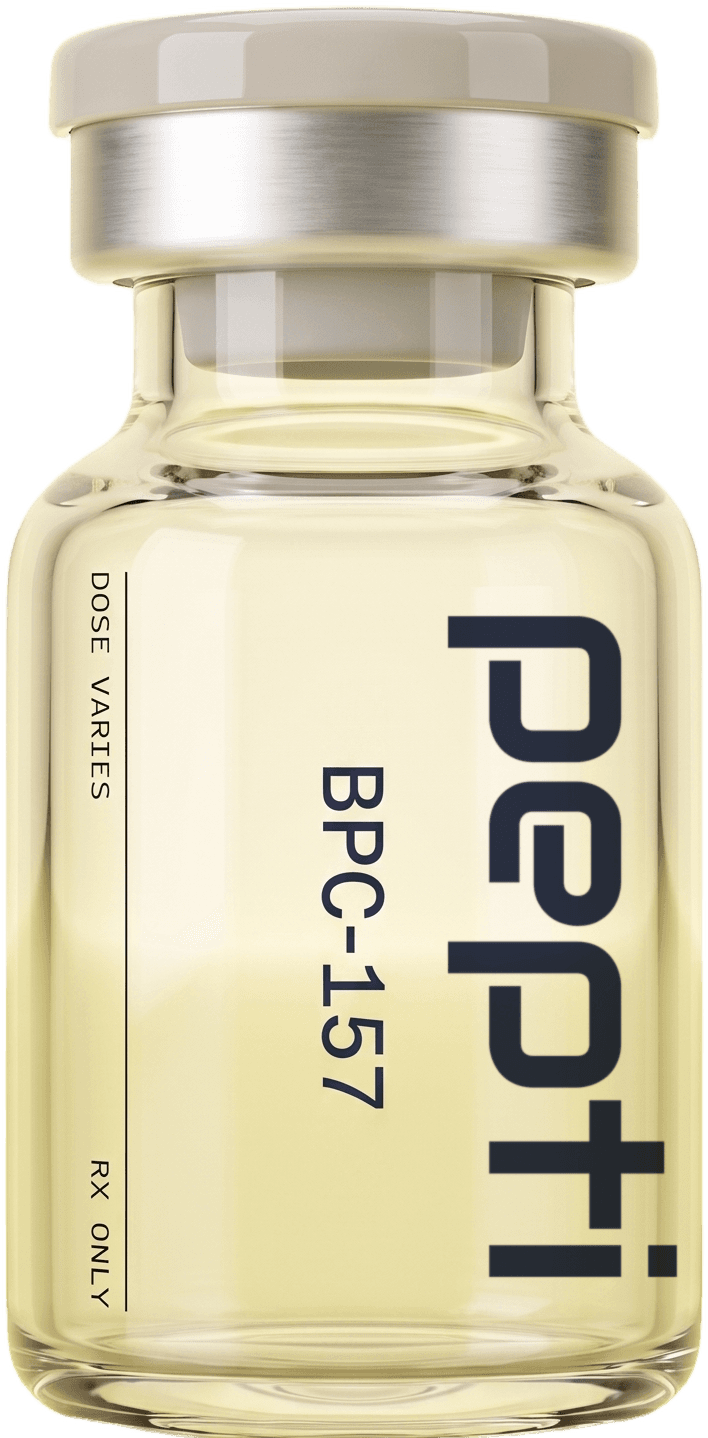
Not one of these used the under-the-skin injection that is actually prescribed, and the FDA's 2026 review found no human data on how much of an injected dose reaches the blood. Pepti supplies BPC-157 as a 5 mL vial at 1 mg/mL for $209/mo, all-in.
How Long Does BPC-157 Take to Work? What the Studies Measured, and When
Why there is no honest number of days
Three gaps stand between the research and the question.
The species gap. The tendon and ligament work is in rats. Rat tissue heals on a rat schedule, and the general how long do peptides take to work guide puts it plainly: reading a two-week rodent result as a two-week human result is the commonest mistake made with this literature.
The route gap. The only randomised human study gave BPC-157 by enema, directly onto the lining of the colon. The other human studies used injection into the knee joint, into the bladder wall, or into a vein. A subcutaneous dose in the abdomen or thigh has never been timed in anyone.
The endpoint gap. The rat studies measured things like tensile strength and collagen under a microscope at the end of a fixed period. That tells you the tissue was different at day ninety, not on which day a change began, and not when a person would feel anything.
Put together, the only honest answer is that a timeline has not been measured. That is different from saying nothing happens; it means nobody can tell you when.
How Long Does BPC-157 Take to Work? What the Studies Measured, and When
What the rat studies measured, and for how long
Tendon and ligament
The 2003, 2006 and 2010 papers in the Journal of Orthopaedic Research are the core of the tendon literature. The 2010 paper is the most specific about time: the medial collateral ligament of the rat knee was cut, and healing was followed over ninety days whether BPC-157 was injected, given in drinking water or applied as a cream. These studies measured things a rat cannot fake, such as time to weight-bearing, tensile strength and collagen organisation.
The 2026 paper in Joint Diseases and Related Surgery was the first to test BPC-157 and TB-500 by name in the same experiment: 32 rats with a repaired Achilles tendon, treated daily for four weeks. Load to failure was higher in both peptide groups than in controls, reaching statistical significance for TB-500; BPC-157 alone showed numerically better tissue scores that did not reach significance, and the combination did no better than either alone. The authors call it exploratory.
The gut
The rodent gut literature, summarised in a 2011 review in Current Pharmaceutical Design, describes protection of the stomach lining against NSAIDs and alcohol, and a 2013 paper in the Journal of Physiology and Pharmacology reported rats with chemically induced colitis healing more completely. These were experimental injuries examined at a set point afterwards, not time courses in people.
Toxicology
The 2020 toxicology work in Regulatory Toxicology and Pharmacology gave single doses and ran 28-day studies in rats and dogs, at doses far above anything prescribed. Twenty-eight days there is the length of a safety study, not a measure of how fast anything works.
How Long Does BPC-157 Take to Work? What the Studies Measured, and When
What the human studies measured, and for how long
The FDA's 2026 literature search found five studies in which BPC-157 was given to people. This is the entire published human experience.
| Year | Design | Route | Duration | People | What was reported |
|---|---|---|---|---|---|
| 2002 to 2003 | Placebo-controlled phase 1, abstracts | Enema | Not reported in full | 32 healthy volunteers | Headache and flatulence, no different from placebo |
| 2005 | Randomised, double-blind, placebo-controlled, abstract | Enema | Two weeks, daily | 53 with ulcerative colitis | Inconclusive; FDA judged it inadequate for efficacy |
| 2021 | Retrospective chart review | Into the knee joint | One or two injections | 17 with knee pain | No adverse events noted |
| 2024 | Single-arm pilot | Into the bladder wall | Not a time-course study | 12 women with interstitial cystitis | No adverse events or complications reported |
| 2025 | Pilot | Intravenous | Two days | 2 | No adverse events |
The two-week enema trial is the closest thing to a human timeline, and it does not give one. The change in disease activity was larger in the BPC-157 group, but the confidence interval for the difference crossed zero, and because the trial was never published in full, its endpoints and statistics are unknown. The 2021 chart review had no control group, so it cannot separate an effect from time or placebo.
How Long Does BPC-157 Take to Work? What the Studies Measured, and When
How to judge BPC-157 on a 28-day vial
Because no trial sets a timeline, the practical question is how to make the time you do spend on it informative.
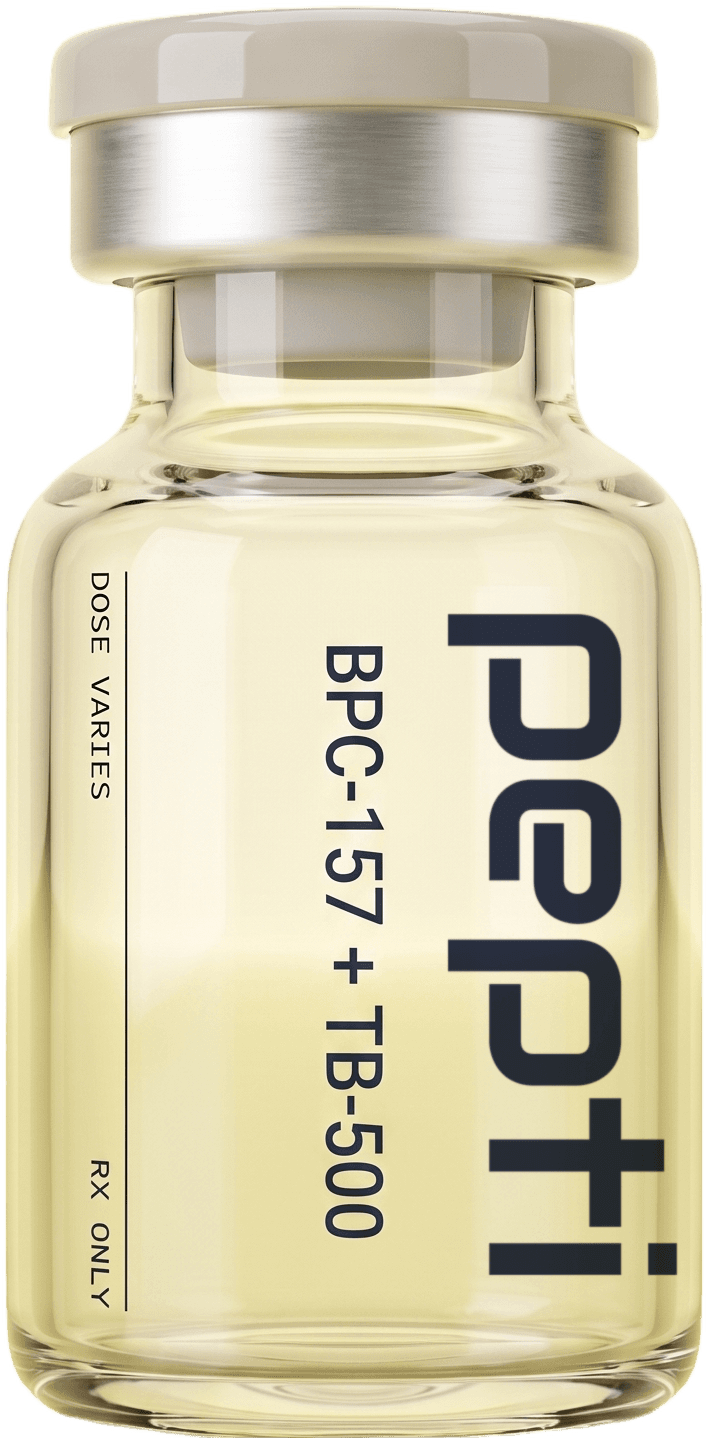
| Detail | BPC-157 | BPC-157 + TB-500 |
|---|---|---|
| Vial | 5 mL, 1 mg/mL (5 mg) | 5 mL, 1 mg/mL of each (5 mg of each) |
| Typical directions | 0.18 mL (18 units) subcutaneously once daily as directed | 0.25 mL (25 units) subcutaneously Monday through Friday mornings |
| Doses per vial | 27 | 20 |
| How long a vial lasts | About four weeks | About four weeks |
| Price | $209/mo | $259/mo |
Your physician sets your directions after reviewing your intake, and the directions printed on your vial are the ones that apply. Refills run every 28 days, one vial per fill, so each fill is a natural checkpoint. BPC-157 dosage explains the units and milligrams.
A few habits make that checkpoint worth something:
- Write down one measurable thing before the first dose. "I can do a full session without the tendon being sore the next morning" can be checked. "Feeling better" cannot.
- Keep the rehabilitation going. For tendinopathy, progressive loading under a physical therapist has human trial evidence that BPC-157 does not. Someone doing the loading and someone only injecting are running different experiments.
- Change one thing at a time. Starting BPC-157 and another new treatment in the same week leaves no way to tell what did what.
- Do not adjust the dose. Taking more, or two doses to make up a missed one, removes your care team's ability to interpret what happens. If you miss a dose, follow your directions.
How do I know if peptides are working covers measurement in more detail.
How Long Does BPC-157 Take to Work? What the Studies Measured, and When
When waiting is the wrong answer
Some problems are not a question of time at all. A complete rupture, a displaced fracture or a significant meniscal tear is a surgical question no peptide changes. Blood in the stool, unintentional weight loss or gut symptoms that wake you at night need investigation, not a longer course. And BPC-157 is not a treatment for ulcerative colitis or Crohn's disease; anyone with a diagnosed bowel disease should treat it as something discussed alongside a gastroenterologist's care, never instead of it.
Message your care team rather than continuing to wait if:
- A side effect is not settling or is getting worse.
- An injection site is hot, spreading or more painful after 48 hours.
- You notice nothing by the review point your physician described.
- A new symptom appears that you did not have before.
Swelling of the face, lips or throat, a widespread rash or difficulty breathing is an emergency: call 911, then tell your physician. The full safety picture is in is BPC-157 safe.
How Long Does BPC-157 Take to Work? What the Studies Measured, and When
What the evidence shows, honestly
The rodent literature on BPC-157 is decades deep and internally consistent, and that is why the peptide is prescribed. It does not contain a human timeline, and neither does the human literature, which is five small studies by routes other than the one prescribed. The accurate framing is "described in preclinical research and used clinically," not "shown to work in people by a given week."
On the regulatory side, BPC-157 was removed from Category 2 of the FDA's 503A bulk substances list on 15 April 2026. On 23 July 2026 the FDA's Pharmacy Compounding Advisory Committee voted 8 to 6, with one abstention, to recommend adding it to the 503A Bulks List; the FDA's final determination is pending. It remains legal to prescribe and compound. Compounded medications, BPC-157 included, are not FDA approved. BPC-157 is also named on the 2026 WADA Prohibited List under S0, so tested athletes should read is BPC-157 banned first.
How Long Does BPC-157 Take to Work? What the Studies Measured, and When
Where to get BPC-157 prescribed
BPC-157 cannot be bought legitimately without a prescription. Sites selling it "for research use only" are not accountable for identity, purity, sterility or concentration. The prescription route:
- Complete a free online intake covering your history, medications and what you want help with.
- A physician licensed in your state reviews it, usually within 24 hours.
- If it is appropriate, a PCAB-accredited, FDA-registered US 503A compounding pharmacy prepares it to that prescription. Lot test results are published at /quality/lab-results.
- It ships refrigerated with ice packs, as a multi-dose solution ready to use, with sterile syringes, alcohol prep pads and your directions printed on the vial.
- Your physician stays reachable for questions and side effects.
Pepti is cash-pay and does not bill insurance, and the price covers medication, physician review, refill management and shipping, with no membership fee. Step by step: how to get BPC-157 prescribed online. How it compares with its usual partner is in BPC-157 vs TB-500.
References
What this is based on.
References
- Chang CH, Tsai WC, Hsu YH, Pang JH. Pentadecapeptide BPC 157 enhances the growth hormone receptor expression in tendon fibroblasts · Molecules (2014) · PMID 25415472
- Krivic A, Anic T, Seiwerth S, et al.. Achilles detachment of rat and stable gastric pentadecapeptide BPC 157 · Journal of Orthopaedic Research (2006) · PMID 16583442
- Sikiric P, Seiwerth S, Rucman R, et al.. Stable gastric pentadecapeptide BPC 157: novel therapy in gastrointestinal tract · Current Pharmaceutical Design (2011) · PMID 21548867
- Cerovecki T, Bojanic I, Brcic L, Radic B, et al.. Pentadecapeptide BPC 157 (PL 14736) improves ligament healing in the rat · J Orthop Res (2010) · PMID 20225319
- Sikiric P, Seiwerth S, Rucman R, Turkovic B, et al.. Stable gastric pentadecapeptide BPC 157-NO-system relation · Curr Pharm Des (2014) · PMID 23755725
- Cox HD, Miller GD, Eichner D. Detection and in vitro metabolism of the confiscated peptides BPC 157 and MGF R23H · Drug Test Anal (2017) · PMID 28035768
- Thomas A, Görgens C, Guddat S et al.. Simplifying and expanding the screening for peptides <2 kDa by direct urine injection, liquid chromatography, and ion mobility mass spectrometry · J Sep Sci (2016) · PMID 26578461
- Farrar JT, Young JP Jr, LaMoreaux L, Werth JL et al.. Clinical importance of changes in chronic pain intensity measured on an 11-point numerical pain rating scale · Pain (2001) · PMID 11690728
- Meyer JD, Ho B, Manning MC. Effects of conformation on the chemical stability of pharmaceutically relevant polypeptides · Pharm Biotechnol (2002) · PMID 11987755
- Xu C, Sun L, Ren F, Huang P, et al.. Preclinical Safety Evaluation of Body Protective Compound-157, a Potential Drug for Treating Various Wounds · Regul Toxicol Pharmacol (2020) · PMID 32334036
- He L, Feng D, Guo H, et al.. Pharmacokinetics, distribution, metabolism, and excretion of body-protective compound 157, a potential drug for treating various wounds, in rats and dogs · Front Pharmacol (2022) · PMID 36588717
- Lee E, Padgett B. Intra-Articular Injection of BPC 157 for Multiple Types of Knee Pain · Altern Ther Health Med (2021) · PMID 34324435
Citations are provided for educational purposes. They do not constitute medical advice. Always discuss any peptide protocol with your prescribing physician.
Common questions
How Long Does BPC-157 Take to Work? What the Studies Measured, and When, answered.
Nobody has measured it in people. There is no human trial of injectable BPC-157, and the studies that exist ran on rat timelines or used other routes, so no honest source can give you a number of days.
The rat knee ligament study in 2010 followed healing over ninety days. A 2026 rat Achilles study treated daily for four weeks. The only randomised human study was a two-week enema trial in ulcerative colitis, and a 2025 intravenous pilot lasted two days.
No. The five human studies the FDA found used an enema, injection into the knee or bladder wall, or a vein, and none measured a time course for a subcutaneous injection.
Rat tissue heals on a different schedule from human tissue, and the studies measured the tissue at a fixed end point rather than tracking when change began. A rat result at a set number of days is not a human prediction.
Until the review point your physician set, measured against something specific you wrote down at the start. A vial covers about four weeks and refills run every 28 days, which gives a natural checkpoint. If nothing has moved, message your care team rather than quietly stopping or changing the dose.
That has not been shown. The one rat study that tested both, and the pair, found the combination did no better than either alone at four weeks. BPC-157 + TB-500 is $259/mo.
There is no evidence for that, and you should never change your own dose. Your physician sets your directions after reviewing your intake, and they are printed on the vial.
At the typical directions of 0.18 mL (18 units) once daily, a 5 mL vial at 1 mg/mL holds 27 doses, about four weeks.
No. Compounded medications are not FDA approved. BPC-157 left Category 2 of the FDA's 503A list on 15 April 2026, and the FDA's advisory committee voted in July 2026 to recommend adding it to the 503A Bulks List; the final determination is pending.
No. Bloodwork is not required for any Pepti treatment. If your physician wants labs for your care, they'll ask through your account. The free assessment goes to a physician licensed in your state. A consultation does not guarantee a prescription.
Next step
See what a physician recommends for you.
A licensed physician in your state reviews your intake and decides what is appropriate. A consultation does not guarantee a prescription.