Recovery · Reference
How Long Does TB-500 Take to Work? What the Studies Measured, and When
This page lists what each study measured and when, explains why an animal endpoint is not a human schedule, and covers what your directions look like and what to track while an injury recovers.
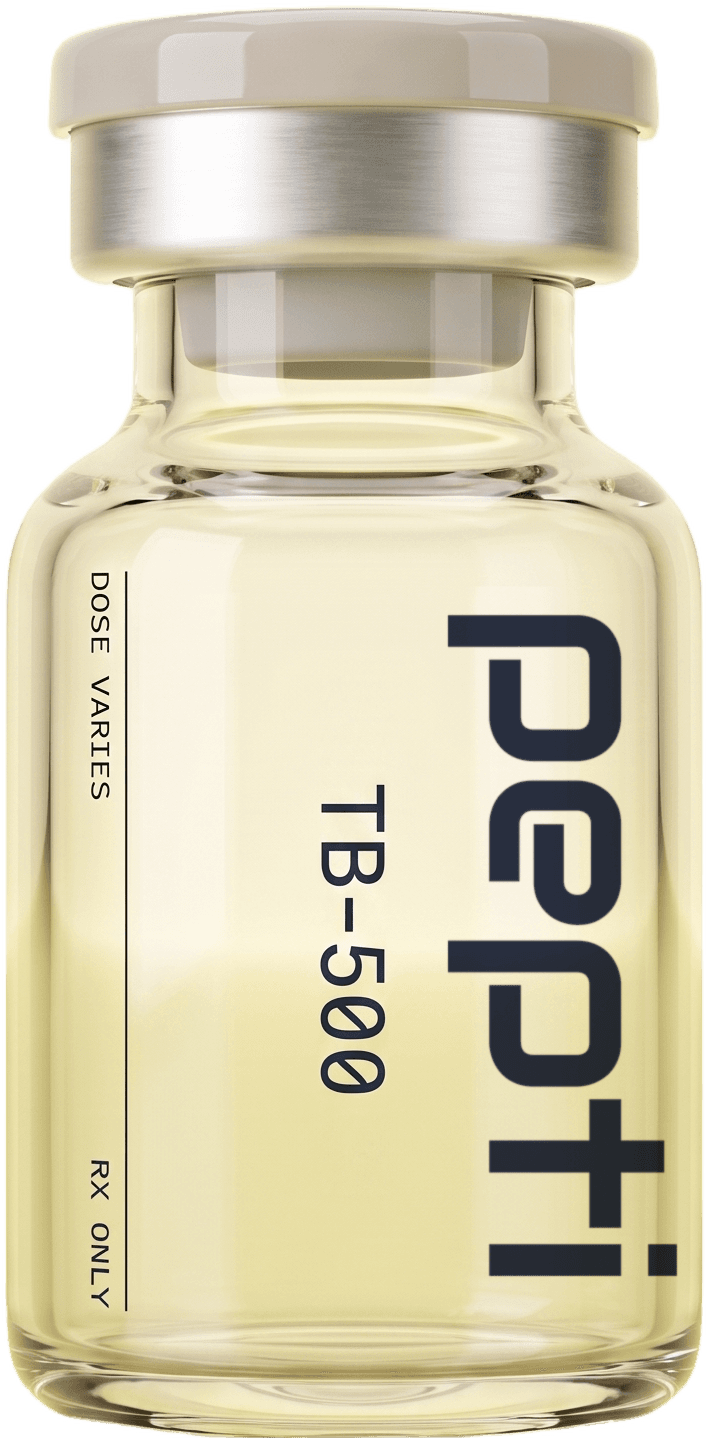
There is no human timeline for TB-500: the FDA searched in 2026 and found no clinical study or human exposure data for TB-500 by any route. The only study to test TB-500 by name in a tendon was a 2026 rat study that measured repaired Achilles tendons after four weeks. The rest of the research is on thymosin beta-4, the full protein TB-500 is a fragment of, in rat and mouse wounds, hearts and eyes, plus small human trials of that full protein as eye drops and skin gel for unrelated conditions. None gives a date for an injury in a person. Compounded medications, TB-500 included, are not FDA approved.
This page lists what each study measured and when, explains why an animal endpoint is not a human schedule, and covers what your directions look like and what to track while an injury recovers.
How Long Does TB-500 Take to Work? What the Studies Measured, and When
The short answer
| Study | What was studied | Molecule | Period | What it measured |
|---|---|---|---|---|
| Joint Diseases and Related Surgery, 2026 | 32 rats with a repaired Achilles tendon | TB-500, BPC-157, or both | Four weeks | Load to failure; higher with TB-500 than control, and the combination did no better than either alone |
| Journal of Investigative Dermatology, 1999 | Rats with full-thickness skin wounds | Thymosin beta-4 | Through wound closure | Speed of closure, collagen and new vessels |
| Wound Repair and Regeneration, 2003 | Diabetic and aged mice | Thymosin beta-4 and the LKKTETQ fragment | Through wound closure | Repair in impaired-healing models; the fragment promoted repair comparably |
| Nature, 2004 and 2007 | Mice after an induced heart attack | Thymosin beta-4 | After injury | Heart function and new vessel growth |
| Annals of the New York Academy of Sciences, 2010 | Healthy volunteers | Thymosin beta-4, intravenous | Single and multiple doses | Tolerability; no dose-limiting adverse events |
| Annals of the New York Academy of Sciences, 2012 | People with pressure, venous and genetic skin ulcers | Thymosin beta-4 topical gel | Phase 2 trials | Wound closure; faster in some dose groups than placebo |
| Cornea, 2015 | People with severe dry eye | Thymosin beta-4 eye drops | Phase 2 trial | Signs and symptoms against placebo |
| Journal of Chromatography B, 2024 | A fibroblast wound in a dish | TB-500 and its breakdown products | In culture | TB-500 itself did not close the wound at the concentration tested; a shorter breakdown product did |
Two things stand out. Only the first row used TB-500 itself in a living animal's tendon, for four weeks, with eight rats per group. And every human row used the full protein, for skin, eyes or tolerability, never for a tendon, muscle or joint.
How Long Does TB-500 Take to Work? What the Studies Measured, and When
Why none of this gives you a date
Rat tissue does not heal on a human schedule
Reading a four-week rat result as a four-week human result is the commonest mistake made with this literature. Rodent tendons and skin repair on their own timescale, and the 2026 study measured one point, the end of four weeks, rather than tracking when a difference first appeared. It also dosed into the abdominal cavity rather than under the skin, and tested a single dose level. It is the first direct evidence that TB-500 does something measurable in a tendon model, and it is exploratory.
The fragment is not the full protein
TB-500 is a synthetic seven-amino-acid piece, Ac-LKKTETQ, of the 43-amino-acid thymosin beta-4 protein: the region that binds actin, the protein that lets cells move. Most of the published work, and every human trial, used the full protein. The FDA's July 2026 briefing put it directly: thymosin beta-4 and TB-500 are not the same substance. The 2024 cell study adds a further question, whether TB-500 acts directly at all or through something it breaks down into. A time course measured on the full protein cannot be transferred to the fragment.
Repair has its own sequence
The mechanism most tied to TB-500 is cell migration: repair cells moving into injured tissue, described in human endothelial cells in culture in 1997 and in animal wound and heart models since. Whatever helps that step, the rest of a repair sequence still has to happen: inflammation settling, vessels forming, collagen laid down and then remodelled under load. That sequence is set by the tissue. A tendon remodels at the speed a tendon remodels, and adding more peptides does not compress it.
Rehabilitation is the real rate limiter
For tendinopathy, progressive loading under a physical therapist has human trial evidence behind it that TB-500 does not. Someone doing graded rehabilitation and someone only injecting will describe different courses, and the difference is not the peptide. The useful early sign is not "the pain is gone" but "the area is less reactive the day after I load it", and that only shows up if the tissue is being loaded. A problem present for a year generally behaves differently from a recent one.
How Long Does TB-500 Take to Work? What the Studies Measured, and When
What your directions look like
| What the label shows | Value |
|---|---|
| Product | TB-500, 5 mL multi-dose vial at 1 mg/mL (5 mg per vial) |
| Typical directions | Inject 0.25 mL (25 units) subcutaneously Monday through Friday mornings |
| TB-500 per dose | 0.25 mg (1 mg/mL x 0.25 mL) |
| Doses per vial | 20, about four weeks |
| Price | $209/mo, all-in |
| Combinations | BPC-157 + TB-500, $259/mo; GLOW, $259/mo; KLOW, $259/mo |
The combinations exist because the described mechanisms are complementary, not because two peptides finish sooner than one; the 2026 rat study found the combination no better than either alone. Refills run every 28 days, one vial per fill, and vials ship ready to use, refrigerated with ice packs, with sterile syringes and alcohol prep pads. Your physician sets your directions after reviewing your intake, and they are printed on the vial. The conversion is in TB-500 dosage.
How Long Does TB-500 Take to Work? What the Studies Measured, and When
What to track, and when to message your care team
| Keep a note of | Why |
|---|---|
| The specific load or task that hurts now, written before you start | "Can I do a full session without soreness the next morning" is measurable; "feeling better" is not |
| Your rehabilitation sessions and how the area responds the next day | Tolerance to load usually changes before resting symptoms do |
| Your physical therapist's own measures | The instrument with human evidence behind it |
| Tiredness, a head-fog feeling, light-headedness or flushing | Reported early effects your care team should hear about |
| The injection site | Redness, itching or a small lump are common; heat, spreading or worsening after 48 hours is not |
Stop dosing and contact your physician the same day for an injection site that is hot, spreading or worsening after 48 hours, a new lump, or unexplained bleeding. Facial or throat swelling, a widespread rash or difficulty breathing is an emergency: call 911. The full picture is in is TB-500 safe.
Do not raise your own dose and do not add another product in the same weeks. Both make it impossible to tell what changed. If an injury has not been imaged, or is getting worse rather than better, say so: a complete rupture or a displaced fracture is a surgical question no peptide changes, and waiting longer only costs time.
How Long Does TB-500 Take to Work? What the Studies Measured, and When
What the evidence shows, honestly
The thymosin beta-4 animal literature is broad, the actin-binding mechanism is solid biology, and the parent protein has been through a small clinical programme in unrelated conditions. TB-500 itself has no human data, a handful of animal studies of its own, and one tendon study in rats. That is why this page gives study periods rather than an expected date, and why a provider quoting you a healing timeline is inventing it.
On regulation: TB-500 was placed in Category 2 of the FDA's 503A list in 2023 over potential immunogenicity, and removed in April 2026. On 23 July 2026 the Pharmacy Compounding Advisory Committee voted 8 to 6, with one abstention, to recommend adding TB-500 to the 503A Bulks List, against the FDA staff's proposal; the final determination is pending. It remains legal to prescribe and dispense as a compounded medication. TB-500 is prohibited at all times under S2.3 of the 2026 WADA Prohibited List. The benefit-by-benefit evidence is in TB-500 benefits, and the most common pairing is compared in BPC-157 vs TB-500.
How Long Does TB-500 Take to Work? What the Studies Measured, and When
Where to get TB-500 prescribed
TB-500 cannot be bought legitimately without a prescription. "TB-500" is a common name rather than an official drug name, and the FDA reports encountering multiple salts and derivatives sold under that one label. The prescription route:
- Complete a free online intake covering your history, medications and what you want help with.
- A physician licensed in your state reviews it, usually within 24 hours.
- If it is appropriate, a PCAB-accredited, FDA-registered US 503A compounding pharmacy prepares it to that prescription. Lot test results are published at /quality/lab-results.
- It ships refrigerated with your directions printed on the vial.
- Your physician stays reachable for questions and side effects.
Pepti prescribes TB-500 in every state except Oklahoma, plus DC, cash-pay, with no insurance billing. Step by step: how to get TB-500 prescribed online and how to get BPC-157 + TB-500 prescribed online.
References
What this is based on.
References
- Goldstein AL, Hannappel E, Kleinman HK. Thymosin beta4: actin-sequestering protein moonlights to repair injured tissues · Trends Mol Med (2005) · PMID 16099219
- Malinda KM, Sidhu GS, Mani H et al.. Thymosin beta4 accelerates wound healing · J Invest Dermatol (1999) · PMID 10469335
- Malinda KM, Goldstein AL, Kleinman HK. Thymosin beta 4 stimulates directional migration of human umbilical vein endothelial cells · FASEB J (1997) · PMID 9194528
- Philp D, Badamchian M, Scheremeta B et al.. Thymosin beta 4 and a synthetic peptide containing its actin-binding domain promote dermal wound repair in db/db diabetic mice and in aged mice · Wound Repair Regen (2003) · PMID 12581423
- Philp D, Goldstein AL, Kleinman HK. Thymosin beta4 promotes angiogenesis, wound healing, and hair follicle development · Mech Ageing Dev (2004) · PMID 15037013
- Philp D, Scheremeta B, Sibliss K et al.. Thymosin beta4 promotes matrix metalloproteinase expression during wound repair · J Cell Physiol (2006) · PMID 16607611
- Smart N, Risebro CA, Melville AA et al.. Thymosin beta4 induces adult epicardial progenitor mobilization and neovascularization · Nature (2007) · PMID 17108969
- Sosne G, Szliter EA, Barrett R et al.. Thymosin beta 4 promotes corneal wound healing and decreases inflammation in vivo following alkali injury · Exp Eye Res (2002) · PMID 11950239
- Sosne G, Hafeez S, Greenberry AL 2nd et al.. Thymosin beta4 promotes human conjunctival epithelial cell migration · Curr Eye Res (2002) · PMID 12324865
- Sosne G, Xu L, Prach L et al.. Thymosin beta 4 stimulates laminin-5 production independent of TGF-beta · Exp Cell Res (2004) · PMID 14729067
- Sosne G, Qiu P, Christopherson PL et al.. Thymosin beta 4 suppression of corneal NFkappaB: a potential anti-inflammatory pathway · Exp Eye Res (2007) · PMID 17254567
- Sosne G, Qiu P, Goldstein AL et al.. Biological activities of thymosin beta4 defined by active sites in short peptide sequences · FASEB J (2010) · PMID 20179146
Citations are provided for educational purposes. They do not constitute medical advice. Always discuss any peptide protocol with your prescribing physician.
Common questions
How Long Does TB-500 Take to Work? What the Studies Measured, and When, answered.
There is no human answer, because TB-500 has never been studied in people. The only tendon study of TB-500 itself measured repaired rat Achilles tendons after four weeks. Tissue biology and rehabilitation set the pace of recovery.
Four weeks, in 32 rats with a repaired Achilles tendon. Load to failure was higher with TB-500 than control, and the combination with BPC-157 did no better than either alone.
No. The human trials used full-length thymosin beta-4 as eye drops for dry eye, as a gel for skin ulcers, and intravenously for tolerability in healthy volunteers.
No study shows that. In the 2026 rat study, the combination did no better than either peptide alone. Combinations are prescribed for complementary mechanisms, not speed.
No study has measured that in people. For soft-tissue injuries generally, a change in how the area tolerates load the next day tends to show before a change in resting pain, and it is only visible if you are doing the rehabilitation.
Follow the directions on your label. The research describes a systemic mechanism, and no study has compared injection sites for speed.
No. Take the dose printed on your vial, on the schedule printed on your vial. Tissue repair is rate-limited by the tissue, not the dose.
About four weeks: 20 doses of 0.25 mL, Monday through Friday mornings.
No. Thymosin alpha-1 is a different peptide studied for immune modulation. See thymosin alpha-1 vs TB-500.
No. Bloodwork is not required for any Pepti treatment. If your physician wants labs for your care, they'll ask through your account. The free assessment goes to a physician licensed in your state. A consultation does not guarantee a prescription.
Next step
See what a physician recommends for you.
A licensed physician in your state reviews your intake and decides what is appropriate. A consultation does not guarantee a prescription.