Weight Loss · Reference
Can You Take FORTIFY Blend With Tirzepatide or Semaglutide?
This page covers what FORTIFY is next to a GLP-1, why it is not a fix for GLP-1 side effects, the immune questions, symptoms that could come from either, how the schedules fit, and how to add FORTIFY properly.

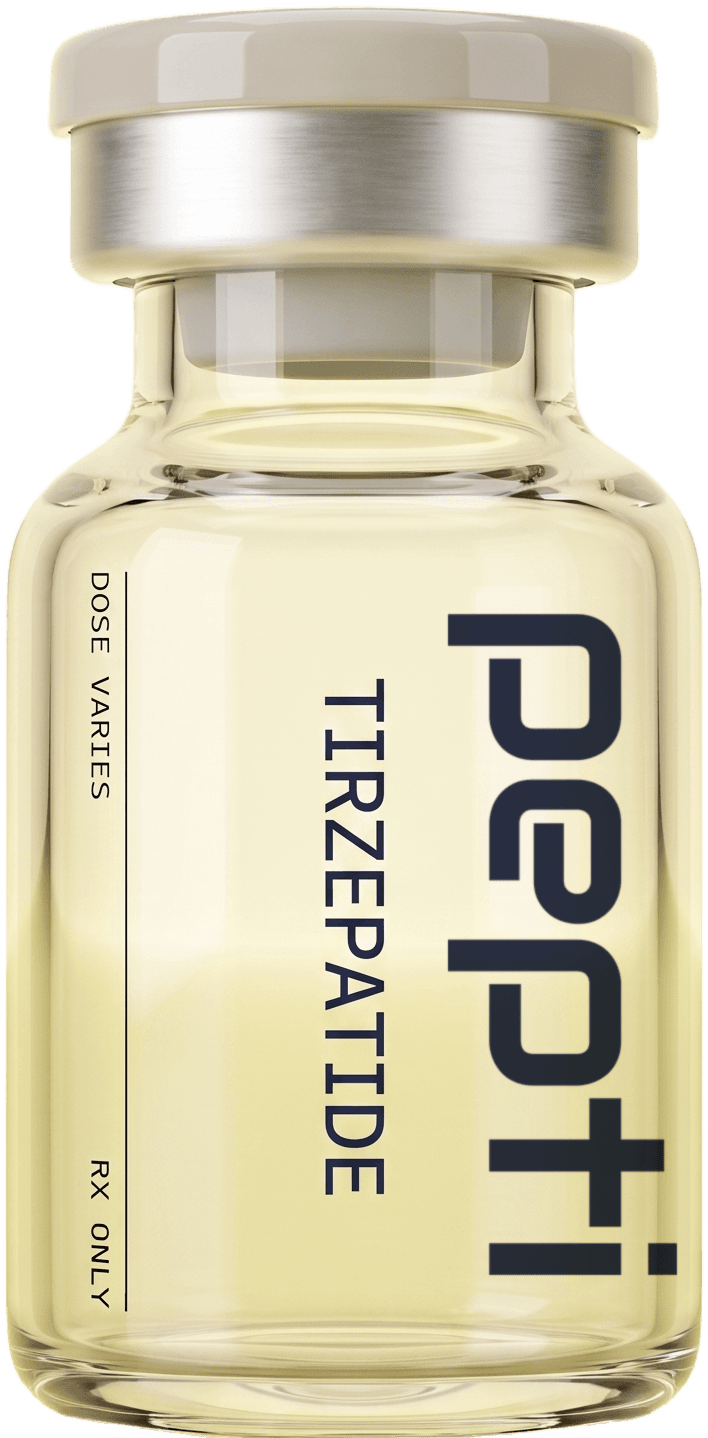
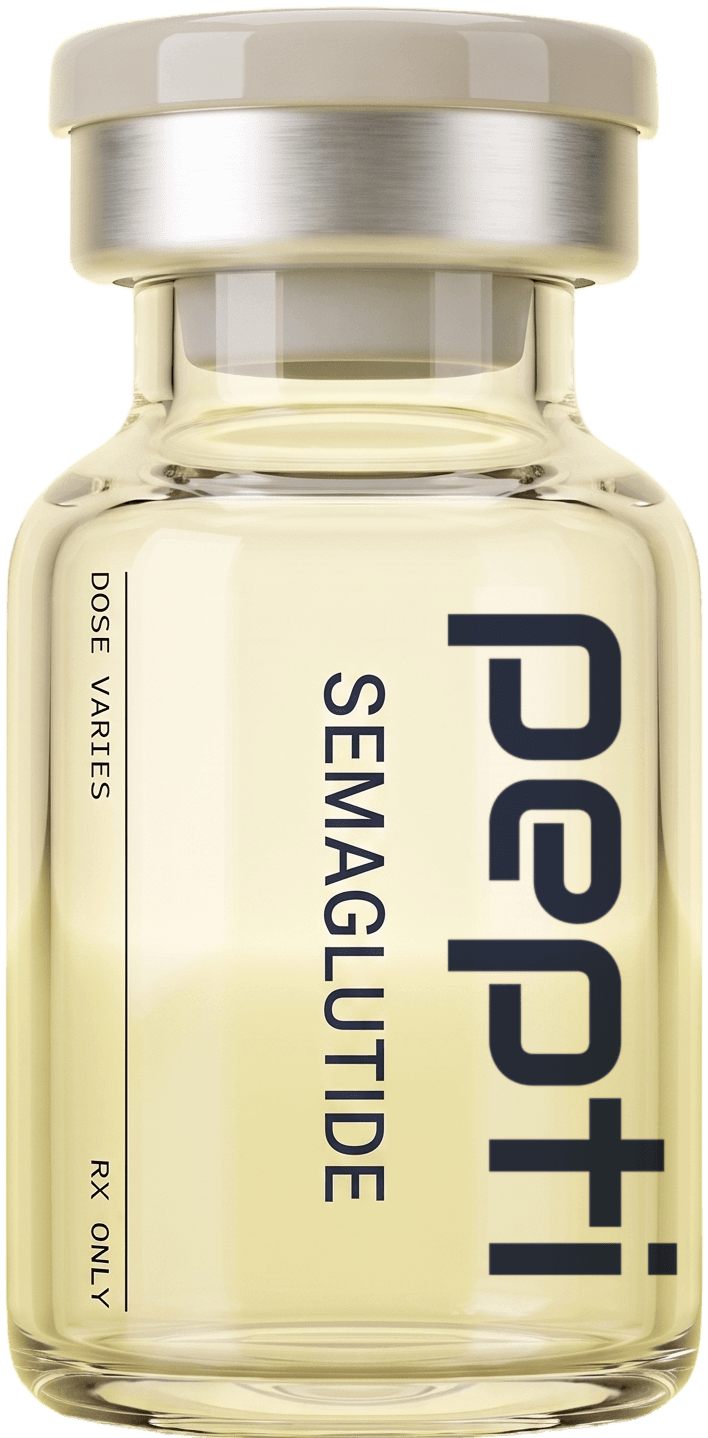
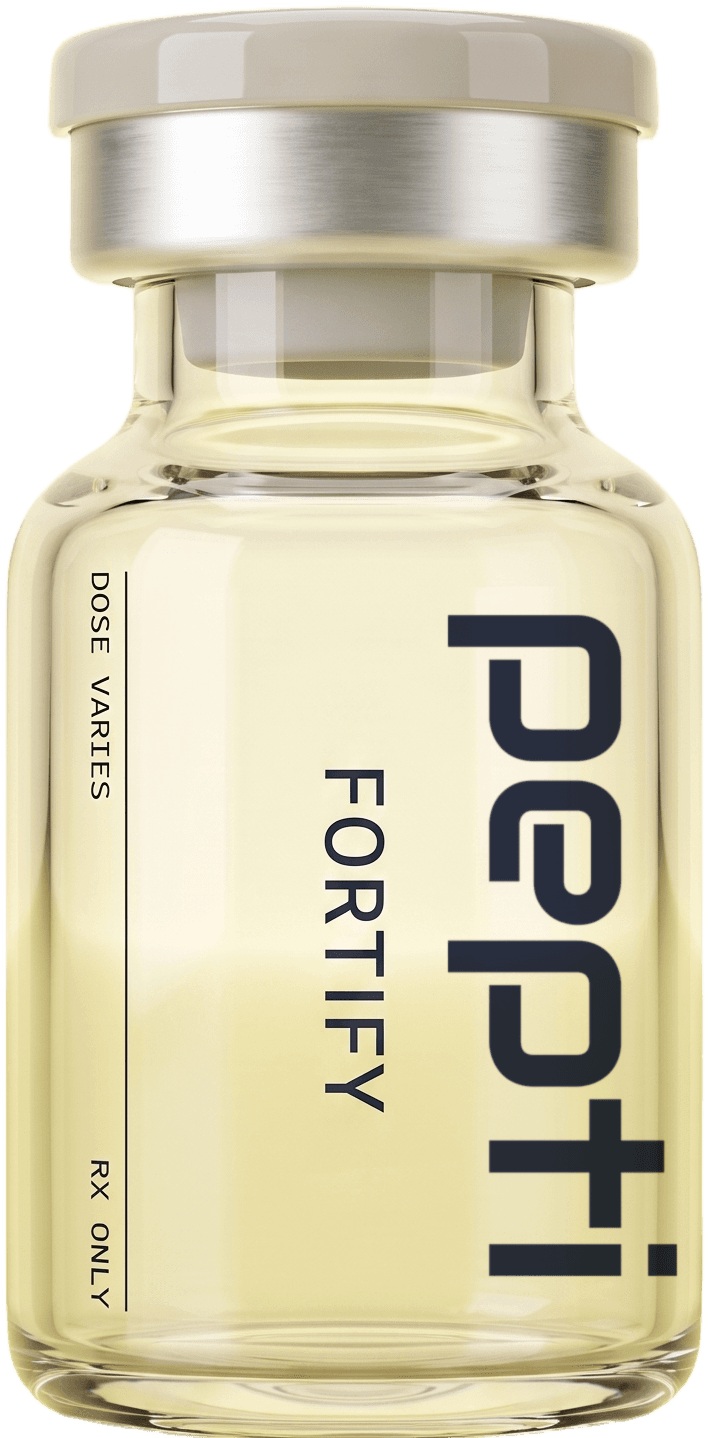
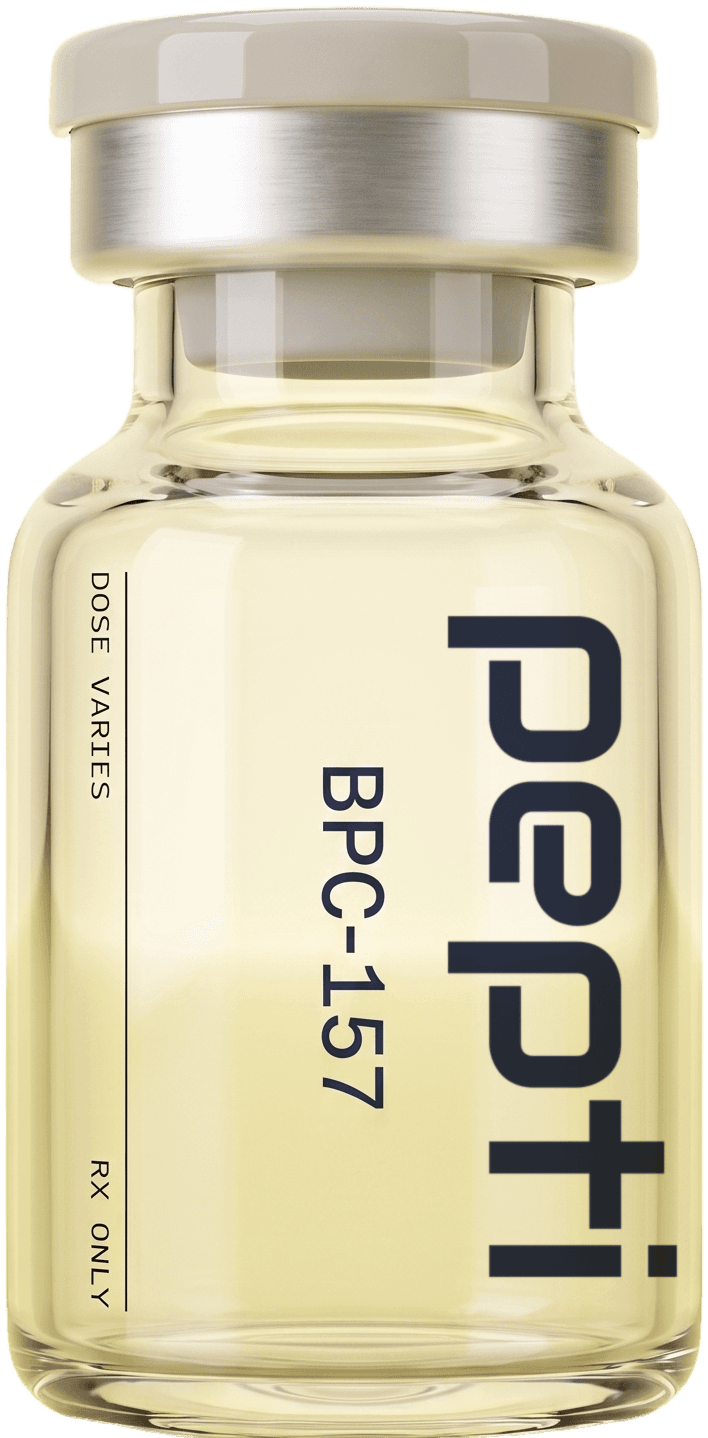
FORTIFY can be prescribed alongside tirzepatide or semaglutide when a physician reviewing your intake judges it appropriate, because the two act on unrelated systems, but no study has tested the blend with a GLP-1, and the blend itself has never been studied as a blend. FORTIFY combines two immune peptides, thymosin alpha-1 and LL-37, with two gut and inflammation peptides, BPC-157 and KPV; none of them acts on appetite, glucose or the GLP-1 receptor. The question people usually mean is whether FORTIFY's BPC-157 and KPV will settle GLP-1 nausea, reflux or constipation, and the honest answer is that they are not a treatment for them. The questions that matter at intake are immune ones: autoimmune disease, immunosuppressive treatment and active cancer care. Everything on this page applies to semaglutide the same way.
This page covers what FORTIFY is next to a GLP-1, why it is not a fix for GLP-1 side effects, the immune questions, symptoms that could come from either, how the schedules fit, and how to add FORTIFY properly.
Can You Take FORTIFY Blend With Tirzepatide or Semaglutide?
The short answer
| Question | Answer |
|---|---|
| Can they be prescribed together? | Yes, when a physician reviewing your intake judges it appropriate |
| Has the combination been studied? | No. Neither FORTIFY with a GLP-1, nor FORTIFY's four components together |
| Does any component act on appetite or glucose? | No |
| Does FORTIFY help GLP-1 nausea or constipation? | Not on any evidence; those are a dose and titration question |
| Does FORTIFY add weight loss? | No |
| Is there an established interaction? | No interaction list exists for FORTIFY or any component |
| What belongs on the intake? | Autoimmune disease, immunosuppressive therapy, active cancer care, diagnosed infections, anticoagulants |
| Same answer for semaglutide? | Yes |
The medications this page covers:
| Product | What is in it | Typical directions | Price |
|---|---|---|---|
| FORTIFY Blend | 5 mL multi-dose vial: thymosin alpha-1 1 mg/mL, BPC-157 1 mg/mL, KPV 0.4 mg/mL, LL-37 0.2 mg/mL (5 mg / 5 mg / 2 mg / 1 mg per vial) | 0.25 mL (25 units) under the skin once daily Monday through Friday | $289/mo |
| Tirzepatide | Dose-specific 2 mL vials at six strengths, 2.5 mg to 15 mg weekly; glycine in the 2.5 mg and 7.5 mg vials | 0.50 mL (50 units) once weekly at every strength | From $159/mo |
| Semaglutide | Dose-specific vials at six strengths | Printed on the vial for your strength | From $99/mo |
Prices are all-in, covering medication, physician review, refill management and shipping, with no membership fee. GLP-1 prices are "from" prices, set by dose. Compounded medications are not FDA approved.
Can You Take FORTIFY Blend With Tirzepatide or Semaglutide?
What FORTIFY is, next to a GLP-1
Tirzepatide is a single peptide that activates the GIP and GLP-1 receptors, acting on appetite centres in the brain, gastric emptying, and insulin and glucagon signalling (what is tirzepatide). FORTIFY is four separately studied peptides in one vial, prescribed in the immune category (what is the FORTIFY blend).
| Component | Per 25 unit dose | What it is described to do | Human evidence | Relation to tirzepatide |
|---|---|---|---|---|
| Thymosin alpha-1 | 0.25 mg | Immune signalling via dendritic cells and T cells | Randomised trials in hepatitis B, sepsis and other diseases; none in healthy adults | No shared pathway |
| BPC-157 | 0.25 mg | Gut-lining protection and angiogenesis in animals | Early-phase work for inflammatory bowel indications | No shared pathway |
| KPV | 0.1 mg | Damps inflammatory signalling; mouse colitis models | None of any kind | No shared pathway |
| LL-37 | 0.05 mg | The body's own antimicrobial peptide; immune signalling | Two topical leg-ulcer trials; none of the injectable | No shared pathway |
None of the four binds the GIP or GLP-1 receptor, acts on appetite or gastric emptying, or is described as changing glucose. All four are injected, so a GLP-1's slower gastric emptying, which can change how swallowed medicines are absorbed, does not apply to them. That makes a direct interaction unlikely on mechanism. With no study of the pairing, that is the limit of what can be said.
Can You Take FORTIFY Blend With Tirzepatide or Semaglutide?
Why FORTIFY is not a fix for GLP-1 stomach side effects
Different problem, different mechanism
Nearly every common GLP-1 side effect follows from one action: the stomach empties more slowly, most after the first dose and after each increase. Food stays longer, the old portion size overshoots, and nausea, reflux, burping and early fullness follow. Constipation can persist at a steady dose. None of that is inflammation of the gut lining.
FORTIFY's gut components are studied in a different setting. BPC-157's gut literature is animal work on NSAID- and alcohol-induced damage and inflammatory bowel models; KPV's is mouse colitis. The live gut-health reference is explicit that GLP-1 nausea, reflux and constipation are a dose and titration question for the prescribing physician, not a reason to add a second vial.
What does help
Most manageable GLP-1 nausea responds to portion size, meal composition and titration pace. Constipation responds to fluid, fibre and movement, and is worth reporting by name. These are covered in GLP-1 nausea: how to manage it and GLP-1 constipation. If side effects are not settling, message your care team. Never change your own dose; any change your physician makes is printed on your next vial.
Can You Take FORTIFY Blend With Tirzepatide or Semaglutide?
When the pairing makes sense, and when it does not
The case for FORTIFY alongside a GLP-1 is a separate goal: someone on a weight program who also gets sick often, recovers slowly, or has a gut that never settles independently of the GLP-1. The two are then doing unrelated jobs.
| Situation | Usually a better conversation |
|---|---|
| Stomach side effects on the GLP-1 | A message to your care team; a dose and titration question |
| An active infection, fever or spreading wound | A physician today; FORTIFY is not a treatment for infection |
| Immune support is the whole goal | Thymosin alpha-1 alone, the component with the human trial record, at 10 mg per vial |
| A diagnosed gut condition | A diagnosis first; KPV or BPC-157 alone if a peptide is appropriate |
| An autoimmune condition | The specialist who manages it, before any immune peptide |
Can You Take FORTIFY Blend With Tirzepatide or Semaglutide?
The immune questions raised at intake
| Situation | Why it is raised |
|---|---|
| Autoimmune disease, including psoriasis | Thymosin alpha-1 modulates immune signalling, and LL-37 has been reported to drive inflammation in psoriasis by binding self-DNA |
| Immunosuppressive therapy, including after a transplant | Needs specialist input before an immune-modulating peptide is added |
| Active cancer treatment, or a personal history of cancer | BPC-157 and LL-37 are described supporting new blood-vessel growth |
| A diagnosed infection such as hepatitis B, hepatitis C or HIV | Approved treatments come first; thymosin alpha-1 was studied alongside them, never instead of them |
| Anticoagulant therapy | BPC-157's animal clotting signals |
| Pregnancy or breastfeeding | Neither FORTIFY nor a GLP-1 is used |
| Personal or family history of medullary thyroid carcinoma or MEN 2 | Rules out tirzepatide and semaglutide |
None of these changes because of a GLP-1, but all of them go on the same intake. The wider category is in peptides for immune support.
Can You Take FORTIFY Blend With Tirzepatide or Semaglutide?
Symptoms that could come from either
| Symptom | On tirzepatide | On FORTIFY |
|---|---|---|
| Nausea | The most common effect: 25 to 29 percent on the label against 8 percent, around starting and dose increases | Some people report early nausea |
| Dizziness or light-headedness | 4 to 5 percent on the label, against 2 percent | Some people early on |
| Headache or tiredness | Some people, often tied to eating and drinking less | Transient, early, reported for KPV and BPC-157 |
| Injection-site redness or bruising | 6 to 8 percent on the label | The most common report |
| Reflux, constipation, diarrhea | Common around dose increases | Not described |
| Severe abdominal pain, often radiating to the back | Seek care; a possible pancreatitis presentation | Not described |
| A flare of a known autoimmune condition | Not described | Theoretical; message your care team and your specialist |
| Fever | Not typical | Not described; it may mean an infection that needs its own assessment |
Two sources of early nausea and light-headedness are hard to tell apart, which is the main reason to start FORTIFY when your GLP-1 dose is steady, not in the same week as an increase. If stomach symptoms appear in the weeks after starting both, the GLP-1 and its dose steps are the first place to look. The side-effect references are tirzepatide side effects and FORTIFY blend side effects.
Can You Take FORTIFY Blend With Tirzepatide or Semaglutide?
Fitting the schedules together
| FORTIFY | Tirzepatide | |
|---|---|---|
| Draw | 0.25 mL (25 units on a U-100 insulin syringe) | 0.50 mL (50 units) |
| Medication per dose | 0.25 mg thymosin alpha-1, 0.25 mg BPC-157, 0.1 mg KPV, 0.05 mg LL-37 | Your weekly strength, 2.5 mg to 15 mg |
| How often | Once daily Monday through Friday, weekends off | Once weekly, same day each week |
| Doses per vial | 20 | 4 |
| One vial lasts | About four weeks | Four weeks |
The FORTIFY figures are math from the vial: 0.25 mL carries a quarter of each component's per-mL concentration, and 5 mL at 0.25 mL is 20 doses. Because the proportions are fixed, every dose delivers the same split. Both run on a 28-day refill cycle, one vial per fill.
- Two vials, two syringes, two sites. Never mix FORTIFY and tirzepatide in one syringe.
- Keep your tirzepatide day fixed. On a shared weekday, inject each at a different site.
- Refrigerate both, and do not keep a multi-peptide vial past its beyond-use date.
The dose arithmetic is in FORTIFY blend dosage and tirzepatide dosing chart.
Can You Take FORTIFY Blend With Tirzepatide or Semaglutide?
What not to combine
| Combination | Why not |
|---|---|
| Tirzepatide with semaglutide or any other GLP-1 | Same receptor system, stacked side effects, no mechanism gained |
| FORTIFY plus standalone thymosin alpha-1, KPV or BPC-157, unplanned | Duplicates a component without anyone deciding the dose should change |
| Two of your vials in one syringe | Neither label describes the mixture |
| Several new agents started in the same fortnight | If something changes, nobody can tell which one caused it |
| Anything sold "for research use only" | Nobody is accountable for identity, purity, sterility or concentration |
Bloodwork is not required for any Pepti treatment. If your physician wants labs for your care, they'll ask through your account.
Can You Take FORTIFY Blend With Tirzepatide or Semaglutide?
Semaglutide works the same way
Semaglutide acts at GLP-1 only, where tirzepatide acts at GLP-1 and GIP, but both reduce appetite, slow gastric emptying and bring the same early stomach side effects. Neither shares a pathway with any FORTIFY component. Semaglutide and tirzepatide are never taken together; see semaglutide vs tirzepatide.
Can You Take FORTIFY Blend With Tirzepatide or Semaglutide?
What the evidence shows, honestly
Tirzepatide has a large human trial base in its approved form. FORTIFY has never been studied as a blend. Thymosin alpha-1 has randomised trials spanning more than thirty years in sick populations, including the 1,106-patient TESTS sepsis trial in the BMJ in 2025, which found no clear mortality benefit and no safety outcome differing from placebo; none was in healthy adults. BPC-157 has early-phase human work for inflammatory bowel indications, KPV has no human trials, and LL-37's human trials were topical. There is no study of FORTIFY or any component with a GLP-1.
On regulation, BPC-157, KPV and LL-37 were removed from Category 2 of the FDA's interim 503A list in April 2026. In July 2026 the advisory committee voted 8 to 6 to recommend adding BPC-157 and KPV to the 503A Bulks List; final determinations are pending. LL-37 is scheduled for review before the end of February 2027. Thymosin alpha-1 received a 4 to 17 committee vote against listing in December 2024, and the FDA has not issued a final determination. The pairing is reasonable to discuss when there is a separate reason for FORTIFY. It is not a stack shown to work better than tirzepatide alone. Related: can you take thymosin alpha-1 with tirzepatide and can you take KPV with tirzepatide.
Can You Take FORTIFY Blend With Tirzepatide or Semaglutide?
How to add FORTIFY to a GLP-1 properly
- Name the goal that is separate from weight, such as frequent illness or a gut that never settles, and say whether it started before the GLP-1.
- List everything, including any immunosuppressant, cancer treatment, diagnosed infection, anticoagulant, and every blend you already take.
- Start when your GLP-1 dose is steady.
- Report what happens, including nothing. Immune change is not something you feel week to week.
Your physician sets your directions after reviewing your intake, and every vial arrives with its directions printed on the label. More on combining is in what peptides can you take with tirzepatide. Step by step: how to get tirzepatide prescribed, and for the components thymosin alpha-1, BPC-157 and KPV.
References
What this is based on.
References
- Dominari A, Hathaway Iii D, Pandav K et al.. Thymosin alpha 1: A comprehensive review of the literature · World J Virol (2020) · PMID 33362999
- Dürr UH, Sudheendra US, Ramamoorthy A. LL-37, the only human member of the cathelicidin family of antimicrobial peptides · Biochim Biophys Acta (2006) · PMID 16716248
- Dalmasso G, Charrier-Hisamuddin L, Nguyen HT et al.. PepT1-mediated tripeptide KPV uptake reduces intestinal inflammation · Gastroenterology (2008) · PMID 18061177
- Grönberg A, Mahlapuu M, Ståhle M et al.. Treatment with LL-37 is safe and effective in enhancing healing of hard-to-heal venous leg ulcers: a randomized, placebo-controlled clinical trial · Wound Repair Regen (2014) · PMID 25041740
- Mahlapuu M, Sidorowicz A, Mikosinski J et al.. Evaluation of LL-37 in healing of hard-to-heal venous leg ulcers: A multicentric prospective randomized placebo-controlled clinical trial · Wound Repair Regen (2021) · PMID 34687253
- Lande R, Gregorio J, Facchinetti V et al.. Plasmacytoid dendritic cells sense self-DNA coupled with antimicrobial peptide · Nature (2007) · PMID 17873860
- Wilding JPH, Batterham RL, Calanna S, et al.. Once-Weekly Semaglutide in Adults with Overweight or Obesity (STEP 1) · New England Journal of Medicine (2021) · PMID 33567185
- Lincoff AM, Brown-Frandsen K, Colhoun HM, et al.. Semaglutide and Cardiovascular Outcomes in Obesity without Diabetes (SELECT) · New England Journal of Medicine (2023) · PMID 37952131
- Wadden TA, Bailey TS, Billings LK, et al.. Effect of subcutaneous semaglutide vs placebo as an adjunct to intensive behavioral therapy on body weight in adults with overweight or obesity (STEP 3) · JAMA (2021) · PMID 33625476
- Rubino D, Abrahamsson N, Davies M, et al.. Effect of Continued Weekly Subcutaneous Semaglutide vs Placebo on Weight Loss Maintenance in Adults With Overweight or Obesity: The STEP 4 Randomized Clinical Trial · JAMA (2021) · PMID 33755728
- Marso SP, Bain SC, Consoli A, et al.. Semaglutide and Cardiovascular Outcomes in Patients with Type 2 Diabetes (SUSTAIN-6) · New England Journal of Medicine (2016) · PMID 27633186
- Davies M, Færch L, Jeppesen OK, et al.. Semaglutide 2.4 mg once a week in adults with overweight or obesity, and type 2 diabetes (STEP 2): a randomised, double-blind, double-dummy, placebo-controlled, phase 3 trial · The Lancet (2021) · PMID 33667417
Citations are provided for educational purposes. They do not constitute medical advice. Always discuss any peptide protocol with your prescribing physician.
Common questions
Can You Take FORTIFY Blend With Tirzepatide or Semaglutide?, answered.
It can be prescribed alongside tirzepatide when a physician reviewing your intake judges it appropriate. None of its components acts on the GLP-1 system, but no study has tested the combination.
The answer is the same as for tirzepatide.
There is no evidence that it does. Those effects come from slowed gastric emptying, not an inflamed gut, and they are a dose and titration question for your physician.
No. None of its components acts on appetite or weight. FORTIFY is prescribed in the immune category.
Yes, as two separate injections from two separate vials, each with its own syringe and at a different site.
No interaction is described, and no interaction list exists for FORTIFY or its components because the trials have not been run.
Discuss it first, with the specialist who manages the condition as well as the prescribing physician. Thymosin alpha-1 modulates immune signalling, and LL-37 has been reported to drive inflammation in psoriasis.
Neither has been studied with one. Thymosin alpha-1 alone carries the component with the human trial record at a higher dose; FORTIFY adds the gut and inflammation components. The choice depends on your goal, not on the GLP-1.
An active infection or fever needs a physician and actual treatment. FORTIFY is not a treatment for an infection.
No. Bloodwork is not required for any Pepti treatment. If your physician wants labs for your care, they'll ask through your account. The free assessment goes to a physician licensed in your state. A consultation does not guarantee a prescription.
Next step
See what a physician recommends for you.
A licensed physician in your state reviews your intake and decides what is appropriate. A consultation does not guarantee a prescription.