Weight Loss · Reference
AOD-9604 vs Semaglutide: Mechanism, Human Evidence, Cost, and Whether to Combine Them
This page explains each on its own terms, puts them side by side, covers what the research does and does not show, where each stands with the FDA, how each is dosed, what each costs at Pepti, and what is known about taking them together.
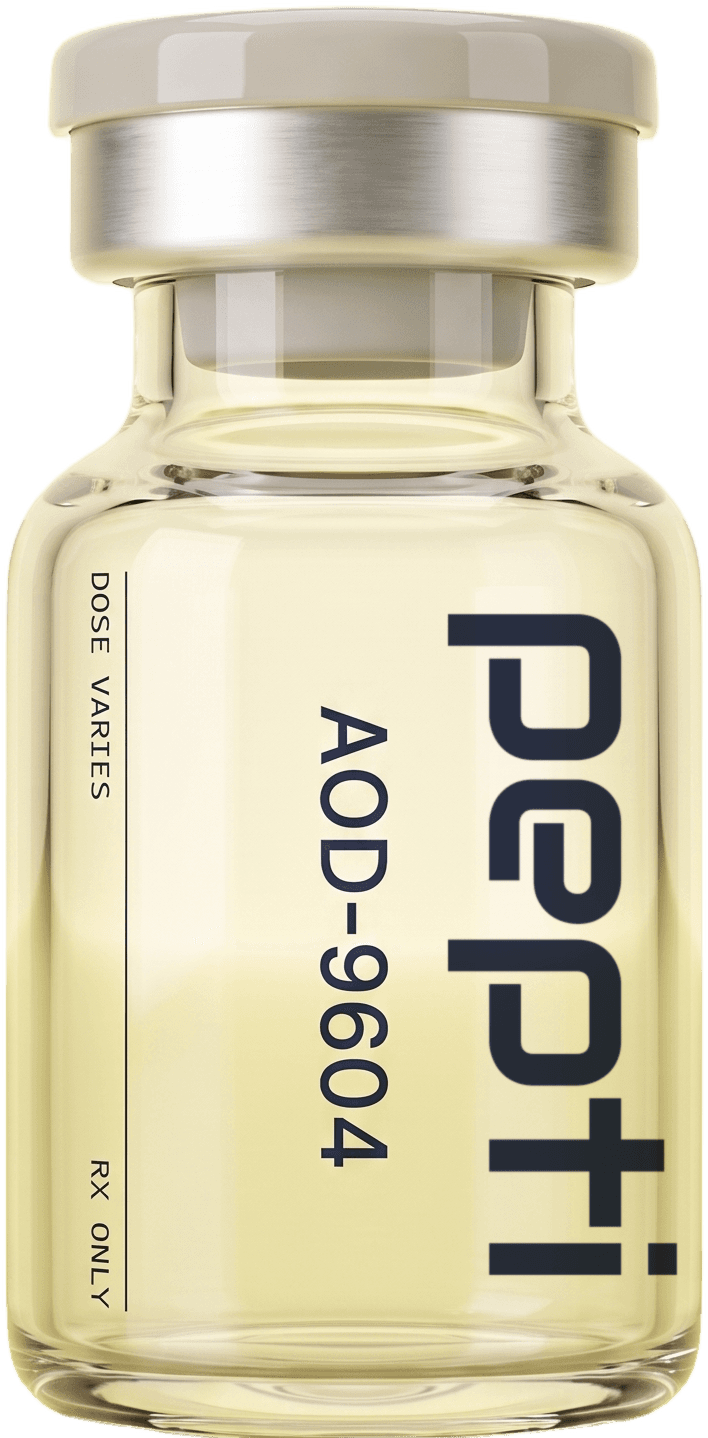
Treatments mentioned
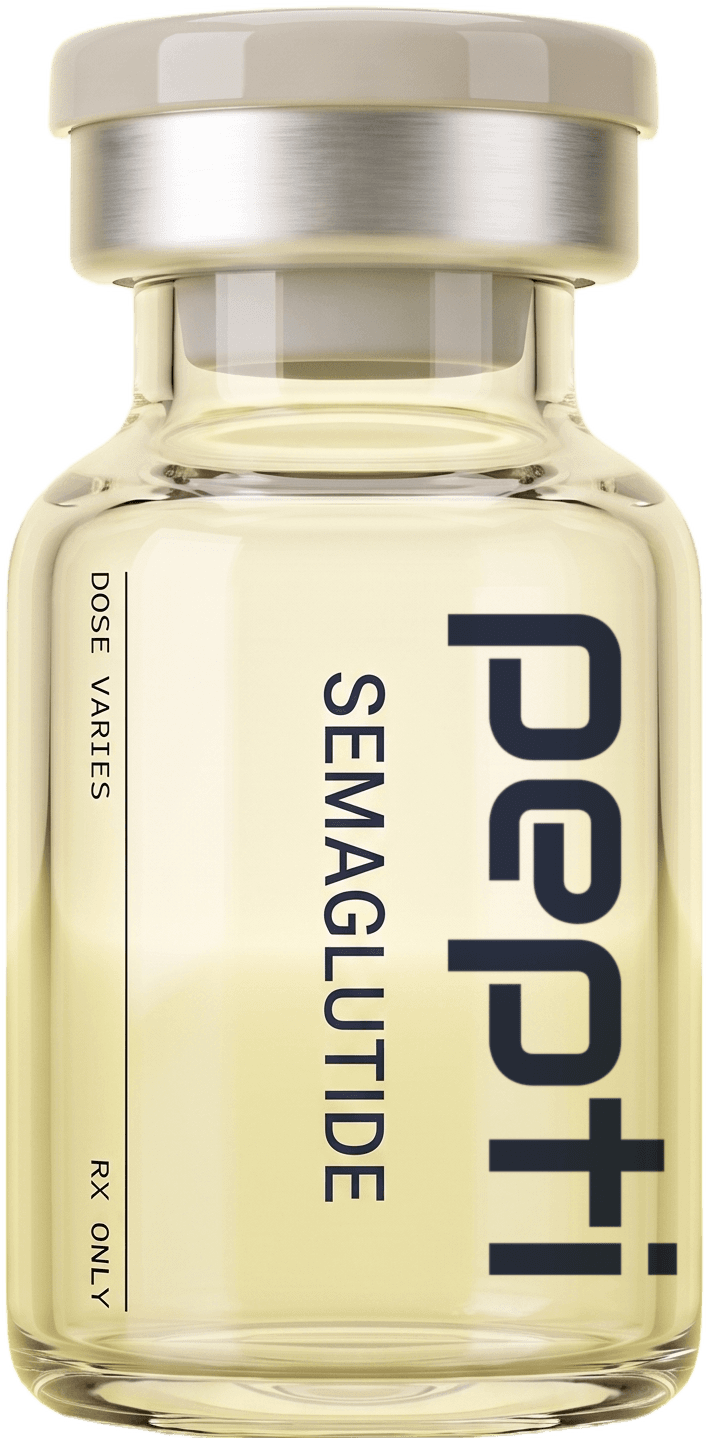
AOD-9604 and semaglutide are both prescribed around weight, but they are unrelated molecules with opposite human evidence. Semaglutide is a GLP-1 receptor agonist that acts on appetite, gastric emptying and insulin release, and its large randomised trials, run on the approved branded products, had weight as a primary endpoint. AOD-9604 is a 16-amino-acid fragment of growth hormone described around fat-cell signalling in animals, and its largest human trial found no statistically significant weight loss over placebo. AOD-9604 is not a GLP-1, does not act on appetite and is not a substitute for semaglutide; compounded versions of both are not FDA approved.
This page explains each on its own terms, puts them side by side, covers what the research does and does not show, where each stands with the FDA, how each is dosed, what each costs at Pepti, and what is known about taking them together.
AOD-9604 vs Semaglutide
The short answer
| If your main goal is | The usual prescription | What is in it | Price |
|---|---|---|---|
| Appetite and body weight, first GLP-1 | Semaglutide | Dose-specific vials, from 1 mg in 1 mL at the starting strength | From $99/mo, priced by dose |
| A fat-metabolism signal that leaves appetite and the growth hormone axis alone | AOD-9604 | 10 mg AOD-9604 in a 5 mL vial | $229/mo |
| AOD-9604 with growth hormone secretagogues, alongside training | SHRED Blend | AOD-9604, CJC-1295, ipamorelin and MOTS-c | $279/mo |
| AOD-9604 with tesamorelin, for body composition | PHYSIQ Blend | Tesamorelin, ipamorelin, AOD-9604 and MOTS-c | $289/mo |
| A dual-receptor GLP-1 option | Tirzepatide | Dose-specific 2 mL vials | From $159/mo, priced by dose |
Every figure is an all-in monthly price covering the medication, physician review, refill management and shipping. There is no separate membership fee. Semaglutide and tirzepatide are "from" prices because the vials are dose-specific and the price moves with the strength. Current pricing always lives on each product page.
AOD-9604 vs Semaglutide
Is AOD-9604 like semaglutide?
No. This is the question behind most searches for the pair. Semaglutide activates the receptor for glucagon-like peptide-1, a gut hormone released after a meal, and its main effect in the weight trials runs through appetite. AOD-9604 acts on none of that. Nothing in its research describes an effect on hunger or fullness, it does not slow the stomach, and it does not lower blood sugar the way a GLP-1 does. The only thing the two have in common is that both are peptides and both are listed under weight loss. Peptides vs GLP-1 explains why "peptide" and "GLP-1" are not the same thing.
AOD-9604 vs Semaglutide
Semaglutide on its own terms
What it is
Semaglutide is a 31-amino-acid analogue of GLP-1. It keeps most of the natural hormone's sequence, swaps one amino acid to block the enzyme DPP-4, which destroys native GLP-1 within about two minutes, changes one other, and adds a fatty-acid chain that binds it to albumin in the blood. The result is a half-life of about a week, which is why it is injected once weekly. It is not a stimulant. The full reference is at what is semaglutide, and the background on the hormone is in what is a GLP-1.
How semaglutide is described to work
- Appetite signalling in the brain. GLP-1 receptors in the hypothalamus and brainstem regulate hunger and fullness. Patients most often describe "food noise" going quiet, and in the weight trials this mechanism carries most of the effect.
- Slower gastric emptying. Fullness lasts longer after a meal. The same action explains the most common side effects: nausea, fullness and constipation.
- Glucose-dependent insulin release. Insulin is released only when blood glucose is raised, and glucagon is suppressed.
Unlike most compounds on this site, these mechanisms have been studied directly in people.
What human data exists for semaglutide
A great deal. The STEP programme studied it for weight management, the SUSTAIN programme in type 2 diabetes, and the SELECT trial for cardiovascular outcomes. SELECT enrolled 17,604 adults with cardiovascular disease and no diabetes, and reported cardiovascular death, heart attack or stroke in 6.5% on semaglutide against 8.0% on placebo. In STEP 4, people switched to placebo after a period on semaglutide regained weight. Two qualifications matter: every trial ran the drug alongside diet and activity counselling, and the trial data belongs to the branded, manufactured products rather than to compounded versions.
AOD-9604 vs Semaglutide
AOD-9604 on its own terms
What it is
Human growth hormone is a protein of 191 amino acids. AOD-9604 is a synthetic copy of the last fifteen, positions 177 to 191, with a tyrosine added at the front, making a 16-amino-acid peptide with a single disulphide bridge. It is the same molecule people call "hGH fragment 176-191". AOD stands for Anti-Obesity Drug: it came out of work at Monash University in Melbourne and was developed in the late 1990s by an Australian company, Metabolic Pharmaceuticals, as an oral obesity treatment. It is not growth hormone and not a growth hormone secretagogue: cell work reports it does not bind the growth hormone receptor, and the human trials reported no change in IGF-1. The full reference is at what is AOD-9604.
How AOD-9604 is described to work
- The "lipolytic domain" idea. A 2000 paper in Hormone Research proposed that growth hormone's effect on fat lives in its tail end and can be separated from its growth and blood-sugar effects. Obese Zucker rats given the fragment gained less weight, without the loss of insulin sensitivity chronic growth hormone causes.
- Beta-3 adrenergic receptors. A 2001 paper in Endocrinology reported reduced weight gain and more beta-3 receptors in the fat of obese mice, and no effect in mice lacking that receptor.
- Fat oxidation without the glucose effect. A 2001 paper in the International Journal of Obesity reported increased fat oxidation and plasma glycerol in obese mice, without the rise in blood glucose growth hormone causes.
All of this is animal and cell work, and the FDA's 2024 review noted that the molecular target of AOD-9604 has never been identified.
What human data exists for AOD-9604
AOD-9604 is one of the few compounded peptides with randomised, placebo-controlled human trials: six of them, run in Australia between roughly 2001 and 2007, enrolling close to 900 people. The decisive one, called OPTIONS, enrolled 536 adults with obesity and gave oral AOD-9604 or placebo once daily for 24 weeks on top of a supervised diet and exercise program. It did not find statistically significant weight loss versus placebo, and on 21 February 2007 the company ended development for obesity. What the trials did establish is mostly about safety: no change in IGF-1, no impairment of glucose tolerance, no antibodies detected in the subjects tested, and no serious adverse event judged related to treatment. Every trial used oral or intravenous dosing; there is no published human trial of the subcutaneous injection that is actually prescribed.
AOD-9604 vs Semaglutide
Head to head
| Semaglutide | AOD-9604 | |
|---|---|---|
| What it is | 31-amino-acid GLP-1 analogue with a fatty-acid chain | 16-amino-acid fragment of growth hormone (positions 177 to 191 plus a tyrosine) |
| Target | The GLP-1 receptor | Not identified; animal work points to beta-3 adrenergic signalling in fat |
| Acts on appetite? | Yes, the main mechanism | No |
| Effect on blood glucose | Lowers it, glucose-dependently | No impairment of glucose tolerance in the trials |
| Effect on IGF-1 | Not a growth hormone agent | No change in the trials |
| Human trials for weight | Large randomised programmes with weight as a primary endpoint | Six randomised trials; the largest found no significant weight loss over placebo |
| Route in the human trials | Subcutaneous injection (branded product) | Oral or intravenous only |
| Approved product exists? | Yes, for type 2 diabetes and chronic weight management | No |
| Schedule at Pepti | Once weekly | Once daily, Monday to Friday |
| Vial at Pepti | Dose-specific vials, one strength per dose step | 5 mL, 2 mg/mL (10 mg) |
| Standard volume | 0.25 mL (25 units) at the starting strength; varies by strength | 0.25 mL (25 units), which is 0.5 mg |
| Doses per vial | About four weekly doses | 20, about 4 weeks |
| Common side effects | Nausea, diarrhoea, vomiting, constipation | Injection-site redness or bruising with the injection; headache in the trials |
| Tested sport | Not among the prohibited classes; confirm your own medication | Prohibited by WADA as a growth hormone fragment |
| Price at Pepti | From $99 a month | $229 a month |
The real difference is evidence, not strength
People ask which is "stronger" for fat loss. That framing hides the important part. Semaglutide was tested in large trials for weight management and met its endpoints. AOD-9604 was also tested properly for weight, by the company that invented it, and did not separate from placebo. One is a weight-management medication with human evidence; the other is a peptide with an interesting animal mechanism and a negative human result for the very use it was designed for.
AOD-9604 vs Semaglutide
Who suits which
Semaglutide first
Semaglutide is the usual starting point when appetite and total body weight are the problem, within the BMI ranges its trials enrolled: 30 or more, or 27 or more with a weight-related condition. It has the longer track record of the two GLP-1s Pepti prescribes, the large cardiovascular outcomes trial and the lower starting price. If you are weighing it against tirzepatide, semaglutide vs tirzepatide covers that choice.
AOD-9604
AOD-9604 tends to come up for someone who is not a GLP-1 candidate on weight grounds, is already training and eating well, and wants a fat-metabolism signal that leaves appetite and the growth hormone axis alone. Prescribers typically frame it as support for a program that is already working, not as a driver of results on its own, and it suits people who understand that the human obesity trials were negative. It is also the AOD-9604 in the SHRED and PHYSIQ blends.
AOD-9604 vs Semaglutide
Can you take AOD-9604 with semaglutide?
They act through unrelated mechanisms, and some prescribers do combine them. What is known and not known:
| Question | Answer |
|---|---|
| Has the combination been tested? | No. No trial has tested AOD-9604 with semaglutide or any GLP-1 |
| Does AOD-9604 add to semaglutide's effect? | There is no human result showing it does, and no reason from the evidence to expect it |
| Does it protect muscle on a GLP-1? | No trial shows that. Protein intake and resistance training are the countermeasures with the most behind them |
| Same syringe? | No. Each vial's directions are calculated against that vial's concentration; never mix two vials in one syringe |
| Same schedule? | No. Semaglutide is once weekly; AOD-9604 is once daily on weekdays |
| Start both at once? | Starting on different dates makes it easier to tell which one caused any change, especially in the early weeks of a GLP-1 when nausea is most likely |
List everything you take on the intake. Your physician sets your directions for each product after reviewing it. What peptides can you take with tirzepatide covers the common pairings, and the same logic applies to semaglutide.
AOD-9604 vs Semaglutide
Where each stands with the FDA
The two sit in completely different regulatory positions.
| Semaglutide | AOD-9604 | |
|---|---|---|
| Approved product | Approved for type 2 diabetes from 2017 and chronic weight management from 2021 | None |
| Shortage history | Shortage declared resolved 21 February 2025 | Not applicable |
| 503A bulks history | Not applicable; it is an approved active ingredient | Category 2 in 2023; left Category 2 on 27 September 2024 when nominations were withdrawn |
| Advisory committee | Not applicable | 4 December 2024: voted 0 to 12 against adding it to the 503A Bulks List, for obesity |
| Pending action | 30 April 2026 proposal to exclude it from the 503B bulks list, not final | No final rule; listed as "nominated but withdrawn" |
| Compounded status | Not FDA approved; 503A compounding for an identified patient where the prescriber documents the reason | Not FDA approved; legal to prescribe and compound |
The 503B proposal concerns outsourcing facilities that compound in bulk; it does not by itself change the 503A pathway under which a pharmacy compounds for a named patient. Some sources claim AOD-9604 has FDA "GRAS" status; as of September 2026 there is no GRAS notice for it in the FDA's inventory, and it would have no bearing on a prescription injection anyway. Compounded medications are not FDA approved. Are peptides FDA approved explains the difference between not approved and not legal.
AOD-9604 vs Semaglutide
Dosing, side by side
Both are injected under the skin (subcutaneously), rotating sites. The schedules and vials are different.
Semaglutide. Once weekly, the same day each week. Each strength is a separate dose-specific vial, so the volume changes with the strength: the starting vial holds 1 mg in 1 mL, drawn at 0.25 mL (25 units), and higher strengths use different concentrations and volumes. Treatment starts at the lowest strength and steps up, typically at roughly four-week intervals as tolerance allows. The semaglutide dosing chart shows every rung.
AOD-9604. 0.25 mL, which is 25 units on a U-100 insulin syringe, once daily Monday through Friday. From the 2 mg/mL vial that is 0.5 mg per dose. Some prescribers direct it in the morning before eating. Twenty doses cover about four weeks. AOD-9604 dosage goes through the conversion.
You do not need to calculate anything: your physician sets your directions after reviewing your intake, and your directions are printed on the vial. Both ship refrigerated with ice packs, with sterile syringes and alcohol prep pads, and refills run every 28 days, one vial per fill. Bloodwork is not required for any Pepti treatment. If your physician wants labs for your care, they'll ask through your account.
AOD-9604 vs Semaglutide
Side effects
Semaglutide. Nausea, diarrhoea, vomiting, constipation and reduced appetite are the most common, mostly during dose increases and usually easing as the body adjusts. Less common but important: pancreatitis, gallbladder disease and dehydration. On insulin or a sulfonylurea, low blood sugar is possible. Slower gastric emptying can change how oral medications are absorbed. The approved labels carry a warning about thyroid C-cell tumours seen in rodents. Semaglutide side effects covers them in full.
AOD-9604. The six company trials give it more human safety data than most compounded peptides. Intravenous dosing was associated with headache, fatigue, dizziness and low blood sugar; oral dosing with headache, diarrhoea, flatulence, increased appetite and nausea, more so at the highest dose. Adverse events were similarly distributed between peptide and placebo. With the injection, prescribers mostly report injection-site redness, mild soreness or bruising. No human trial has used the subcutaneous route. AOD-9604 side effects has the detail.
For either, stop and contact your physician for any reaction that is severe, spreading or involves difficulty breathing, and for severe, persistent abdominal pain. For swelling of the face or throat or trouble breathing, call 911.
AOD-9604 vs Semaglutide
Who should not take them, or should discuss it first
| Situation | Semaglutide | AOD-9604 |
|---|---|---|
| Pregnancy or breastfeeding | Not used | Not used; safety data is absent |
| Personal or family history of medullary thyroid carcinoma or MEN 2 | Contraindicated | Not a specific concern |
| History of pancreatitis or gallbladder disease | Needs careful discussion | Not a specific concern |
| On insulin or a sulfonylurea | Raise it at intake; low blood sugar risk rises | Raise it at intake |
| Tested athletes | Confirm your own medication before starting | Prohibited by WADA as a growth hormone fragment |
AOD-9604 vs Semaglutide
What the evidence shows, honestly
Semaglutide has one of the largest human evidence bases of any weight-management medicine, for the branded products those trials studied, run alongside diet and activity. Weight tends to return after it is stopped. AOD-9604 has a clean safety record from oral and intravenous trials, a negative result for weight loss, and nothing at all for the subcutaneous route that is prescribed. No trial has tested a compounded vial of either, and no trial has tested them together. Any provider presenting AOD-9604 as a "natural semaglutide" or as a trial-backed fat-burner is describing trials that reached the opposite conclusion. The wider picture is in best peptides for weight loss.
AOD-9604 vs Semaglutide
Where to get AOD-9604 or semaglutide prescribed
Neither can be bought legitimately without a prescription. Sites selling them "for research use only" are not accountable for what is in the vial: identity, purity, sterility and concentration are untested. The prescription route:
- Complete a free online intake covering your history, medications and what you want help with.
- A physician licensed in your state reviews it, usually within 24 hours.
- If it is appropriate, a PCAB-accredited, FDA-registered US 503A pharmacy compounds it to that prescription. Lot test results are published at /quality/lab-results.
- It ships refrigerated with your directions printed on the vial.
- Your physician stays reachable for questions and dose changes.
Pepti is cash-pay and does not bill insurance. Step-by-step pages: how to get semaglutide prescribed online and how to get AOD-9604 prescribed online.
References
What this is based on.
References
- Wilding JPH, Batterham RL, Calanna S, et al.. Once-Weekly Semaglutide in Adults with Overweight or Obesity (STEP 1) · New England Journal of Medicine (2021) · PMID 33567185
- Lincoff AM, Brown-Frandsen K, Colhoun HM, et al.. Semaglutide and Cardiovascular Outcomes in Obesity without Diabetes (SELECT) · New England Journal of Medicine (2023) · PMID 37952131
- Wadden TA, Bailey TS, Billings LK, et al.. Effect of subcutaneous semaglutide vs placebo as an adjunct to intensive behavioral therapy on body weight in adults with overweight or obesity (STEP 3) · JAMA (2021) · PMID 33625476
- Rubino D, Abrahamsson N, Davies M, et al.. Effect of Continued Weekly Subcutaneous Semaglutide vs Placebo on Weight Loss Maintenance in Adults With Overweight or Obesity: The STEP 4 Randomized Clinical Trial · JAMA (2021) · PMID 33755728
- Marso SP, Bain SC, Consoli A, et al.. Semaglutide and Cardiovascular Outcomes in Patients with Type 2 Diabetes (SUSTAIN-6) · New England Journal of Medicine (2016) · PMID 27633186
- Davies M, Færch L, Jeppesen OK, et al.. Semaglutide 2.4 mg once a week in adults with overweight or obesity, and type 2 diabetes (STEP 2): a randomised, double-blind, double-dummy, placebo-controlled, phase 3 trial · The Lancet (2021) · PMID 33667417
- Garvey WT, Batterham RL, Bhatta M, et al.. Two-year effects of semaglutide in adults with overweight or obesity: the STEP 5 trial · Nature Medicine (2022) · PMID 36216945
- Rubino DM, Greenway FL, Khalid U, et al.. Effect of Weekly Subcutaneous Semaglutide vs Daily Liraglutide on Body Weight in Adults With Overweight or Obesity Without Diabetes: The STEP 8 Randomized Clinical Trial · JAMA (2022) · PMID 35015037
- Aronne LJ, Horn DB, le Roux CW, et al.. Tirzepatide as Compared with Semaglutide for the Treatment of Obesity (SURMOUNT-5) · New England Journal of Medicine (2025) · PMID 40353578
- Sanyal AJ, Newsome PN, Kliers I, et al.. Phase 3 Trial of Semaglutide in Metabolic Dysfunction-Associated Steatohepatitis (ESSENCE) · New England Journal of Medicine (2025) · PMID 40305708
- Wilding JPH, Batterham RL, Davies M, Van Gaal LF, Kandler K et al.. Weight regain and cardiometabolic effects after withdrawal of semaglutide: The STEP 1 trial extension · Diabetes Obes Metab (2022) · PMID 35441470
- Batsis JA, Gavras A, Gross DC, Cheever CR, Da Silva BR et al.. Effect of Incretin-Based and Nonpharmacologic Weight Loss on Body Composition: A Systematic Review · Ann Intern Med (2026) · PMID 41996180
Citations are provided for educational purposes. They do not constitute medical advice. Always discuss any peptide protocol with your prescribing physician.
Common questions
AOD-9604 vs Semaglutide, answered.
No. AOD-9604 is a fragment of growth hormone. It does not act on the GLP-1 receptor, appetite, gastric emptying or insulin release, which are the things semaglutide acts on.
No study has compared them, but the evidence is not close. Semaglutide's large trials met their weight endpoints. AOD-9604's largest human trial, 536 adults over 24 weeks, found no statistically significant weight loss over placebo.
No. Nothing in the AOD-9604 research describes an effect on hunger or fullness. Increased appetite was actually among the effects reported with oral dosing in the company trials.
Some prescribers combine them because they act on unrelated pathways, but no trial has tested the combination and there is no human result showing AOD-9604 adds anything to semaglutide. They are separate prescriptions on separate schedules, drawn in separate syringes.
No. At Pepti, AOD-9604 is $229 a month and semaglutide starts from $99 a month, priced by dose. More importantly, AOD-9604 does not do the same job and does not have the same evidence.
There is no trial showing that. AOD-9604 does not raise growth hormone or IGF-1. Weight lost on a GLP-1 includes some lean mass, and a daily protein target and resistance training are the countermeasures with the most behind them.
No. Semaglutide is an approved active ingredient, but compounded preparations are not FDA approved. AOD-9604 has no approved product of any kind. Both are legal to prescribe and compound.
No. It left the FDA's Category 2 list in September 2024, and the December 2024 advisory committee vote against it was a recommendation, not a final rule. It is prohibited in tested sport by WADA as a growth hormone fragment.
At Pepti, AOD-9604 is $229 a month and semaglutide starts from $99 a month, rising with the strength. Every figure is all-in, covering medication, physician review, refill management and shipping.
No. Bloodwork is not required for any Pepti treatment. If your physician wants labs for your care, they'll ask through your account. The free assessment goes to a physician licensed in your state. A consultation does not guarantee a prescription.
Next step
See what a physician recommends for you.
A licensed physician in your state reviews your intake and decides what is appropriate. A consultation does not guarantee a prescription.