Weight Loss · Reference
Where to Buy Semaglutide Online: Compounded vs Branded, and What to Verify
This page covers what semaglutide is, the three different things sold under its name, how the prescription route works from intake to refill, what a legitimate provider should be able to show you, the red flags specific to GLP-1 sellers, where the FDA stands as of September 2026, and what the trial evidence does and does not establish.

Reviewed by Dr. Gene, MD · Board-certified Family Medicine
Every Pepti prescription is reviewed by a licensed U.S. physician before it's dispensed — and only provided if clinically appropriate.
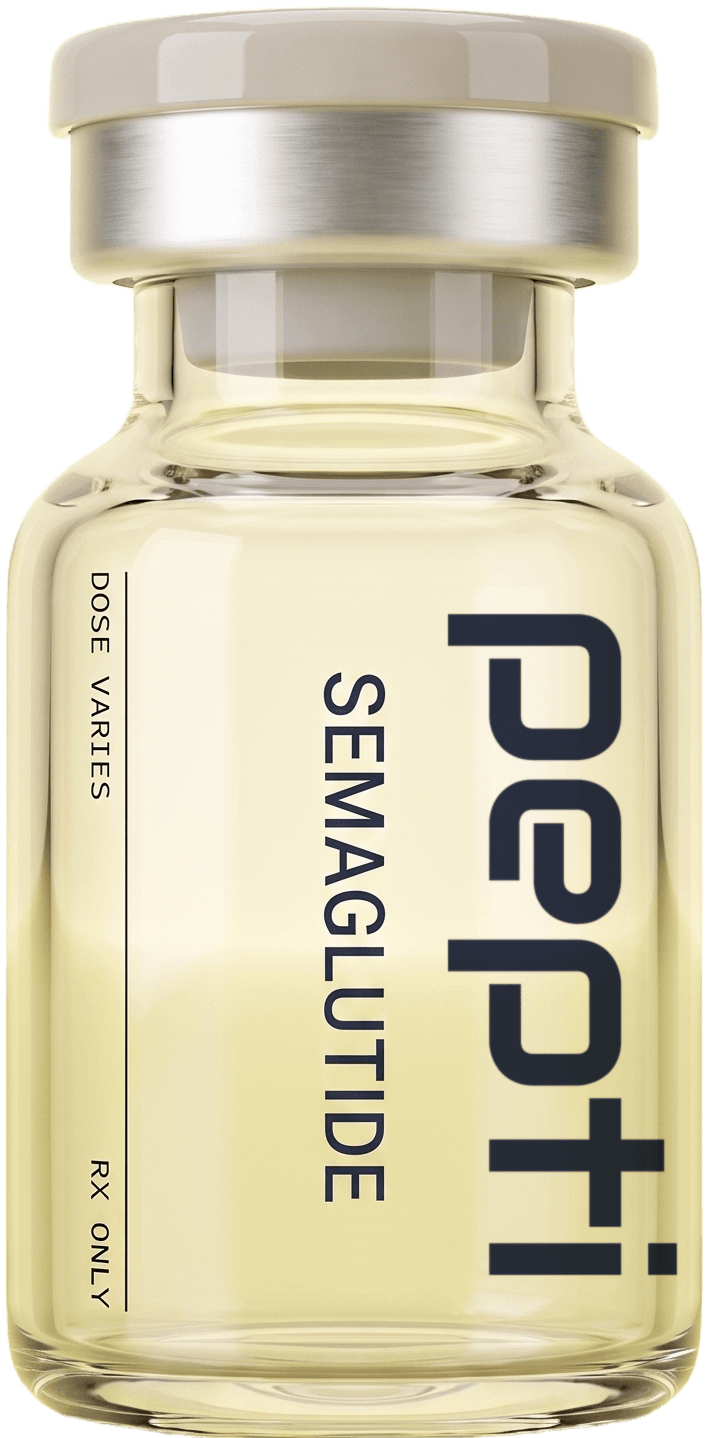
Treatments mentioned
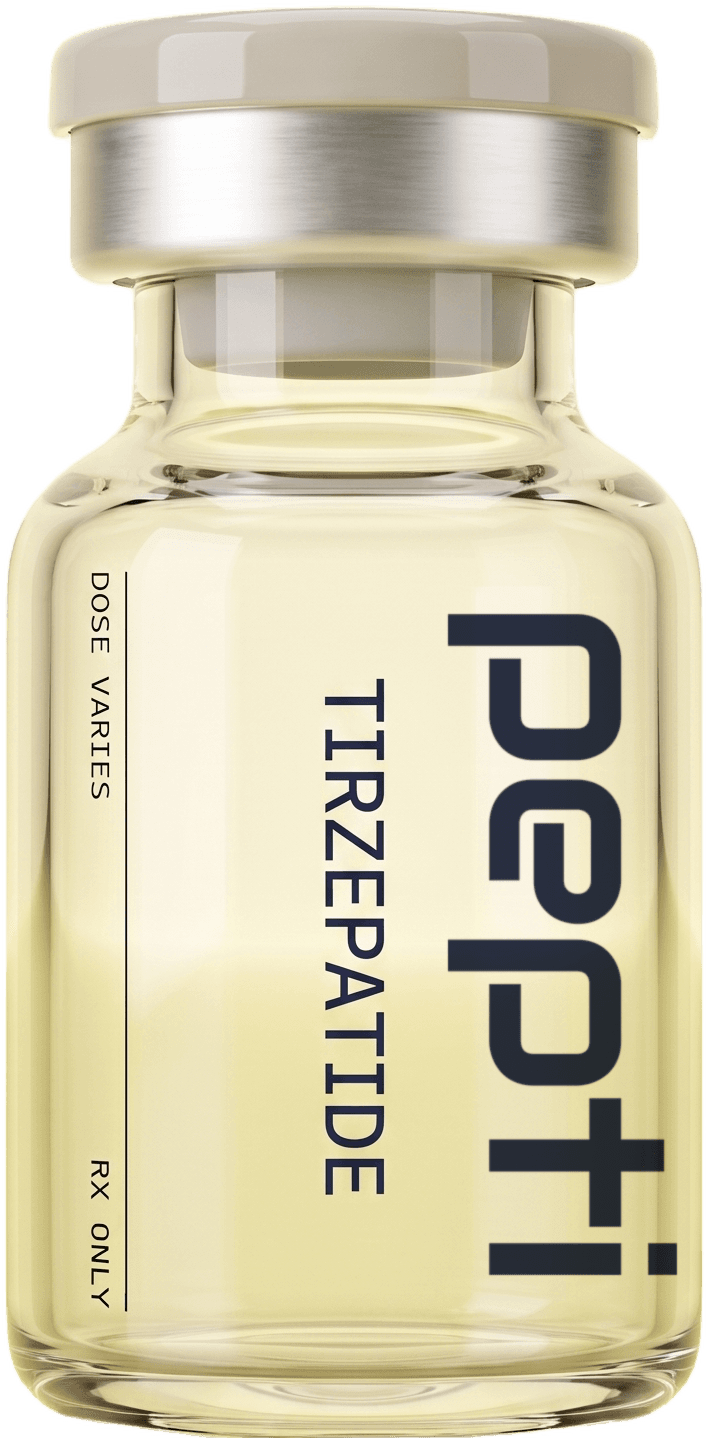
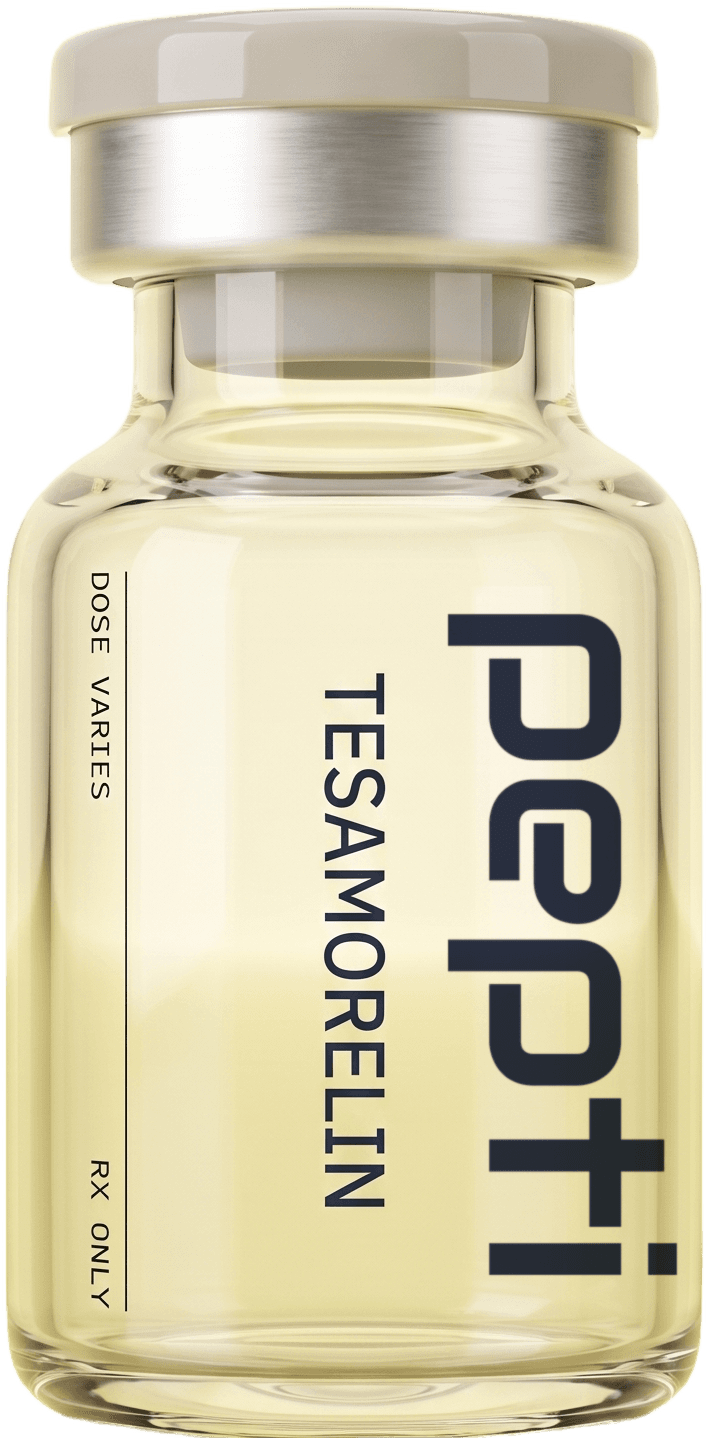
Semaglutide is prescription-only in every form, so buying it online legitimately means either a branded product dispensed by a pharmacy or a compounded preparation prescribed by a physician licensed in your state and made by a licensed US compounding pharmacy. Anything that ships without a prescription is a research chemical, and those listings often sell salt forms that are not the same active ingredient as the medication. Compounded semaglutide is not FDA approved; the branded products are. That single distinction is the one most sites blur, and a provider that blurs it on purpose is telling you what kind of business it is.
This page covers what semaglutide is, the three different things sold under its name, how the prescription route works from intake to refill, what a legitimate provider should be able to show you, the red flags specific to GLP-1 sellers, where the FDA stands as of September 2026, and what the trial evidence does and does not establish.
Where to Buy Semaglutide Online
The short answer
| If your situation is | The route | What is in it | Price |
|---|---|---|---|
| Starting compounded treatment | Semaglutide at the starting rung | 1 mg in a 1 mL vial (1 mg/mL) | From $99 |
| Already titrated, continuing | Semaglutide at your current rung | Dose-specific vials up to 10 mg per 2 mL (5 mg/mL) | Published per rung |
| Wanting the dual-receptor option | Tirzepatide | Dose-specific vials with cyanocobalamin | From $159 |
| Insurance may cover a branded product | Branded semaglutide through your plan | The approved product | Varies by plan |
| Not a candidate for a GLP-1 | Other metabolic options such as PHYSIQ | 10 mg each Tesamorelin, Ipamorelin, AOD-9604, MOTS-c | $279 |
Compounded pricing is per dose rung, because strength drives the cost of compounding, and each figure is all-in: medication, physician review, refill management and shipping. It is a subscription that refills until you cancel.
Three products share one name online: an FDA-approved branded drug, a compounded preparation made to an individual prescription, and a laboratory chemical sold "not for human use." The first two are legitimate and different from each other; the third is where most search results for "buy semaglutide online" actually lead. If a site will send you semaglutide without a physician looking at your history first, it is not selling you a medication, whatever the label says.
Where to Buy Semaglutide Online
What semaglutide actually is
Semaglutide is a GLP-1 receptor agonist: a peptide analogue of glucagon-like peptide-1, a hormone your gut releases after you eat.
It does four things that matter. It prompts insulin release when blood glucose is high. It suppresses glucagon, the hormone that tells the liver to release glucose. It slows gastric emptying, so food leaves the stomach more slowly. And it acts on appetite centres in the brain, which is the part patients notice as food occupying less mental space. Structural modifications extend its half-life enough for weekly dosing. There is more in what semaglutide is.
It is a weekly subcutaneous injection, titrated upward over months rather than started at a full dose, because the gastrointestinal effects are dose-related.
Why the dose climbs in rungs
The compounded ladder runs from a 0.25 mg weekly starting rung up through 0.5 mg, 1 mg, 1.7 mg and 2 mg, each supplied as its own dose-specific vial. Nobody starts at the top. The nausea, reflux and constipation that people associate with GLP-1s are dose-related, and the body adapts to each step over a few weeks. A provider that skips the ladder is prioritizing speed over tolerability, and the FDA has specifically flagged faster-than-labeled titration among the dosing problems reported with compounded products.
Where to Buy Semaglutide Online
Compounded versus branded versus research chemical
| Branded semaglutide | Compounded semaglutide | "Research use only" vial | |
|---|---|---|---|
| FDA approved | Yes | No | No |
| Prescription required | Yes | Yes | No |
| Who makes it | The manufacturer | A state-licensed, FDA-registered compounding pharmacy | A chemical supplier |
| Active ingredient | Semaglutide | Semaglutide | Often a salt form, which FDA has said is not the same active ingredient |
| Insurance | Sometimes covered, subject to plan criteria | Generally not covered | No |
| Sterility oversight | Manufacturing standards | USP sterile compounding, state board oversight | None |
| Accountable if something is wrong | Manufacturer and pharmacy | Pharmacy and prescriber | Nobody |
| Cost to you | Varies enormously with coverage | One published monthly price per rung | Lowest, for the reasons above |
If your insurance covers a branded product, check that first. Paying cash for compounded medication when a plan would have covered the approved one is a common and expensive mistake. Coverage is covered in does insurance cover peptide therapy, and the compounded question specifically in is compounded semaglutide safe.
The branded product
The approved semaglutide products are manufactured under FDA-inspected conditions, come in a pre-filled pen at fixed doses, and are the products the STEP and SELECT trials were run on. Whether you pay a copay or the full cash price depends entirely on your plan's criteria. For many people with a qualifying diagnosis and a cooperative plan this is the cheapest route, and a legitimate compounded-medication provider will tell you so.
The compounded preparation
A compounded preparation is made by a licensed pharmacy for one named patient, against one prescription, from semaglutide base obtained from an FDA-registered supplier. It shares the active ingredient with the branded product. It does not share the approval, the pre-filled pen or the manufacturing-scale batch testing. What replaces those is state board of pharmacy oversight, USP sterile-compounding standards, and a pharmacy that is named on your label and answerable to you.
Compounded semaglutide is not FDA approved, and no compounded drug is. A provider that describes its compounded product as "FDA approved" is either confused about its own supply chain or hoping you are.
The research chemical, and the salt-form problem
The third product is sold as "semaglutide" by chemical suppliers under a label stating it is not for human consumption. There is no prescription, no pharmacy, no physician and no accountability. The FDA's specific concern with this category is that much of it is a salt form: "These salt forms, including semaglutide sodium and semaglutide acetate, are different active ingredients," and the agency has said it is not aware of any basis for compounding with them.
This is not a technicality. The approved drug is semaglutide base; a sodium or acetate salt has a different molecular weight, different solubility and no clinical testing in people. Nobody buying from that channel can know what dose they are taking, or whether the powder is sterile.
Where to Buy Semaglutide Online
The process, step by step
- Complete a medical intake: height and weight, medical history, medications, personal or family history of medullary thyroid carcinoma or MEN 2, pancreatitis history, gallbladder history, pregnancy status, and any history of disordered eating.
- A physician licensed in your state reviews it. They may request labs, ask follow-up questions, or decline. If you are already on a dose elsewhere, say so, because a prescriber can often continue you rather than restarting at the bottom rung.
- A prescription is written for a starting rung and a titration plan.
- A licensed compounding pharmacy prepares dose-specific vials and ships refrigerated with your directions on the label.
- You titrate with the prescriber reachable. Dose increases should follow tolerance, not a calendar. Nausea management is in GLP-1 nausea, how to manage it.
What the intake is actually screening for
The questions are not paperwork. Medullary thyroid carcinoma and MEN 2 appear on the boxed warning of every approved GLP-1 product because of thyroid C-cell tumors seen in rodent studies, and a personal or family history is a hard contraindication. Pancreatitis has been reported with GLP-1s, so a prior episode changes the risk conversation. Rapid weight loss itself raises gallstone risk. The drug is not used in pregnancy and should be stopped well before conception. And an appetite-suppressing drug is the wrong tool for someone whose relationship with food is the actual problem. A form that skips these is not a medical intake.
The physician is deciding three things: whether semaglutide is appropriate for you at all, which rung to start you on, and what pace of titration and follow-up your history calls for. A physician can decline, and a legitimate provider refunds a declined consultation rather than routing you to a different product.
What the pharmacy does, and what happens at each refill
The pharmacy receives a prescription with your name, the strength, the volume to inject and the frequency. It compounds the preparation under USP sterile-compounding standards, labels it with your name, the sig, the pharmacy's identity and a beyond-use date, and ships it cold. The label on your vial is the single most useful document in the process, because it names every party responsible for what is inside.
Refills run on a 28-day cycle, one vial per fill. Before a dose increase, the prescriber wants to know how you tolerated the current rung, whether side effects are settling, and what your weight and appetite are doing. A provider that increases your dose automatically on a schedule, without that check, is running a calendar rather than a treatment. The prescriber should also stay reachable between refills, because the first eight weeks are where the questions happen: nausea that will not settle, a missed dose, a new medication from another doctor. A seller whose relationship with you ends at checkout has sold you a product, not treatment.
Where to Buy Semaglutide Online
What a legitimate provider can show you
A physician licensed in your state
Telehealth prescribing is state-by-state. The physician who reviews your intake must hold a license in the state where you are when you are treated, and a legitimate provider can tell you who reviewed your case. A service that cannot name a prescriber, or that says a "medical team" approved you, has not necessarily had a physician look at your file.
A named pharmacy
You should know which pharmacy compounded your medication before it arrives, and it should be on the label when it does. A state-licensed pharmacy has a license number you can check with that state's board of pharmacy. The pharmacy's FDA registration is a separate, checkable fact. A provider that will not tell you where the medication comes from is asking you to trust a supply chain it will not describe.
Testing on the preparation
A compounding pharmacy tests its preparations for potency and sterility, and a provider that takes quality seriously will show you what that testing looks like. Pepti publishes its pharmacy testing at lab results, and the overall quality process at quality. What to look for on a certificate of analysis: the preparation name and strength, the lot, the assay result against the labeled strength, and sterility and endotoxin results. A vague "third-party tested" claim with nothing attached is not the same thing.
The label on your vial
A legitimate compounded medication arrives labeled with your name, the drug and strength, the directions, the pharmacy's name and contact details, the prescriber, the date and a beyond-use date. A vial with a brand-style sticker and no patient name, or a bag of lyophilized powder with a separate vial of bacteriostatic water, did not come from a pharmacy filling a prescription for you.
Where to Buy Semaglutide Online
Red flags specific to GLP-1 sellers
| What you see | What it tells you |
|---|---|
| Ships with no prescription, or "no consultation required" | Research-chemical seller, and possibly a salt form rather than semaglutide |
| "Semaglutide sodium" or "semaglutide acetate" | Salt forms sold for laboratory use, which FDA has stated are not the same active ingredient as the approved drug |
| Lyophilised powder plus a vial of bacteriostatic water for you to mix | You are being asked to compound a sterile injectable at home |
| A brand name used as the product name for a compounded preparation | Compounded semaglutide is not the branded product and cannot be sold as it |
| "FDA approved" on a compounded preparation | Untrue |
| Pounds or percentages promised in a set time | Outcome promises no legitimate provider makes |
| Starting you at a high dose to "speed things up" | Titration exists because the side effects are dose-related |
| No questions about thyroid cancer history or pancreatitis | The screening that specifically matters here was skipped |
| Price that excludes the consultation, shipping, needles or refills | The headline is not the price |
The general version is in how to tell if a peptide seller is legitimate. Compounding rules for GLP-1s have shifted with FDA guidance more than once, so a provider that changes what it offers is usually complying with something rather than hiding something.
Counterfeits that look like the branded product
The FDA has warned that counterfeit versions of the branded pens are in circulation, and that counterfeit drugs "could contain the wrong ingredients, contain too little, too much or no active ingredient at all or other harmful ingredients." A branded pen at a fraction of the pharmacy price from a site that is not a licensed pharmacy is the highest-risk purchase in this category, because it is designed to be indistinguishable from the real thing.
Dosing that does not match the vial
The FDA's concerns page describes adverse event reports involving "patients measuring and self-administering incorrect doses" and "health care professionals miscalculating doses" with compounded products, often because the concentration on the vial differed from what the patient or provider assumed. This is why the directions on a legitimate label are written in milliliters and syringe units for the specific strength in your hand, and why a provider that ships one concentration and tells you to "adjust" it for each rung has removed the safeguard.
"Deep discounts" and retail pressure
The FDA's own list of warning signs for online GLP-1 sellers includes companies offering "deep discounts or prices that seem too good to be true" and those not requiring "a screening and prescription by a licensed doctor." Compounded semaglutide has a real cost floor: the base material, sterile compounding, cold shipping and a physician's time. A price far below that floor means one of those things is missing. Referral codes, countdown timers and "only three spots left" are retail mechanics, not medical ones.
Where to Buy Semaglutide Online
What it costs, and what drives the number
Why compounded semaglutide is priced per rung
The pharmacy's cost scales with the amount of semaglutide in the vial, so a 2 mg weekly rung costs more to compound than a 0.25 mg starting rung. A provider that charges one flat price for every rung is either overcharging you at the bottom or subsidizing the top. Per-rung pricing is the honest version. The current figure for each rung is on the semaglutide cost page; tirzepatide is priced the same way.
What "all-in" should include
Medication, the physician review, refill management and refrigerated shipping. Injection supplies should be included or clearly listed. There should be no separate membership fee sitting underneath the medication price. If any of those appear as line items at checkout that were not in the headline, the headline was marketing. A research-chemical vial is cheapest because it comes with no physician, no pharmacy, no sterility testing and no one to call; the saving is the cost of everything that was removed.
The branded product and insurance
If your plan covers a branded semaglutide product for your diagnosis, your copay may well be lower than any compounded price. Plans generally require a qualifying BMI or diagnosis and often prior authorization. Ask before paying cash. The mechanics are in does insurance cover peptide therapy.
Where to Buy Semaglutide Online
Where semaglutide stands with the FDA right now
This section was verified against FDA pages in September 2026. The regulatory picture for compounded GLP-1s has moved several times, and most articles online describe a moment that has passed.
The shortage, and when it ended
Compounded semaglutide reached the mainstream during the FDA drug-shortage period, when compounders were permitted to make copies of a drug in shortage. The FDA determined that the shortage of semaglutide injection products was resolved on 21 February 2025. Enforcement discretion for 503A pharmacies then ended on 22 April 2025, and for 503B outsourcing facilities on 22 May 2025, following a court decision in April 2025. For tirzepatide, the shortage was declared resolved on 19 December 2024, with 503A discretion ending 18 February 2025 and 503B on 19 March 2025.
What "essentially a copy" means for your prescription
Outside a shortage, the law restricts compounding a preparation that is essentially a copy of a commercially available drug. The FDA's working definition is a preparation with the same active ingredient in a comparable strength by the same route, unless the prescriber documents a significant difference for that individual patient. That is why a legitimate compounded prescription is individualized to you by a physician rather than a generic order, and why the intake and the physician's notes are not formalities.
The April 2026 proposal on 503B outsourcing facilities
On 30 April 2026 the FDA proposed to exclude semaglutide, tirzepatide and liraglutide from the 503B bulks list. If finalized, outsourcing facilities would not be permitted to compound these drugs from bulk substances except during a declared shortage, on the basis that the agency found insufficient evidence of a clinical need. The proposal was open for public comment until 29 June 2026 and, as of this page's verification, is a proposal rather than a final action. The press release addresses 503B outsourcing facilities, which compound in bulk without patient-specific prescriptions; it does not address 503A pharmacies compounding to an individual prescription, which is how a prescription written for you is filled.
None of the 2025 and 2026 actions change the basics: semaglutide is a lawful, FDA-approved active ingredient, a physician can prescribe a compounded preparation of it to an individual patient, and a state-licensed pharmacy can compound and dispense it to that prescription. What they narrow is copying the branded product at scale. Compounded semaglutide remains not FDA approved as a finished product, which is true of every compounded medication.
What the FDA has said about compounded products in use Read plainly, that page is an argument for the exact safeguards described above: a physician who screens you, a named pharmacy, dose-specific vials with directions in units, and a prescriber reachable after the box arrives.
Where to Buy Semaglutide Online
What to plan for that most providers skip
Protein and resistance training. Weight lost on a GLP-1 includes lean mass. Protein intake and resistance training are how you influence that ratio, and no vial does it for you.
A titration pace you can live with. The aim is the lowest dose that does the job, not the highest you can tolerate.
What happens when you stop. Appetite signalling returns to baseline, which is why the exit plan should be part of the first conversation rather than the last. See what happens when you stop taking peptides.
Who should not take it. Personal or family history of medullary thyroid carcinoma or MEN 2, pregnancy or breastfeeding, and a history of pancreatitis that needs careful discussion first.
What to expect, and when
Most people notice reduced appetite within the first one to two weeks at the starting rung, and some nausea in the same window. This is where a reachable prescriber earns their keep: smaller meals, slower eating, avoiding high-fat food near injection day, and not increasing the dose until the current one is comfortable. Months two to six are where the ladder is climbed and where most weight change in the trials occurred; the prescriber's job is to find the lowest rung that controls appetite without side effects that interfere with eating well. Not everyone reaches 2 mg, and reaching it is not the goal. These are patterns described by prescribers, not trial endpoints.
Semaglutide treats a chronic condition and is used long-term, refilled on a 28-day cycle. Because it slows gastric emptying it can change how quickly oral medications are absorbed, and insulin or a sulfonylurea raises the question of low blood sugar, which is the practical reason the intake asks for everything you take.
Where to Buy Semaglutide Online
What the evidence shows, honestly
Semaglutide has the strongest evidence of any molecule in this catalogue. Large randomised trials support the branded products for weight management and type 2 diabetes, with cardiovascular risk reduction demonstrated in approved populations. This is not a preclinical story.
The honest caveats are about the compounded version rather than the molecule. Compounded preparations share the active ingredient but not the approval, and the trials were run on the branded products. Gastrointestinal side effects are common rather than rare. Response varies, and a meaningful number of people do not respond well, which is the subject of why am I not losing weight on semaglutide.
The STEP program
STEP 1 (New England Journal of Medicine, 2021) randomized 1,961 adults with overweight or obesity and no diabetes to weekly semaglutide 2.4 mg or placebo alongside lifestyle intervention for 68 weeks, and reported a mean weight change of about 14.9% with semaglutide against about 2.4% with placebo. STEP 2 (The Lancet, 2021) ran the same design in adults with type 2 diabetes and reported smaller but still substantial differences from placebo. STEP 3 (JAMA, 2021) added semaglutide to intensive behavioral therapy and reported greater weight loss than behavioral therapy alone. STEP 5 (Nature Medicine, 2022) reported weight loss maintained over two years with continued treatment. STEP 8 (JAMA, 2022) reported greater weight loss with weekly semaglutide than with daily liraglutide.
What the trials say about stopping
STEP 4 (JAMA, 2021) is the study to know if you are deciding whether to start. After a 20-week run-in on semaglutide, participants were randomized to continue or to switch to placebo. Those who switched regained much of the lost weight over the next 48 weeks, while those who continued kept losing. That finding is the trial-level reason an honest provider talks about long-term treatment, and about protein and training, from the first conversation.
Cardiovascular and liver outcomes
SELECT (New England Journal of Medicine, 2023) enrolled over 17,000 adults with established cardiovascular disease and overweight or obesity but without diabetes, and reported a lower rate of major adverse cardiovascular events with semaglutide than with placebo. SUSTAIN-6 (New England Journal of Medicine, 2016) had earlier reported a cardiovascular outcomes benefit in adults with type 2 diabetes. ESSENCE (New England Journal of Medicine, 2025) reported improvement in liver histology in adults with metabolic dysfunction-associated steatohepatitis. These are outcomes trials in specific populations on the branded products; they are not evidence about compounded preparations and they do not apply to everyone considering semaglutide. The point for a buyer is the breadth of the evidence base, which is a different situation from almost every other peptide on this site.
Semaglutide against tirzepatide
SURMOUNT-5 (New England Journal of Medicine, 2025) compared tirzepatide directly with semaglutide in adults with obesity and reported greater weight loss with tirzepatide over 72 weeks. Tirzepatide acts at both GIP and GLP-1 receptors; semaglutide acts at GLP-1 alone. That trial does not make tirzepatide the right choice for every patient: cost, side-effect experience and history all bear on it, and the decision is the prescriber's. The comparison is in semaglutide vs tirzepatide.
What the evidence does not establish
- It does not establish how any individual will respond. Trial means hide wide variation, and a real fraction of participants lost little.
- It does not establish results for compounded preparations, which have not been the subject of randomized trials.
- It does not establish that the medication works without the dietary and activity changes that accompanied it in every trial.
- It does not establish that weight stays off after stopping; STEP 4 suggests the opposite for most people.
Where to Buy Semaglutide Online
When semaglutide is the wrong tool
A reference that only ever recommends its own product is not much of a reference. Some honest cases:
- Your insurance covers the branded product. Use it. A compounded preparation exists for people who cannot access the approved one affordably, not as a preference.
- You have a contraindication. A history of medullary thyroid carcinoma or MEN 2, pregnancy, or a pancreatitis history the physician is not comfortable with. The answer is no, and a physician will say so.
- You are not a candidate for a GLP-1 but want metabolic support. PHYSIQ or a growth-hormone-axis product such as tesamorelin may be the conversation to have with a physician instead.
- Your goal is body composition at an already healthy weight. An appetite-suppressing drug is not the right lever, and a physician is likely to decline.
- You want the dual-receptor option. Tirzepatide is a different molecule with its own trial data; what tirzepatide is covers it.
Your physician will tell you if semaglutide is not the right tool for what you have described. A consultation does not guarantee a prescription, and being declined is refunded.
Where to Buy Semaglutide Online
Monitoring and bloodwork
Bloodwork is not always required. A physician may want a metabolic panel, HbA1c, lipids and thyroid markers depending on your history, particularly if diabetes, kidney disease or thyroid disease is in the picture. At-home blood testing covers these without a lab visit, and the general question is in do you need bloodwork before peptides. During treatment, symptoms and weight trajectory matter more than labs for most people; persistent severe abdominal pain, vomiting that will not stop, or symptoms of low blood sugar are reasons to contact the prescriber the same day. Periodic labs are a physician's call.
References
What this is based on.
References
- Wilding JPH, Batterham RL, Calanna S, et al.. Once-Weekly Semaglutide in Adults with Overweight or Obesity (STEP 1) · New England Journal of Medicine (2021) · PMID 33567185
- Lincoff AM, Brown-Frandsen K, Colhoun HM, et al.. Semaglutide and Cardiovascular Outcomes in Obesity without Diabetes (SELECT) · New England Journal of Medicine (2023) · PMID 37952131
- Wadden TA, Bailey TS, Billings LK, et al.. Effect of subcutaneous semaglutide vs placebo as an adjunct to intensive behavioral therapy on body weight in adults with overweight or obesity (STEP 3) · JAMA (2021) · PMID 33625476
- Rubino D, Abrahamsson N, Davies M, et al.. Effect of Continued Weekly Subcutaneous Semaglutide vs Placebo on Weight Loss Maintenance in Adults With Overweight or Obesity: The STEP 4 Randomized Clinical Trial · JAMA (2021) · PMID 33755728
- Marso SP, Bain SC, Consoli A, et al.. Semaglutide and Cardiovascular Outcomes in Patients with Type 2 Diabetes (SUSTAIN-6) · New England Journal of Medicine (2016) · PMID 27633186
- Davies M, Færch L, Jeppesen OK, et al.. Semaglutide 2.4 mg once a week in adults with overweight or obesity, and type 2 diabetes (STEP 2): a randomised, double-blind, double-dummy, placebo-controlled, phase 3 trial · The Lancet (2021) · PMID 33667417
- Garvey WT, Batterham RL, Bhatta M, et al.. Two-year effects of semaglutide in adults with overweight or obesity: the STEP 5 trial · Nature Medicine (2022) · PMID 36216945
- Rubino DM, Greenway FL, Khalid U, et al.. Effect of Weekly Subcutaneous Semaglutide vs Daily Liraglutide on Body Weight in Adults With Overweight or Obesity Without Diabetes: The STEP 8 Randomized Clinical Trial · JAMA (2022) · PMID 35015037
- Aronne LJ, Horn DB, le Roux CW, et al.. Tirzepatide as Compared with Semaglutide for the Treatment of Obesity (SURMOUNT-5) · New England Journal of Medicine (2025) · PMID 40353578
- Sanyal AJ, Newsome PN, Kliers I, et al.. Phase 3 Trial of Semaglutide in Metabolic Dysfunction-Associated Steatohepatitis (ESSENCE) · New England Journal of Medicine (2025) · PMID 40305708
- Wilding JPH, Batterham RL, Davies M, Van Gaal LF, Kandler K et al.. Weight regain and cardiometabolic effects after withdrawal of semaglutide: The STEP 1 trial extension · Diabetes Obes Metab (2022) · PMID 35441470
- Batsis JA, Gavras A, Gross DC, Cheever CR, Da Silva BR et al.. Effect of Incretin-Based and Nonpharmacologic Weight Loss on Body Composition: A Systematic Review · Ann Intern Med (2026) · PMID 41996180
Citations are provided for educational purposes. They do not constitute medical advice. Always discuss any peptide protocol with your prescribing physician.
Common questions
Where to Buy Semaglutide Online, answered.
No, not as a medication. Sites offering it without one are selling research chemicals, frequently salt forms that are not the same active ingredient, under a label stating they are not for human use. The FDA has stated that semaglutide sodium and semaglutide acetate are different active ingredients from the approved drug, and it lists sellers that do not require a screening and prescription by a licensed doctor among its warning signs.
It is priced per dose rung, because higher strengths cost more to compound, and each rung's price is published on the semaglutide cost page rather than quoted on request. The price includes medication, physician review, refill management and shipping.
It contains the same active ingredient but it is not the approved product and it is not FDA approved. It is prepared by a licensed compounding pharmacy against a prescription written for you. The branded product is manufactured at scale in a pre-filled pen; the compounded preparation is a dose-specific vial drawn with a syringe. The STEP and SELECT trials were run on the branded product.
Tirzepatide acts at two incretin receptors rather than one, and the two differ in cost and in side-effect experience. The comparison is in semaglutide vs tirzepatide, and the decision belongs to the prescriber who has your history.
Usually, if you tell them. A physician can often continue you at your current rung instead of restarting at the lowest one, but they need to know what you have been taking and for how long.
Not always, though a physician may want metabolic and thyroid markers depending on your history. See do you need bloodwork before peptides.
It is worth understanding before you start rather than finding out on a bad night. See can you drink alcohol on semaglutide.
Yes, with a prescription from a physician licensed in your state, filled by a state-licensed pharmacy. The telehealth consultation, the prescription and the dispensing are each regulated at state level, and a legitimate provider can name the physician and the pharmacy. What is not lawful is a seller shipping semaglutide to you with no prescription, or a compounded preparation being marketed under the branded name.
The FDA declared the semaglutide shortage resolved on 21 February 2025 and ended enforcement discretion for 503A pharmacies on 22 April 2025 and 503B facilities on 22 May 2025. What ended was mass copying of the branded product. A physician can still prescribe an individualized compounded preparation to a named patient, and a licensed pharmacy can compound it to that prescription.
On 30 April 2026 the FDA proposed to exclude semaglutide, tirzepatide and liraglutide from the 503B bulks list, which would stop outsourcing facilities compounding them from bulk substances outside a shortage. The comment period closed on 29 June 2026 and it remains a proposal. It addresses 503B outsourcing facilities and does not address 503A pharmacies compounding to an individual prescription.
A salt form of the molecule sold by chemical suppliers. The FDA has stated that semaglutide sodium and semaglutide acetate are different active ingredients from the approved drug, with no data on whether they behave the same way. A listing that names a salt form is not selling the medication, whatever the price.
Once weekly by subcutaneous injection, in dose-specific vials from a 0.25 mg starting rung up to 2 mg. The exact volume in milliliters and syringe units is printed on your label for the strength in your hand, and your physician sets the rung and the pace of any increase. It ships refrigerated in insulated packaging with ice packs, with your name, directions and a beyond-use date on the label, and stays refrigerated at home. One vial per 28-day fill; a legitimate provider does not ship a stockpile.
Nausea, constipation, diarrhea, reflux and reduced appetite beyond what is intended, most of which are dose-related and most pronounced in the weeks after a dose increase. Less common but important: gallbladder problems, pancreatitis and low blood sugar in people also taking insulin or a sulfonylurea. Severe or persistent abdominal pain is a same-day call to your prescriber. Management is in GLP-1 nausea, how to manage it. The free assessment goes to a physician licensed in your state. A consultation does not guarantee a prescription.
Next step
See what a physician recommends for you.
A licensed physician in your state reviews your intake and decides what is appropriate. A consultation does not guarantee a prescription.