Recovery · Reference
Thymalin vs KPV: Immune Extract or Anti-Inflammatory Tripeptide, and Which One Fits
This page explains each on its own terms, puts them side by side, covers what the research does and does not show, where each stands with the FDA, how each is dosed, what each costs at Pepti, and who tends to suit which.
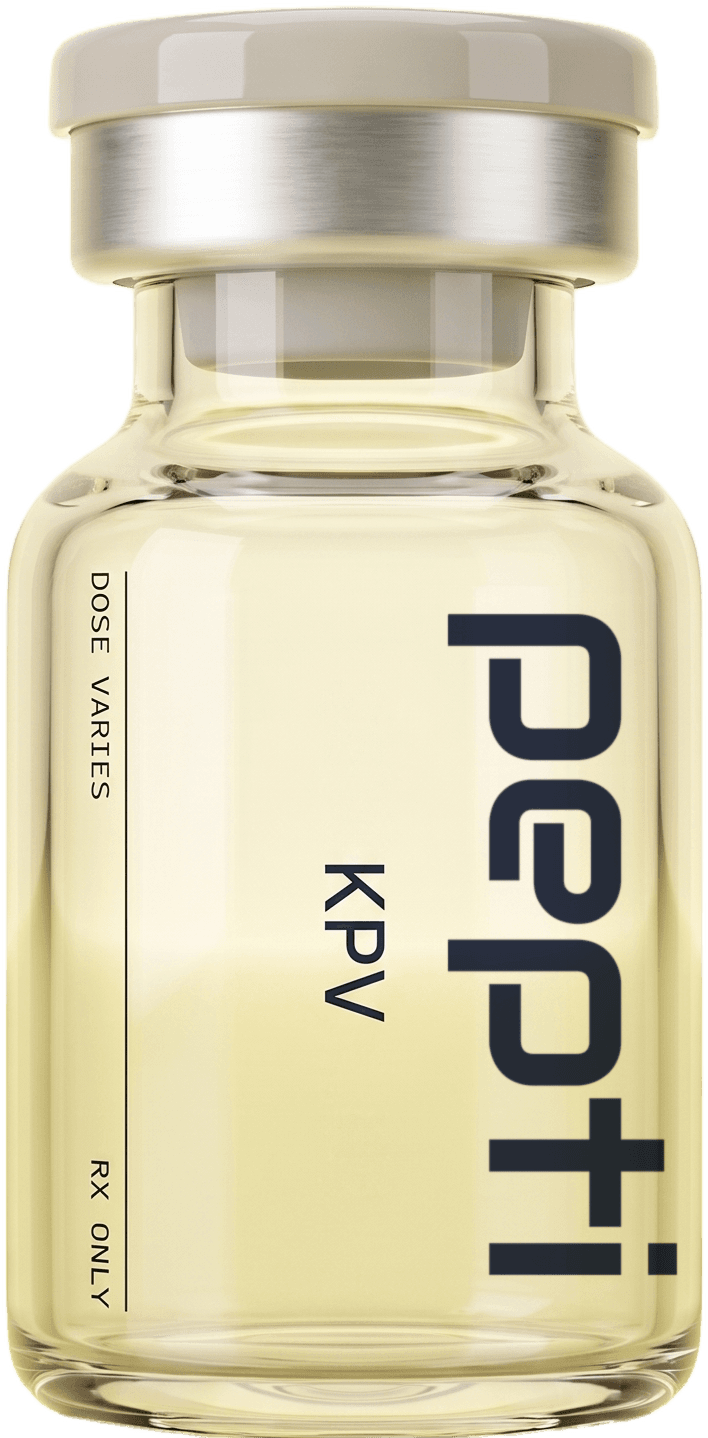
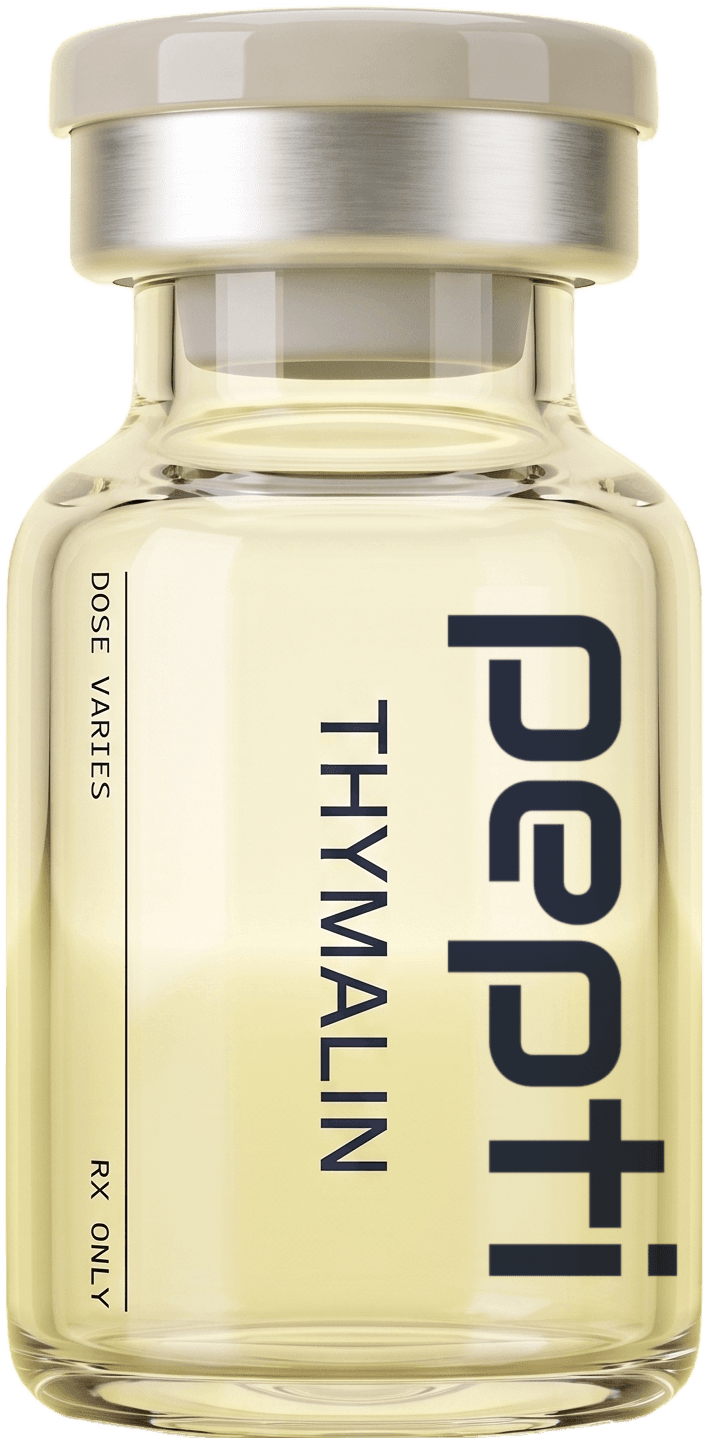
Thymalin and KPV are both prescribed around the immune system and inflammation, but they answer different questions. Thymalin is a mixture of short peptides extracted from calf thymus, described around T-cell maturation, with decades of clinical use in Russia and observational human reports but no randomized trials. KPV is a synthetic three-amino-acid fragment of alpha-MSH, described around damping inflammatory signalling inside cells, with cell and mouse work only and no human studies at all. Thymalin is the conversation when the concern is a weakened immune response with age; KPV is the conversation when the concern is inflammation that will not settle, especially in the gut. Both are prescription-only, compounded by a licensed US pharmacy, and neither is FDA approved.
This page explains each on its own terms, puts them side by side, covers what the research does and does not show, where each stands with the FDA, how each is dosed, what each costs at Pepti, and who tends to suit which.
Thymalin vs KPV
The short answer
| If your main goal is | The usual prescription | What is in it | Price |
|---|---|---|---|
| Immune support framed around ageing of the thymus | Thymalin | 5 mg thymalin in a 5 mL vial (1 mg/mL) | $209/mo |
| Inflammation without a specific injury, often gut-related | KPV | 10 mg KPV in a 5 mL vial (2 mg/mL) | $229/mo |
| Immune modulation with the deeper human trial record | Thymosin Alpha-1 | 10 mg thymosin alpha-1 in a 5 mL vial | $249/mo |
| Immune, inflammation and gut coverage in one vial | FORTIFY Blend | Thymosin alpha-1, BPC-157, KPV and LL-37 | $289/mo |
| Inflammation alongside skin and tissue repair | KLOW Blend | GHK-Cu, KPV, BPC-157 and TB-500 | $259/mo |
Every figure is an all-in monthly price covering the medication, physician review, refill management and shipping. There is no separate membership fee. Current pricing always lives on each product page; the table is a guide to which product fits which goal.
Thymalin vs KPV
Thymalin on its own terms
What it is
Thymalin is a polypeptide complex, a mixture of short peptides, extracted from the thymus gland of young cattle. That makes it unusual: most peptides on this site are one defined sequence a chemist can synthesize, while thymalin is a standardized extract. The group that developed it describes two dipeptides inside the mixture, Lys-Glu (KE) and Glu-Trp (EW), as the active components. The full reference is at what is thymalin.
The thymus is where T-lymphocytes mature. It is large in childhood and shrinks steadily from puberty onward, and the loss of thymic output is one of the best-described contributors to the weakening of the immune system in older age. The idea behind thymalin is to supply thymic signalling peptides to a body whose own thymus has largely stopped producing them.
Where it came from
Thymalin was developed in the Soviet Union by Vladimir Khavinson and Vyacheslav Morozov, working from 1973 onward at what became the St. Petersburg Institute of Bioregulation and Gerontology. It has been used clinically in Russia for decades. Almost all of its literature comes from that one group and its collaborators, much of it in Russian-language journals.
How thymalin is described to work
- Pushing blood stem cells toward mature T-cells. A 2020 paper in the Bulletin of Experimental Biology and Medicine exposed human hematopoietic stem cells to thymalin in culture and reported CD28, a marker of mature T-lymphocytes, rising nearly seven times while stem-cell markers fell.
- Two dipeptides acting on inflammatory genes. The developing group's 2023 paper in the International Journal of Molecular Sciences reported that thymalin and its two dipeptides reduced IL-1 beta, IL-6 and TNF-alpha production by 1.4 to 6 times in stimulated human blood immune cells.
- Calmer monocytes and macrophages. A 2022 study in the same journal, run in Italy with the St. Petersburg group as co-authors, reported reduced TNF and IL-6 in a human monocyte cell line.
All of the mechanism work is in cells.
What human data exists for thymalin
Study Who What was reported 2002 and 2003, Advances in Gerontology and Neuroendocrinology Letters 266 older adults followed six to eight years Fewer acute respiratory illnesses and lower mortality in treated groups than controls 2021, Stem Cell Reviews and Reports COVID-19 hospital patients Faster fall in IL-6, C-reactive protein and D-dimer than standard care alone 2022, Advances in Gerontology Middle-aged and elderly patients with severe COVID-19 Better blood counts and clotting markers, and lower in-hospital mortality than standard care None of the published abstracts describes randomization, blinding or placebo, and no independent group has replicated the work. There are no randomized controlled trials of thymalin. The honest framing is "used clinically in Russia for decades, with cell-study support, and without controlled trials." Detail on each claim is in thymalin benefits.
Thymalin vs KPV
KPV on its own terms
What it is
KPV is a tripeptide: lysine, proline and valine. It is the last three amino acids of alpha-melanocyte-stimulating hormone (alpha-MSH), a thirteen-amino-acid hormone the body makes. Alpha-MSH is best known for driving pigmentation, but it also works as an anti-inflammatory signal. A 2008 review in Endocrine Reviews described the three-amino-acid tail keeping much of that anti-inflammatory activity in cell and animal models, while pigmentation depends on a different part of the hormone. KPV is an attempt to keep the first role and leave the second behind. The full reference is at what is KPV.
How KPV is described to work
- Getting into cells through PepT1. A 2008 paper in Gastroenterology reported that KPV is carried into intestinal cells by PepT1, the transporter the gut lining uses to absorb small peptides from food, and that its effect depended on that transporter.
- Interrupting NF-kB and MAPK. The Gastroenterology work and a 2008 paper in Inflammatory Bowel Diseases describe reduced NF-kB activation in cells and in inflamed mouse colon. NF-kB is the switch that starts transcription of inflammatory genes.
- Lower cytokine output. In cell and mouse work, less TNF-alpha, IL-6, IL-1 beta and IL-8, depending on the model.
- No pigment receptor needed. A 2012 study in human bronchial epithelial cells described KPV acting through a route independent of the melanocortin-1 receptor, which is why it is not expected to tan.
What human data exists for KPV
None. There are no human trials of KPV of any design. The FDA's review for its July 2026 advisory committee found no published human studies. The evidence is cell work, including human cell lines, and mouse models: several colitis studies (2008 and 2017), plus single studies in skin, airway and brain-injury models. Detail is in KPV benefits.
Thymalin vs KPV
Head to head
| Thymalin | KPV | |
|---|---|---|
| What it is | A natural polypeptide extract of calf thymus | A synthetic three-amino-acid fragment of alpha-MSH |
| Defined sequence? | No; a standardized mixture with two described active dipeptides | Yes; Lys-Pro-Val |
| Main described direction | T-cell maturation and immune regulation | Damping inflammatory signalling inside the cell |
| Where the research is deepest | Immune ageing in older adults | Mouse models of gut inflammation |
| Human data | Russian observational and hospital reports | None |
| Randomized human trials | None | None |
| Origin of the literature | Mostly one Russian group, much of it in Russian | Cell and mouse studies in English-language journals |
| Key safety note | Animal-origin extract: theoretical allergy risk | No human safety data; nausea or headache reported by some early on |
| FDA status | Never nominated for the 503A list | Removed from Category 2 April 2026; advisory committee voted 8 to 6 for the Bulks List in July 2026 |
| Vial at Pepti | 5 mL, 1 mg/mL (5 mg) | 5 mL, 2 mg/mL (10 mg) |
| Standard directions | 0.25 mL (25 units) once daily, Monday to Friday | 0.25 mL (25 units) once daily, Monday to Friday |
| Per dose | 0.25 mg | 0.5 mg |
| Doses per vial | 20, about 4 weeks | 20, about 4 weeks |
| Price at Pepti | $209 a month | $229 a month |
| Also found in | Single vial only | KLOW, ELEVATE and FORTIFY blends |
The real difference is the question you are asking
Both produce cytokine reductions in a dish, so on paper they can look alike. The useful difference is what each is used to address. Thymalin is framed around a weakened immune response, the shrinking thymus and immune ageing, and its human record, thin as it is, comes from older adults followed over years. KPV is framed around too much inflammatory signalling, and its research is about calming inflamed tissue, especially the colon. One is about restoring a response; the other is about turning one down. No study has compared them.
Thymalin vs KPV
Who suits which
Thymalin
Thymalin suits someone whose interest is specifically immune ageing and the Russian geroprotective programme, who understands that the human evidence is observational, and who is comfortable with an animal-derived extract. It is often discussed alongside Epithalon, the synthetic peptide derived from the pineal extract studied with thymalin in the 266-person programme; see Epithalon benefits.
KPV
KPV suits inflammation-led complaints without a specific injury, most often gut-related ones, where the mouse colitis work is strongest. It is a small, defined molecule and one variable on its own, which makes it easier to judge whether it is doing anything. The wider picture for gut complaints is in peptides for gut health.
When the stronger immune evidence matters more
If the question is immune modulation and you want the peptide with randomized human trials, thymosin alpha-1 has them, in hepatitis B, sepsis, melanoma and vaccine response, with mixed results. The FORTIFY Blend pairs thymosin alpha-1 with KPV, BPC-157 and LL-37 for people who want immune and inflammation coverage in one vial. It is built around thymosin alpha-1, not thymalin.
Can you take thymalin and KPV together?
They are described as doing different jobs, and some physicians prescribe more than one immune or inflammation peptide. No study has tested this combination, so it means two unknowns at once. Whether a combination fits you is worked out by your physician after reviewing your intake. Starting with one makes it easier to tell what is doing what.
Thymalin vs KPV
When neither is the right first step
| Situation | What makes more sense |
|---|---|
| Blood in the stool, unintentional weight loss, persistent vomiting, or symptoms that wake you at night | Investigation by a gastroenterologist or your primary physician first |
| A diagnosed inflammatory disease on prescribed treatment | Stay on that treatment; neither peptide replaces it |
| An active infection | Your physician; neither is an antibiotic or antiviral |
| A diagnosed immunodeficiency or autoimmune condition | A specialist; both need that history on your intake |
| A specific tendon, ligament or muscle injury | BPC-157 or TB-500, whose animal work is about tissue repair |
Thymalin vs KPV
Where each stands with the FDA
The two sit in very different places in the FDA's compounding process, as of the FDA pages checked in 2026:
| Thymalin | KPV | |
|---|---|---|
| 2023 | Not nominated | Placed in Category 2 |
| April 2026 | Not involved; never in any category | Removal from Category 2 announced 15 April, effective 22 April |
| July 2026 | Not on the advisory committee agenda | Committee voted 8 to 6, one abstention, to recommend adding it to the 503A Bulks List; FDA reviewers had recommended against |
| Final FDA determination | None; the FDA has expressed no view | Pending |
Thymalin has never been nominated for the 503A bulks list, so the FDA has not evaluated it either way. The similarly named "thymulin acetate" on the FDA's list is a different thymic peptide. A committee vote, as with KPV, is a recommendation rather than a decision. Both remain legal to prescribe as compounded medications, and compounded medications are not FDA approved. Are peptides FDA approved explains the difference.
Thymalin vs KPV
Dosing, side by side
Both are injected under the skin into the abdomen or thigh, rotating sites, once daily Monday through Friday with weekends off. The volume is the same, 0.25 mL, which is 25 units on a U-100 insulin syringe. Because the vials differ in strength, that volume holds 0.25 mg of thymalin or 0.5 mg of KPV. This is arithmetic, not advice: your physician sets your directions after reviewing your intake, and they are printed on the vial.
Twenty doses per vial covers about four weeks, which is why refills run every 28 days, one vial per fill. Both ship refrigerated with ice packs, ready to use, with sterile syringes and alcohol prep pads, and stay in the fridge between doses. More detail is in KPV dosage.
Thymalin vs KPV
Side effects
Thymalin. The published Russian clinical reports do not describe a characteristic toxicity. What is reported is mostly injection-site redness, mild soreness, occasional bruising or itching. As an animal-derived protein extract it carries a theoretical allergy risk a single synthetic sequence does not, so a rash, hives or swelling beyond the injection site should be reported to your care team promptly.
KPV. Animal work has not reported toxicity at the doses studied, but there are no human trials. Reported with the injection: redness, soreness or bruising at the site, and in some people mild nausea, a transient headache or light-headedness early on. It is not expected to darken skin. More is in KPV side effects.
For both, there is no established interaction list, so the intake asks for every medication you take. Anything acting on the immune system, such as immunosuppressants or biologics, matters most. Facial or throat swelling or difficulty breathing needs emergency care first (call 911), then tell your physician.
Thymalin vs KPV
Who should not take either, or should discuss it first
| Situation | Why |
|---|---|
| Pregnancy or breastfeeding | Not used; safety data is absent |
| Autoimmune disease, immunosuppressants or biologics | Raise it at intake; both act on immune signalling |
| Known allergy to animal-derived products | Especially for thymalin, as a calf-thymus extract |
| Tested athletes | KPV is not named on the WADA list, but S0 covers substances without regulatory approval for human use; check the current list for either |
Thymalin vs KPV
What the evidence shows, honestly
Neither peptide has a randomized controlled trial in people. Thymalin has more human experience: a long observational programme in older adults and two hospital studies, all from one country, none describing randomization or blinding. KPV has a cleaner and more widely replicated mechanism story in cells and mice, and nothing in people. Any source describing either as shown to work in humans is overstating it. Neither has an established effect size or timeline for anyone.
Thymalin vs KPV
Where to get thymalin or KPV prescribed
Neither can be bought legitimately without a prescription. Sites selling them "for research use only" are not accountable for what is in the vial: identity, purity, sterility and concentration are untested. The prescription route:
- Complete a free online intake covering your history, medications and what you want help with.
- A physician licensed in your state reviews it, usually within 24 hours.
- If it is appropriate, a PCAB-accredited, FDA-registered US 503A pharmacy compounds it to that prescription. Lot test results are published at /quality/lab-results.
- It ships refrigerated with your directions printed on the vial.
- Your physician stays reachable for questions and side effects.
Pepti prescribes both in every state except Oklahoma, plus DC Pepti is cash-pay and does not bill insurance. Step-by-step pages: how to get thymalin prescribed online and how to get KPV prescribed online.
References
What this is based on.
References
- Khavinson VKh, Morozov VG. [Geroprotective effect of thymalin and epithalamin] · Adv Gerontol (2002) · PMID 12577695
- Khavinson VKh. Peptides and Ageing · Neuro Endocrinol Lett (2002) · PMID 12374906
- Khavinson VK, Linkova NS, Kvetnoy IM, Polyakova VO, Drobintseva AO, Kvetnaia TV, Ivko OM. Thymalin: Activation of Differentiation of Human Hematopoietic Stem Cells · Bull Exp Biol Med (2020) · PMID 33237528
- Khavinson VK, Kuznik BI, Trofimova SV, Volchkov VA, Rukavishnikova SA, Titova ON, Akhmedov TA, Trofimov AV, Potemkin VV, Magen E. Results and Prospects of Using Activator of Hematopoietic Stem Cell Differentiation in Complex Therapy for Patients with COVID-19 · Stem Cell Rev Rep (2021) · PMID 33575961
- Kuznik BI, Shapovalov KG, Smolyakov YN, Lukyanov SA, Tereshkov PP, Kazantseva LS, Linkova NS. [Morphological compound and indicators of the blood clotting system in severe COVID-19 patients of middle aged and elderly during treatment of Tocilizumab and Thymalin] · Adv Gerontol (2022) · PMID 36169363
- Avolio F, Martinotti S, Khavinson VK, Esposito JE, Giambuzzi G, Marino A, Mironova E, Pulcini R, Robuffo I, Bologna G, Simeone P, Lanuti P, Guarnieri S, Trofimova S, Procopio AD, Toniato E. Peptides Regulating Proliferative Activity and Inflammatory Pathways in the Monocyte/Macrophage THP-1 Cell Line · Int J Mol Sci (2022) · PMID 35408963
- Linkova N, Khavinson V, Diatlova A, Petukhov M, Vladimirova E, Sukhareva M, Ilina A. The Influence of KE and EW Dipeptides in the Composition of the Thymalin Drug on Gene Expression and Protein Synthesis Involved in the Pathogenesis of COVID-19 · Int J Mol Sci (2023) · PMID 37686182
- Dalmasso G, Charrier-Hisamuddin L, Nguyen HT et al.. PepT1-mediated tripeptide KPV uptake reduces intestinal inflammation · Gastroenterology (2008) · PMID 18061177
- Kannengiesser K, Maaser C, Heidemann J et al.. Melanocortin-derived tripeptide KPV has anti-inflammatory potential in murine models of inflammatory bowel disease · Inflamm Bowel Dis (2008) · PMID 18092346
- Xiao B, Xu Z, Viennois E et al.. Orally Targeted Delivery of Tripeptide KPV via Hyaluronic Acid-Functionalized Nanoparticles Efficiently Alleviates Ulcerative Colitis · Mol Ther (2017) · PMID 28143741
- Land SC. Inhibition of cellular and systemic inflammation cues in human bronchial epithelial cells by melanocortin-related peptides: mechanism of KPV action and a role for MC3R agonists · Int J Physiol Pathophysiol Pharmacol (2012) · PMID 22837805
- Cutuli M, Cristiani S, Lipton JM et al.. Antimicrobial effects of alpha-MSH peptides · J Leukoc Biol (2000) · PMID 10670585
Citations are provided for educational purposes. They do not constitute medical advice. Always discuss any peptide protocol with your prescribing physician.
Common questions
Thymalin vs KPV, answered.
They are aimed at different things. Thymalin is described around T-cell maturation and immune ageing, with Russian observational human reports. KPV is described around turning down inflammatory signalling, with cell and mouse work only. No study has compared them.
KPV is the one built around inflammation, and its mouse colitis work is the deepest part of its literature. Thymalin also reduced inflammatory cytokines in cell studies, but it is prescribed mainly for immune ageing. Neither has been tested for inflammation in a human trial.
KPV, if either. Its research is concentrated in mouse models of gut inflammation and in uptake through the gut's PepT1 transporter. Thymalin has no gut-specific research. Gut symptoms such as bleeding or weight loss need investigating first.
Thymalin is a natural extract of calf thymus containing many short peptides. KPV is a single synthetic three-amino-acid fragment of the hormone alpha-MSH. They come from different tissues, act on different parts of the immune system and have different kinds of evidence.
Some physicians prescribe more than one immune or inflammation peptide, but no study has tested this pair. Your physician works out whether a combination fits after reviewing your intake.
Thymalin has human reports from Russia, including a 266-person observational programme and two COVID-19 hospital studies, but no randomized trials. KPV has no human studies of any design.
Neither has human safety data from a controlled trial. Thymalin has a longer clinical history and carries a theoretical allergy risk as an animal extract. KPV has animal work reporting no toxicity at the doses studied. Both mostly cause injection-site reactions when anything is reported.
It is not expected to. Pigmentation depends on a part of alpha-MSH that KPV does not contain, and cell work describes KPV acting without the pigment receptor.
At Pepti, thymalin is $209 a month and KPV is $229 a month, all-in, including the medication, physician review, refill management and shipping. The FORTIFY Blend, which contains KPV, is $289 a month.
No. Compounded medications are not FDA approved. Thymalin has never been nominated for the FDA's 503A list. KPV was removed from Category 2 in April 2026 and recommended for the Bulks List by the advisory committee in July 2026; the final determination is pending.
No. Bloodwork is not required for any Pepti treatment. If your physician wants labs for your care, they'll ask through your account. The free assessment goes to a physician licensed in your state. A consultation does not guarantee a prescription.
Next step
See what a physician recommends for you.
A licensed physician in your state reviews your intake and decides what is appropriate. A consultation does not guarantee a prescription.